Best Photography Tours in Death Valley National Park (2026)
Updated
Featured photograph: Photo by Stephen Leonardi via Pexels (source; Pexels license). (Stock photo, illustrative.)
Death Valley is the national park that breaks every camera assumption you bring to it. The lowest point in North America, the hottest air temperature ever recorded on Earth, sand dunes that glow like bronze at last light, and badlands carved into ridges so textured they look rendered. It is the largest national park in the contiguous United States, and one of the most photogenic landscapes anywhere in the desert Southwest.
It is also enormous, remote, and genuinely dangerous in the wrong season. Distances between the classic photo spots run 30 to 60 miles on park roads, summer heat kills, and cell service is mostly absent. That is exactly why a good photography tour earns its keep here: someone else handles the driving, the timing, and the heat logistics while you concentrate on the light.
Here is the honest picture before we get into it: neither Edin nor anyone on the ShutYourAperture team has personally taken the tours below. We researched what actually serves Death Valley, compared the itineraries against the spots a photographer cares about, and read the current listings. This guide tells you what we found, who each option suits, and what to confirm before you book. Details change seasonally in this park more than almost anywhere else, so treat the listings as the final word.
Why Death Valley belongs on a photographer’s list
The numbers alone read like a dare. Badwater Basin sits 282 feet below sea level, the lowest point in North America. Furnace Creek holds the world record air temperature of 134°F, set on July 10, 1913. The park covers more than 3 million acres of Mojave Desert. It was first protected as a national monument in 1933 and re-designated as a national park in 1994.
For a landscape photographer, the superlatives translate into variety. Within a single day you can shoot salt polygons at Badwater, the golden eroded ridges of Zabriskie Point, the flowing lines of the Mesquite Flat Sand Dunes, the multicolored volcanic hills along Artist’s Drive, and the vertigo-inducing view from Dante’s View, more than 5,000 feet above the valley floor you stood on that morning. Few parks pack that range into one road system.
The light is the other reason. Death Valley’s air is dry and usually clear, sunrises and sunsets are long and warm, and the park is famous among night photographers for its dark skies. Winter and early spring bring the best shooting conditions, and in wet years the valley floor can briefly fill with wildflowers or even a shallow ephemeral lake at Badwater.
The spots your tour should cover
Zabriskie Point. The classic sunrise location. Golden badlands ripple toward the Panamint Range, and the first direct light sets the ridges on fire while the valley stays in blue shadow. A short paved walk from the parking area. If your tour doesn’t time Zabriskie for early or late light, ask why.
Mesquite Flat Sand Dunes. The most photographed dunes in the park, near Stovepipe Wells. The best shots come at sunrise or the last hour before sunset, when the dune ridges throw long shadows and footprints from midday have context. Bring a telephoto as well as a wide angle; compressed dune layers are the signature frame.
Badwater Basin. The salt flats at the bottom of North America. The hexagonal salt polygons photograph best with a low camera position and side light. Late afternoon puts the Panamints behind you in warm light. After rare heavy rains, a thin sheet of water turns the basin into a mirror, one of the most sought-after shots in the park.
Dante’s View. A 5,475-foot overlook straight down onto Badwater and across to Telescope Peak. Best in the morning, when the sun lights the valley floor below you. The scale here is the story; a wide lens with a strong foreground works better than a panorama grab.
Artist’s Drive and Artist’s Palette. A one-way scenic loop through hills stained pink, green, gold, and purple by oxidized metals. Mid-to-late afternoon light brings out the color. The palette section is the money shot, but the whole loop is worth frames.
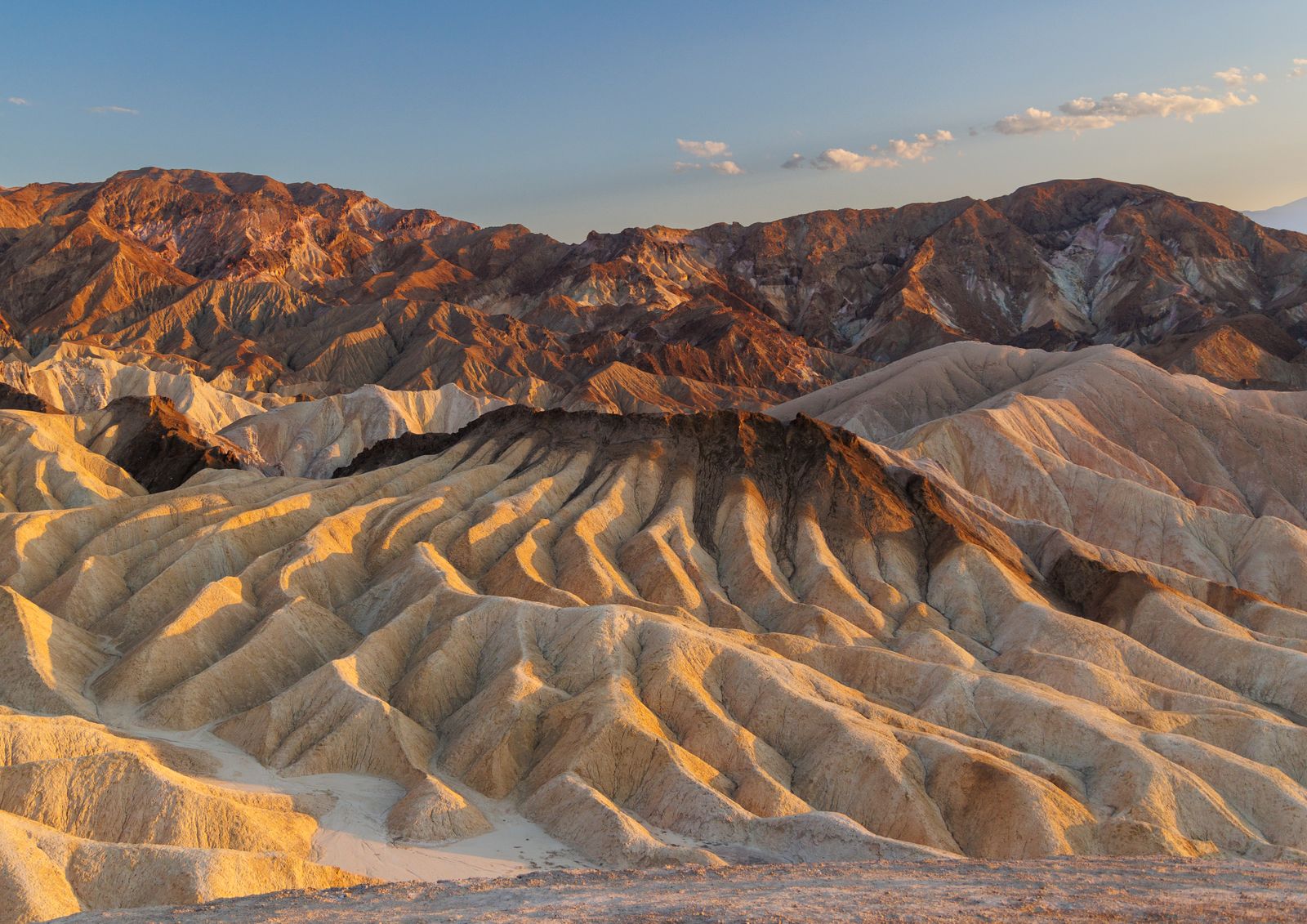
Zabriskie Point’s golden badlands at first light. Photo: Igor Passchier / Pexels. An illustrative photograph of the site, not a guaranteed stop on any tour below.
What to look for in a Death Valley photography tour
Departure city. Most Death Valley day tours run from Las Vegas, roughly a two-hour drive each way to the park’s east side. That makes for a long day, typically 10 to 12 hours door to door. A smaller number of options base inside or near the park itself, around Furnace Creek, which trades the Vegas convenience for far more time actually shooting.
Small groups. The difference between a 50-seat coach and a 14-passenger van matters here. Small groups move faster between stops, can linger when the light turns, and the guide can actually talk to each guest about camera settings. Every tour we recommend below runs small-group formats as of our check.
Light-aware timing. General sightseeing tours hit the famous stops at midday, when Death Valley light is at its flattest and harshest. Better photography-focused itineraries put you at Zabriskie or the dunes in the first or last hours of the day. Read the itinerary order, not just the stop list.
Heat and water logistics. From late spring through early fall, midday temperatures routinely exceed 110°F. Reputable operators carry water, schedule around peak heat, and are explicit about what to bring. In summer 2026 conditions, this is a safety feature, not a luxury.
The best Death Valley photography tours
We compared the current tour market for Death Valley across Viator, GetYourGuide, and Klook, checking live listings as of November 2026. Here are the options worth your money, and one honest note about the gap in the market.
1. The classic full-day small-group tour from Las Vegas
The backbone of Death Valley touring is the full-day small-group trip out of Las Vegas, and the strongest example we found is the small-group day tour covering the park’s iconic stops with hotel pickup in Las Vegas and a guide narrating the geology and history between them. The listing showed free cancellation up to 24 hours before the experience starts (local time) as of our November 2026 check.
Check availability for the Death Valley Small-Group Day Tour on Viator
Who it suits: first-time visitors based in Vegas who want the iconic locations in one day with zero driving. The photography tradeoff is timing; day trips from Las Vegas generally put you at the major stops in late morning and midday light, so you are working the scene harder for your frames. The upside is coverage: you will stand at Badwater, Zabriskie, and Dante’s View in a single day, and you can scout compositions for a future self-drive trip at golden hour.
2. The photographer-timed small-group alternative
A second Vegas-based option we verified is built for exactly what a photographer wants: a small-group day-and-night tour that times the valley for sunset and then stays out for stargazing under some of the darkest skies in the country, with a strong review count on the listing as of our check. It showed free cancellation up to 24 hours before the experience starts (local time) as of our November 2026 check.
Check availability for the Death Valley Day and Night Tour on Viator
Who it suits: shooters who care more about light than stop count, and anyone who wants night-sky frames without driving desert roads in the dark themselves. Ask the operator about the current season’s exact timing before booking; departure times shift through the year to track sunset.
3. The budget-friendly day tour
GetYourGuide’s strongest Death Valley listing out of Las Vegas covers a similar greatest-hits route at a competitive tier, with small-group transport, pickup options, and free cancellation shown on the listing as of our November 2026 check.
Check availability for the Death Valley Guided Day Tour on GetYourGuide
Who it suits: travelers watching the budget who still want a guided, small-group day rather than a big coach. As with any marketplace listing, read the most recent reviews on the listing page itself, since the operator mix behind aggregator listings can change between seasons.
4. Private and custom options
If you want the day built entirely around your shot list, a private tour is the way to do it in Death Valley. Private listings let you set the departure time around light, wait out a cloud bank at Zabriskie, or spend three hours in the dunes without holding up a group. They cost meaningfully more, and for a dedicated photographer on a once-a-decade trip, that can be the right trade.
Check availability for a Private Death Valley Tour on Viator
Klook also lists a small-group full-day Death Valley tour from Las Vegas, verified live as of our November 2026 check, worth comparing if you are flexible on format.
An honest gap: as of our check in November 2026, we found no widely available dedicated multi-day photography workshop basing inside the park with current bookable dates on the major marketplaces. Specialist photo workshops do run in Death Valley in the cooler months, typically announced on individual photographers’ own sites, so if a workshop is what you want, search for current-season offerings and book directly with the photographer.
Planning your own Death Valley photo trip
When to go. November through March is the shooting season: daytime highs in the 60s and 70s, low sun angles all day, and the best odds of dramatic winter clouds. April and October are workable shoulders. May through September is extreme-heat season, with highs routinely above 110°F; tours still run, but itineraries compress into early morning and evening, and midday shooting is a health risk as much as an aesthetic problem.
Entrance fees. Death Valley charges a per-vehicle entrance fee, and unlike many parks its fee stations are largely self-serve. Check the current rates and payment options on the NPS Death Valley entrance fees page before you go, and note that guided tours typically handle park entry for you.
Getting there. Las Vegas is the practical gateway, about two hours from the park’s eastern entrances. From Los Angeles, plan on four to five hours to Furnace Creek. Fuel up before you enter the park; in-park gas exists at Furnace Creek and Stovepipe Wells but at a premium, and some park roads are 50-plus miles between services.
What to bring. A wide-angle lens for the big vistas and a 70-200mm or longer for dune compression and distant ridge layers. A sturdy tripod for blue hour and any night work. More water than you think you need, sun protection in every season, and layers: winter mornings at Dante’s View are genuinely cold even when the valley floor is mild. Blowing sand is a sensor-cleaning hazard, so change lenses inside the car.
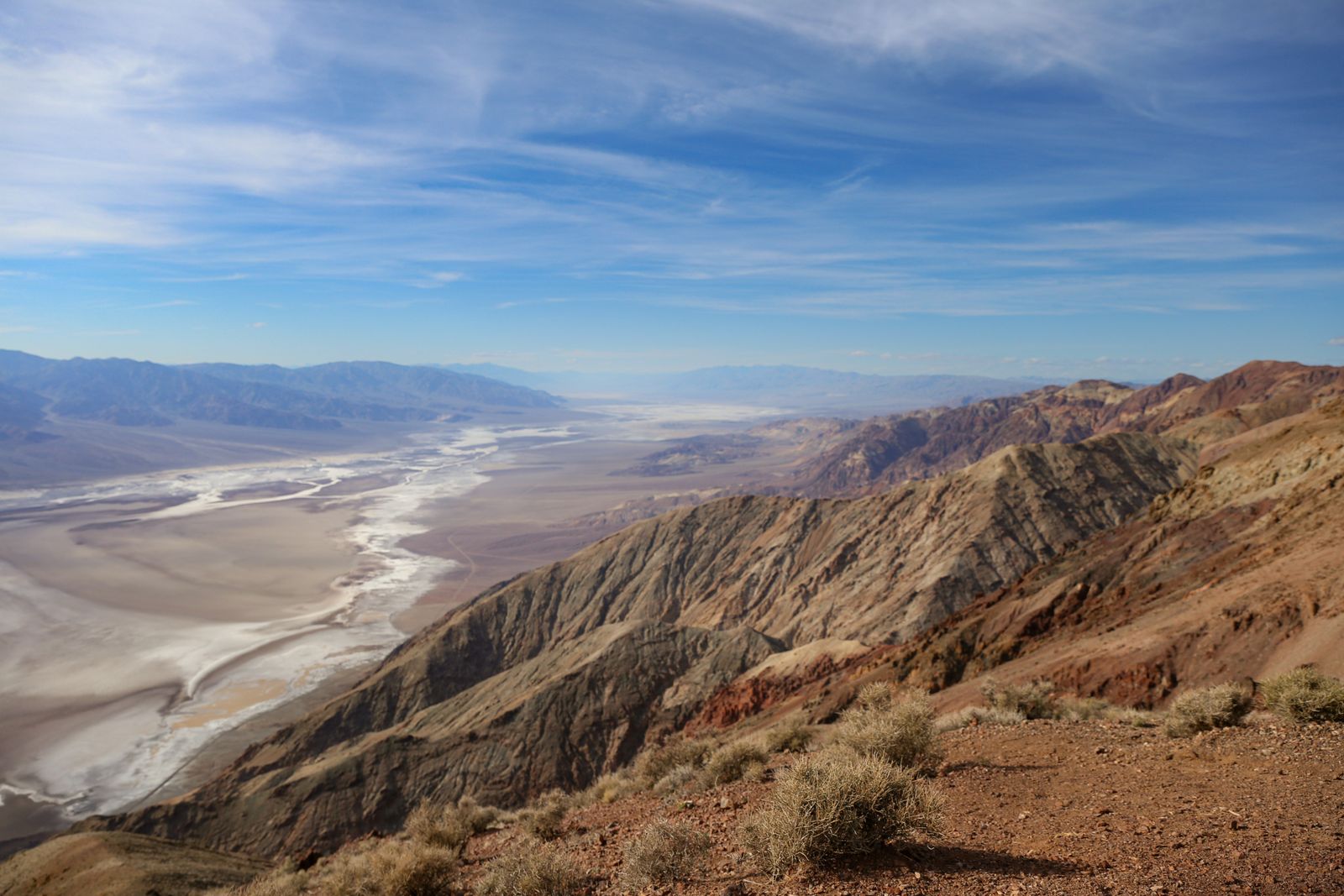
The view from Dante’s View down onto the Badwater salt flats. Photo: Daniel Erlandson / Pexels. An illustrative photograph of the site, not a guaranteed stop on any tour below.
Is a Death Valley photography tour worth it?
For most photographers visiting for the first time, yes, with the timing caveat above. The park’s scale is the argument: the classic spots are far apart, the roads are unfamiliar, and a good guide removes the logistics so you can watch the light. If you have multiple days and a rental car, self-driving wins on light quality because you control sunrise and sunset; a tour still makes sense for day one, to learn the layout from someone who knows it.
The one scenario where we would steer you away from a standard day tour is a serious landscape trip in prime season. If you are coming in winter specifically for portfolio work, base yourself at Furnace Creek or Stovepipe Wells for two or three nights instead, shoot every dawn and dusk, and use midday for scouting and sleep. No Vegas day trip can compete with that.
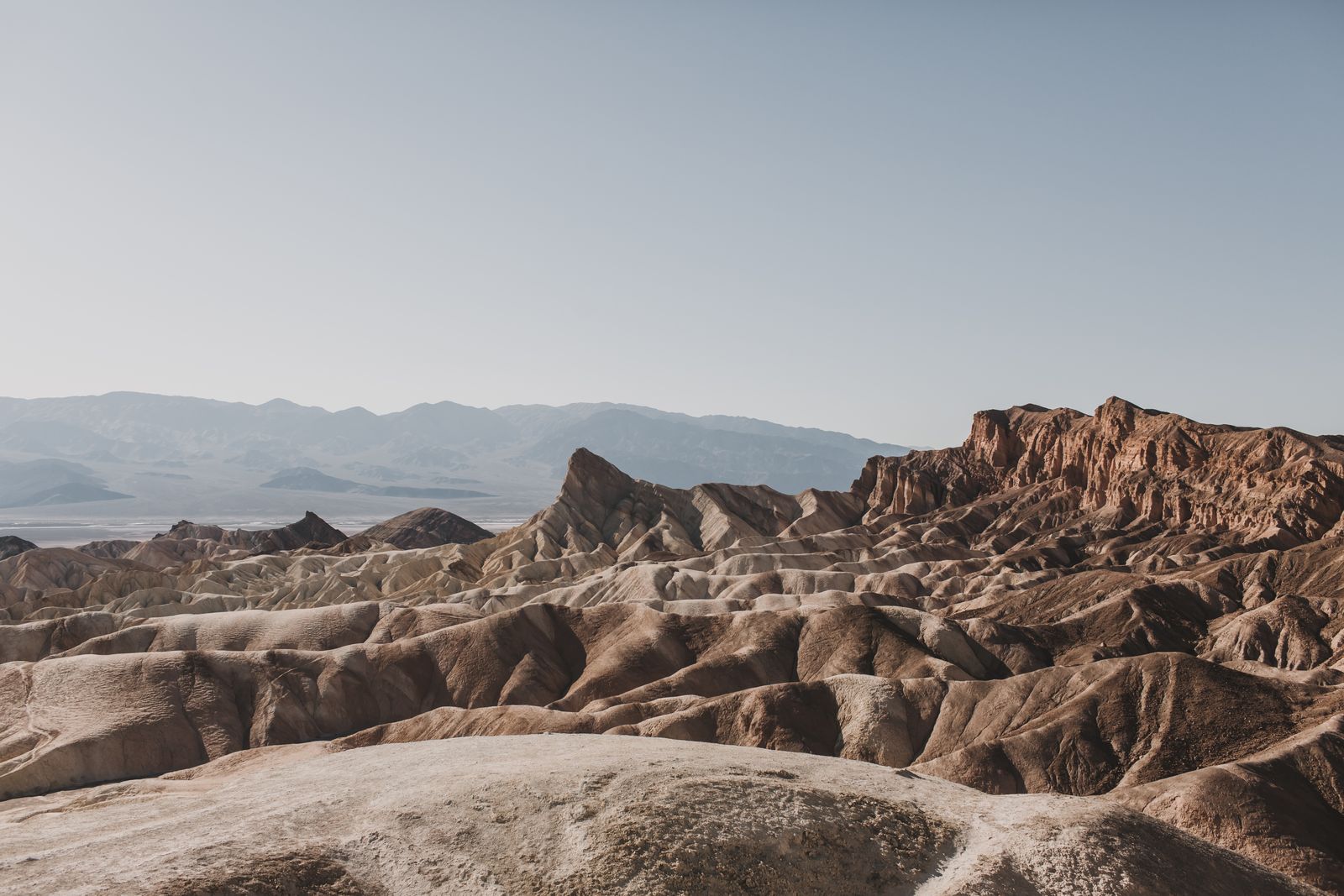
Death Valley’s eroded badlands under a clear desert sky. Photo: Vlada Karpovich / Pexels. An illustrative photograph of the site, not a guaranteed stop on any tour below.
Frequently asked questions
What is the best time of year to photograph Death Valley?
November through March offers the best combination of mild temperatures, long warm light, and dramatic skies. Summer visits are possible but require dawn-and-dusk-only shooting schedules because of extreme heat.
Can you photograph Death Valley in one day?
Yes, and guided day tours from Las Vegas are built for exactly that, covering Zabriskie Point, Badwater Basin, Dante’s View, and the dunes in a single long day. One day gives you the icons; two or three days let you work them in the best light.
Do Death Valley tours run in summer?
Many do, on heat-adjusted schedules with early starts. If you book a summer tour, confirm the itinerary’s timing, the vehicle’s air conditioning, and the operator’s water policy before paying.
Is Death Valley good for night photography?
It is one of the best dark-sky locations in the country, with minimal light pollution across most of the park. Winter Milky Way seasons favor the galactic core before dawn; plan around the moon phase and give your eyes time to adapt.
Do I need a tour, or can I photograph Death Valley on my own?
Experienced desert travelers with a reliable vehicle can absolutely self-drive; the main roads are paved and well signed. A tour earns its cost in logistics, local knowledge, and safety margin, especially on a first visit or a short trip.
Affiliate disclosure: Some links in this article are affiliate links. If you book through them, we may earn a commission at no extra cost to you. We only link to tours and marketplaces we have researched. Neither Edin nor the ShutYourAperture team has personally taken these tours; recommendations are based on research, listing details, and traveler reviews as of our check.
Recommended Gear for a National Park Photography Tour
If your tour allows personal camera gear, a small kit can help with changing light and weather. Check the operator’s tripod policy and your camera mount before buying. B&H Photo Video and Amazon options are linked below.
| What & Why | B&H | Amazon |
|---|---|---|
Fujifilm X100VI Compare this option with your current kit. Check compatibility and the product details before buying. | Shop B&H → | Shop Amazon → |
Sony FE 35mm f/1.4 GM (Sony E-mount) Check the camera mount before buying. Choose a focal length that fits the photos you plan to make. | Shop B&H → | Shop Amazon → |
Peak Design Aluminum Travel Tripod Check the load rating, packed size and local tripod rules before buying. | Shop B&H → | Shop Amazon → |
OP/TECH USA 18-inch Rainsleeve Compare this option with your current kit. Check compatibility and the product details before buying. | Shop B&H → | Shop Amazon → |
B&H and Amazon links are affiliate links. We earn a small commission on purchases at no extra cost to you.