Best Photography Tours in Wrangell-St. Elias National Park (2026)
Updated
Wrangell-St. Elias National Park and Preserve is the biggest national park in the United States, and it is not close: 13.2 million acres in southeast Alaska, the same size as Yellowstone, Yosemite, and Switzerland combined, per the National Park Service. It rises from the ocean to the 18,008-foot summit of Mount St. Elias, holds the greatest concentration of glaciers in North America – more than 3,000 of them covering over three million acres – and wraps it all around an early-1900s copper boomtown, Kennecott, preserved as a National Historic Landmark. For photographers, this is the park where scale stops being a concept and becomes the whole problem.
This guide compares the photography tours and guided experiences available for Wrangell-St. Elias in 2026, with honest notes on what each includes, what it costs, and how to book. Access here is expedition-grade, and guided inventory reflects that – we tell you plainly what exists, who runs it, and what the honest alternatives are.
Quick comparison: Wrangell-St. Elias photography tour options
| Tour | Type | Duration | From | Cancellation |
|---|---|---|---|---|
| Kennecott Mill Town Tour | Guided historic walking tour | 2 hours | $36 | Free cancellation up to 24 hours ahead |
| Half-Day Glacier Hike | Guided Root Glacier hike | 5.5 hours | $127 | Free cancellation up to 24 hours ahead |
| Kennicott Glacial Lake & River Raft | Guided raft trip, Class III | 4 hours | $285 | Non-refundable |
| Kennicott Glacial Lake Kayak Tour | Guided inflatable kayak tour | 4 hours | $285 | Non-refundable |
Prices and details checked on November 15, 2026 and can change.
The tours and experiences in detail
1. Kennecott Mill Town Tour
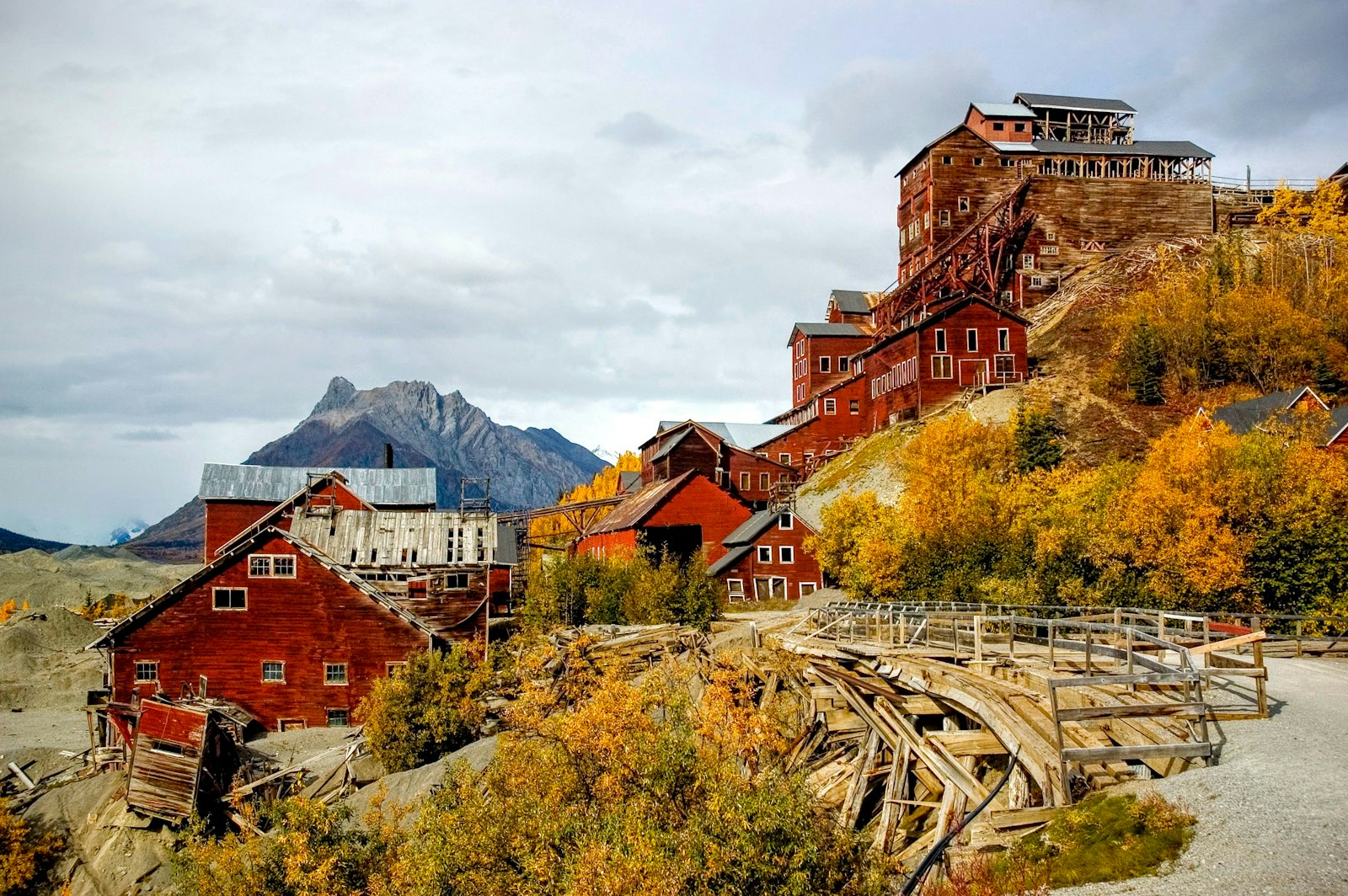
The essential two hours in the park: a guided walk through the Kennecott townsite, the copper company town abandoned in 1938 with its equipment, buildings, and belongings left in place. The headline for photographers is access inside the 14-story Concentration Mill – the red icon of every Kennecott composition – which the listing notes is only possible on this tour. Guides weave the history as you go: lucky fortunes, tenacious frontiersmen, tragic endings.
When we checked on November 15, 2026 it was priced from $36, runs about two hours with admission included, and offers free cancellation up to 24 hours before the experience. For photographers this is the highest-value booking in the park: you cannot legally get inside the mill any other way, and the interior catwalks and machinery are the shot.
2. Half-Day Glacier Hike (Root Glacier)
Five and a half hours, five to six miles round trip, moderate: a guided hike from Kennecott out the two-mile trail and onto Root Glacier itself, run by a guide service with over 40 years of experience in the park, per the listing. Groups run around eight travelers per guide, crampons and glacier navigation are handled for you, and the guide adds the flora, fauna, and history along the way. When we checked on November 15, 2026 it was priced from $127 with free cancellation up to 24 hours ahead.
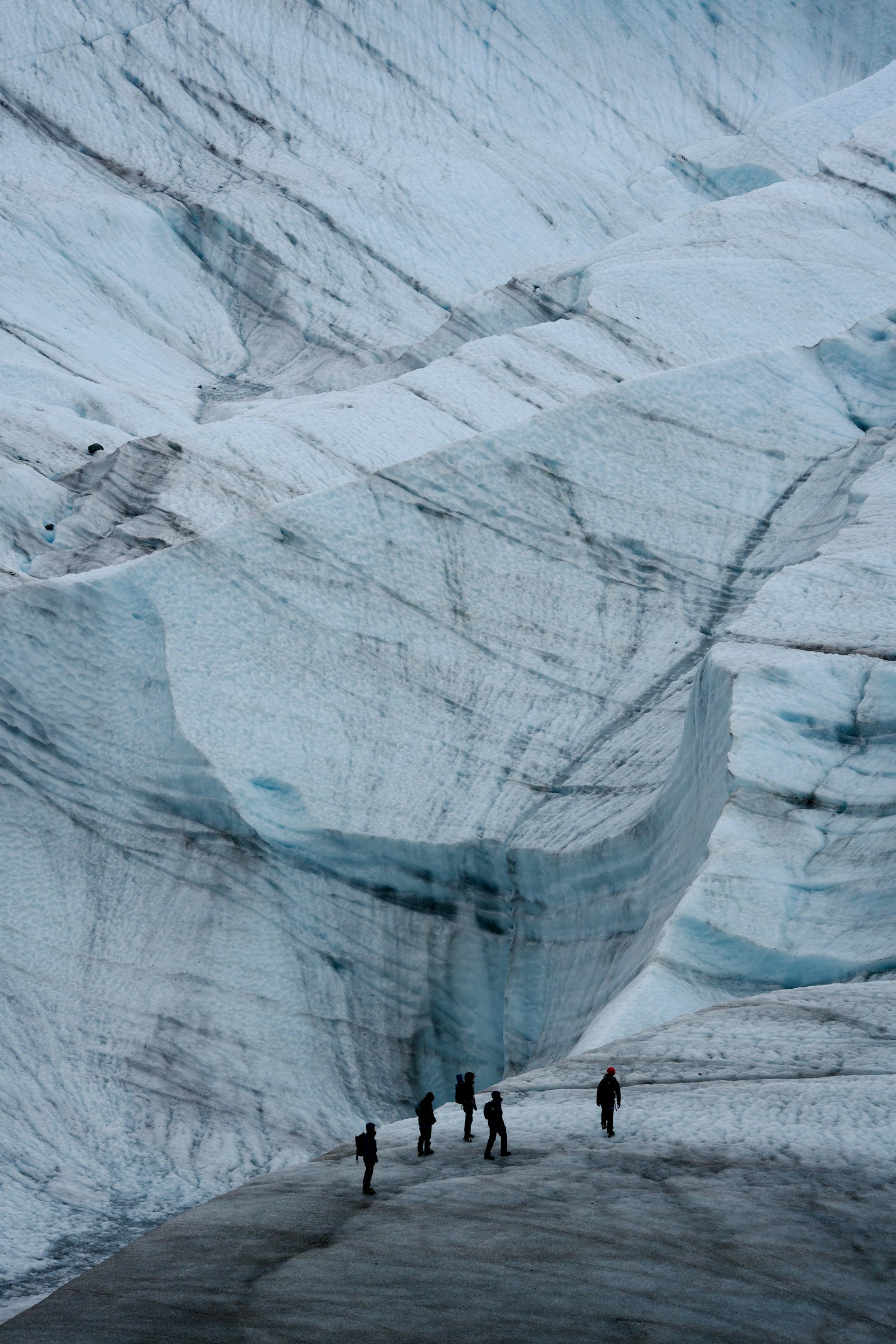
On the ice is where the abstract becomes tactile – blue pools, crevasses, sculpted surfaces – and having a guide read the glacier lets you work the details instead of worrying about your footing. A private version of this hike is listed from $285 (price varies by group size, non-refundable) if you want the guide’s full attention for a shoot.
3. Kennicott Glacial Lake and River Raft
Four hours floating the face of a 25-mile glacier and then running the best rapids on the Kennicott River – Class III whitewater in drysuits, with icebergs for company, per the listing. Guides cover the natural and human history of the Kennicott Valley while you float, and yes, jumping from an iceberg into the glacial water is on the highlights list. When we checked on November 15, 2026 it was priced from $285.
One thing to know before booking: this experience is non-refundable and cannot be changed for any reason, so commit only when your dates are firm. For photographers, a dry bag is mandatory and a midrange zoom is the right lens – you will be close to the ice and occasionally very wet.
4. Kennicott Glacial Lake Inflatable Kayak Tour
The quiet option on the same water: four hours paddling an inflatable kayak among icebergs on Kennicott Glacier Lake, stepping onto a glacier, with views toward the Stairway Icefall and Mount Blackburn while a guide talks glacier formation and Kennecott history, per the listing. When we checked on November 15, 2026 it was priced from $285 and, like the raft trip, it is non-refundable – book when your plans are set.
Kayak-level is the best camera height for iceberg reflections and calving ice, and the silence between paddle strokes is when the glaciers creak and tumble. Bring the polarizer.
An honest note on GetYourGuide, Klook, and flightseeing
We check the other major platforms so you do not have to. When we searched GetYourGuide on November 15, 2026, its single result for this park was actually a walking tour in the town of Wrangell, Alaska – an island community hundreds of miles away in the Alexander Archipelago, not Wrangell-St. Elias National Park – so there is no GetYourGuide button in this guide. Klook’s search returned no results for the park at all. And while flightseeing is the classic way to see this park’s interior, we could not verify a bookable flightseeing product for the park on the major platforms on November 15, 2026; ask locally in McCarthy or Chitina, where the air taxis are based.
Why photograph Wrangell-St. Elias?
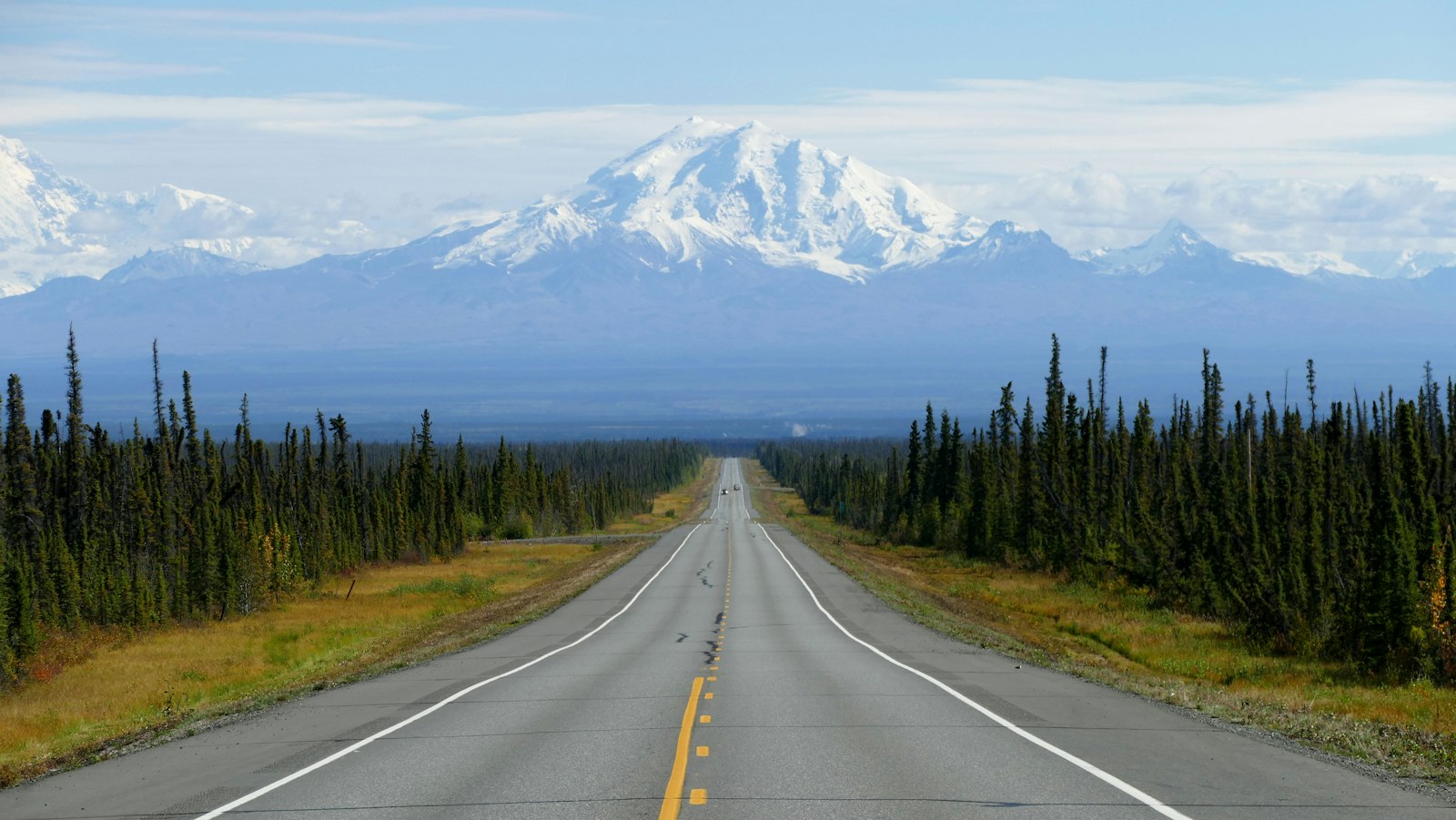
Start with the vertical. The park rises from sea level to 18,008 feet, one of the greatest reliefs on the continent, and four major mountain ranges overlap inside its boundaries – the Wrangell Mountains alone, per the National Park Service, lie entirely within the park and reach 16,390 feet. Nowhere else in the system do you compose across that many horizons at once.
Then the ice. More than 3,000 glaciers cover over three million acres – the greatest concentration in North America – and they are not distant set dressing: valley glaciers with medial moraines striping their backs flow right up to the road ends, and you can stand on one with crampons the same day you arrive. Glacial blue against dark rock is the park’s signature palette.
And the human layer. Kennecott Mines National Historic Landmark – the rust-red, fourteen-story mill building and its company town – sits against a wall of ice and peaks like a film set, per the National Park Service an early 1900s copper operation that succeeded in the heart of the Alaskan wilderness. Industrial decay in front of a glacier is a frame no other American park offers.
Best photography spots in the park
Whether you join a guided trip or explore on your own, these are the frames that define a Wrangell-St. Elias portfolio. Guided tours follow their own itineraries and are not guaranteed to stop at any specific location – use this list to plan the time around your tour.
Kennecott Mill Town
The red mill building against the Root Glacier and the Stairway Icefall is the park’s iconic composition. Shoot it from the glacier side in morning light, from the road in the evening, and in any weather – low cloud turns the whole scene graphic. Details inside the townsite reward a longer lens and a slower eye.
Root Glacier
The most accessible big ice in the park, reached on foot from Kennecott. Crevasses, blue pools, and ice-sculpted textures work at every focal length, and the guided trips provide the crampons and the safety read you need on the ice. Overcast days make the blue tones glow.
The McCarthy Road corridor
Fifty-nine miles of gravel from Chitina to the Kennicott River, per the National Park Service – an adventure in itself, with the Kuskulana and Gilahina trestles, beaver ponds, and mountain reveals along the way. Give the drive a full day each way with your camera riding shotgun.
Nabesna Road
The park’s quieter northern entrance: a 42-mile gravel road from Slana with three stream crossings, big views of the Wrangell Mountains, and almost no company. This is the choice for photographers who want the park’s scale without the McCarthy-area crowds.
 Save
 Save
Flightseeing: the definitive vantage
Most of Wrangell-St. Elias has no trails, no roads, and no other way in – which makes the small-plane flightseeing trip the closest thing this park has to a signature tour. From the air the park finally resolves: the Bagley Icefield, the Stairway Icefall, braided rivers, and ranges stacked to the horizon. Ask for a seat on the side matching your subject, shoot with a fast shutter and a midrange zoom, and book early in your trip so weather delays can be re-flown.
Planning your visit: fees, access, and seasons
Fees
There is no entrance fee, and there are no entrance stations: public lands in the park are open year-round, per the National Park Service. Your real costs are getting there, getting in, and any guided trips. One local wrinkle: private overnight parking and camping near the Kennicott River bridge at the end of the McCarthy Road carries a fee charged by permitted private businesses, not the park.
Getting there and getting around
Fly into Anchorage or Fairbanks. The main visitor center is at mile 106.8 of the Richardson Highway in Copper Center – about 200 miles northeast of Anchorage and 10 miles south of Glennallen. From there, two dirt roads enter the park, both state-maintained: the 42-mile Nabesna Road from Slana in the north, and the 59-mile McCarthy Road from Chitina in the south, usually passable in two-wheel drive but demanding caution, per the National Park Service. There is no fuel inside the park, so leave with a full tank. All vehicles stop at the Kennicott River bridge – Kennecott itself is five miles beyond McCarthy, reached by a private summer shuttle for a fee, or on foot. Shuttles from the road system to McCarthy exist but schedules are limited and reservations are required.
Seasons
Summer, mid-May through mid-September, is the season: visitor centers are open (the main one daily 9 am to 5 pm, May 11 through September 20), the shuttles run, the roads are graded, and the guided trips operate. Snow is usually on the ground by the end of September. From October through April every visitor contact station is closed, services in McCarthy and Kennecott shut down entirely, and the roads are not regularly maintained – winter visits are for the fully self-sufficient.
Photography gear notes
- Midrange and telephoto zooms – the scale here eats ultra-wides for breakfast; compression is how you stack ranges and glaciers.
- Polarizer for glacial rivers, wet rock, and cutting haze on the big vistas.
- Fast shutter discipline for flightseeing – 1/1000s or faster from a vibrating plane, wide aperture preferred over high ISO.
- Rain cover and dry bags – coastal weather systems die hard against these ranges, and stream crossings splash.
- Plenty of cards and batteries – the nearest camera store is in Anchorage, and the days are long in June.
Where the tours fit in your trip
Build your McCarthy-Kennecott days around three bookings. First, the Mill Town Tour on arrival day – two hours, the history, and the mill interior while the light is still finding the valley. Second, the Glacier Hike on your first full day, because standing on Root Glacier teaches you the ice better than any overlook. Third, one water trip – the raft for adrenaline and whitewater frames, the kayak for stillness and reflections. Everything else the park gives you for free: the road corridor, the overlooks, and the long northern light.
 Save
Combining Wrangell-St. Elias with a wider Alaska trip
The park anchors a serious Alaska loop. From Anchorage, the Glenn Highway east is one of the state’s great drives, and many itineraries pair Wrangell-St. Elias with Valdez (via the Richardson Highway south) or with the Kenai Peninsula on separate days. Budget a minimum of two nights in the McCarthy-Kennecott area – one for the mill town and one for the ice – plus weather slack, because in this park the light you came for often arrives a day late and stays an hour.
Frequently asked questions
Are there guided photography tours in Wrangell-St. Elias National Park?
Dedicated photography-specific workshops are not something we could verify as of November 15, 2026. What exists: guided experiences that put photographers exactly where the images are – a two-hour Kennecott Mill Town Tour (from $36), a guided half-day hike onto Root Glacier (from $127, with a private version from $285), and four-hour raft and kayak trips on the glacial lake and river (from $285). All bookable through Viator; none is a formal photo workshop.
Is there an entrance fee for Wrangell-St. Elias?
No. The park charges no entrance fee and has no entrance stations, and its public lands are open year-round. Expect to pay for the things that get you deep into it – parking or camping at the Kennicott River bridge, the McCarthy-Kennecott shuttle, and any guided trips.
Can I drive to Kennecott?
Not all the way. The McCarthy Road runs 59 gravel miles from Chitina to the Kennicott River bridge, where everyone parks. McCarthy is a short walk beyond, and Kennecott is five miles further – by private summer shuttle for a fee, or on foot. In winter the only way in is to hike or ski those five miles.
When is the best time to photograph Wrangell-St. Elias?
Mid-June through August for open services, running shuttles, and guided trips; late August into early September for fall color and returning night skies. Visitor centers operate mid-May through mid-September and everything is closed October through April.
Is the McCarthy Road really that rough?
It is 59 miles of gravel that usually suits two-wheel drive, but with limited visibility, soft shoulders, and conditions that deteriorate after rain, per the National Park Service. Drive it slowly, carry a real spare, fuel up before Chitina – there is no gas inside the park – and treat it as part of the adventure rather than a commute.
Do I need a tour, or can I explore on my own?
Self-guided works for the road corridor, the McCarthy-Kennecott area, and the marked trails – the park is open year-round with no entrance stations. Tours earn their cost on the glacier (crampons and crevasse judgment), in the air (the only way to see most of the park), and on the rivers.
Disclosure: This article contains affiliate links. If you book through them, we may earn a commission at no extra cost to you. Tour availability, prices, and itineraries can change; check the booking page for the latest details. National park information was verified against nps.gov in November 2026.
Recommended Gear for a National Park Photography Tour
If your tour allows personal camera gear, a small kit can help with changing light and weather. Check the operator’s tripod policy and your camera mount before buying. B&H Photo Video and Amazon options are linked below.
| What & Why | B&H | Amazon |
|---|---|---|
Fujifilm X100VI Compare this option with your current kit. Check compatibility and the product details before buying. | Shop B&H → | Shop Amazon → |
Sony FE 35mm f/1.4 GM (Sony E-mount) Check the camera mount before buying. Choose a focal length that fits the photos you plan to make. | Shop B&H → | Shop Amazon → |
Peak Design Aluminum Travel Tripod Check the load rating, packed size and local tripod rules before buying. | Shop B&H → | Shop Amazon → |
OP/TECH USA 18-inch Rainsleeve Compare this option with your current kit. Check compatibility and the product details before buying. | Shop B&H → | Shop Amazon → |
B&H and Amazon links are affiliate links. We earn a small commission on purchases at no extra cost to you.