Best Photography Tours in Dry Tortugas National Park (2026)
Updated
Dry Tortugas National Park is the park at the end of the map: a scatter of coral-and-sand islands roughly 70 miles west of Key West, reachable only by boat or seaplane, with the largest masonry structure in the Americas – Fort Jefferson – rising from the middle of it. The water here is the subject as much as the land: a ring of impossible turquoise around rust-red brick, coral heads you can photograph from the moat wall, and seabird colonies that blacken the sky in season. There are no roads, no crowds by accident, and no bad angles.
This guide compares the photography tours and guided experiences available for Dry Tortugas in 2026, with honest notes on what each includes, what it costs, and how to book. Access shapes everything here – we tell you plainly what exists, who runs it, and what the honest alternatives are.
Quick comparison: Dry Tortugas photography tour options
| Tour | Type | Duration | From | Cancellation |
|---|---|---|---|---|
| Dry Tortugas Day Trip by Luxury Private Boat | Private guided boat from Key West | 8 hours | $1,500 per group | Free cancellation up to 24 hours ahead |
| Dry Tortugas Boat Charter from Key West | Private boat charter | 8 hours | $1,699 per group | Non-refundable |
| Dry Tortugas Self-Guided Audio Tour | GPS audio tour (your own transport) | 7-8 hours | $12.99 per group | Free cancellation up to 24 hours ahead |
Prices and details checked on November 16, 2026 and can change. The park entrance fee ($15 per person) is extra unless noted.
The tours and experiences in detail
1. Dry Tortugas National Park Day Trip by Luxury Private Boat
The premium way to do the park on your own schedule: a full-day private boat from Key West with a professional captain who doubles as your guide. Snorkeling equipment is included, the itinerary is yours to shape – Fort Jefferson for the history and the walls, Loggerhead Key for the lighthouse and snorkeling when conditions allow – and the run out takes roughly two and a half hours each way, so the day is a genuine expedition. When we checked on November 16, 2026 it was priced from $1,500 per group with free cancellation up to 24 hours before the experience.
Two costs sit outside the headline price, per the listing: a fuel surcharge of about $850 per booking and the $15 per-person park entry fee. Reviews of this product mention the fuel billing can be confusing at checkout – ask the operator to confirm the all-in number in writing before you go. For a photography group splitting the boat, though, this is the strongest option in the park: your timetable, your subjects, and a captain who knows the water.
2. Dry Tortugas National Park Boat Charter from Key West
The other private-boat option, eight hours from Key West with bottled water, ice, and coolers aboard – bring your own provisions and the boat does the rest. When we checked on November 16, 2026 it was priced from $1,699 per group, with the $15 per-person government (park) fee and a fuel charge of $1,000 per booking extra, per the listing.
The important caveat: this experience is non-refundable and cannot be changed for any reason, so book it only when your dates – and the weather window – are as firm as they can be in the Florida Straits. If you want the private-boat experience with a cancellation safety net, the day trip above is the better fit.
3. Dry Tortugas National Park Self-Guided Audio Tour
The budget companion for the day: a GPS-triggered audio tour with turn-by-turn guidance that works offline after download – essential in a park with no cell service. It runs seven to eight hours of content and layers the history, shipwrecks, and ecology over your day at the fort. When we checked on November 16, 2026 it was priced from $12.99 per group with free cancellation up to 24 hours ahead.
One thing to understand clearly: this is an audio guide, not transportation – you still need ferry, seaplane, or charter tickets to reach the park. Paired with the ferry, it is the cheapest way to add real interpretation to the day, and for photographers the shipwreck and birding stories point you at subjects you would otherwise walk past.
An honest note on the ferry, seaplanes, GetYourGuide, and Klook
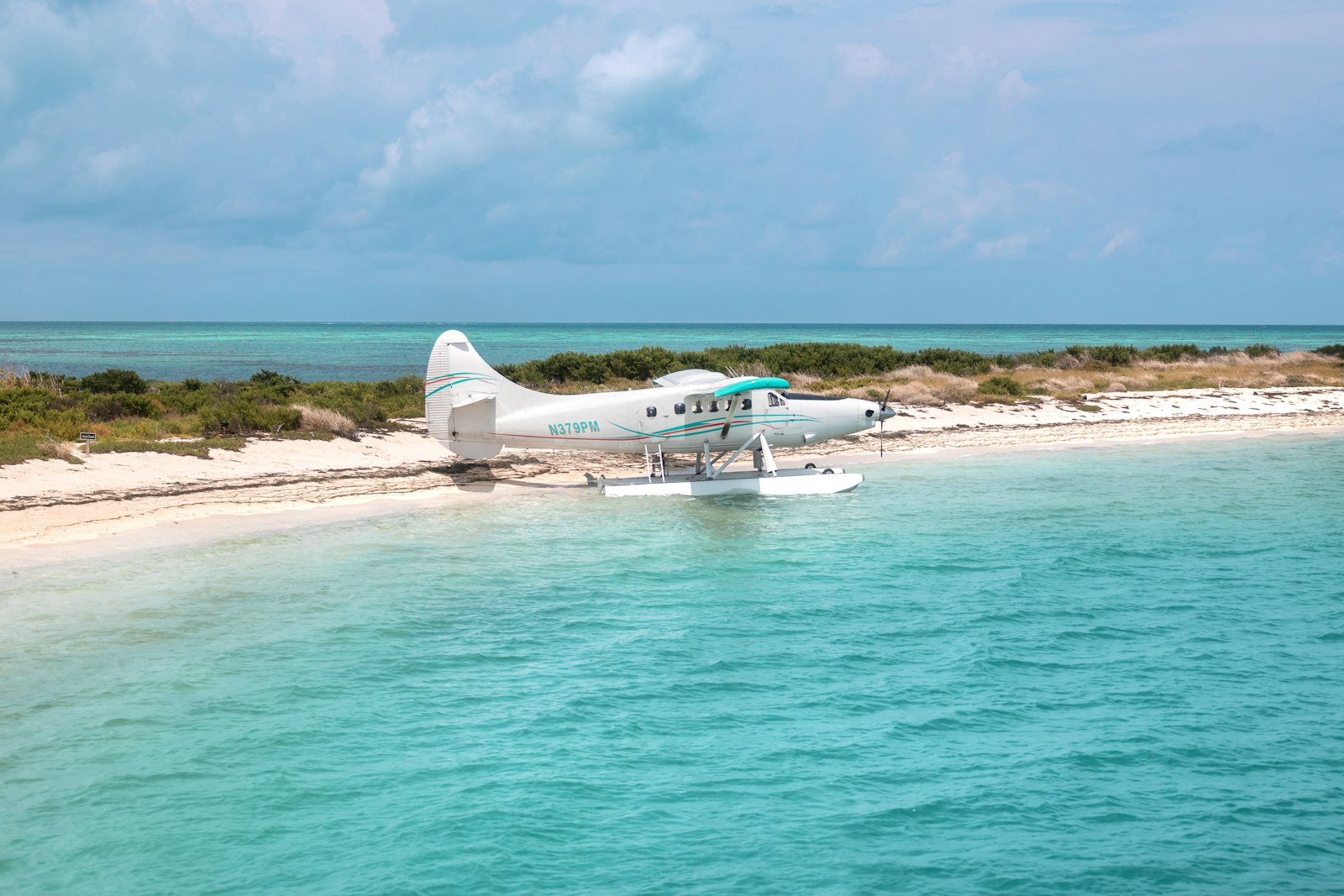
Most visitors reach the park on the ferry or seaplane concessions out of Key West – the ferry ticket includes your park entrance fee (but not camping), and seaplane passengers pay the fee in cash on arrival, per the National Park Service. Those are transportation concessions rather than photography tours, so we describe them here without booking buttons; reserve them directly and early, because they sell out in season.
We check the other major platforms so you do not have to. When we searched GetYourGuide on November 16, 2026, it surfaced no Dry Tortugas products – its closest offering was a Miami-to-Key-West shuttle with dolphin snorkeling, which never reaches the park – so there is no GetYourGuide button in this guide. Klook’s search returned no results for the park at all.
Why photograph the Dry Tortugas?
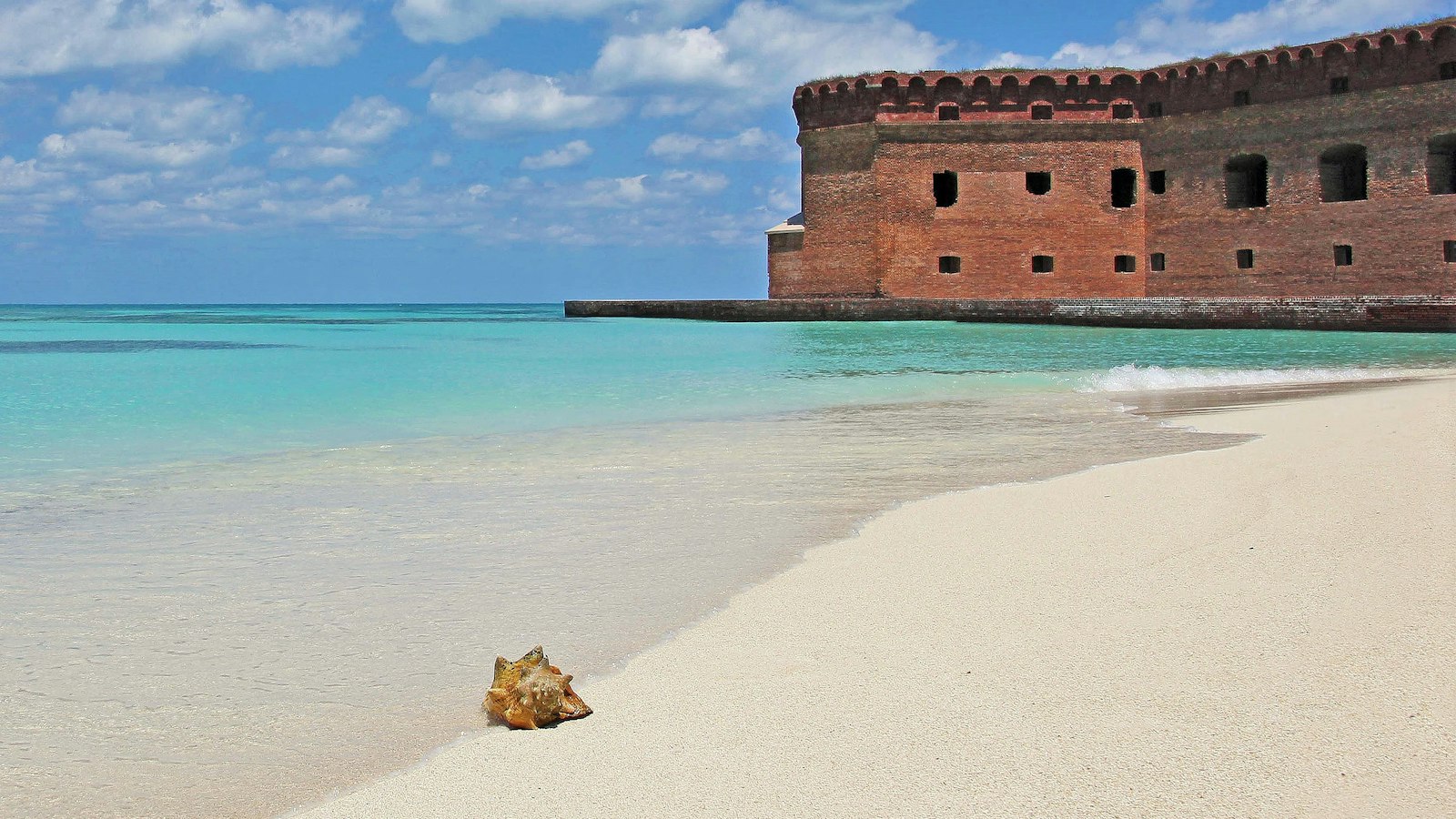
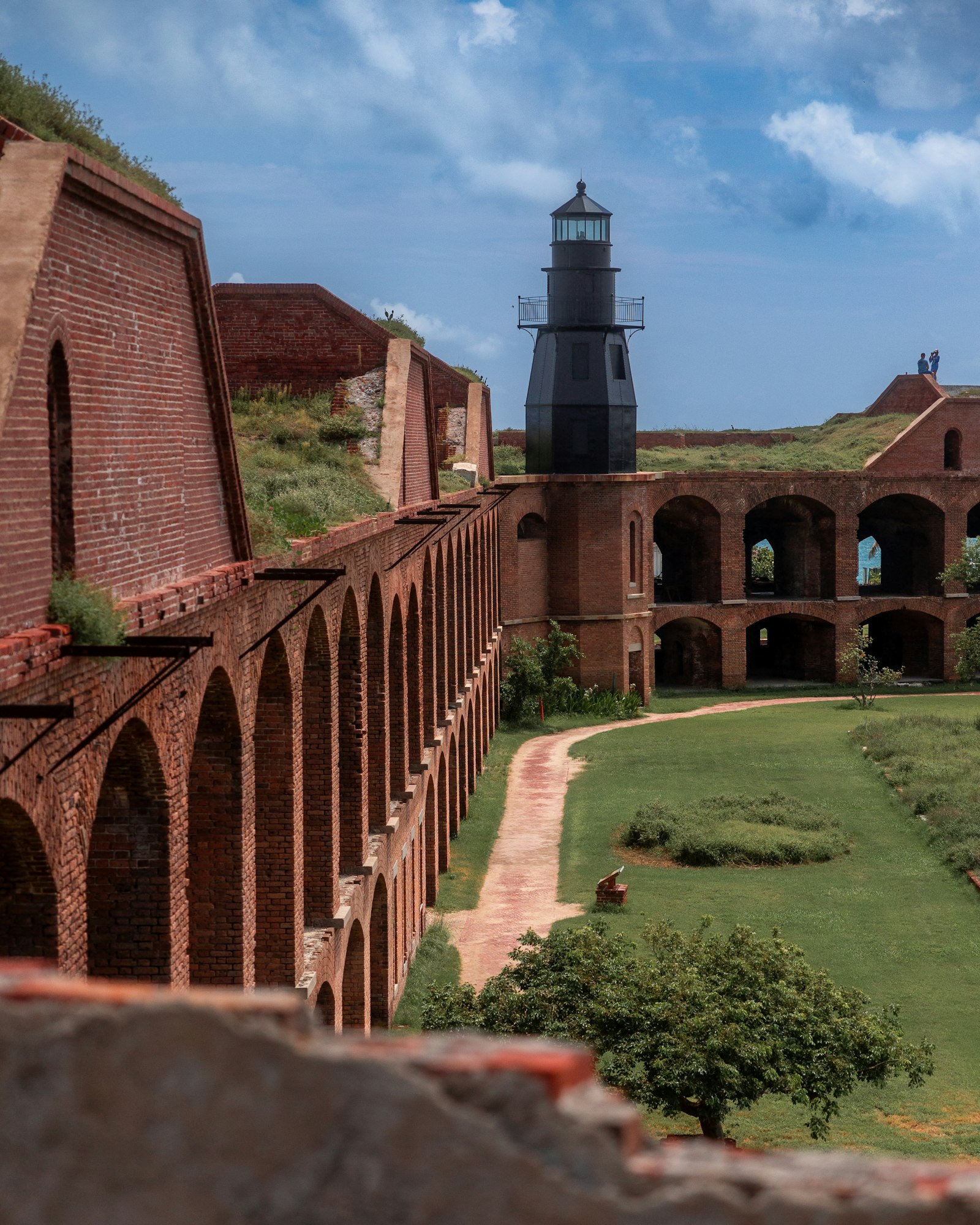
Fort Jefferson is the anchor: a nineteenth-century coastal fortress of more than sixteen million bricks, its hexagonal walls reflected in a moat that doubles as a snorkeling lagoon. Walk the ramparts at golden hour and the geometry does the composing for you – casemate arches receding in perfect rhythm, cannon-lined terreplein against open ocean, and the lighthouse on Loggerhead Key floating on the horizon.
The water is the second subject. The shallows around Garden Key shift through every blue a camera can record, and the coral heads inside the moat let you shoot reef fish, coral, and the occasional sea turtle without a boat. Underwater housings and even a phone in a good case earn their keep here.
And then the birds. Bush Key, beside Garden Key, hosts one of the most accessible sooty tern colonies in the country – the key closes during nesting season, per the National Park Service, but even from the designated areas the wheeling flocks against fortress brick are a frame found nowhere else in the park system.
Best photography spots in the park
Whether you arrive by ferry, seaplane, or private charter, these are the frames that define a Dry Tortugas portfolio. Guided trips follow their own itineraries and are not guaranteed to stop at any specific location – use this list to plan the time around your tour.
Fort Jefferson’s ramparts and casemates
The top of the wall is the classic vantage: the full hexagon, the moat, and the curve of Garden Key below. Inside, the casemate arches form natural frames-within-frames – shoot down the corridors with a wide lens when side light rakes through. The fort is open year-round from sunrise to sunset, per the National Park Service.
The moat wall and snorkeling lagoon
The moat wall itself is a leading line that never fails, and the water inside it is calm enough for split-level over-under shots of coral heads against the fort’s foundations. Early morning, before the day boats arrive, the lagoon is glass.
Garden Key beaches and the campground
The swim beaches west of the fort deliver the postcard: white sand, turquoise shallows, and the fortress looming behind. Campers get the prize – the fort to themselves at dawn and dusk, when day-trippers are 70 miles away.
Loggerhead Key
Three miles from Garden Key, Loggerhead Key carries the park’s lighthouse and its wildest beach. It is open to day visitors year-round from sunrise to sunset – though its buildings and docks are closed – and reaching it takes a private boat, charter, or a long paddle, per the National Park Service. If your charter offers it, go: the lighthouse against empty horizon is the park’s cleanest composition.
 Save
 Save
Night sky and camping photography
Seventy miles from the mainland, the Dry Tortugas offer some of the darkest skies in Florida. Camping on Garden Key – $15 per night per site, and ferry tickets cover the park entrance fee but not camping, per the National Park Service – puts the Milky Way over Fort Jefferson within a short walk of your tent. Bring a fast wide lens, a tripod, and respect for the sun: there is no shade worth the name outside the fort, and fresh water is something you carry in.
Planning your visit: fees, access, and seasons
Fees
The entrance fee is $15 per person, good for seven consecutive days, and visitors 15 and under are exempt, per the National Park Service. If you come on the park’s ferry, the ticket includes your entrance fee – but not camping. Arrive by seaplane and the fee is collected on arrival – bring cash. Private boaters buy a digital pass in advance through recreation.gov or pay cash or check at the Garden Key dock.
Getting there
There are no roads: the park lies about 70 miles west of Key West, reachable only by ferry, seaplane, private boat, or permitted charter, per the National Park Service. The ferry and seaplane both land you at Garden Key, home of Fort Jefferson. Services are limited to none – no fuel, no food for sale, no fresh water – so whatever you need for the day leaves Key West with you.
Seasons and hours
Garden Key is open year-round, 24 hours a day; Fort Jefferson itself is open sunrise to sunset, and the Garden Key visitor center runs 8:30 am to 4:30 pm daily, per the National Park Service. Winter brings milder temperatures and migrating birds; summer brings calmer seas for snorkeling and the peak of turtle season. Bush Key closes seasonally for sooty tern nesting – it is usually open from mid-October to mid-January – and several smaller keys are closed year-round for nesting wildlife. Hurricane season can cancel boats with little warning, so build slack into any trip.
Photography gear notes
- Ultra-wide lens for the casemate corridors and rampart vistas – the fort was built for it.
- Polarizer to cut glare and pull the reef structure out of the turquoise.
- Underwater housing or a waterproof phone case – half this park’s portfolio is below the surface.
- Telephoto zoom for terns, frigatebirds, and the Loggerhead lighthouse from Garden Key.
- Sun protection and spare batteries – there is no recharging and no shade outside the fort walls.
Where the tours fit in your trip
If your group is three or more and photography is the point, pool for one of the private boats – eight hours on your own timetable turns the Dry Tortugas from a four-hour shore leave into a real shoot, with Loggerhead Key in reach. The day trip with free cancellation is the safer booking; the charter saves nothing and locks you in, so choose it only for firm dates. Solo travelers and couples should take the ferry, add the audio tour for thirteen dollars, and spend the savings on a night of camping – the fort at dawn, empty, is the best photograph this park offers and no tour can sell it to you.
 Save
Combining the Dry Tortugas with a Key West trip
Nearly every Dry Tortugas visit is anchored in Key West, and the pairing writes itself: Old Town and Mallory Square sunsets on either end, the park as the centerpiece day. Photographers with flexibility should watch the marine forecast and book the park day for the calmest window – the crossing can be lively, and flat water is what makes the aerial-style shots from the fort walls sing. If you can swing one night of camping, do it: the islands after the last ferry leaves are a different park entirely.
Frequently asked questions
Are there guided photography tours in Dry Tortugas National Park?
Dedicated photography-specific workshops are not something we could verify as of November 16, 2026. What exists: two private full-day boat options from Key West (from $1,500 and $1,699 per group) that put a captain and flexible itinerary at your disposal, and a self-guided GPS audio tour (from $12.99 per group) that adds interpretation to any visit. All bookable through Viator; none is a formal photo workshop.
Is there an entrance fee for Dry Tortugas?
Yes – $15 per person, valid for seven consecutive days, with visitors 15 and under exempt. Ferry tickets include the entrance fee but not camping; seaplane visitors pay on arrival in cash; private boaters buy a digital pass through recreation.gov or pay at the Garden Key dock.
Can you stay overnight in the park?
Yes – primitive camping on Garden Key at $15 per night per site. Campers bring everything, including water, and take everything out. The reward is having Fort Jefferson at dawn, dusk, and under the stars to yourself.
How do you get to Dry Tortugas without a tour?
The park’s ferry and seaplane services run from Key West and land at Garden Key – the ferry ticket includes your park entrance fee. Private boats and permitted charters are the other options. There is no road access of any kind.
When is the best time to photograph the Dry Tortugas?
Winter and spring for migrating birds and milder air; summer for the calmest snorkeling seas and nesting turtles; any clear night you are camping for the Milky Way over the fort. Watch the marine forecast – the crossing dictates everything.
Is the snorkeling really that good?
Yes, and it is unusually accessible: living coral heads grow inside the fort’s moat, steps from the beach, with reef fish and occasional turtles in water calm enough for beginners. Bring your own snorkel gear – or book a charter that provides it.
Disclosure: This article contains affiliate links. If you book through them, we may earn a commission at no extra cost to you. Tour availability, prices, and itineraries can change; check the booking page for the latest details. National park information was verified against nps.gov in November 2026.
Recommended Gear for a National Park Photography Tour
If your tour allows personal camera gear, a small kit can help with changing light and weather. Check the operator’s tripod policy and your camera mount before buying. B&H Photo Video and Amazon options are linked below.
| What & Why | B&H | Amazon |
|---|---|---|
Fujifilm X100VI Compare this option with your current kit. Check compatibility and the product details before buying. | Shop B&H → | Shop Amazon → |
Sony FE 35mm f/1.4 GM (Sony E-mount) Check the camera mount before buying. Choose a focal length that fits the photos you plan to make. | Shop B&H → | Shop Amazon → |
Peak Design Aluminum Travel Tripod Check the load rating, packed size and local tripod rules before buying. | Shop B&H → | Shop Amazon → |
OP/TECH USA 18-inch Rainsleeve Compare this option with your current kit. Check compatibility and the product details before buying. | Shop B&H → | Shop Amazon → |
B&H and Amazon links are affiliate links. We earn a small commission on purchases at no extra cost to you.