Best Photography Spots Near Beijing Capital Airport (PEK): Layover Guide
Updated
~12 min read · 2026-09-27
Beijing Capital International Airport (PEK) handled 70.7 million passengers in 2025, second in China only to Shanghai Pudong – and it remains one of the most spotter-friendly major airports in Asia. Three runways, Air China and Hainan Airlines as home carriers, every major international airline at least daily, and an active local spotting community that has mapped the field for years. This is the layover photographer’s field guide to Beijing Capital: seven spotting locations within 30 minutes of the terminals, five Beijing photo subjects within about an hour, how the 240-hour transit visa-free policy works, and the honest picture on rules, maps, and the smog.
Why Beijing Capital airport is a photographer's launchpad
Airspace constraints keep PEK in north-flow most of the time: landings arrive from the south on 36R, 36L and 01, departures leave toward the south on 18L and 18R. Air China and its Star Alliance partners prefer runway 01, which handles more arrivals than departures; 36L carries most cargo (SF Airlines and China Postal fly mainly in the morning). Even with arrivals split across three runways the volume is so high you will not wait long between frames. Two honest caveats before you plan: the city’s famous smog can turn the sky gray or white with no warning – check the air-quality index before committing a day – and Google Maps’ street layer is displaced in China (satellite imagery is correct, streets are shifted), so navigate with the Baidu Maps app instead. Beijing is very spotter-friendly by Chinese standards; local spotters work these locations daily.
Quick layover map: 7 spots within 30 minutes of PEK
- Siwei Rd field — 01 arrivals, morning
- Park Hill, south park — 36R arrivals evening, plus lineups
- China Inn Hotel, Tianzhou Rd — 36L arrivals, morning
- Tianbei Rd pedestrian overpass — 36L arrivals, afternoon
- The Red Wall (Peking University Third Hospital, airport campus) — 18L departures
- Parking-lot sidewalk south of Terminal 3 — 01 arrivals, evening
- Airport East Rd bridge — 01 departures banking
Best photography spots within 30 minutes of Beijing Capital Airport
Siwei Rd Field
Location: Siwei Rd, about a 30-minute walk from the airport, or a short Didi ride (download the Didi app before you land – it solves the language barrier).
The morning 01 position: arrivals on the runway Air China and the Star Alliance carriers prefer, with freedom to walk the road and pick your angle and distance. A 777 at 110mm, an A320 at 190mm, good light from sunrise to about 11am. Nothing out here – bring water.
Park Hill, South Park
Location: The hill in the small park south of the airport, near the crossing of Erwei and Yijing Rd – or walk over from Terminal 3 via the ground-level pathways.
The social heart of PEK spotting: an elevated hill in a public park (open to everyone, no restrictions or reservations) with 36R arrivals in the evening light and the best lineup shots on the field at 50-300mm – an Air China 777 lines up at 60mm. Arrivals are good from 2:30pm to sunset; lineups work most of the day. Benches and bins on site, and the terminal’s shops and restrooms are a short walk away.
China Inn Hotel, Tianzhou Rd
Location: Tianzhou Rd off Tianbei Rd – walk 100 m from the Tianbei Rd intersection and look for the China Inn hotel/residence on your right.
The comfortable 36L morning position: same arrivals as the Tianbei Rd intersection but from a quieter angle at shorter focal lengths (an A320neo at 155mm, an A330 at 100mm) and without standing on a narrow grass strip next to a noisy, traffic-heavy crossing. Sunrise to 11am year-round.
Tianbei Rd Pedestrian Overpass
Location: Follow Tianbei Rd west from the intersection until the pedestrian overpass; climb the south-side ramp. Next to the Tianzhu Kindergarten parking lot.
The afternoon 36L position: an elevated overpass with 36L arrivals from noon to sunset year-round, a 777 at 140mm and an A321 at 230mm. Easier to reach by public transport than the alternatives. Nothing nearby except a public toilet 50 m west – bring everything you need.
The Red Wall (Peking University Third Hospital, Airport Campus)
Location: The red perimeter wall of the Peking University Third Hospital Capital Airport campus; take the bus to Beipingli (北平里) station.
The signature PEK shot: 18L departures climbing past the deep-red hospital wall – unmistakably Beijing in the background of every frame. Good from noon to sunset, summer and winter, with no heat haze, at 100-200mm. Stay at the red wall itself, not the hospital gate, and do not park in the hospital lot – it serves patients. Food, drinks and restrooms inside. When large groups of spotters gather, police sometimes stop by; a solo photographer working quietly rarely draws attention.
Parking-Lot Sidewalk, South of Terminal 3
Location: Descend inside Terminal 3 to ground level and follow the small pathway toward the staff parking lot south of the terminal; stay within the grass area.
The evening 01 arrivals position, 2:30pm to sunset, a 777 at 100mm and an A320 at 175mm – and the closest spotting gets to the terminal itself. Two things to know: do not shoot from inside the parking lot (spotters have been sent away from there), and as of 2026 the location carries a posted "No Photography" sign. Local spotters still use the spot and enforcement is usually lax, but the sign exists, so treat it as a gray area: if you are asked to stop, stop, and be extra cautious when the area is crowded or when government flight operations are underway at PEK.
Airport East Rd Bridge
Location: The bridge near Airport East Rd with a sidewalk; bus Shun 22 (Shunyi) gets you within a 500 m walk, or take a Didi.
For drama: 01 departures banking right after takeoff, the classic wings-vertical climbing frame. Only heavies and larger narrow-bodies bank hard enough to be worth the frame, and you need reach – 400mm+. Sunrise to 11am, no supplies on site, and mind the traffic on the road beside you.
Best photography spots within 1 hour of Beijing Capital Airport
Jingshan Park (Forbidden City Overlook)
Location: approx 39.9259, 116.3964
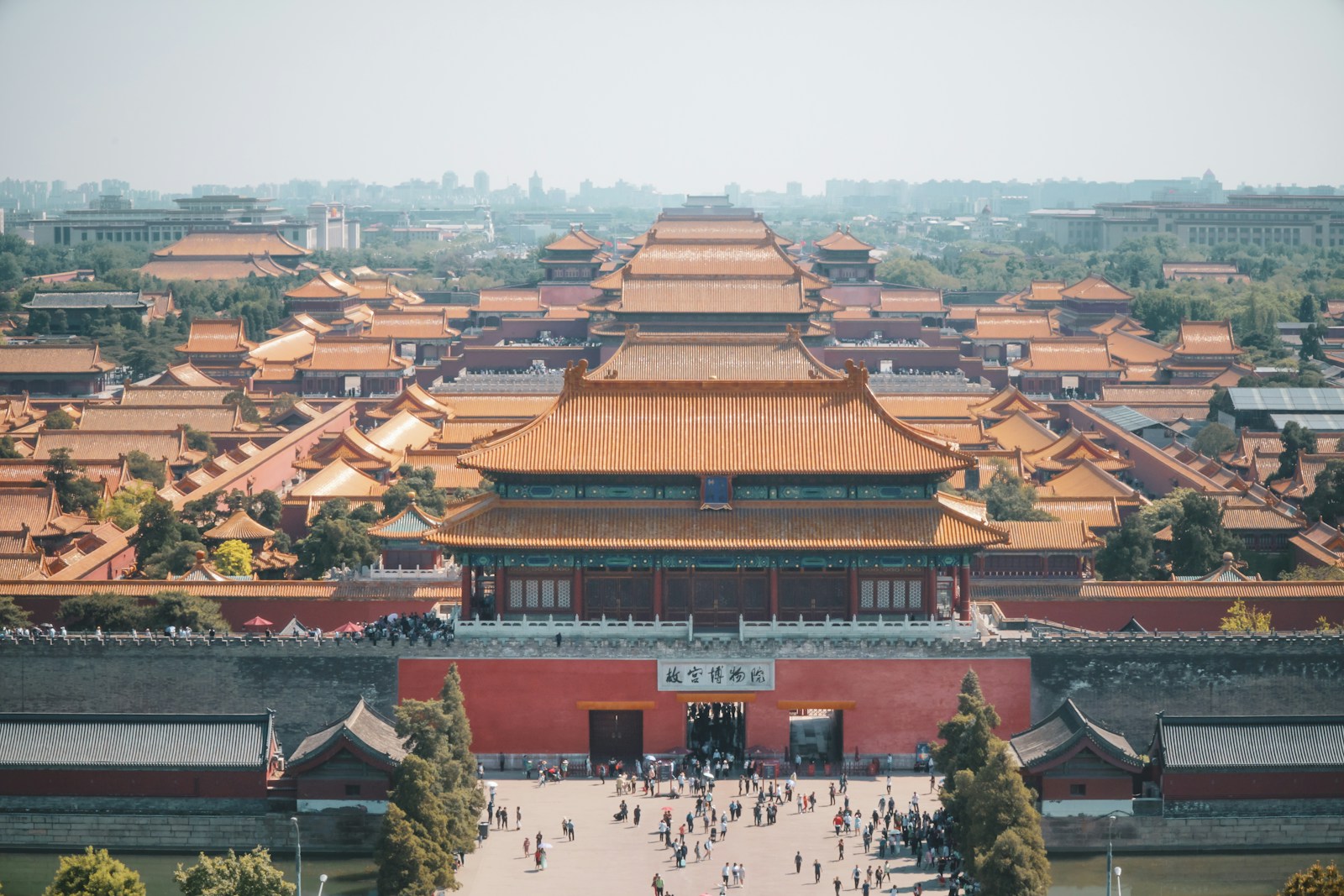
The single best view in Beijing: the hill directly north of the Forbidden City, with the entire palace complex laid out below you and the CBD skyline behind. Best at opening time (tour groups arrive by 9am) or at sunset. About 45-60 minutes from PEK by Airport Express to Dongzhimen plus subway line 6/8.
 Save
Temple of Heaven
Location: approx 39.8822, 116.4066
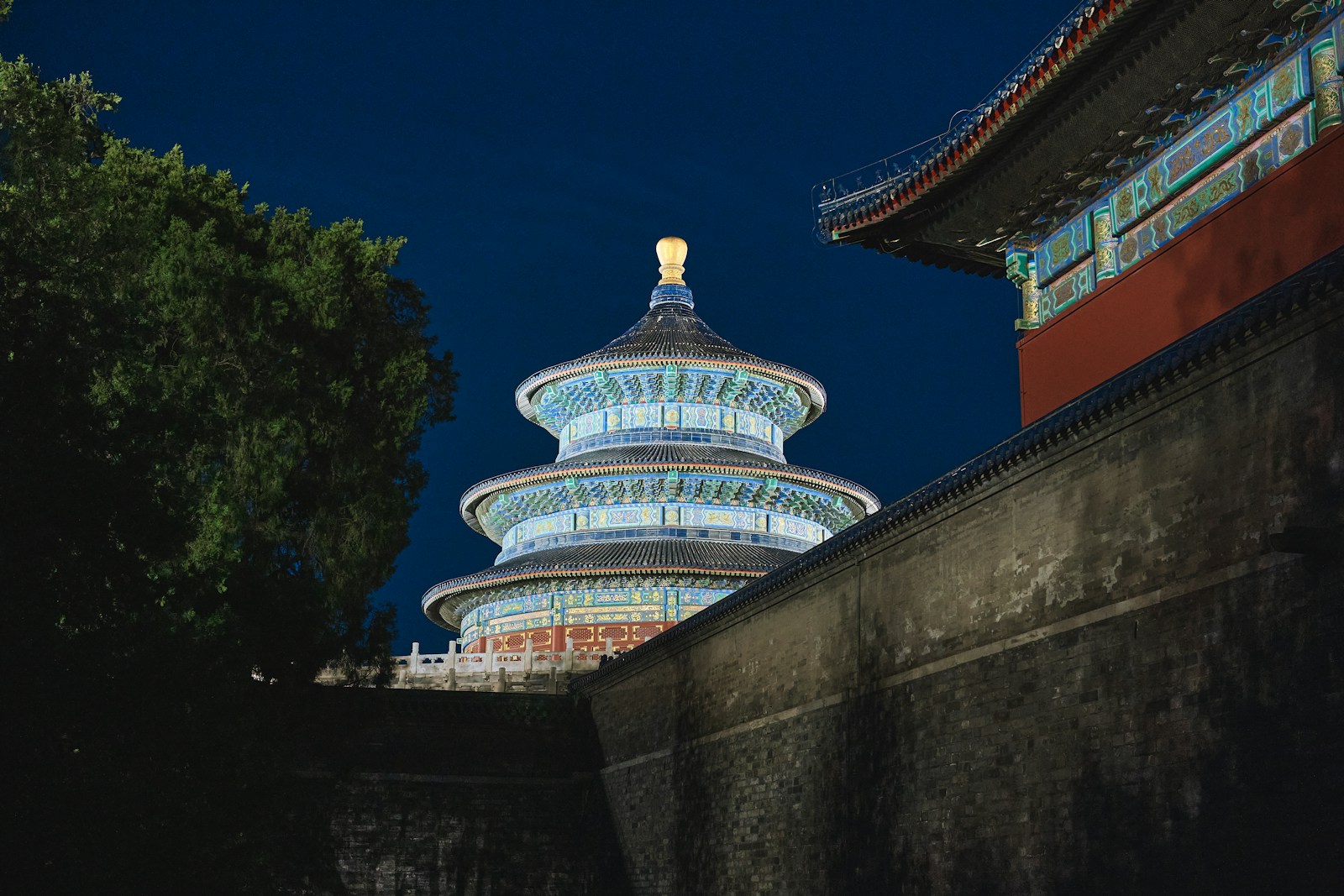
The Ming-dynasty Hall of Prayer for Good Harvests – the triple-roofed circular temple that is Beijing’s most photographed single building. Go at opening (the park opens before the buildings; locals practice tai chi in the dawn light) and work the symmetry from the south steps. About 50-70 minutes from PEK by rail and subway.
 Save
Houhai and the Hutongs
Location: approx 39.9372, 116.3820
Old Beijing: the lakes at Houhai ringed by hutong alleyways, courtyard houses, and the Drum and Bell Towers. Best at blue hour when the lakeside lights come on, and in the early morning when the alleys belong to residents. About 50-60 minutes from PEK via Dongzhimen.
798 Art District
Location: approx 39.9842, 116.4954
The closest city subject to the airport: Bauhaus-style 1950s factory halls turned galleries, street art, and industrial textures in the Dashanzi district. Twenty to thirty minutes from PEK by taxi – the realistic city target on a short layover.
Mutianyu Great Wall
Location: approx 40.4319, 116.5704
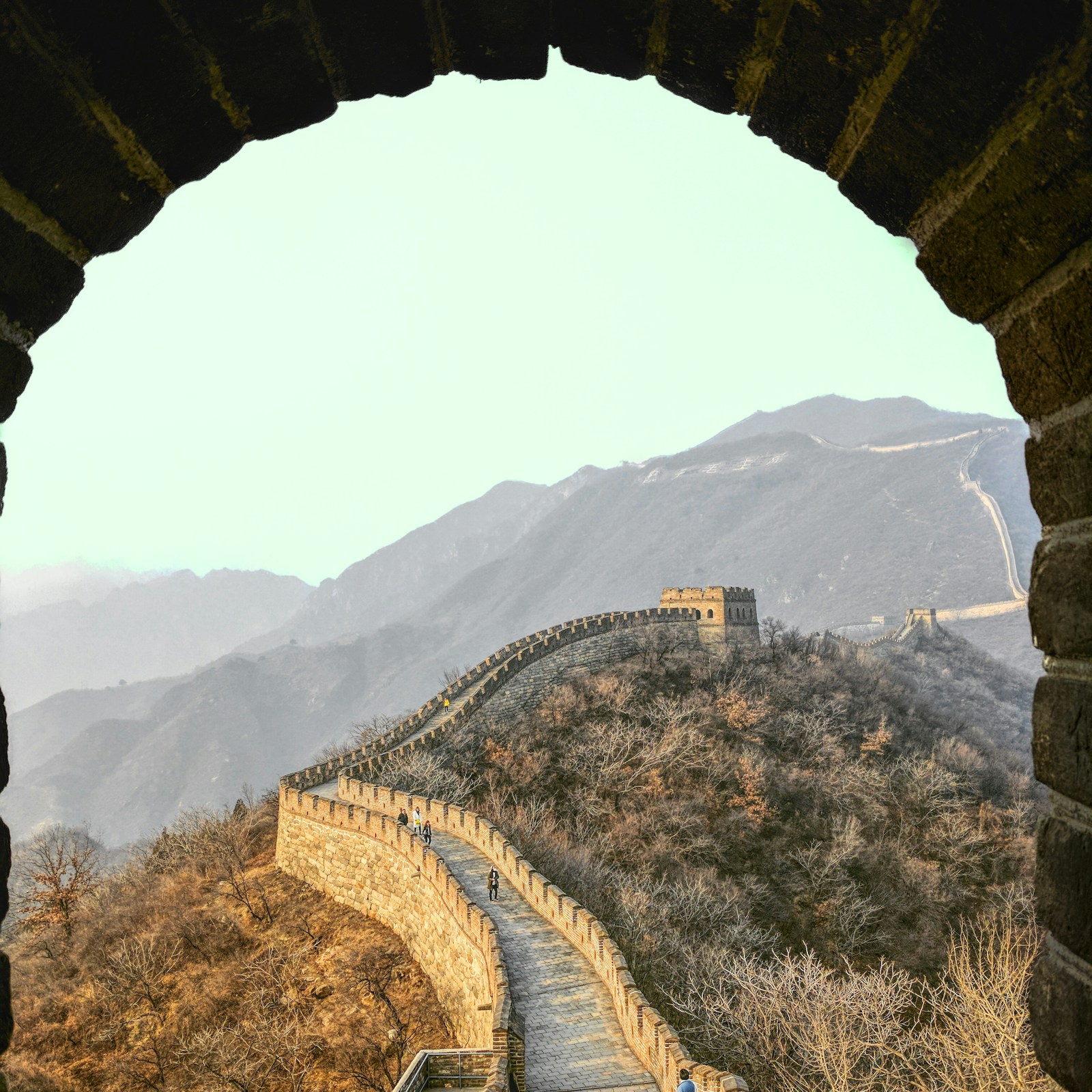
The long-layover prize: the restored wall winding over forested ridges, less crowded than Badaling, with a cable car up and a toboggan down. It sits north of the city, which helps from PEK – allow 60-90 minutes each way by car or tour bus and a minimum 8-hour layover. Haze is the gamble; autumn gives the clearest skies.
 Save
Photographing the airport itself
Terminal 3 – Norman Foster’s 2008 Olympic gateway, once the largest building in the world – is a subject in its own right: the red-and-gold roofscape and the dragon-like plan photograph well from the departures-level roadway and from inside the central atrium. Airside, T3’s windows look onto the 01/36R ramps. China is generally relaxed about terminal photography, but avoid security checkpoints, border-control areas, and anything marked as restricted, and expect plainclothes attention if you linger over government or VIP movements.
Layover length guide
2-hour layover
Two hours: stay in Terminal 3 and work the architecture and the ramp through the windows – T3 is enormous and the walk between piers eats layovers. The parking-lot sidewalk spot south of T3 is the only spotting position close enough for a 2-hour window, and only in the evening.
4-hour layover
Four hours: one spotting session. Morning – the China Inn for 36L or Siwei Rd for 01; afternoon/evening – Park Hill for 36R arrivals and lineups. Add the 798 Art District instead if you want city frames: it is 20-30 minutes by taxi, the only city subject this close.
6-hour-plus layover
Six hours: Jingshan Park for the Forbidden City overlook or the Temple of Heaven, timed for early morning or sunset. With 8+ hours, Mutianyu Great Wall becomes realistic by car – the classic PEK long-layover excursion. Keep 90 minutes for the return: Airport Express plus security plus the sheer size of T3.
Camera and lens recommendations for layovers
PEK layover kit: a 100-400mm zoom covers almost everything – Park Hill lineups start at 50mm, the Red Wall wants 100-200mm, the bridge wants 400mm+ – so add a teleconverter if banking departures are the goal, and a 24-70mm for the city. The defining variable is air quality: Beijing’s smog can erase backgrounds entirely, and on bad days the sun itself disappears behind a white sky. Check the AQI forecast before planning a spotting day; clear northerly winds after a cold front give the crystalline winter light that makes PEK worth the trip. October to April is the reliable season. In summer, heat haze over the runways argues for morning arrivals and against distant lineup shots at noon.
Transit from PEK to top spots
The Capital Airport Express subway runs from Terminal 3 and Terminal 2 to Sanyuanqiao and Dongzhimen in about 20-30 minutes for ¥25, connecting to the Beijing subway network. Airport shuttle buses fan out across the city. For the spotting locations, the Didi ride-hailing app is the essential tool: it pins your exact pickup and drop-off so the language barrier disappears – download and set it up before you land, since Google, WhatsApp and most western apps are blocked in China (WeChat, with its built-in translation, is the local must-have). Use Baidu Maps for navigation: Chinese mapping rules displace Google’s street layer, while Baidu’s street and satellite layers agree. On visas: nationals of 57 countries including the US, UK, EU, Canada and Australia can transit visa-free for up to 240 hours when continuing to a third country – check your eligibility and the current rules before planning an overnight city visit. The official BCIA airport app carries live flight information.
Photography restrictions and aviation rules
Drones: forget them. China requires drone registration under national rules in force since January 2024, airports carry no-fly buffers, and the Beijing municipal government publishes a controlled-airspace notice (effective August 2025) that puts essentially all of central Beijing and the airport area off-limits to drones without specific approval. This is enforced. On the ground, plane spotting is tolerated and practiced openly at the locations in this guide – but China expects photographers to be sensible: stay at the established public spots, follow posted signs (the T3 parking-lot sidewalk now carries a "No Photography" sign – heed any instruction from staff or police there), do not photograph military or government aircraft or VIP operations, carry your passport at all times, and if an officer asks what you are doing, answer politely and show your pictures. The local community’s long-standing advice is simple: the spots stay open because spotters stay low-key and cooperative.
Frequently asked questions
Can I leave Beijing Capital Airport during a layover for photography?
Yes – and China made it much easier: the 240-hour transit visa-free policy covers nationals of 57 countries continuing to a third country. The 798 Art District is only 20-30 minutes by taxi; Jingshan Park and the Temple of Heaven need 6+ hours; the Mutianyu Great Wall needs 8+. Check your nationality’s eligibility before you travel.
What is the best plane spotting location at PEK?
Park Hill in the south park for the overall experience – elevation, benches, evening 36R arrivals and the best lineup shots. The Red Wall at the Peking University Third Hospital airport campus gives the most distinctive Beijing frame (18L departures past the deep-red wall), and the Airport East Rd bridge delivers dramatic banking departures for long lenses. PEK runs north-flow most of the time: arrivals on 36R/36L/01, departures on 18L/18R.
Are drones allowed near PEK?
No. China requires drone registration, airports have no-fly buffers, and Beijing municipality’s controlled-airspace notice (in force since August 2025) covers the airport area and essentially all of central Beijing. Enforcement is real. Leave the drone at home.
How do I get from PEK to the city?
The Capital Airport Express subway runs from Terminals 3 and 2 to Dongzhimen in about 20-30 minutes (¥25), connecting to the subway network. Airport buses cover more of the city. For the spotting spots and anything off the rail map, the Didi app is the answer – and install Baidu Maps, because Google Maps’ street layer is displaced in China.
Can I photograph inside the PEK terminals?
Yes – Terminal 3’s Foster architecture is worth the frames and airside windows overlook the ramps. Avoid checkpoints, border control and restricted areas, and be discreet around government or VIP movements. The outdoor spots in this guide are the productive answer for aircraft.
More airport guides: browse the complete airport photography hub → for sibling guides.
What to Pack
A landscape kit built around wide views, steady support, and changing light is a useful starting point. Compare the gear and choose what fits your camera, budget, and conditions. These links lead to B&H Photo Video and Amazon.
| What & Why | B&H | Amazon |
|---|---|---|
Sony 16-35mm f/2.8 GM Check the camera mount before buying. Choose a focal length that fits the photos you plan to make. | Shop B&H → | Shop Amazon → |
Peak Design Travel Tripod Check the load rating, packed size and local tripod rules before buying. | Shop B&H → | Shop Amazon → |
Breakthrough X4 CPL Check the filter type and lens thread size before buying. Use a filter only when the effect fits your photo. | Shop B&H → | Shop Amazon → |
Breakthrough X4 10-stop ND Check the filter type and lens thread size before buying. Use a filter only when the effect fits your photo. | Shop B&H → | Shop Amazon → |
Sony NP-FZ100 battery Use the battery type specified for your camera. Bring a spare if your shooting plan calls for one. | Shop B&H → | Shop Amazon → |
SanDisk Extreme Pro 128GB Check the card format and speed requirements specified for your camera. | Shop B&H → | Shop Amazon → |
Koh microfiber cloths Compare this option with your current kit. Check compatibility and the product details before buying. | Shop B&H → | Shop Amazon → |
B&H and Amazon links are affiliate links. We earn a small commission on purchases at no extra cost to you.