Best Photography Spots in Dubai: 5 Spots With GPS (2026)
Updated
Best Photography Spots in Dubai: 5 Spots With GPS (2026)
Five places to photograph Dubai – Burj Khalifa, the Marina, the Dubai Frame, the Museum of the Future, and Burj Al Arab – with timing, permit notes, drone rules, and gear guidance for each.
It is 4:45 a.m. and the Dubai Marina promenade is empty except for a cleaning crew and two stray cats. The air is already 82°F and carrying that faint mineral smell of the Gulf. You are standing at the south end of the canal walk, tripod sunk into the gap between two paving stones, shooting due north. The towers — JW Marriott Marquis, the twisting Cayan, the Infinity — are dissolving into a deep pink sky. The canal surface is glass. There is one boat at its mooring, and the reflection is so precise you could flip the frame and not know which half is real. This is why you are not still asleep. This is the shot. By the time the sun clears the towers at 6:20, the haze will have rolled in off the desert and the contrast will be gone. You have 40 minutes.
 Save
Why Dubai Is One of the Most Challenging Cities to Shoot Well
Dubai is seductive in photographs and genuinely punishing to shoot. Here is what the Instagram accounts do not tell you.
Heat and haze are relentless from April through October. By 9 a.m. in summer the air shimmers above the pavement and every distant building smears into a heat blur. Atmospheric haze from the Gulf means you will almost never get the crisp “clean air” look that photographers associate with, say, a cold winter city. In November through March you get roughly 90-minute windows — predawn through an hour after sunrise, and the last 40 minutes before sunset — where the atmosphere cooperates. Midday is almost always a write-off.
Glass towers are everywhere and they reflect everything. Without a polarizer, half your skyline shots will have blown-out specular highlights on tower facades at 45-degree angles from the sun. It is not a minor issue — the reflectivity of Dubai’s glass is extreme. This is where understanding how light interacts with glass pays dividends.
Drone laws are among the strictest in the world. The General Civil Aviation Authority (GCAA) requires full registration, operator training, and per-flight permits. As a tourist, the process takes weeks and costs money. Most visitors do not fly legally. The penalties for illegal drone use are serious. Plan ahead or shoot from the ground.
Private property is everywhere and actively enforced. Dubai is largely built on private land. Malls, hotels, residential towers, and even many outdoor promenades are private property. Security here is well-resourced and polite but firm. A professional-looking camera body plus a tripod reads as a commercial shoot to most security personnel, regardless of intent. Know the rules before you raise the camera.
People photography requires consent. UAE law treats unauthorized photography of people — particularly women and children — as a serious privacy violation, with criminal consequences for sharing images without consent. Street photography in the Western tradition works differently here. Ask first.
The 5 Best Photography Spots in Dubai
Burj Khalifa — Exterior + At the Top Observation Deck
Address: 1 Sheikh Mohammed bin Rashid Blvd, Downtown Dubai
GPS: 25.1970, 55.2741 · Open in Google Maps
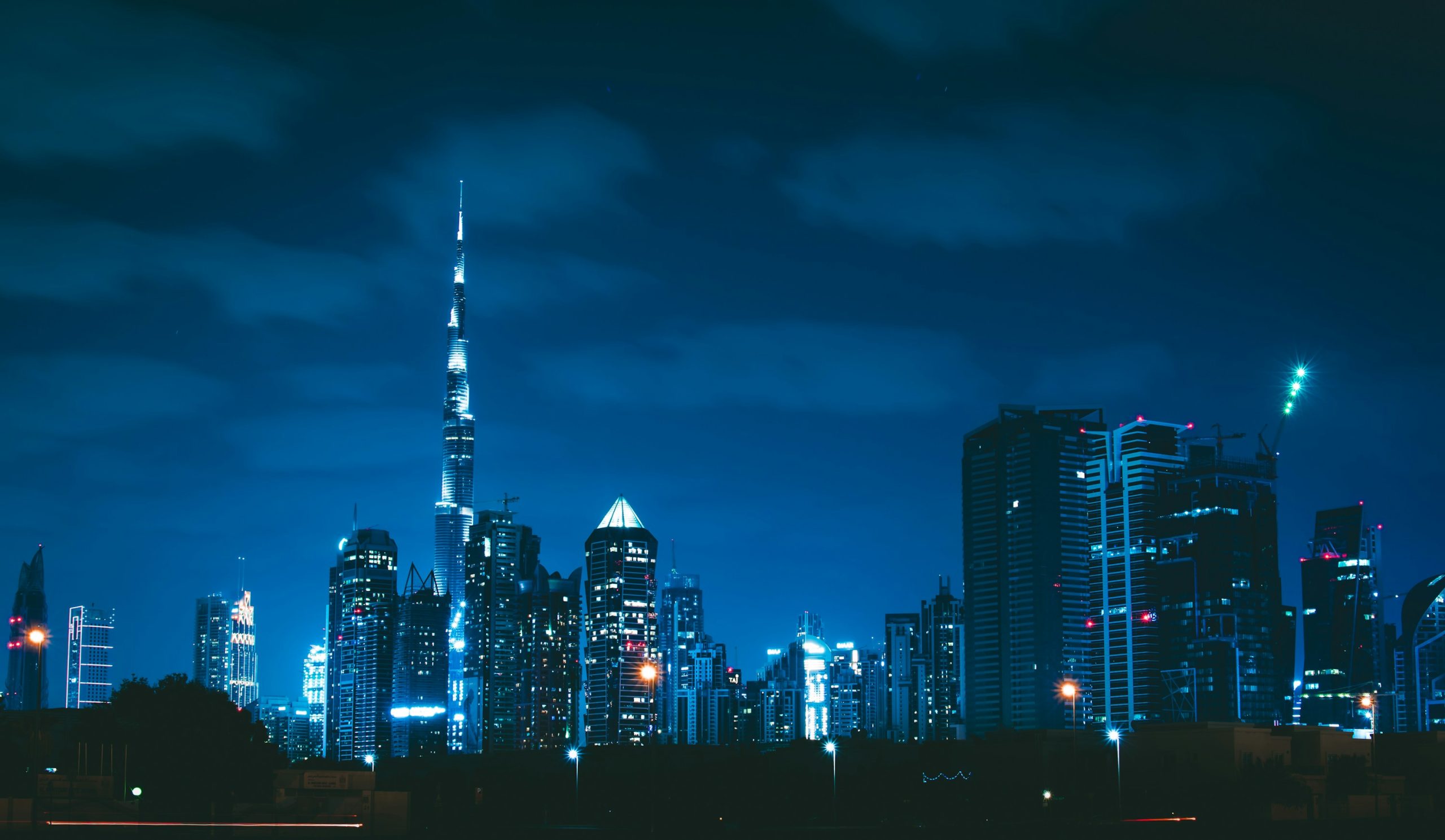
At 828 meters, the Burj Khalifa forces every compositional decision you think you know into a recalibration. You cannot get the full tower in a single frame unless you back up to the lake at Dubai Fountain. That lake reflection shot at blue hour — tower lit in gold, its mirror image in the water below, the fountain jets silent in the off hours — is the frame everyone is chasing. Get there 30 minutes before blue hour. Find the southwest corner of the Burj Khalifa Lake promenade and shoot with a 24mm or wider. A tripod is technically prohibited in the publicly accessible promenade areas around the mall, but compact gorillapods used low to the ground get far less attention than full-height tripods.
At the Top (Level 124/148): Book early — peak slots sell out weeks ahead and are cheapest when booked direct. Bring a lens cloth and a Lenskirt or improvised black cloth to press against the glass and cut reflections. At this height, the haze often works in your favor: a layer of atmospheric diffusion separates the distant desert from the city grid below, creating depth you would not otherwise get. Morning tickets (7–9 a.m.) have softer light and smaller crowds than afternoon. Level 148 (At the Top Sky) allows better glass contact than Level 124.
Dubai Marina — Canal Walk & JBR Beach Reflections
Address: Marina Walk, Dubai Marina
GPS: 25.0856, 55.1476 · Open in Google Maps
The predawn canal walk described in the opening of this guide is real and repeatable. The south end of the marina promenade — near the Dubai Marina Mall — gives the longest unobstructed canal sight line. Set up facing north and the tower density increases with distance, which creates the compression effect that makes the skyline feel genuinely dense. An ND filter here lets you smooth the water in a 20–30 second exposure and turn any remaining boat wake into silk.
JBR Beach offers the reverse: the marina skyline reflected in tidal wet sand at low tide. Arrive 10 minutes after a wave wash and shoot horizontally at ground level — the reflection extends surprisingly far when shooting almost parallel to the surface. Late afternoon in November through February gives warm sidelight on the towers. Bring a polarizer to manage glare on the wet sand.
Dubai Frame — The Gold Aperture
Address: Zabeel Park, Al Kifaf, Dubai
GPS: 25.2355, 55.3004 · Open in Google Maps
The Dubai Frame is a 150-meter-tall gold rectangle connecting Old Dubai (south side) and New Dubai (north side). As a piece of architecture, it is unusually photogenic precisely because it is so literal: it frames the contrast between the historic city and the modern one, and that frame itself has a golden-anodized aluminum skin that catches warm light beautifully. The exterior is best shot in the 30 minutes after sunrise when the sun is low enough to light the south face without blowing the highlights. A 70–200mm from about 200 meters south on Zabeel Park gives the cleanest full-frame shot.
The glass-bottomed Sky Bridge at Level 48 allows photography looking straight down — bring a wide angle (16mm or shorter) and shoot with a fast shutter speed because vertigo is real and camera shake compounds it.
Museum of the Future — The Toroid on Sheikh Zayed Road
Address: Sheikh Zayed Road, Trade Centre, Dubai
GPS: 25.2192, 55.2819 · Open in Google Maps
The Museum of the Future is arguably the most architecturally audacious building in Dubai: a seamless toroid (hollow donut) wrapped in a stainless steel skin laser-cut with Arabic calligraphy. The calligraphy is not decorative — it quotes the ruler’s vision statements — and the way it catches light makes the building look like it is breathing. The exterior is best shot from across Sheikh Zayed Road, wide enough to frame the whole structure with the elevated metro track running through the background at the same level as the building’s equator.
Night photography here is exceptional. After dark the calligraphy illuminates from within, giving the toroid a warm glow that reads well even against the city’s ambient light. A tripod set up on the public footbridge over Sheikh Zayed Road is your best platform — bring a 24–70mm and shoot both wide for context and tight for the calligraphy detail.
Jumeirah Beach & Burj Al Arab — The Skyline Shot
Address: Jumeirah Street, Umm Suqeim 3, Dubai
GPS: 25.1413, 55.1854 · Open in Google Maps
The Burj Al Arab — the sail-shaped hotel on its artificial island — is Dubai’s most recognizable silhouette. The classic shot is taken from Jumeirah Beach Park or the public beach to its north, shooting south with the hotel against the sky. The thing nobody tells you: the hotel’s west face is what you see from the beach, and that face catches the setting sun directly. In November through February, sunset on this west face can be legitimately spectacular — the white sail turns deep orange for about 15 minutes. A 200mm from the beach compresses the hotel against the sky cleanly.
The Madinat Jumeirah waterway (the resort complex adjacent to the hotel) offers a different angle: the hotel framed through the low Arabic-arched buildings of the resort, with the resort’s canal boats in the foreground. This view is from within a private resort so you need to be a guest or at the very least dining at one of the restaurants for access. It is a better shot than the beach version — worth a meal.
Gear for Shooting Dubai
Dubai in peak shooting season (November through March) runs 65–80°F at sunrise, 80–95°F by afternoon. In summer it reaches 110°F+. Humidity off the Gulf is a real issue for electronics — condensation when moving from air conditioning to outdoor heat is common. Here is what the shooting conditions actually demand.
Best Months & Golden-Hour Timing
Dubai’s photography window is among the most defined of any major city. Plan around it or accept haze-degraded images.
November through March is the window. Temperatures at sunrise run 60–75°F. Humidity is manageable. The atmospheric haze that blurs distant towers in summer largely clears. You can shoot through the morning until about 10 a.m. before midday flatness sets in. Sunset golden hour starts around 17:30–17:50 depending on the month.
Morning beats sunset for most Dubai subjects. This is the counterintuitive local reality. By late afternoon, the Gulf humidity has typically built back up, giving a warm but slightly hazy sunset. Morning — particularly the 20 minutes before and after sunrise — has cleaner air, better color separation between sky and building, and dramatically fewer tourists. The marina, the creek, and the desert all photograph best in predawn to mid-morning. Exceptions: the Burj Al Arab west face, the Museum of the Future at night, and the Burj Khalifa fountain are better at sunset or after dark.
Sunrise in November: approximately 6:25 a.m. In January: approximately 7:10 a.m. Golden hour extends longer in winter due to the lower sun angle. Set your alarm for 5:30 a.m. and you will be in position before the light arrives.
Permits, Drones & People Photography Rules
Drone Law — The Honest Version
Dubai has some of the most actively enforced drone regulations in the world. The GCAA (General Civil Aviation Authority) requires: full drone registration, an operator training certificate from an approved provider, a no-objection certificate (NOC) for each specific flight location, and in some areas, per-flight permits from the Dubai Civil Aviation Authority (DCAA) as well.
For tourists who have not pre-arranged this — which means almost everyone reading this guide — the practical reality is that legal drone flight in Dubai requires 3–4 weeks of lead time, approximately 1,500 AED in registration and training fees, and a specific-location NOC that can be denied. Drones brought into the UAE without pre-registration are confiscated at customs. You can retrieve them at the airport’s civil aviation office on departure, but not during your trip.
The aerial photos you see of Dubai on Instagram from photographers without a GCAA license were taken illegally. This is not an endorsement. The fines and potential criminal consequences are real and have been applied to tourists.
Prohibited zones include: all airspace within 5 km of airports (Dubai International covers a large radius), government buildings, military installations, over crowds and events, and any residential area without an NOC. The Palm Jumeirah and Dubai Marina are effectively no-fly zones for tourists.
People Photography
Article 378 of the UAE Penal Code prohibits photographing people without their consent. Article 21 of the Cybercrime Law adds penalties for sharing such images digitally. The law is enforced, complaints are taken seriously, and “it is a public space” is not a legal defense in the UAE.
In practice, candid street photography happens in Old Dubai and the creek area, but photographers who draw attention — large camera bodies, long lenses aimed at individuals — will be approached. Always ask permission. In the Spice Souk and around the creek, many vendors and workers are accustomed to photographers and will agree if asked respectfully. Learn “mumkin sura?” (Arabic for “may I take a photo?”).
Photography of women, families, and children requires particular care. Always ask, always accept refusals without argument. Photography inside mosques during prayer is prohibited.
Government & Military Sites
Do not point a camera at any building with a UAE government or military designation. This includes courts, civil defense centers, ports infrastructure, and public prosecution offices. The law is literal. Incidental background inclusion in tourist photos is typically not enforced, but targeted shots of these facilities will create problems.
The Mall Problem
Dubai Mall and Mall of the Emirates both have policies that treat professional camera equipment as a commercial activity requiring a permit. In practice, this means: smartphones are tolerated everywhere; a mirrorless body with an inconspicuous kit lens is usually fine; a DSLR with a 70–200mm lens, a tripod, or any lighting equipment will get you stopped and escorted to a management office.
The Dubai Fountain (outside Dubai Mall) is technically on public-accessible waterfront, but the fountains themselves and the fountain boardwalk are managed by Emaar, a private company. Tripods are nominally prohibited but enforcement is inconsistent — predawn when the area is empty is when photographers get away with it. During fountain show times (6:00 and 6:30 p.m., then hourly) the crowds are dense enough that a small tripod is effectively invisible.
The Dubai Aquarium (inside Dubai Mall) and similar attractions have their own photography policies. Check before you visit. “No flash” and “no tripod” are near-universal inside mall attractions.
The workaround: shoot Dubai Mall from outside, particularly from the Mohamed Bin Rashid Boulevard pedestrian areas. The mall exterior with the Burj Khalifa behind it is a cleaner composition than the interior atrium shots, and you are on public-adjacent space where a compact tripod draws less attention.
Getting Around Dubai for Photography
Dubai Metro (Red and Green Lines): Connects the major photography districts reliably — Dubai Marina (DMCC station), Dubai Frame (Dubai Frame station), Burj Khalifa/Dubai Mall (Burj Khalifa/Dubai Mall station), and the Creek area. The metro runs from 5:30 a.m. which means you can reach the marina for a 5:45 a.m. setup without a taxi. Clean, air-conditioned, inexpensive.
Taxis / Careem: Dubai taxis are metered and inexpensive by Western standards. The app-based Careem (similar to Uber, now owned by it) is reliable for locations the metro does not reach. For predawn shoots at non-metro locations, a taxi is the practical choice.
Rental Car: Required for Al Marmoom desert, Hatta, and Jebel Jais. Also significantly faster for moving between widely-spaced locations on a single shooting day. International driving licenses are accepted. Fuel is cheap. Parking at most shooting locations is straightforward except around the Burj Khalifa/Dubai Mall (use the mall’s paid parking or the paid lots on the boulevard).
Palm Monorail: Useful for the Palm Jumeirah crescent without a car. Takes you to the Atlantis end and back. The elevated perspective from the monorail windows is actually decent for a few frames of the Palm fronds below if you are near a clean window.
Explore
All Travel Photography Guides
Browse
Travel Photography Destinations
Learn
Aperture, Explained
FAQ
Plan a Dubai outing with Klook
Check which floors your selected package includes and the entry time before booking. This is attraction admission, not photography instruction.
Affiliate disclosure: Some links above (B&H Photo, Amazon) are affiliate links. We earn a small commission at no cost to you. We only link gear we actually recommend.
What to Pack
A landscape kit built around wide views, steady support, and changing light is a useful starting point. Compare the gear and choose what fits your camera, budget, and conditions. These links lead to B&H Photo Video and Amazon.
| What & Why | B&H | Amazon |
|---|---|---|
Sony 16-35mm f/2.8 GM Check the camera mount before buying. Choose a focal length that fits the photos you plan to make. | Shop B&H → | Shop Amazon → |
Peak Design Travel Tripod Check the load rating, packed size and local tripod rules before buying. | Shop B&H → | Shop Amazon → |
Breakthrough X4 CPL Check the filter type and lens thread size before buying. Use a filter only when the effect fits your photo. | Shop B&H → | Shop Amazon → |
Breakthrough X4 10-stop ND Check the filter type and lens thread size before buying. Use a filter only when the effect fits your photo. | Shop B&H → | Shop Amazon → |
Sony NP-FZ100 battery Use the battery type specified for your camera. Bring a spare if your shooting plan calls for one. | Shop B&H → | Shop Amazon → |
SanDisk Extreme Pro 128GB Check the card format and speed requirements specified for your camera. | Shop B&H → | Shop Amazon → |
Koh microfiber cloths Compare this option with your current kit. Check compatibility and the product details before buying. | Shop B&H → | Shop Amazon → |
B&H and Amazon links are affiliate links. We earn a small commission on purchases at no extra cost to you.