

It is Friday, March 13, 2026, and while some people are hiding from black cats, the photography and videography world is absolutely on fire. If you’ve been out shooting all day, you might have missed the massive wave of news that just hit the wires. We aren’t just talking about a new lens cap or a firmware update that fixes a bug nobody had. We are talking about fundamental shifts in how we create, how we get paid, and where our gear even comes from.
In the fast-paced world of digital media, staying updated isn't just a hobby: it’s a survival tactic. Whether you are a seasoned pro or someone just getting started with manual mode 101, the landscape is changing beneath your feet.
Here are the five massive industry shifts you need to know about this evening.
1. AI Moves from "Cool Filter" to "Operational Boss"
We’ve spent the last few years playing with AI that generates funny cat photos or swaps out a sky. But as of mid-2026, AI has moved into a phase of full operational deployment. It’s no longer a pilot program; it’s the engine running the show. According to recent industry data, 92% of creative organizations are increasing their AI investments this year.
What does this mean for you at the lens? It means "Physical AI." We are seeing cameras that don't just recognize a human eye; they predict the movement of a subject based on the physics of their environment. Think of it as a digital director living inside your mirrorless body. This tech is being driven by massive domestic investments in specialized semiconductors, making our cameras faster and smarter than we ever imagined back in 2024.
For post-processing, the shift is even more dramatic. Tools like Luminar are now utilizing these advanced chips to handle complex masking and light reconstruction in real-time. If you haven't integrated Luminar into your workflow yet, you're essentially working with one hand tied behind your back. The goal now is efficiency. Why spend four hours retouching when AI-driven operational deployment can handle the heavy lifting in four minutes?
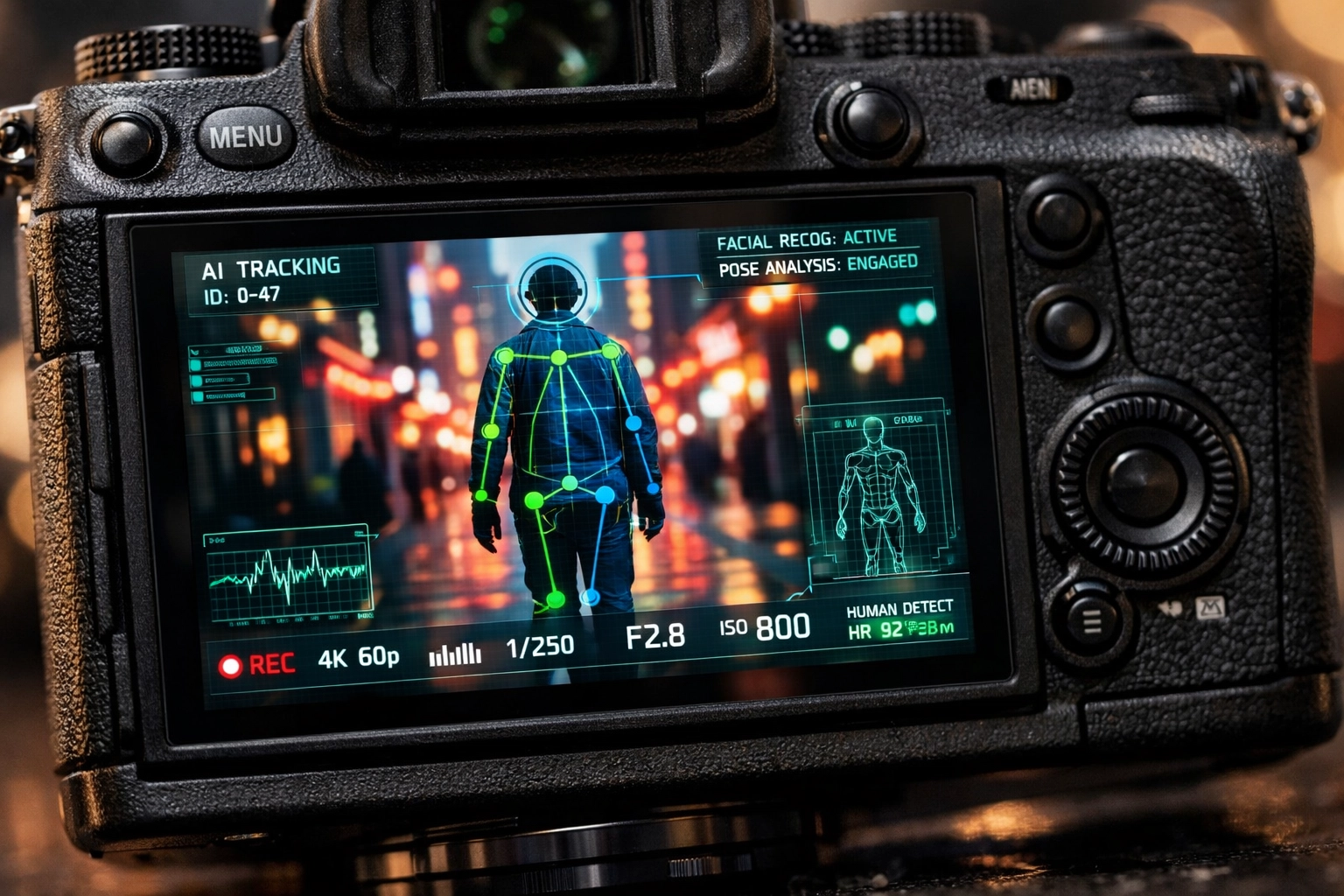
Alt Text: A modern mirrorless camera displaying advanced AI tracking interfaces on the rear LCD screen, illustrating operational AI deployment.
2. CleanTech and the Eco-Friendly Creator
The "Green Transition" isn't just for power plants anymore. CleanTech has become a core profit driver for the photography industry. We’re seeing a massive shift in how gear is manufactured and powered. Investment in low-carbon infrastructure has reached over $2 trillion, and that is trickling down to the bags we carry.
We are seeing the rise of "Energy-as-a-Service" for traveling photographers. Imagine reaching a remote location and having access to modular, solar-powered charging grids specifically designed for creators. Brands are moving away from traditional engineering and toward sustainable, multi-decade contracts for gear longevity.
This shift is a huge deal for anyone interested in the TRAVEL category. Being a sustainable traveler is no longer a niche choice; it’s the industry standard. Your next camera might feature a body made from recycled ocean plastics, powered by solid-state batteries that last three times longer than the current lithium-ion standard. This isn’t just good for the planet; it’s good for your bottom line because your gear lasts longer and costs less to power.
3. Manufacturing Reshoring: "Made Near You" is the New Meta
For decades, we’ve been at the mercy of global supply chain hiccups. If a factory closed halfway across the world, we couldn't get our favorite 50mm prime. That’s changing. As of 2026, nearly 68% of manufacturers are planning to increase regional production capacity. With over $1.2 trillion invested in U.S. manufacturing, the photography industry is seeing a "reshoring" boom.
What this means for the average shooter is faster access to gear and more localized innovation. We’re seeing boutique lens manufacturers popping up in tech hubs like Austin and Denver, using high-end automation and 3D glass printing to create bespoke optics.
When you look at how to choose the best mirrorless cameras, the "where" is becoming as important as the "what." Localized manufacturing means parts are easier to find, repairs are faster, and the carbon footprint of your gear is slashed. It’s a win-win that’s stabilizing the market after years of volatility.
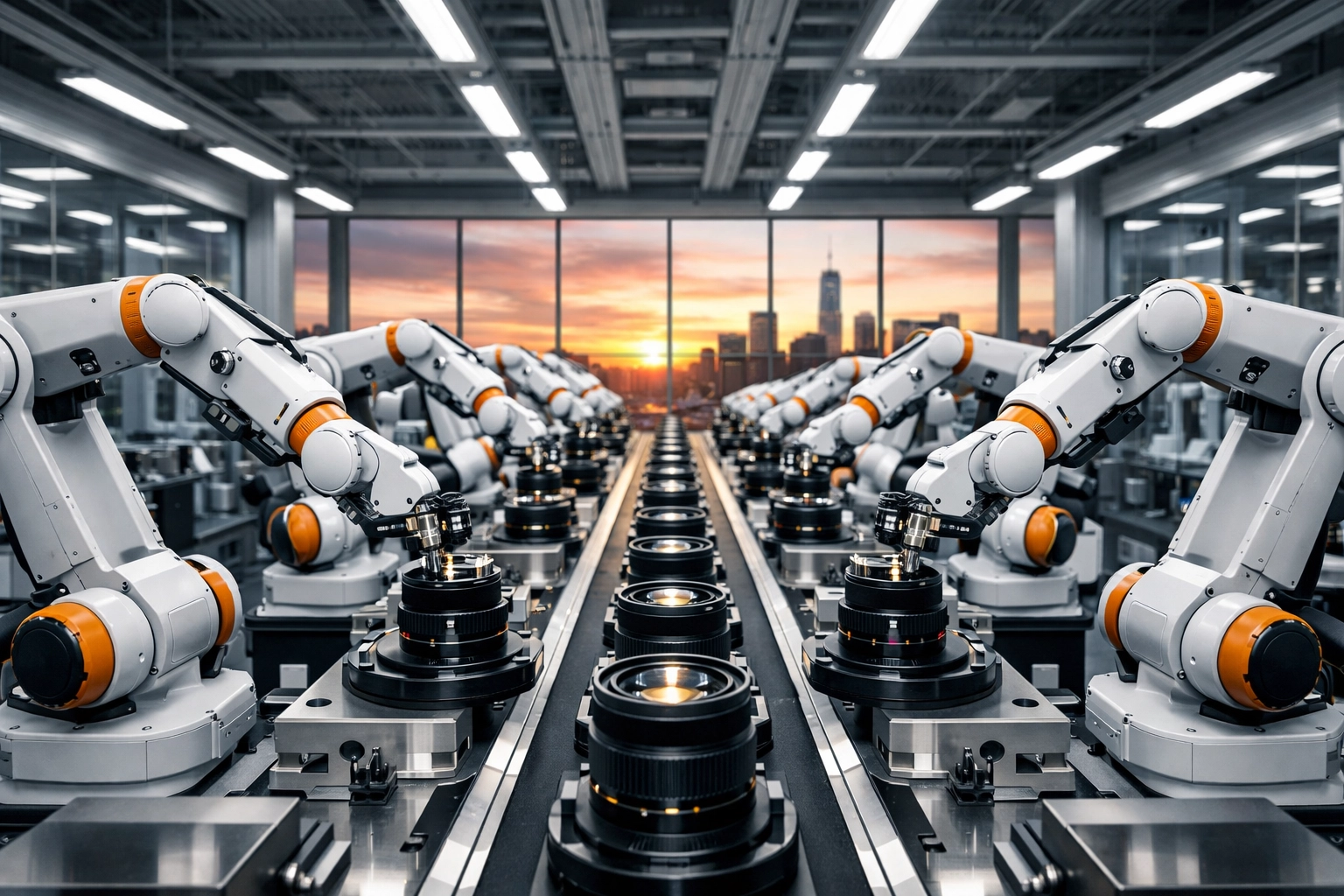
Alt Text: A high-tech automated lens assembly line in a modern US-based manufacturing facility, showcasing the reshoring of camera gear production.
4. Digital Health and the Ergonomic Revolution
This is a shift many didn't see coming: the intersection of Digital Health and creative professional gear. The digital health market has exploded, and it’s finally hitting the camera industry. We are seeing cameras and straps equipped with biometric sensors that monitor a photographer's heart rate, stress levels, and even eye strain.
Why? Because burnout is real. The industry is shifting toward "wellness-integrated" gear. If your camera notices your grip is tightening and your heart rate is spiking, it might suggest a break or adjust the stabilization to compensate for your shaky hands.
In the world of portrait photography techniques, these health-tech integrations allow for a more intuitive connection between the photographer and the subject. If you’re relaxed, your subject is relaxed. This shift is turning our cameras into tools that not only capture images but also help maintain our physical and mental longevity in a high-stress career.
5. FinTech: Getting Paid in the Creator Economy
The way we get paid is undergoing a fundamental shift. The global FinTech market is set to hit nearly $900 billion by 2030, and the focus is on "Embedded Payments." For photographers, this means the end of chasing invoices for months.
Platforms like www.proshoot.io are leading the charge by integrating real-time transfers and blockchain-based image licensing directly into the workflow. Imagine delivering a gallery and having the payment hit your digital wallet the second the client clicks "download." No more "the check is in the mail."
This level of liquidity is a game-changer for small businesses. It allows you to reinvest in your craft instantly. Whether you’re buying new presets, upgrading your Luminar subscription, or booking your next TRAVEL gig, the compression of payment cycles is the silent hero of the 2026 creative economy.

Alt Text: A photographer using a smartphone app to receive instant payment for a photo shoot, representing the integration of FinTech in the creative industry.
Why This Evening’s News Actually Matters
You might be wondering, "Edin, why do I need to know all this just to take a photo?" The answer is simple: the "middle class" of photography is disappearing. You are either evolving with these shifts or you are being left behind by someone who is.
Understanding why the latest photography news will change the way you shoot is the difference between a struggling freelancer and a thriving studio. We are moving into an era where the camera is just one part of a much larger ecosystem of AI, sustainable energy, and instant finance.
Breaking Down the Gear: Mirrorless vs. The World
If you’re still holding onto that old DSLR, 2026 might finally be the year you have to let go. We’ve discussed DSLR vs Mirrorless extensively, but the industry shifts we’re seeing today make the choice even clearer.
Mirrorless systems are the only ones capable of handling the "Operational AI" we mentioned earlier. The data throughput required to run these predictive algorithms simply doesn't exist in older DSLR architectures. If you want to take advantage of the latest in Luminar or use the new biometric-integrated grips, you need a mirrorless body.
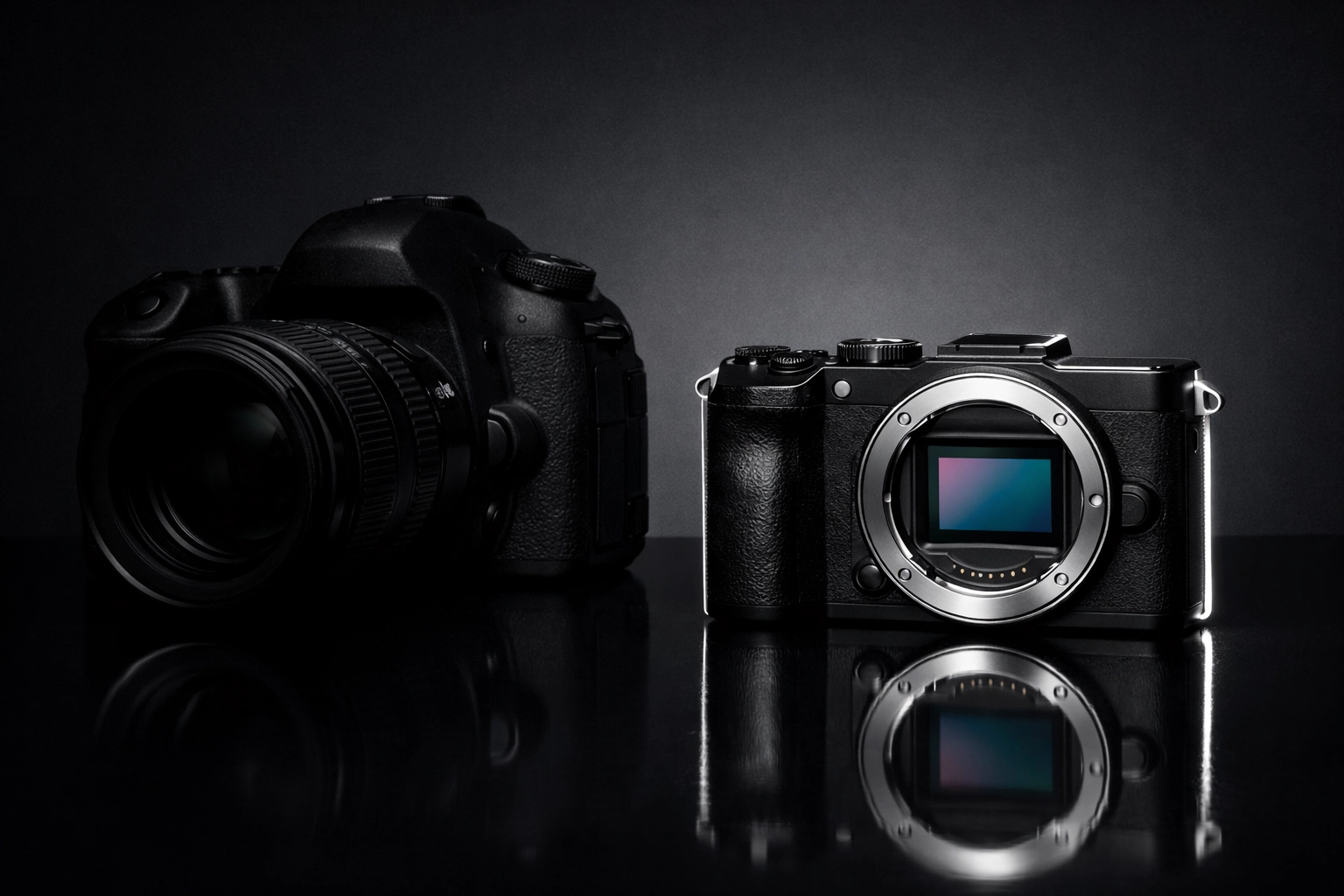
Alt Text: A comparison of a classic DSLR and a modern mirrorless camera, highlighting the sleek design and technological superiority of the 2026 models.
Viral Trends: The "Hyper-Realistic Mundane" PHOTO SERIES
One of the most viral trends hitting the PHOTO SERIES category this week is what creators are calling "Hyper-Realistic Mundane." In an age where AI can generate anything, photographers are finding massive success by documenting the ultra-real, unedited, and "boring" parts of life with incredible technical precision.
It’s a rebellion against the over-processed look of the early 2020s. People want to see the texture of a concrete sidewalk or the way light hits a messy kitchen table at 5 PM. It’s about finding the beauty in the ordinary, and it’s a great TUTORIALS topic for those looking to practice their composition and lighting without needing a mountain range or a supermodel.
Final Thoughts for the Friday Crowd
As we head into the weekend, take a moment to look at your business and your gear. Are you prepared for these shifts?
- Are you using AI like Luminar to save time?
- Are you moving your finances to platforms like www.proshoot.io to ensure you get paid on time?
- Are you keeping up with todays camera gear news?
The world is moving fast, but at Shut Your Aperture, we’ve got your back. Whether you’re here for the latest News, a stunning PHOTO SERIES, or deep-dive TUTORIALS, we are committed to keeping you at the forefront of the industry.
The industry isn't just changing; it’s maturing. We’re moving away from the "wild west" of the early digital era and into a more sustainable, intelligent, and professional landscape. It’s a great time to be a creator: as long as you keep your eyes open.
For more updates, check out blog.edinchavez.com or browse our extensive sitemap to find exactly what you need to level up your game.
Category: News, PHOTO SERIES, TUTORIALS, TRAVEL
Tags: News, PHOTO SERIES, TUTORIALS, TRAVEL, Photography News 2026, AI Photography, CleanTech, FinTech for Photographers, Mirrorless Cameras, Edin Chavez, Shut Your Aperture




