
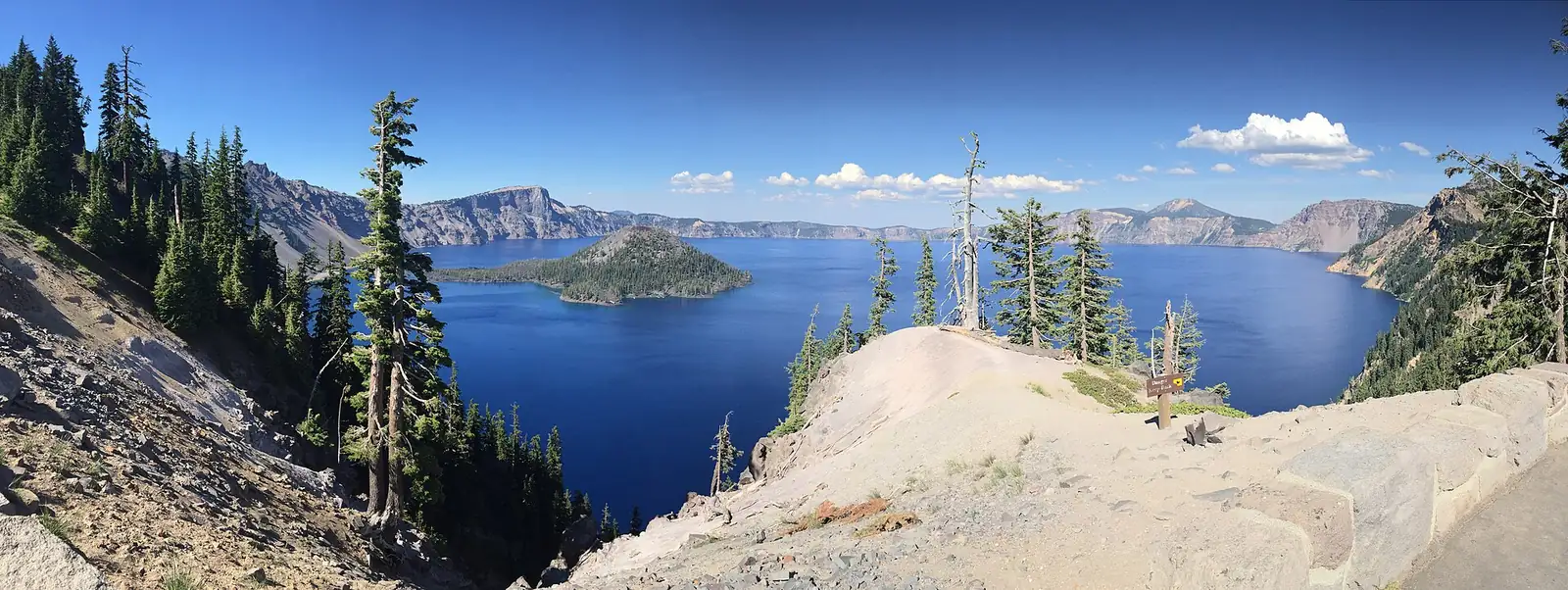
Crater Lake fills the caldera of Mount Mazama, a volcano that collapsed roughly 7,700 years ago. At 1,943 feet deep, the water is so clear that its color is a function of depth and light scattering, not algae or minerals. Photographically, the challenge is representing that blue faithfully while the volcanic rim creates foreground geometry. The lake is accessible by road only in summer — deep snow closes the Rim Drive from October to June.
Best Time to Shoot
Sunrise from the east rim at Watchman Overlook or Discovery Point gives warm light on Wizard Island. Sunset illuminates the east wall. Midday from Crater Lake Lodge works for the iconic postcard view. Winter visits require snowshoeing in but produce extraordinary snow-rimmed caldera shots. For practitioners, see our breakdown of focal length plus aperture for compression. For practitioners, see our breakdown of expose-to-the-right at high ISO. For practitioners, see our breakdown of shutter sync with strobes.
How to Get There
Crater Lake National Park is on OR-62, 80 miles north of Klamath Falls. Entry is $35 per vehicle (7-day). Rim Drive is 33 miles and takes 2+ hours to photograph properly. The boat to Wizard Island requires a separate fee and early reservation.
Camera Settings
The lake’s blue is intense — a polarizer deepens it and removes surface glare, but do not over-rotate; at full polarization the blue can look artificial. f/11-f/16 for front-to-back sharpness of the caldera walls and lake surface. ISO 100. Bracket for the bright lake surface vs shaded rim walls. A 70-200mm from the south rim isolates Wizard Island with the north wall behind it.
Recommended Gear for This Spot
Common Mistakes
- Arriving without a polarizer: the lake surface goes flat gray without one.
- Driving only to Rim Village: the best photographic overlooks are on the north and east rim, accessible only by continuing on Rim Drive.
- Shooting wide open near f/2.8: the depth from rim to lake to far wall requires f/11 to stay sharp throughout.
- Leaving before blue hour: the lake reflects ambient sky light for 20-30 minutes after sunset, turning deep indigo.
A Crater Lake photography tour times sunrise from the east rim and sunset from the west rim, covering the full caldera arc in one day. Browse Crater Lake photography tours to find options that fit your schedule.
For more location guides like this, see the Landscape Photography Guide on Shut Your Aperture. Browse all spots on the USA OR photo spots hub.
What to Pack
A focused landscape kit handles every shot at Crater Lake without breaking your back. Here is the working photographer's pack list — every link goes to B&H Photo Video (our primary supplier) or Amazon (for accessories and same-day delivery in the US).
| What & Why | B&H | Amazon |
|---|---|---|
Wide-angle zoom (14-35mm range) The single most important lens for sweeping vistas. Pair with a circular polarizer for skies and water. | Shop B&H → | Shop Amazon → |
Sturdy travel tripod Carbon fiber, packs to 15 inches, holds steady in wind off the coast. Essential for blue-hour and long-exposure work. | Shop B&H → | Shop Amazon → |
Circular polarizer (77mm or 82mm) Cuts haze, deepens sky, reveals texture in water. Non-negotiable for landscape work. | Shop B&H → | Shop Amazon → |
10-stop ND filter For 30-second exposures that turn moving water and clouds into silk. | Shop B&H → | Shop Amazon → |
Extra batteries (3 minimum) Cold weather and long exposures eat batteries. Carry triple what you think you need. | Shop B&H → | Shop Amazon → |
Fast SD/CFexpress cards V90 or CFexpress depending on your body. Two cards minimum so a failure mid-trip is recoverable. | Shop B&H → | Shop Amazon → |
Microfiber lens cloths Salt spray, mist, and dust will ruin every shot if you don't carry a cloth. | Shop B&H → | Shop Amazon → |
B&H and Amazon links are affiliate links. We earn a small commission on purchases at no extra cost to you. We only recommend gear we use or would buy ourselves.