
Updated October 2026
Kuwohi photography starts with a simple decision: photograph the observation tower, or photograph the mountain layers seen from it. The circular concrete platform and long rising ramp offer a clear architectural subject. The surrounding ridges offer a different picture, built from changing visibility, overlapping shapes, and the balance between bright sky and darker forest.
This guide covers the Kuwohi observation tower and its paved visitor approach in Great Smoky Mountains National Park. Older maps, photographs, and links may use Clingmans Dome. It is the same mountain, not a second viewpoint to add to an itinerary. Plan for a steep walk, uncertain mountain weather, and seasonal road access before thinking about a particular sunrise frame.
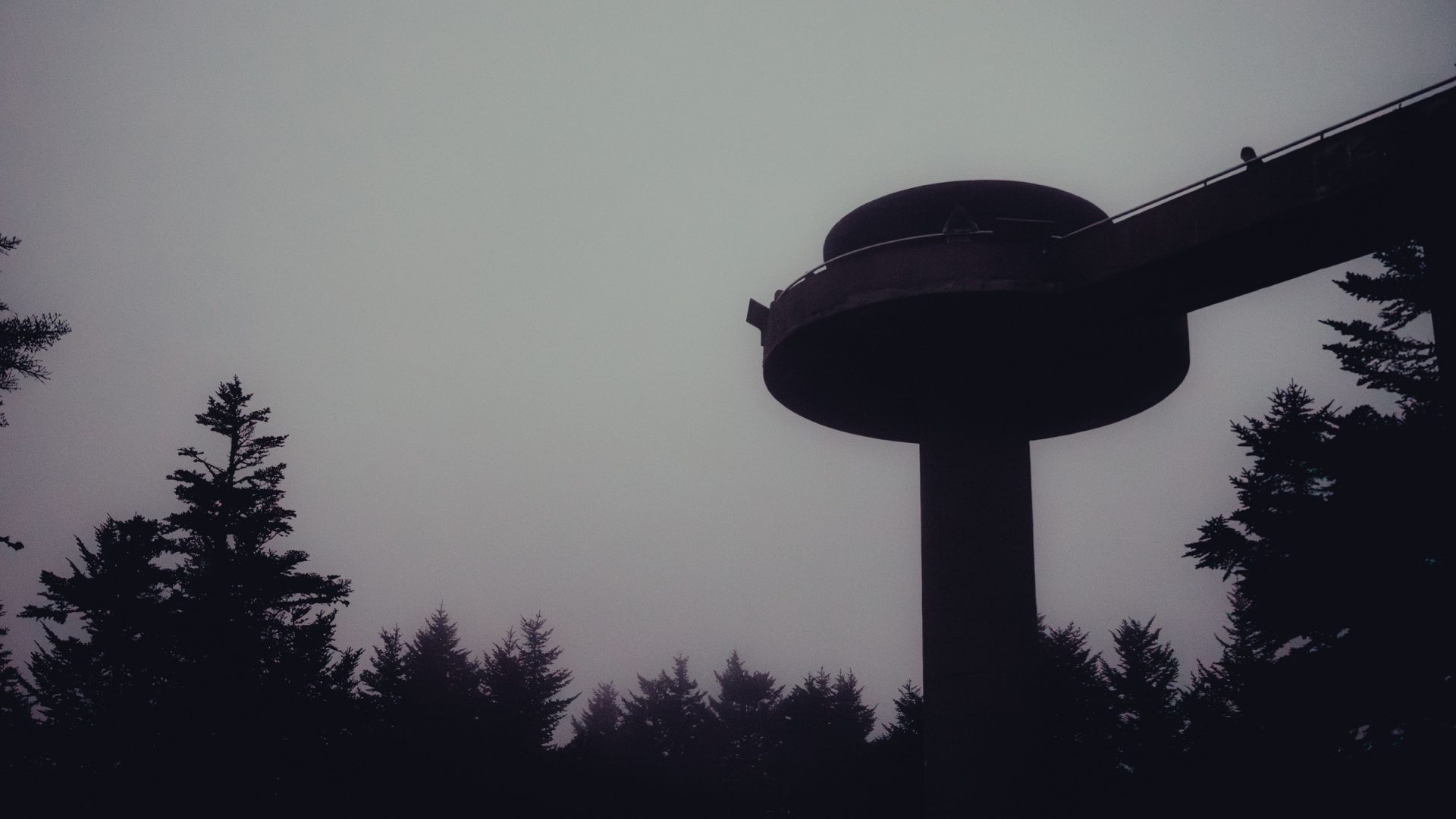
Featured photo: (Stock photo, illustrative.) The circular observation platform and rising ramp form a dark silhouette against fog. This image does not establish capture time, current visibility or access. Photo: Connor Scott McManus. Source · Pexels License. Resized full frame; no generative edits added here.
Use the current name and understand the setting
The National Park Service’s name-restoration announcement explains that Kuwohi is the Cherokee name for the mountain, meaning “mulberry place.” The name was formally restored in September 2024 following a request from the Eastern Band of Cherokee Indians. NPS describes Kuwohi as a sacred place for the Cherokee people.
Use Kuwohi as the main name when planning and sharing photographs. Including “formerly Clingmans Dome” once can help readers connect an older label with current information. Do not treat the older name as a different destination or let an old road name distract from the current road status.
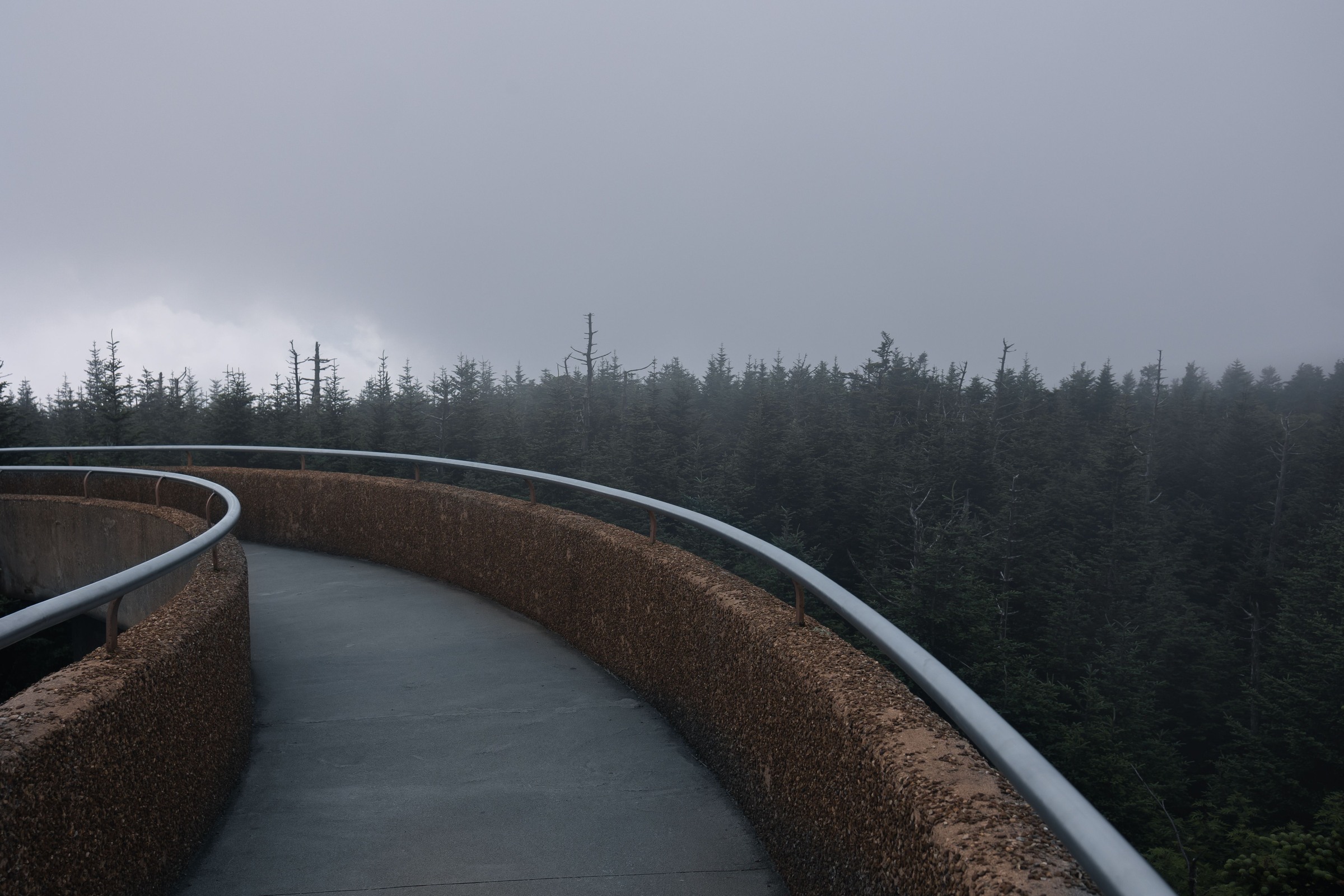
The NPS tower description places Kuwohi at 6,643 feet, the highest point in Great Smoky Mountains National Park. It describes a 45-foot observation tower built in 1959, with a long ramp rising to a circular platform. These facts explain the scene’s two useful photographic subjects: the structure itself and the broad view above the nearby trees.
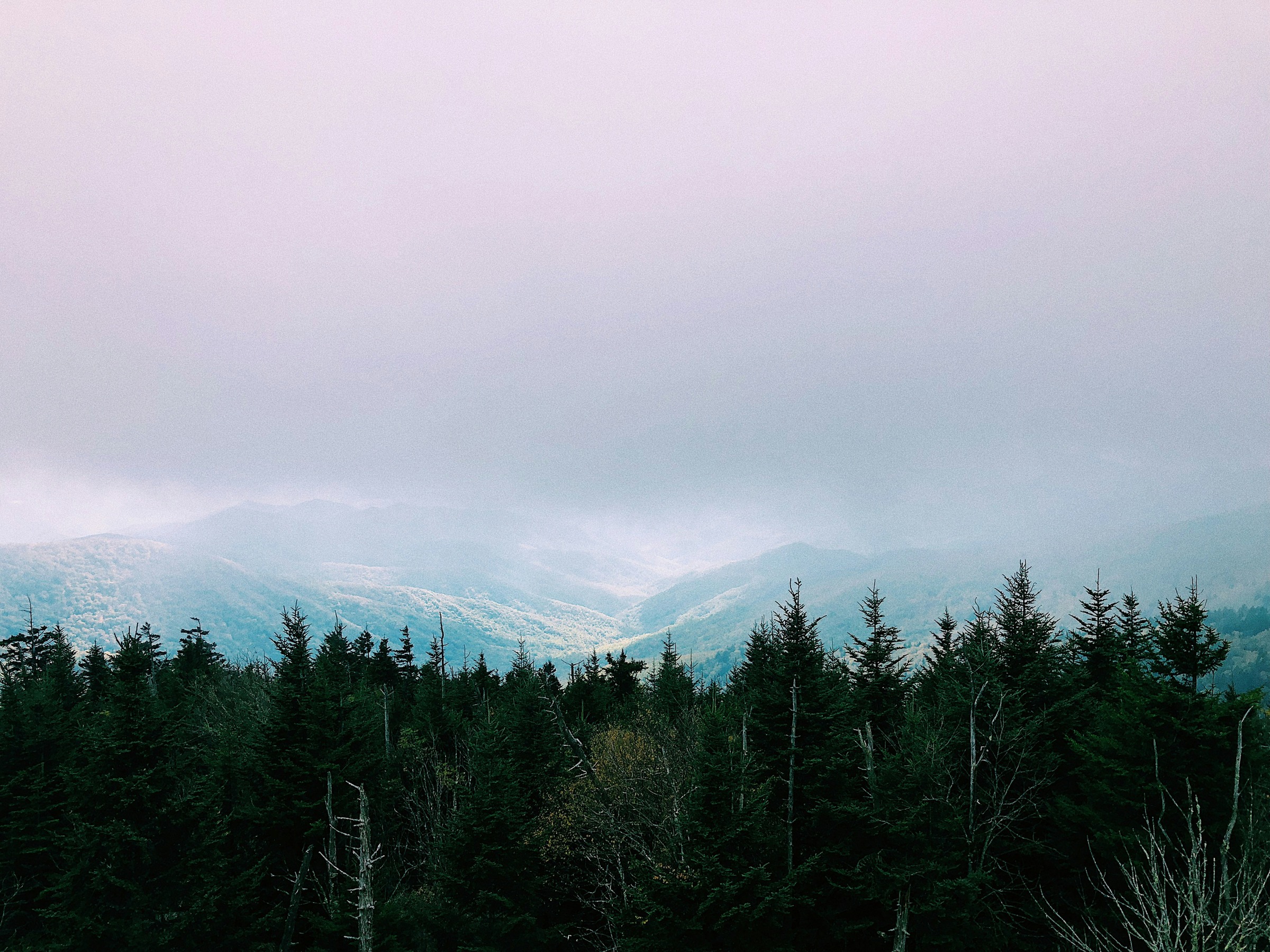
A high viewpoint does not guarantee distant detail. Clouds can hide the ridges, while haze can reduce them to soft silhouettes. Treat a clear panorama as one possible outcome. A tower partly lost in cloud or a short sequence of darker and lighter ridges can be a more useful subject than a wide view with no clear center.
Check the road before committing to the climb
Kuwohi Road connects the visitor area with Newfound Gap Road. It has a winter closure and can also close because of hazardous weather during its scheduled season. Check the NPS seasonal road schedule and current conditions before leaving. A calendar opening date is not permission to drive past a closed gate.
Do not assume that an open Newfound Gap Road means Kuwohi Road is open. Likewise, an open visitor center elsewhere in the park does not establish access to the tower parking area. Use the status of the road you actually need, along with current signs and staff instructions.
If winter closure prevents a normal drive-up visit, change the plan. A much longer approach on foot is a separate undertaking, not a casual substitute for the short paved trail described here. This article does not provide a winter hiking route or recommend going around a closure for a photograph.
Build flexibility into arrival plans. NPS warns that parking demand at Kuwohi can exceed capacity. Avoid marked no-parking areas, keep traffic clear, and do not wait in an unsafe position because the light is changing. A full lot is a reason to reassess, not permission to invent a parking space.
 Save
Separate free entrance from the parking tag
Great Smoky Mountains National Park does not charge an entrance fee. That does not make every part of a visit free. The park’s fees and parking-tag page explains the separate parking program. For an ordinary vehicle visit, parking for longer than 15 minutes generally requires a valid tag; NPS lists exemptions and current terms.
The tag is tied to the vehicle’s license plate and must be physically displayed. A digital image is not a substitute. An America the Beautiful entrance pass does not replace the park’s parking tag, and purchasing a tag does not reserve a space at Kuwohi. Read the current NPS instructions before arriving rather than treating a past receipt or another park’s pass as sufficient.
This guide does not quote a fixed parking price. Check the available durations, purchase method, and date rules on the official page for your visit. If you are using a rental car, the vehicle’s actual plate matters. Do not buy a tag against a guessed plate number.
NPS suggests considering a shuttle for busy destinations. If you choose one, confirm the operator’s current service, pickup arrangements, and return time directly. Do not assume a general suggestion means there is a free park shuttle waiting at the tower or a guaranteed ride after a late photo session.
Plan for a short but very steep paved walk
The NPS Kuwohi hike page describes a one-mile roundtrip walk from the parking area. The main paved approach is about half a mile each way and is very steep. Short mileage and pavement should not be translated into an easy, level stroll.
Allow time for your own pace and the return descent. Keep the camera secured while walking and stop in a stable place before checking a frame. Carrying several heavy lenses can make the approach less comfortable without improving the photograph. Choose what you can manage safely, along with water, weather protection, and enough light for the return if needed.
Do not infer wheelchair suitability from the tower’s ramp or from a photograph of pavement. The approach grade is a separate issue. Review the park’s access information and discuss individual needs with NPS before planning around the tower. A photograph cannot establish current surface conditions, a usable rest area, or the suitability of a mobility device.
Keep the route open for other visitors. Do not lay bags across the path, spread tripod legs through the walking line, or stop at a narrow point just because it makes a convenient foreground. Wait for space and move aside without stepping into vegetation. A familiar angle is not a reason to leave the visitor surface or cross a barrier.
 Save
Let mountain weather shape the session
NPS describes clouds, precipitation, and cold temperatures as common at Kuwohi. The summit can be much cooler than surrounding lowlands, even in summer. Bring layers and a jacket rather than dressing only for the temperature where you started the drive.
Read the park’s weather guidance and check the forecast for the high-elevation area. Blue sky in a nearby town does not establish a clear tower view. A photograph from another season is not a forecast, and a bright webcam frame is only a past moment unless its timestamp and location are checked.
In cloud, simplify. Look for the tower’s outline, a nearby tree, or a small group of ridges with enough tonal separation to read. If the distant view disappears, continuing to point a wide lens into blank gray space will not restore it. A closer subject may work, but a safe decision to leave is also a valid outcome.
Do not wait on an exposed observation platform for dramatic storm light. Check NPS safety advice and retreat when conditions become unsafe. Thunder, poor visibility, strong wind, ice, or difficulty walking should change the plan immediately. Protecting equipment is secondary to getting yourself and your group back safely.
 Save
Photograph the tower as a structure
Before climbing the ramp, consider whether the circular platform or the rising curve is the main subject. A wider frame can describe how the tower sits above the trees. A closer view can emphasize the relationship between concrete, railing, and open sky. Choose one clear idea rather than fitting every part of the structure into every photograph.
Watch the edges of the frame. A small branch crossing the platform or a railing ending awkwardly at the border can distract from the main shape. Often a change in camera direction solves the problem without moving your feet. Stay within the visitor area and do not step over a barrier to clean up a background.
Keep perspective deliberate. Tilting a wide lens upward can make vertical elements lean, while a more level camera can preserve a quieter architectural arrangement. Neither is automatically wrong. Check whether the result supports the subject, then leave enough room around the structure if you expect to adjust perspective later.
The tower and ramp are shared visitor spaces, not a private set. Do not block circulation to wait for an empty photograph. A quieter moment may allow a clean frame, but it is not guaranteed. Respect visitors’ privacy and avoid directing people into unsafe positions to create scale.
Arrange the mountain layers
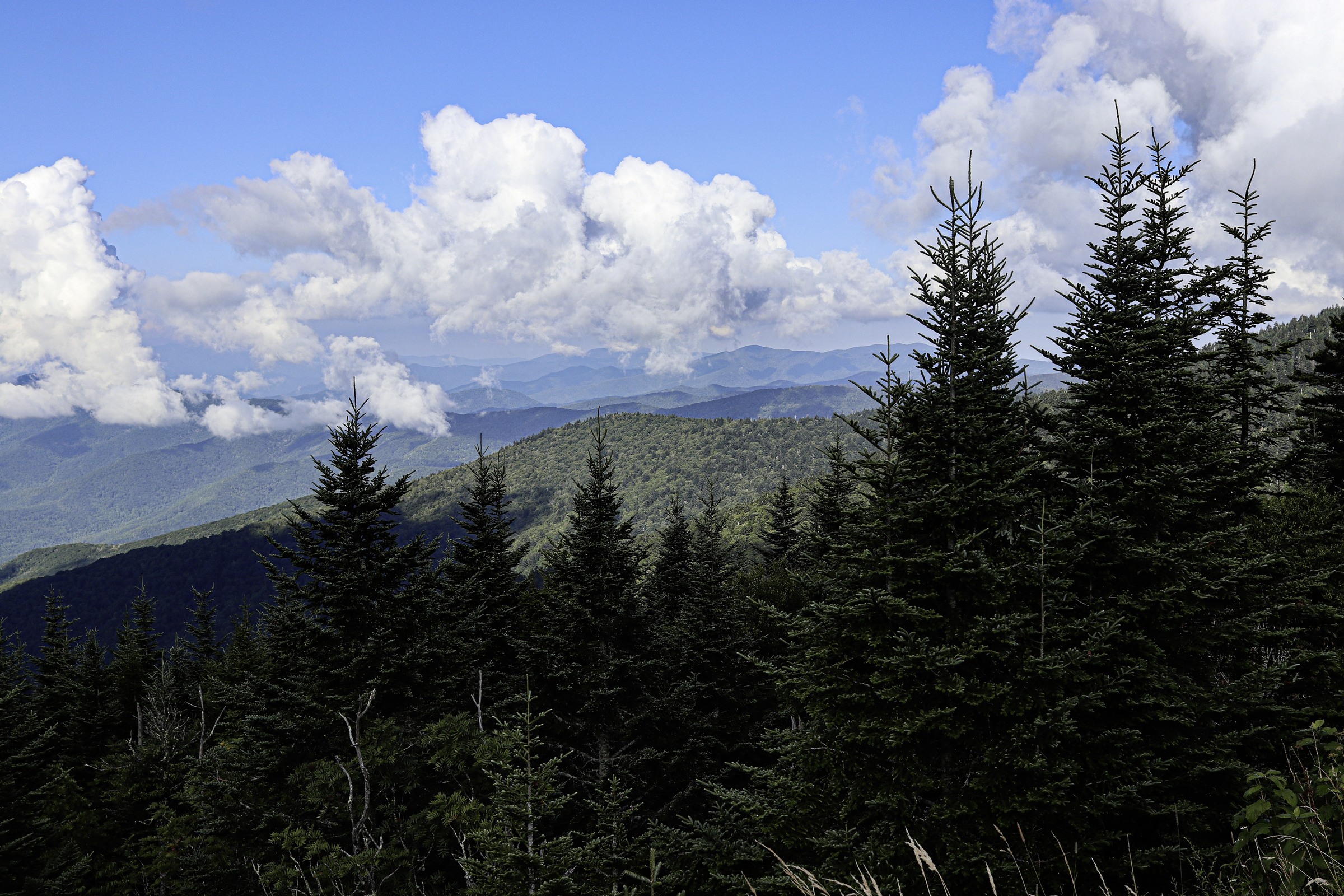
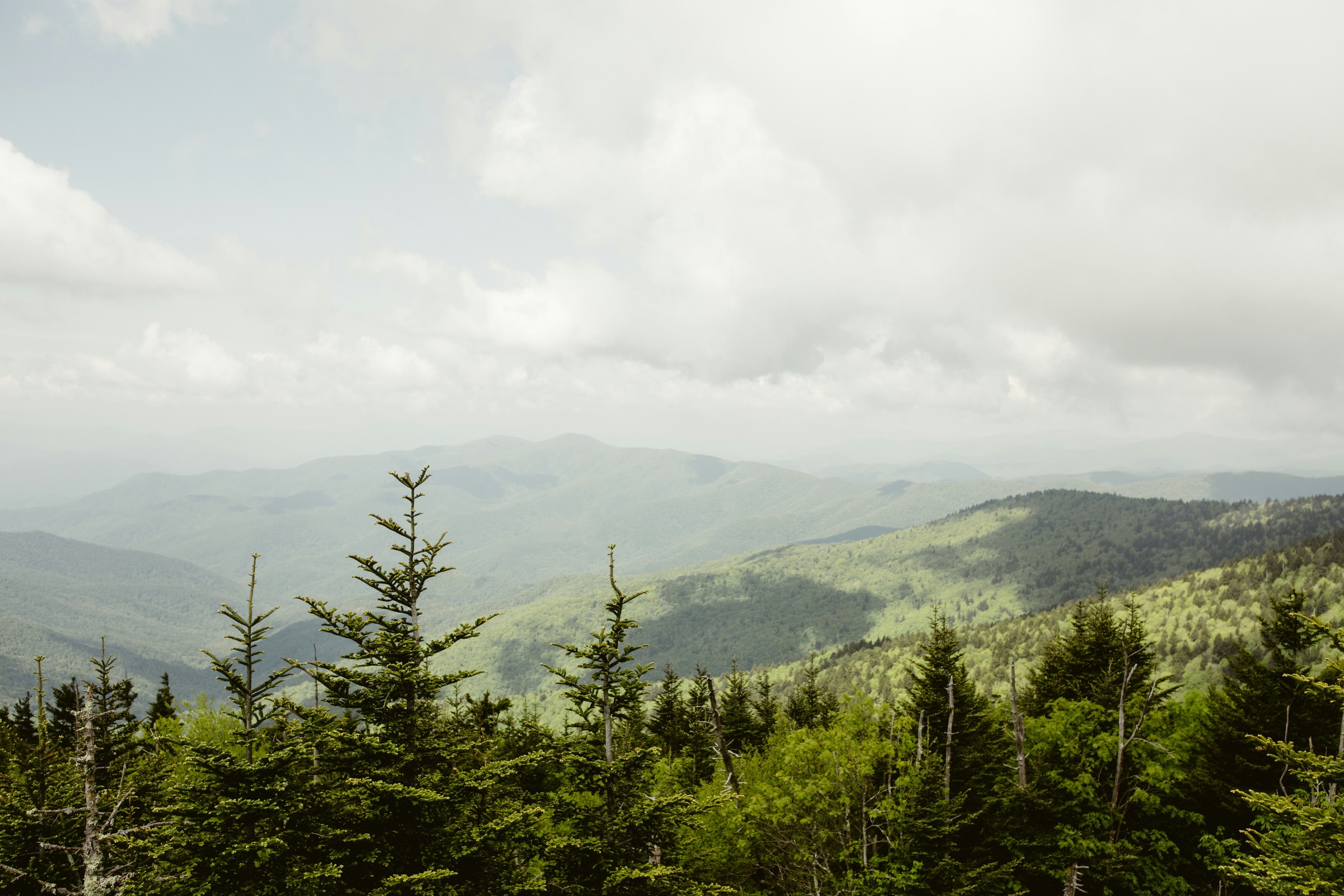
From the platform, start by finding a sequence of ridges that separate clearly. A darker near ridge, a softer middle layer, and a pale distant outline can create depth without a large foreground object. The important question is whether the shapes remain distinct at the size you intend to show the photograph.
Try a tighter frame before assuming a sweeping panorama is the best choice. A longer focal length can isolate a useful overlap or remove a bright area that pulls attention away from the ridges. It cannot remove haze or recover detail that was not visible. If distant texture is weak, use the larger shapes instead.
Sky should earn its space. A useful cloud pattern can support a wide view, while a blank bright strip may only make exposure harder. Compare a frame with more sky against one built mostly from mountain layers. The more successful version is the one with a clearer relationship between shapes, not necessarily the one showing the widest area.
For a panorama, keep the camera level and overlap frames consistently. Use stable exposure and focus when practical. Moving visitors, branches, or clouds can create seams. Take an ordinary single-frame alternative as well, and inspect the merged result later rather than assuming a complete sweep guarantees a clean final picture.
 Save
Choose exposure for brightness and movement
There is no required lens, aperture, ISO, or shutter speed for Kuwohi. Choose aperture for the depth you need and check focus on the important subject. A distant ridge study is a different problem from a frame combining a nearby railing with the far mountains. One small aperture is not the answer to every composition.
Bright sky can be much lighter than forested slopes. Watch the histogram and highlight warning, then adjust if important cloud detail is clipping. Do not judge exposure only from a rear screen viewed in changing light. Keep some depth in the shadows rather than forcing every ridge to the same brightness.
Wind and camera movement matter. If a handheld frame is soft, examine shutter speed and your stance before blaming the lens. A higher ISO may be a better tradeoff than an exposure blurred by movement. When using support in a safe, permitted place, check a test frame rather than assuming the support has solved every vibration problem.
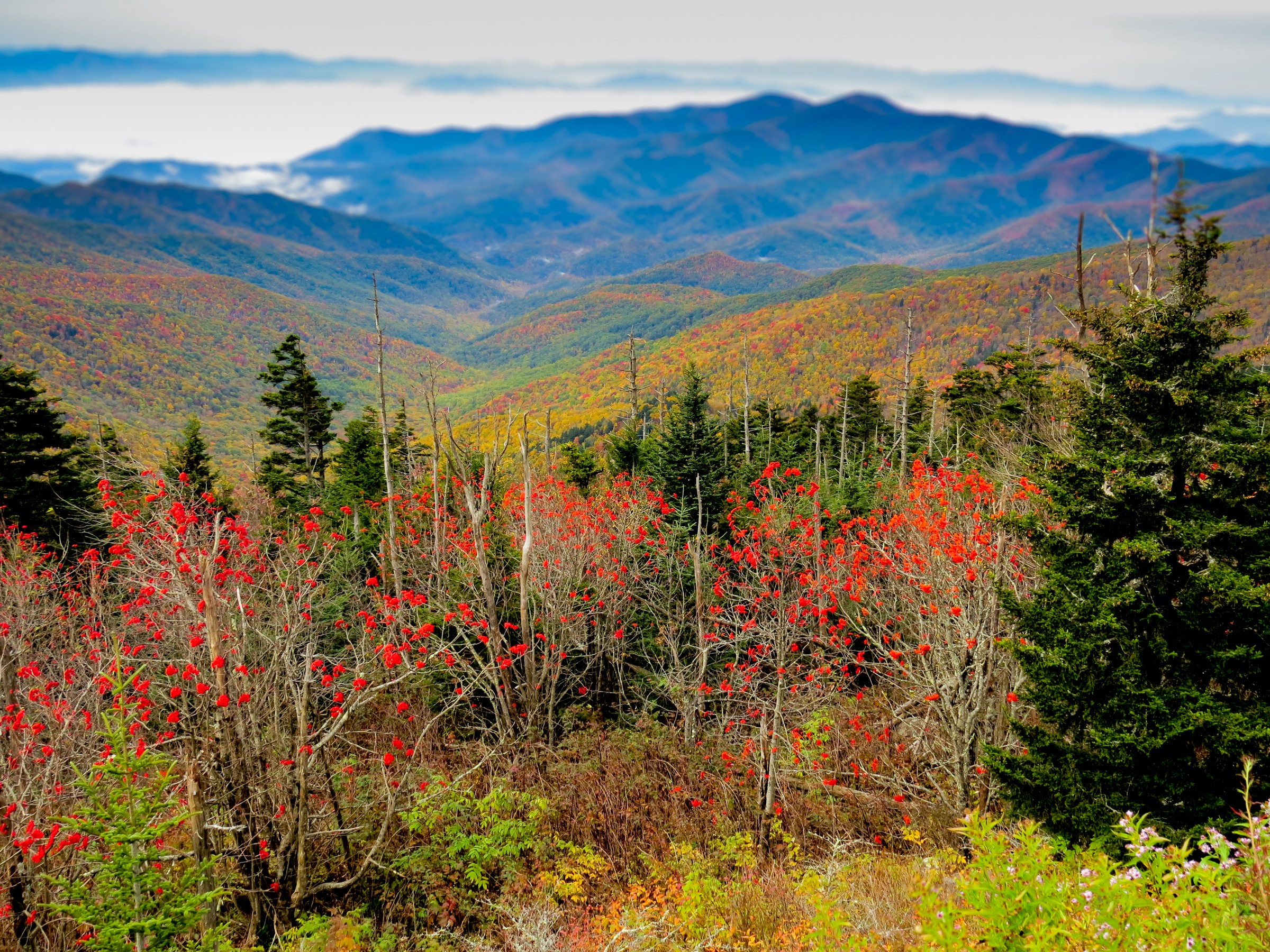
Fog does not always look right with a fixed exposure compensation. Review the actual scene and test again as brightness changes. For color, a daylight reference or auto white balance can be a starting point. If you record RAW, adjust later with restraint; exaggerated blue ridges and orange highlights are not required to show the atmosphere.
 Save
Treat sunrise, sunset, and darkness as conditional plans
Low-angle light can separate the ridges or give clouds more shape, but the best time is not a fixed number of minutes before sunrise or sunset. Cloud cover, haze, season, and the direction of your subject all matter. Plan the light for your date, then let the scene determine the photograph.
Confirm road access and any current restrictions before planning a predawn arrival or a late departure. This guide makes no promise of a particular gate opening time or unrestricted night access. A photograph of stars or a sunset does not prove the current rules for reaching the tower.
If the visit is lawful and conditions are suitable, carry dependable lighting and know the return route before dark. Do not rely on a phone screen as your only navigation light. Keep light considerate around other visitors without compromising your footing. Staying later is not worthwhile if the descent or drive becomes unsafe.
For a night photograph, test focus and star movement in an enlarged frame instead of applying a universal exposure recipe. A sky tracker changes how the sky and fixed landscape are recorded; it is not a default requirement for this viewpoint. No Milky Way photograph is promised, and this guide does not recommend sleeping or camping at the tower.
Keep the equipment and the impact small
A manageable camera setup is easier to carry on the steep approach and easier to use in a crowded space. Secure straps, keep lens caps and small items from blowing away, and pack the camera before moving. Never lean equipment over an edge or attach it to a protective railing to gain a little reach.
Use a tripod only where it is permitted and can stand without obstructing people. If crowding or wind makes that impractical, simplify the photograph or work handheld. A support accessory does not give priority over other visitors. Do not turn a walking route into an equipment staging area.
For a staged shoot, exclusive use, additional equipment, or another activity beyond ordinary visitor photography, consult the park’s current filming and still-photography rules. The requirements depend on the actual activity, not merely on whether a photograph is commercial. A photography permit, when needed, also does not replace parking requirements.
Keep food and trash controlled, stay on the visitor route, and give wildlife space. The NPS hiking-safety guidance emphasizes preparation, appropriate footwear, changing weather, and limited cell service. A short paved walk still deserves a return plan. Bring home a few clear compositions rather than leaving a bigger footprint for one more angle.
Keep the tower visit in context
For wider park planning, see our Great Smoky Mountains photography locations. This Kuwohi guide covers only the tower and its visitor approach. Our landscape photography guide expands on light and framing. If you prefer organized help, compare the scope and meeting arrangements in our Smokies photography tour guide; a listing does not guarantee tower access, transport or availability.
Optional gear for the steep paved approach
Keep the camera packed or securely carried while walking. A black Peak Design Slide Lite camera strap, model SLL-BK-3, is one optional carry accessory, not a requirement for Kuwohi photography. Check your camera attachment points and full camera-and-lens weight, follow the attachment instructions, and inspect the anchors. A strap does not replace safe footing, keeping the visitor route clear or respecting barriers.
Compare the Slide Lite SLL-BK-3 on Amazon | Check the Slide Lite SLL-BK-3 at B&H
Affiliate disclosure: We may earn a commission from qualifying purchases through these links at no extra cost to you. As an Amazon Associate, Shut Your Aperture earns from qualifying purchases. Check current retailer specifications before buying; no hands-on test, price or availability promise is made here.
Kuwohi photography FAQ
Is Kuwohi the same place as Clingmans Dome?
Yes. Kuwohi is the Cherokee name restored to the mountain in September 2024. Older maps and photographs may use Clingmans Dome. Use current NPS information for the same mountain and observation tower.
How far is the walk to the observation tower?
NPS describes a one-mile roundtrip walk, about half a mile each way, from the parking area. The main path is paved but very steep. Allow for your own pace and do not assume pavement means a level or universally accessible route.
Is there a park entrance fee or a parking requirement?
Great Smoky Mountains National Park does not charge an entrance fee. Parking for longer than 15 minutes generally requires a valid, physically displayed parking tag, with exemptions described by NPS. A tag does not guarantee a parking space, and an entrance pass is not a substitute.
Can you drive to Kuwohi throughout winter?
No. Kuwohi Road has a seasonal winter closure and can also close because of hazardous weather. Check the current NPS road schedule and conditions. An open Newfound Gap Road does not establish access to the tower parking area.
What lens works best for the tower and mountain views?
A wider view can describe the tower’s shape and setting, while a tighter frame can isolate layered ridges. No focal length is mandatory. Choose framing, focus, and exposure for visibility, wind, available space, and the subject.
Is a clear sunrise or sunset view guaranteed?
No. Clouds, haze, wind, and precipitation can change the view quickly. Check high-elevation weather and current road access, carry suitable layers and lighting, and be ready to simplify the photograph or leave when conditions are unsafe.