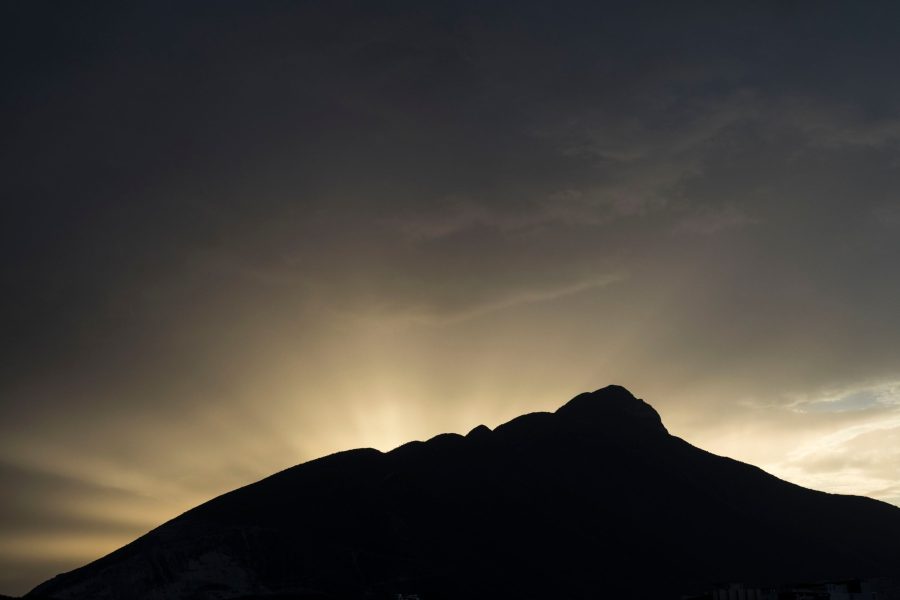
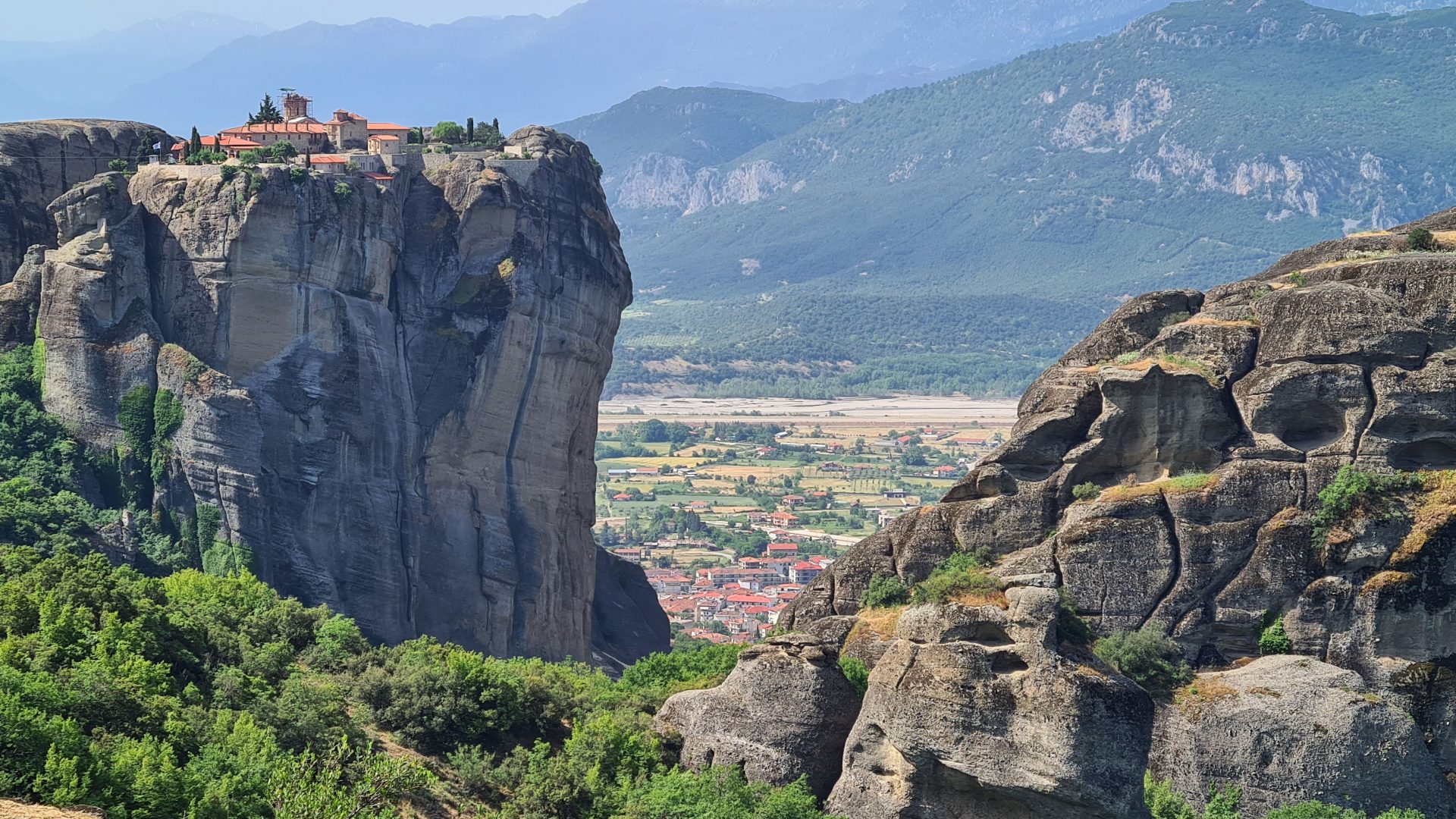
Featured photograph: Photo by Michelle Chadwick via Pexels (source; Pexels license). (Stock photo, illustrative.)
Original date December 16, 2015. Updated October 2026.
Meteora means “suspended in the air” in Greek, and the name fits. In central mainland Greece, a group of monasteries sits on tall sandstone pillars that rise sharply from the land around them. In December 2015 we shared a short film by photographer Elia Locardi that follows the area from above. The linked film offers another view of the landscape; it is not evidence of current access or permission to fly. Below you will find the film, a short guide to what Meteora is, and a set of photography ideas for anyone who plans to go.
Watch Meteora Greece – Suspended in Air on YouTube. The film is also linked on Elia Locardi’s own video page. Playback availability can vary; this historical creative reference is not current flight or visitor guidance.
The film and its credit belong to its maker. The photographs on this page are separate stock illustrations from Pexels, credited in each caption. They are there to show the rock formations and the monasteries, not to stand in for any particular visit. If you want to see more of the photographer’s work, his channel is linked in the caption above.
What Meteora Is
According to UNESCO, Meteora is a collection of monasteries in the centre of mainland Greece. The monasteries stand on almost inaccessible sandstone peaks, which UNESCO describes as “heavenly columns.” Monks settled on these columns from the 11th century onwards. In the 14th century, a time of political instability in Thessaly, monasteries were built on top of the peaks, and by the end of the 15th century there were 24 of them. UNESCO lists the place as a World Heritage site, noting both its cultural value and the natural beauty of the setting. The details in this section come from the UNESCO World Heritage Centre page for Meteora.
The rock itself has a long history. UNESCO says the sandstone peaks rise more than 400 meters above ground level and were formed about 60 million years ago from river deposits. Earthquakes, rain and wind have since shaped them into the tall, rounded forms you see in the photographs. The setting is a large part of the appeal. The buildings are interesting, but it is the drop of the cliffs and the open land below them that makes the pictures.
 Save
Why Photographers Go There
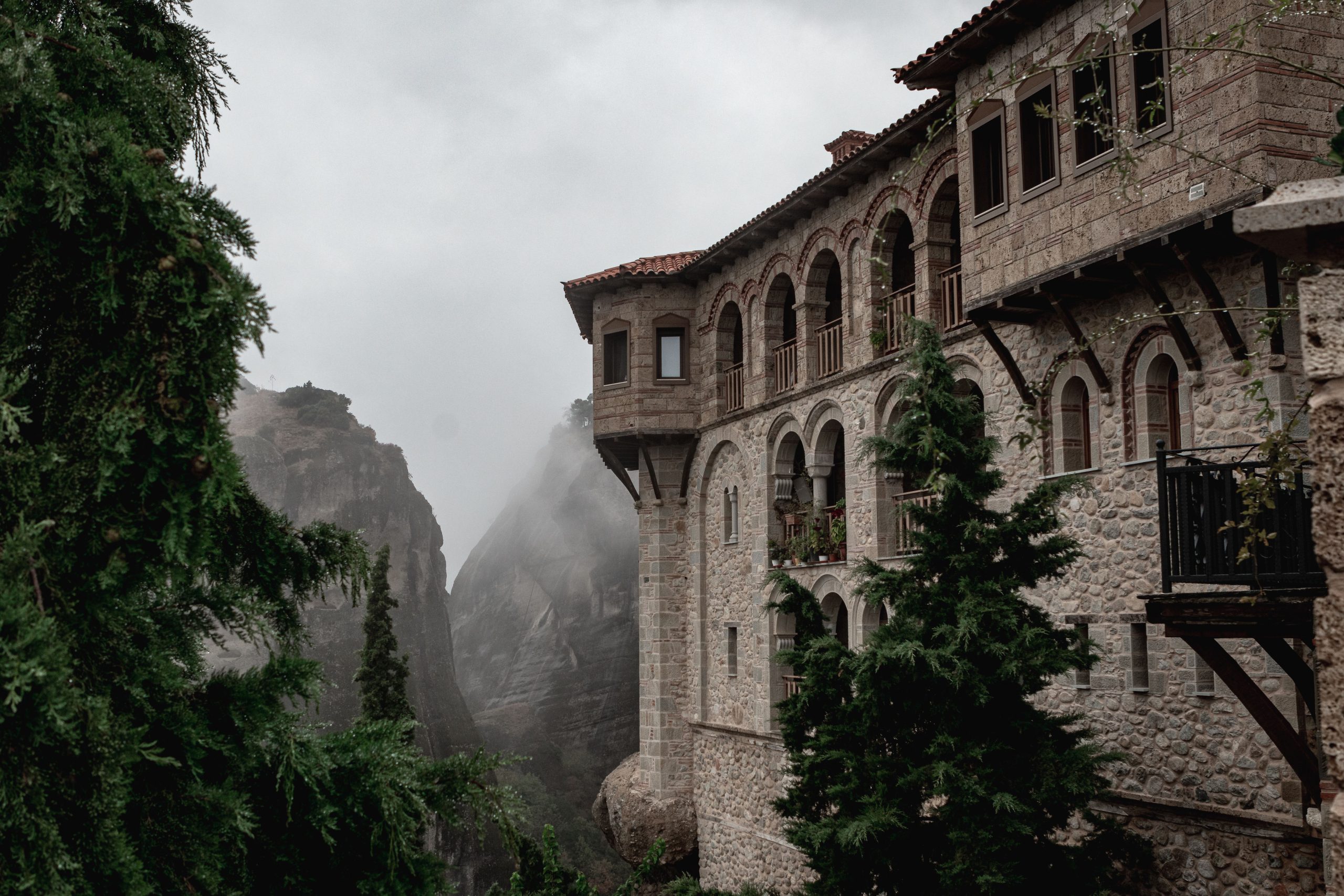
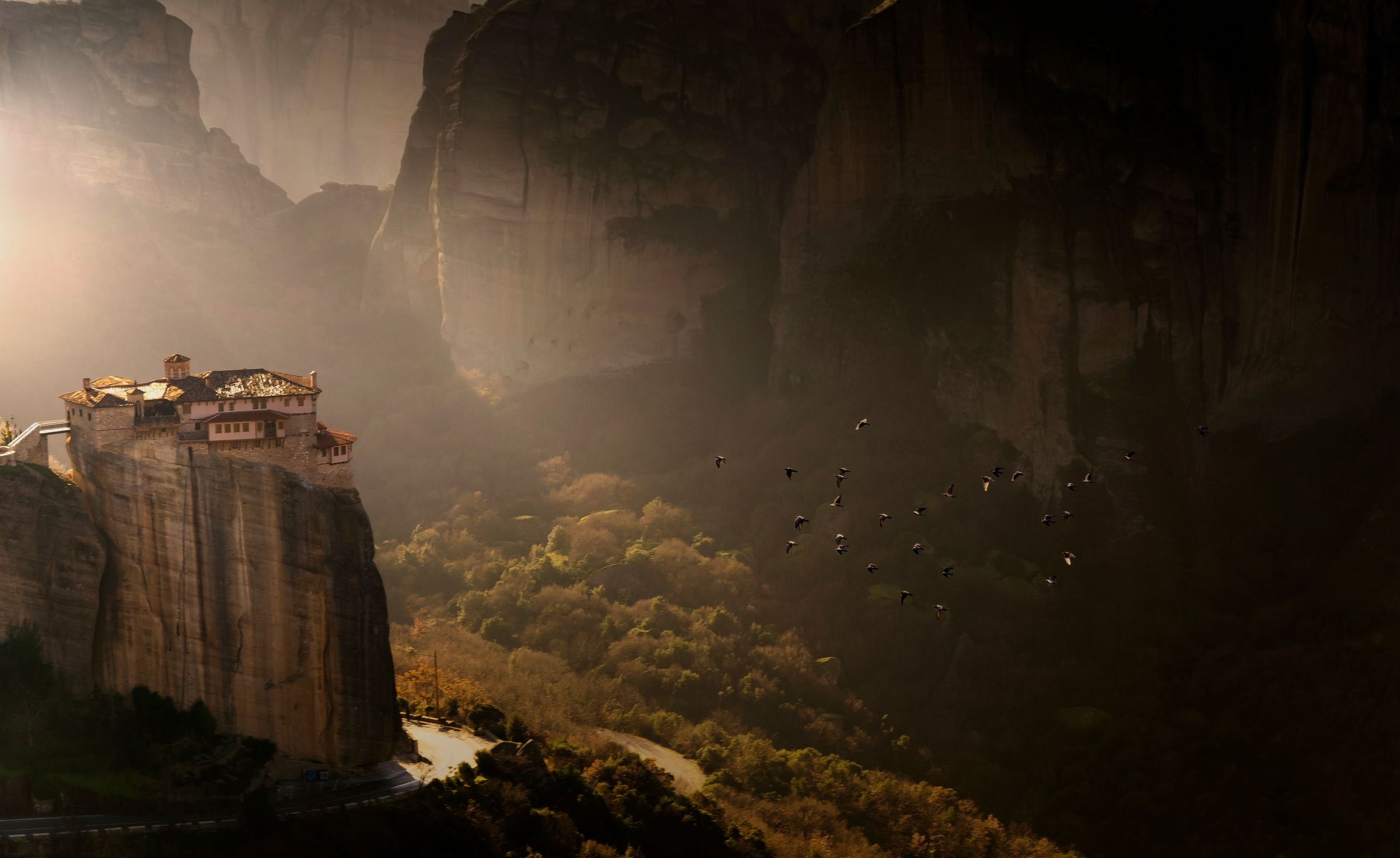
Meteora gives you a strong subject, a clear sense of scale and a lot of variety in a small area. The towers of rock make natural frames. The monasteries add color, mostly warm roofs and pale stone against the gray cliffs and the green of the trees. The land below changes with the weather. Fog can fill the valley and hide the base of the pillars. A clear day shows long views across the plain to distant mountains.
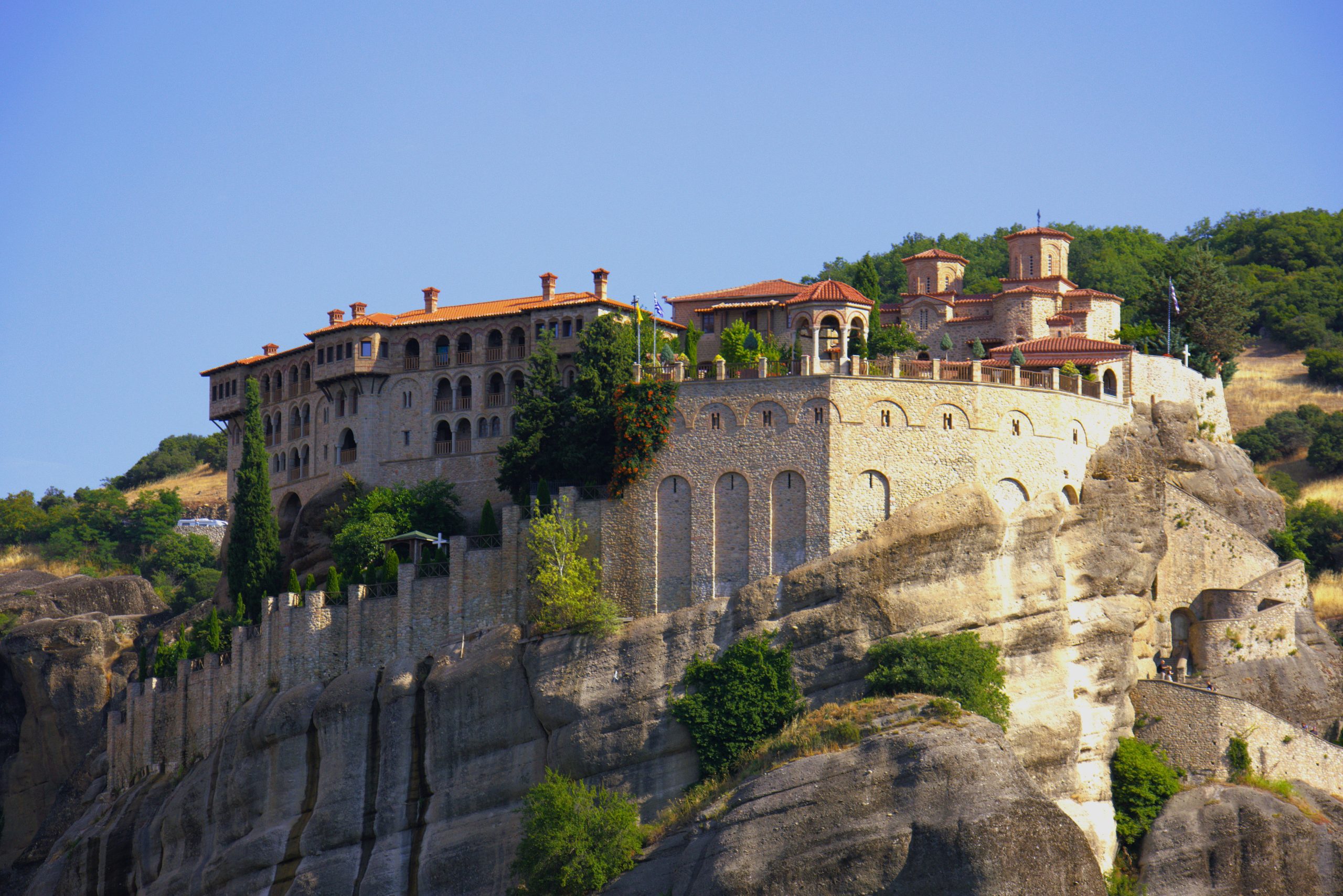
The subject also rewards both wide and tight pictures. A wide frame shows how small the buildings are next to the rock. A longer lens picks out one monastery, the windows and balconies and the line where the wall meets the cliff. Many photographers bring both and switch as the light and the distance change.
A look at the film and the photographs on this page shows the same few ideas. The buildings are small and the rock is huge. The sky is large and the light is soft or warm. Each frame has an obvious subject. If you want to build your own set, those are good things to look for before you press the shutter.
Planning a Photography Trip to Meteora
This section is general planning advice. It does not replace current information from the monasteries or from official sources. Before you go, check the current visiting information for each monastery you want to see. Opening days and hours, dress requirements and rules about photography can differ between sites and can change, so confirm them with the monastery itself or an official tourism source close to your travel dates. UNESCO notes that the monasteries themselves issue entrance tickets, so expect to deal with each site separately.
Think about how many places you want to see. A trip is easier if you pick a few viewpoints and a few monasteries, and spend time in each. Photographers often plan around the light, so look at the direction each view faces and when the sun will reach it. Apps that show sunrise and sunset positions are useful for this, and so are a few minutes with a map before you set out.
Plan for the weather as well. A forecast of clear sky is good for long views. Low cloud and fog can give you moody frames and also hide the very rocks you came to see. Give yourself more than one morning or evening if you can, so a single bad forecast does not decide the trip.
 Save
Respecting a Working Religious Site
Meteora is not only a scenic place. UNESCO states that human habitation continues there to this day, and the monastic communities take part in the care of the monuments. That means many of the buildings are living religious places. Treat them that way. Follow the signs and the staff, keep your voice down, dress as the site asks and do not photograph anywhere that is marked as not allowed.
Be careful with people. If a monk, a worker or a visitor is the main subject of your picture, ask first and accept a refusal. Avoid photographing children as subjects. If you share a picture, describe what is visible and where you were, and do not guess names or details. Churches often have special rules about photography inside, and some do not allow it, so ask before you raise the camera indoors.
Gear and Camera Settings
You do not need much gear. A camera with a standard zoom covers most views. A longer lens, such as a 70-200mm or a 100-400mm, lets you pull a monastery out of the landscape from a distance. A wide-angle lens helps with the big views and with interiors of courtyards. Bring spare batteries and cards, a lens cloth and a small bag that is comfortable to carry on uneven ground.
For landscapes, a practical low ISO and an aperture around f/8 to f/11 can be starting tests. Inspect near and distant detail and adjust for your lens, movement and intended output. Where a tripod is allowed and the ground is safe, it helps in low light. Where it is not, choose a safe handheld shutter speed and adjust ISO as needed. Check your histogram in bright conditions. Pale stone and bright sky can fool the meter, so a small amount of exposure compensation may help.
A polarizing filter can deepen the sky and reduce glare on foliage, but use it with care on wide lenses because the sky can look uneven. A graduated filter, or a bracketed set of exposures that you blend later, helps when the sky is much brighter than the land.
 Save
Composition Ideas
Use the rock for scale
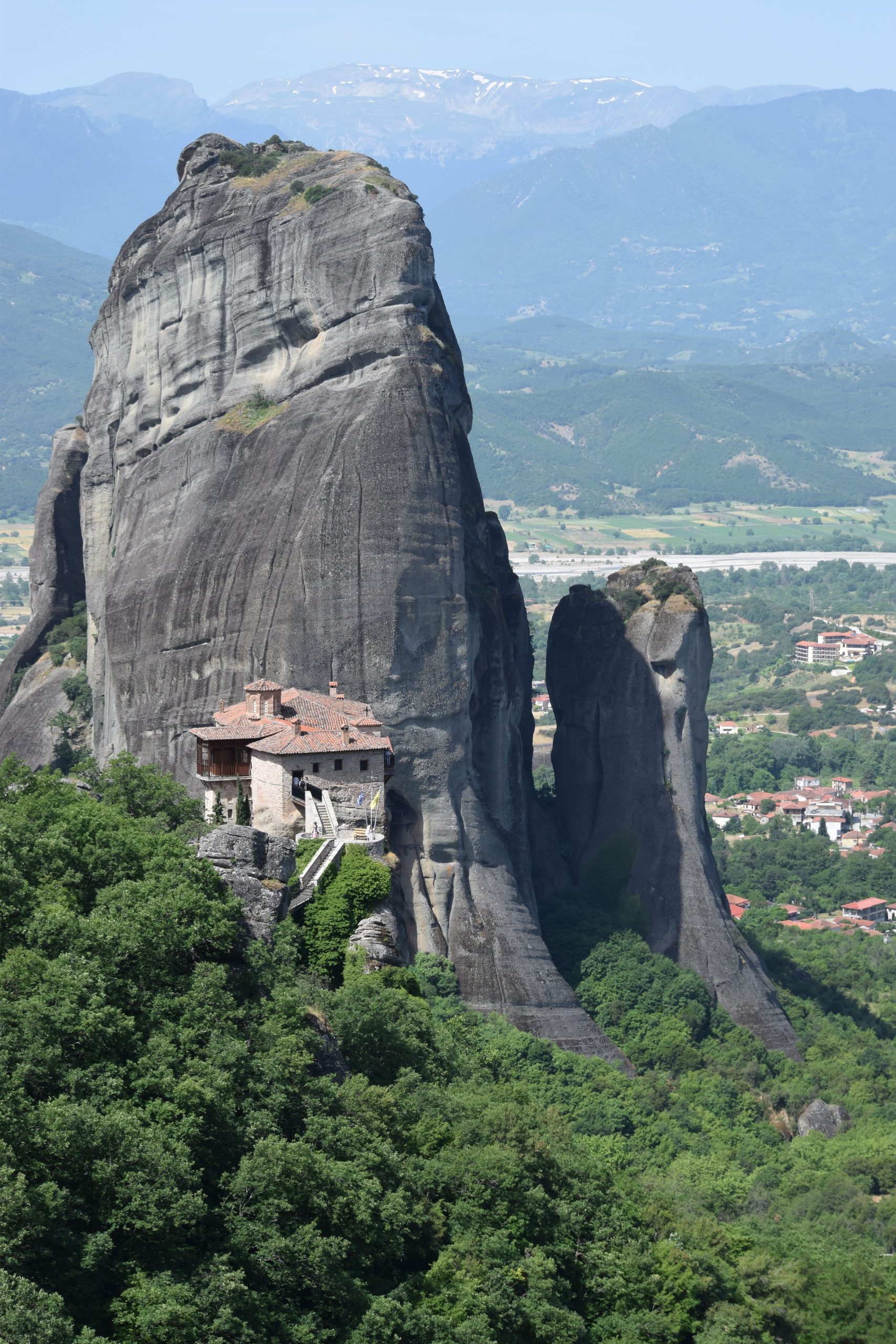
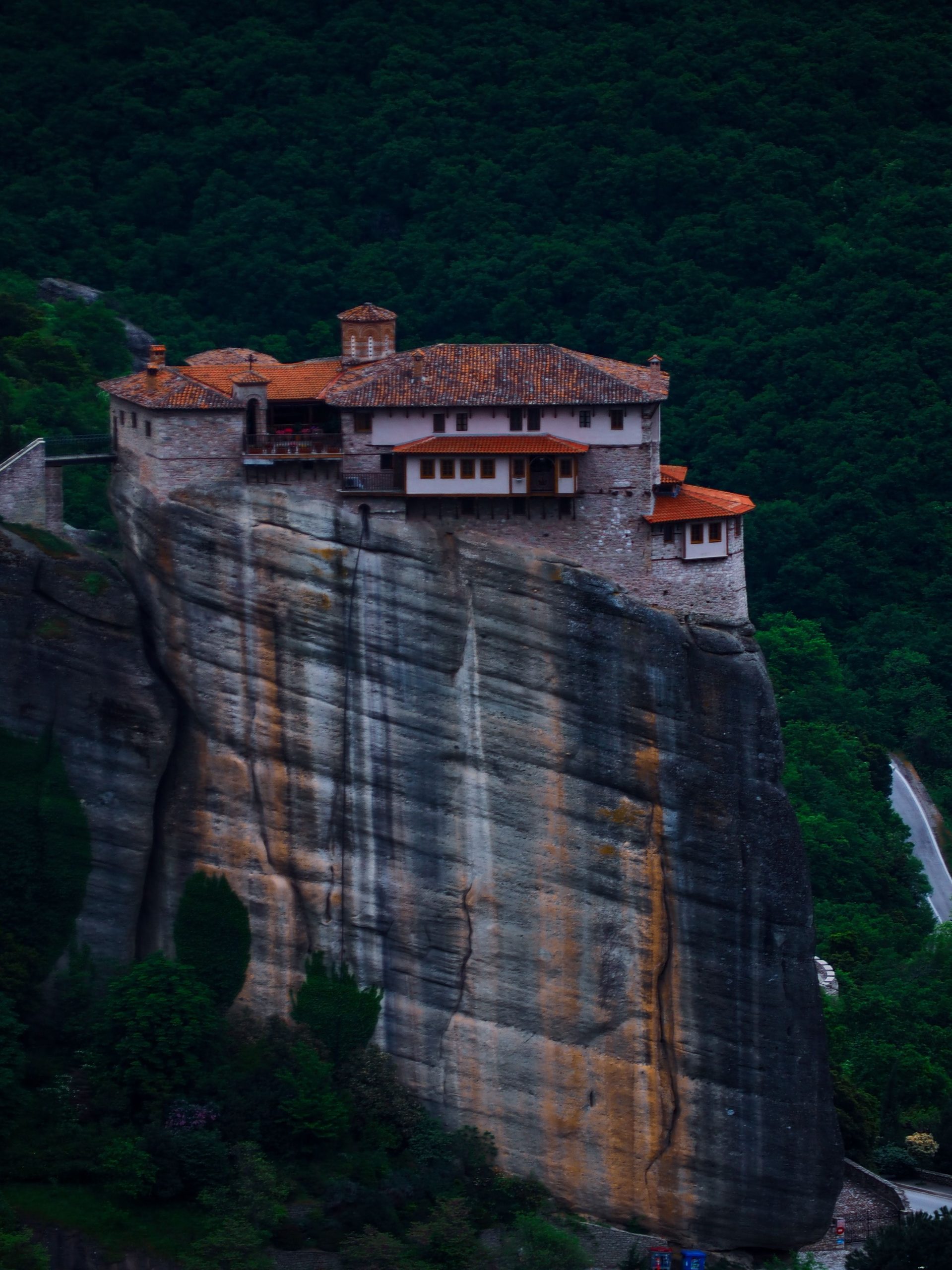
Place a monastery in a large area of rock, sky or green and let the size of the pillar tell the story. A small building high in the frame, with the cliff below it, feels much taller than the same building cropped tight.
Layer the land
Look for foreground, middle ground and background. A branch or a rock in the foreground, a monastery in the middle and a faraway ridge behind give a picture depth. Fog can separate the layers for you.
Watch the edges
A monastery on a cliff has hard edges where the wall ends and the rock begins. Check that you have not cut off a corner of the building or a tower in your frame. A small move can fix the problem.
Go vertical and horizontal
The pillars are tall, so vertical frames feel natural, and the valley is wide, so horizontal frames suit the long views. Take both. You will be glad of the choice when you edit.
Wait for the light
Warm light early or late in the day brings out the color of the stone and the roofs. Soft cloud is good for detail. Harder light can produce strong shadow boundaries; test whether they help the particular view.
 Save
About Photographing From the Air
The film on this page shows Meteora from above, and many readers will ask about doing the same. This page does not give advice on flying a drone there. Rules for drones differ by country, by region and by site, and they change, so anyone who wants to fly must check the official rules for that specific place and follow them before doing anything. Ground-level viewpoints and longer lenses offer different ways to isolate the buildings. They do not reproduce an aerial camera position.
Editing Meteora Pictures
Begin with a restrained edit and compare it with the original. Correct exposure and white balance, then bring out the texture of the rock with a small increase in clarity or contrast. Watch the greens. Foliage can go neon if you push saturation, and the warm tones of the roofs can look unnatural if you push them too far. Straighten the verticals on buildings and check that the pillars do not lean in an odd way.
If you remove sensor dust or a small distraction, that is normal clean-up. If you composite or replace a sky, say so when you share the image. For more on building strong travel pictures, see our travel photography guide and our landscape photography guide.
 Save
A Short Shot List
For a useful set, make a wide frame first, then change the picture deliberately instead of taking ten nearly identical views. Try a longer focal length to separate one monastery from the surrounding valley. Check the corners for branches, poles and bright patches that pull attention away from the rock. If a safe, permitted viewpoint gives you room to move, shift a little sideways and compare how the foreground overlaps the building. Keep the horizon level unless the composition gives you a clear reason not to. Before leaving, zoom into a test frame and check the roofline and cliff detail for camera shake. A second exposure made carefully is more useful than discovering a soft file after the trip.
Before you go, write a short list so you do not forget the basics. A wide view of the pillars and the valley. A medium view of one monastery against its rock. A detail of a wall, a roof or a window. A frame with fog or low cloud if the weather gives you the chance. A picture of the land at the end of the day. If you have all five, you have a fair record of the place and room to experiment with the rest.
Keep notes as you shoot. A few words about which monastery or viewpoint each picture shows will save you from guessing later. Captions that say what is visible and where you stood are better than a long, confident story you cannot back up.
Final Thoughts
Meteora rewards patience. The monasteries are small, the rock is huge and the light changes quickly. The film at the top of this page shows the place from above, and the stock photographs here illustrate the landscape from several viewpoints. Use both to plan your own picture list, check current visiting information for the places you want to see and treat each one with respect. Then go and make something of your own.
Frequently Asked Questions
What does Meteora mean?
UNESCO gives the meaning of Meteora in Greek as “suspended in the air,” which describes the monasteries on their tall rock pillars.
Where is Meteora?
UNESCO describes Meteora as a collection of monasteries in the centre of mainland Greece, on sandstone peaks.
How old are the Meteora monasteries?
According to UNESCO, monks began settling on the rock columns from the 11th century, and by the end of the 15th century 24 monasteries had been built on the peaks.
Can I take pictures inside the monasteries?
Rules differ by site and can change. Check the current rules with each monastery or an official source, follow posted signs and ask staff before using a camera indoors.
Can I fly a drone at Meteora?
This page does not give advice on that. Drone rules differ by country and site and change over time, so check the official rules for the exact place before any flight.
Options for travel and landscape photography, not gear used for these illustrative photographs. No prices listed here – check current pricing and availability at the retailer links.
Affiliate disclosure: this article contains B&H affiliate links. If you buy through them we may earn a commission at no extra cost to you.