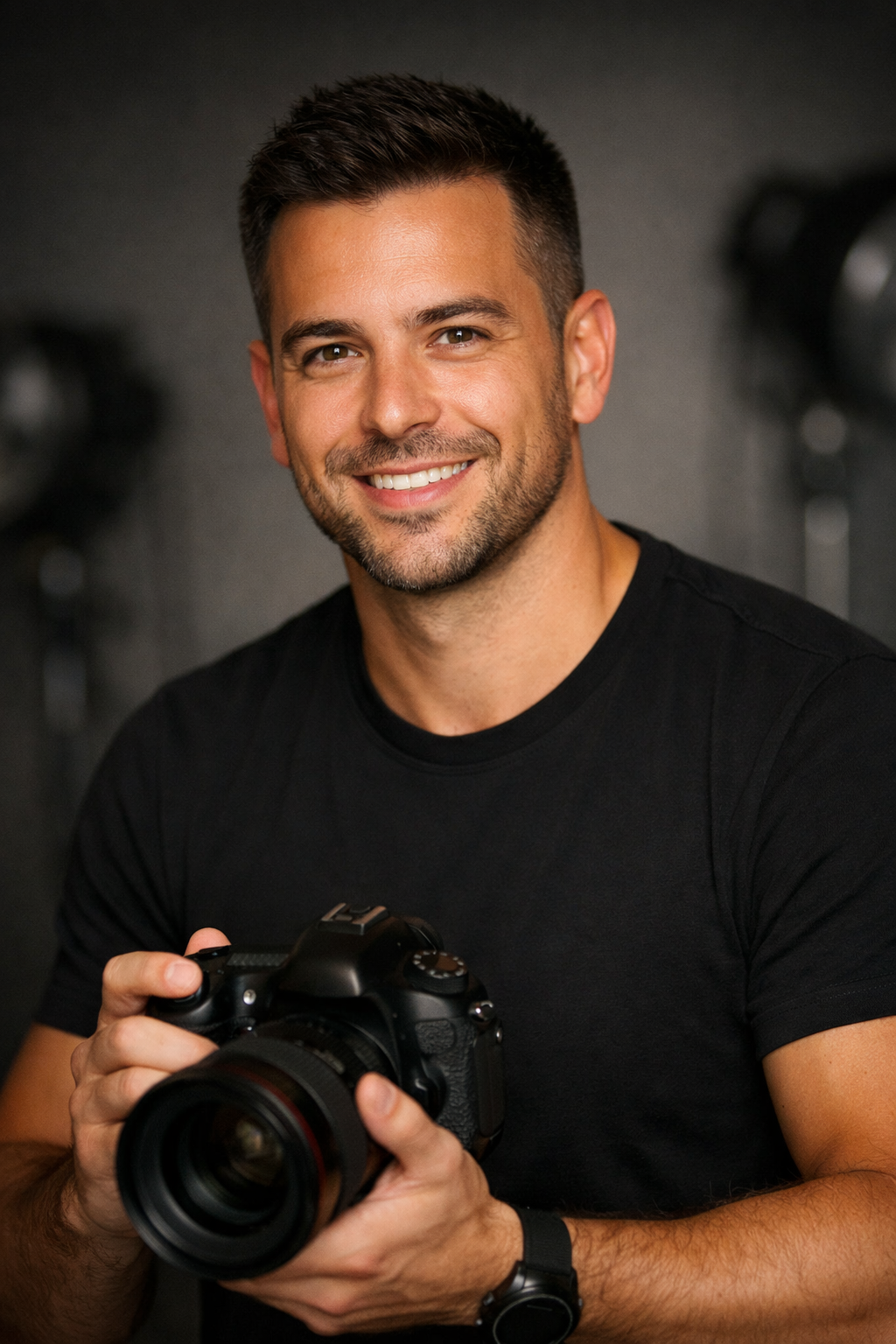
Making someone look photogenic is not about fixing their face. It is about making a photograph that feels like them. Find useful light, give clear direction, and leave enough room for a real expression. Those decisions matter more than a complicated pose or a bag full of expensive lenses.
When someone says, “I never look good in pictures,” do not argue with them or promise a miracle. Ask what they dislike about being photographed. Maybe they feel rushed, freeze when they see a camera, or have only seen themselves in harsh overhead light. Your job is to make the session easier, not to turn their appearance into a problem.
These portrait photography tips build on three practical ideas: prepare the light and small details, arrange a comfortable position, and make space for natural expression. They work for a quick portrait, a family photograph, a personal branding session, or a more deliberate environmental portrait. Adapt them to the person rather than expecting everyone to fit the same recipe.
1. Change the conditions before changing the person
Start by looking at the scene. Where is the light coming from? What sits behind the subject? Is there enough room to move without standing in a road or blocking a doorway? Solve those problems before asking someone to turn their head ten different ways. A small move into better light can do more than a long list of instructions.
Look for a place where the face receives useful light and the background does not compete with it. That might be near a window, under open shade, or beside a doorway. These are starting points, not automatic answers. Take a test photograph and inspect the eyes, forehead, cheeks, and shadows. You want to see the actual result, not trust the name of the lighting setup.
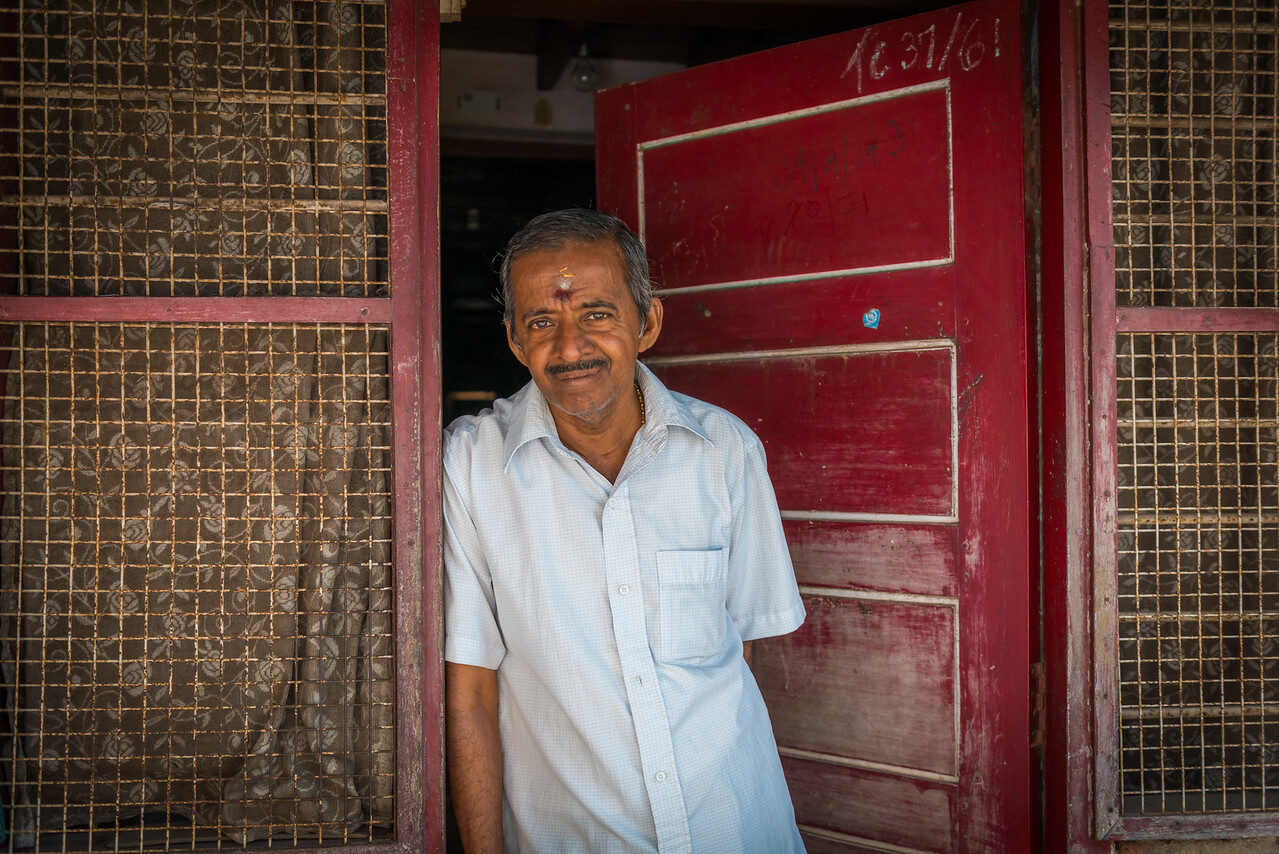
A doorway can create direction and a sense of place. Keep access clear and ask permission before using someone else’s space. Do not assume that every shaded doorway has good light: a bright street behind the photographer, dark walls, or a colored surface can all change what reaches the face. Move carefully and watch the photograph improve or get worse.
 Save
Use the eyes as a lighting check
Look at the eyes before you worry about tiny details elsewhere. Are they visible, or buried under a heavy shadow? Is the person squinting? Does a reflection in glasses hide them? Try turning the subject or changing your position a little. A small adjustment can improve eye visibility without forcing an uncomfortable head angle.
Soft light is often an easy starting point, but it is not the only useful light. Stronger light can suit a portrait when the shadows are deliberate and the subject is comfortable. The mistake is using a difficult lighting situation without noticing its effect. If you have only a few minutes, choose the simpler setup and spend the saved time connecting with the person.
Keep the background on your side
Scan the edges of the frame. A pole behind the head, a bright sign beside the face, or a patch of sky can pull attention away from the subject. Change your position before asking the person to move. Sometimes one step sideways is enough. Other times a wider frame that includes the environment makes more sense than trying to blur everything into nothing.
Do not use a very wide aperture as a substitute for looking. A soft background can still contain distracting shapes and colors. Check the foreground too: an object near the lens may cover a hand or cut across clothing. Make the frame intentional from edge to edge, then decide how much of the setting you want to keep.
Ask before adjusting hair or clothing
Hair, collars, jewelry, and glasses can change a portrait. Point out a detail politely and let the person decide whether to adjust it. Say, “Your collar folded over on this side. Would you like to straighten it?” That is clearer and more respectful than reaching into their space. Never touch someone, their hair, or their clothing without asking.
Offer a mirror or show a quick photograph when appropriate. They may prefer their hair exactly as it is. Your taste does not automatically outrank theirs. If a loose strand covers an eye, explain what you see rather than calling it a flaw. Keep the conversation practical and avoid turning the session into an inspection of their appearance.
2. Give the body a comfortable starting position
A useful pose gives someone a place to begin. It does not need to reshape them. Start with a position they can hold comfortably: standing with balanced weight, sitting securely, or leaning lightly against a surface that is safe and permitted. Check mobility needs, clothing restrictions, and fatigue before suggesting something more demanding.
Ask the person to settle into the position rather than lock every joint. Stiff shoulders and clenched hands often come from trying too hard to follow instructions. Give one change at a time. If the direction is confusing, demonstrate it yourself without exaggeration. A clear example usually works better than a long explanation involving multiple angles.
 Save
Try a square position and a slight turn
A person facing the camera can make a direct, confident portrait. A small turn may introduce depth or better connect them to the setting. Neither is universally better. Make a photograph of both if time allows and compare the expression, light, and overall feeling. Do not describe one arrangement as the correct way to hide a body.
Keep the head movement small unless the person naturally wants to do more. A strong body turn with the face pulled back toward the camera can strain the neck. If you see discomfort, reset. There is no prize for holding a pose that hurts, and discomfort is unlikely to help the expression you are trying to capture.
Give the hands something simple to do
Hands often become the first awkward part of a portrait. They can rest loosely, hold a familiar object, sit on a chair arm, or connect with another person when that feels appropriate. Choose something that belongs in the photograph. Adding a random cup or prop can solve one problem while creating a stranger-looking scene.
Watch pressure and tension. A tight grip can make the whole pose feel forced. Ask for a lighter touch rather than telling the person to relax in a vague way. If they are seated, check whether the hands are comfortable and visible. Let them shift between photographs instead of holding the same arrangement through every camera adjustment.
Make sitting work for the person
Check the seat before suggesting it. It should be stable, clean enough for the clothing, and suitable for the subject’s needs. A low ledge may be easy for one person and difficult for another. Offer a choice. Do not ask someone to climb, balance, or sit somewhere unsafe just because the background looks interesting.
A seated portrait can include more of the environment and provide a natural place for hands. Look at how the chair or ledge intersects the body. Keep important details from merging into the background, but do not obsess over geometric perfection. The person and their expression should remain the reason for the photograph.
 Save
Use distance thoughtfully
Your distance from the subject changes perspective. For a close portrait, avoid moving so close that nearby facial features become exaggerated unless that effect is deliberate. Step back and reframe when the space allows. Changing focal length alone does not undo the perspective of a very close camera position.
There is no single portrait lens that makes everyone look good. A wider view can show a person in their environment; a tighter view can concentrate on expression. Choose the framing first, then use the equipment and distance that support it. Watch the frame edges when using a wider view, especially if another person is standing near the edge.
3. Make room for an expression instead of demanding one
“Smile” is sometimes enough. Often it is not. A person who already feels watched may produce a fixed expression and hold it until their face gets tired. Keep talking, give them pauses, and make photographs between instructions. You are looking for a recognizable expression, not the widest possible grin.
Ask whether they prefer a smile, a neutral portrait, or a mix. Some people love a big laugh; others feel more themselves with a quieter expression. Do not insist that every photograph needs to be cheerful. A direct gaze, a thoughtful pause, or a small smile can all belong in a strong portrait.
Give specific, kind feedback
Tell the person what is working: “That position gives us good light across your eyes,” or “Stay there for one more frame; the background is clean.” This is more useful than a stream of exaggerated compliments. Keep criticism directed at the setup, not the person. Say that the light is difficult, not that their face is difficult.
When a photograph misses, take responsibility for the next adjustment. Move the camera, improve the light, or simplify the instruction. Do not make the subject feel that they failed a test. A calm session gives you better chances to notice something real than a session built around constant correction.
 Save
Use a short reset when the face gets tired
Let the person look away, breathe normally, or change their position. You can invite them to look back toward the lens when ready. Some people like briefly closing their eyes before a photograph, but ask rather than treating it as a guaranteed trick. It may not suit their comfort, expression, or the situation.
A reset should be easy. Do not invent an elaborate emotional prompt when a simple pause will do. Avoid pushing someone to recall a painful memory or disclose something personal for the sake of a photograph. Conversation can be ordinary and still produce a useful moment. Respect a person who prefers a quiet session.
Keep the camera ready so the person does not have to wait
Prepare exposure and focus before giving detailed direction. Choose a shutter speed that fits the subject’s movement and your camera handling. If the person talks, laughs, or shifts, a setting that worked for a motionless test frame may not be enough. Review sharpness at useful moments and adjust when needed.
Use eye detection if your camera provides it and it works reliably in the scene, but check the result. Glasses, low light, more than one face, or an unusual angle can change where the camera focuses. With a group, consider whether your depth of field covers everyone rather than only the nearest eye. A technically missed expression is still a missed photograph.
Take a small series when expression is changing, then stop. Constant bursts can feel overwhelming and create a pile of nearly identical files. Explain what you are doing if the camera is noisy. Keep screen checking brief enough that the person does not feel abandoned while you review every frame.
A simple portrait sequence you can repeat
- Talk first. Ask how the person wants to look and what makes the session uncomfortable.
- Choose the light. Make one test photograph and check eyes, shadows, and background.
- Set one position. Use comfortable standing or sitting, then make a direct portrait.
- Change one thing. Try a slight turn, another hand position, or a different framing.
- Reset. Give the person a break, then make a quieter expression or a smile if they want one.
- Check together. Show a useful frame when appropriate and ask whether it feels like them.
Keep the sequence flexible. If a position works, stay long enough to make a clean photograph. If it does not, move on without making the subject carry the problem. Three thoughtful arrangements are more useful than twenty rushed ones. Finish while the person still has energy rather than stretching the session simply because you can.
Edit the photograph without rewriting the person
Start with exposure, color, crop, and distractions. Keep skin color believable and avoid applying an aggressive preset that fights the light. Ask about retouching preferences when the work calls for it. A temporary distraction and a permanent feature are different decisions; do not assume that everything visible needs removal.
Let the person influence the final selection when that fits the project. You may prefer a dramatic expression while they prefer a softer one. Explain your choices, but listen. A portrait can be technically strong and still fail the subject’s purpose. The goal is a photograph they can use and recognize, not proof that you know a posing trick.
Build your portrait skills with purpose
Practice one variable at a time with willing subjects. Try the same comfortable position in two lighting situations, or compare a direct view with a slight turn. Review what changed and why. That gives you a useful foundation instead of a collection of poses you cannot explain.
The Academy’s Portrait Masterclass connects trust, light, direction, and the human connection. It is a way to build the judgment behind these tips, so you can adapt to the person in front of you instead of copying a fixed pose. Put that practice into a simple workflow before your next important portrait session.
Portrait photography questions
How do I help someone who says they are not photogenic?
Ask what makes photographs uncomfortable, start in useful light, and give one clear instruction at a time. Offer breaks and show a useful frame when appropriate. Do not treat their appearance as a problem to fix.
Does everyone need to smile for a good portrait?
No. A neutral expression, small smile, or laugh can all work. Ask what feels like the person and make a few options rather than demanding the same expression throughout the session.
What should someone do with their hands?
Start with a comfortable resting position, a chair arm, or a familiar object that belongs in the scene. Watch tension and ask for a lighter touch when needed. There is no single hand position that suits everyone.
What lens is best for making people look photogenic?
No lens guarantees that result. Choose framing and camera distance thoughtfully, then use a focal length that fits the space and purpose. Avoid an unintentionally close camera position when its perspective does not suit the portrait.
Should I change someone’s hair or clothing during a portrait?
Point out a detail respectfully and let them decide. Ask before touching the person, their hair, or their clothing. Their comfort and preferences matter more than a styling rule.