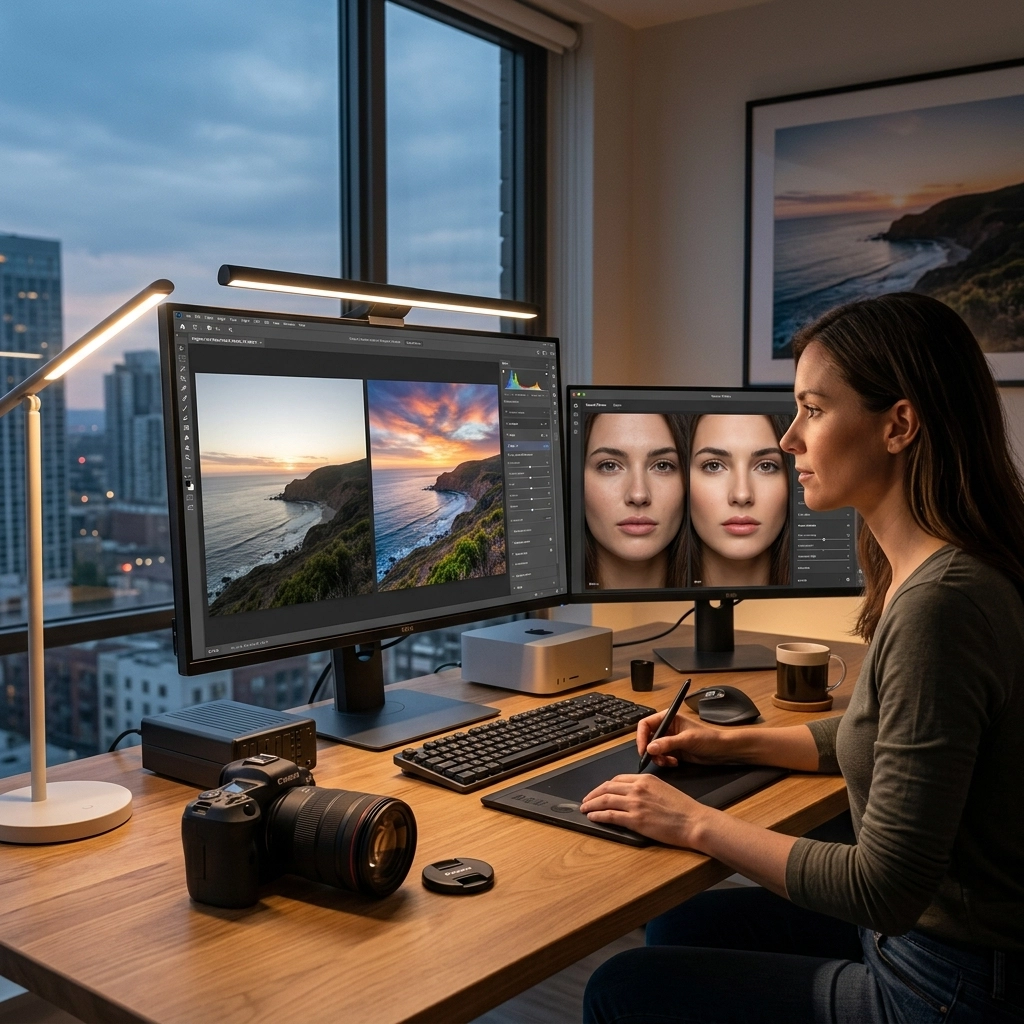
It is Thursday, April 9, 2026, and if you haven’t looked at your editing software in the last few months, you might not even recognize it. The world of photography isn't just moving fast; it’s basically strapped itself to a rocket ship and left the atmosphere.
Remember when "editing" meant sitting in a dark room for six hours, hunched over a laptop, squinting at individual pixels to remove a stray hair? Or spending an entire afternoon trying to mask out a complex treeline? Those days are officially in the rearview mirror.
The latest AI photography news isn't just about a few new filters or faster sliders. We are seeing a fundamental shift in how we capture, process, and even think about images. We’re talking about an intelligent, real-time collaboration between you and your gear. At Shut Your Aperture, we’ve been tracking these changes closely, and honestly, it’s the most exciting time to be a photographer since the switch from film to digital.
The Death of the "Technical Grind"
For decades, the mark of a "professional" photographer was technical mastery. You had to know your color theory, your masking tools, and your noise reduction algorithms inside and out. If you didn't, your photos looked amateur.
But here’s the kicker: AI is now handling the technical execution better than most humans can. From noise reduction to sharpening and exposure optimization, the AI is doing the heavy lifting. This allows us to focus on what actually matters: the soul of the photo.
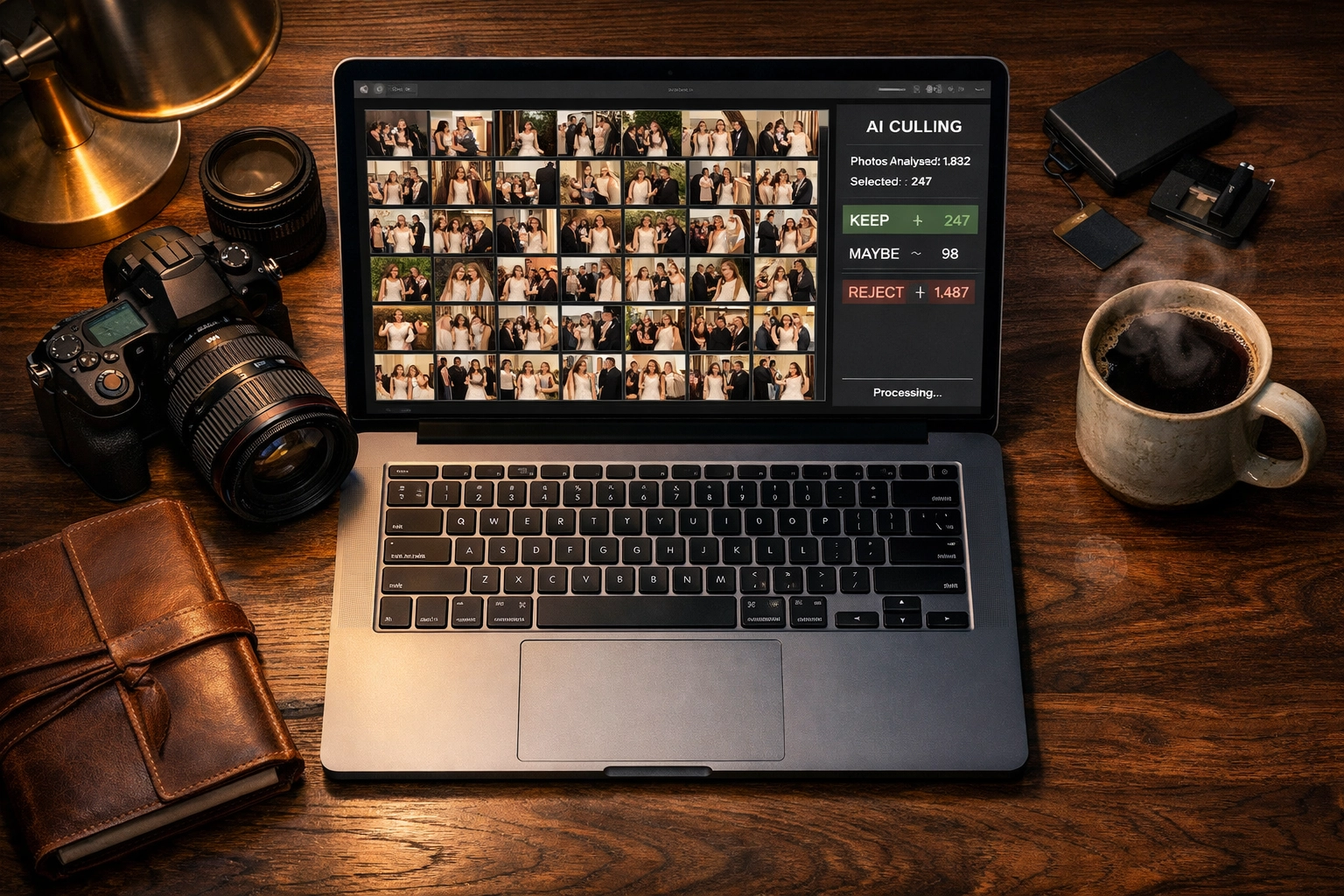
As the industry shifts, the emphasis is moving toward storytelling and emotion. If you’re a photographer who relies purely on being a "technical wizard," you might find the current landscape a bit scary. But if you’re a storyteller, AI is the best assistant you’ve ever had. Over 250,000 photographers are already using AI culling tools like Aftershoot to reclaim their lives. Instead of spending five hours picking the best shots from a wedding, the AI does it in five minutes, letting the photographer get back to the creative side of things.
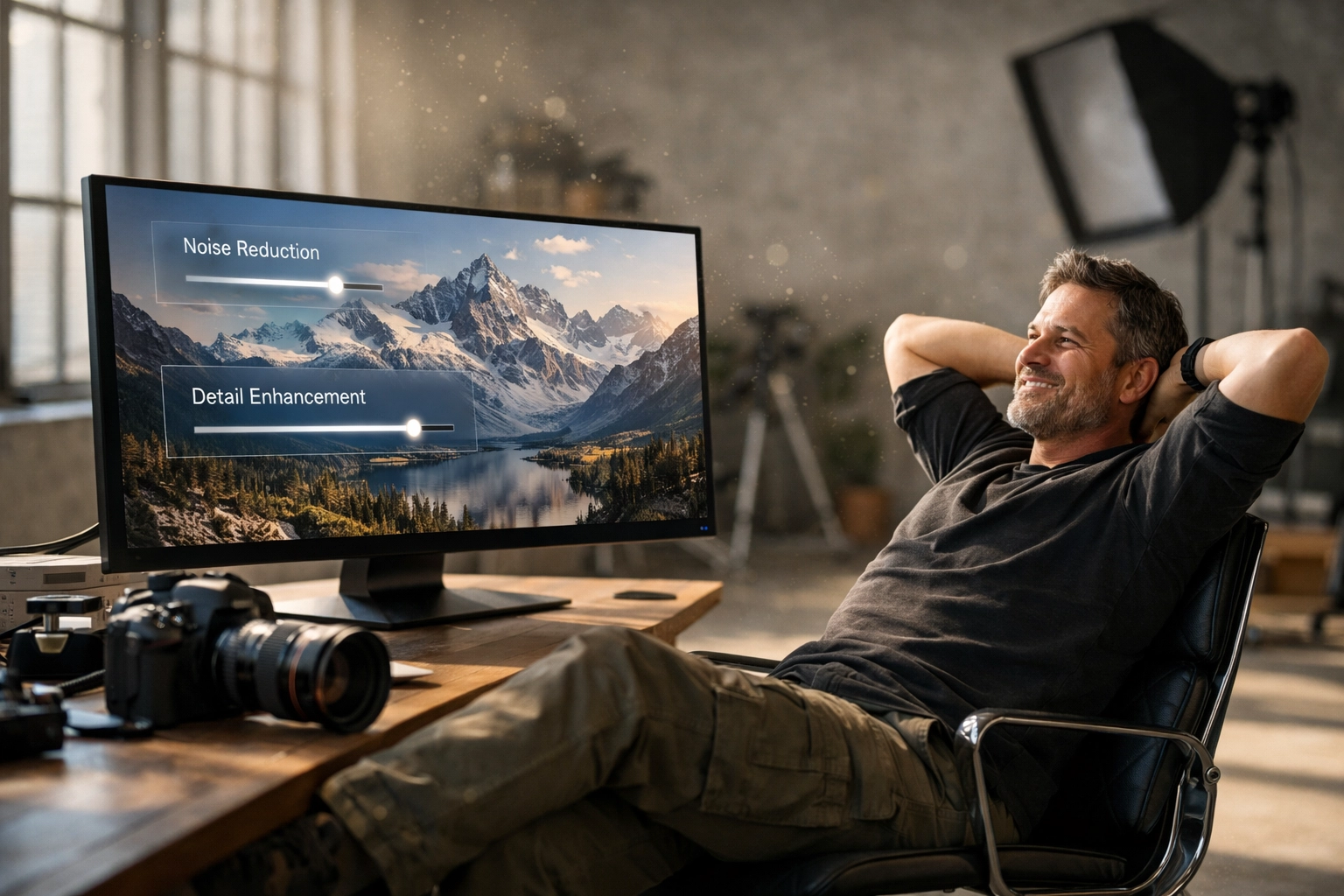
In-Camera AI: The Capture Is the Edit
We used to say, "I'll fix it in post." In 2026, the "post" is happening while you’re still holding the camera.
Take the Canon EOS R5 Mark II, for example. It’s not just a box that records light; it’s a supercomputer. It uses deep learning modules that actually anticipate subject movement. It doesn't just react to where a bird is; it predicts where the bird will be.
More importantly, it’s adjusting exposure and automatically improving image quality during the capture phase. We’re even seeing prototypes like the CMR M-1 that embed diffusion algorithms directly into the device. This allows you to modulate generative output in real-time. You can basically "style" your RAW file before the data even hits the memory card.
If you want to stay updated on these hardware shifts, check out our guide on why everyone is talking about mirrorless cameras in 2026. It’s not just about the lack of a mirror anymore; it’s about the brains inside the body.
The Power of Generative Editing
Generative AI has moved far beyond the "experimental" phase. It’s now a core part of the professional workflow. Adobe Photoshop’s Generative Fill has changed the game for commercial photographers. Need to extend a landscape because the client wants a horizontal banner instead of a vertical one? Done. Need to invent a realistic background because the location was ugly? Easy.
But it’s not just Adobe. Software like Luminar Neo has been pushing the boundaries of what’s possible with atmospheric AI. Tools that can instantly relight a scene or add realistic fog aren't just "cheating": they are creative tools that allow you to execute a vision that might have been physically impossible to capture in the moment.
If you’re just starting out and this sounds a bit overwhelming, don’t sweat it. Mastering these tools is easier than learning the old manual ways. Take a look at our photo editing tutorials 101 to see how to integrate these new features into a simple, effective workflow.
Custom AI Models: Your Digital Fingerprint
One of the biggest complaints about AI in the early days was that everything started to look the same. Everyone was using the same "AI look," and it felt a bit soulless.
That changed when Adobe and other developers started allowing photographers to train their own models. Now, you can feed an AI your own portfolio: your specific color grades, your preferred contrast levels, your unique style: and the AI will learn how to edit like you.
This is huge. It moves AI from a "one-size-fits-all" preset to a personalized creative expression. It means you can maintain your artistic voice while the AI handles the repetitive tasks. It’s like having a digital clone of yourself that does all the boring stuff while you make the big creative decisions. For more on how to hone that creative eye, Shut Your Aperture has some great resources on developing a unique style.
Beyond the Basics: Restoration and Enhancement
We’ve all been there: you capture the perfect moment, but the focus is just a hair off, or the lighting is so dim that the noise ruins the shot. In the past, those were "bin" photos. You’d delete them and move on.
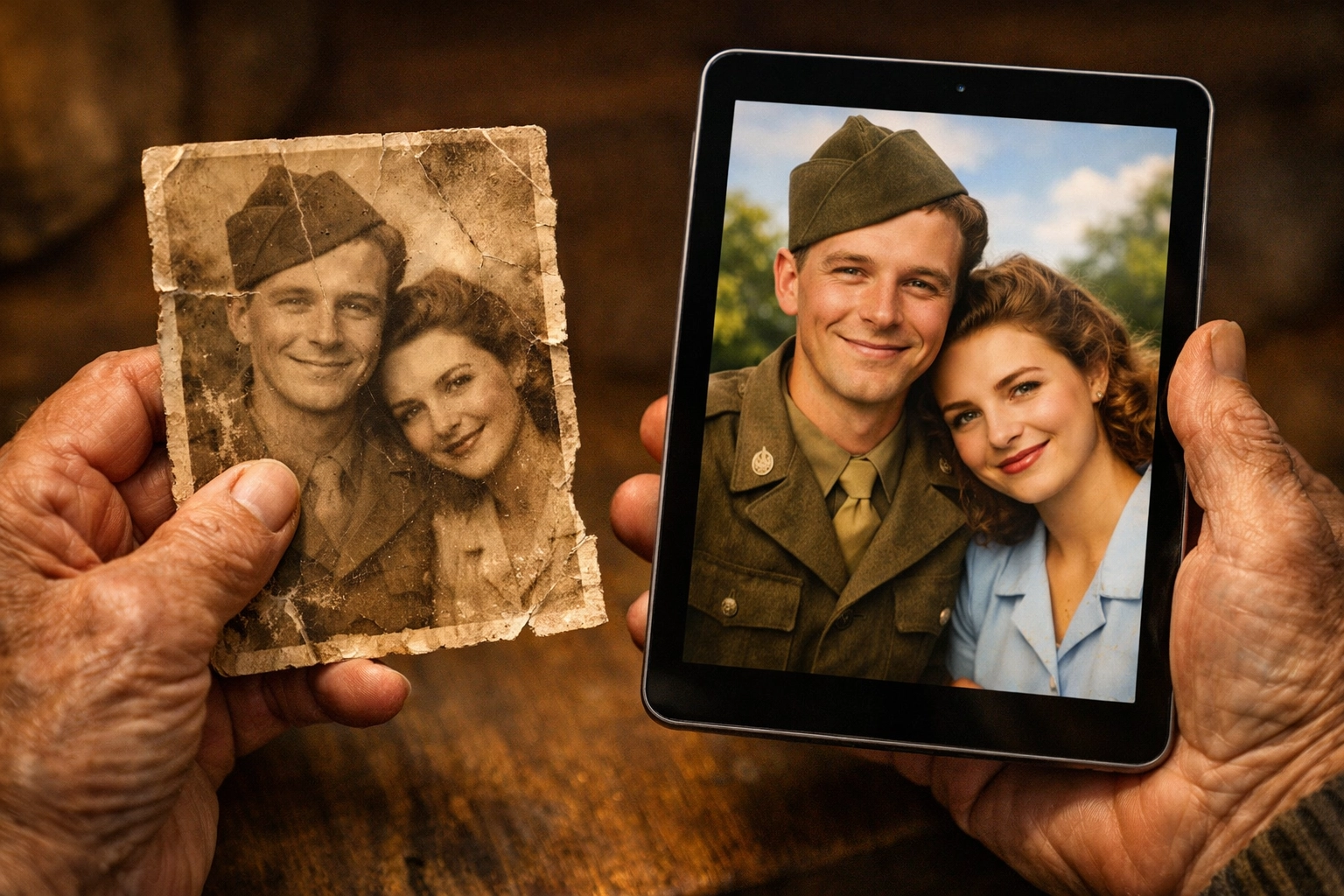
Not anymore. Tools like Topaz Photo AI and Luminar have reached a point where they can effectively "hallucinate" missing detail based on deep learning. They aren't just blurring the noise; they are understanding what the texture of skin or fabric is supposed to look like and rebuilding it.
This technology has massive implications for historical archives and personal memories. We can now take photos from decades ago and bring them up to modern standards of clarity and color. This bridge between the past and the future is one of the most heartwarming aspects of the AI revolution.
Changing the Philosophical Approach to Photography
There is a lot of talk about "authenticity" in the age of AI. If an AI adds a sunset or removes a person, is it still a photograph?
At Shut Your Aperture, we believe photography has always been about a blend of reality and vision. Since the days of the darkroom, photographers have been dodging, burning, and manipulating their images to tell a story. AI is just a more powerful brush.
The goal is to take better photos, and if AI helps you achieve the vision you had in your head when you pressed the shutter, then it’s a win. The latest photography news shows that the industry is embracing this. We are moving away from the "purist" mindset and toward a "creator" mindset.
For inspiration on how to maintain a strong composition even when using these high-tech tools, check out our piece on Steve McCurry's composition tips. No amount of AI can fix a poorly composed shot, so the fundamentals still matter more than ever.
Practical Steps to Embrace AI in Your Workflow
If you’re feeling a bit behind, don't worry. You don't have to change everything overnight. Here is a simple way to start integrating AI into your editing today:
- AI Culling: Use a tool like Aftershoot to get through your raw files. Your time is worth more than clicking "next" 2,000 times.
- Generative Clean-up: Use Photoshop’s Generative Fill to remove distracting elements that used to take hours to clone out.
- Intelligent Enhancements: Use Luminar for sky replacement or relighting to give your photos a professional polish with one click.
- Upscaling: If you have an old photo you love but it’s too small for a large print, use an AI upscaler to prep it for Edin Fine Art.
The Future: What’s Next?
As we look toward the rest of 2026 and beyond, the integration between our eyes and our editors will only get tighter. We are already seeing the rise of "computational photography" in smartphones, and that tech is bleeding into professional full-frame systems.
We might soon see a world where your camera suggests compositions in real-time based on the styles of famous photographers, or where your editing software can automatically generate a full gallery based on a single "hero" edit you’ve made.
If you want to keep your finger on the pulse, make sure to visit ProShoot.io for professional gear reviews and Edin Studios for more creative inspiration.
Conclusion: Don't Fear the Machine
The latest AI photography news isn't a threat to photographers; it’s a liberation. It’s taking away the tedious, eye-straining parts of the job and giving us back the joy of creation.
Whether you’re a beginner learning how to use manual mode or a seasoned pro looking for the best mirrorless camera in 2026, AI is going to be a part of your journey. Embrace it, play with it, and use it to tell stories that were never possible before.
The way we edit has changed forever, and honestly? We wouldn't have it any other way. For more deep dives into the world of photography and to see some incredible work, check out our blog at EdinChavez.com. Stay creative, keep shooting, and don't be afraid to let the AI help you reach that next level.