Updated October 2026
Magnum Silentium by Yohan Terraza is a mountain photography series built around silence, not a list of summits. Its pictures move between broad daylight, clouded ridges, firelight, and stars. Sometimes a person appears as a small silhouette. Sometimes the landscape stands alone. The work asks you to slow down long enough to notice how scale, darkness, and the space between things change the way a mountain photograph feels.
The series was originally featured here in May 2015 with Terraza’s own account of its development. He described collecting photographs over six years while traveling through mountains in France, Switzerland, and New Zealand, with many images made in the French Pyrénées. The project emerged from those journeys rather than from one expedition planned around a fixed shot list. This expanded guide preserves the twelve photographs in our original feature and looks at their visual structure. The analysis is editorial; it does not pretend to supply missing exposure settings, exact locations for every frame, or the photographer’s undocumented production methods.
A mountain series that became a personal portrait
Terraza called the work an “inner story” and described silence both outside and inside himself. He connected mountain travel with humility, respect, freedom, shared adventures, and simplicity. In that sense, he considered the series a self-portrait even when his face was not in the picture. The meaning came from how he experienced the mountains and from which photographs he chose to bring together.
That idea is more useful than treating every successful landscape photograph as a technical trophy. A project can show what repeatedly draws you back: weather, solitude, companions, a certain kind of light, or a feeling of being small. You do not need to resolve the project’s entire meaning before you begin. You do need to recognize the relationships when they emerge and decide which frames belong together. The archive becomes a series through selection, not simply because every picture contains a mountain.
Contemporary coverage by Fubiz in November 2014 also described the project as work made across France, Switzerland, and New Zealand over six years. That supports the original account, but it does not identify the country of each photograph reproduced here. The original caption specifically identifies the Milky Way reflected in a mountain lake as the Pyrénées, France. Other frames are discussed by what is visible rather than assigned to a summit or route without evidence.
Begin with atmosphere rather than a complete view
 Save
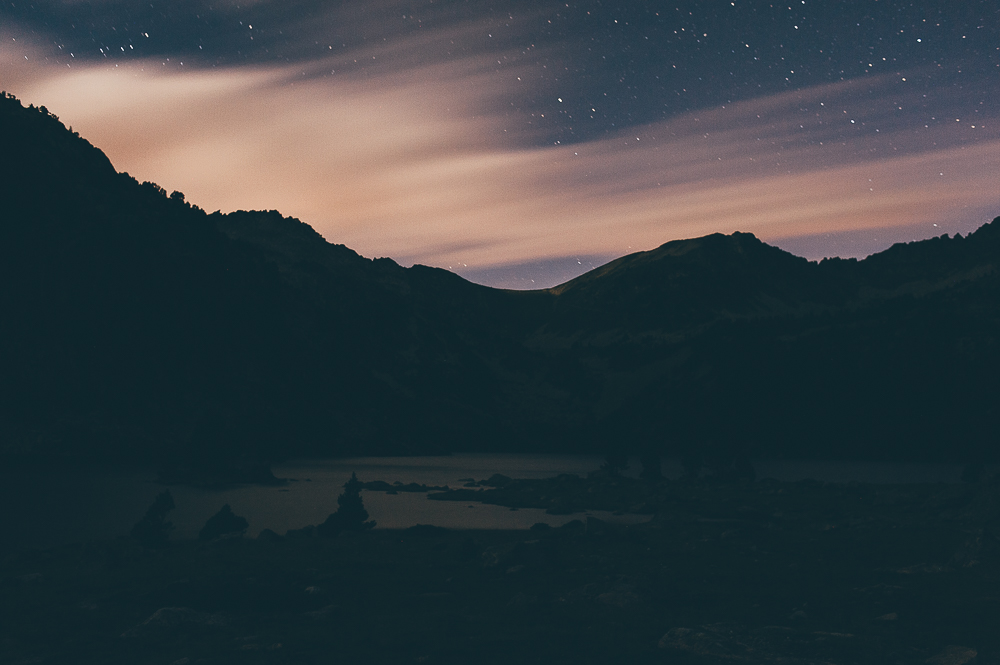
SaveThe first image keeps much of the foreground dark. The sky has color and movement, while the mountains form a quiet boundary. Instead of explaining every rock and tree, the frame establishes a time of day and a state of attention. That is a useful opening for a series about silence: it gives the viewer a reason to stay without telling them everything immediately.
For your own work, ask whether the opening photograph should describe the place or set its emotional terms. A bright, information-rich view and a spare twilight view do different jobs. Keep the important shapes readable, but do not lift every shadow just because editing software makes it possible. Darkness can carry structure. The question is whether the dark areas help the picture, not whether they contain recoverable detail at maximum magnification.
Let a daylight frame reset the scale
 Save
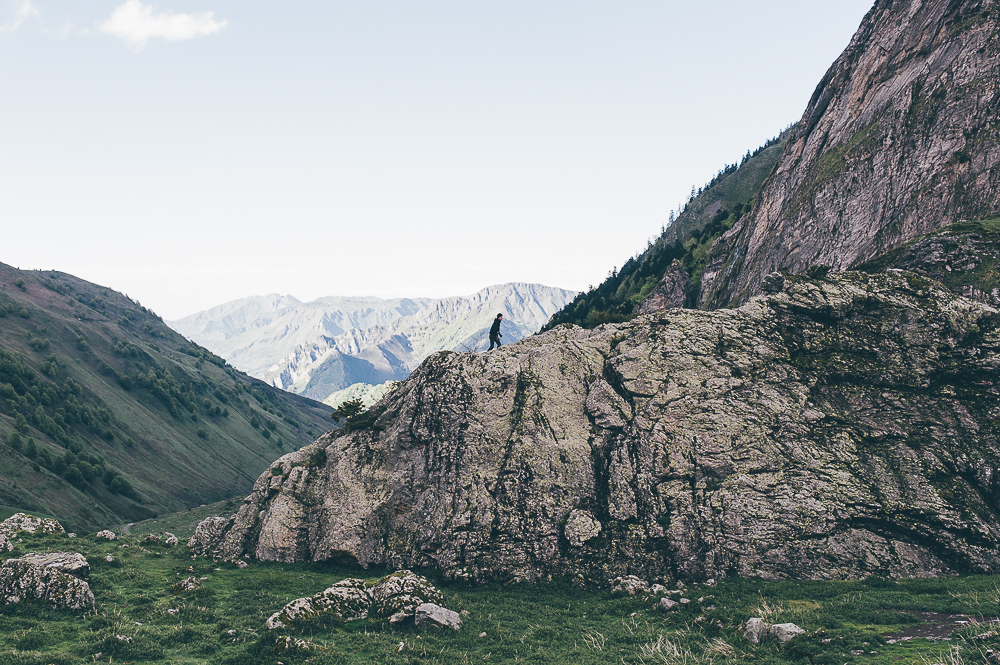
SaveA brighter valley view changes the pace. You can read the rock face, patches of vegetation, and the route of the valley more clearly. The near wall gives the distant mountains a frame of reference. In a sequence, that clarity creates contrast with pictures where cloud or darkness removes information. The series does not have to repeat one dramatic lighting formula to feel consistent.
When assembling a project, include frames that let the viewer breathe and understand space. Those photographs can be quieter than the obvious hero image, yet essential to the sequence. Compare the direction of lines, the position of the horizon, and the relative scale of the landforms. An image may belong because it changes the rhythm in a useful way, not because it produces the strongest response when shown alone.
Allow cloud to simplify a complicated ridge
 Save
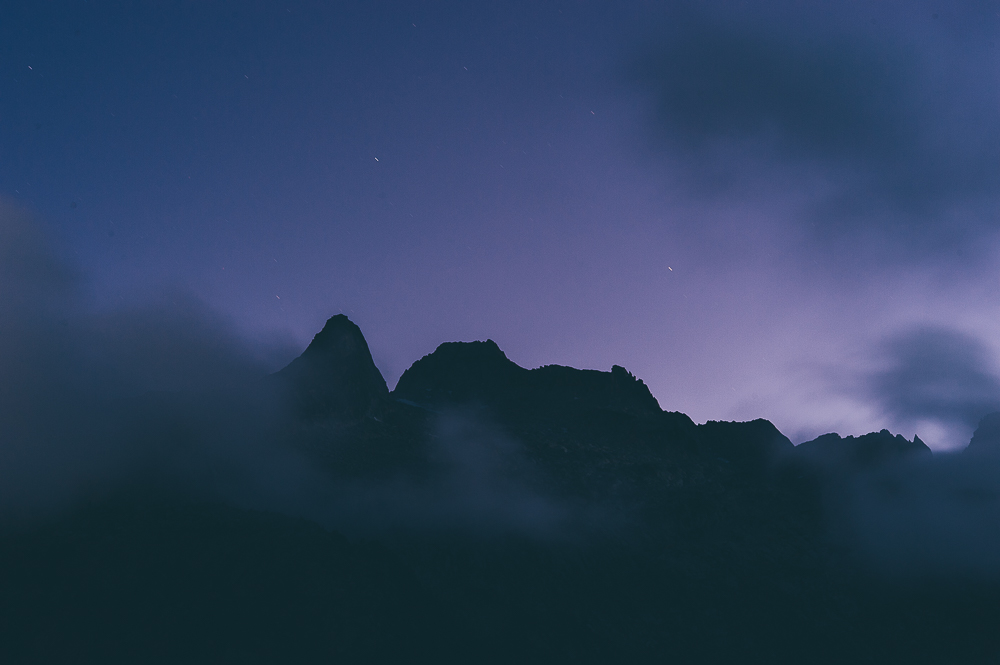
SaveThe pointed ridge is partly obscured. Its visible outline provides enough structure to hold the frame, while cloud removes competing detail. The cool palette connects sky and atmosphere rather than separating them into hard layers. This is a different kind of mountain description: the place is recognizable as a mountainous environment, but the exact topography is not the main point.
A clouded view can work when you stop fighting for a complete panorama. Look for a strong edge, one opening, or a limited group of tones. Wait only from a safe position and let conditions decide whether the photograph is worth continuing. A dramatic weather pattern is not an invitation to stay on exposed ground. The image can be about uncertainty without the working process becoming unsafe.
Use warm and cool frames as a sequence, not a contest
 Save
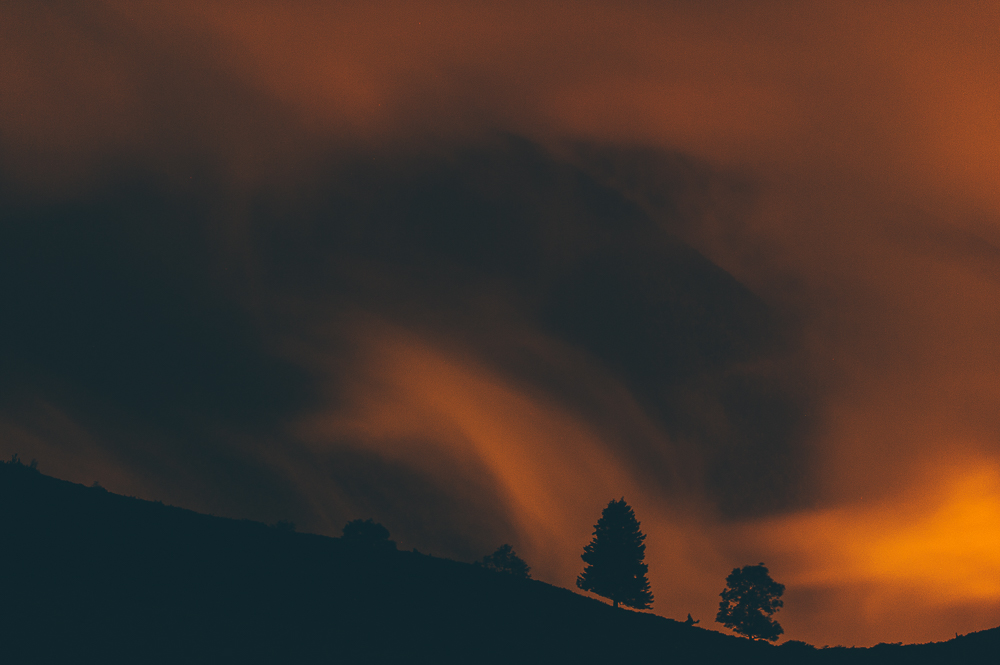
SaveOrange cloud dominates this frame, but the trees give the color a scale. Without those small silhouettes, the picture could read as an abstract patch of sky. With them, the sky feels large and the land feels close enough to inhabit. The visual relationship is simple: a broad field of light above a narrow band of dark forms.
This is a reminder to keep a small anchor in a wide atmospheric view. A tree, ridge, or distant figure can give the viewer a foothold without taking over the picture. In editing, compare the intensity of warm and cool images across the series. Consistency does not require identical white balance. It requires choices that feel intentional rather than a collection of unrelated color effects.
A pale mountain face can be a quiet pause
 Save
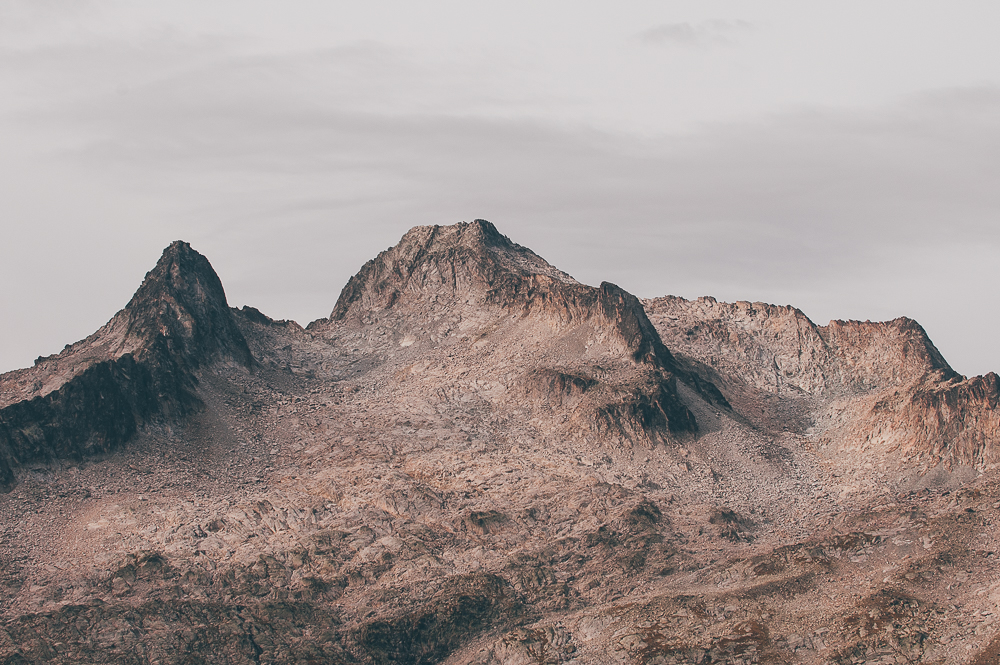
SaveThis view relies on the landform itself. The sky is comparatively quiet, and the pale surface gives you more detail than the silhouette images. The changes in slope and shadow establish volume without a bright prop or human figure. It shows that a series about atmosphere still benefits from photographs where the mountain is fully present.
Use that kind of frame to test your selection. If every image needs a spectacular sky to work, the project may be describing weather more than the place or experience you intended. Include a picture that can stand on the strength of its shape, texture, or spacing. Then decide whether it adds something the more theatrical frames cannot.
Human warmth changes the meaning of darkness
 Save
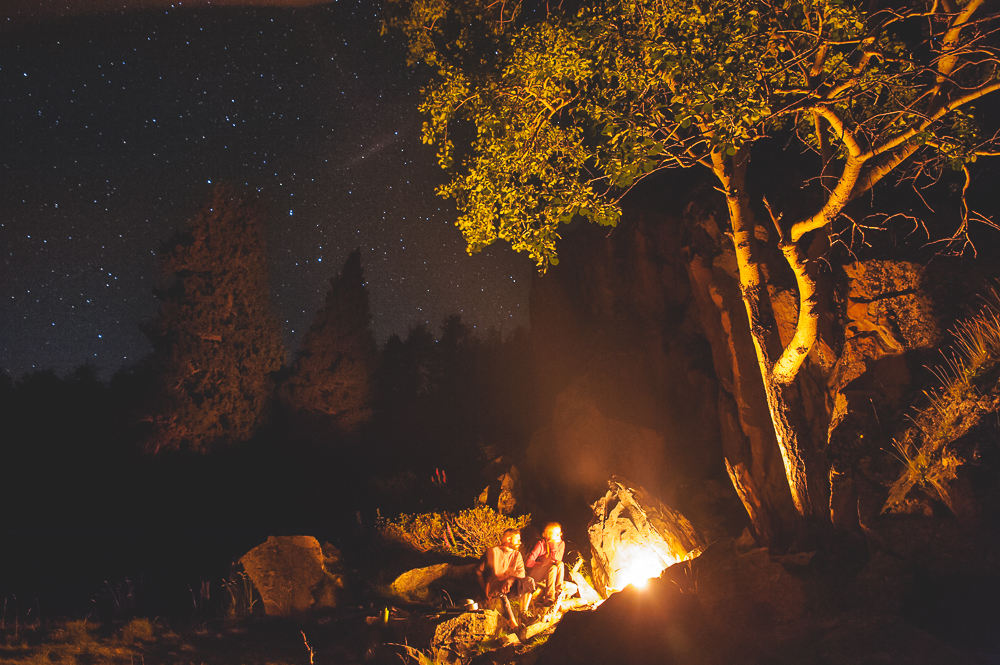
SaveFirelight changes the balance between landscape and people. The lit tree and nearby figures form a small island of warmth, while the surroundings remain dark. The frame is not simply about a scenic night. It is about the difference between a shared place and the large space beyond it. That fits Terraza’s original dedication to the people who joined his adventures.
Do not turn the presence of a fire in an old photograph into current camping advice. Fire restrictions, land rules, weather, and local conditions control whether a fire is allowed. You can photograph human warmth without a flame: a lawful light source, a shelter window, or a small pool of ambient light can serve a different visual purpose. Never add a fire or leave materials behind just to recreate an image.
Keep a person small when the sky is the subject
 Save
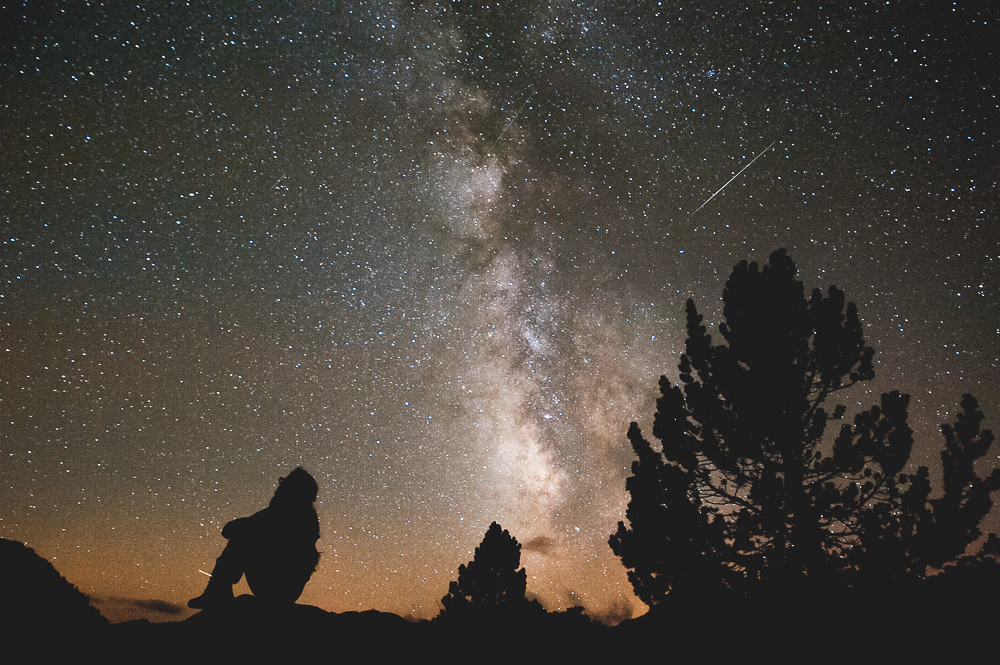
SaveThe figure is readable but not dominant. Its position along the lower edge gives the viewer a human reference while leaving the sky as the largest visual field. Nearby tree shapes repeat the darkness of the person. The frame therefore connects human and landscape through tone before it connects them through story.
When photographing a person under stars, decide what you want them to do visually. A simple outline may be enough. A complicated pose can be hard to read at the final display size, and movement can interfere with a long exposure. Test the gesture and the light without asking anyone to stand in an unsafe place. This discussion does not identify the exposure time or whether multiple source frames were used in Terraza’s picture.
One bright figure can carry a dark frame
 Save
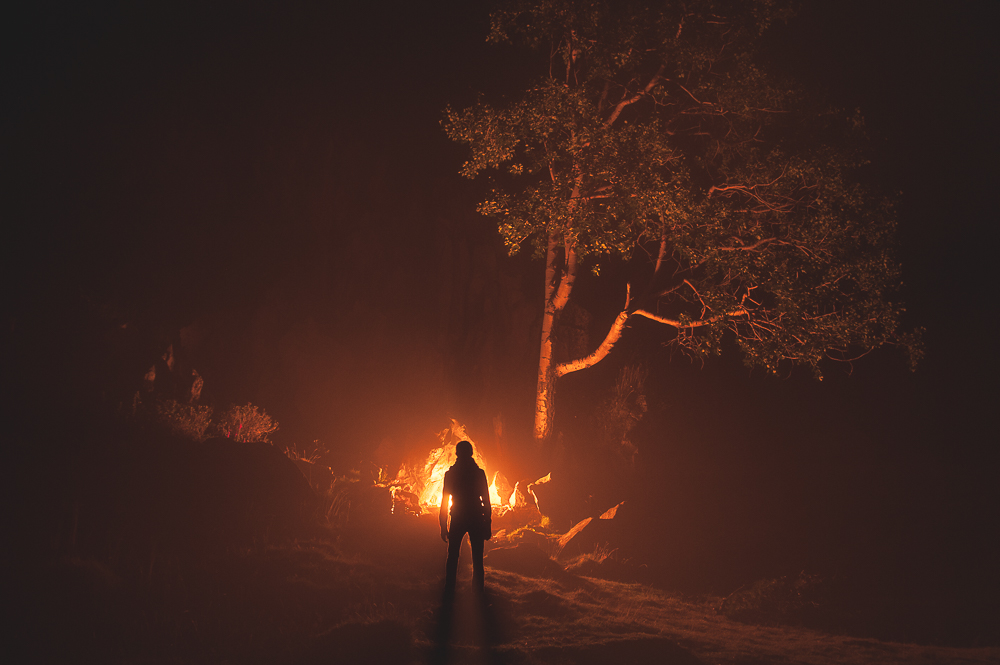
SaveHere the human presence is more direct. A narrow bright area near the figure draws the eye, while most of the frame stays subdued. The tree supplies a surrounding structure, and the darkness makes the small light feel important. The picture does not need a fully lit person to suggest an encounter with the landscape.
A night scene is easier to control when each light has a job. Consider whether a light establishes the subject, creates separation, or merely adds glare. Shield and direct permitted lights so they do not disturb other visitors or wildlife. Keep exposure tests short enough to learn from them, and inspect the highlights as well as the shadows. A small bright area can lose detail long before the rest of the scene looks overexposed.
The lake reflection joins sky and land
 Save
SaveThe lake creates a second sky. Dark trees and the mountain edge sit between the stars above and their reflection below, giving the image a strong central boundary. The reflection is not a separate decorative extra; it completes the frame’s structure. It also makes stillness visible. The viewer can infer calm water from the reflected pattern without a caption saying the scene felt quiet.
For a reflection photograph, scout the composition while you can see the shore clearly. Avoid approaching unknown water edges in darkness. A safe camera position, a stable support, and a readable foreground relationship matter more than reaching the most dramatic-looking point. The sky, water, and land may need different exposure compromises. Check the result rather than assuming one setting makes every part equally clean.
Fog can turn distance into layers
 Save
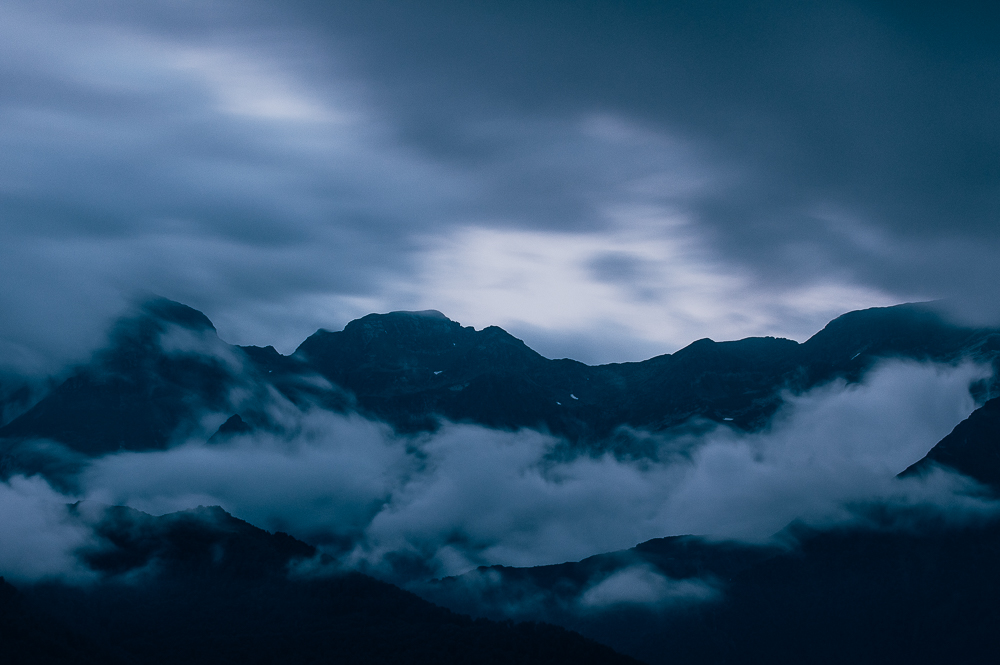
SaveThis image returns to a cool atmosphere. Fog sits between landforms and changes the way distance is read. A ridge that might be visually dense in clear daylight becomes a band among other bands. The eye can move through those layers without being held by one highly detailed surface.
Layered views reward careful framing. Check whether near and distant edges overlap in a confusing way, and whether a small shift in camera position improves separation. Do not assume a wider lens always explains more. Sometimes a narrower view removes distractions and makes the relationship between layers clearer. For a sequence, this kind of image can connect the detailed daylight frames with the more reduced night silhouettes.
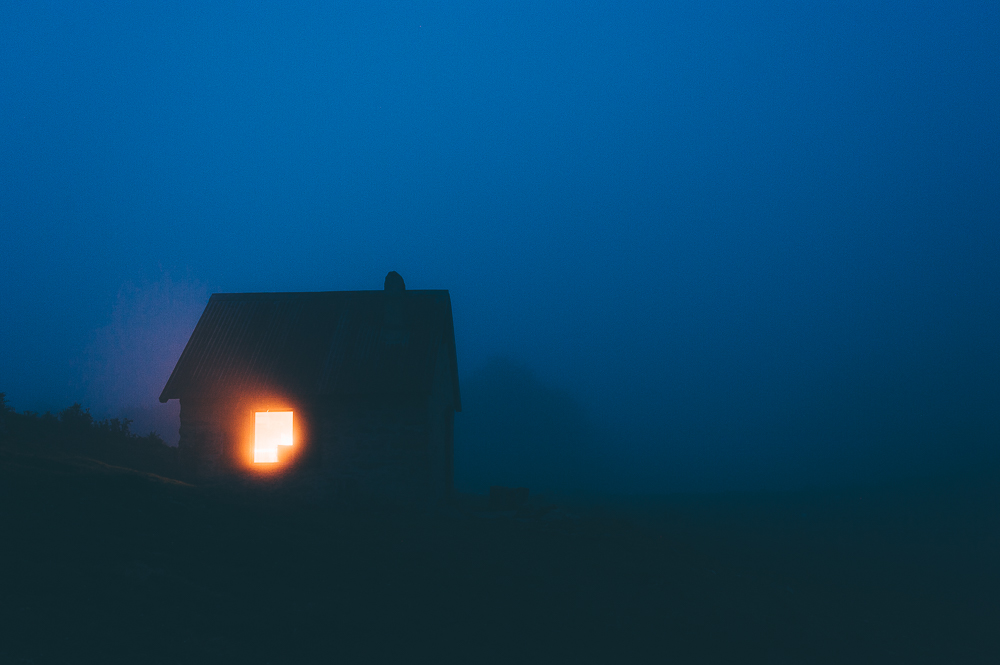
A shelter can suggest presence without showing a person
 Save
SaveThe shelter provides an alternative to a visible figure. Its illuminated opening suggests human presence while the surroundings remain indistinct. The small warm area is enough to establish a relationship between interior and exterior. That economy suits the larger project: a limited number of details carries the feeling.
This is useful when photographing traces of people rather than people themselves. A path, window, occupied-looking shelter, or piece of equipment can imply use, but a caption should not invent who was there or what happened. Photograph from a permitted position, respect occupants, and avoid publishing details that would expose a private refuge or encourage unsafe access.
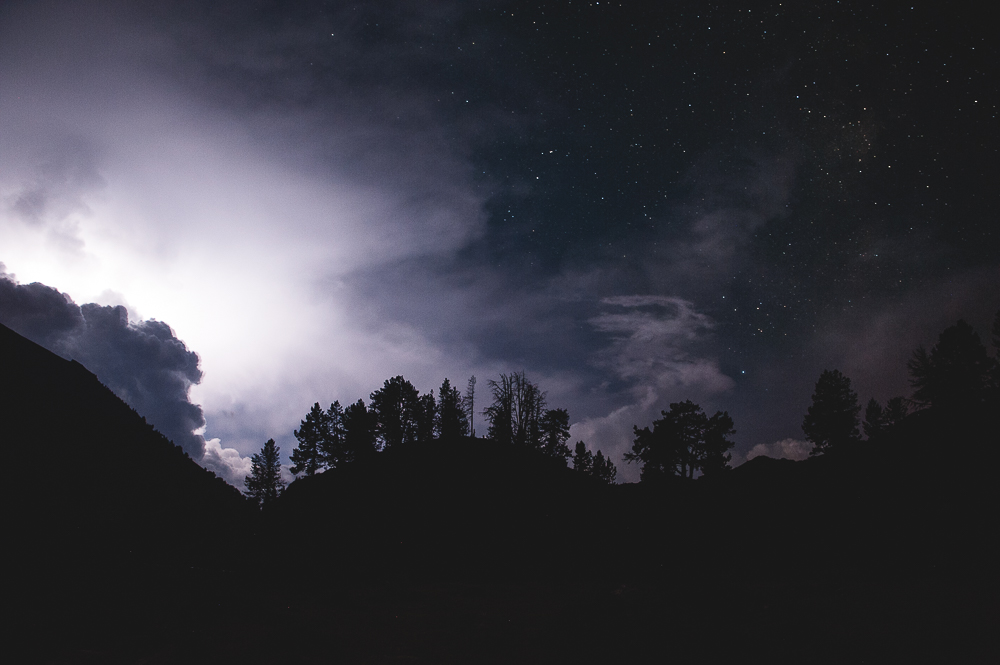
Close with energy without changing the project’s voice
 Save
SaveThe final frame is more forceful in its light, yet it keeps the same visual language of dark landforms, limited color, and a broad sky. A series can change intensity without losing its voice. The key is that the bright moment belongs to the same set of relationships rather than feeling like a different project inserted for impact.
Try several ending images when editing your own series. One may close the story, another may leave it open. Look at what happens immediately before the ending and whether the final frame changes how you remember the opening. Sequence decisions are part of the work. Twelve strong individual photographs do not automatically make the strongest twelve-picture order.
Build your own quiet landscape project
Start with a question you can revisit, then make photographs across more than one outing. Keep the project small enough to review honestly. Save working notes on location, permissions, weather, and your intentions, but do not make the notes a substitute for what the photograph communicates. Select by relationships: light, scale, human presence, color, and the space a frame gives its neighbors.
For guided practice in exposure, composition, and editing, explore the Shut Your Aperture Academy. Choose from the current course catalog for your goals, then apply the fundamentals to a project with room for repeated attempts. Better control of the camera and the edit gives you more freedom to concentrate on the feeling and structure of the picture rather than chasing a fixed recipe.
Frequently asked questions
Who made Magnum Silentium?
French photographer Yohan Terraza created Magnum Silentium, a mountain photography series described in his original account as an inner story about silence, humility, respect, and adventure.
Where were the Magnum Silentium photographs made?
Terraza described mountain travel in France, Switzerland, and New Zealand, with many photographs made in the French Pyrénées. The original lake reflection caption identifies that frame as the Pyrénées, France; this guide does not assign exact locations to every image.
What does Magnum Silentium mean in this series?
Terraza described it as The Great Silence, connecting the silence of the mountains with an inner experience. The work is a personal project rather than a summit checklist.
Are the camera settings for these photographs available here?
No. The original feature does not provide exposure settings, complete equipment details, or source files for the individual photographs. The visual analysis is not a reconstruction of undocumented methods.
How can I create a coherent mountain photography series?
Choose a clear theme, work safely and with permission across repeated outings, and edit for relationships between images. Compare scale, light, color, atmosphere, and human presence, then test different sequences rather than choosing only standalone hero pictures.
Photographs and original project account: Yohan Terraza. Contemporary context: Fubiz, November 2014; portfolio listing: Art Limited. Original photographer link: Facebook.