Charleston gives you several different photographs in a small-looking area: pastel houses, harbor views, live oaks, bridge geometry and a coast that changes with the tide. The mistake is trying to collect all of them in one rushed lap. Choose the kind of work you want to make, plan around access and light, and leave enough time to see something beyond the postcard frame.
This guide to Charleston photography spots is researched, not a firsthand account of a trip or a claim that I made the photographs shown here. The locations and operators below provide the planning foundation. Opening hours, maintenance, weather, tides and photography policies can change. Verify them before travel, especially when your plan depends on an early or late visit.
Find your next photography guide.
Choose a peninsula walk or a separate coastal session
Rainbow Row, Waterfront Park and White Point Garden can form a peninsula-based photography plan. Folly Beach is a separate coastal outing. Boone Hall and Magnolia are separately operated sites that require their own time and access decisions. Do not confuse a list of places around Charleston with a single easy walking route.
For a short visit, choose the peninsula or the coast as the main session. For two days, keep one day focused on streets and harbor, then use the other for the beach or a slower garden visit. This is an optional structure, not a tested itinerary or a driving-time guarantee.
Check your forecast and the operator pages before deciding the order. Overcast light can help with color and building detail; changing skies can add interest over the harbor. A clear sunrise might favor a coastal plan, but only when access and conditions allow it. Let the actual day shape the work instead of forcing a promised golden-hour photograph.
Rainbow Row: photograph the houses without taking over the street
The Rainbow Row landmark listing identifies the historic houses along East Bay Street. The color is the obvious starting point. Look for relationships between adjacent facades, shutters, doors and trees rather than treating the entire street as one compulsory wide shot.
Work from legal public space and respect the fact that these are buildings people use, not a studio set. Keep doors, sidewalks and traffic clear. Do not step into the road to remove a parked car from your frame, and do not move somebody’s property because it disrupts a composition.
A wider lens can include several houses, but close placement may exaggerate verticals. Step back where access allows and decide whether you want to correct perspective later or use the angle intentionally. For tighter details, a longer focal length can simplify the frame from a respectful distance.
Be patient with cars and pedestrians rather than assuming the street will be empty. A person can give scale and a sense of place if the photograph is made respectfully. If you want an architectural image without people, wait or change the framing. Do not write an invented access rule into your plan to obtain the clean view.
 Save
Waterfront Park: the Pineapple Fountain and the wider harbor
Charleston Parks Conservancy’s Joe Riley Waterfront Park listing describes harbor views, paths and other park features. At the time of this research, the listing gives sunrise-to-sunset hours. Verify the current listing before arranging a session around the edge of the day.
The Pineapple Fountain is a recognizable subject, but the fountain does not have to occupy every frame. Start with a clean view that establishes the location. Then look for water, repeated shapes, foreground detail or a wider relationship between the park and harbor. Change your camera position before changing lenses.
Water movement offers different choices. A short exposure can show individual drops, while a longer one changes the texture. Whether a tripod and long exposure are permitted for your intended activity must be checked through the applicable rules. No visual effect is worth blocking a path or ignoring park instructions.
People use the park to relax. Keep distance, avoid intrusive close-ups and be particularly careful about children. If your picture depends on a recognizable subject, use the consent and publication approach appropriate to the project. The fact that a scene is public does not remove every ethical or use question.
White Point Garden and the Battery: trees, layers and harbor context
The White Point Garden listing gives the location at 2 Murray Boulevard and currently lists 9 AM to sunset. That matters: do not schedule a before-sunrise session inside the garden simply because another Charleston location opens earlier. Confirm the current posted hours.
Use the trees as structure instead of automatically placing a trunk in the middle of the photograph. Walk slowly and look for a foreground, a clear subject and a background that adds context. Strong branches can frame a scene, but they can also hide the subject. Check the edges before pressing the shutter.
The surrounding Battery area can add harbor and architectural context. Keep your route within open, legal public areas and account for temporary works or restrictions. Historic neighborhoods deserve the same respect as Rainbow Row: do not enter private property for an angle or treat a residential doorway as your equipment station.
These places carry historical meaning. Read the interpretation rather than using monuments as anonymous props. If you photograph a memorial, know what it depicts before captioning it. Accurate context is part of making a useful travel photograph.
 Save
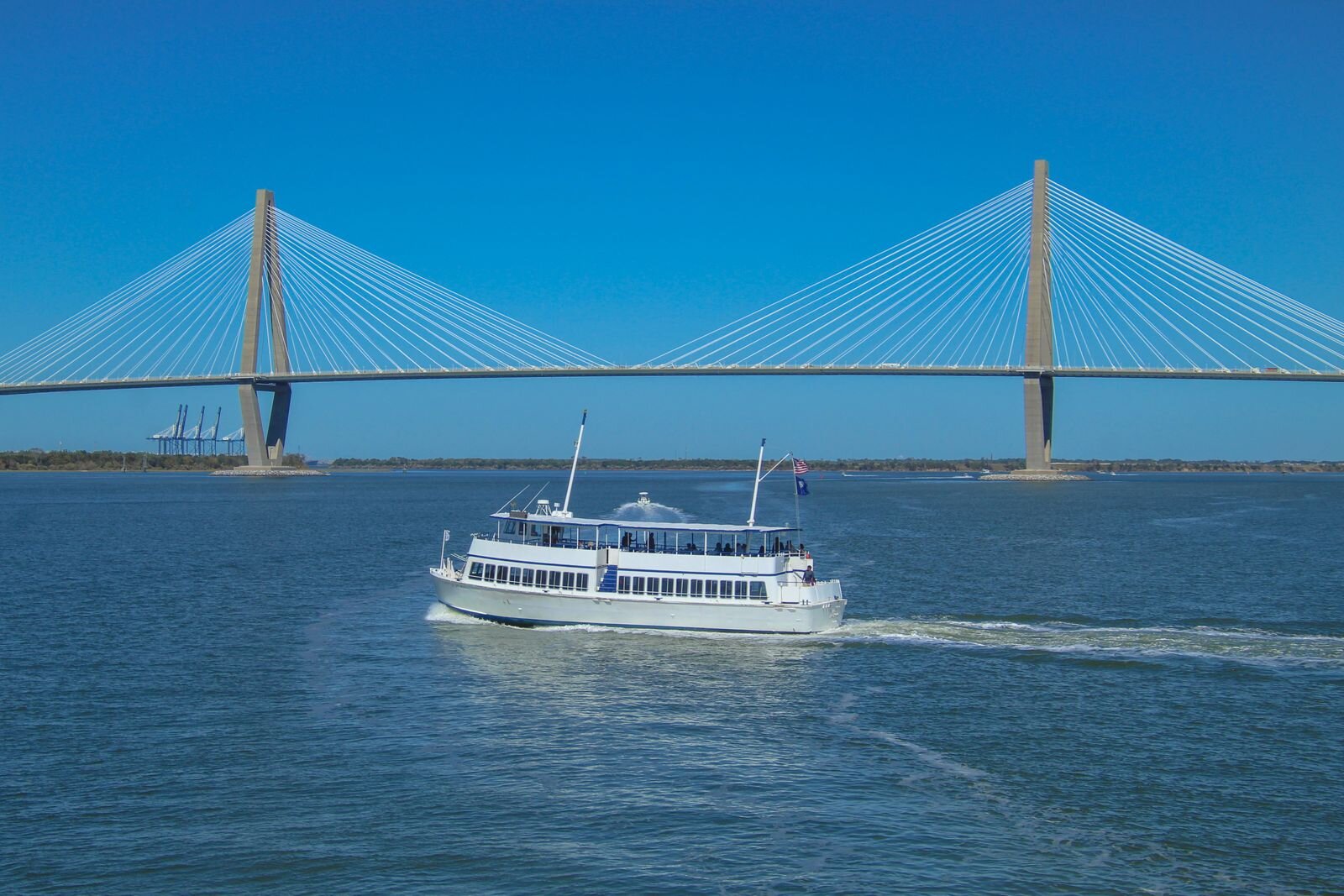
Arthur Ravenel Jr. Bridge: make the geometry readable
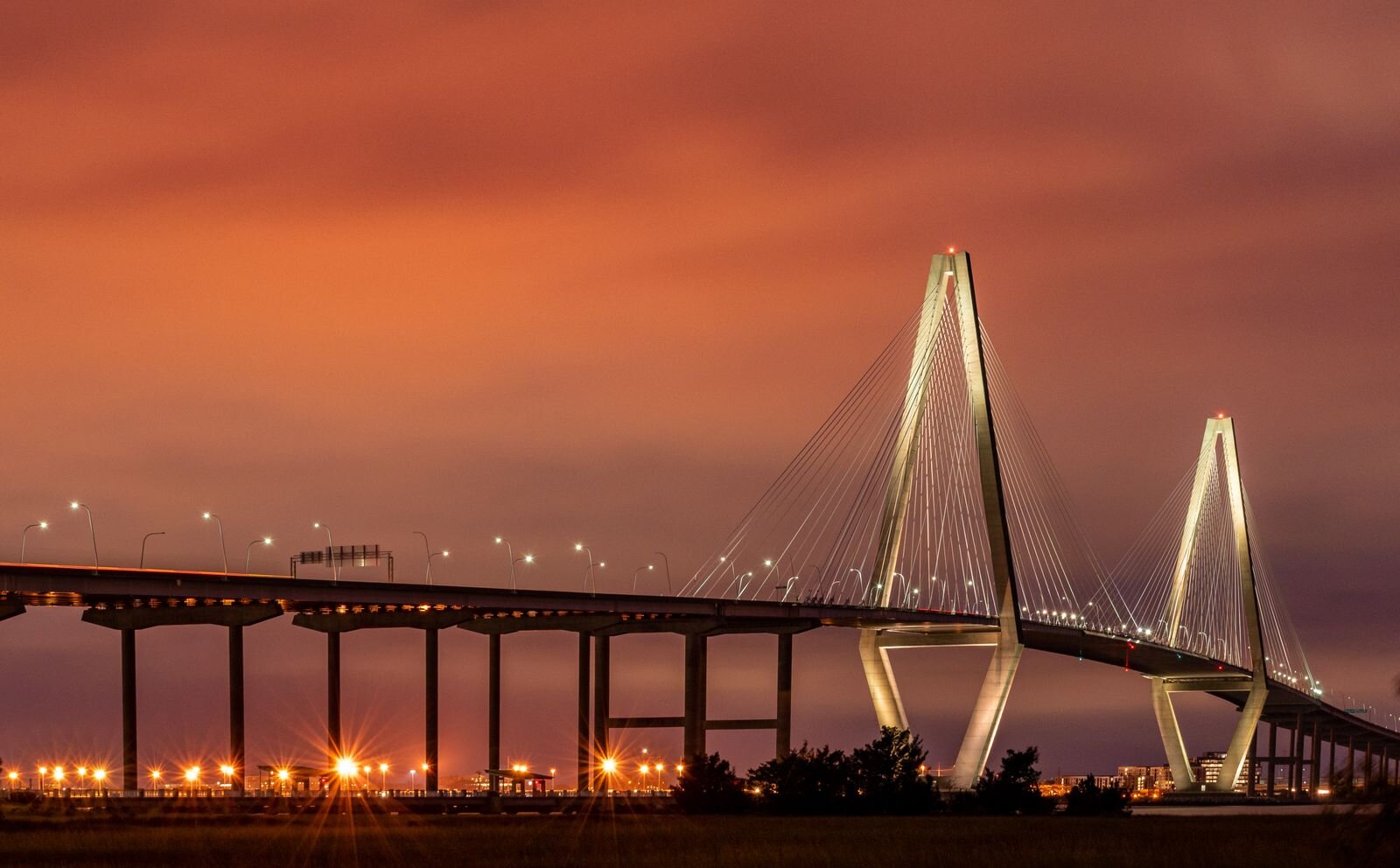
The bridge is a strong subject because its cables and structure create a visual rhythm. A legal shoreline viewpoint can show that geometry in relation to the water. Scout access in daylight before a low-light session. This guide does not promise a particular unrestricted shoreline angle.
Choose between a wide contextual picture and a tighter structural study. In a wide image, watch whether the foreground adds something or simply fills the lower half with darkness. In a tighter frame, look for repeated lines and intersections. Avoid clutter that competes with the bridge.
At dusk, a tripod may help with a longer exposure where permitted and safe. Keep it out of circulation space, protect yourself from moving traffic and never climb a barrier for a cleaner view. Light and wind determine what exposure choices are practical. A bridge photograph made by somebody else is not a guarantee of the same conditions when you arrive.
 Save
Folly Beach Pier: plan for the coast, not a downtown add-on
Charleston County Parks’ Folly Beach Pier page is the current operator starting point. Check opening hours, parking, events, closures and photography rules there before travel. A visitor guide can help with context; the operator is the better source for the visit that depends on access.
Decide whether you want to photograph from the pier or photograph the pier itself from a legal beach viewpoint. Those are different compositions with different access questions. A view of waves from the deck does not show the same structure as a shoreline view looking along the supports.
Tide changes the available foreground, reflections and distance between your feet and the water. Check a current tide source for the date and location rather than copying the waterline in a sample image. Watch the water and leave a safe retreat path. Never put a camera bag where a rising wave can turn it into a floating problem.
Salt spray, sand and wind are part of the session. Keep lens changes deliberate, protect unused equipment and follow manufacturer cleaning guidance afterward. Carry less gear if it helps you stay aware of the environment. A heavily loaded bag does not improve a coastal photograph.
Boone Hall: a separate visit with history, not only an oak avenue
Boone Hall’s admissions page is the place to check the current visit options, hours and terms. Do not assume an ordinary admission ticket authorizes a portrait production, a commercial crew or drone work. Ask the operator about your specific activity before booking around it.
The oak avenue is a familiar visual subject, but a plantation visit should not reduce the site to decorative trees. These places have histories of enslavement that belong in your understanding of the visit. Engage with the site’s historical interpretation and caption photographs accurately.
For composition, look at the spacing of trunks, the overhead branches and the path’s direction. A centered frame can emphasize symmetry; a changed position can reveal texture and depth. Work within the areas and activities the operator allows rather than treating a recognizable photograph as proof that you may stand anywhere.
Magnolia: give the gardens enough time
Magnolia’s visit page describes gardens, walking routes and guided experiences, including historical interpretation. Check the current ticket structure and which areas or experiences your admission includes. Do not plan a photograph around a feature you have not confirmed is accessible.
Make this a slower visit rather than a stop squeezed between the pier and several downtown locations. Gardens reward looking closely: the shape of a path, reflected branches, a small color relationship or the separation between foreground foliage and the subject. Seasonal growth and maintenance affect what you find.
The site’s landscape also has historical context. Its current visit page describes the swamp garden’s relationship to rice paddies engineered by enslaved people. That context is not optional background noise. Read the interpretation and avoid captions that turn a complex place into an invented timeless paradise.
Stay on permitted routes and follow wildlife and property rules. Do not disturb an animal, step beyond a barrier or damage a plant for a photograph. Your lens choice should adapt to the access, not the other way around.
Permissions: check the activity, not just the address
The City of Charleston Film and Photography Permits page explains its application process and states that photography or filming in a City Park also requires a park permit. Read the current requirements and ask the city how they apply to your proposed activity. This guide does not grant an exemption for casual, posed, commercial or crew-based work.
A site operator can have additional rules. An admission ticket, a public sidewalk, a park listing and aviation permission each answer different questions. If you plan lights, stands, a model, a tripod setup, a crew, a client production or a drone, resolve the actual permissions before committing the session.
Keep access checks with your plan. Note the source and date, relevant contacts and any written approval. Be ready to change the route if a place is closed or the activity is not permitted. A useful photography guide should help you make that change, not encourage you to push through a restriction.
A flexible two-day plan
On day one, focus on the peninsula. Use Rainbow Row for architecture, Waterfront Park for fountain and harbor context, and White Point Garden within its current opening window. Add a bridge session only if you have a verified legal viewpoint and the time to reach it safely. Leave room for walking, meals and checking the photographs.
On day two, choose the coast or a separately ticketed site. Folly Beach fits a tide-aware shoreline session. A garden visit calls for more time to explore and read the interpretation. Trying to do both plantation sites and the coast can turn the day into transportation instead of photography.
If weather changes, shorten the route. Cloud cover can support detailed architecture and foliage photographs; unsafe weather can cancel an exposed session entirely. Have a modest alternate plan rather than believing every travel day owes you a sunset.
Charleston photography Q&A
What is the best first Charleston photography location?
For a peninsula-based plan, Rainbow Row is a clear architectural starting point and Waterfront Park adds harbor context nearby. For coastal work, make Folly Beach the main outing. Choose by the photograph you want and confirmed access, not a universal ranking.
Can I photograph White Point Garden at sunrise?
Do not assume so. The current Conservancy listing gives 9 AM to sunset. Recheck the official listing and posted rules before planning an early session inside the garden.
Do I need a photography permit?
Check the City Film and Photography Permits page and ask how its requirements apply to your activity. It states that City Park photography or filming also requires a park permit. Private and ticketed sites can impose additional rules.
Is Folly Beach Pier part of a downtown walk?
No. Treat it as a separate coastal stop with its own access, parking and weather checks. Do not assume a peninsula walking route covers it.
Should I bring a wide-angle lens?
A wide lens can help with streets, the bridge and coastline, while a normal or longer lens can simplify architectural details. Bring the kit you understand and can carry safely. No specific lens is required by this route.
Are plantation visits simply landscape-photo stops?
No. They are separately operated historic sites with histories of enslavement and their own access rules. Make time for interpretation and describe the places accurately, rather than treating them only as scenery.
Were these locations personally photographed for this guide?
No firsthand visit or ownership of the source images is claimed. This is a researched planning guide. The current operator pages, posted rules and conditions on the day take priority over the suggested order.
Disclosure: This route is researched rather than firsthand and contains no verified paid-tour or affiliate offer in this version. Access and photography permissions require current checks. No opening time, weather condition or photographic result is guaranteed.
Find your next photography guide.
Want to go further? The ShutYourAperture Academy’s Wander & Capture: Travel Photography (7 modules, 28+ lessons) is built to help you cover the art and practice of photographing a place well.
Walk the historic district with a local guide
For a guided introduction to the streets in this route, consider the Historic Charleston Walking Tour. The listed route includes landmarks such as Rainbow Row and Waterfront Park. This is a history walk, not a photography workshop. Confirm the stops and allow your own time to shoot afterward.
Tour links are affiliate links. I may earn a commission if you book through them, at no extra cost to you.
Camera carry for a walking session
A black Peak Design Slide Lite camera strap is one carry option for a walking session. Check attachment points, the full camera-and-lens weight and the current manufacturer instructions before buying. Inspect the strap and anchors before use. This is a carry link, not a claim of use at any location in this researched guide. Compare the current retailer specifications; no hands-on test, price or stock promise is being made here.
Compare Peak Design Slide Lite Camera Strap Black on Amazon | Check Peak Design Slide Lite Camera Strap Black at B&H
Affiliate disclosure: We may earn a commission from qualifying purchases through these gear links at no extra cost to you. As an Amazon Associate, Shut Your Aperture earns from qualifying purchases.