By Edin Chavez | Updated October 2026
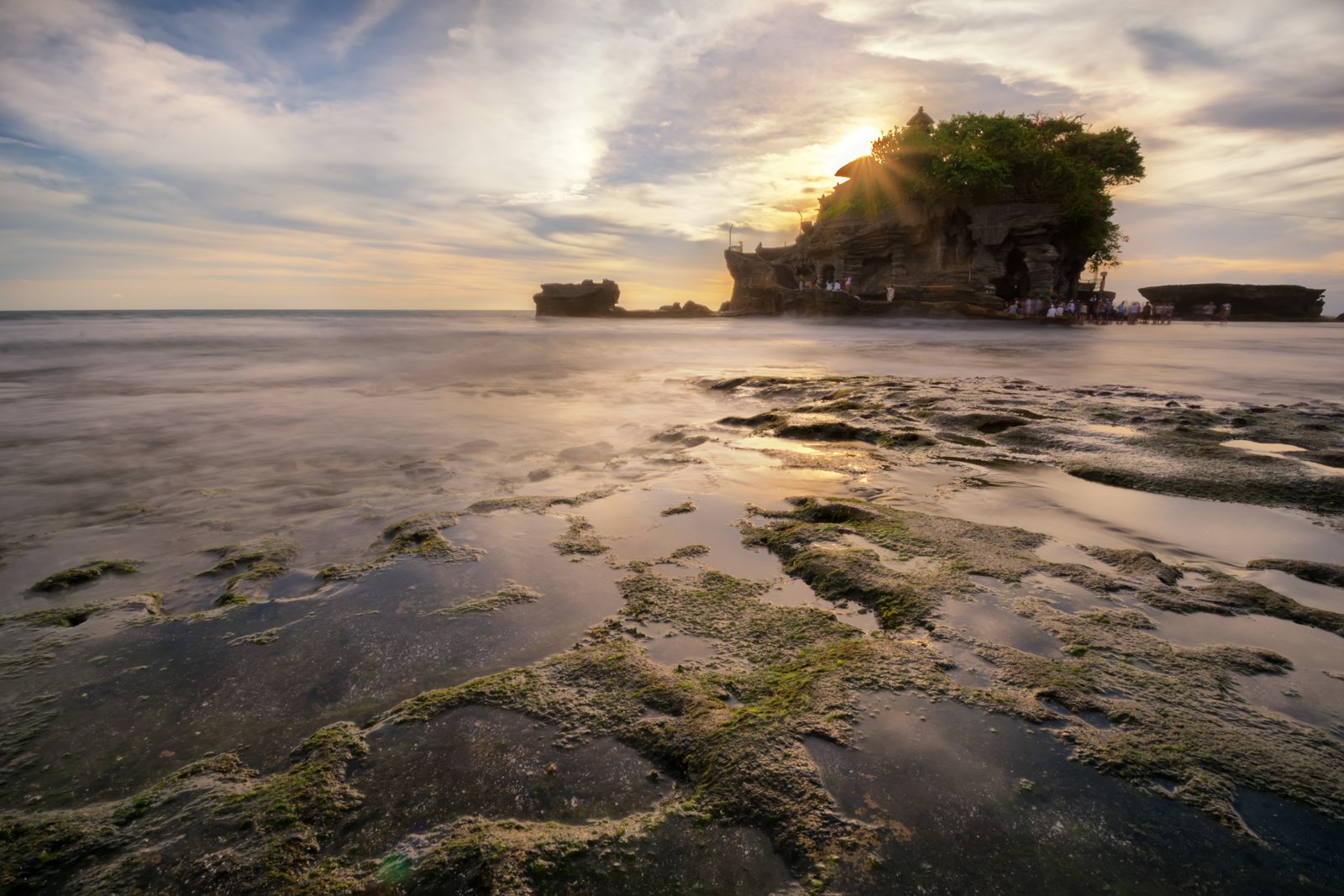
Header photo: Zexsen Xie, Wikimedia Commons, licensed CC BY 2.0. Source. Resized for web.
Bali gives photographers sea temples, volcano sunrises, lake shrines and rice terraces on one island, and almost every famous frame there is also a place of worship or a working farm. That changes how you shoot. The best frames come from planning around light and from respecting the rules of each place, not from racing to the same spot as everyone else.
This is not a trip report. These are researched spots, based on UNESCO pages, the Indonesian aviation regulator, operator and tour listings, and the photographs selected for each place. I am not claiming a first-hand visit, and I do not give exact GPS points or camera settings. Treat each place as a named starting point, then check the current rules before you go.
Start with the light, not the list
Bali sits close to the equator, so the sun rises and sets quickly and the day does not change much in length through the year. That makes timing a matter of minutes. Check the sunrise and sunset times for your exact date on an ephemeris such as timeanddate for Denpasar before you commit to a spot.
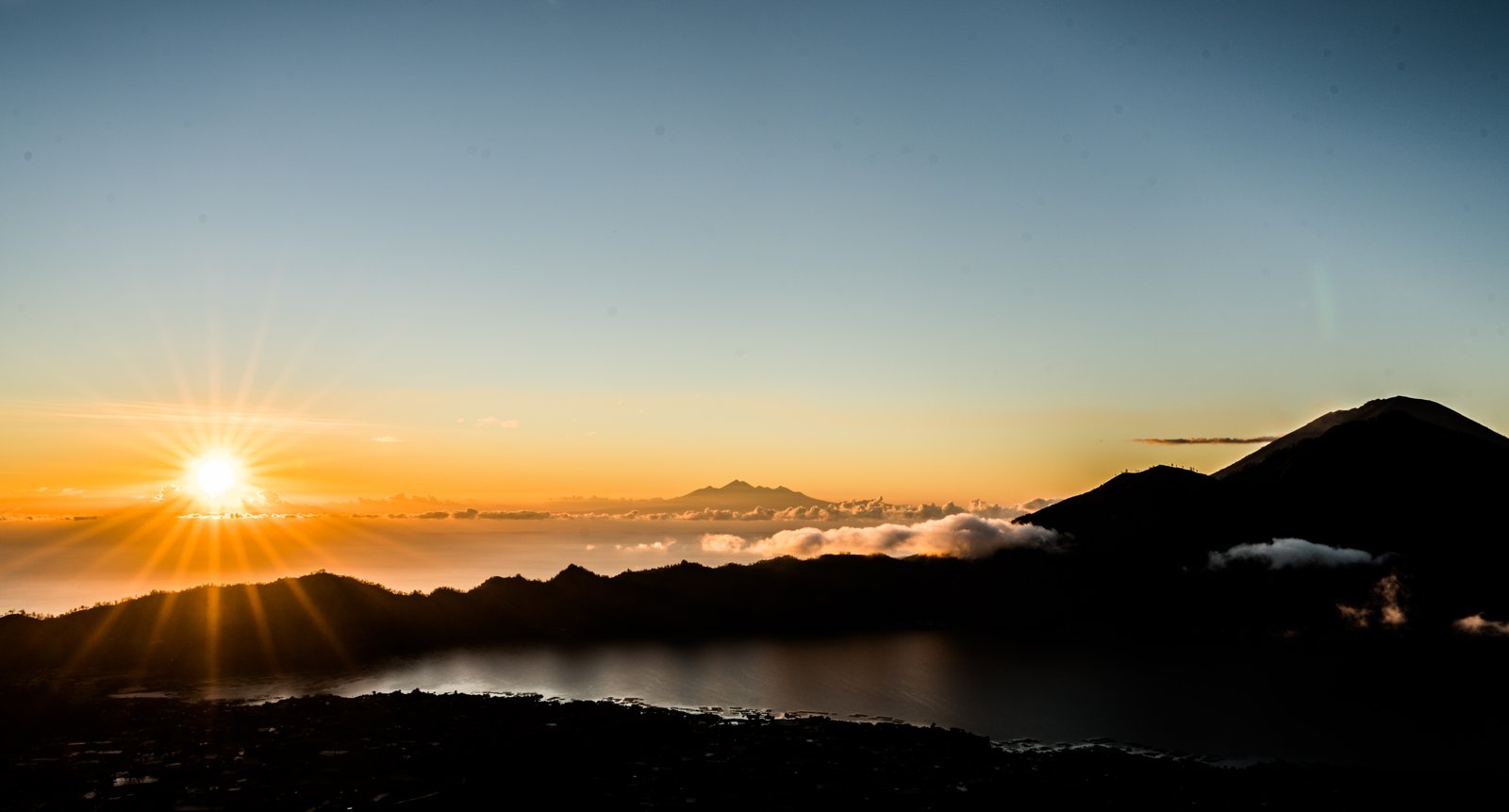
Sunrise. Volcano and highland frames work best in the first light, before cloud builds over the peaks. The frame below was made from Mount Batur and shows Lake Batur below, with Mount Agung in the distance and Mount Rinjani on Lombok far to the left, according to the photographer’s description.
 Save
Sunset. The west coast catches the sun going down over the sea, which is why Tanah Lot is a sunset place. Cloud decides whether you get a flat orange glow or a sky worth waiting for, so give a sunset at least two evenings if your plans allow it.
Midday. Harsh light and crowds arrive together at the best-known temples. Use the middle of the day for travel, lunch and scouting, and spend your good light on one or two places, not five.
Weather. Bali has wetter and drier months, and cloud, mist and haze change from one week to the next. Check the forecast the evening before, and carry a rain cover for the camera.
The rules that decide your camera
Temples are active places of worship. Travel guides describe a common dress rule: shoulders and legs covered, with a sarong and sash worn into temple areas, and many temples lend or rent them at the entrance. Last Call Bali sets out what is usually required. Follow the signs and staff at each temple, stay out of areas marked closed, and do not climb on shrines or walls for a better angle. Ceremonies can close areas without notice.
Ceremonies come first. If a ceremony is under way, give worshippers space and ask before photographing people. Skip flash near prayer.
Fees are paid at the gate. Several of these places charge an entrance fee and some take cash only. I am not quoting prices because they change; check the current fee with the operator or a recent source before you travel.
Guides. Bali’s Governor issued Circular Letter 7 of 2025 on conduct for foreign tourists, and it says they are to be accompanied by a licensed tour guide when visiting tourist attractions. The provincial tourism office summary describes this for cultural and natural sites. It is a circular, so confirm with your operator how it applies at the place you plan to visit, and book a licensed guide where it does.
Drones. Check aircraft-registration, pilot-certification and flight-approval requirements with Indonesia’s Directorate General of Civil Aviation (DGCA) before flying. Its SIDOPI GO portal is the official starting point, and the operating rules are in Ministry of Transportation Regulation PM 37 of 2020. Foreign visitors should confirm their eligibility and any authorization or local-operator requirements, and permission from a site does not replace aviation approval. Flights near airports, temples and other sensitive sites may also need approval or be prohibited, and local rules can differ.
Professional work. If you are shooting for a client or selling the images, ask the site manager about commercial photography rules before you set up. Rules vary by site, so check the current requirements for the specific place. Check your visa as well as site permits: Australia’s government travel advice for Indonesia (Smartraveller) says it is illegal to work on a tourist visa, including creating or posting online content for payment or commercial purposes.
Tanah Lot at sunset
Tanah Lot is a Hindu sea temple on a rock just off the coast, on the island’s west coast. It is one of the most photographed places in Bali, and the reason is simple: the rock, the waves and the sunset line up. The header photograph above shows the temple at sunset with rays breaking over the sea.
Plan to be there well before sunset. One guide site, tanahlot.org, lists opening hours of 07:00 to 19:00 and advises arriving in the late afternoon to find a spot on the cliffs. It is not an official page, so confirm hours and fees with the operator before you go.
How the scene looks depends on the tide. At higher tide the rock can look cut off by water, and at lower tide more of the rocks and shoreline are exposed. Check a local tide table for your day and decide whether you want clean reflections or foreground rock. A tripod and a neutral density filter help if you want the water to smooth out, but check that tripods are allowed on the day.
If you have only one sunset on the west coast, Tanah Lot is the obvious choice. If crowds are the problem, arrive early, pick a vantage point and stay with it instead of moving as the sun drops. Access to the temple itself is for worshippers, so photograph from the viewing areas.
Mount Batur and the Batur caldera
Mount Batur is an active volcano inside a large caldera in Kintamani, in the north-east highlands. UNESCO describes it as part of the Batur UNESCO Global Geopark, designated in 2015, and lists a sunrise hike of Mount Batur among its highlights. The geopark spans 15 villages in the Kintamani district.
A sunrise climb means a very early start. Tour operators describe a pre-dawn start, roughly one and a half to two and a half hours of walking, and a summit around sunrise. Foreign visitors should plan on a licensed guide (see the Guides note above), and confirm the details with your operator or the trail’s village association before planning a climb. Bring a headlamp, warm layers and a rain cover; the summit is cold before sunrise.
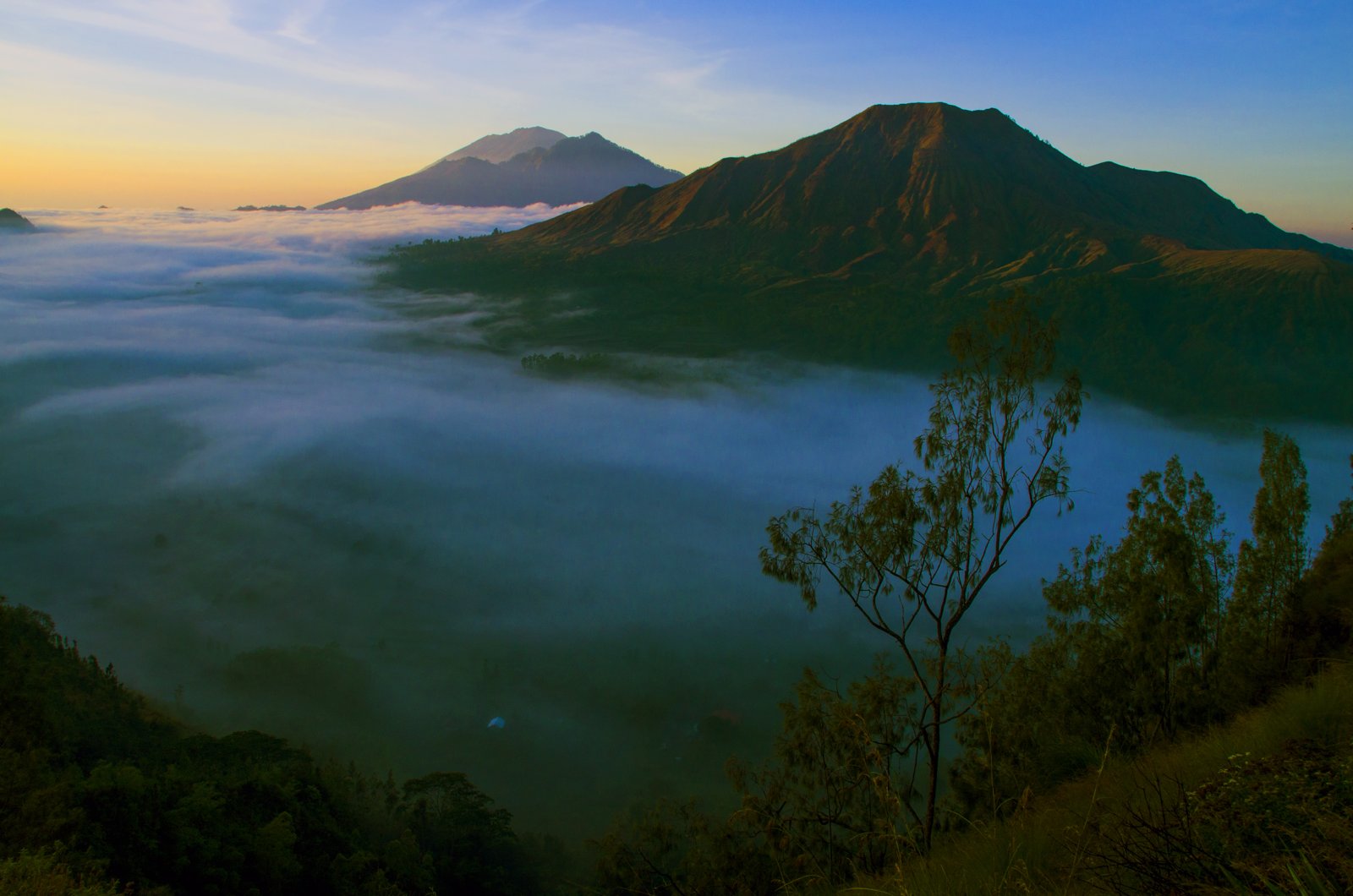
You do not have to climb to photograph the caldera. The frame below was taken from Pinggan village and shows morning fog at the foot of the mountain, according to the photographer’s description. Fog and low cloud change by the hour, so the same view can look very different an hour later.
 Save
Plan the light more than the route. The summit gives you a long view and the first sun. Lower viewpoints give you layers of fog and ridgelines. Take a telephoto to pick out the cone and a wide lens for the lake and the sky.
Pura Ulun Danu Bratan on Lake Bratan
Pura Ulun Danu Bratan sits on the shore of Lake Bratan in the Bedugul highlands, and its tiered shrines appear to float when the water is calm.
This is a cool, damp highland location, and mist can sit over the water. That works in your favour: low cloud softens the light and cuts glare, and it keeps the background simple. The operators set opening hours and fees, and I could not verify a single official site, so confirm them with a current source (the attraction’s own contact page at danauberatan.com lists contact details) before you plan an early or late visit.
For composition, look for the reflection on still water and keep the horizon level. A longer lens isolates the pagoda from the visitor buildings around it. Arrive early for the quietest conditions, because tour groups tend to cluster in the middle of the day.
Lempuyang and the Gates of Heaven
Pura Lempuyang, in Karangasem on the east side of the island, is famous for a split gate (a candi bentar) that frames Mount Agung.
Expect queues. A 2024 report from The Bali Sun said visitors had waited for four hours or more to take a photo between the gates, and a travel guide notes that the well-known mirror-like reflection is usually staged with a phone or a lens trick, not a real pool of water (Gobaligo). Both facts matter for planning. If you want a wide documentary frame with the mountain behind it, ask staff what is allowed and be ready to wait.
The gate is a sacred entrance and not a studio. Dress properly, follow the queue, and give worshippers priority. Cloud often covers Mount Agung, so the mountain may not appear in your frame even in good weather.
Tegallalang and Jatiluwih rice terraces
Bali’s rice terraces are working farms. UNESCO lists the Cultural Landscape of Bali Province: the Subak System, inscribed in 2012, as five rice terraces and their water temples covering 19,500 hectares, and describes the subak irrigation system as dating back to the ninth century. Jatiluwih is commonly described as part of that landscape; check the listing for the exact sites.
Tegallalang, north of Ubud, is a steep valley with paddies stepping down both sides, and guides report cafes and swings along the top edge. Jatiluwih, in Tabanan, is a wider, quieter stretch of terraces.
Terraces reward the first hour after sunrise and the last hour before sunset, when low light picks out the stepped shapes and the water in the paddies. Respect the farmers: stay on the paths, do not walk on the banks, and expect a small fee at the entrance, as the operators report.
Passes, tickets and timing at a glance
- Tanah Lot: sunset sea temple on the west coast; fees and hours are set by the operator, so confirm them. Pay at the gate and bring cash.
- Mount Batur: pre-dawn sunrise hike or caldera viewpoints; confirm guide requirements with your operator.
- Ulun Danu Bratan: lake temple in the highlands; mist common, early visits are quieter.
- Lempuyang: split gate near Mount Agung; queues are reported, so plan for a long wait.
- Terraces: Tegallalang (north of Ubud) and Jatiluwih (Tabanan); small entrance fees reported.
- Drones: check SIDOPI GO and the current rules; flights may need approval or be prohibited.
If you want someone else to handle the logistics
A guide can help with pre-dawn starts, transport and timing. These are not photography tours, and I have not verified dates, itineraries, group sizes or cancellation terms. The links open current listings, so read the tour page before you book.
- Mount Batur sunrise trek listings: a guided sunrise trek. Check the listing for the start time, pickup and what is included.
- Tanah Lot sunset tour listings: a half-day sunset tour. Check the listing for the route and whether entry is included.
- Lempuyang Gates of Heaven tours on GetYourGuide: several east Bali listings. Compare what they include and how they handle the queue.
To learn the skills behind these frames, start with the Travel Photography Academy. For more city guides, see the international cities photography hub, the Rome photography spots guide and the Athens photography spots guide. For shooting after dark, see the night photography guide.
Frequently asked questions
When is the best time of day to photograph Tanah Lot?
Late afternoon into sunset is the usual choice, because the temple sits on the west coast and the sun sets over the sea. Arrive early for a spot, and check the sunset time and the tide for your date.
Do I need a guide for Mount Batur?
Foreign tourists are expected to be accompanied by a licensed tour guide at tourist attractions under Bali’s Circular Letter 7 of 2025. Confirm how it applies to your climb with your operator or the trail’s village association before you plan.
Can I fly a drone in Bali?
Flights may require approval or be prohibited near airports, temples and other sensitive sites. Check aircraft-registration, pilot-certification and flight-approval requirements with Indonesia’s DGCA before flying. Foreign visitors should confirm eligibility and any authorization or local-operator requirements; site permission does not replace aviation approval.
How long is the wait at Lempuyang?
A 2024 news report described waits of four hours or more at busy times. Plan for a long queue and check current conditions before you go.
What should I wear at a Balinese temple?
Guides describe covered shoulders and legs, plus a sarong and sash, which many temples lend or rent. Follow the signs and staff at each temple.
What gear do I need?
A wide lens for temples and landscapes, a short telephoto for peaks and details, a small tripod where one is allowed, and a rain cover. Pre-dawn hikes also call for a headlamp and warm layers.
Are the spots in this guide exact camera positions?
No. They are named places and starting references, not tested camera positions.
Recommended Gear for Bali Sunrise, Sunset and Low-Light Photography
A short kit for pre-dawn hikes, temple visits and sunset work. Pick gear that suits handheld shooting and a compact support, and add a rain cover for the wet months.
Peak Design Carbon Fiber Travel Tripod: Shop B&H | Shop Amazon. Compact support for sunrise and sunset frames where one is allowed.
Sony FE 24mm f/1.4 GM Lens: Shop B&H | Shop Amazon. A fast wide lens for temples and low light. Pick the equivalent for your camera system.
Sony FE 70-200mm f/4 Macro G OSS II Lens: Shop B&H | Shop Amazon. A short telephoto for volcano ridgelines and distant temples.
Peak Design Everyday Sling 6L: Shop B&H | Shop Amazon. A small front-carry bag for crowded temples and steps.
SanDisk Extreme PRO 128GB UHS-I SDXC Card: Shop B&H | Shop Amazon. Room for bracketed sunrise and sunset frames.
Disclosure: this post links to third-party tours and photography gear. If you book a tour or buy gear through those links, the site may earn a commission at no extra cost to you. Hours, fees and closures change; the operator and official pages take priority.
Sources: UNESCO Batur Global Geopark; UNESCO World Heritage, Subak System of Bali; Indonesia SIDOPI GO drone portal; Ministry of Transportation PM 37/2020; Ulun Danu Beratan site. Photo sources are linked in each caption. Checked October 5, 2026.