If you find yourself fighting noise in dim rooms or after sunset, our ISO photography guide shows exactly when to push and when to hold back.
So, you’ve decided to finally stop relying on your smartphone and get a "real" camera. Welcome to the club. It’s May 2026, and let me tell you, the world of mirrorless cameras has never been more exciting: or more confusing.
Back in the day, you had to choose between a bulky DSLR and a point-and-shoot that took grainy photos. Now, mirrorless technology has basically taken over the world. These cameras are smaller, faster, and packed with AI features that make it feel like you’re cheating. But when you look at a shelf (or a website) full of sleek black boxes with price tags ranging from $500 to $5,000, it’s easy to get overwhelmed.
If you’re looking for photography for beginners, you don’t need the most expensive gear on the market. You need something that feels good in your hands, doesn't require a PhD to operate, and leaves you with enough money to actually go somewhere and take photos.
In this guide, I’m going to break down how to choose the best mirrorless cameras for your specific needs, compare the top contenders for 2026, and help you understand what specs actually matter.
Why Mirrorless is the Only Way to Go in 2026
If you’re still hearing people talk about DSLRs, they’re probably nostalgic for the "clack" of the mirror. But the truth is, mirrorless is the present and the future.
In a mirrorless camera, there is no internal mirror reflecting light into a viewfinder. Instead, the light goes straight to the sensor, and you see a digital preview of your image on the screen or through an Electronic Viewfinder (EVF). This is a game-changer for beginners because what you see is exactly what you get. If your photo is too dark, you’ll see it’s dark before you even press the shutter.
Plus, mirrorless cameras are much better at focusing. Most new models use AI to track eyes, animals, and even cars. If you want to learn photography for beginners 101, starting with mirrorless will save you a lot of frustration.
The Big Questions: Before You Buy
Before we get into the gear, you need to be honest with yourself. I see people buy a $3,000 setup all the time only for it to sit in a closet because it’s too heavy or too complicated. Ask yourself these four questions:
1. What is your actual budget?
Don't just think about the camera body. You need lenses, extra batteries, memory cards, and maybe a bag. In 2026, a solid beginner setup (body + kit lens) usually lands between $700 and $1,200.
2. What are you actually going to shoot?
Are you interested in landscape photography tips and want to hike into the mountains? You’ll want something light and weather-sealed. Are you more into street photography ideas? You’ll need something small and discreet. If you’re looking to master portrait photography techniques, you’ll want a system with affordable "prime" lenses.
3. Do you care about video?
Most mirrorless cameras are "hybrids" now, meaning they do both well. But some are designed specifically for vloggers (no viewfinder, better microphones), while others are built for traditional photographers.
4. How much weight are you willing to carry?
The best camera is the one you have with you. If the camera is a brick, you won’t take it out. Full-frame cameras (which have larger sensors) are amazing, but the lenses are often massive. APS-C or Micro Four Thirds systems are much more portable.

SEO Alt Text: A side-by-side comparison of three different mirrorless camera sizes, from a compact street photography model to a larger hybrid professional body.
The Specs That Actually Matter (And the Ones That Don't)
Marketing teams love to throw big numbers at you. "50 Megapixels!" "8K Video!" Look, for a beginner, most of that is noise. Here is what you should actually pay attention to:
The Sensor (Full Frame vs. APS-C)
Think of the sensor like the "eye" of the camera.
- Full Frame: Best for low light and that blurry background (bokeh) everyone loves. But it’s expensive.
- APS-C: This is the "Goldilocks" sensor for beginners. It’s smaller, which makes the cameras and lenses cheaper and lighter, but the image quality is still lightyears ahead of a phone.
- Micro Four Thirds: Even smaller. Great for wildlife (because of the crop factor) and travel.
Autofocus (AF)
This is where the magic happens in 2026. You want a camera with "Eye-Autofocus." This ensures that when you take a photo of a person, their eyes are sharp every single time. Sony and Canon are currently leading the pack here, but Nikon and Fuji aren't far behind.
IBIS (In-Body Image Stabilization)
This tech moves the sensor inside the camera to compensate for your shaky hands. It’s a lifesaver for shooting in low light or for handheld video. If you can afford a body with IBIS, get it.
Lens Ecosystem
When you buy a camera, you aren't just buying a gadget; you're joining a system. Some brands have hundreds of lens options (Sony E-mount), while others are a bit more limited. Check out PhotoGuides.org for deep dives into specific lens reviews.
Comparing the Best Beginner Mirrorless Cameras of 2026
Let’s look at the top contenders. I’ve broken these down by "vibe" so you can find the one that fits your style.
1. The Easy All-Rounder: Canon EOS R10
Canon knows how to make a camera that feels "right." The R10 is a fantastic entry point. It has an incredible autofocus system inherited from their pro cameras and a menu system that actually makes sense. It’s lightweight and handles beautifully.
- Pros: Great ergonomics, insane AF tracking, very user-friendly.
- Cons: The selection of Canon-made APS-C lenses is still a bit thin compared to others.
- Best for: Someone who wants a camera that just works without a steep learning curve.
2. The Tech Powerhouse: Sony a6400 (or its 2026 successor)
Sony basically invented the modern mirrorless market. The a6400 series is legendary for its autofocus. If you’re interested in street photography ideas, this is a great choice because it’s small and fast.
- Pros: Massive lens selection (third-party lenses from Sigma and Tamron are cheap and great), tiny size.
- Cons: The menus can feel like you’re trying to program a VCR from 1994.
- Best for: The tech-savvy beginner who wants the best performance and lens options.
3. The Stylist: Fujifilm X-T30 II or X-S20
Fuji cameras look like pieces of art. They have physical dials for shutter speed and aperture, which is the best way to learn how to use manual mode camera. Plus, their "Film Simulations" make your JPEGs look amazing right out of the camera.
- Pros: Beautiful design, tactile controls, great colors.
- Cons: Can be a bit more expensive than comparable Sony or Canon models.
- Best for: The creative soul who wants to enjoy the process of taking photos.
4. The Vlogger’s Dream: Nikon Z30
If you’re more interested in YouTube and TikTok but still want great photos, the Z30 is a bargain. It removes the viewfinder (which keeps the price down) and adds a big "record" button and a flip-out screen.
- Pros: Very affordable, great built-in microphone, excellent 4K video.
- Cons: No viewfinder makes it hard to see your screen on a very sunny day.
- Best for: Content creators who lean 70% video and 30% photos.
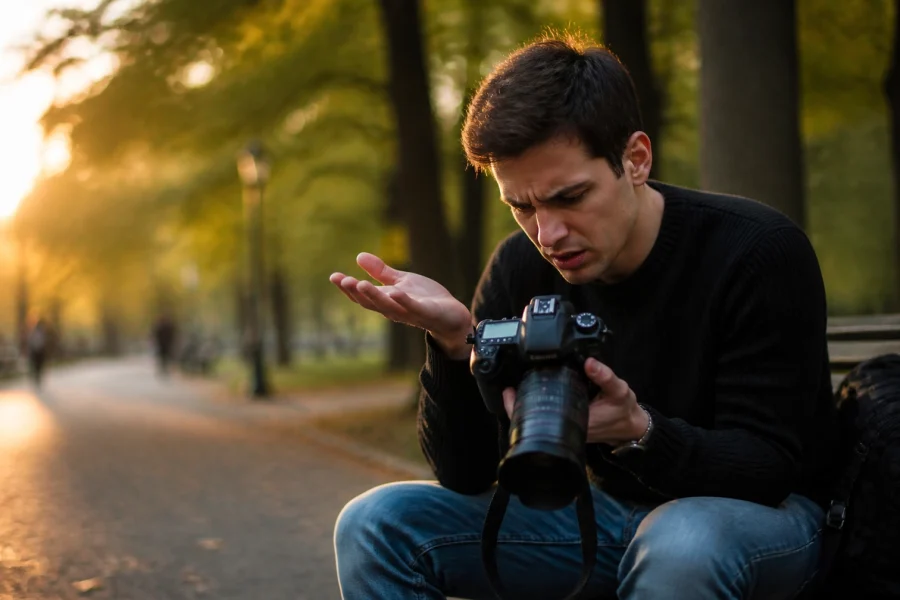
SEO Alt Text: A beginner photographer sitting on a park bench, holding a mirrorless camera and looking at the flip-out screen while adjusting settings.
Why Everyone is Talking About AI-Powered Mirrorless Tech
We can't talk about 2026 without mentioning AI. Modern mirrorless cameras are now using deep learning to predict movement. For example, if you're shooting a bird and it flies behind a tree, the camera's AI "remembers" it's a bird and picks it back up the second it reappears.
This is huge for photography for beginners because it allows you to focus on composition and timing rather than wrestling with your focus points. You should check out why everyone is talking about AI-powered mirrorless tech to see how it can help you get better shots faster.
Lenses: Don't Get Stuck with Just the Kit Lens
Most beginner cameras come with a "kit lens" (usually a 18-55mm). It’s fine for starting out, but it’s not going to give you those "wow" shots. To really see what your mirrorless camera can do, you need to eventually buy a "Prime Lens."
A prime lens has a fixed focal length (it doesn't zoom). Because it does one thing, it does it very well. A "Nifty Fifty" (50mm lens) is usually the first lens I recommend. It’s great for portraits and works well in low light.
If you're into landscapes, look for something wide-angle. For more on this, check out landscape photography tips on Edin's personal blog: he’s a master of finding the right gear for the right light.
Learning the Ropes: Mastering Your New Camera
Once you’ve picked your camera, don’t leave it on "Auto." That’s like buying a Ferrari and never taking it out of first gear.
The first thing you should do is learn the Exposure Triangle: Aperture, Shutter Speed, and ISO. I know, it sounds boring, but once it clicks, you’ll have total creative control. If you're feeling stuck, I highly recommend checking out a few photography tutorials.
I’ve seen a lot of people make the same mistakes when they start. If you want to skip the frustration, read about the 7 mistakes you’re making with manual mode. Understanding how to use manual mode camera is the single biggest step you can take toward becoming a pro.
SEO Alt Text: A close-up shot of a mirrorless camera's mode dial set to the 'M' for manual mode, with a soft-focus background of a sunset.
Post-Processing: The Final Piece of the Puzzle
Getting the shot is only 50% of the job. The other 50% happens on your computer. In 2026, photo editing has been revolutionized by AI. You don't need to spend hours moving sliders anymore.
Tools like Luminar have made it so beginners can get professional-looking results in minutes. Whether it’s replacing a boring sky with a dramatic sunset or using AI to enhance the lighting on a subject’s face, editing is where your personal style really comes through.
If you’re new to editing, start with some photo editing tutorials to get the basics down. And keep an eye on photography news because software updates happen almost every month now, bringing even more powerful tools to your desktop.
Summary Comparison Table
| Camera | Best For | Sensor | Top Feature |
|---|---|---|---|
| Canon R50 | Absolute Beginners | APS-C | Great UI & Compact |
| Sony a6400 | Growth & Lenses | APS-C | Massive Lens Library |
| Fujifilm X-S20 | Film Look & Style | APS-C | Film Simulations |
| Nikon Z30 | Vlogging/Content | APS-C | Affordable & Mic Quality |
| OM E-M10 IV | Travel/Weight | Micro 4/3 | Stabilization (IBIS) |
Where to Buy and What to Avoid
When you're ready to pull the trigger, I suggest buying from a reputable dealer. Avoid those "bundle" deals on big-box retail sites that come with 20 cheap plastic accessories (the tripods are usually flimsy and the filters will ruin your image quality).
Instead, buy the body and the kit lens, and then spend your remaining budget on one good quality prime lens and a fast SD card. If you want to see some of the gear in action or look for inspiration on what's possible with high-end setups, check out Edin Fine Art.
Final Thoughts for the New Photographer
Choosing a camera is a big step, but don't let the gear hold you back. The technology in a "basic" 2026 mirrorless camera is better than what pros were using ten years ago.
Focus on the basics. Learn how light works. Understand how to frame a shot. The camera is just a tool: you are the one who creates the art. If you ever get overwhelmed, just remember: everyone started exactly where you are right now.
Take your time, do your research, and once that camera arrives, get out there and start shooting. The world looks a lot different through a viewfinder, and trust me, it’s a view you’re going to love.
For more camera gear reviews and deep dives into the latest photography news, keep it locked right here. We’re always updating our guides to make sure you have the best info for your creative journey.
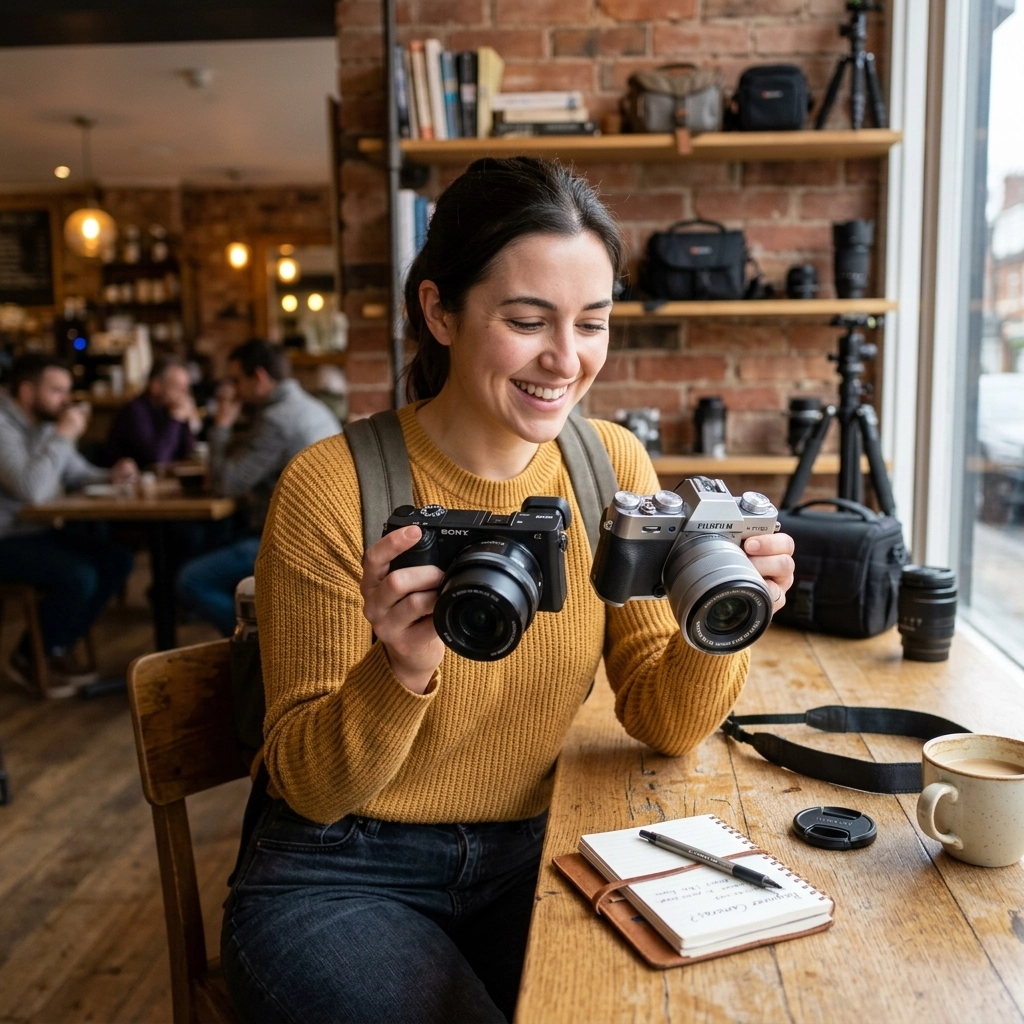
SEO Alt Text: A group of beginner photographers in a workshop setting, all holding different mirrorless cameras and laughing while a tutor explains a concept.