Updated October 2026.
Killarney National Park photography at dawn is hard to beat. There are mornings that make you glad you got out of bed in the dark. Karl Jordan had one of them at Lough Leane in Killarney National Park, County Kerry, and he came home with a set of frames that show exactly why still water at dawn is one of the great gifts in landscape photography. Below you will find his series, his own account of the morning, and a set of practical tips for Killarney National Park photography and any calm lake at sunrise. This is an epic place and an epic subject.
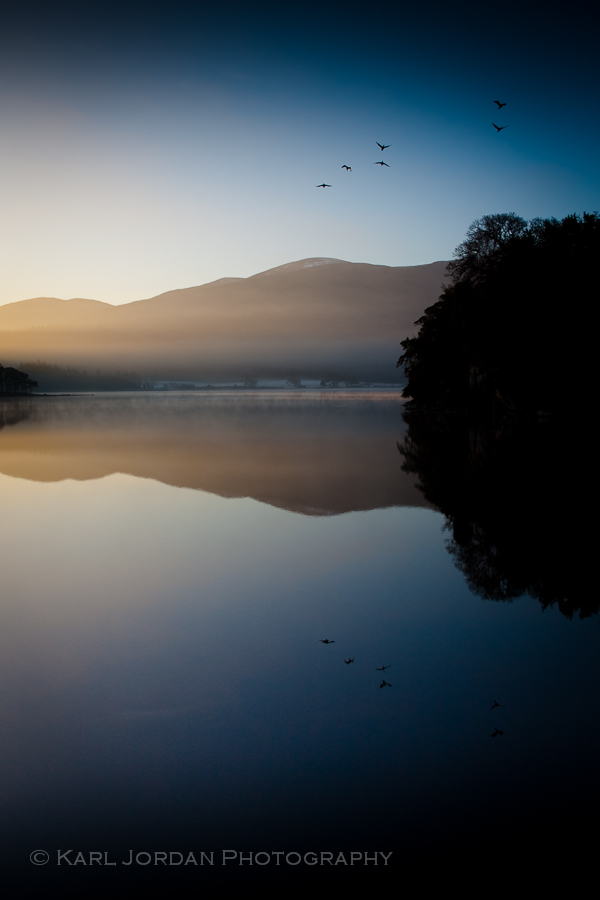
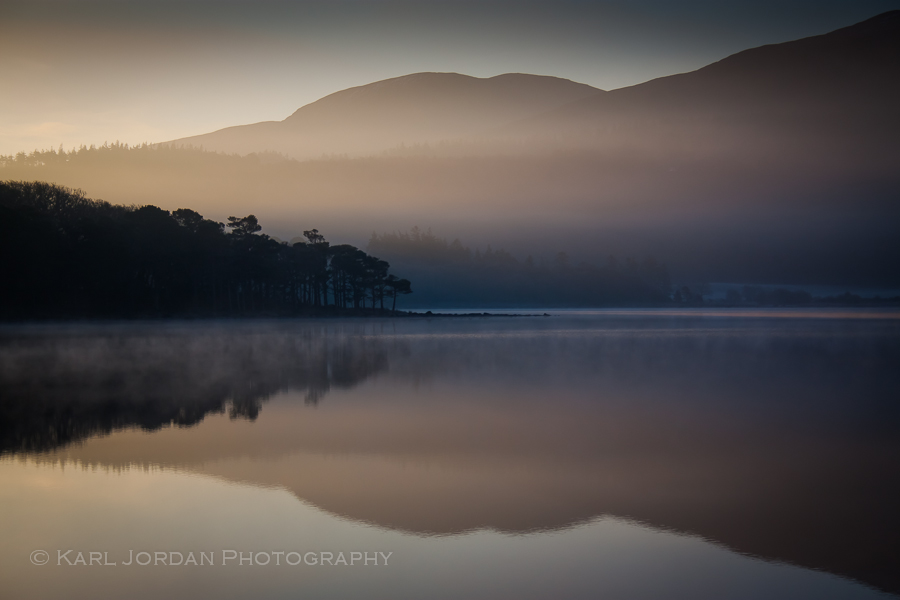
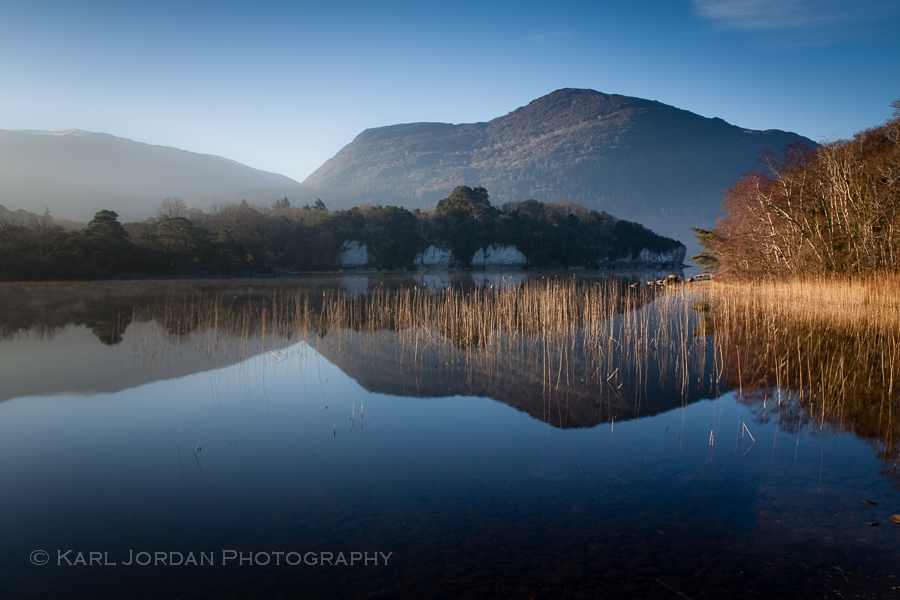
“Living in Ireland I have many opportunities to capture images of the incredible countryside and coastline, and County Kerry has some of the most beautiful and majestic scenery in the country. I visited Killarney National Park in early March, and rose before dawn on a freezing but clear morning to photograph the lovely Lough Leane, one of the famous Lakes of Killarney. Wrapped up against the icy air and frosted grass and vegetation, I spent a wonderful few hours in absolute solitude photographing the dawn light gradually revealing the stunning landscape. Mirror-flat water reflected the landscape and gave a wonderful reflected symmetry to the scene.” – Karl Jordan
All of the photographs in this post are by Karl Jordan, featured here as part of our photo series and credited to him. You can see more of his work on his website. I have not photographed Lough Leane myself, so the tips below are general landscape techniques that fit what you see in these frames, plus facts from official sources on the park. No first-hand claims from me about the location.
 Save
SaveAbout Killarney National Park
Killarney National Park sits south and west of the town of Killarney in County Kerry. According to the National Parks and Wildlife Service of Ireland, it takes in the lakes of Killarney and the rugged mountain country around them, including the McGillycuddy’s Reeks, the highest mountain range in Ireland. It was the first national park in Ireland, created after the Muckross Estate was donated to the state in 1932. The park has since been expanded, and it is designated a biosphere reserve. Parts of it have been left largely undisturbed for a very long time, which is why you find rare plants and native wildlife there.
The three main lakes, Lough Leane, Muckross Lake and the Upper Lake, sit in a broad valley between the mountains. Lough Leane is the largest of them. For a photographer that adds up to the ingredients you want at dawn: big open water for reflections, hills for layered silhouettes, woodland along the shore for foreground and a climate that produces mist and soft light.
Sources: National Parks & Wildlife Service, Killarney National Park, the NPWS site synopsis and Discover Ireland.
 Save
SaveWhat makes a mirror-flat lake shot work
Look at the series and you will notice the same few things in every frame. The water is calm, the light is low and soft, there is a clear subject on the far shore and there is something close to the camera that anchors the picture. Let me break that down so you can copy the recipe anywhere.
1. Wind is the whole game
A reflection needs still water. Even a light breeze breaks it into ripples. Dawn is often the calmest part of the day, which is the first reason sunrise beats every other time for lake reflections. Check the wind forecast the night before, and if the lake is moving when you arrive, give it twenty minutes. Often the air settles right around first light. If it does not, shoot the mist and the hills instead.
2. Arrive before the light
Karl got up before dawn, and that is the right instinct. The best color often comes before the sun clears the horizon, in the blue and pink glow of civil twilight. Be set up and composed with your camera on the tripod before it begins. Then you can spend the good minutes watching the light instead of fumbling with legs and filters.
3. Use a tripod and shoot at low ISO
Low light means long shutter speeds. A solid tripod, base ISO and a remote or two second timer keep everything sharp. Water is forgiving of long exposures when it is calm, so you do not need to worry about it blurring.
4. Balance the sky and the water
At dawn the sky is much brighter than the land. A soft graduated neutral density filter holds the sky back so you can expose for the water. If you prefer not to carry filters, bracket your exposures and blend them in post, or use your camera’s highlight warning and expose to the right without clipping the glow.
 Save
Save5. Use a polarizer, with care
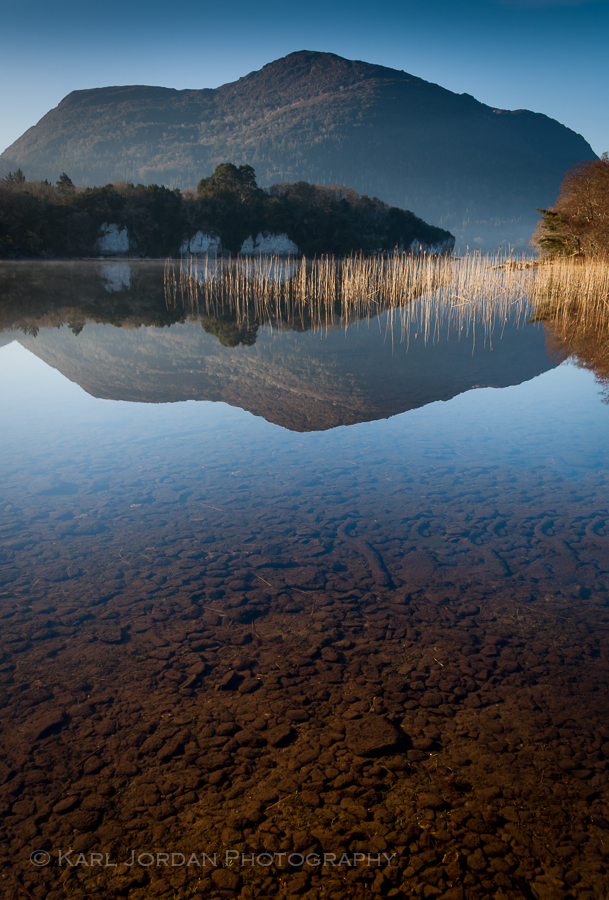
A circular polarizer cuts glare on the surface and lets you see through the water to the stones below, as in the clear shallows here. But it can also kill the very reflection you came for. Rotate it slowly and watch the screen. Stop when you have the balance you like between transparency and mirror.
6. Compose in layers
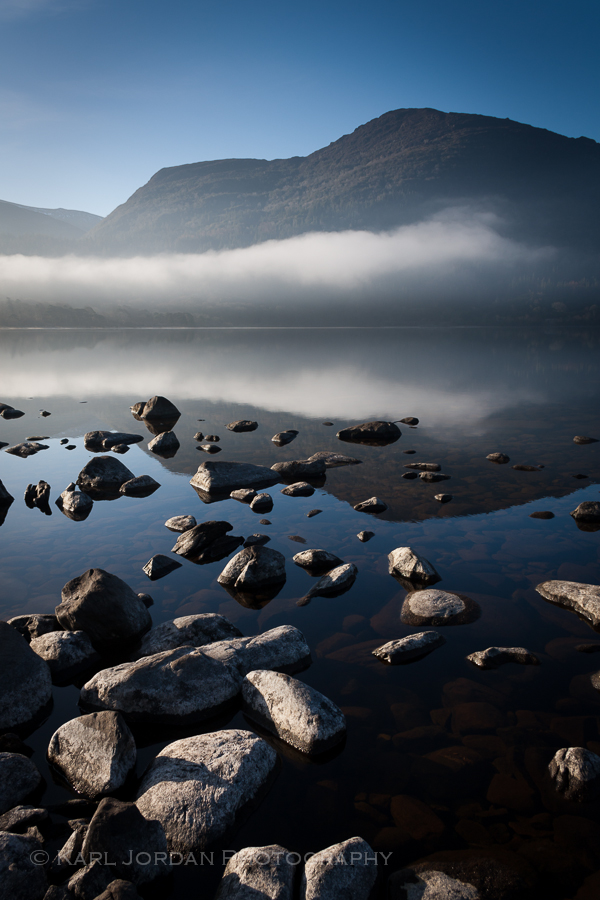
The strongest frames in this series have three layers: a foreground (rocks, reeds or a tree), a middle ground (the water and shoreline) and a background (the mountain and sky). The foreground gives the eye an entry point. The middle ground carries the reflection. The background sets the mood. If any layer is missing, the picture feels flat.
7. Watch your horizon and symmetry
With perfect reflections, a crooked horizon is obvious. Use the grid in your viewfinder or a hot shoe level. Think about where to place the line where land meets water. Dead center gives a calm, symmetrical image. Off center, with two thirds sky or two thirds water, gives you more tension and a clear emphasis.
 Save
Save8. Shoot both orientations
A vertical frame lets you stack a tall reflection under a tall subject. A horizontal frame emphasizes the sweep of the hills. Take both. Karl’s series mixes the two, and the variety makes the set feel richer.
Dealing with cold, frost and early starts
Karl describes a freezing, clear March morning with frost on the grass and vegetation. That is lovely to look at and demanding to shoot in. A few tips for staying comfortable and keeping your gear working:
- Dress in layers. You will stand still for a long time. Add a warm hat and gloves that let you work the controls.
- Carry spare batteries. Cold drains them faster. Keep spares in an inside pocket close to your body.
- Watch for condensation. If you bring a cold camera into a warm car or room, it can fog. Let it warm up in a closed bag first.
- Wipe the front element. Mist and frost can leave droplets. Keep a clean microfiber cloth handy.
- Mind your footing. Frosted grass and wet rocks are slippery. Use a headlamp for the walk in, and do not go out on rocks or ice at the water’s edge to get a shot.
- Tell someone where you are going. Early starts in remote places are better with a plan.
 Save
SavePlanning a dawn shoot at Killarney or any lake
- Scout in daylight. Find your viewpoints, check how to reach them in the dark and note where the sun will rise.
- Check the forecast. Look at wind, cloud cover, temperature and the chance of mist. Clear and cold with little wind is the classic recipe.
- Use a sun tracker. Apps such as PhotoPills or The Photographer’s Ephemeris show where the sun and the first light will fall.
- Pack the night before. Tripod, filters, spare batteries, cards, a warm drink, a headlamp.
- Arrive early. Give yourself at least 45 minutes before sunrise to find your spot and compose.
- Stay after the sun is up. The best mist and warm light often come in the half hour after sunrise.
Also check the rules for the park you are visiting, such as where you can walk, whether there are seasonal closures and whether permits are needed for drones or commercial work. Leave no trace and give wildlife space.
 Save
SaveEditing tips for calm water landscapes
Keep your edit as light as the scene. Reflections look best when the sky and water match in tone. A few simple steps go a long way:
- Start with a clean white balance. Dawn light is cool, and a slight warm shift in the highlights adds mood.
- Use a gradient on the sky to bring down highlights, and a gentle opposite gradient on the foreground water.
- Lift the shadows a little to show the lake bed or the rocks, but keep the dark areas dark enough to hold the mood.
- Watch your colors. Blue and orange are the natural palette here. Do not push saturation so far that the water goes neon.
- If you remove birds, sensor dust or other distractions, that is a normal clean-up. If you composite or replace skies, say so when you share the image.
What we can learn from this series
Karl spent a few hours in solitude as the light changed, and the series shows that patience. He did not chase one frame. He worked the scene from different angles as it developed. The birds in the sky, the layered mist, the clear shallows with stones and the reed beds all come from staying put and looking around. That is the real tip in this post: slow down and let the place show you what it has.
Seasons and weather: when to go
Karl shot in early March, when the air was frozen and clear. Cold, still mornings are great for mist and sharp light, and the bare reeds and winter colors in these frames suit that season. Autumn brings warmer tones in the woodland and often more mist over the water. Spring and summer give you early sunrises, which can be a gift if you do not like to wake up at 4 AM, but also more haze and more people. Overcast days are not wasted either. Soft light is good for detail in rocks and reeds, and moody cloud can add drama over the mountains. The point is to match your plan to the weather you have, not to wait for a perfect day that may never come.
If you are traveling from far away and only have a few mornings, give yourself a buffer. Plan two or three dawn sessions at different spots around the lake so one bad forecast does not sink the trip. Keep a backup plan for midday, such as woodland detail or waterfall shots in soft light, so the hours between sunrise and sunset are not wasted.
Learn the fundamentals first
Dawn landscape photography leans on exposure, focus and composition. If you want to get those right before you set the alarm for 4 AM, our school at learn.shutyouraperture.com walks through them step by step.
Frequently asked questions
Where are these photos taken?
The photos were taken at Lough Leane, one of the lakes of Killarney, inside Killarney National Park in County Kerry, Ireland. They were shot at dawn on a clear, cold morning in early March by photographer Karl Jordan.
When is the best time to photograph a lake reflection?
Usually just before and after sunrise, when the wind is lowest and the light is soft. Check the wind forecast and arrive before first light so you are ready when the best color arrives.
Do I need a filter to shoot dawn landscapes?
Not always. A graduated neutral density filter helps hold back a bright sky, and a polarizer can cut glare. You can also bracket exposures and blend them in editing.
What is Lough Leane?
Lough Leane is the largest of the three main lakes of Killarney, inside Killarney National Park in County Kerry, Ireland.
Who took the photos in this post?
All of the photographs are by Karl Jordan, credited to him with a link to his website. Shut Your Aperture did not shoot them.
Gear box: dawn landscape starting points
These are research starting points, not rankings. Check current models, reviews and prices before you buy.
- A sturdy tripod: See tripods at B&H or on Amazon.
- Graduated ND filters: Browse at B&H.
- A circular polarizer: See polarizers at B&H or on Amazon.
- A remote shutter release: See remotes on Amazon.
- A headlamp for early starts: See headlamps on Amazon.
Affiliate disclosure: some links above are affiliate links. If you buy through them, Shut Your Aperture may earn a small commission at no extra cost to you.