

Updated October 2026.
A wide lens gives you more room to make a mess. Before reaching for 24mm, decide what the photograph is about. Check the foreground, the edges and the distance between you and the subject. The Sigma 24-35mm f/2 gives you a small range of wide views, but the useful change often comes from moving your feet.
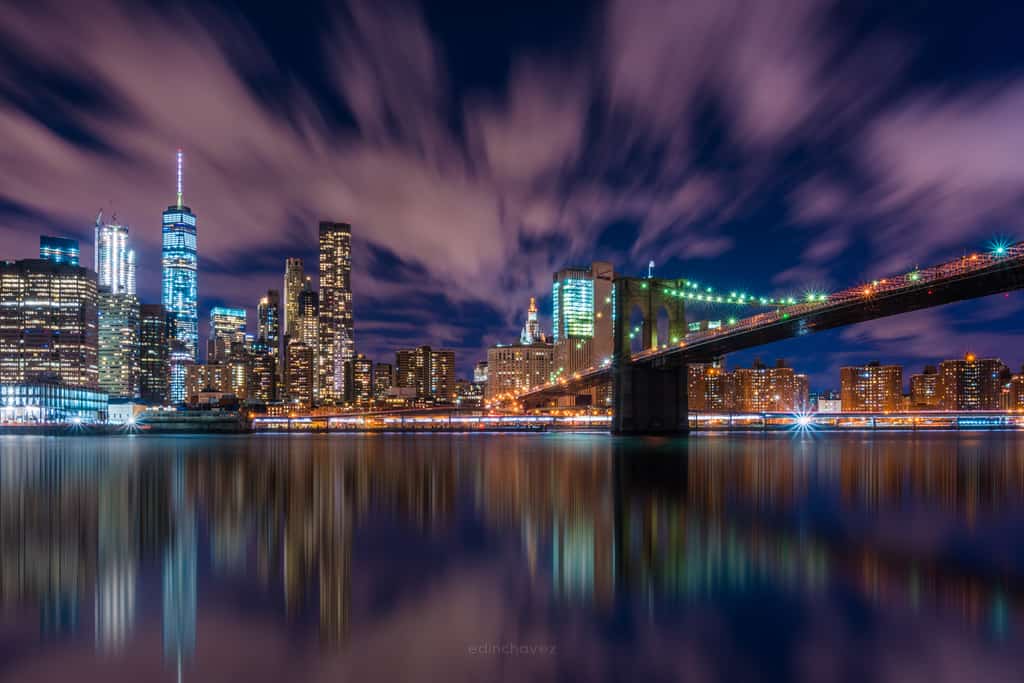
This guide covers the Sigma 24-35mm F2 DG HSM Art, with the Canon EF version as the starting point. It is a researched shooting and used-buying guide, not a hands-on lens test. The landscape and city photographs illustrate composition and are not presented as samples from this lens. Do not confuse this DSLR-era Art zoom with a newer DG DN mirrorless lens.
What this short zoom actually gives you
The focal-length range is 24-35mm, with a constant maximum aperture of f/2. It covers full-frame sensors and was offered in Canon EF, Nikon F and Sigma SA mounts. The mount is a purchase decision, not a menu setting: a Nikon F copy is not the Canon EF copy described in this post’s original title.
Sigma lists 18 elements in 13 groups, nine rounded diaphragm blades and a minimum aperture of f/16. The global specification lists 940g, with figures calculated for the Sigma SA version. That is a useful warning about the class of lens, not an exact weight promise for every mount and accessory combination. Check the actual kit with its hood and camera before planning to carry it all day.
The range includes 24, 28 and 35mm, but the old claim that it replaces three primes needs context. It gives those focal lengths in one lens. It does not automatically replace a smaller lens, a faster f/1.4 lens, a stabilized lens or a particular rendering you prefer. Choose by the photographs and handling you need rather than the number of products a marketing line says you can remove.
Sigma’s global product page now labels the model discontinued. That does not establish the stock, condition or warranty of a particular seller’s copy. Treat this as an exact-model shopping guide, with no current availability or price promise.

Canon EF, crop bodies and adapters
For a Canon EF camera, confirm that the lens is the EF version and that the exact body and lens firmware combination is supported. The original lens is designed for DSLRs. A mirrorless camera may need an adapter, and physical fit does not prove every autofocus, correction or video function behaves as expected.
On a Canon APS-C body using a 1.6x crop, the field of view is approximately equivalent to 38.4-56mm on full frame. The focal length itself does not change, and the maximum aperture is still f/2. The lens stops being a wide-angle option in the same sense as it is on full frame. If your main goal is a wide room or a broad landscape on that crop body, check whether the view is wide enough before buying.
Do not extend the Canon crop calculation to every camera brand or sensor size. Establish the sensor and crop factor first. Likewise, do not describe the EF lens as a native RF lens. Check the exact adapter, body, lens version and required functions with the manufacturers.
Sigma’s model-specific firmware page documents changes for particular camera and adapter combinations. A firmware note about one body is not a blanket guarantee for every later body. Read the correct mount section and test your own setup before a job.
24mm: organize the foreground
At the wide end, start with one strong subject and one useful foreground element. A rock, reflection or line can lead into the frame, but it should support the subject rather than compete with it. Look for rubbish, bright fragments and cut-off objects along all four edges before pressing the shutter.
Moving closer changes the size relationship between near and distant objects. Zooming from a fixed position changes framing without giving you that same change in perspective. Use both decisions deliberately. If the foreground looks too large, move back or change your camera position rather than expecting a correction slider to repair the composition.
Keep people away from the extreme edges when a stretched appearance would be unflattering. For buildings, keep the camera level when you want verticals to remain upright. Tilting upward changes the geometry. Leave room for a later perspective correction if that is part of your plan, because correcting the frame may require a crop.
35mm: simplify without losing the setting
The long end can make an environmental photograph feel more focused. Use it when the wider view includes too much unrelated detail. Before changing focal length, ask which part of the setting matters. A person, doorway or small group may need enough context to explain the scene without including the entire street.
For an environmental portrait, give the subject a clear place in the frame and inspect the background for distractions. Do not stand too close merely because the lens focuses there. Distance influences how faces and nearby objects appear. Step back when the perspective feels wrong, then reconsider framing.
A short zoom is useful when your position is constrained, but it cannot solve every situation. If 35mm still includes too much background, a longer lens or a different position may be the answer. If 24mm cannot include what you need, the answer may be a wider lens. Be honest about the range instead of stretching the phrase “all-purpose.”
Use f/2 for a reason
The constant f/2 maximum aperture stays available throughout the zoom range. Compared with f/2.8, f/2 admits one stop more light under the same conditions. You can use that exposure difference for a faster shutter, a lower ISO or a different depth-of-field choice. It does not guarantee sharper photographs in poor light.
For a moving person, choose shutter speed to control subject movement first. A wide aperture helps you reach it, but focus still needs to land in the right place. Do not expect a wide-angle lens to make every part of a close scene sharp at f/2. Check the saved image, especially when several people stand at different distances.
For a landscape, select aperture for the depth you need rather than treating f/2 as the reason to use the lens in every frame. Make a normal reference exposure, inspect important near and far details, then adjust. Stopping down to f/16 automatically is not a substitute for choosing a focus distance and checking the result.
For a night scene, stabilize the camera when the subject permits it and separate camera movement from subject movement. This lens has no optical stabilization. Any stabilization offered by an adapted camera body is a separate compatibility question. A tripod can reduce camera movement; neither a tripod nor stabilization freezes people walking through the exposure.
Focus checks that tell you something
HSM names Sigma’s Hyper Sonic Motor autofocus system. It does not establish a current subject-tracking feature or promise that every used copy focuses perfectly on every camera. Begin with a simple, well-lit subject, choose a clear focus target and inspect repeated files at the distances you actually use.
Test at both 24 and 35mm and at a middle position. Include a close subject and a more distant one. If results vary, check the camera mode, shutter speed, target contrast and technique before deciding the lens needs calibration. A single soft frame does not diagnose front focus, back focus or an optical defect.
On a compatible DSLR, compare the relevant focusing workflows carefully and follow the camera’s adjustment instructions if needed. Keep a record of the starting values. Do not copy someone else’s autofocus adjustment numbers: they describe a particular body and lens pair, not a setting every owner should install.
Sigma’s USB Dock and Optimization Pro are part of this lens family’s update and adjustment workflow. Verify the correct dock mount and the supported operations before purchasing it. The official firmware page tells owners to update Optimization Pro before updating the lens. Calibration changes focus behavior; it does not change the glass into a different optical design.
Close focus is not macro
Sigma lists a minimum focusing distance of 28cm and a maximum magnification ratio of 1:4.4. The focusing-distance figure is measured from the sensor plane, not from the front of the lens. Your working space in front of the lens is therefore shorter than 28cm. Check clearance before moving toward a fragile object.
A 1:4.4 maximum ratio is not life-size 1:1 macro. The lens can include a close detail with its surroundings, but small subjects may still occupy less of the frame than you want. Choose a macro lens when life-size detail is the actual goal rather than buying this zoom because the distance number sounds short.
For a close still-life photograph, inspect the background and the plane of focus. Small changes in position can alter both. Stop down when the required depth calls for it, and watch for your camera or hood casting a shadow. Do not let close-focus capability become an excuse to crowd the subject.
Filters, flare and straight lines
The lens takes 82mm filters, and Sigma lists the LH876-03 hood among its supplied accessories. Check the thread, hood fit and cap before buying used. A damaged filter ring can turn a useful lens into an awkward kit if you need neutral-density or polarizing filters for your work.
Choose a filter for a specific problem. A neutral-density filter changes exposure; a polarizer affects reflections and polarized light under suitable conditions. Neither automatically improves every landscape. Inspect the corners for unwanted darkening with the actual filter combination, especially if you stack filters.
Sigma describes its Super Multi-Layer Coating as reducing flare and ghosting. Reducing is not eliminating. Bright light near or inside the frame can still require a change of position, shielding or composition. Make a reference without an unnecessary filter when checking a problem.
For architecture, inspect the saved file with the correction settings you plan to use. Lens distortion and converging verticals from camera tilt are different issues. Sigma’s firmware notes address Canon in-camera lens-aberration correction on specified models. Follow those exact notes instead of assuming every correction menu can be enabled indiscriminately.
Used-lens checks and the complete kit
Confirm the mount and edition, then inspect the front and rear glass, mount, contacts, filter thread, hood and switches. Look for cracks, corrosion, haze and signs of moisture. Do not call every speck of internal dust a failed lens, but do not accept a blurry listing photograph as a condition check either.
Turn the zoom and focus rings gently through their useful travel. Test autofocus, aperture control and the saved files on your body. Photograph a detailed scene at several apertures and focal lengths, then compare the corners without confusing a tilted target with a lens problem. If one side looks consistently wrong, investigate within the return period.
Do not infer weather sealing from the Art badge or from a different Sigma lens. Protect this older model from rain, dust and spray, and ask about service history. Used condition matters more than a copied claim that the lens is “professional.”
Include the cost and weight of the hood, 82mm filters, correct dock or adapter and a safe carrying option in your decision. A launch price is not today’s value. Read the official model specifications, verify the seller’s actual kit and return terms, and buy only if this particular short zoom fits your photographs.
Frequently asked questions
Is the Sigma 24-35mm f/2 Art a full-frame lens?
Yes. Sigma identifies it as a full-frame DG lens offered in Canon EF, Nikon F and Sigma SA mounts. Choose the correct mount.
Is this a native Canon RF lens?
No. This guide starts with the Canon EF DSLR version. Verify the exact adapter, body and lens firmware for mirrorless use.
What view does it give on Canon 1.6x APS-C?
Approximately the field of view of 38.4-56mm on full frame. The focal length remains 24-35mm and the maximum aperture remains f/2.
Does it have optical stabilization?
No. Do not borrow stabilization claims from another lens. Camera-body stabilization on an adapted setup is a separate compatibility check.
Is 28cm close focus the distance from the front glass?
No. Minimum focusing distance is measured from the sensor plane. Sigma lists maximum magnification at 1:4.4, not life-size macro.
Which filter size does it use?
82mm. Check the filter thread and test the actual filter combination for clearance and corner darkening.
Gear to check for this wide-angle kit
Verify exact model, mount, condition and compatibility before buying. These are shopping starting points, not promises of stock or price.
Canon EF lens: Browse Amazon or B&H. Check the actual item against your setup.
Matching lens dock: Browse Amazon or B&H. Check the actual item against your setup.
82mm filters: Browse Amazon or B&H. Check the actual item against your setup.
Stable support: Browse Amazon or B&H. Check the actual item against your setup.
Affiliate disclosure: This article contains affiliate links. If you buy through them, we may earn a commission at no extra cost to you. As an Amazon Associate, we earn from qualifying purchases.
For practical photography tips, visit the Shut Your Aperture Academy. Build your understanding of light, framing and focus alongside your lens setup.


