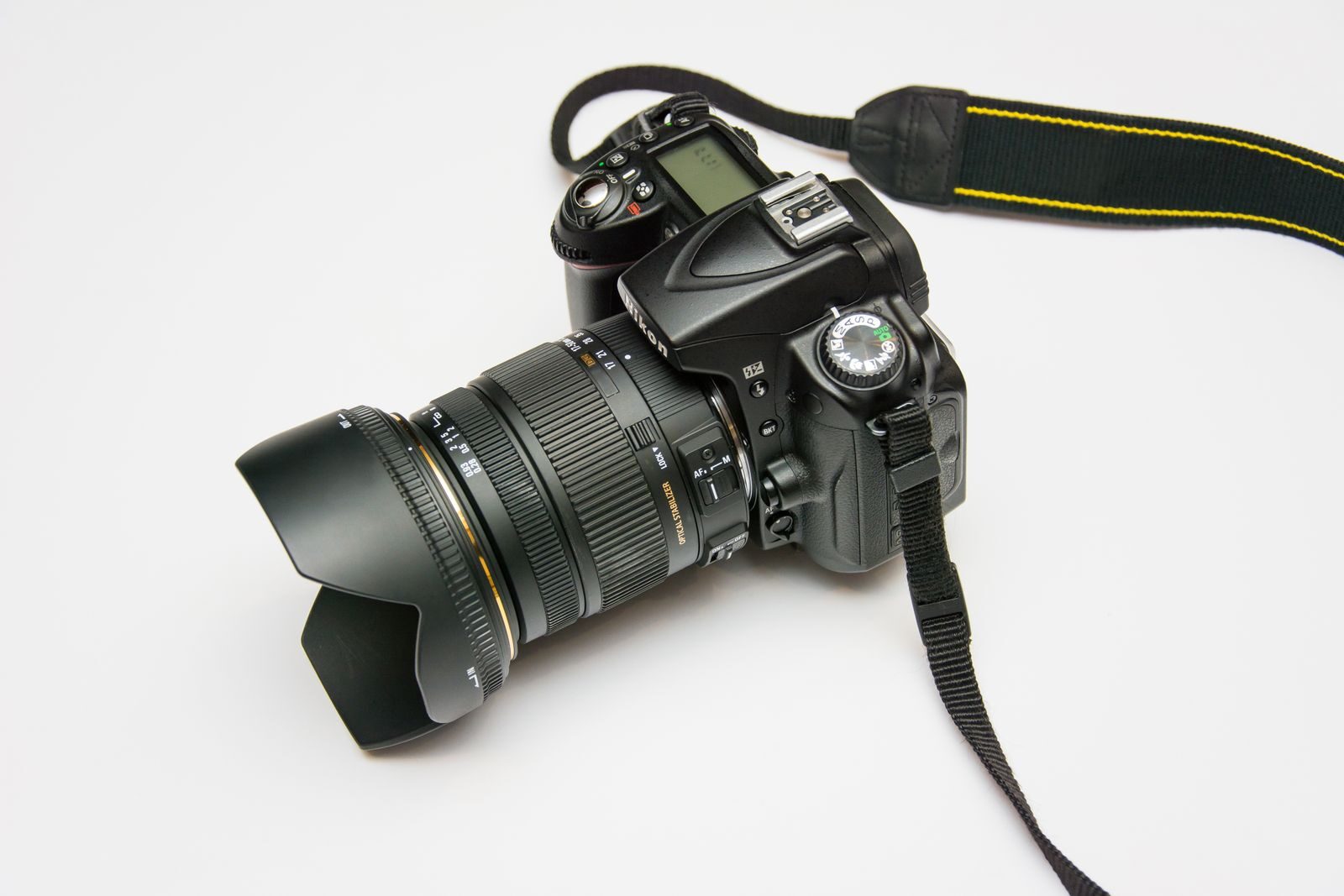
The Nikon D810 launched in June 2014. It is now twelve years old. By every benchmark spec sheet that gets posted on launch day — autofocus subject detection, in-body image stabilization, eye-AF, 8K video, AI scene modes — the camera is technically obsolete. And yet in 2026 there is a stubborn working pro community that refuses to give it up. Wedding shooters keep one in the bag as a backup. Landscape photographers still use it as their primary body. Studio portrait pros choose it over $4,000 mirrorless bodies for specific kinds of work.
This guide explains why. Not as a nostalgia piece — as a practical breakdown of where the D810 still wins, where it does not, and how to buy one used in 2026 without getting burned. If you are looking at a $700 to $1,100 body that does most of what a $3,500 modern camera does for portrait and landscape work, the D810 is the reason that comparison still happens.
 Save
SaveThe short version
The Nikon D810 is a 36.3-megapixel full-frame DSLR with no anti-aliasing filter, a base ISO of 64 (lower than most modern cameras), a 51-point autofocus system, and a Multi-CAM 3500FX module that still hits focus reliably in moderate light. It shoots 5 frames per second, supports 1080p video, and runs on the EN-EL15 battery that is still in production. The body is sealed against weather, the shutter is rated to 200,000 actuations, and the optical viewfinder shows you the scene as your eye sees it.
What it does not have: subject-detection autofocus, eye-AF, in-body stabilization, electronic shutter, 4K video, articulating screen, dual UHS-II slots, or any of the AI features that ship on every 2025 and 2026 release. It is a tool, not a feature list.
The used market in 2026 has the D810 sitting at $700 to $1,100 depending on shutter count and cosmetic condition. Compare that to a new Nikon Z8 at $4,000 or a used Sony A7R IV at $1,800 to $2,300. For studio portrait, landscape, real estate, and architectural work — categories where the camera sits on a tripod and the photographer controls focus deliberately — the D810 delivers files that are functionally indistinguishable from the newer bodies once the raw is processed.
The base ISO 64 conversation
Most full-frame cameras start at ISO 100. A few go down to ISO 50 as an extended setting that compresses highlights. The D810 starts at native ISO 64. That one-third stop matters more than it sounds on the spec sheet.
Base ISO is where the sensor is at its cleanest. Lower base ISO means a wider usable dynamic range — typically 14.8 stops on the D810 at ISO 64, measured at the file level. That is more dynamic range than the Sony A7R IV (14.6) and roughly equivalent to the Nikon Z7 II (14.7). The D850 (15.0) is the only Nikon body that meaningfully exceeds it, and the D810 is its older sibling.
For landscape photographers shooting bracketed exposures or single-frame high-dynamic-range scenes, ISO 64 is the reason to own this camera. You can hold detail in a bright sky and pull shadows three stops without color banding. Compared to a Sony A7 III at ISO 100, the D810 at ISO 64 has a measurable highlight retention advantage that shows up in the final print.
For studio work with strobes, ISO 64 lets you open the aperture wider before the flash output overwhelms the exposure. A photographer shooting an f/2 portrait under studio lights without ND filters can do it on the D810 — on most other cameras the minimum shutter sync speed plus the strobe minimum output forces ISO 100 and a smaller aperture, which kills the look you wanted.
No anti-aliasing filter, 36 megapixels, and what that gets you
The D810 was the first major Nikon to ship without an optical low-pass filter (the AA or anti-aliasing filter). That filter is a thin layer of birefringent material that slightly blurs the image to prevent moire patterns when shooting fabric, fine grids, or repeating textures. Removing it sharpens the per-pixel resolution by roughly 10 to 15 percent.
Combined with the 36-megapixel sensor, the D810 produces files with detail that holds up to large prints. A 36MP file at 300 DPI prints at 24 by 16 inches without upscaling. With modern AI upscaling (Topaz Gigapixel, Adobe Super Resolution) the same file prints at 48 by 32 inches with no visible quality loss. For landscape photographers who sell prints, this is the floor.
The moire risk is real but limited. Fabric-heavy fashion shoots and architectural work with fine grid patterns occasionally produce moire that has to be addressed in post. Lightroom and Capture One both have moire-suppression brushes that handle it. For landscape and portrait work, moire essentially does not appear.
 Save
SaveAutofocus in 2026: still good enough for most working pros
The D810’s 51-point Multi-CAM 3500FX autofocus is the same module that shipped in the Nikon D750, D5, and the original D4S. In 2014 it was the best phase-detect AF system in a non-flagship DSLR. In 2026 it is mid-pack — slower at subject acquisition than a Sony A1 or Nikon Z9, but accurate and predictable in conditions where it has light to work with.
For static or semi-static subjects — portraits, landscapes, real estate, products, events with deliberate composition — the AF system is functionally indistinguishable from a 2025 mirrorless body. You pick a focus point, you put it on the eye or the subject, you press the button, and the focus lands. The hit rate at f/1.4 on a 50mm or 85mm portrait lens is in the 95 percent range with good technique. That is the same hit rate a working pro gets out of the Z8 in single-point mode.
Where the D810 falls behind: fast-moving sports, birds in flight, kids and pets at full sprint, wedding reception dancing in dim ambient. The AF tracking algorithms in 2014 did not have the predictive ML models that modern bodies use. If your primary work is sports or action, the D810 is not the camera. If your primary work is anything else, it is plenty.
One specific note: the D810’s autofocus accuracy with f/1.4 lenses is better than most mirrorless cameras using phase-detect AF on the sensor. The dedicated AF module reads focus off a separate sensor stack, which is more accurate at wide apertures with shallow depth of field. Modern mirrorless has closed most of that gap with subject detection and eye-AF, but for portrait pros who manually pick the eye and rely on optical precision, the D810 system still delivers.
The optical viewfinder argument
Mirrorless cameras show you the exposure preview in the EVF. You see what the file will look like before you press the shutter. That is genuinely useful for some workflows.
The D810 has a 100 percent coverage pentaprism optical viewfinder that shows you the actual scene through the lens. No lag, no battery drain, no electronic flicker, no preview pipeline. For long sessions — weddings, events, sports, anything where you are looking through the camera for hours — the optical viewfinder is more comfortable, especially in bright sunlight where EVFs wash out and in dim conditions where the EVF gain artifacts get distracting.
Battery life follows directly from the optical viewfinder. The D810 runs 1,200+ frames per charge in normal use, more like 2,000 frames for tripod-based landscape work where the screen is mostly off. Compare that to 400 to 800 frames on most mirrorless bodies. For a wedding shooter doing a full day plus reception, one D810 battery covers the whole event. On a mirrorless body the same shoot needs two or three batteries.
Where the D810 actively beats newer cameras
Three specific scenarios where the D810 is the right answer in 2026:
Tethered studio shooting. The D810 tethers cleanly via USB 3.0 to Capture One and Lightroom. The transfer speed is fast enough for any commercial studio workflow. Many photographers report that the D810 tether is more reliable than newer Nikon Z bodies on the same firmware — the older USB stack has fewer dropped connections during long sessions. For product, fashion, and headshot work where the photographer reviews files on a 27-inch monitor between every shot, this matters.
Long-exposure landscape with ND filters. The optical viewfinder makes composition with a 10-stop ND filter easier than mirrorless, because the EVF on most mirrorless bodies gets too dim to compose accurately. With the D810 you compose without the filter, then drop the filter in, and the optical viewfinder still shows you the framing. Live view is available for fine focus checks. The full workflow is faster than the equivalent on a mirrorless body.
Architectural and real estate work with tilt-shift lenses. The Nikon PC-E tilt-shift lenses (24mm, 45mm, 85mm) work natively on the D810 with full electronic aperture control. On mirrorless Z bodies the same lenses require an FTZ adapter, which adds a millimeter of flange distance and can introduce minor optical inconsistencies. For tilt-shift work the D810 is the more native body.
 Save
SaveWhere the D810 loses
Plain reality: the D810 is not the right camera for every job. The places it loses:
Video. 1080p only. No 4K. Decent codec for B-roll but not a primary video camera. If you shoot hybrid stills-and-video, look at a Z6 II or Z8.
Subject-detection AF. No eye-AF, no animal-AF, no bird-AF. The focus point selection is manual. For wildlife and sports, this is a real disadvantage.
In-body stabilization. None. You need either a tripod or a stabilized lens for low-light handheld. Most pro Nikon F-mount lenses have VR built in, so this is less of a problem in practice than it sounds.
Silent shooting. The shutter is loud. For wedding ceremonies, court reporting, or any situation where shutter noise is a problem, the D810 is not viable. Live view mirror-up mode is quieter but still has a noticeable click.
Frame rate. 5 fps is the max. Not enough for sports.
High-ISO performance above 6400. ISO 6400 is usable, ISO 12,800 is grainy but salvageable, anything higher gets noisy. Modern bodies push two stops better. For low-light event work the D810 is workable but not best-in-class.
How to buy a used D810 in 2026
Three places matter: B&H used department, Amazon used and renewed, and KEH Camera. eBay is workable but has the most variable seller quality.
The single most important spec on a used D810 is shutter count. The shutter mechanism is rated to 200,000 actuations. Most used bodies in the $700 to $1,100 range have between 30,000 and 100,000 actuations. Below 30,000 is a low-mileage body. Above 150,000 is approaching end of life — still functional, but you should expect a shutter replacement (about $400 from Nikon service) at some point.
To check shutter count, plug the camera into a computer and use a free tool like ShutterCount (Mac) or Opanda IExif (Windows). Any reputable seller will list the count up front. If a seller refuses to disclose the count, pass on the body.
The second check is sensor cleanliness. Take a test photo at f/22 against a white wall and look for dust spots. A few are normal. Heavy spotting suggests dust under the sensor that needs a wet cleaning ($50 to $100 from a camera shop). This is fixable but should affect your price.
Third, check the AF fine-tune setting. A previous owner may have calibrated AF for their specific lenses and saved the adjustments. Reset the AF fine-tune to zero before testing focus with your own lenses. If the body needs more than ±5 of fine-tune on a known-good lens, the AF module may need calibration ($150 to $250 from Nikon service).
Lenses that pair well with the D810
The D810 uses the Nikon F-mount with full electronic aperture and AF support for AF-S and AF-P lenses, plus aperture-ring support for older AF-D lenses. The lens ecosystem is mature and prices on used F-mount glass have dropped 20 to 40 percent since Nikon’s pivot to the Z mount in 2018. This is a buying opportunity.
The portrait standard is the Nikkor 85mm f/1.4G, which can be found used for around $1,000 to $1,400. For landscape, the Nikkor 16-35mm f/4 VR is the workhorse wide zoom, used around $650 to $850. The Nikkor 24-70mm f/2.8E VR covers the standard zoom range and is the best AF-S 24-70 Nikon made — used prices have settled around $1,500. Add the Nikkor 70-200mm f/2.8E FL VR (used $1,800) and you have a complete wedding or portrait kit for under $5,000 body and lenses.
For specific niches: the Nikkor 105mm f/1.4E is one of the finest portrait lenses ever made, and at $1,400 used it is a steal compared to mirrorless equivalents. The Nikkor 14-24mm f/2.8G is the legendary astro lens, used around $900 — still the lens that put Nikon on the map for night sky work.
Real-world workflow notes
A few practical considerations from working photographers who still use the D810 as a primary or backup body:
The card slot configuration is one CompactFlash and one SD. CF cards are getting harder to find new — order spares now from B&H CF card stock or Amazon CF card listings. SanDisk and Lexar still make professional CF cards for legacy bodies. Set the camera to record raw to CF and JPEG to SD as a hot backup, or both raw if you need redundancy.
Battery life is excellent but only if you turn off live view by default. The optical viewfinder pulls almost no power; live view doubles the drain. For tripod work, live view is essential for fine focus — toggle it on for the focus check, then turn it off before the exposure.
Firmware: the final D810 firmware is version C 1.14. Update before you start shooting paid work. The update fixes a card-format bug and improves AF behavior with the f/1.4E lenses. Download from Nikon’s support site, copy to a freshly formatted SD card, and run the update from the menu.
The popup flash is not for serious work but it triggers the Commander mode for off-camera Nikon Speedlights. If you build a small wireless flash kit (one SB-700 and one SB-5000), the D810 controls it directly through the popup without needing a separate trigger. For event work with off-camera fill, this is convenient.
Is it worth it in 2026?
The honest answer depends on what you shoot.
If your primary work is landscape, studio portrait, real estate, architectural, or product photography — yes, the D810 in 2026 is one of the best dollar-for-dollar buys on the used market. A $900 body that produces files indistinguishable from a $4,000 mirrorless body in those genres is a serious tool. The base ISO 64, the 36MP file size with no AA filter, the optical viewfinder, the battery life, and the F-mount lens ecosystem add up to a camera that delivers.
If your primary work is wedding, sports, wildlife, or hybrid video — the D810 is workable as a backup but probably not your best primary. Modern mirrorless bodies have closed the gap on the things the D810 does well and built a meaningful lead on the things it does poorly. Buy a Z8 or A1 II as primary and keep an eye out for a clean D810 as backup if you want one.
If you are just starting out and want a full-frame body to learn on — the D810 is one of the best teaching cameras ever built. It rewards deliberate technique. It does not bail you out with subject detection or AI scene modes. Every well-focused, well-exposed image came from your decisions, not the camera’s. That is how you learn.
For more
If you want to go deeper on the technique side: our aperture photography pillar covers the wide-aperture portrait workflow the D810 was built for, and the ISO photography pillar walks through the dynamic range advantages of base ISO 64. For lens selection, compare the D810 with the current mirrorless options and lenses that fit the work you actually shoot.
Recommended dual-affiliate picks
| Best for | Pick | B&H | Amazon | Why |
|---|---|---|---|---|
| Used D810 body | Nikon D810 (used, <100K shutter) | Check B&H | Check Amazon | $700-1,100, 36MP, base ISO 64, F-mount |
| Standard zoom | Nikkor 24-70mm f/2.8E VR | Check B&H | Check Amazon | Best 24-70 Nikon made for F-mount |
| Portrait prime | Nikkor 85mm f/1.4G | Check B&H | Check Amazon | Used $1,000-1,400, legendary portrait glass |
| Wide landscape | Nikkor 16-35mm f/4 VR | Check B&H | Check Amazon | Sharp, weather-sealed, $650-850 used |
| Battery spare | Nikon EN-EL15c | Check B&H | Check Amazon | Still in production, 1,200+ frames per charge |
Color science and skin tones
One reason working portrait pros keep coming back to the D810 is its color science. Nikon’s color profile for the D810 sensor produces skin tones that need less correction than most modern bodies. Reds and oranges sit slightly warmer out of camera, greens are more neutral, and the highlight roll-off in the yellow channel is smoother than on the Z series. For wedding and headshot photographers who batch-edit hundreds of files per session, less color correction per file translates directly into faster turnaround.
The raw files (Nikon NEF) carry generous color headroom. White balance can be shifted ±1500 Kelvin in post without visible color artifacts, and tint can swing ±20 without breaking skin tones. That latitude matters in mixed-light venues where tungsten, daylight, and LED practicals fight each other. The D810 raws hold up to aggressive white balance corrections better than the more sensor-aggressive files from newer mirrorless bodies, which sometimes show magenta or green casts when pushed.
The bottom line
The Nikon D810 in 2026 is not the camera you buy because it has the best feature list. It is the camera you buy because for specific kinds of work it delivers professional results at a price point no modern body can match. Landscape, studio, real estate, architectural, and deliberate portrait work — these are categories where the D810 is still a serious tool. A clean used body with a 35,000 to 80,000 actuation count, paired with one or two pro F-mount lenses, builds a kit that produces commercial-grade files for under $2,500 total.
That is the case for the D810 in 2026. Not nostalgia. Not stubbornness. Working economics on a camera that does the job.
 Save
SaveAffiliate disclosure: Some links above are affiliate links. We earn a small commission if you buy through them at no extra cost to you. This funds the site.