Last month I shot a wedding at a venue with no overhead lighting and a DJ who thought every colored gel was a gift from God. 3,200 ISO, wide open, and praying. The RAW files looked like textured soup. What saved the shoot wasn’t a new lens or a faster card — it was running 847 files through Topaz Photo AI in about 25 minutes while I made coffee. That’s the actual promise of AI photo editing tools: not magic, not a replacement for knowing what you’re doing, but a genuine speed multiplier for problems that used to eat your weekend.
The category has exploded over the past 18 months. Every major editing platform now has some flavor of AI built in, and a handful of standalone tools have gotten genuinely competitive. This guide covers the nine tools worth your money right now — what each one actually does well, where it falls short, and who should bother buying it.
 Save
SaveQuick Comparison: Best AI Photo Editing Tools 2026
| Tool | Best For | Starting Price | Free Trial | SYA Verdict |
|---|---|---|---|---|
| Adobe Lightroom (AI Denoise + Generative Remove) | Whole-catalog editing, batch workflows | $9.99/mo (Photography Plan) | 7-day trial | Best all-around for most photographers |
| Topaz Photo AI | Noise reduction, sharpening, upscaling | $199 one-time (then $119/yr upgrades) | 30-day trial | Best standalone noise/sharpening tool |
| Skylum Luminar Neo | Sky replacement, portrait retouching, fast creative edits | $69/yr subscription or ~$119 perpetual | 7-day trial | Best for hobbyists who want speed over control |
| DxO PureRAW 4 | RAW preprocessing, optics correction | $119 one-time | 30-day trial | Best first-pass RAW denoiser for Lightroom/C1 users |
| ON1 Photo RAW AI | Lightroom alternative, all-in-one editing | $79.99 perpetual / $89.99/yr subscription | 30-day trial | Best value Lightroom replacement |
| Capture One (AI Masks) | Commercial, tethered, color-critical work | $18/mo (Pro) / $349 perpetual | 30-day trial | Best for studio and fashion photographers |
| Photoshop Generative Fill | Content-aware manipulation, compositing | Included with Creative Cloud ($54.99/mo) | 7-day trial | Best for retouchers and compositors |
| Imagen AI | AI culling and profile-based editing | $7/mo minimum (editing); $12/mo culling plan | 1,000 free edits | Best for high-volume wedding and portrait photographers |
| Aftershoot | AI culling and automated basic edits | $10/mo (culling) / $15/mo (culling + edits) | 14-day trial | Best budget entry into AI-assisted culling |
1. Adobe Lightroom — AI Denoise and Generative Remove
Lightroom’s AI Denoise was the feature that actually changed how I handle nighttime shoots. Before it landed, you were choosing between acceptable sharpness or acceptable noise in any image shot above ISO 3200. Now I regularly push to ISO 12,800 knowing the cleanup will be fast and the file won’t look plasticky. The 2025 update dropped the requirement to create a separate DNG — it processes directly on the RAW, which means your catalog stays manageable and your storage bill stays sane.
Generative Remove (Lightroom’s answer to Photoshop’s content-aware fill) handles background objects well — fence posts, stray tourists, power lines — though it still struggles when the removal zone crosses complex textures like water or intricate foliage. For serious compositing work you still need Photoshop. But for the 80% of “get this thing out of my photo” jobs, it works without leaving Lightroom.
What it does well: Batch denoise across an entire session, seamless catalog integration, no file format gymnastics, regular feature updates included in subscription cost.
What it sucks at: Extreme noise (ISO 25,600+) still trails Topaz at the high end. Generative Fill tools are less powerful than Photoshop’s full implementation. Subscription-only — no perpetual option.
Price: Photography Plan (Lightroom + Lightroom Classic + Photoshop, 1TB) is $9.99/month paid annually ($119.88/year). Available at adobe.com.
Who should buy it: Almost every photographer working in RAW. If you’re not already on Lightroom and you shoot any volume, this is table stakes. Pair it with a solid preset library and your per-image editing time drops dramatically.
Real-world workflow: Select all images from a dark reception shoot, apply AI Denoise at “High” strength, let it run overnight, wake up to clean 85MB DNG-free files ready to grade.
2. Topaz Photo AI — Noise, Sharpness, Upscaling
Topaz Photo AI combines the company’s three core models — Denoise AI, Sharpen AI, and Gigapixel AI — into one application. The integration is smart: it auto-analyzes each image and suggests which combination of adjustments to apply. Most of the time the suggestion is right. When you override it manually, the individual model controls are granular enough to dial in exactly what you need.
For genuinely extreme noise — think a 35mm film scan, a very old sensor, or a wildlife shot at ISO 25,600 — Topaz is still ahead of Lightroom’s built-in AI Denoise. The difference narrows every Lightroom update cycle, but it’s there.
What it does well: Class-leading results on severe noise and motion blur, batch processing with autopilot mode, excellent upscaling for print work, integrates as a Lightroom/Photoshop plugin.
What it sucks at: Slow on machines without a capable GPU. The interface can feel redundant once Lightroom’s denoise is doing 80% of your jobs. Topaz moved to a subscription model in late 2025 — pricing has become more complex.
Price: Topaz Photo AI is $199 one-time (with free minor updates; annual upgrade pricing applies for major versions). Check current pricing at topazlabs.com — they frequently discount.
Who should buy it: Wildlife photographers, low-light event shooters, and anyone who regularly needs to rescue underexposed files or upscale images for large-format printing.
Real-world workflow: Run entire bird photography session through Topaz Photo AI on autopilot while importing; review the autopilot calls and override on files where background motion blur was tagged for sharpening instead of the bird.
3. Skylum Luminar Neo — Creative AI for Fast Edits
Luminar Neo plays a different game than the other tools on this list. It isn’t trying to be a technical powerhouse — it’s trying to get you from RAW file to a finished look in the fewest possible clicks. The sky replacement tool is the best in the consumer space. The portrait tools (skin retouching, facial lighting adjustments) are genuinely good and fast. GenErase and GenExpand round out the AI toolkit for quick generative work.
The catch: Luminar Neo changed its pricing model in 2025, and lifetime license holders lost access to generative AI tools starting January 2026. That caused real frustration in the community. The current subscription ($69/year) or perpetual (~$119, without generative tools) pricing is reasonable, but the shifting terms make it hard to plan around.
What it does well: Sky replacement, atmosphere effects, portrait skin work, fast creative presets with AI adjustment, approachable for photographers who don’t want to learn deep color theory.
What it sucks at: Less precise masking than Lightroom or Capture One, catalog management is not as mature, software can be slow on older machines, pricing model instability is a real concern for long-term users.
Price: Subscription from $69/year (includes generative tools). Perpetual license around $119. Try it first — 7-day free trial available. Visit Skylum for current offers.
Who should buy it: Real estate photographers who need fast sky replacements, hobbyists who want impressive results without mastering the full Adobe stack, portrait photographers doing casual shoots.
Real-world workflow: Real estate exterior shoot on a gray overcast day: run batch sky replacement in Luminar Neo, swap in a blue-sky-with-clouds image from the same lens/focal length, export to TIFF for final MLS delivery in under an hour.
4. DxO PureRAW 4 — Optics-First RAW Preprocessing
DxO PureRAW is not a full editor. That’s the point. It processes your RAW files — applying lens corrections from DxO’s optical database, removing noise with DeepPRIME XD2S, and correcting distortion — and hands you a clean DNG (or JPEG) to take wherever you normally edit. The optical corrections are camera-lens combination specific, not generic, which is why the results often look better than what Lightroom or Capture One produces from the same file.
For photographers who are deeply invested in a non-Adobe workflow but want better noise performance, PureRAW slots in cleanly as a preprocessing step. It also works as a Lightroom plugin if you prefer to stay in that ecosystem.
What it does well: Best-in-class optical corrections, excellent DeepPRIME noise reduction, supports most major RAW formats, no subscription required, outputs universally compatible DNG files.
What it sucks at: Not a standalone editor — you still need something else for actual adjustments. Creates large DNG files. Lens database doesn’t cover every third-party lens combination.
Price: $119 one-time license, with upgrade pricing for major versions (upgrade price approximately $79). Available at dxo.com.
Who should buy it: Lightroom users who want better base files before color grading, photographers who shoot with lenses that have significant optical distortion, anyone switching from JPEG-only to full RAW workflows.
Real-world workflow: Run a landscape session (shot with an ultra-wide prime known for strong barrel distortion) through PureRAW first; import the corrected DNGs into Lightroom where the lens distortion is already resolved and noise is clean before you touch a single slider.
 Save
Save5. ON1 Photo RAW AI — Best Value Lightroom Alternative
ON1 Photo RAW has been quietly getting better every year, and the 2026 version is the strongest release yet. It bundles an impressive set of AI features — subject and background masking, super resolution, Restore AI (noise/sharpening) — into a package that costs $79.99 as a one-time purchase. No ongoing subscription required if you can live without the latest major-version updates.
The interface mirrors Lightroom’s enough that Adobe refugees can get productive quickly, but the masking and local adjustment tools have their own personality. Restore AI competes well with Lightroom’s denoise for most shooting conditions, and the depth lighting and AI masking additions in the 2026 release are genuinely fun to work with.
What it does well: Perpetual license option, strong AI masking, solid noise reduction, works standalone or as a Lightroom plugin, good preset ecosystem, no cloud dependency.
What it sucks at: Tethering support is limited. Catalog migration from Lightroom is imperfect. Performance can lag on complex local adjustments. Less community support than Adobe or Capture One.
Price: ON1 Photo RAW 2026 perpetual license: $49.99 (standard) / $79.99 (MAX, includes plugin functionality). Subscription: $89.99/year. Available at on1.com.
Who should buy it: Photographers who want to escape the Adobe subscription cycle but need a full-featured editor, not just a preprocessor. Also a good choice for landscape photographers who rely heavily on local adjustments and don’t need tethering.
Real-world workflow: Import a landscape shoot, use ON1’s AI sky mask to pull a graduated adjustment that follows the actual horizon line (not just a flat linear gradient), apply targeted noise reduction to shadowed foreground separately from the sky in one session without leaving the app.
6. Capture One — AI Masks and Studio Workflow
Capture One’s AI masking has matured significantly. The 16.7 update added the ability to combine different mask types in a single adjustment layer — AI subject selection, linear gradients, and luma ranges can all feed into one mask. For studio and fashion work where you need to adjust a model’s clothing, skin, hair, and background as separate elements, this is genuinely powerful.
The color science in Capture One is still the reason professionals pay the premium. The color editor is more flexible than Lightroom’s HSL panel, the tethering workflow is faster and more reliable, and the output quality for print production is difficult to match. The AI tools are icing; the foundation is already strong.
What it does well: Industry-leading color tools, best tethering support, sophisticated AI masking (subject, skin, hair, clothing), strong ICC profile support for print, excellent file browsing.
What it sucks at: Steep price ($18/mo or $349 perpetual). Learning curve is real. Generative AI features lag behind Adobe. The catalog structure frustrates Lightroom users initially. Less intuitive for beginners than Lightroom.
Price: Pro subscription $18/month; All-in-One $24.67/month; perpetual license $349. Full pricing at captureone.com.
Who should buy it: Commercial photographers, studio shooters, fashion and product photographers who need the best color rendering and reliable tethering. If you’re shooting with controlled aperture in studio conditions, the Capture One color workflow is worth learning.
Real-world workflow: Tethered fashion shoot: capture directly into a Capture One session, apply a product-specific color profile, use AI People mask to isolate clothing for a targeted color grade, deliver web-resolution JPEGs to art director on-set in real time.
7. Adobe Photoshop — Generative Fill and AI Retouching
Photoshop’s Generative Fill arrived with mixed reviews from photographers who’d been using it for compositing work, but by 2025 the model quality improved substantially. For removing distracting objects from complex scenes — a piece of equipment in the frame, an unwanted reflection in a window, a skin blemish that other healing tools leave a trace of — Generative Fill is the fastest tool available.
The 2025 and 2026 updates also expanded the Generative Expand tool, which lets you extend the canvas of an image and fill the added area with contextually generated content. For editorial and product photography where a design team needs more breathing room around a subject, this saves what used to be a complex multi-layer composite job.
What it does well: Best generative content quality for retouching, Generative Expand for canvas extension, Neural Filters for frequency separation and portrait retouching, deep integration with Lightroom catalog via Edit In workflow.
What it sucks at: No standalone pricing — requires a Creative Cloud subscription. Not a RAW processor. Generated content sometimes fails on specific textures (hair, grass, water at close range). Overkill if you don’t composite or retouch heavily.
Price: Photoshop standalone plan $22.99/month; Creative Cloud All Apps $54.99/month. Included in Photography Plan only through specific bundles — check adobe.com/creativecloud. No affiliate program — link is informational only.
Who should buy it: Retouchers, composite artists, product photographers, anyone who routinely needs to clean up scenes rather than just grade them. If you’re mostly adjusting tones and doing minimal object removal, Lightroom’s Generative Remove is sufficient.
Real-world workflow: Product shoot on white sweep: shoot with a deliberate overhang on canvas edges; use Generative Expand in Photoshop to add 20% canvas on left and right; fill to extend the background seamlessly; deliver to agency with the same tight crop but correct aspect ratio for their layout.
8. Imagen AI — Profile-Based AI Editing and Culling
Imagen AI occupies a specific niche: it learns your editing style from a set of edited images, builds a personal AI profile, then applies that style to new shoots automatically. For wedding and portrait photographers who deliver a consistent look across hundreds of galleries a year, this is the closest thing to cloning yourself. The culling side — ranking images by technical quality and composition — is reliable enough that many photographers use it as a first pass before doing a final human cull.
The pricing model is a bit unusual. The culling subscription is $12/month (billed annually). The editing side is usage-based — 5 cents per image to apply edits, with a $7/month minimum. For a photographer delivering 500 images per wedding, that’s $25 in editing cost per wedding. For 100 weddings a year, it adds up. Know your volume before committing.
What it does well: Highly accurate personal AI profiles built from your own edits, solid culling that learns to recognize your preferred compositions, cloud-based so it runs without tying up your machine, integrates directly with Lightroom.
What it sucks at: Per-image pricing can get expensive at scale. Requires a substantial editing sample (at least 3,000 previously edited images) to build a useful profile. Not useful for photographers who deliberately vary their style across genres.
Price: Culling: $12/month billed annually ($18 month-to-month). Editing: $0.05/photo plus $7/month minimum. 1,000 free edits to start. Details at imagen-ai.com.
Who should buy it: Wedding and portrait photographers delivering 200+ images per event, multiple times per month, who have a well-defined style they want to replicate consistently. Not a good fit for photojournalists or photographers with deliberately varied styles.
Real-world workflow: Import 800-image wedding gallery; run Imagen culling to get to ~350 selects in 10 minutes; apply AI editing profile to all 350; review in Lightroom and override the 15-20% that need a manual touch; deliver finished gallery same night.
9. Aftershoot — Affordable AI Culling and Auto-Editing
Aftershoot competes directly with Imagen AI on culling, and for photographers who don’t want to spend heavily on per-image fees, it often wins the budget comparison. The culling model assesses sharpness, blink detection, duplicate flagging, and composition simultaneously. At $10/month for unlimited culling, it’s an easy experiment for anyone who still selects by hand through thousands of images per shoot.
The auto-editing side — available at $15/month — is less sophisticated than Imagen’s profile-based approach, but it gets you a solid starting point with exposure, white balance, and basic color adjustments applied automatically. The AI cropping and straightening features are worth the upgrade cost alone for photographers who deliver a lot of lifestyle or action content.
What it does well: Simple flat monthly pricing (no per-image fees), fast culling that handles large batches, AI cropping and straightening, personal AI editor training at the $40/month tier, integrates with Lightroom and Capture One.
What it sucks at: Auto-edit quality is more generic than Imagen’s profile approach at the base tier. AI profile training requires the $40/month plan (MAX). Less useful for photographers with a very distinctive or manual editing style.
Price: Culling only: $10/month. Culling + auto-editing: $15/month. Personal AI editor (MAX): $40/month. Billed monthly; no annual lock-in required. See current plans at aftershoot.com.
Who should buy it: Volume photographers who want culling automation with predictable costs, photographers new to AI-assisted editing who want a low-risk entry point, anyone shooting events who currently spends 2-3 hours culling per shoot.
Real-world workflow: Sports event photographer: import 2,400 frames from a youth soccer tournament into Aftershoot, cull down to 240 usable shots in 8 minutes, apply auto-editing for base corrections, export to a Lightroom preset-based workflow for final creative grading.
 Save
SaveHow to Pick the Right AI Editing Tool for Your Workflow
The biggest mistake photographers make is buying a tool because it got the best lab test results, then finding it doesn’t fit how they actually work. Here’s a practical decision tree:
Step 1: Are you already on Lightroom?
Yes: Start with what’s already in Lightroom AI Denoise and Generative Remove. Add Topaz Photo AI only if you regularly shoot above ISO 6400 or need large-format upscaling. Add DxO PureRAW only if your lens profile matters more than convenience.
No, and you want to avoid Adobe subscriptions: Try ON1 Photo RAW first.
Step 2: What’s your primary editing bottleneck?
Noise on high-ISO files: Topaz Photo AI or DxO PureRAW 4.
Culling and initial editing of large galleries: Imagen AI (if you have a defined style) or Aftershoot (if you want simple pricing).
Sky replacements and fast creative looks: Luminar Neo.
Color-critical studio or commercial work: Capture One.
Heavy retouching and object removal: Photoshop Generative Fill.
Step 3: What’s your volume?
Under 500 images per month: A single tool (Lightroom or ON1) is probably enough with AI features already included.
500–3,000 images per month: Add one specialized tool (Topaz, DxO, or Aftershoot) for your biggest pain point.
3,000+ images per month: Look hard at Imagen AI or Aftershoot MAX — the time savings will pay for the subscription in the first month.
If you’re building a landscape workflow specifically, the combination of Lightroom + ON1 (for AI masking and local adjustments) covers most bases — see our landscape photography guide for how these tools slot into a full field-to-delivery process.
Workflow Recipes by Genre
Wedding Edit
Tools: Aftershoot or Imagen AI + Lightroom + Photoshop (for select images)
Process: Import all cards simultaneously. Run Aftershoot culling while cards ingest — by the time the last card is done, your first pass cull is ready. Apply Imagen AI editing profile (or Lightroom presets) across the selects. Handle specific problems — harsh shadows, cluttered backgrounds, stray objects — with Lightroom Generative Remove. For formals with blemishes or venue cleanup, open in Photoshop Generative Fill. Target turnaround: gallery delivered within 5 days of wedding date.
Where AI helps most: culling (saves 2-3 hours), base exposure/color on reception shots (saves another 1-2 hours).
Real Estate Edit
Tools: Lightroom + Luminar Neo (exterior shots) + Photoshop (HDR interiors)
Process: For exteriors with flat or overcast skies, run through Luminar Neo sky replacement before final delivery — it consistently produces the cleanest sky swaps without haloing around tree lines. Interior HDR merges happen in Lightroom or Photoshop. For listing photos where furniture removal is needed, Photoshop Generative Fill handles most residential jobs. Virtual staging is outside the scope of these tools, but clearing a room of a single chair or fixture is routine.
Where AI helps most: sky replacements on exteriors (5 minutes per property vs. 20+ with manual masking).
Landscape Edit
Tools: DxO PureRAW 4 (preprocessing) + Lightroom or Capture One (primary editing)
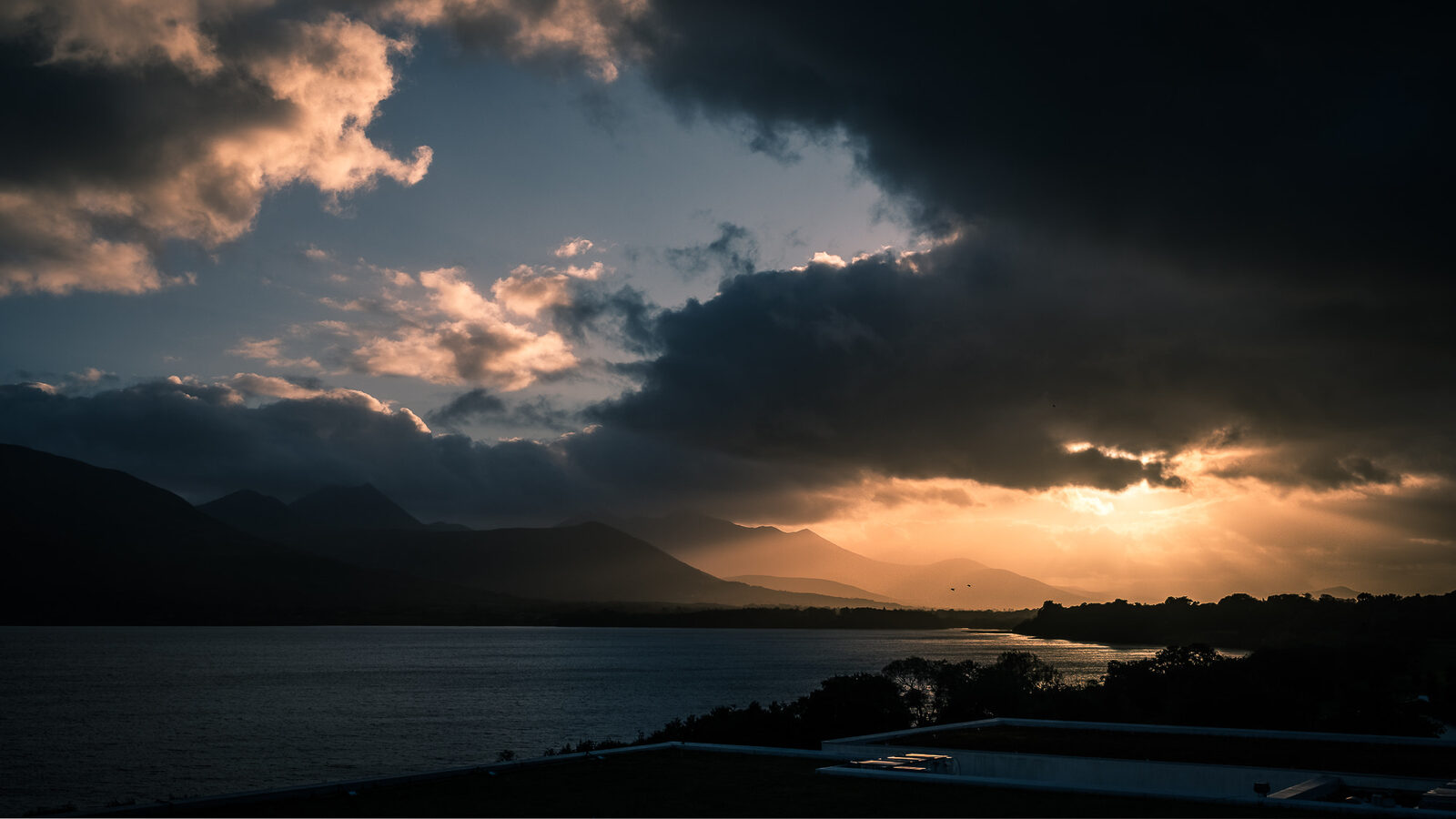
Process: After a landscape session, run all RAW files through DxO PureRAW first. This applies lens-specific distortion corrections and DeepPRIME noise reduction before you ever open an image in your primary editor. Import the resulting DNGs into Lightroom — you’ll notice the base files look cleaner and sharper than RAW imports from the same session. Use AI masking for sky/land separation rather than graduated filters. Topaz Gigapixel for final print upsizing if delivering files larger than native resolution.
Where AI helps most: optical correction quality (lens profiles), noise reduction on blue-hour and dawn shots, AI masking for sky/ground separation in complex scenes.
For a deeper look at the creative side of this workflow, the landscape photography guide covers location scouting, exposure technique, and how understanding aperture control changes the decisions you make in post.
Frequently Asked Questions
Is AI photo editing cheating?
No more than using a graduated ND filter in-camera or dodging and burning in a darkroom. AI tools automate decisions a skilled editor would make manually — they don’t make bad photos good, and they don’t replace learning how light works. What they do is compress the time between “shot on location” and “delivered to client.” If your images aren’t any good to start, no AI tool will rescue them — it’ll just process mediocre files faster.
Can I replace Lightroom with AI tools alone?
Not entirely. Tools like Topaz Photo AI, DxO PureRAW, Imagen AI, and Aftershoot all operate on top of (or alongside) a primary editor — they don’t replace the need for color grading, local adjustments, or catalog management. ON1 Photo RAW is the closest thing to a standalone Lightroom replacement that includes AI features, but even it works best in conjunction with some understanding of traditional editing technique. Pair any AI tool with a strong preset workflow and you’ll cover the basics faster.
How much does AI photo editing software cost per year?
A practical stack costs roughly $120–$300/year depending on your needs. At the low end: Adobe Photography Plan ($119.88/year) covers Lightroom AI Denoise and basic generative tools. Mid-tier: add Topaz Photo AI ($119/year upgrade) for noise-heavy work, bringing you to about $240/year. High-volume photographers adding Imagen AI or Aftershoot should budget another $120–$480/year on top of their primary editor.
Does AI noise reduction work on JPEG files?
Most tools work on both RAW and JPEG, but the results are meaningfully better on RAW files. JPEG compression already discards data and introduces its own artifacts — applying AI noise reduction on top of that can smooth over detail in ways that look slightly wrong. If you have any option to shoot RAW, do it before relying on AI noise tools. For legacy JPEG files, Topaz Photo AI tends to do the best job of distinguishing real noise from compression artifacts.
What’s the difference between AI culling and AI editing?
Culling is the process of selecting which images from a shoot to keep. AI culling tools (Imagen AI, Aftershoot) analyze sharpness, focus accuracy, blink detection, duplicate frames, and composition to rank or flag images automatically. AI editing refers to the actual adjustment of tone, color, and noise in an image. The two are related but distinct — some photographers use AI culling but handle editing manually, others do both. Most high-volume photographers benefit from at least automating culling first, as it’s where the most time gets burned.
Which AI photo editing tool is best for beginners?
For beginners who want to see strong results quickly: Luminar Neo. The interface is approachable, the one-click presets are genuinely good-looking, and the AI tools like sky replacement and portrait adjustments work without deep technical knowledge. For beginners who plan to get serious and grow into more advanced work: Adobe Lightroom, because the skill investment carries over to Photoshop, Camera Raw, and the broader creative industry standard stack. The preset workflow in Lightroom is a good starting point for developing an editing sensibility without getting lost in sliders.
Is Topaz Photo AI worth it if I already have Lightroom AI Denoise?
For most shooting situations: probably not. Lightroom’s AI Denoise has closed the gap significantly as of the 2025 update, and for ISO 3200–6400 images there’s no visible difference in most real-world tests. The gap opens at extreme ISO (12,800+), with very old sensors, and with motion blur where Topaz’s Sharpen AI models have no equivalent in Lightroom. If you regularly rescue files in those categories — wildlife, low-light events, nightscapes — Topaz is worth the cost. If you mostly shoot under good light and occasionally push ISO moderately, Lightroom’s built-in tools are sufficient.
Do AI photo editing tools work on mobile?
Limited options. Adobe Lightroom Mobile has a subset of AI tools including basic masking and some denoise capability — the full AI Denoise is GPU-intensive and currently limited to desktop. Luminar Neo is desktop-only. Topaz tools are desktop-only. The current best mobile AI editing options are Adobe Lightroom Mobile (for color and basic AI adjustments) and Snapseed (free, good AI masking for mobile-specific workflows). If mobile editing is a core part of your workflow, none of the desktop tools on this list will help you — they all require a laptop or desktop with sufficient GPU.