By Edin Chavez | Updated October 2026
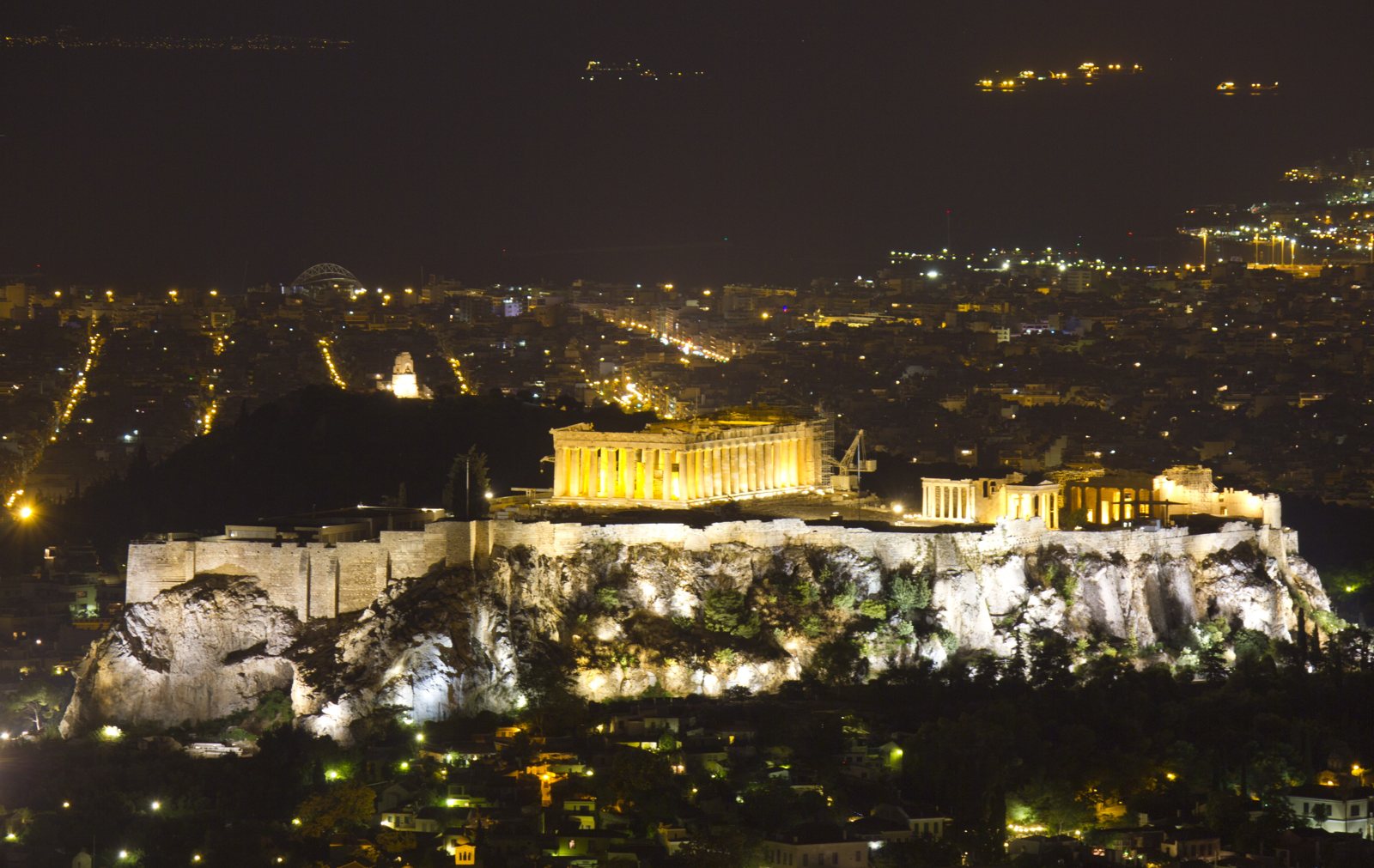
Header photo: Christos Doudoulakis, Wikimedia Commons, licensed CC BY-SA 4.0. Source. Resized for web.
Athens is easy to photograph and surprisingly hard to photograph well. The Acropolis is visible from half the city, the ticketed site closes before dark for much of the year, and the best frames of it are often made from somewhere else entirely. This is a researched guide to Athens built around night, blue hour and sunset light, and around the rules that decide where you can set up a camera.
This is not a trip report. These are researched spots, based on official Ministry of Culture and Sports pages, operator pages and the photographs selected for each place. I am not claiming a first-hand visit to any of them. Hours, fees and closures change, so check the linked official page before you go.
Start with the light, not the list
Athens works best in three windows.
Night. The Acropolis is floodlit after dark, and from a distance the whole rock glows against a dark sky. This is the best reason to climb Lycabettus Hill or one of the western hills after the sun is down.
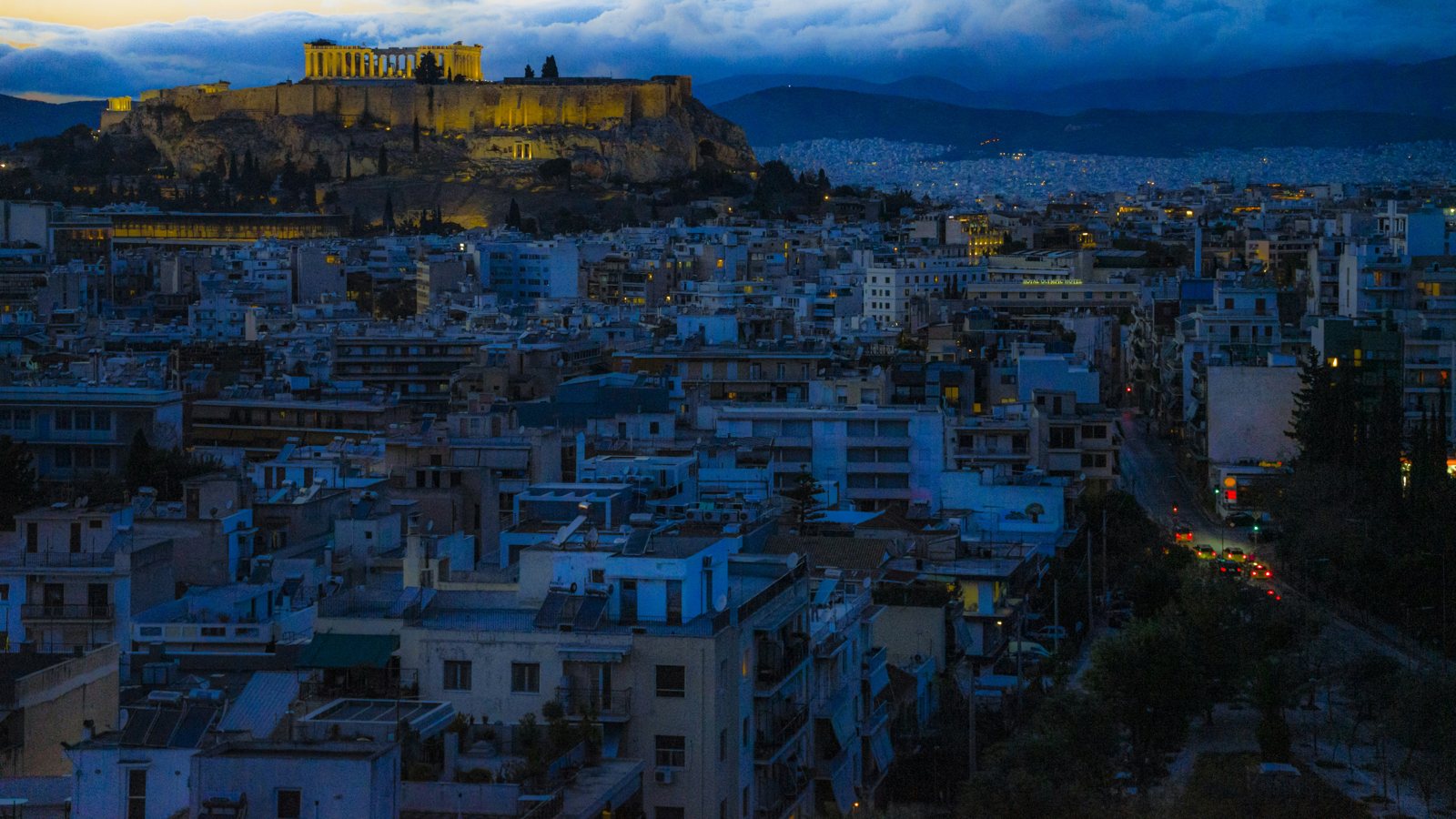
Blue hour. The half hour or so after sunset is a rough scouting window: the sky turns deep blue, the monuments are lit and the lights come on across the rooftops. It is the easiest time of day to balance the Acropolis and the city in one exposure.
 Save
Sunset. The sunset direction moves with the season, so check the sun’s position for your date. A hilltop with a clear western horizon gives you warm colour behind the city. Sunset frames of the Acropolis itself usually come from a hill, not from inside the site. For more on shooting after dark, see the Shut Your Aperture night photography guide.
Midday is the weak slot. The marble is bright, the shadows are short and the crowds are at their peak. Use it for walking, tickets and scouting your evening positions.
The rules that decide your camera
The Acropolis site. The Ministry of Culture and Sports page for the Acropolis lists a full ticket at EUR 30 and a reduced ticket at EUR 15, sold at the site and online through the official e-ticket service. Hours shorten in autumn. The Ministry’s page gives 08:00 to 18:30 from October 1 to 15 (last entrance 18:00) and 08:00 to 18:00 from October 16 to 31 (last entrance 17:30). In winter the site closes at 17:00. Compare sunset, last entry and closing time for your exact date. In early and mid autumn the site closes before dusk. Greek clocks go back on Sunday, October 25, 2026, after which sunset comes earlier than the listed 18:00 closing time, so the picture changes in the last week of the month. Do not assume you can or cannot be inside at blue hour; check the dates. Outside the gates, the hills below give you sunset and night frames either way. The same page bans food and drink, smoking and pets (except assistance dogs), and says visitors must follow guards and stay on marked routes. The site is closed on Easter Sunday and May Day.
Photography rules. The Ministry’s published filming instructions and permit forms say professional photography, filming and photography from the air need permission from the competent Ephorate of Antiquities and may carry fees. Older Ministry fee decisions treat casual handheld photography without flash as free when it is not for professional use. I could not confirm the current wording of that rule, so check the site’s current rules and ask first if you are shooting for a client, for sale or with a crew. I also could not find an official Acropolis tripod rule, so check before you plan to use one inside.
Drones. The Hellenic Civil Aviation Authority requires drone pilots to check the DAGR airspace map before any flight. Archaeological sites fall in restricted zones where flights may need prior approval or may be prohibited. Check DAGR and get the required authorization before flying anywhere near the Acropolis.
The western hills. The Ministry’s Western Hills page lists the Pnyx, the Muses’ Hill and Philopappos as open 24 hours. A Ministry notice from 2021 on that page shows the site can be closed when a fire-risk entry restriction applies, so check the day you go and stay on the established paths.
Lycabettus. The summit can be reached on foot or by the cable car from Kolonaki. The operator’s ticket page lists the cable car at EUR 13 return and EUR 10 one way. Its pages give conflicting closing times, so confirm descent hours before you plan a night shoot.
Acropolis exterior and the Propylaea
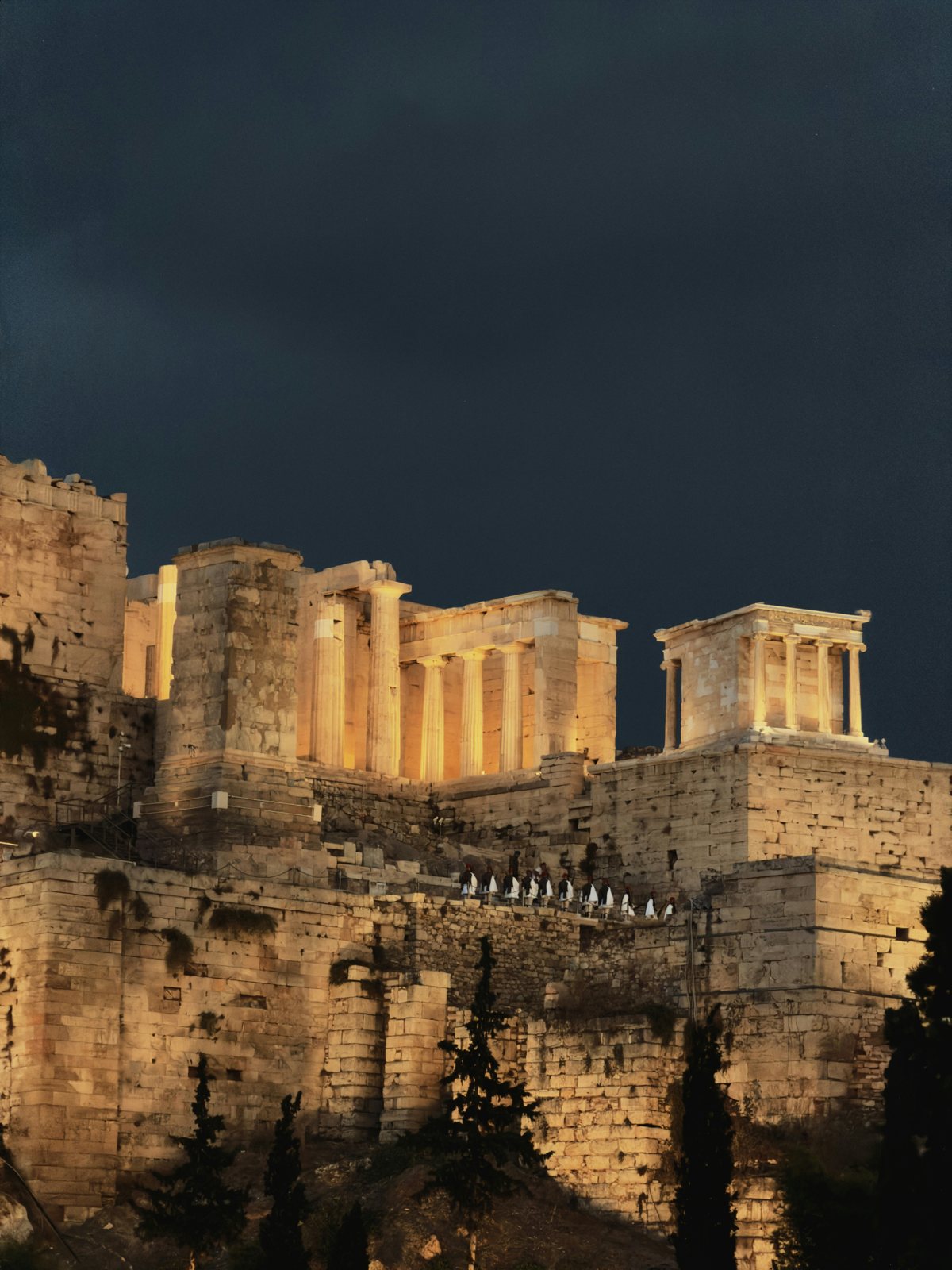
The Acropolis rock is the subject, and the gate end of it is the most photogenic at night. In the frame below, the floodlit Propylaea and the small temple of Athena Nike on its bastion catch warm light against a dark sky.
 Save
If you are inside, the ticketed route climbs past this end first. If it is after hours, the paths and streets below the rock give you a version of the same view. Watch for wet or polished stone on the slopes. Keep to the open paths and stay out of fenced areas.
A longer lens helps. With a 70 to 200 mm lens you can compress the temple and the rock against the sky from a distance. Treat shutter speeds as scenarios, not promises: handheld at blue hour you will often be near 1/30 to 1/60 s at a high ISO, and from a steady wall or bag you can go to a second or two at a low ISO.
Areopagus Hill
Areopagus is a rock outcrop just below the Acropolis entrance and above the ancient Agora. It is a free public viewpoint outside the ticket gates, so it is a practical place for a sunset or blue hour frame of the Acropolis when the site itself is closed. The rock can be slick in worn places, and it gets crowded around sunset, so arrive early and pick a position before the light changes.
Look for a foreground. A tree branch or a rooftop silhouette can add depth. Check the sunset time for your date and plan to be set up well before it.
Philopappos Hill
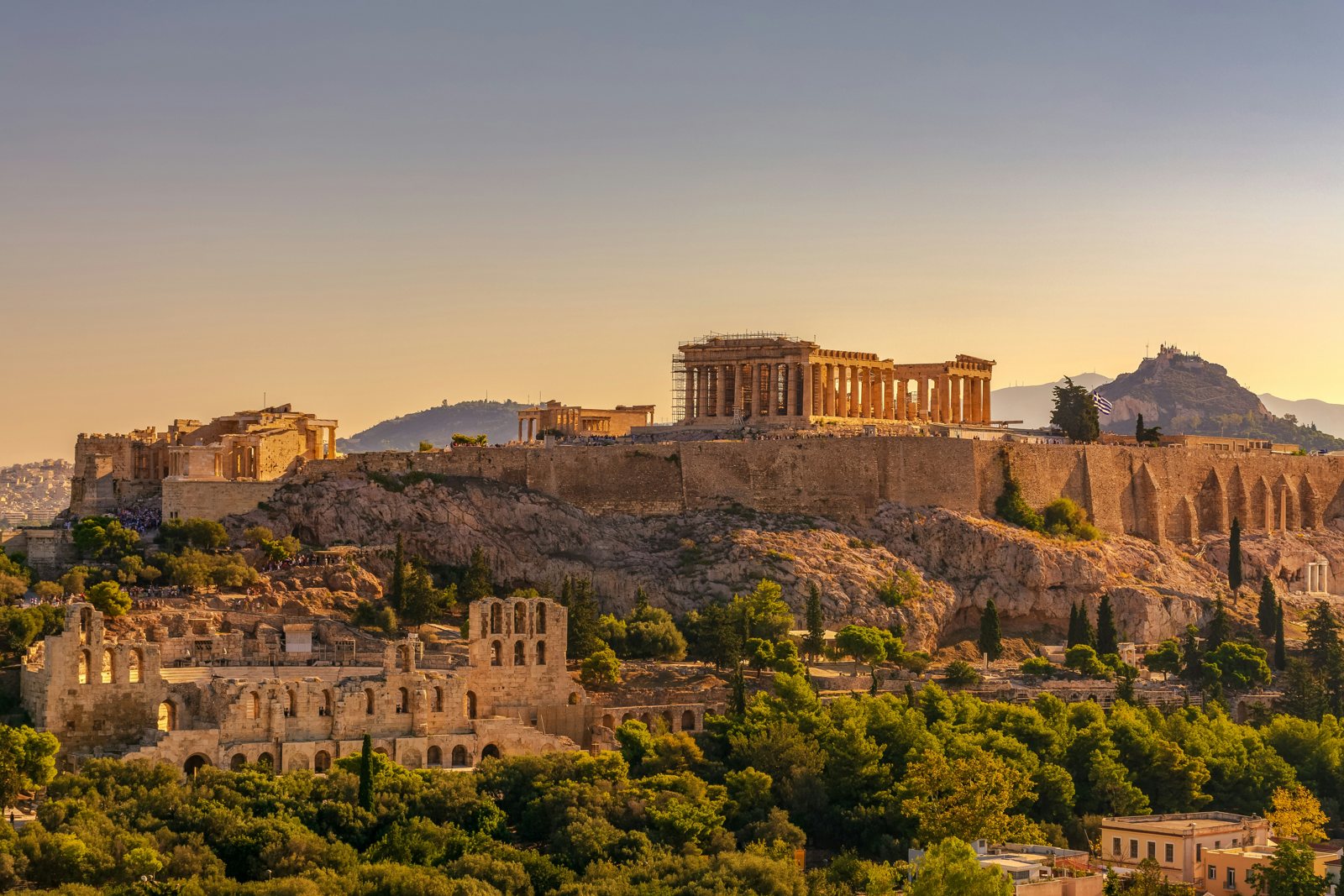
Philopappos Hill sits south-west of the Acropolis and gives a wide view back at the rock with the Parthenon and the Erechtheion on top. The photographer’s description of the frame below places it on Filopappou hill and also names Lycabettus in the distance.
 Save
The hill belongs to the Western Hills archaeological site, which the Ministry lists as open 24 hours. Stay on the established paths and use a stable bag or low wall as support. Evening is the useful window: the light is warm and side-on, and the Acropolis stands out from the hillside. Bring a layer. It is windier and cooler on the hilltop than in the streets.
Lycabettus Hill
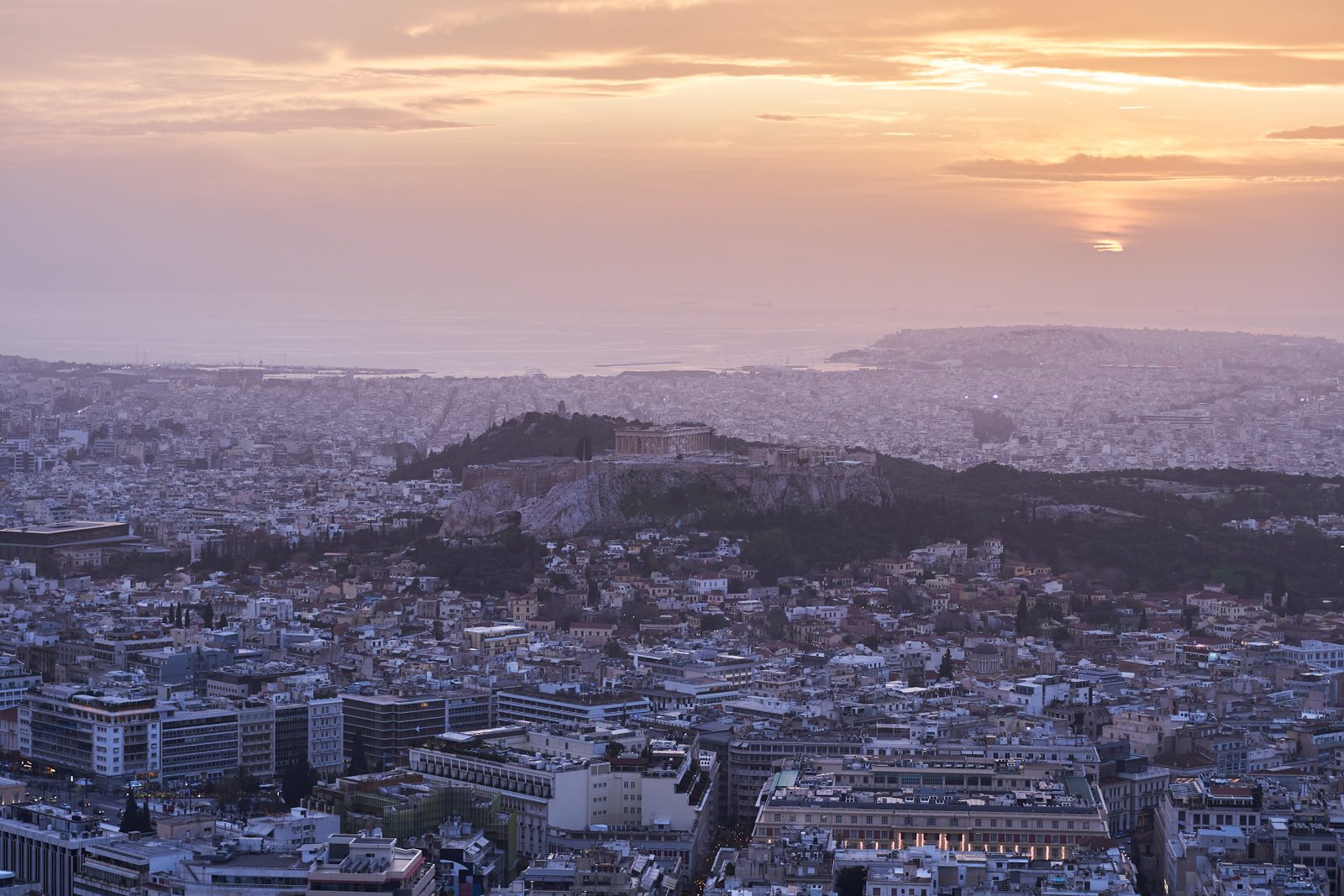
Lycabettus is the tallest point in the centre of Athens, topped by the small chapel of St George. From the summit you look across the rooftops to the Acropolis, with the sea beyond. It is the classic place for sunset and night frames.
 Save
You can walk up or take the cable car. The summit terrace is small and is usually crowded at sunset, so arrive early for a position at the rail. Allow time to come down after dark: the cable car runs late but check the operator page, and paths on the hillside are poorly lit. For night frames use a stable base. A railing, a bag or a compact tripod where there is room and it is not blocking other people will do. Do not block the terrace.
Plaka, Anafiotika and Monastiraki
These are street-level chapters rather than viewpoints. Anafiotika is a small area of whitewashed lanes under the north side of the Acropolis, and Monastiraki Square is a busy public square with rooftop terraces around it. I have not included a photograph for either because I could not verify a frame that clearly shows the place at the right light. If you walk them, photograph the lanes and not private doorways, and treat any rooftop terrace as a separate paid venue.
Passes, tickets and timing at a glance
- Acropolis: EUR 30 full, EUR 15 reduced. Online tickets through the Ministry’s official e-ticket service.
- Acropolis hours: 08:00 to 18:30 (last entry 18:00) from October 1 to 15; 08:00 to 18:00 (last entry 17:30) from October 16 to 31; winter 08:00 to 17:00.
- Western Hills (Philopappos, Pnyx, Muses’ Hill): listed as open 24 hours, subject to closures.
- Lycabettus cable car: EUR 13 return, EUR 10 one way, per the operator.
- Drones: check DAGR first; archaeological sites are restricted zones that may need prior approval or be prohibited.
Prices, hours and rules change, so use the official page for the day you go.
If you want someone else to handle the walking
A local guide can help with timing, crowds and the climb. These are not photography tours. They are general Athens tours, and I have not verified dates, itineraries, group sizes or cancellation terms. The links open current listings, so read the tour page before you book.
- Athens night walking tour listing on GetYourGuide: a small-group evening walk through the old centre. Check the listing for the route, start time and meeting point.
- Athens sunset tour listing on Viator: a sunset tour that pairs the Acropolis with a viewpoint hill. Check the listing for what entry is included and how long it runs.
To learn the skills behind these frames, start with the Travel Photography Academy. For more city guides, see the international cities photography hub and the Rome photography spots guide.
Frequently asked questions
When is the best time of day to photograph the Acropolis?
Blue hour and the first part of the night are a good bet. The rock is floodlit and the rooftops are lit. Because the ticketed site closes before dusk for part of the year, check closing times for your date and plan on a hill outside, such as Lycabettus, Philopappos or Areopagus.
Can I photograph inside the Acropolis?
Casual handheld photography has been allowed without flash, but professional or commercial shoots need Ministry permission and may carry fees. I could not confirm the current wording or a tripod rule, so check with the site before you go.
Can I fly a drone in Athens?
Flights may require approval or be prohibited near archaeological sites. Check the DAGR map and get the required authorizations before flying.
Is Lycabettus worth it for photographers?
It gives the widest view of Athens and the Acropolis together, and it works for sunset and night. Expect crowds at sunset and plan your descent.
Which hill is best for a sunset photo of the Acropolis?
Philopappos faces the Acropolis from the south-west, and Lycabettus looks across the city from the north-east. Philopappos gives a closer view of the rock. Lycabettus gives the wider city.
What gear do I need?
A fast wide lens for streets and lanes, a short telephoto for compressing the Acropolis, and a small support for night frames where it is allowed. A bag that sits in front of you helps in crowds.
Are the spots in this guide exact camera positions?
No. They are named viewpoints and starting references, not tested camera positions.
Recommended Gear for Athens Night and Low-Light Photography
A short kit for hill climbs, blue hour and night work. Pick gear that suits handheld shooting and a compact support.
Peak Design Carbon Fiber Travel Tripod: Shop B&H | Shop Amazon. Compact support for hilltop night frames where there is room.
Sony FE 24mm f/1.4 GM Lens: Shop B&H | Shop Amazon. A fast wide lens for lanes and squares at night. Pick the equivalent for your camera system.
Sony FE 70-200mm f/4 Macro G OSS II Lens: Shop B&H | Shop Amazon. A short telephoto for compressing the Acropolis from a hilltop.
Peak Design Everyday Sling 6L: Shop B&H | Shop Amazon. A small front-carry bag for crowded terraces and steep paths.
SanDisk Extreme PRO 128GB UHS-I SDXC Card: Shop B&H | Shop Amazon. Room for bracketed sunset and night frames.
Disclosure: this post links to third-party tours and photography gear. If you book a tour or buy gear through those links, the site may earn a commission at no extra cost to you. Hours, fees and closures change; the operator and official pages take priority.
Sources: Ministry of Culture and Sports, Acropolis of Athens; Western Hills of the Acropolis; Ministry filming instructions; Hellenic Civil Aviation Authority drone guidance; Orizontes Lycabettus cable car. Checked October 5, 2026.