Updated October 2026
Todd Lambert’s night photographs make familiar objects feel unfamiliar: an old car in a field, a porch, a radio dish, a weathered boat, or a line of trees after dark. The original Photographer of the Week feature appeared in May 2015. This update keeps its eighteen photographs and adds a closer reading of their composition, light, and visual rhythm. It is an archive feature, not a new interview or a fresh test of the techniques used to make them.
The original introduction described Lambert traveling across America for a project called America by Twilight. It also described downsizing his belongings to live on the road. Those statements belong to the historical profile and should not be read as a verified current itinerary or living arrangement. His Twilightscapes site remains a place to see the work; this article does not review or endorse the app products now promoted there.
The archive supplies image titles, but not reliable settings, precise locations, or a complete explanation of every lighting method. I will not turn a title into a claim about how a photograph was made. Study what is visible: the shape of the foreground, the direction of light, the balance with the sky, and the space around the subject. Those are useful ideas without guessed exposure numbers.
Read the work without copying the risk
The original biography romanticized being somewhere you were not supposed to be. That is not advice to follow. Night photography needs lawful access and a safe place to work. Abandoned structures, graveyards, industrial equipment, roads, and aircraft may be private property or restricted sites. A photograph on a portfolio page does not establish permission for your own visit.
Do not enter unstable buildings, climb machinery, stand in traffic, or cross a closed boundary for a similar picture. Scout in daylight where access allows it, confirm opening rules and permission, and choose a position you can leave safely. A useful composition never depends on pretending the hazards are part of the art.
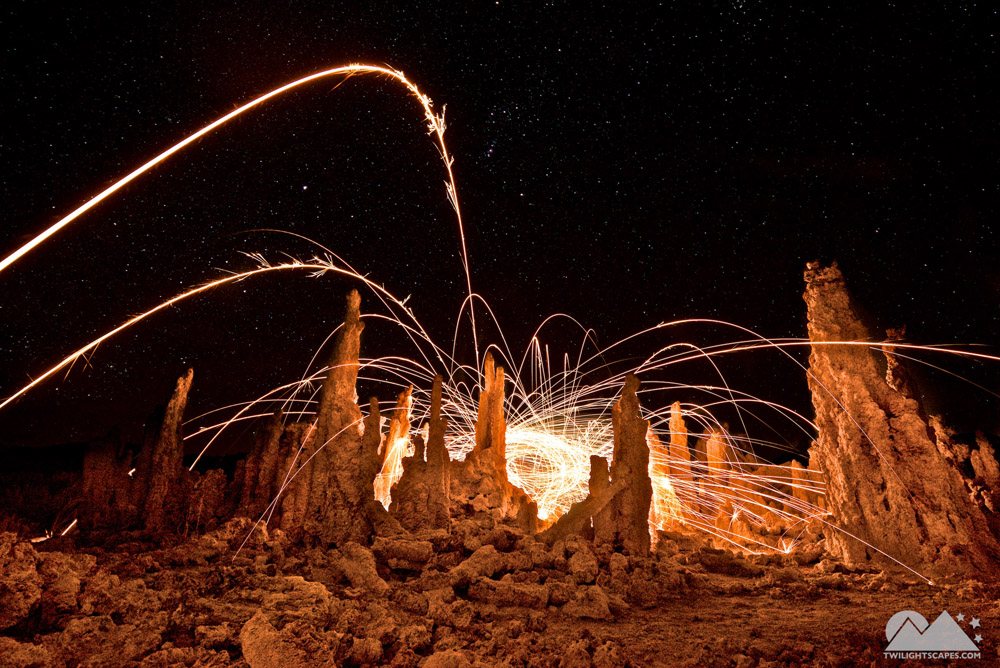
Several images contain sparks or bright light traces. Their appearance does not establish the material, method, permission, or safety arrangements used. This feature does not provide instructions for recreating those effects. Study their shape and visual weight instead. You can practice those composition ideas with ordinary, safe subjects and without introducing fire or flying hot material.
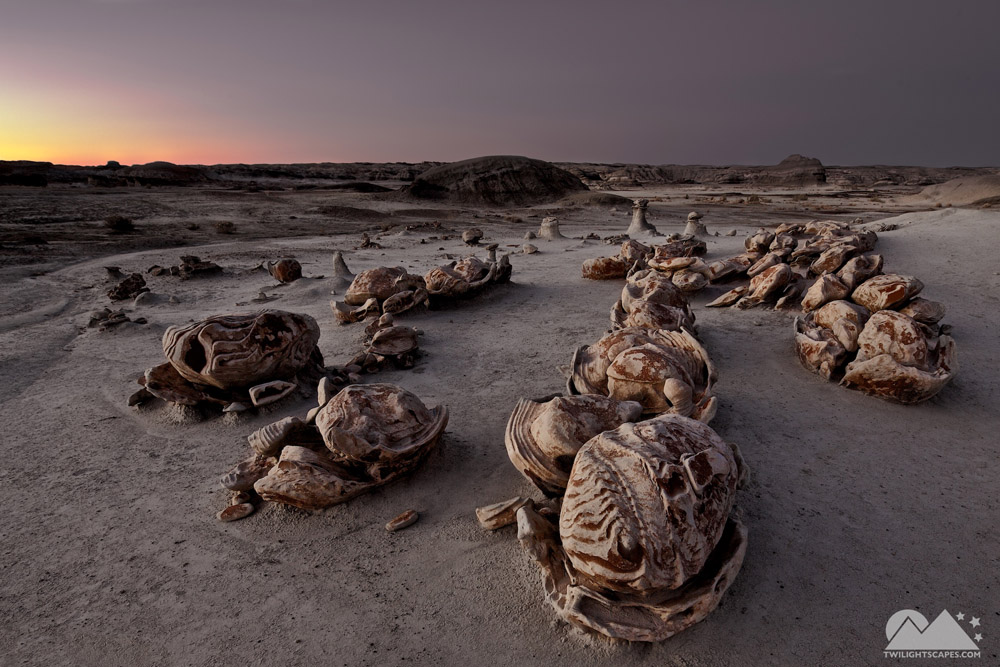
Geology and the horizon: Alien Egg Farm
 Save
The nearest rounded forms have enough detail to feel solid, while the horizon remains quiet. The photograph gives the rocks room to repeat across the ground. That repetition makes the scene interesting before the sky becomes important. Look at how the larger shapes relate to the smaller ones farther away.
In your own foreground, check the spacing between objects. A cluster can be more readable when there is a little separation around its main shape. Do not fill the frame with every interesting rock you can see. Choose a clear arrangement and inspect the bottom corners for shapes that look accidentally cut off.
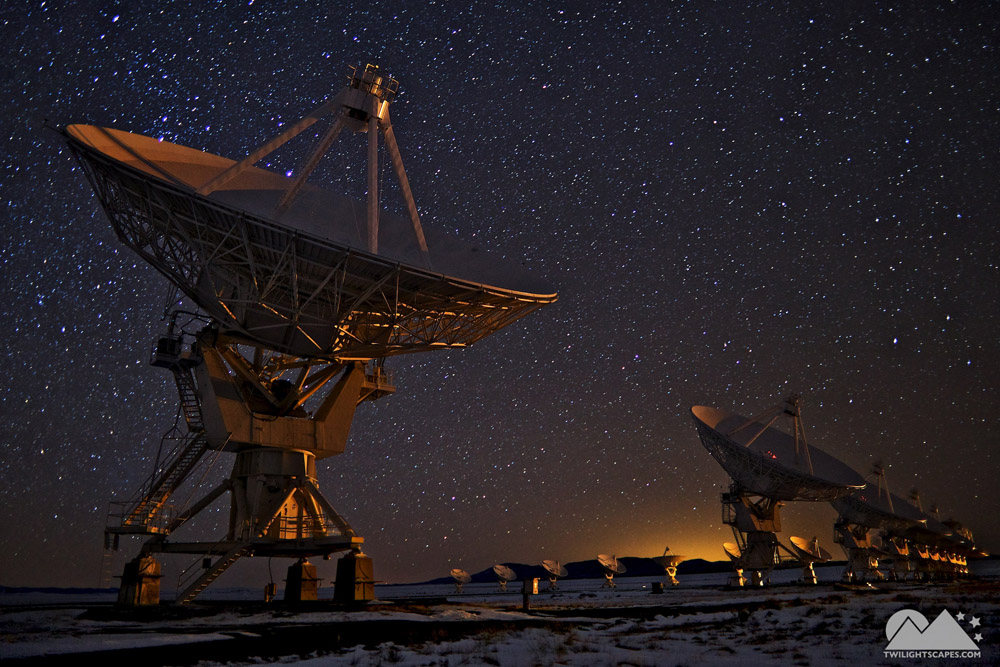
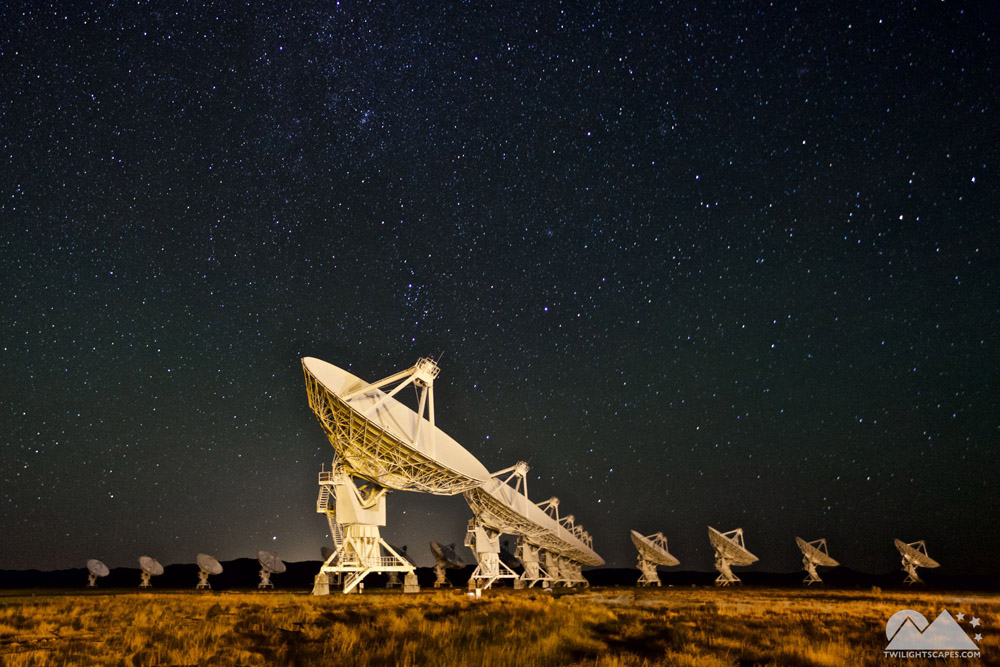
Large structures under small stars
 Save
 Save
Terrestrial Towers and Stellar Sentries use similar subjects differently. One brings a large dish close enough to dominate; the other lets several dishes repeat across the horizon. Compare the amount of sky in each. The subject can feel imposing through scale or through repetition, and those are different choices.
A wide night sky can become empty space if nothing connects it to the ground. Here the upward-facing structures create that relationship. In your own scene, ask whether the foreground points, rises, or opens toward the sky. You do not need a radio dish, but you do need a reason for the two parts of the frame to belong together.
A boat, a small crescent, and a narrow frame
 Save
 Save
Boatswain’s Blunder gives a weathered boat a clear outline against the sky. The mast stretches the shape upward, while the hull anchors it below. Watch the difference between bright subject detail and the quieter background. The boat has to remain readable without every part of the sky competing with it.
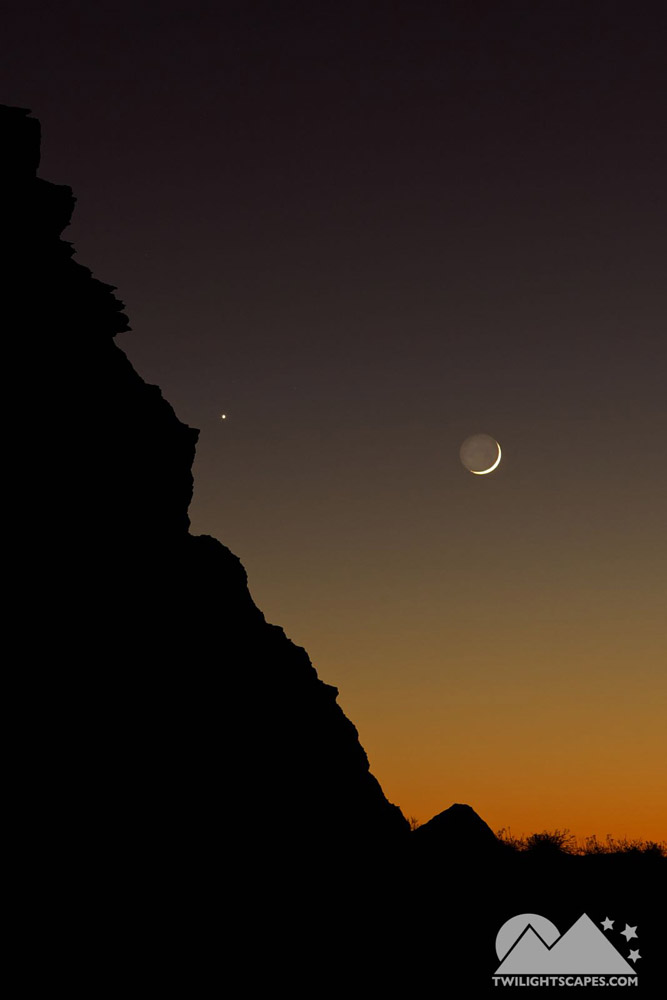
The archive title Moon and Venus is retained for the second image, but the title alone does not verify each visible celestial object. Compositionally, the small bright shape matters because it is surrounded by space and a dark silhouette. A tiny subject can carry a frame when the surrounding shapes support it.
When you photograph a small bright object above land, decide how much foreground to include. Too much dark mass can make the light feel incidental. Too little can remove the sense of place. Check the relationship at thumbnail size, where the largest shapes become easiest to judge.
Contained light: Captive Light
 Save
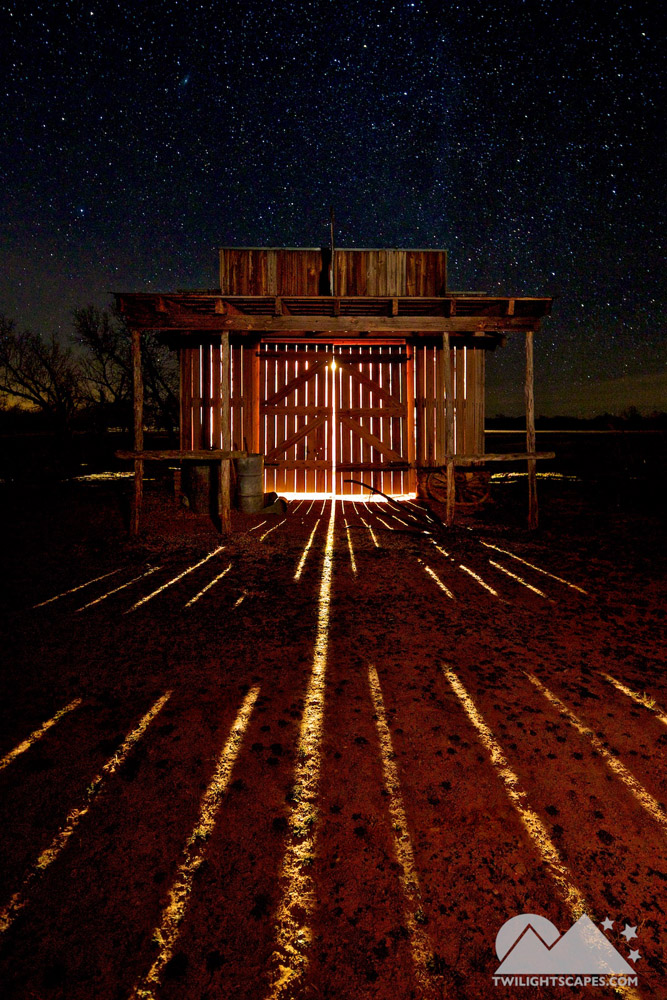
This image builds attention around a central bright area and the lines spreading away from it. The surrounding darkness makes those lines easy to see. Study the pattern, not a guessed lighting recipe. The archive does not provide a verified explanation of the effect.
You can apply the same compositional idea to a safe night scene with a window or a lit doorway. Start with one readable source of brightness, then look at the lines around it. Ask whether they lead inward, scatter outward, or create a frame. Keep unnecessary bright distractions out of the edges.
Star movement and a grounded foreground
 Save
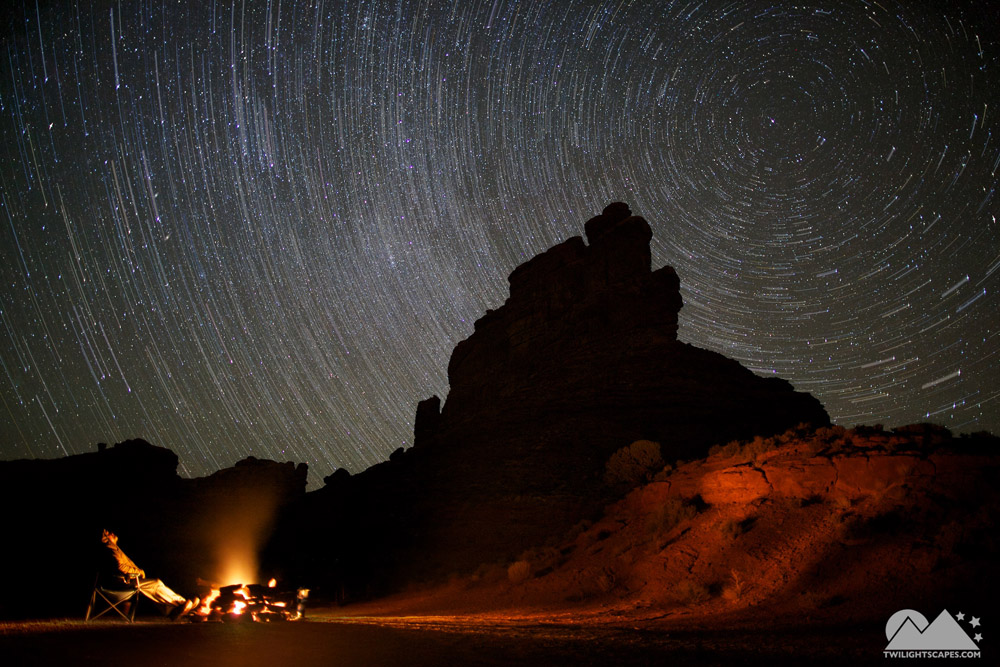
In The Sky With Diamonds contrasts movement in the sky with the solid outline of the rock. The trails form an arc, while the foreground holds the bottom of the frame. Neither part needs to fill the whole picture. Their difference is the main visual idea.
Visible star trails do not tell us whether the final image came from one exposure or combined files. Do not assign a method or duration without source information. If you want to practice star-trail photography, choose an authorized, safe location and use a documented workflow for your equipment. Judge the direction of the trails and the strength of the foreground separately.
Check how much artificial or warm light reaches the land. A foreground that is too bright can overwhelm the sky; one that is completely black can lose its shape. The useful balance depends on the scene, not on a universal brightness rule.
Energy and quiet: Jettison and the porch
 Save
 Save
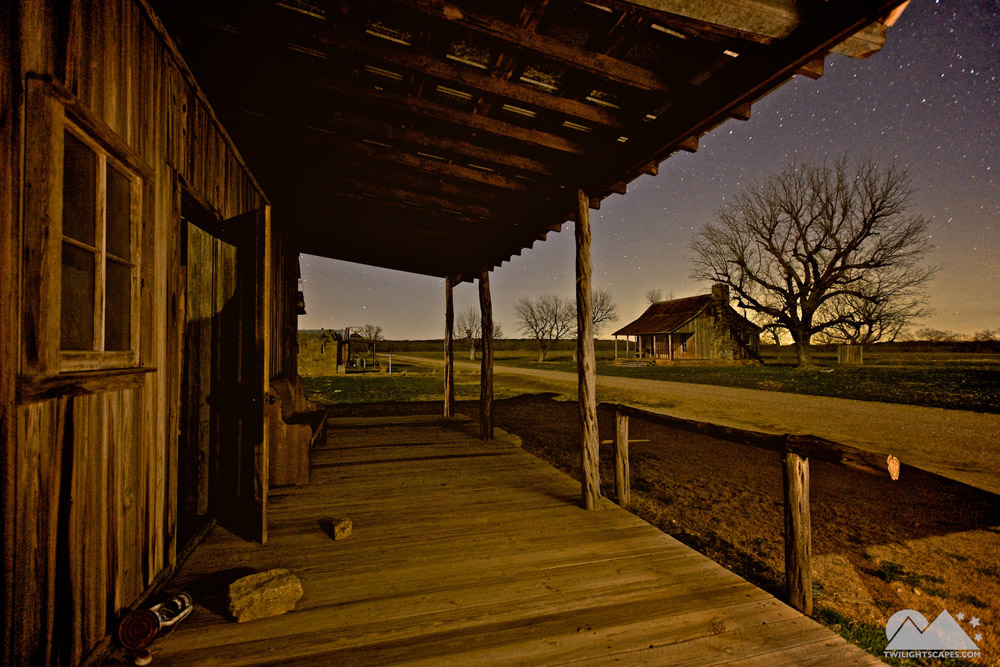
Jettison creates energy through curved traces and a bright center. Where The West Was Won is quieter, using the porch roof and railing to frame open space. Putting them beside each other shows how different night photographs can feel without changing the basic need for a clear arrangement.
The porch photograph is useful for studying a frame within a frame. Roof beams, posts, and floorboards create directions that can guide the eye toward the tree. Check where those lines end. A strong interior foreground works best when it opens onto something worth looking at, not only onto undifferentiated darkness.
A vertical landscape and a reflected mountain
 Save
 Save
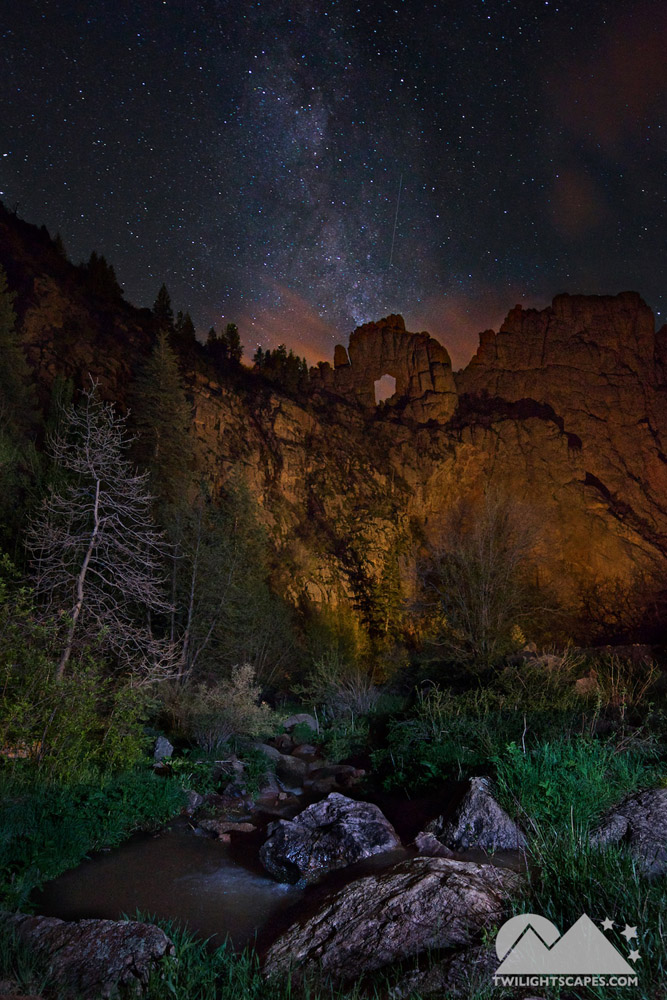
Cosmic Portal gathers sky, trees, and water into a tall frame. The lower rocks give the viewer a starting point while the dark sides contain the scene. A vertical landscape can be effective when the main relationships run from near ground to high sky rather than across a broad horizon.
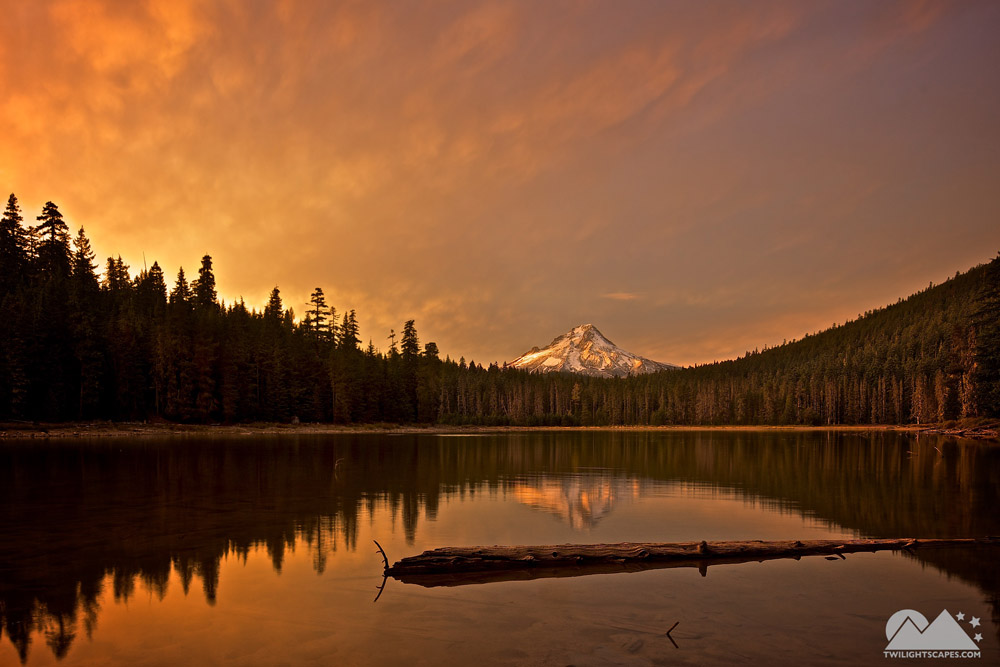
Fire On The Mountain uses a different balance: the lake reflects the upper scene, and the distant peak sits between darker tree lines. The title is artistic, not proof of a fire in the landscape. Read the warm sky and reflection as visible color, without inventing a weather event or a lighting source.
With a reflection, inspect both halves together. A bright area above the horizon can be repeated below it, increasing its visual weight. Decide whether the symmetry helps the scene or makes the foreground too passive. A shoreline or near-water detail can add a useful interruption.
Flowers, a car, and deliberate subject separation
 Save
 Save
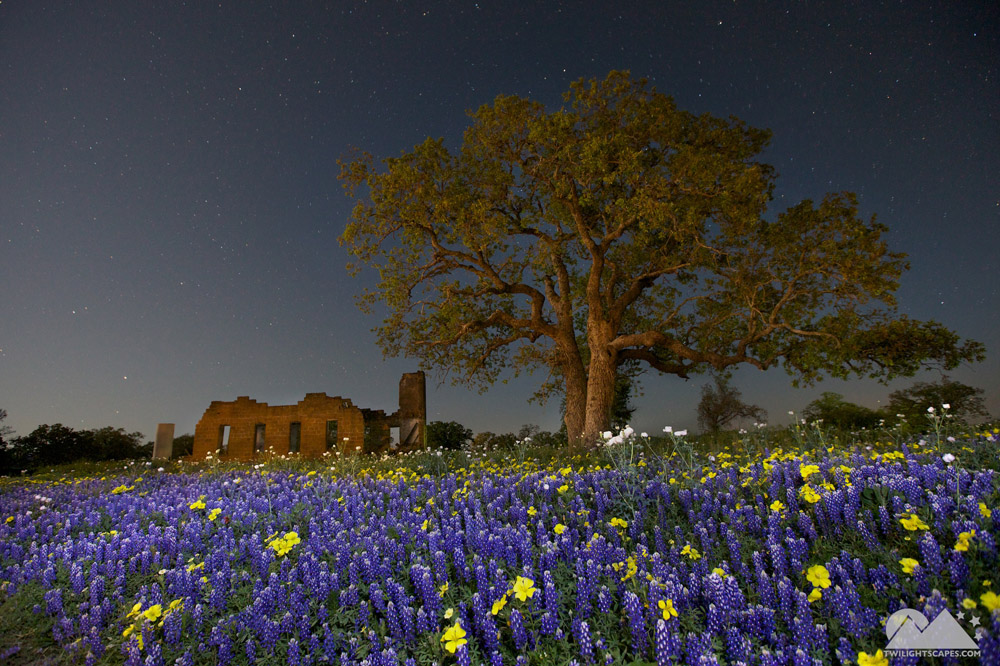
Bloom Of The Pontotoc layers flowers, a tree, and a building. The foreground color gives the eye an immediate point of entry. Check the tree’s size against the building and the open sky. A scene with several subjects needs those differences in scale and brightness so it does not become a list of equally important objects.
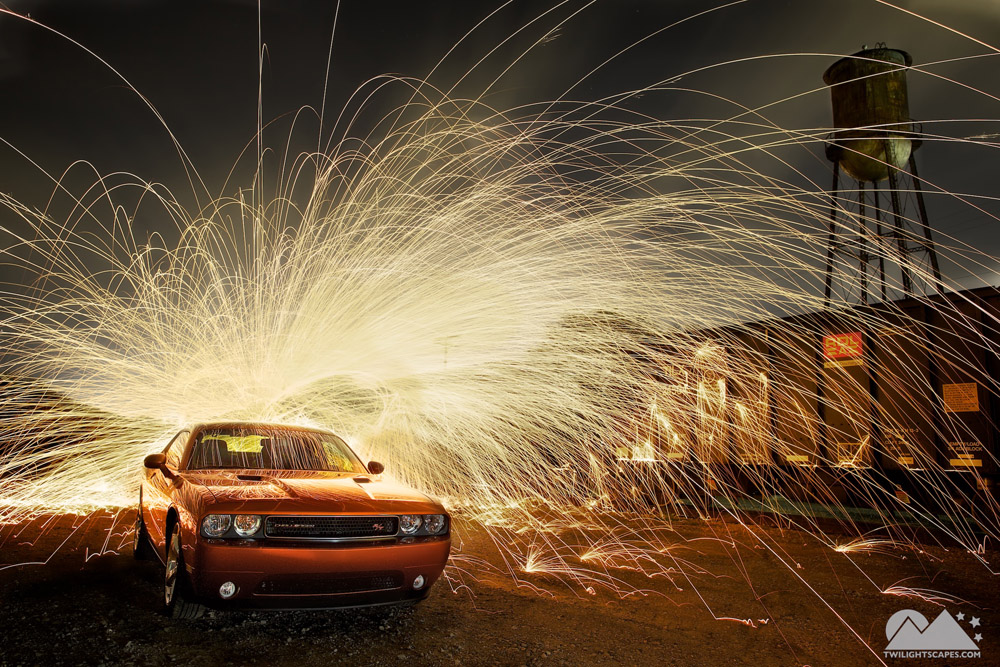
Challenger Explosion places the car inside a much more forceful pattern. The image title is not a verified description of an explosion, and the archive supplies no safe procedure for the effect. The useful visual point is that a central subject can remain recognizable inside a complex field of lines when its shape is clear.
Do not assume a spectacular effect is necessary for a strong car photograph. A controlled background, a clear viewpoint, and ordinary safe lighting can give you a readable subject. Study where the car sits and how much space it has before thinking about adding anything more.
Quiet water and an old automobile
 Save
 Save
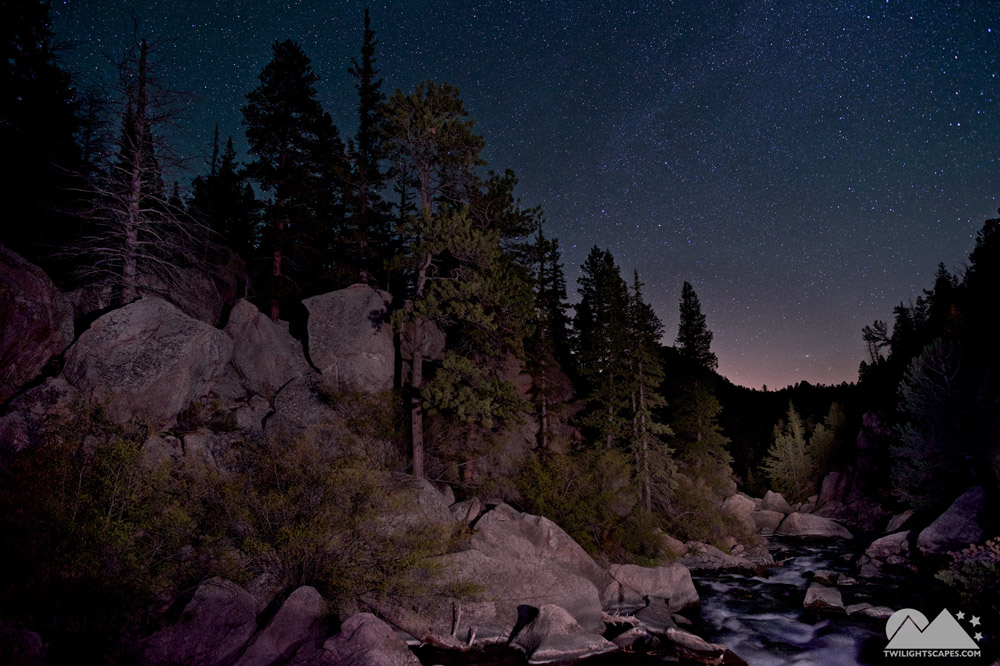
Twinkle Twilight lets rocks, trees, and water carry the scene without a large bright effect. The stream creates a route into the frame, while the trees form its sides. This is a reminder that a night image can work through atmosphere and shape rather than through spectacle.
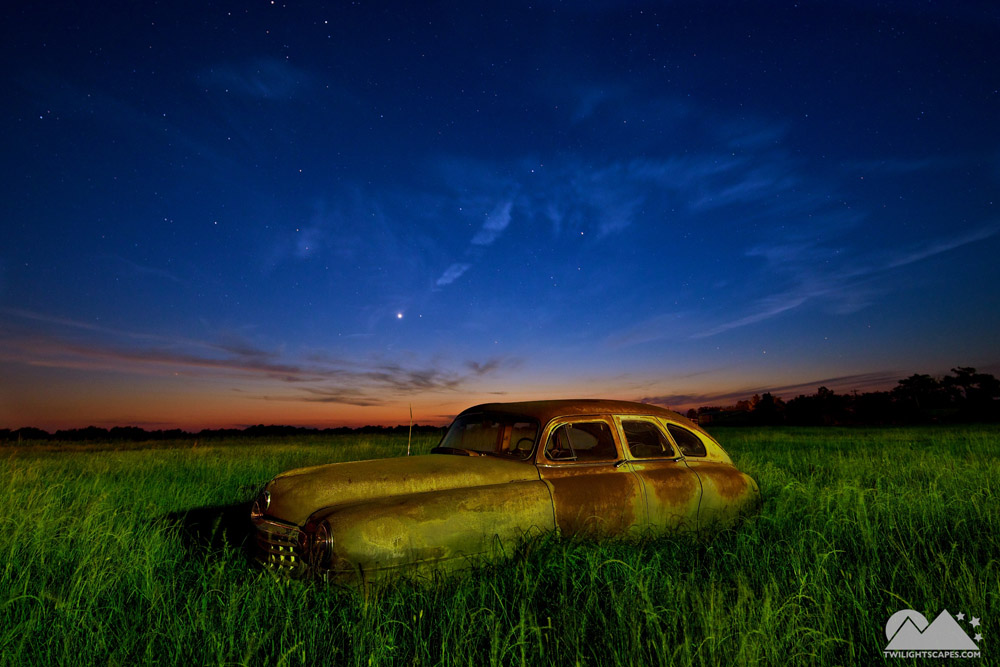
Ambassador Of Twilight makes an old automobile the subject of a broad field and sky. The car is relatively small, but the surrounding space gives it a distinct role. Check the balance between its outline and the horizon. A low viewpoint or careful separation can help a small subject remain readable in a wide frame.
Machinery and the shape of light
 Save
 Save
 Save
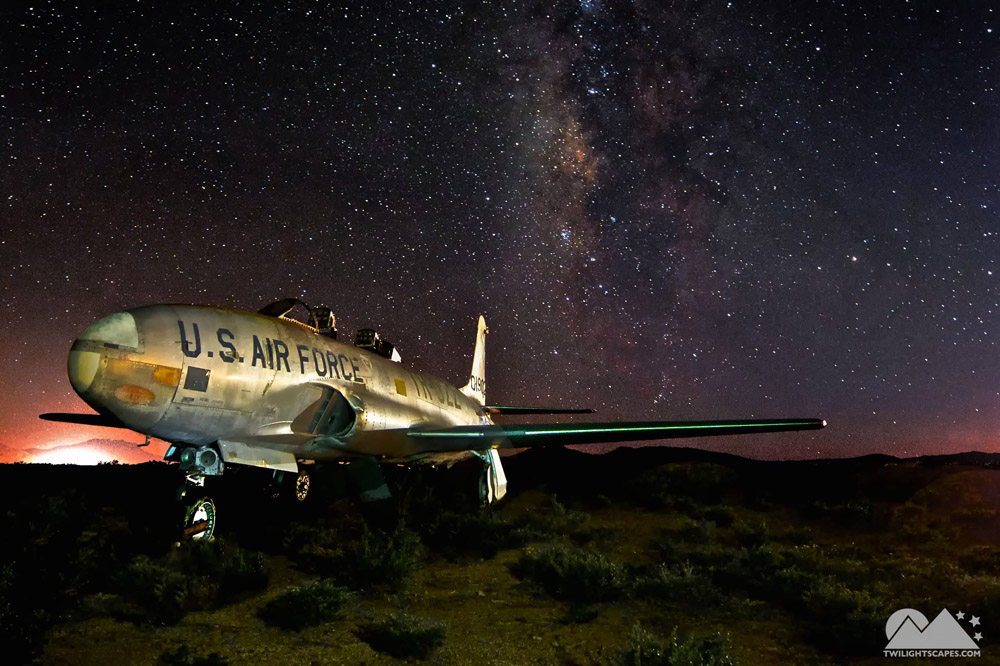
Atomic Martini Flyboys places an aircraft beneath a large sky. The plane’s wings stretch across the lower frame, giving the scene a different geometry from the vertical radio dishes. The markings are visible, but the archive does not establish the aircraft model, location, or access arrangements. Those details remain unassigned.
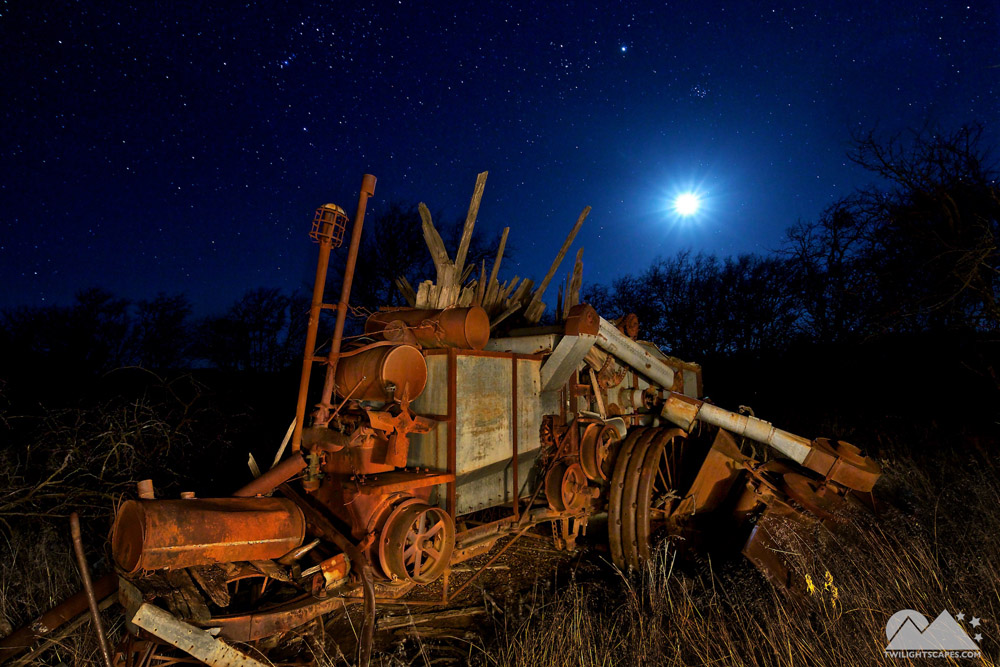
Steam Punk uses the complexity of old machinery as a subject. Look at which parts are brightest and which remain in shadow. When photographing a complicated object, simplify through viewpoint and light. You do not have to reveal every component equally to make the object convincing.
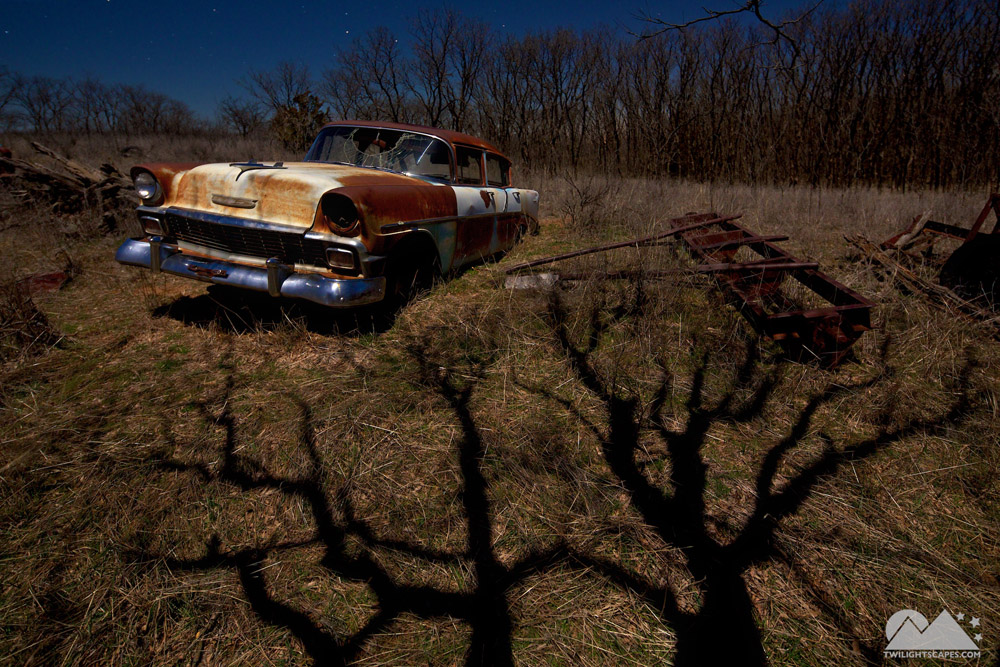
Crude Addiction includes branching shadows across the foreground. The shadows are part of the composition, not empty darkness to remove. Follow their direction and compare it with the car and trees. In your own night photograph, inspect the ground as well as the subject: the light can create a second set of shapes there.
A useful way to study a night portfolio
Choose two images with different moods and write down what creates that difference. Compare subject size, empty space, light direction, sky detail, foreground texture, and the strongest line. Keep your observations about visible choices separate from assumptions about settings or equipment. That makes the exercise more useful and more honest.
For your own outing, choose a safe, authorized place and a simple subject you can revisit. Make one deliberate change at a time: a lower viewpoint, less sky, more separation, or a different foreground edge. Compare the files afterward. The point is to learn which change helped the picture, not to copy an unknown method from a finished portfolio image.
Organize originals, working files, and finished exports clearly, and keep an independent backup before clearing cards. The storage option below supports a working copy. It is not equipment attributed to Lambert or to the original photographs.
To build a more deliberate eye for composition, light, and editing, explore the Shut Your Aperture Academy. A portfolio gives you ideas to examine. Practice helps you recognize those relationships in your own scene, explain your choices, and make a photograph that belongs to your own work.
Frequently asked questions
Who is Todd Lambert?
He is the night photographer featured in this original May 2015 profile and associated with the Twilightscapes portfolio. The historical article described an America by Twilight project.
Is his original travel biography current?
This update does not verify his current itinerary or living arrangements. Statements about downsizing and living on the road are presented as part of the historical profile.
Are settings and exact locations supplied for this gallery?
No. The archive provides image titles but not reliable settings or precise locations for every photograph. Those details are not guessed.
Does this article teach the spark effects shown in some images?
No. The archive does not establish the method or safety arrangements. The discussion studies visual shape and balance without instructions for recreating hazardous effects.
Can I enter an abandoned location to make a similar photograph?
Only with lawful access and a safe place to work. A portfolio photograph is not permission to trespass, enter unstable structures, climb machinery, or stand in traffic.
Source note: Original May 2015 feature, titles, and eighteen photographs; Twilightscapes portfolio; archived photographer profile. Gallery is the featured photographer’s work, not new photographs by Edin; no current app review is implied.


