For the underlying mechanics behind every choice below, our aperture photography guide is the fastest way to get fluent.
Street photography is the art of capturing the raw, unscripted beauty of daily life as it unfolds in public spaces. To find inspiration right now, you need to shift your focus from looking for the "perfect" subject to looking for the perfect light, shapes, and moments. Whether it is chasing geometric shadows on a skyscraper, capturing the vibrant motion of a city at night, or finding the quiet stories in a puddle reflection, street photography is about being present and seeing the extraordinary in the ordinary.
Let’s be honest: we’ve all been there. You grab your camera, head downtown with all the enthusiasm in the world, and then… nothing. The streets feel crowded but empty of "soul." Every person looks the same, the light feels flat, and you start wondering if you should have just stayed home and watched YouTube tutorials.
But here is the secret, street photography isn’t about the destination; it’s about the hunt. It’s a mental game as much as it is a visual one. If you’re feeling stuck, you don’t need a new camera or a flight to Tokyo (though that would be nice). You just need a new way to look at the sidewalk you’ve walked a thousand times.
I’ve put together 15 street photography ideas that will get your creative gears turning. These aren't just "take a photo of a person" tips; these are specific challenges designed to push your composition, technical skills, and storytelling.
1. Play the Shadow Game
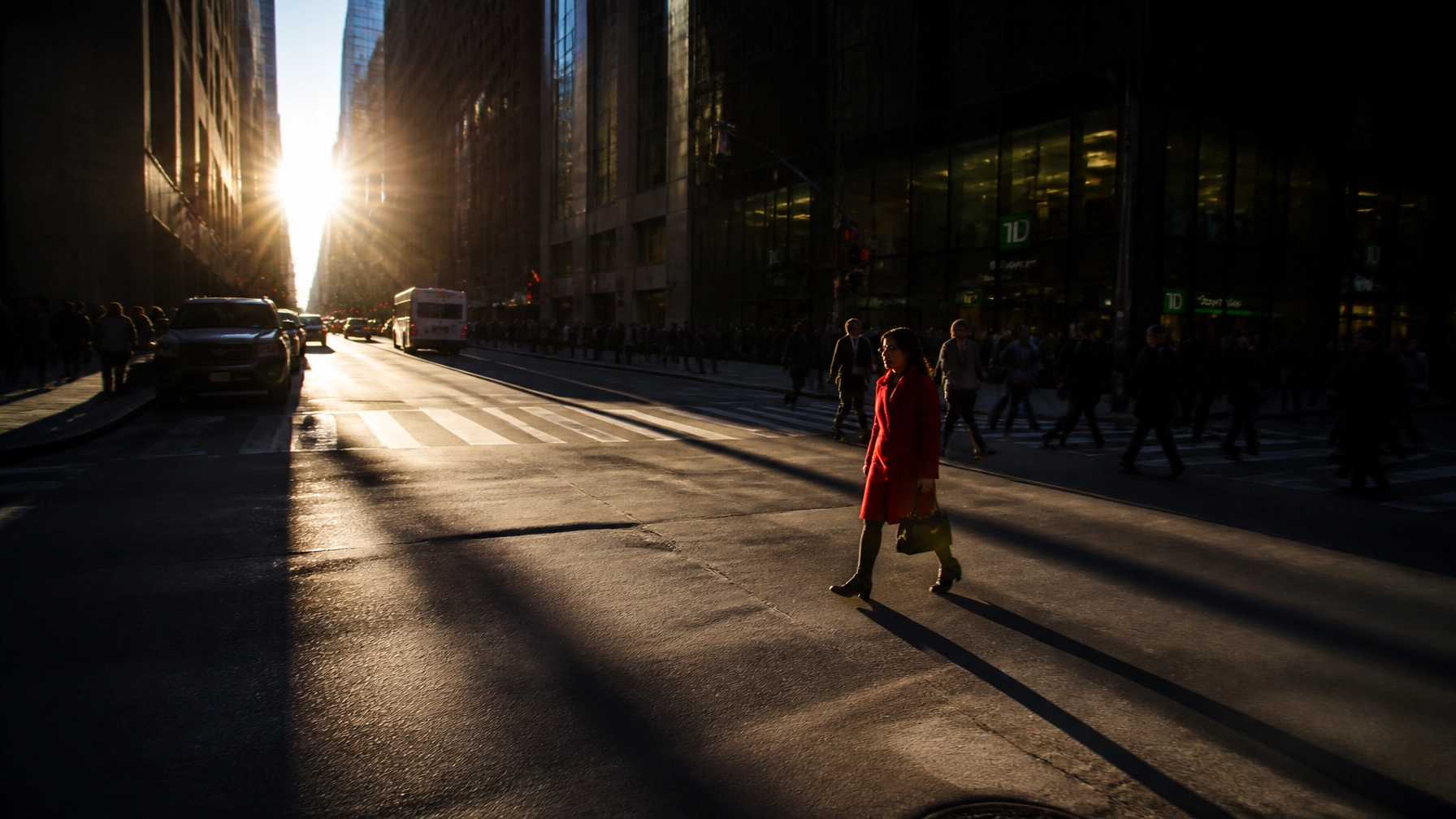
When the sun is low in the sky, think early morning or late afternoon, the city becomes a playground of high-contrast geometry. Buildings cast long, dramatic shadows that can cut a frame in half or create leading lines out of thin air. Instead of trying to photograph the person, try to photograph the shadow they are walking into.
Wait for a "patch" of light between two massive buildings. Set your exposure for the highlights (the bright part) so the shadows go completely black. Then, wait. This is a classic technique called "fishing." When a subject enters that beam of light, click. The result is a cinematic, moody shot where the person is isolated from the chaos of the city. If you're struggling with getting those blacks just right, you can always tweak the contrast later using Luminar.
2. Puddles Are Portals
If it just rained, don’t put your camera away. Rainy days are a gift for street photographers. Look for puddles on the ground. When you get low, and I mean "get your knees dirty" low, the puddle becomes a mirror.
You can capture a "double world" where the reflection of a historic building or a colorful neon sign meets the real-world footsteps of a passerby. This adds layers to your image and creates a sense of surrealism. It’s a great way to avoid the 7 mistakes you’re making with street photography by adding a unique perspective that most people walk right over.
3. Embrace the Blur
Everything in the city is moving. Why try to freeze it all the time? Slow down your shutter speed to 1/15th or 1/8th of a second. If you hold your camera steady (or lean against a lamp post), the background will stay sharp while the people walking by become ghostly streaks of color.
This technique, often called intentional camera movement or motion blur, conveys the "rush" of urban life. If you’re feeling extra spicy, try a "panning" shot. Follow a cyclist or a car with your camera at the same speed they are moving while pressing the shutter. If you time it right, the subject will be relatively sharp, and the background will be a horizontal blur of speed.
4. Silhouettes in the Golden Hour
Find a strong light source, like the setting sun at the end of a street, and place your subject between you and that light. By underexposing the shot, you turn your subject into a black silhouette.
The key here is "separation." You want to make sure the silhouette has a clear, recognizable shape. A person walking with a wide stride or someone holding an umbrella works best. If their limbs are tucked into their torso, they just look like a black blob. Check out some of the work on Edin Fine Art to see how light and shadow can create massive impact in fine art photography.
5. Framing Within Frames
The city is full of natural frames: doorways, windows, arches, even the space between two parked cars. Instead of a wide-open shot, look through something.
When you frame your subject inside another element, you’re essentially telling the viewer exactly where to look. It adds depth and a "voyeuristic" feel that is quintessential to street photography. It’s like a secret window into someone else's life. If you want to dive deeper into composition, check out the ultimate guide to photography tutorials for more tips.
6. The "Waiting Game" (Fishing)
Stop walking. Find a background that is visually stunning, maybe a mural, a textured brick wall, or a unique storefront, and just stand there.
Most photographers make the mistake of hunting too hard. Sometimes the best thing you can do is let the photo come to you. Pick your frame, set your focus, and wait for the right "character" to walk into the scene. Maybe it’s a person with a matching hat, or someone looking in the opposite direction. This patience is what separates the snapshots from the art.
7. Street Portraits (The Brave Way)
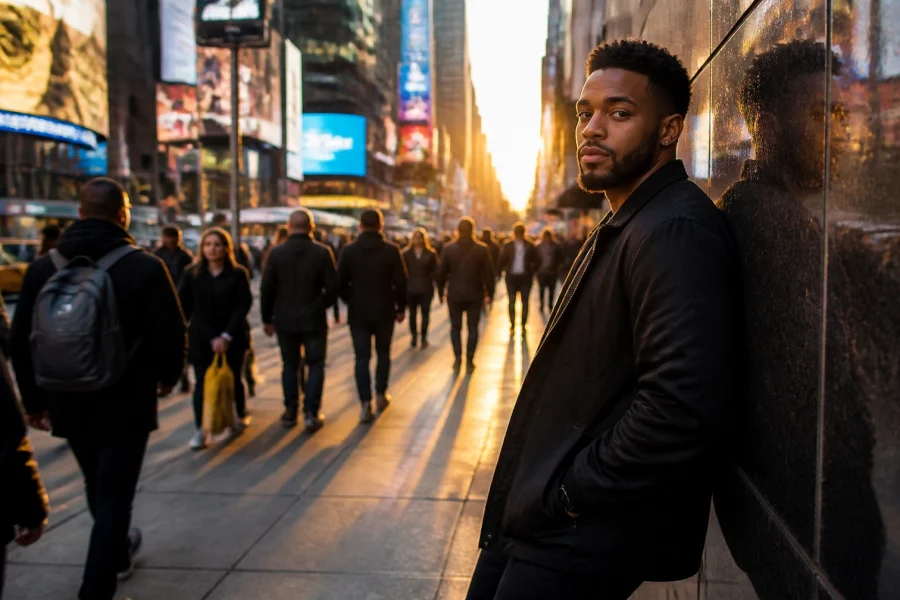
Candid shots are great, but there is a special energy in a street portrait where the subject is looking right at the lens. This doesn't have to be scary.
Walk up to someone with an interesting look and say, "Hey, I love your style, can I take a quick photo of you?" Nine times out of ten, they’ll say yes. It’s a great way to practice your social skills and get a high-quality, sharp portrait that earns its place in a body of work. For more on gear choices for portraits, you might want to look into how to choose the best mirrorless camera for 2026.
8. Color Popping Series
Pick a color. Let's say… red. Now, go out and only take photos where the color red is the dominant feature. Maybe it’s a red bus, a red balloon, or a person in a red dress.
This forces your brain to filter out the noise of the city and focus on one specific element. By the end of the day, you’ll have a cohesive series of images that look like they belong together. It’s a fantastic exercise for your "photographic eye."
9. Monochrome Moods
Sometimes color is a distraction. If the light is harsh or the colors in the scene are clashing, flip your camera to "Monochrome" mode (or shoot RAW and convert later).
Black and white photography is all about textures, lines, and emotions. Without the distraction of color, the viewer is forced to look at the "soul" of the image. For a masterclass in how black and white can transform a scene, head over to PhotoGuides.org.
10. Night Cityscapes and Neon
When the sun goes down, the city transforms. Neon signs, streetlamps, and car headlights become your primary light sources.
Night street photography is moody, gritty, and exciting. Don't be afraid to crank up your ISO. Modern cameras can handle it, and a little bit of grain actually adds to the "film" vibe of a night shot. If the colors feel a bit off due to the artificial lighting, Luminar has some incredible AI-powered tools to balance the white balance and make those neons pop.
11. Minimalist Streets
We usually think of streets as crowded, but sometimes the most powerful shot is a single subject in a vast, empty space.
Find a large plaza, a long staircase, or a clean architectural wall. Use "negative space" to make your subject feel small and isolated. This creates a sense of scale and loneliness that is very effective in storytelling. If you’re a fan of the "less is more" approach, you’ll love the 25 creative street photography ideas we’ve previously covered.
12. Change Your Perspective (Low/High)
Most people shoot from eye level. It’s boring. It’s how we see the world every single day.
Try shooting from the hip, or better yet, put your camera on the ground. A worm’s-eye view makes everything look grand and imposing. Conversely, find a bridge or a balcony and look straight down. This "top-down" view turns the street into a flat map where people become moving shapes.
13. Juxtaposition
This is the "holy grail" of street photography. Juxtaposition is when you place two contrasting elements in the same frame to create a new meaning.
Think of a wealthy businessman walking past a homeless person, or a tiny child standing next to a massive statue. It could even be something funny, like a person standing in front of a billboard that makes it look like they have wings. These photos are clever, thought-provoking, and always get a reaction.
14. Animals of the Urban Jungle
Don't forget the non-human residents of the city. Dogs waiting for their owners, pigeons fighting over a crumb, or a stray cat slinking through an alleyway.
Animals add a layer of unpredictability and humor to street photography. They don't care about your camera, which makes for some of the most authentic candid moments you can find.
15. The Details (Macro Street)
You don’t always need a person in the shot. Sometimes the "vibe" of a street is found in the details.
The texture of a rusted door, a discarded coffee cup, a hand gripping a subway pole, or the patterns of graffiti on a wall. These "micro" stories help fill in the gaps of your street photography portfolio and show that you’re paying attention to the small things.
Mastering the Technical Side
I know, I know. You want to focus on the "art." But if your technical skills are lacking, your art is going to suffer. You can't capture a "decisive moment" if you're fumbling with your settings.
Manual Mode Is Your Friend
If you’re still shooting on "Auto," stop it. Right now. You need to be in control of your shutter speed and aperture. Street photography moves fast, and the camera’s auto mode often gets fooled by bright lights or dark shadows. If you need a refresher, read our guide on how to master your camera’s manual mode in 5 minutes.
Zone Focusing
This is an old-school technique that is still incredibly relevant. Instead of relying on autofocus: which can be slow or focus on the wrong thing: you "pre-set" your focus distance.
If you set your aperture to f/8 and your focus to about 3 meters (10 feet), almost everything from 2 meters to 5 meters will be in focus. This allows you to snap photos instantly without the camera having to "hunt" for focus. It’s how the legends like Henri Cartier-Bresson did it.
The Right Gear
You don't need a massive DSLR to be a street photographer. In fact, a smaller camera is often better because it’s less intimidating to people. A 35mm or 50mm prime lens is the gold standard. It forces you to move your feet and get close to the action. If you're looking for gear inspiration, check out the morning news breakdown on new gear to see what’s currently trending.
The Mindset: Don't Be a Creep
There is a fine line between a street photographer and a creep. The secret is confidence and transparency.
If someone catches you taking their photo, don’t look away and pretend you were looking at a bird. Smile, nod, and maybe even show them the photo. If they aren't happy about it, offer to delete it. Being respectful goes a long way.
Remember, you are documenting history. The way people dress, the cars they drive, and the way the city looks today will be completely different in 20 years. You are a historian with a lens. That’s a pretty cool job.
For more inspiration and a community of like-minded shooters, I highly recommend checking out Edin Chavez’s personal blog. He’s been in the game for a long time and has some incredible insights into the lifestyle of a professional photographer.
Post-Processing: Making It Yours
Once you get home with a memory card full of potential, the real work begins. Street photography editing isn't about "fixing" a bad photo; it’s about enhancing the mood you felt when you were there.
I’m a huge fan of Luminar for this. Their AI tools are specifically designed to save you time. You can use their "Structure" tool to bring out the grit of the pavement or the "Relight" tool to fix those tricky high-contrast scenes.
Sometimes, a photo just needs a little nudge to go from "okay" to "wow." Don't over-process, though. The beauty of the street is its reality. If you make it look like a video game, you’ve lost the point.
Final Thoughts
Street photography is a marathon, not a sprint. You might go out for four hours and come back with zero keepers. That’s okay. That’s actually normal.
The goal isn't to get a masterpiece every time you step outside. The goal is to train your eyes to see. The more you look, the more you see. And the more you see, the more you’ll fall in love with the chaos and beauty of the world around you.
If you’re looking to take your skills to the next level and want some structured guidance, jump over to Learn Shut Your Aperture. We have a ton of resources specifically designed to help you stop taking "okay" photos and start creating art that you’re proud to hang on your wall.
Now, stop reading this and go outside. The streets are waiting.