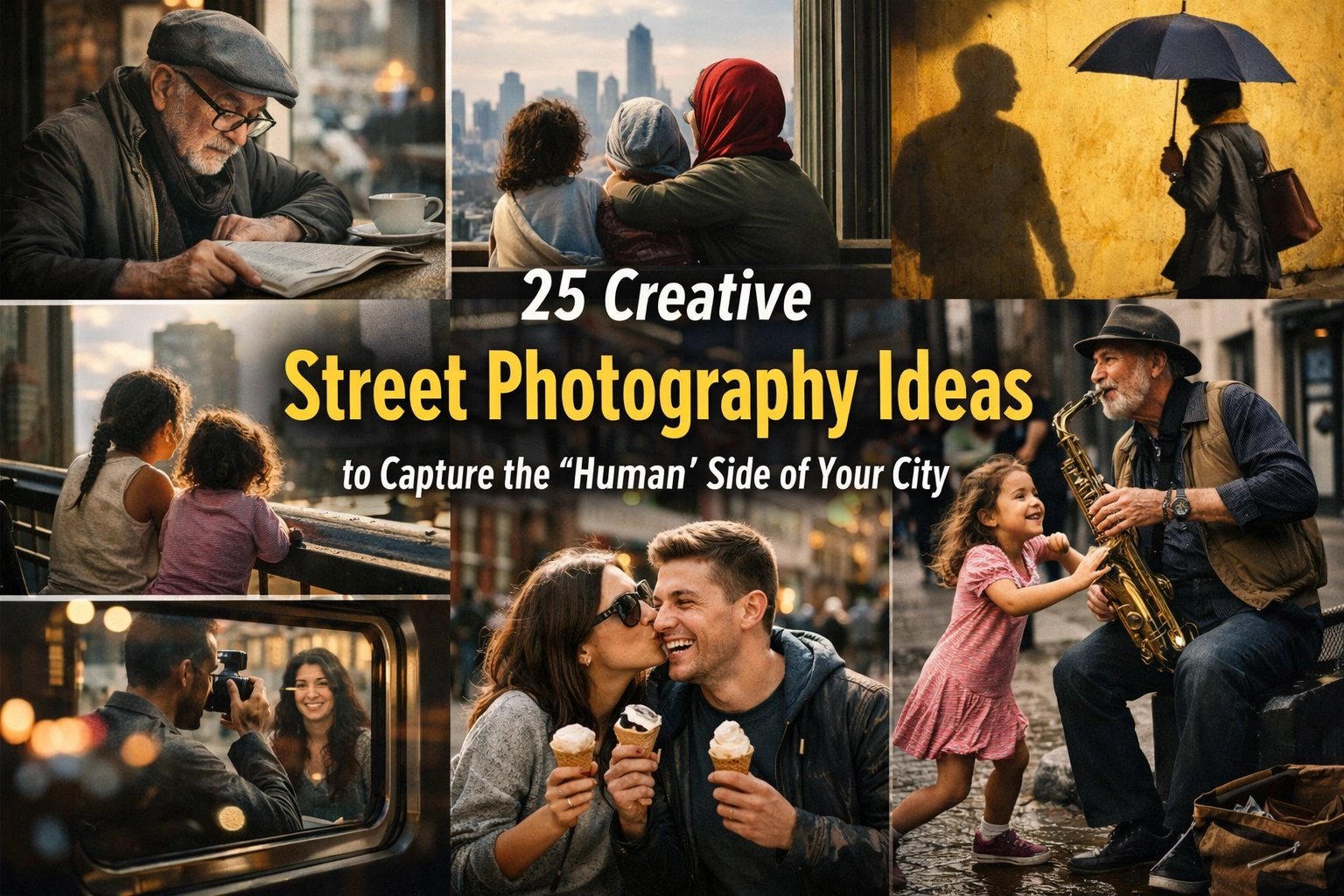
Street photography is more than just clicking a shutter in a crowded place. It is a profound act of reverence for the ordinary. To me, the city is a living, breathing organism: a sprawling canvas where natural light acts as our paintbrush and the pavement serves as our stage. Every person walking by is a character in a story that is both ethereal and ephemeral, appearing for a fleeting second before vanishing into the urban mist.
Capturing the "human" side of a city requires us to slow down. We often get caught up in the technical "brass tacks" of gear: obsessing over whether we have the latest Nikon D850 or the fastest mirrorless sensor: but the true unsung hero of a great street photo is the photographer’s eye. It is the ability to see the intrinsic beauty in a commute, a conversation, or a quiet moment of solitude.
If you are feeling stuck or looking to breathe new life into your portfolio, here are 25 creative street photography ideas to help you capture the soul of your city.
The Human Connection: People and Interactions
1. The Poetry of the Everyday
The most profound stories are often hidden in the mundane. Look for people waiting for the bus, checking their watches, or sharing a quick laugh over coffee. These everyday street scenes are the heartbeat of any metropolis. Nothing compares to the raw honesty of a person who doesn't realize they are being observed.
2. Festivals and Public Rituals
If you are shy about pointing your lens at strangers, head to a street festival or a demonstration. In these environments, people expect to be seen. The energy is high, the colors are vibrant, and the barriers between the photographer and the subject dissolve. It is a fantastic way to practice your timing. For more on navigating busy environments, check out our Barcelona Go guide.
3. Street Performers in Motion
Musicians, dancers, and magicians are the city's pulse. Instead of a static shot, try using a slightly slower shutter speed to capture the motion of a violinist’s bow or a dancer’s spin. This "motion blur" adds a layer of emotion that a sharp, frozen image sometimes lacks.
4. Seeking Genuine Emotion
Venture forth into areas where life happens: outside hospitals, train stations, or schools. Look for the "stoic" face of a commuter or the "ethereal" joy of a child seeing bubbles for the first time. Real human feelings are the most powerful elements you can include in a frame.
5. The Solitary Figure
Isolate an individual from a massive crowd. This contrast highlights the theme of urban loneliness or individual strength. By singling out a subject, you create a direct line of communication between the viewer and the person in the photo. For more inspiration on framing subjects, take a look at the work of Marek Kijevsky.
Alt text: A black and white street photography shot of a solitary man sitting on a park bench surrounded by swirling city pigeons, capturing a moment of urban solitude.
The Dance of Motion: Movement and Energy
6. Ghosting the Crowd
Set your camera on a tripod in a busy intersection and use a long exposure. The static architecture will remain sharp while the humans become ghostly, translucent ribbons of color. This technique visualizes the "ephemeral" nature of city life: people are just passing through, while the city remains.
7. Silhouettes in the Golden Hour
When the sun begins its descent, natural light becomes a dramatic paintbrush. Position yourself so your subjects are between you and the light. This turns people into anonymous, dramatic silhouettes, shifting the focus from who they are to what they are doing.
8. The Speed of the City
Use a slow shutter speed (around 1/15th or 1/30th of a second) and pan your camera with a passing cyclist or runner. This keeps the subject relatively sharp while the background streaks into a blur of speed. It’s one of my favorite street photography ideas for conveying the relentless energy of a place like New York or Dubai.
9. Nightlife and Neon
The city doesn't sleep; it just changes its clothes. Head out after dark and use the glow of neon signs or streetlights to illuminate your subjects. The high contrast and deep shadows create a "noir" atmosphere that is inherently cinematic.
10. The Commuter’s Rhythm
Cyclists are a staple of urban life. Photographing them as they navigate traffic provides a sense of scale and movement. Frame them against a static mural or a repeating architectural pattern to emphasize their transit through the space.
Alt text: A vibrant street photography image of a cyclist blurred by motion as they pass a neon-lit shop window at night, highlighting urban energy.
Structural Soul: Composition Techniques
11. The Power of Three
In visual arts, the "rule of threes" is a game-changer. Try to find three subjects or three distinct elements within your frame to create a triangular composition. This balance leads the viewer’s eye around the photo in a satisfying, dynamic way.
12. Embracing Juxtaposition
Find a subject that contrasts with their environment. A businessman in a suit sitting in a gritty, graffiti-covered alleyway, or an elderly person standing next to a modern, high-tech advertisement. These juxtapositions tell a story about the changing face of the city. For more advanced composition tips, dive into our tutorials category.
13. Urban Symmetry
Cities are built on grids and patterns. Use the symmetry of a subway tunnel or the reflection in a glass skyscraper to frame a human subject. The rigid lines of the architecture serve to highlight the organic, "imperfect" shape of the person.
14. Environment First, Humans Second
Sometimes, the best way to get a great shot is to find a stunning background first and wait for the "right" person to walk into it. This is a lesson in patience. You find your canvas, set your settings, and wait for the sun to dance with the landscape.
15. The Discreet Lens
Sometimes, the best tool is the one that doesn't scream "photographer." Using a smaller, discreet camera setup allows you to blend in. It’s about becoming a "ghost" in the machine, capturing moments without altering them by your presence. You can find excellent gear recommendations for this style on proshoot.io.
Painted by Light: Light and Mood
16. Chiaroscuro on the Pavement
Look for harsh "pockets" of light between tall buildings. When a subject walks through a single beam of light while the rest of the street is in deep shadow, it creates a spotlight effect. This is the essence of dramatic street photography.
17. Shadow Patterns
Don't just look at the people; look at their shadows. Late afternoon sun stretches shadows across the pavement, creating long, distorted figures. Sometimes the shadow is more interesting than the person casting it.
18. Artificial Glow
In the absence of the sun, the city’s artificial lights take over. Use the light from a bus stop, a vending machine, or a billboard to create an atmospheric portrait. These light sources are often "unsung heroes" of night photography, providing unique color casts that you can enhance later in Luminar 4.
19. Reflections in the Rain
Rainy days are a gift. The wet pavement becomes a mirror, reflecting the neon lights and the colorful umbrellas of pedestrians. Position your camera low to the ground to capture these liquid reflections. It adds a "dreamlike" quality to an otherwise gray day.
20. High-Key Minimalism
On overcast days, try "high-key" photography. Overexpose slightly to turn a gray sky into a white, minimalist backdrop. This strips away distractions and puts the entire focus on the human silhouette or the expression on a face.
Alt text: A stunning street photography shot capturing the reflection of people with colorful umbrellas in a rain-slicked city street, using the water as a mirror.
Narrative Threads: Thematic Approaches
21. Creating a Visual Essay
Instead of taking random shots, pick a theme. Maybe it’s "The Hands of the City" or "Blue Hour in Brooklyn." Having a focus forces you to look deeper into your environment. For professional insights on building a cohesive body of work, check out Edin Chavez’s personal blog.
22. The Unexpected Moment
Keep your camera ready for the bizarre. A dog wearing sunglasses, a man carrying a giant plant, or a spontaneous street performance. These are the "glitches" in the urban matrix that make street photography so addictive.
23. The Power of Return
I have tried every method of scouting, but nothing compares to returning to the same corner every day for a week. You begin to notice the patterns: the same flower seller, the same morning joggers. This familiarity allows you to anticipate the shot before it happens.
24. Black and White Expression
Stripping away color forces the viewer to focus on light, texture, and emotion. It removes the "noise" of the city and lends a timeless, "stoic" quality to your images. If you’re struggling with a busy background, try converting the shot to B&W to see if the human element pops. You can see beautiful examples of this in the fine art world at edinfineart.com.
25. Looking Where Others Don't
While everyone is busy photographing the famous landmark, turn around. Look at the crowd. Look up at the windows. Look down at the puddles. The most "intrinsic" human moments are often happening behind the backs of the tourists.
Alt text: A street photography portrait in black and white of an elderly street vendor with a weathered face, emphasizing texture and human experience.
Getting Down to Brass Tacks
Now that we’ve delved into these creative concepts, it’s time to get down to the practical side. Success in street photography isn't just about the "ideas": it's about execution.
Dear hobbyists, remember that your gear is a game-changer only if you know how to use it. If you are still struggling with your settings, I highly recommend our HDR tutorial or browsing through the extensive guides at photoguides.com. Understanding the technical limits of your camera allows you to push your creative boundaries.
If you are looking for high-quality prints or professional services to showcase your new street work, take a look at edinstudios.com. Seeing your work printed is a spiritual reward that validates the hours spent pounding the pavement.
Street photography is a journey of discovery. It’s about finding the "human" in the concrete jungle and capturing a slice of life that will never happen the same way again. It requires patience, a bit of bravery, and a whole lot of heart.
Do you have a favorite street spot or a technique that has changed your game? Drop me a line below or share your latest shots on our submissions page. I’d love to see how you’re capturing the "human" side of your world.
Venture forth, keep your eyes open, and don't forget to shut your aperture every once in a while to let the light in. Seize these moments!