
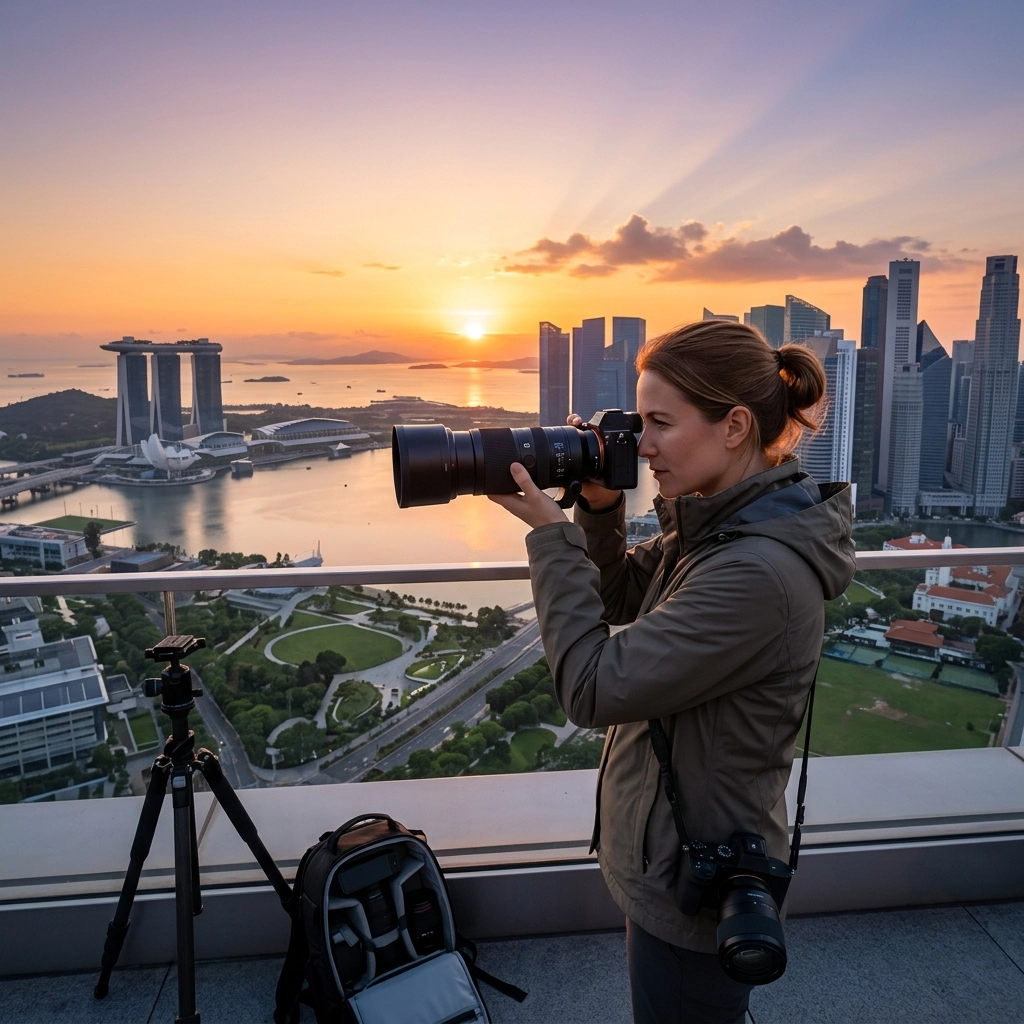
It’s Monday, March 30, 2026, and if you thought the photography world was going to slow down after the chaotic start to the year, you were wrong. Grab your coffee, maybe a croissant, and let’s dive into what’s happening in the world of glass, sensors, and the silicon brains that run them.
We’ve officially entered the "Refinement Era." Gone are the days when we’d see a 100-megapixel jump every six months. Today, the focus is on speed, smarter autofocus, and making sure your camera doesn't turn into a hand warmer when you’re shooting 8K video in the sun. Whether you’re shooting corporate event photography or chasing the next viral landscape shot, the tech being announced this week is designed to make your life easier.
Canon’s Retro Fever: The Analog Concept and the AE-1 Anniversary
If you’ve been following the rumors, you know Canon is currently having a bit of a mid-life crisis, in the best way possible. At the CP+ show last month, they stole the spotlight not with a 12K cinema beast, but with a box. Specifically, the Canon Analog Concept Camera.
This thing is a trip. It’s a retro-style box camera featuring a top-down, waist-level optical viewfinder. It feels like something a street photographer from the 1950s would use, but with modern internals. It’s fully manual focus, forcing you to actually work for your shot. In an era where AI does everything for us, this is a bold move.
But why now? Rumor has it this is all building up to April 2026, which marks the 50th anniversary of the legendary Canon AE-1. We are expecting a massive announcement next month. If you’ve ever wanted a digital version of the AE-1 that actually feels like a film camera, your bank account might be in trouble very soon.

Alt Text: A modern photographer using a retro-styled digital camera with a waist-level viewfinder in an urban setting.
The Mid-Range Battle: Sony A7 VI vs. Canon EOS R7 Mark II
For most of us, the mid-range is where the real work gets done. You don't always need a $6,000 flagship to get the job done, whether you’re learning mastering photography 10 essential tips or shooting high-end real estate.
Sony A7 VI: The New King of Versatility?
The Sony A7 VI is the most anticipated camera of 2026. Sony has finally addressed the biggest complaints from the A7 IV and V. The new model features a significantly faster sensor readout, which means rolling shutter is almost a thing of the past. If you’ve ever tried to pan quickly and noticed the buildings looking like they’re leaning, you know why this matters.
The A7 VI also gets the AI processing unit from the higher-end models, offering terrifyingly accurate autofocus that can track anything from a bird’s eye to a car's headlight. More importantly, the thermal performance has been overhauled. You can now shoot 4K 60p indefinitely without the "Internal Temperature Too High" warning ruining your day.
Canon EOS R7 Mark II: The APS-C Powerhouse
Expected to drop by mid-2026, the R7 Mark II is Canon’s answer to the hybrid creator. It’s expected to improve on the original R7’s already impressive speed. We’re looking at better rolling shutter control and a more reliable hybrid workflow. For wildlife photographers or anyone who needs that extra reach, this is going to be the "Goldilocks" camera, just the right size, price, and power.
Nikon’s Power Play: The RED Acquisition Pays Off
If you haven't been keeping up, Nikon’s acquisition of RED Digital Cinema was the "Red Wedding" of the camera industry. In 2026, we are finally seeing the fruit of that union.
Nikon has announced a massive firmware update for all Expeed 7 cameras (that’s your Z6 III, Z8, Z9, Z5 II, and Zf). They are bringing RED RAW NE (Nikon Expeed) capabilities to the entire professional lineup. This is a game-changer. It means your Nikon Z8 is basically a mini-RED cinema camera now.
Speaking of flags, the Nikon Z9 II is rumored for a late 2026 release. It’s expected to push the boundaries of sensor readout speed even further. We’re talking about a camera that might not even need a mechanical shutter anymore (even more so than the original Z9). If you’re into sports or fast-action photography, this is the one to watch. You can find more professional gear advice and reviews over at ProShoot.io.
Alt Text: A professional Nikon Z9 II camera mounted on a cinema rig with a large monitor, showcasing the RED RAW integration.
The Compact Comeback: PowerShot V3 and G7-Series
Remember when everyone said smartphones killed the point-and-shoot? Well, the point-and-shoot is back, but it’s evolved.
Canon is rumored to be launching three new PowerShot models this year. The standout is the PowerShot V3. It uses a 1.4-inch sensor with a 20x zoom range. It’s designed specifically for "stills first" photographers who want something better than an iPhone but smaller than a mirrorless body.
There’s also talk of a new G7-series model with a super telephoto compact lens. For travelers exploring the best time for USA road trips, having a pocketable camera with a massive zoom is a dream come true.
Software is the New Hardware: Luminar and AI Editing
While camera manufacturers are fighting over sensors, software companies are fighting over your workflow. Editing has become just as important as the shot itself.
Luminar has just released its latest 2026 update, and the Generative AI features are getting scarily good. We aren't just talking about sky replacement anymore. The new "Contextual Lighting" engine can analyze the luminosity in a scene and adjust it to match a specific time of day perfectly.
This is huge for niches like real estate. If you’ve ever struggled with the role of luminosity in real estate photography, these software fixes are a lifesaver. You can take a flat, midday shot and turn it into a golden hour masterpiece with a few clicks. In 2026, the gap between a "good" photo and a "great" photo is often found in the software.
Alt Text: A laptop screen displaying the Luminar editing interface with a landscape photo being enhanced by AI lighting tools.
Industry Trends: What to Watch for the Rest of 2026
As we move further into 2026, a few key trends are emerging that every photographer should keep an eye on:
- Thermal Management: With 8K and high-frame-rate 4K becoming standard, cameras are getting better at dissipating heat. We’re seeing more internal fans and magnesium alloy bodies designed as giant heat sinks.
- Hybrid Zoom Lenses: Canon is leading the way with RF hybrid zooms that reduce focus breathing and have smooth aperture transitions. These are perfect for creators who switch between stills and video constantly.
- AI Autofocus Intelligence: It’s no longer just about finding a face. Cameras in 2026 can distinguish between a player on a field and the ball they’re holding, or a car and the driver inside.
- The "Lik" Effect: We are seeing a massive resurgence in large-format printing and high-gloss landscape displays. People are looking at lessons in landscape photography from Peter Lik and wanting that high-impact, ethereal look for their own homes.
Alt Text: A gallery wall featuring high-gloss, large-format landscape photographs in the style of Peter Lik.
Why This Matters for Your Business
If you’re a pro or a high-end hobbyist, keeping up with these releases isn’t just about having the newest toy. It’s about efficiency. Better autofocus means fewer missed shots. Better software means less time sitting at your desk and more time out in the field.
For those in the real estate niche, the new sensor readouts on the Sony A7 VI and the improved dynamic range on the Nikon Z-series are essential. High-quality imagery is no longer optional; it’s the bare minimum. If you’re wondering is photography essential for real estate marketing, the answer is a resounding yes, and the tech of 2026 is making it easier to stand out.
Panasonic’s Quiet Revolution: S1Hii and S9
Panasonic isn't letting Sony and Canon have all the fun. The Panasonic S1Hii is the new gold standard for indie filmmakers. It’s essentially a cinema camera in a mirrorless body, now featuring better autofocus (finally!) and internal ND filters: a feature photographers have been begging for for years.
Then there’s the Panasonic S9, which uses a semi-stacked sensor variant. It’s fast, compact, and designed for the social media age. If you’re working with a social media manager like Sonny, this is the kind of gear that allows you to pump out high-quality content at a breakneck pace.
Alt Text: A filmmaker using the Panasonic S1Hii on a handheld gimbal to shoot a cinematic sequence.
Closing Thoughts for the Morning
2026 is looking like a great year to be a photographer. We’ve moved past the "megapixel wars" and into an era where the tools are actually becoming smarter. Whether you’re interested in peter lik’s creative process revealed or just want a camera that doesn’t overheat during a summer wedding, there is something for everyone.
Keep an eye on those firmware updates: especially if you’re a Nikon user. The RED RAW integration is a literal gift that keeps on giving. And don't forget to check your lens mounts; the new hybrid zooms from Canon and Sony are going to change how you think about your kit.
Stay tuned for more updates as we approach the AE-1 anniversary in April. It’s going to be a big one. For more deep dives into the world of fine art and photography, check out EdinFineArt.com and stay inspired.
Remember, the best camera is the one you have with you: but the best camera for 2026 might just be the one that was announced this morning. Happy shooting!