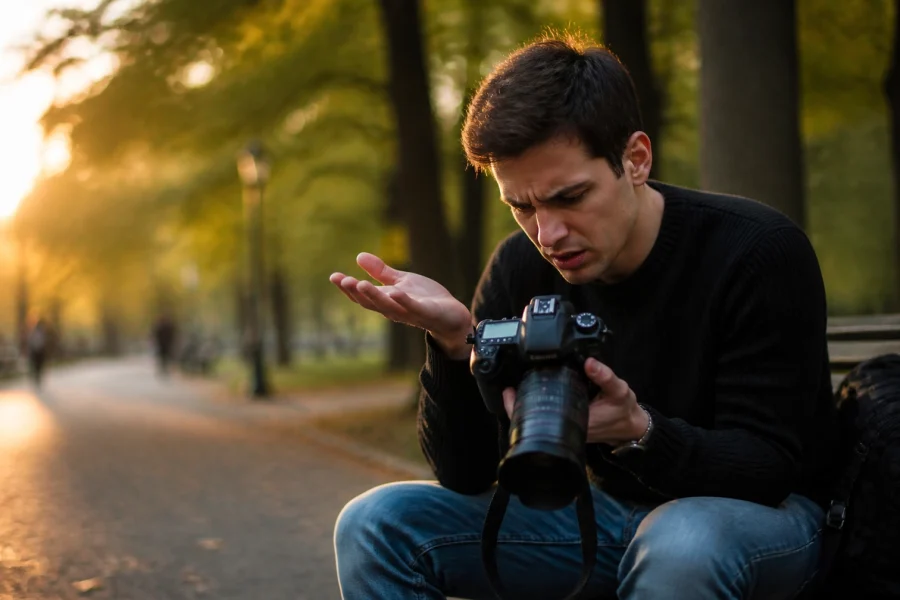
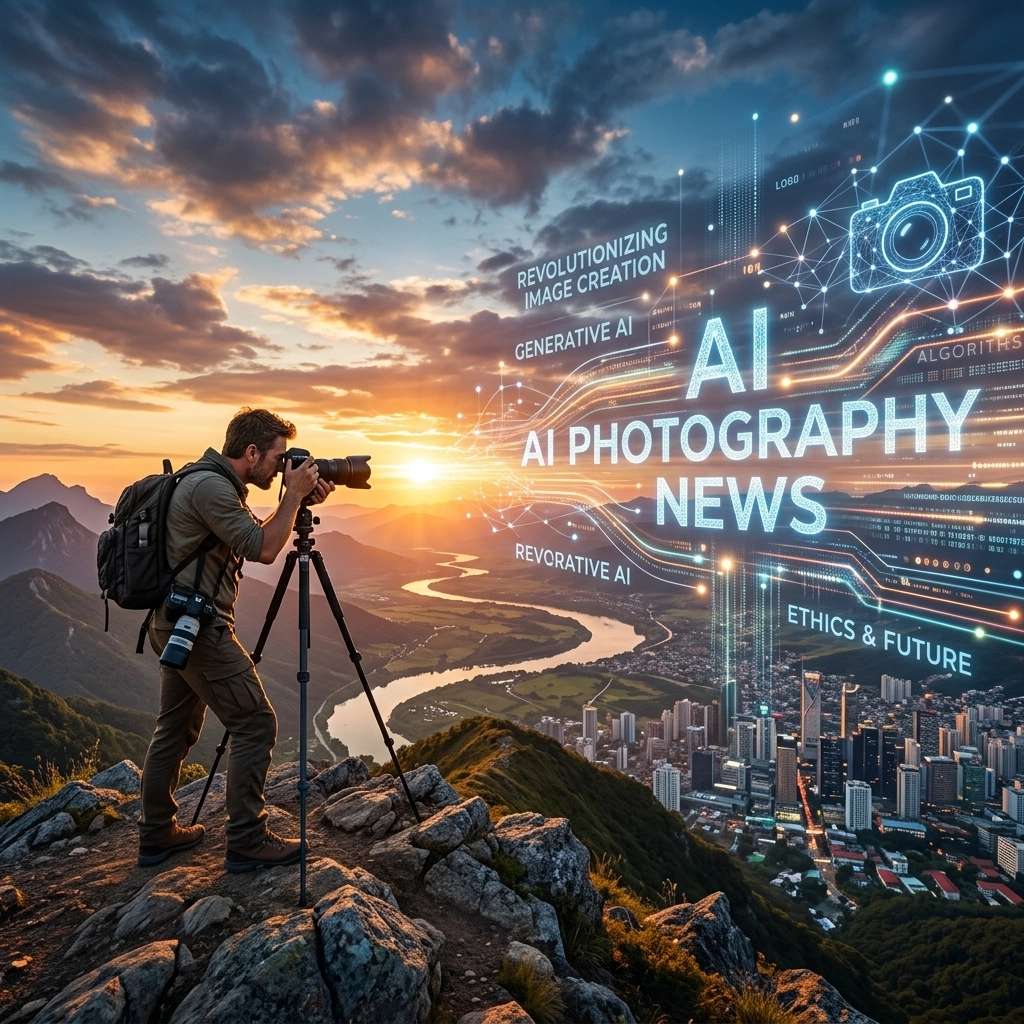
If you’ve opened a news app or scrolled through your social feed lately, you’ve probably seen it. AI-generated portraits of people who don't exist, hyper-realistic landscapes of planets we’ve never visited, and tools that can remove a distracting tourist from your vacation photo in roughly three seconds.
For some, it’s exciting. For others, it’s terrifying. For the rest of us? It’s a lot of noise to filter through.
But here’s the thing: we are past the "it's just a fad" phase. We are officially in the middle of the most significant shift in the history of the medium since the jump from film to digital. At Shut Your Aperture, we keep a close eye on today’s photography and videography news, and the consensus is clear: AI isn't just coming for photography; it's already here, sitting in your pocket and living inside your favorite editing software.
So, why should you actually care? Let’s break it down without the jargon.
The Tipping Point: Why Now?
For a few years, AI in photography was a bit of a gimmick. It was "FaceApp" making you look like an old man or weird, trippy dreamscapes that looked like melting clocks. But 2024 and 2025 changed everything. The technology hit a tipping point where the output became indistinguishable from reality.
Tech giants aren't just experimenting anymore; they’re all-in. Adobe has integrated Firefly into Photoshop, Google is baking "Magic Editor" into every Pixel phone, and Apple is making AI (or "Apple Intelligence") a core part of the iPhone experience.
When the biggest companies in the world decide that AI is the future of the image, the rest of us have to pay attention. It’s no longer a niche tool for tech-savvy nerds; it’s the new standard. If you want to keep up, you need to understand how these tools are being used: and how they might be using you.
 Save
Save
It’s Not About "Faking It": It’s About the Workflow
One of the biggest misconceptions is that AI photography is only about generating fake images from scratch. While that’s a huge part of the conversation, the real "news" for most photographers is how AI is fixing the boring stuff.
Think about how much time you spend on the "grunt work" of photography. Masking a subject, cleaning up sensor spots, or trying to fix a blown-out sky. AI tools are turning hours of tedious work into seconds.
Software like Luminar has led the charge here, using AI to recognize structures in a photo. Instead of manually drawing a mask around a person, you just click "Mask AI," and it’s done. This allows you to focus on the creative side of things: the mood, the story, the composition: rather than the technical struggle.
If you’ve been struggling with your post-processing, you might find that you’re actually just using outdated methods. Check out our guide on 7 mistakes you’re making with photo editing to see where you can streamline your process.
The Death of the "Perfect" Photo
Ironically, as AI makes it easier to create "perfect" images, the world is starting to crave imperfection.
We’ve all seen those AI portraits that look too smooth. The skin is flawless, the lighting is impossible, and the eyes have a weird, robotic shimmer. Audiences are developing a sixth sense for this. They can feel when an image lacks soul.
This is why "AI news" is actually driving a resurgence in analog-style photography. People are leaning back into film grain, motion blur, and candid moments. The more AI creates perfection, the more valuable "real" becomes.
As a photographer, you should care about this shift because it changes what clients want. They don’t want a generic, AI-looking headshot anymore. They want something that feels human. If you can combine the efficiency of AI tools with a raw, authentic aesthetic, you’ll be ahead of the curve. You can learn more about finding that balance in our ultimate guide to photography tutorials.
 Save
Save
Democratization vs. Devaluation
There’s a heated debate happening right now about whether AI is "democratizing" photography or "devaluing" it.
On one hand, AI allows someone who has never picked up a camera to create a stunning visual. It levels the playing field for people who have vision but perhaps lack the physical ability or the $10,000 budget for gear.
On the other hand, professional photographers are worried. If a company can generate a high-quality product shot using AI for $5, why would they hire a pro for $500?
This is a valid concern. But history tells us that whenever technology makes things easier, the value shifts from the execution to the idea. When digital cameras came out, people said it would kill photography because "anyone could take a photo." It didn't kill it; it just changed who the real pros were. The pros became the people who knew how to use the new tools to tell better stories.
If you want to stay relevant, you need to be an early adopter. Our friend at blog.edinchavez.com often talks about the business side of staying ahead, and the message is always the same: don't fight the tide; learn to surf.
The Trust Crisis: Can We Believe Our Eyes?
This is the "big one" in the news cycles. Deepfakes, misinformation, and the erosion of visual truth.
We are entering an era where a photograph is no longer proof that something happened. This has massive implications for photojournalism, legal evidence, and even our personal memories.
Adobe and other industry leaders have launched the "Content Authenticity Initiative." It’s basically a digital "nutrition label" for photos that shows if AI was used and what edits were made. As a creator, you should care about this because your reputation will soon depend on your transparency.
Expect to see more platforms requiring "Made with AI" labels. Understanding these ethics now will prevent you from getting "canceled" or losing the trust of your audience later. For more deep dives into the technical side of how things are changing, Shut Your Aperture is a fantastic resource for keeping your skills sharp and ethical.
 Save
Save
Emotional Connection and the "Time Travel" Factor
One of the more heartwarming trends in AI photography news involves people using AI to reconnect with their past. You might have seen the viral images of people "hugging" their younger selves or "meeting" deceased relatives in a generated photo.
While some find this "creepy," it highlights a fundamental truth: photography has always been about emotion and memory. AI is just a new way to access those feelings.
People are also using AI to generate professional headshots from their old selfies or creating 3D figurines of their pets. It’s opening up new ways for people to interact with their own lives. As a photographer, you can look at this as competition, or you can look at it as a new service you can offer. Imagine offering a "legacy" package where you use AI to restore and enhance a client's old family photos. That’s a high-value service that didn’t exist five years ago.
AI and the Social Media Machine
I was chatting with Sonny, our Social Media Manager, the other day about how AI is changing the way we post. Algorithms are now prioritizing content that uses trending AI filters and tools.
If you’re trying to grow your brand on Instagram or TikTok, you can’t afford to ignore these trends. Sonny is constantly looking for ways to link our blog content back to what’s trending on social, and right now, AI is the king of the algorithm.
Using AI to create "impossible" street photography or surreal portraits is a surefire way to get engagement. If you need some inspiration for what to shoot (with or without AI), check out these 25 creative street photography ideas.
 Save
Save
How to Stay Relevant (A Practical Checklist)
So, what should you actually do with all this information? Here’s a simple game plan:
- Experiment with AI Editing: Don’t let your first experience with AI be when a client asks for it. Download Luminar or try the Generative Fill in Photoshop. See what it can (and can’t) do.
- Focus on Composition and Storytelling: AI can generate a pretty picture, but it’s still bad at nuanced storytelling. Double down on your "eye." Study the ultimate guide to landscape photography to master the fundamentals that AI can’t replicate.
- Be Transparent: If you use AI to move a mountain or change a sky, be honest about it. Your audience will appreciate the transparency more than the "perfection."
- Network with Other Creators: Platforms like proshoot.io are great for seeing how other pros are integrating tech into their workflow.
- Don’t Panic: Every time a new technology emerges, people predict the end of art. It hasn't happened yet. AI is a tool, just like the darkroom was, and just like Photoshop was in the 90s.
The Big Picture
The reason everyone is talking about AI photography news is that it forces us to ask a very uncomfortable question: What is a photographer?
If a computer can make the image, are we still artists?
The answer is a resounding yes. An artist isn't someone who clicks a shutter; an artist is someone who has something to say. Whether you use a Leica, an iPhone, or a prompt in Midjourney, the "art" is in the intent.
AI is going to change your gear, your software, and maybe even your business model. But it can’t change your perspective. It can’t replicate the way you see the world.
So, keep an eye on the news. Stay curious. Try the new tools. But don't forget to get out there and actually shoot. There is still no AI in the world that can replicate the feeling of being in the right place at the right time with a camera in your hand.
 Save
Save
If you're looking for more ways to stand out in this new landscape, maybe try something different, like using rare textures for tangible aesthetic photography. In a world of digital perfection, the "tangible" is your secret weapon.
We’ll be here keeping you updated as things evolve. The world of photography is getting weird, but it’s also getting a whole lot more interesting. Don't get left behind.