To turn these ideas into a fast, repeatable edit, our Lightroom presets library gives you a head start you can build on.
Let’s be honest for a second. Photography used to be a bit of a grind. You’d lug around a heavy bag, fiddle with dials until your fingers went numb, and then spend hours hunched over a laptop screen trying to fix a sky that looked like a muddy puddle. If you’re a pro, that was just "the job." If you’re a hobbyist, it was the reason your expensive camera spent six months at a time sitting in a drawer.
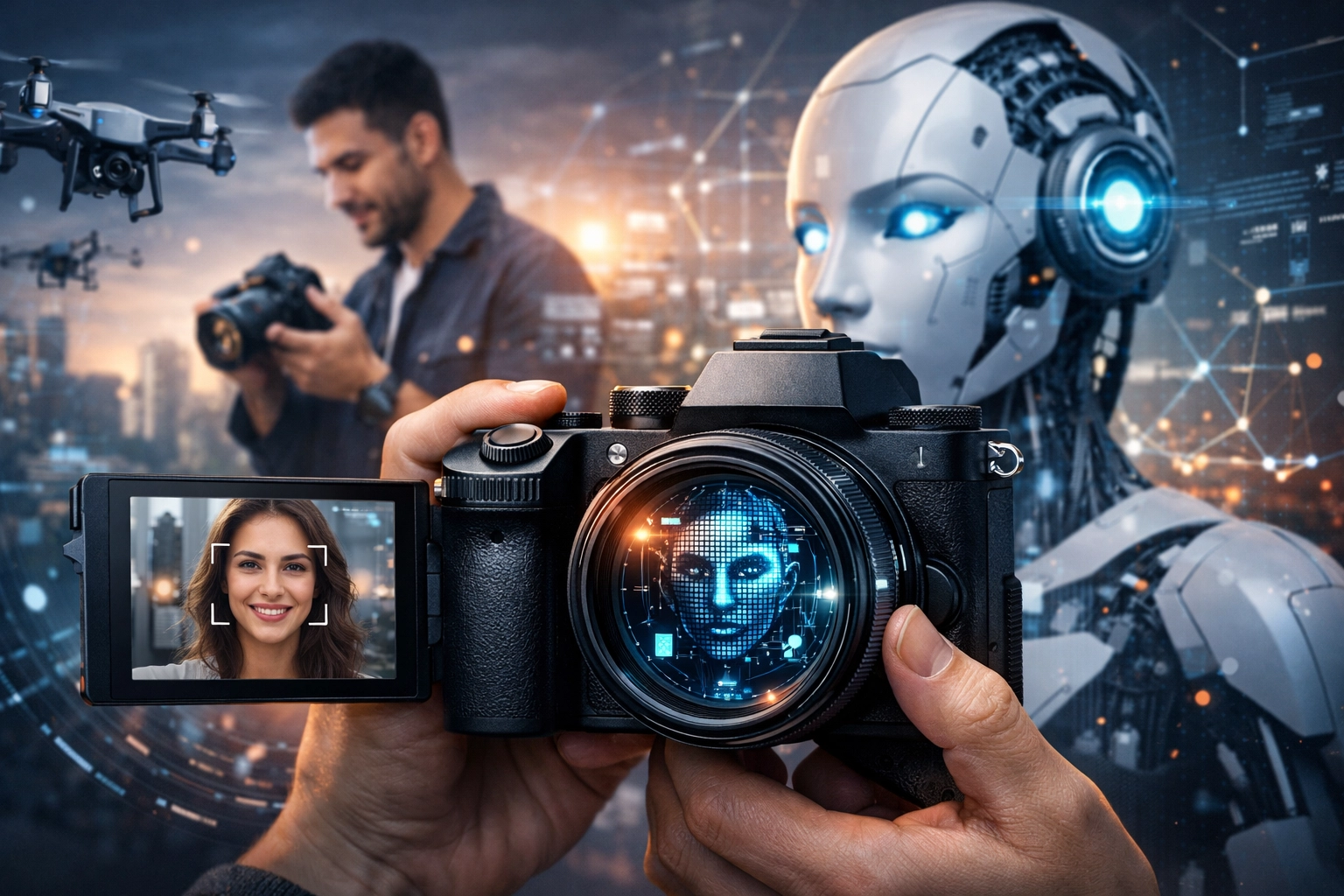
But the world just shifted. We aren't just talking about a better sensor or a faster autofocus anymore. We are talking about cameras that actually think.
If you’ve been scrolling through tech news lately, you’ve probably seen the name "Caira" or heard people whispering about "Nano Banana." No, those aren't the names of new indie bands. It’s the beginning of a revolution in AI-powered mirrorless tech that is fundamentally changing how we capture the world.
The Death of the "Shoot, Then Edit" Workflow
For decades, the workflow has been a rigid three-step process: shoot, download, edit. You’d fill up an SD card, pray it didn't get corrupted, plug it into a reader, and then start the long journey of post-processing.
With the latest AI-powered mirrorless tech, that workflow is being condensed into a single, seamless experience. Imagine being out in the field, taking a shot, and seeing the finished product: perfectly edited: before you’ve even put the lens cap back on.
This isn't just about filters. It’s about on-device generative AI that understands what you’re looking at. If you’re working on landscape photography and the lighting is just a bit too harsh, the AI can re-light the scene in real-time. It’s wild, it’s a little scary, and it’s definitely the future.

Meet Caira: The Camera That Listens
The big headline-maker right now is Caira. It’s a mirrorless camera system that doesn't look like anything we’ve used before. Instead of a back screen full of complicated menus, it uses your iPhone via MagSafe as the brain and the interface.
But the real magic is what’s happening under the hood. Caira integrates Google’s Nano Banana generative AI directly into the hardware. This means you can literally talk to your camera.
Imagine you’re shooting a busy city street. You get the perfect framing, but a delivery truck ruins the background. Instead of spending twenty minutes in Photoshop later, you just tell the camera, "Remove the truck and make it look like golden hour."
The AI processes the request instantly. It uses the massive processing power of the smartphone combined with its own internal hardware to give you a professional-grade shot that’s ready to share on the spot. If you’ve ever felt like you were making mistakes with photo editing, this tech basically acts as a professional editor sitting on your shoulder.
Why This Isn't Just "Smartphone Photography"
I know what you’re thinking. "My phone already has AI."
True. But your phone has a sensor the size of a fingernail and a lens made of plastic. Caira and the new wave of AI mirrorless cameras use Micro Four Thirds sensors. That’s real glass and real silicon. You get the depth of field, the low-light performance, and the dynamic range of a professional camera, but with the brains of a supercomputer.
Caira supports over 100 interchangeable lenses from big names like Olympus, Panasonic, and Leica. You get that beautiful "bokeh" that only a real lens can provide, but without the headache of traditional camera settings. There are no ISO dials or shutter speed wheels. The AI handles the technical heavy lifting so you can focus on the art.
If you are looking for more tips on how to use these high-end tools, check out some of the resources over at Shut Your Aperture.
The Efficiency Game: Speed Is King
In the current creator economy, speed is everything. If you’re a content creator or a social media manager, the time it takes to get an image from your camera to your audience is the difference between going viral and being forgotten.
The AI-powered mirrorless trend is all about removing friction. By eliminating SD cards and manual transfers, these cameras allow you to share high-quality content immediately. Whether you’re shooting street photography or high-end portraits, the ability to go from "click" to "post" in seconds is a game-changer.
Even if you aren't ready to go full AI in-camera, you can see this trend in desktop software. Tools like Luminar have been leading the charge in AI-assisted editing for years, making it easier for photographers to get professional results without the steep learning curve of older software.
Is It Still "Real" Photography?
This is the big question everyone is debating at the local camera shop. If the AI is "generating" parts of the image: like smoothing out water or changing the time of day: is it still a photograph?
It depends on who you ask. At Shut Your Aperture, we believe photography has always been about the vision of the person behind the lens. Whether you’re using a darkroom, a digital sensor, or a generative AI model, the goal is to tell a story.
The interesting thing about Caira’s implementation of AI is the ethical boundary they’ve set. The system is designed to avoid altering things like skin tone, ethnicity, or facial features. It’s meant to enhance the environment and the technical quality of the shot, not to create a fake person. This aligns with Google’s Generative AI Prohibited Use Policy, ensuring the tech remains a tool for creators rather than a tool for deception.
How Professional Photographers Can Adapt
If you’ve spent years mastering the exposure triangle, don’t panic. Your skills aren't obsolete; they’re just evolving.
- Focus on Composition: AI can fix lighting, but it can’t tell a compelling story for you. Your eye for framing and timing is more important than ever.
- Learn the Language: Using voice-activated AI requires a new kind of "prompt engineering." Knowing how to describe what you want is the new shutter speed.
- Embrace the Hybrid Workflow: You might use an AI camera for quick social content while sticking to traditional mirrorless setups for fine art prints you sell on Edin Fine Art.
- Stay Updated: Tech is moving fast. Keep an eye on sites like ProShoot.io and Edin Studios to see how pros are integrating these tools into high-end productions.
The Hardware Specs: What’s Under the Hood?
While we talk a lot about the software, the hardware in these new units is nothing to scoff at. The move toward integrating mobile processors with mirrorless sensors is a massive engineering feat.
By using the iPhone as the display and primary processor, companies like Caira can keep the camera body small and light. This makes it perfect for travel or long days on the street. You’re essentially getting the power of a desktop computer in the palm of your hand.
For more in-depth technical breakdowns, you can always dive into the archives at blog.edinchavez.com, where we go deep into the gear that makes these shots possible.
The Future of the Industry
We are only at the beginning. As AI chips get faster and sensors get more efficient, the line between "taking" a photo and "making" a photo will continue to blur.
We might see cameras that can automatically track a subject through a crowd using facial recognition AI, or cameras that can suggest the best lens for a specific scene based on what it sees through the viewfinder.
If you want to stay ahead of the curve, it’s time to start experimenting. Whether that’s trying out the latest AI features in Luminar or looking into a system like Caira, the goal is to keep your workflow fast and your creative spirit alive.
Why This Matters for Beginners
If you’re just starting out, there’s never been a better time to get into photography. The technical barrier to entry is crumbling. You no longer need to spend three years learning how to balance ISO and aperture to get a shot that doesn't look like a blurry mess.
AI-powered mirrorless tech allows beginners to get "the shot" immediately, which builds confidence and keeps people interested in the hobby. From there, you can dive deeper into the ultimate guide to photography tutorials to understand why the AI made the choices it did.
Final Thoughts on the AI Shift
The buzz around AI-powered mirrorless tech isn't just hype. It’s a response to a real need for speed, quality, and simplicity in a world that demands content at an astronomical pace.
While some will cling to their manual film cameras (and there’s a place for that, trust me), the rest of the world is moving toward a more intuitive, intelligent way of capturing life.
Don't be afraid of the "Robot Revolution" in photography. It’s not here to take your job; it’s here to take away the boring parts of your job so you can get back to being creative.
So, next time you see someone talking to their camera, don't think they’re crazy. They’re probably just telling their AI to fix the white balance. And honestly? I’m here for it.