Paris vs Rome: Honest Comparison and a Clear Winner
–
 Save
SaveSide-by-Side Spec Comparison
Before diving into use cases and recommendations, here is a direct specification comparison. Use this table as a quick reference when you need to compare a specific attribute.
| Specification | Paris, France | Rome, Italy |
|---|---|---|
| Best photography season | April–June, September–October (mild, long days) | March–May, September–November (before summer crowds and heat) |
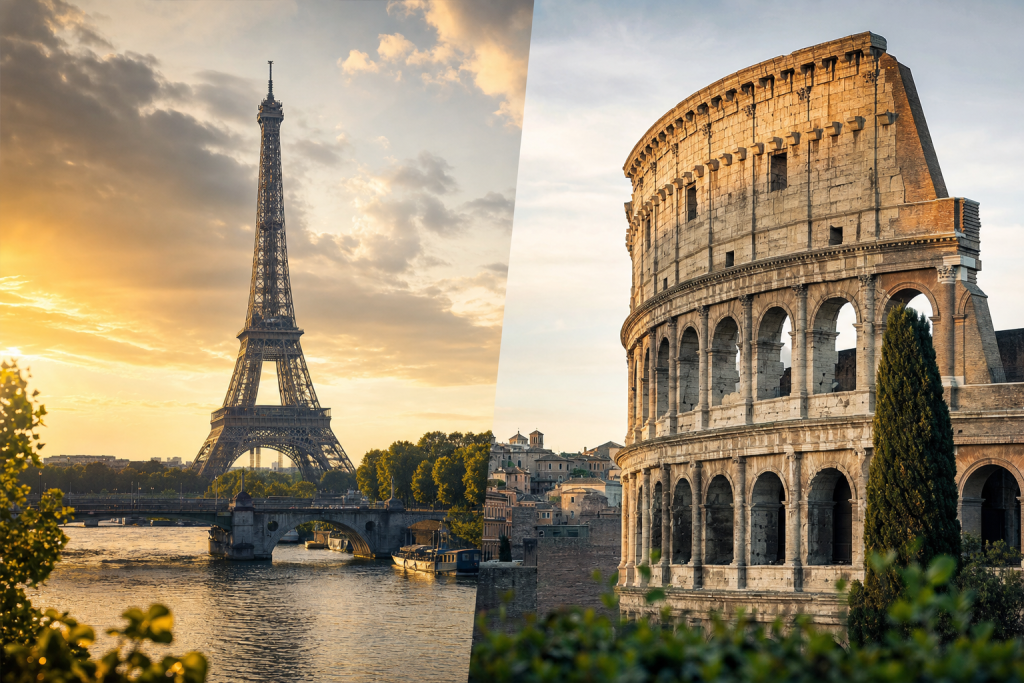
| Iconic shots | Eiffel Tower, Seine at blue hour, Sacré-Cœur from Montmartre | Colosseum at dawn, Trevi Fountain, Roman Forum, Pantheon |
| Architecture style | Haussmanian limestone, Belle Époque, Art Nouveau metro entrances | Ancient Roman, Baroque, Renaissance — 2,000+ years of layers |
| Light quality | Soft northern-European diffused light — flattering for architecture | Mediterranean sun — warm and directional; can be harsh midday |
| Color palette | Grey limestone with blue-green rooftop zinc, cream and gold accents | Terracotta, ochre, sienna — warm earthy Italian palette |
| Street photography | Excellent — Marais, Saint-Germain, Belleville have rich character | Excellent — Trastevere, Testaccio, Pigneto outside tourist core |
| Tourism density at iconic spots | High — Eiffel Tower; manageable with dawn timing | Very high — Colosseum, Trevi, Vatican; brutal in summer |
| Nearest alternative destinations | Versailles (30 min), Loire Valley (1.5 hr), Normandy (2 hr) | Ostia Antica (30 min), Tivoli gardens (1 hr), Orvieto (1.5 hr) |
Real-World Use Cases: Which Option Wins for Your Situation?
Specifications only tell part of the story. Here is how each option stacks up for specific photography scenarios:
| Your Situation | Best Choice | Why |
|---|---|---|
| Architecture photographer | Paris | Haussmanian building facades create consistent photographic rhythm down every boulevard. The cast-iron Eiffel Tower, Art Nouveau Guimard metro entrances, and the Opéra Garnier are unique to Paris. |
| Historical ruins photographer | Rome | No city outside Athens rivals Rome for accessible ancient architecture. The Forum, the Palatine Hill, and the Appian Way catacombs are the historical photography equivalent of Angkor Wat, accessible with a single museum pass. |
| Portrait photographer (environmental) | Rome | The terracotta light of the Trastevere neighborhood at golden hour creates environmental portrait backgrounds that feel painting-like. Warm Mediterranean light flatters skin tones. |
| Night cityscape photographer | Paris | The Eiffel Tower sparkle lighting, the blue-hour Seine reflections from Pont de Bir-Hakeim, and the illuminated Louvre pyramid are iconic night photography subjects. |
| Combined trip | Both (2 weeks each minimum) | Paris and Rome are 2 hours apart by direct flight. Both deserve at minimum 5-7 days of serious photography time — a 10-14 day trip covering both is the most popular European photography itinerary. |
Pricing Breakdown
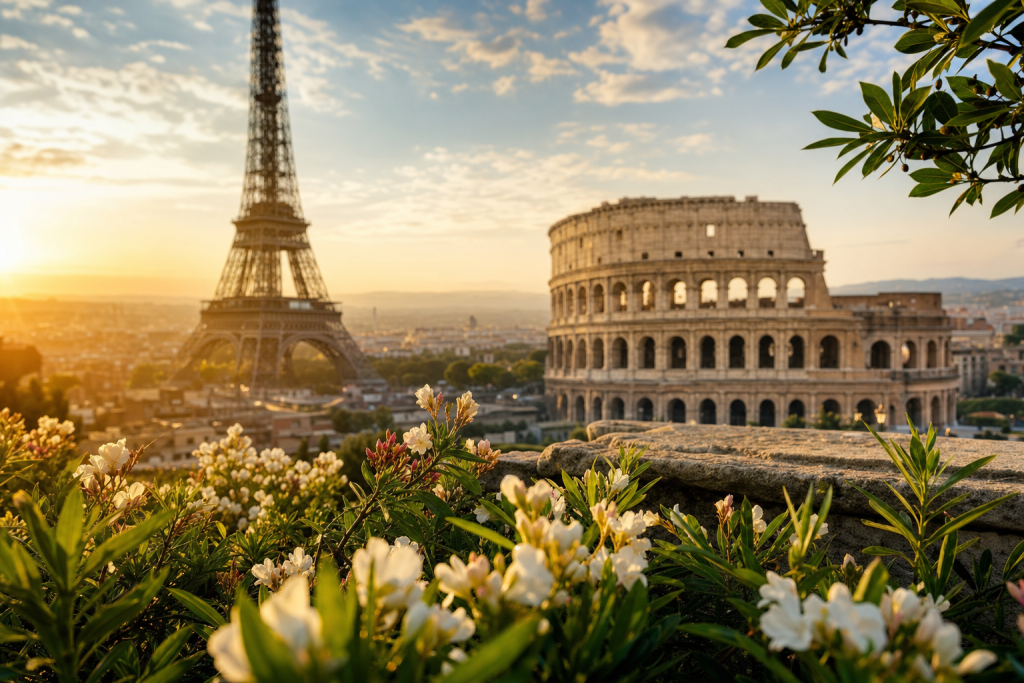
Both are expensive European capitals. Paris: hotels $150-400/night; meals $25-60; most major museums ($15-20 each). Rome: hotels $120-350/night; meals $20-50; Colosseum/Forum/Palatine combo ticket $18. The Paris Museum Pass ($69/48hr, $103/96hr) covers most major sites. Rome’s Omnia Card ($60/24hr) covers Vatican and major sites. Both cities have extensive free street photography that requires zero admission.
 Save
SaveAlternatives Worth Considering
Before you commit to either option, these alternatives may better suit your specific needs:
- Florence, Italy: Half the crowds of Rome, similar Renaissance art density, and the golden hour over the Arno from Piazzale Michelangelo is among Europe’s finest sunset views
- Lisbon, Portugal: A fraction of Paris’s and Rome’s cost, with equally beautiful azulejo tile facades, miradouros viewpoints, and tram-lined streets — dramatically underrated
- Barcelona, Spain: Gaudí’s unique architecture (Sagrada Família, Park Güell, Casa Batlló) offers a completely different visual vocabulary from either Paris or Rome
Frequently Asked Questions
Is Rome or Paris better for a first Europe photography trip?
Paris has a slight edge for first-timers — the city’s photographic icons are more concentrated, the metro system is easier to navigate, and English is more widely spoken. Rome’s tourism density in summer can overwhelm first-time visitors at major sites.
Which has better light for photography?
Rome’s Mediterranean light is warmer and more saturated — better for color photography. Paris’s northern European light is more consistent and diffused — better for architectural detail and overcast-day shooting.
Can I photograph the Eiffel Tower’s light show?
The Eiffel Tower sparkling lights are a copyrighted artistic creation — commercial use of night sparkle images requires permission. Personal and editorial use is generally unrestricted; check current enforcement for professional/commercial publications.
Which is better for autumn photography?
Paris — the chestnut trees in the Tuileries Garden, along the Seine embankments, and in Père Lachaise cemetery turn gold in October-November. Rome has less dramatic autumn foliage but the warm October light on the ochre facades is exceptional.
The Bottom Line
Our recommendation: Paris for architecture and light elegance; Rome for historical density and natural color. The best choice ultimately depends on your specific shooting style, budget, and existing kit. Use the use-case table above as your primary decision framework — find your most common scenario and choose the option that wins there. Both options in this comparison are used by working professional photographers; you cannot make a wrong choice if it aligns with your actual workflow.
 Save
SaveMaking the Most of Your Time in Each City
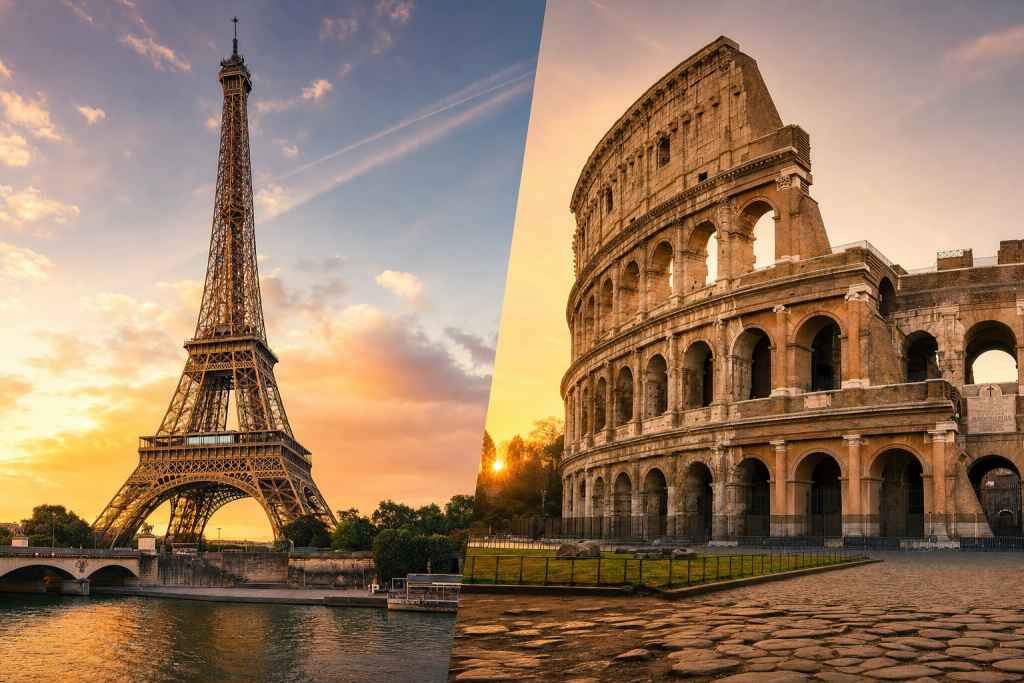
Paris and Rome are both dense with photographic opportunities, which creates a specific problem for photographers: trying to cover too many locations in too few days. The most experienced travel photographers visiting Paris deliberately choose three or four neighborhoods and photograph them deeply over 2-3 days each, rather than checking off every famous landmark in a single rushed itinerary. Le Marais + Bastille for one full day, Montmartre + Pigalle at dawn and the following evening, then the Seine embankments and the Tuileries for a third day — this approach produces more distinctive images than the standard Instagram checklist.
Rome rewards the same depth-over-breadth approach. The classic Rome photography circuit (Colosseum, Roman Forum, Pantheon, Trevi Fountain, Vatican) covers an impressive list but produces photographs that are nearly identical to every other photographer who visits. The alternative: spend a full day in a single neighborhood — Trastevere, Testaccio, or the Jewish Ghetto — photographing the daily life of a non-tourist Rome. The laundry lines, the cats on ancient walls, the bar patrons reading newspapers in morning light — these images capture the city that Romans actually inhabit and are photographic far richer and more personal than the architectural monuments every visitor photographs.