Best Camera for Vlogging 2026
~12 min read · Updated 2026-09-26
This is the definitive buyer’s guide to best camera for vlogging 2026 — real picks, real prices, honest pros and cons, and a clear winner. Six camera bodies and one wide prime lens made the list – the lens has its own section below. Every pick has a direct B&H affiliate buy button for current pricing.
Table of contents
- TL;DR — The winner
- How I picked these cameras and lenses (criteria)
- The 6 best cameras
- #1: Canon EOS R50 V
- #2: Sony ZV-E10 II
- #3: Sony ZV-E1
- #4: Nikon ZR
- #5: Sony ZV-1 Mark II
- #6: Panasonic Lumix LX100 II
- The best lens add-on
- #1: Canon RF 16mm f/2.8 STM
- What to look for when buying
- Who should skip this category
- Upgrade path
- Frequently asked questions
Want every ShutYourAperture gear roundup in one place? The Best Photography Gear hub indexes every buyer’s guide — bookmark it and come back when you are ready to upgrade.
 Save
SaveTL;DR — The winner
More About Cameras For Vlogging And Youtube
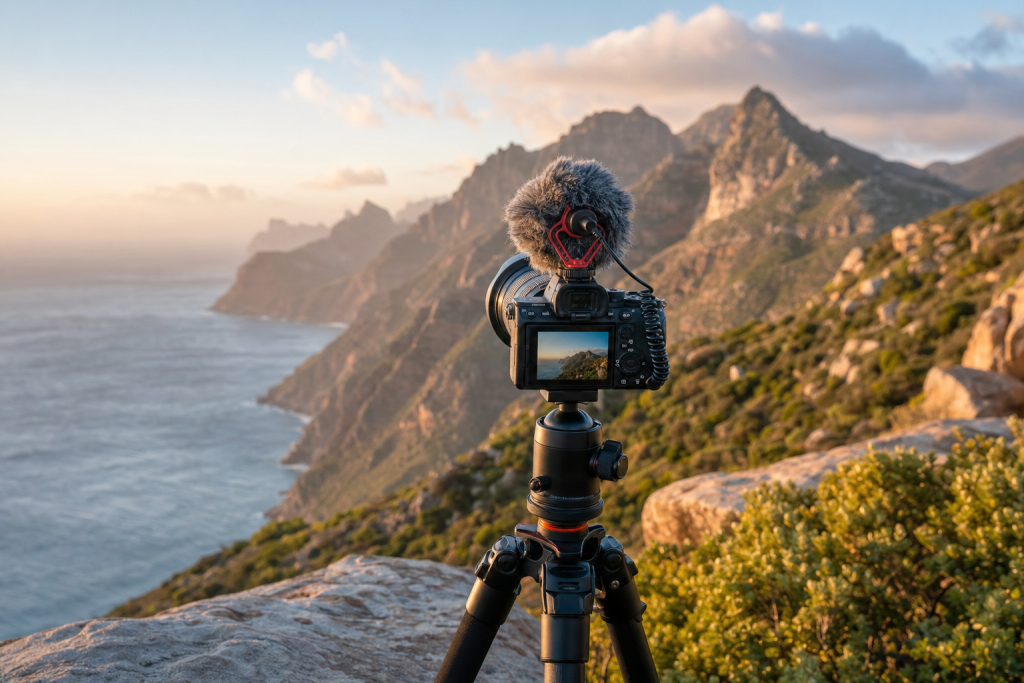
The best vlogging camera in 2026 is not the one with the highest spec sheet — it’s the one that disappears from the production workflow. Fast autofocus, flip screen, good in-body stabilization, and usable internal audio are more important than 8K resolution for most vloggers.
Top Picks: Detailed Breakdown
Here is a closer look at each recommended option, with pros, cons, best use cases, and purchasing information for each pick.
Sony ZV-E10 II — ~$750
26MP APS-C, 4K 60fps with 10-bit log, real-time Eye AF, fully articulating screen, directional microphone, product showcase mode.
Best for: YouTube creators and vloggers who want the best 4K/60fps at sub-$1,000 and already have or plan to buy a gimbal for walking shots.
Pros:
- 4K 60fps with 10-bit S-Log3 at $750 — best video specs at the price
- Real-time Eye AF reliable for talking-head self-filming
- Product Showcase mode shifts focus from face to product instantly
Cons:
- No IBIS — requires electronic stabilization (crops 1.2x)
- No EVF
- Sony E-mount kit lens is mediocre — buy the Sigma 16mm f/1.4 separately
Buy the Sony ZV-E10 II at B&H Photo
DJI Osmo Action 4 — ~$349
4K 120fps, 1/1.3″ sensor (largest in action camera class), front and rear screens, RockSteady 3.0 stabilization, up to -20°C operating temperature.
Best for: Adventure and travel vloggers who need a second “B-camera” for extreme conditions, time-lapses, and stabilized walking sequences.
Pros:
- Best stabilization in the action camera category (RockSteady 3.0)
- Largest action camera sensor — better low light than GoPro
- Magnetic mounting ecosystem covers every adventure scenario
Cons:
- Fixed lens — no interchangeable glass
- Audio requires external mic for professional voice quality
- 4K 120fps is crop-dependent
Buy the DJI Osmo Action 4 at B&H Photo
Fujifilm X-S20 — ~$1,299
26.1MP APS-C, 6.2K 30fps, 4K 60fps 10-bit, 7-stop IBIS, 800-shot battery life, Film Simulations including Eterna Cinema for video.
Best for: Vloggers and travel filmmakers who want the best in-body stabilization, stunning SOOC color, and reliable battery life without carrying a gimbal.
Pros:
- 7-stop IBIS — no gimbal needed for most walking shots
- 800 CIPA shots — all-day shooting without battery anxiety
- Eterna Cinema Film Simulation produces cinematic color directly from camera
Cons:
- Larger and heavier than Sony ZV-E10 II
- Face AF is slightly behind Sony in video tracking
- Higher price entry for equivalent video resolution
Buy the Fujifilm X-S20 at B&H Photo
Canon EOS R50 — ~$679
24.2MP APS-C, 4K 30fps, Dual Pixel CMOS AF II, fully articulating screen, 10fps burst, lightweight 375g body.
Best for: Beginner vloggers, educators, and creators who want the most reliable face AF at the lowest possible price within an interchangeable-lens system.
Pros:
- Lowest price in the mirrorless vlogging segment
- Dual Pixel CMOS AF II — Canon’s best AF algorithm
- Most intuitive beginner menu system
Cons:
- No IBIS
- 4K 30fps only (no 60p)
- Canon RF-S lens ecosystem smaller than Sony E
Buy the Canon EOS R50 at B&H Photo
Buying Guide: How to Choose the Right Option for You
Before purchasing, work through these key decision questions:
Will you walk and film yourself?
IBIS or a gimbal is non-negotiable. Fuji X-S20 IBIS handles smooth handheld walking at moderate pace. For anything faster (hiking, cycling), add a DJI RS3 Mini gimbal ($299) regardless of which camera you choose.
Do you film in dark locations (bars, restaurants, indoor events)?
Sony ZV-E10 II with a Sigma 16mm f/1.4 ($399) gives the best indoor low-light video at the $1,150 combined price. The APS-C sensor + f/1.4 lens admits sufficient light for clean 4K video at ISO 1600.
Do you post daily on social media?
The DJI Osmo Action 4 ($349) combined with a phone for quick editing is the fastest workflow for daily social content. Reserve the mirrorless for longer-form YouTube.
Does color grading time matter to you?
Fujifilm X-S20’s Eterna Cinema and Classic Chrome Film Simulations require almost no grading. Sony and Canon cameras require more post-processing for pleasing video color. If you want faster post, Fuji wins.
What is your audio strategy?
The best vlogging camera upgrade is a $70-150 external microphone before upgrading from a kit lens or changing bodies. Canon R50, Sony ZV-E10 II, and Fuji X-S20 all have 3.5mm mic inputs. A Rode VideoMicro II ($80) transforms any camera’s audio.
Frequently Asked Questions
What is the most important spec for vlogging?
Autofocus reliability — specifically face and eye tracking that holds through movement, transitions, and looking away from the camera. Sony ZV-E10 II and Canon R50 both excel here. Stabilization is second; resolution is third.
Do I need 4K for YouTube?
Yes for future-proofing, but 1080p60 is perfectly adequate for most YouTube audiences in 2026. If storage and editing speed are limitations, shoot 1080p60 on your current camera before buying a new one.
Which cameras work with TikTok and Instagram live?
Any mirrorless camera with a USB-C video output can stream via a USB capture card (Elgato Cam Link, ~$130). No camera in this list streams natively without an adapter.
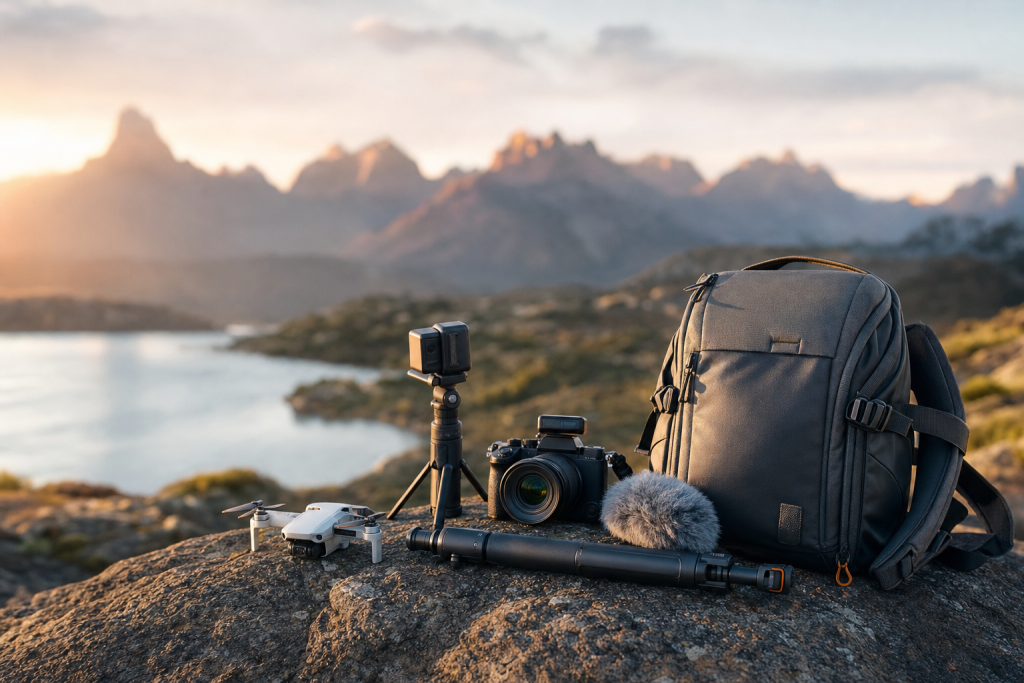
Canon EOS R50 V — top pick for vlogging camera
The most creator-focused all-around pick right now: it is purpose-built for vloggers, offers strong autofocus and streaming features, and keeps the price manageable for a first serious camera.
 Save
SaveHow I picked these cameras and lenses (criteria)
Autofocus reliability and face/eye tracking, front-facing or fully articulated screen, 4K quality and crop behavior, stabilization, low-light performance, microphone/headphone support, battery life, lens ecosystem or built-in zoom range, size/weight, and creator-specific features like vertical shooting and USB livestreaming.
The 6 best cameras for vlogging
#1: Canon EOS R50 V
Price range: $649 – $799
The most creator-focused all-around pick right now: it is purpose-built for vloggers, offers strong autofocus and streaming features, and keeps the price manageable for a first serious camera.
| Pros | Cons | |||||
|---|---|---|---|---|---|---|
|
|
Best for: creators who want a purpose-built vlogging body with strong autofocus and streaming features at an accessible price.
Check price at B&H →#2: Sony ZV-E10 II
Price range: $999 – $1149
Best value for creators who want better image quality and lens flexibility than a fixed-lens vlogging camera, while staying compact and accessibly priced.
| Pros | Cons | |||||
|---|---|---|---|---|---|---|
|
|
Best for: creators who want better image quality and lens flexibility than a fixed-lens camera while staying compact and affordable.
Check price at B&H →#3: Sony ZV-E1
Price range: $2198 – $2398
A strong step-up choice for creators who want cleaner low-light footage and a more premium look than APS-C bodies can usually deliver.
| Pros | Cons | |||||
|---|---|---|---|---|---|---|
|
|
Best for: creators stepping up to full-frame for cleaner low-light footage and a more premium look.
Check price at B&H →#4: Nikon ZR
Price range: $2296 – $2496
Best for ambitious solo creators who want a camera that can grow into higher-end production work without giving up vlogging friendliness.
| Pros | Cons | |||||
|---|---|---|---|---|---|---|
|
|
Best for: ambitious solo creators who want a camera that can grow into higher-end production work.
Check price at B&H →#5: Sony ZV-1 Mark II
Price range: $798 – $948
The easiest low-friction choice for beginners who want to start filming immediately without buying lenses.
| Pros | Cons | |||||
|---|---|---|---|---|---|---|
|
|
Best for: beginners who want to start filming immediately without buying lenses.
Check price at B&H →#6: Panasonic Lumix LX100 II
Price range: $1499 – $1699
A compelling compact option for creators who value a built-in fast zoom and a more premium pocket-carry-style vlogging setup than interchangeable-lens bodies.
| Pros | Cons | |||||
|---|---|---|---|---|---|---|
|
|
Best for: creators who want a premium pocketable fixed-lens camera with a fast built-in zoom.
Check price at B&H →The best lens add-on for vlogging
If you shoot on a Canon RF body, one inexpensive wide prime upgrades vlogging framing more than any body swap.
#1: Canon RF 16mm f/2.8 STM
Price range: $279 – $429
The best inexpensive lens add-on for creators using Canon RF bodies who need a wider, more flattering vlogging field of view.
| Pros | Cons | |||||
|---|---|---|---|---|---|---|
|
|
Best for: Canon RF vloggers who need a wider, more flattering field of view on a budget.
Check price at B&H →What to look for when buying
Autofocus reliability and face/eye tracking, front-facing or fully articulated screen, 4K quality and crop behavior, stabilization, low-light performance, microphone/headphone support, battery life, lens ecosystem or built-in zoom range, size/weight, and creator-specific features like vertical shooting and USB livestreaming.
Who should skip this category
Buying a camera with great still-photo specs but poor vlogging ergonomics; ignoring autofocus and screen articulation; overlooking audio inputs and wind protection; choosing a body before checking lens costs; assuming 4K60 is enough without considering crop, overheating, or stabilization; buying too much resolution and not enough usability.
Upgrade path
Look for strong subject detection AF, USB-C power/streaming, log profiles, 10-bit or higher recording if possible, weather-aware cooling or good thermal design, a deep lens ecosystem, and body features that support vertical video and external audio. Prefer cameras with roomier codecs and higher-quality 4K/6K capture so you can crop and reframe for short-form content for years.
 Save
SaveFrequently asked questions
Do I need full-frame for vlogging?
Usually no; APS-C is lighter, cheaper, and more than good enough, while full-frame mainly helps in low light and for a shallower look.
Is a fixed-lens camera better than interchangeable lenses for beginners?
Yes, if you want simplicity; no, if you expect to grow and want creative flexibility.
What matters more for vlogging: autofocus or resolution?
Autofocus and screen usability matter more for most creators; good 4K is plenty.
Should I buy a microphone too?
Yes; audio quality usually matters more than a small jump in image quality.
Is 4K60 necessary?
Not for everyone, but it helps with motion, reframing, and a more polished look.
Planning a full kit upgrade? Browse the Best Photography Gear hub — every buyer’s guide organized by category. Cameras, lenses, tripods, bags, and accessories all in one place.
More gear guides on Shut Your Aperture
Read more on Shut Your Aperture
Subscribe to the Aperture Academy for weekly photography deep dives, or browse our full gear guide library for more buyer’s guides.
shutyouraperture-20). Buying through these links costs you nothing extra and helps fund our free guides.