
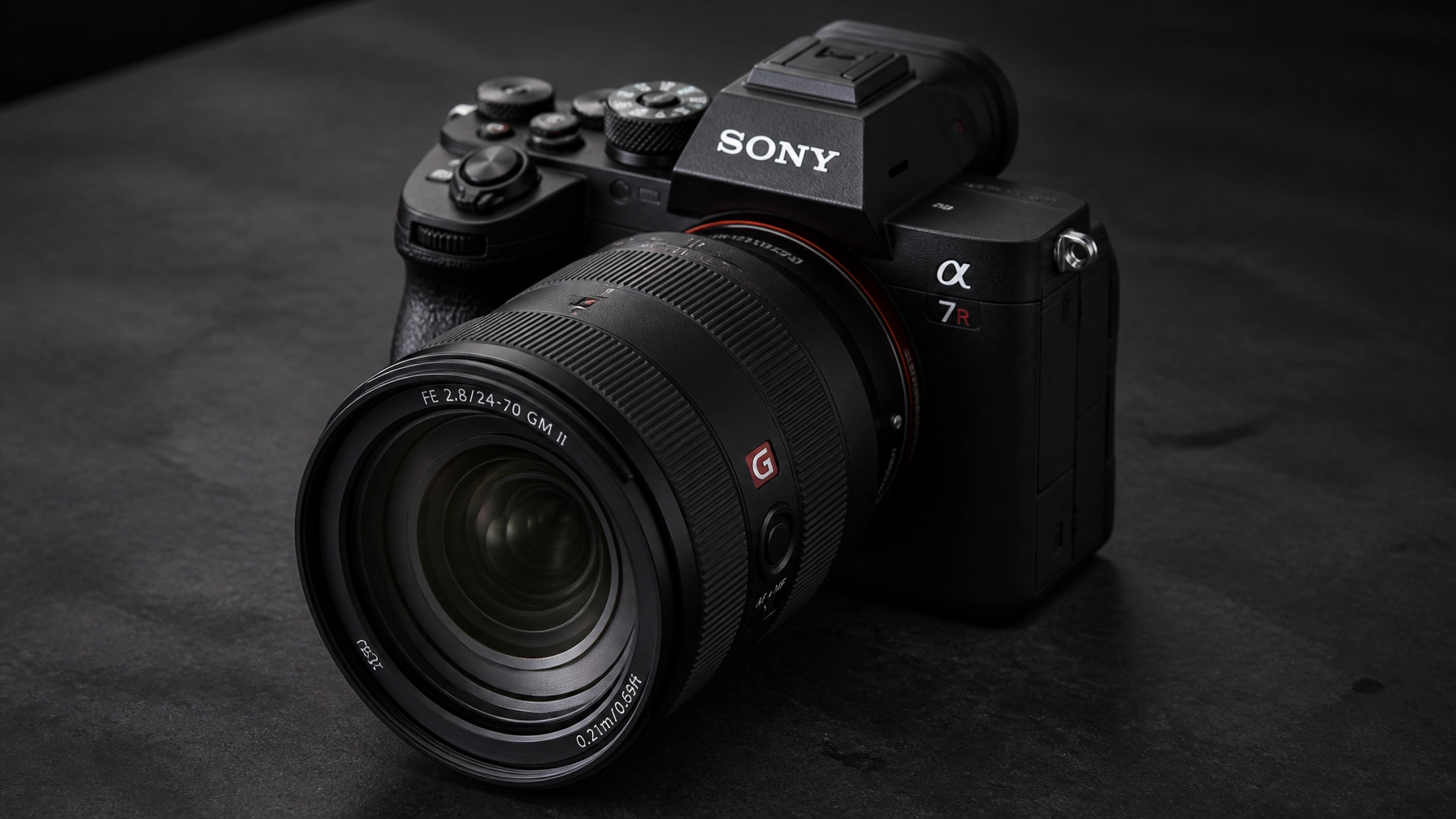
The Sony A7R VI matters because it represents the first time we’ve seen a 67-megapixel stacked sensor hit the mainstream market, effectively bridging the gap between high-resolution landscape photography and high-speed sports shooting. For years, you had to choose between the pixel-dense detail of an "R" series camera or the blistering speed of the "A1" or "A9" series. With the official announcement of the Sony A7R VI on May 13, 2026, that compromise is officially a thing of the past. If you’re a professional looking to future-proof your kit, today’s news is the most significant update we’ve seen in years.
Morning, creators! Grab your coffee because the photography world just got hit with a lightning bolt. We’re talking about the kind of gear announcements that make your current camera look like a dusty Polaroid from the '80s. Between Sony’s massive sensor reveal, Canon’s big-boy firmware updates, and the AI-powered magic happening over at Skylum, there is a lot to digest.
We’ve spent the morning digging through the specs, the rumors, and the official press releases to give you the lowdown on what actually matters. Whether you’re a pixel-peeper, a wildlife fanatic, or a film enthusiast who still loves the smell of chemicals in the morning, we’ve got something for you.
The Heavyweight Champion: Sony A7R VI Specs and Details
The headline of the day is undoubtedly the Sony A7R VI. Sony held a special event on May 13, and let's just say they didn't hold back. This isn't just a minor refresh; it’s a total overhaul of what a high-resolution camera can do.
The 67MP Stacked Sensor
At the heart of the A7R VI is a brand-new 66.8-megapixel stacked CMOS sensor. Why does "stacked" matter? In simple terms, it means the sensor has its own memory and processing layer built right into it. This allows for data to be pulled off the sensor at insane speeds.
We’re talking about 30 frames per second of continuous shooting in 14-bit RAW. To put that in perspective, the previous A7R V was a beast, but it couldn't dream of these speeds without significant blackout or rolling shutter issues. The A7R VI offers a completely blackout-free experience, making it a viable tool for sports and wildlife photographers who still want enough resolution to crop in 400% and still see the texture on a bird’s feather.
Dynamic Range and the New DCG-HDR
Sony is also touting something they call "DCG-HDR" (Dual Conversion Gain HDR). This tech allows the camera to achieve a staggering 16 stops of dynamic range in mechanical shutter mode. For those of us who love shooting high-contrast landscapes, this means fewer bracketed shots and more detail in those deep shadows and bright highlights. If you’re transitioning from an older body, check out our landscape photography guide to see how you can maximize this new tech.
Video Capabilities: 8K Without the Compromise
Video shooters aren’t being left out. The A7R VI can record full-frame 10.9K oversampled 8K video at 30p. And here’s the kicker: it’s uncropped. Previous models often had a 1.2x crop when shooting in 8K, which can be a nightmare when you're trying to stay wide. You also get 4K at 120p for that buttery-smooth slow motion, which is pixel-binned from 5.5K.
Pricing and When You Can Buy It
The Sony A7R VI is priced between $3,999 and $4,500, depending on your region and the bundle. Shipping is scheduled to begin in the first week of June 2026. If you’ve been on the fence about upgrading, this might be the nudge you needed. When you're trying to choose the best new camera gear, the A7R VI currently sits at the top of the food chain for versatility.

The Perfect Partner: FE 100-400mm f/4.5 GM OSS
You can't have a 67MP beast of a camera without some world-class glass to put in front of it. Alongside the camera, Sony announced the FE 100-400mm f/4.5 GM OSS.
This isn't just a rehash of the old 100-400mm. The standout feature here is the constant f/4.5 aperture. While it’s not quite as fast as an f/2.8 prime, having that consistency throughout the zoom range is a godsend for wildlife and sports photographers who are constantly tracking subjects through changing light.
It’s designed to resolve the insane detail that the A7R VI sensor provides. If you’re used to older zooms, you’ll notice a significant jump in corner-to-corner sharpness. Sony is clearly aiming this at the crowd that wants prime-like performance with the flexibility of a zoom. Look for this to ship in June 2026 as well.
Software Intelligence: Luminar Neo’s Spring 2026 Update
While hardware is exciting, software is where the final image truly comes to life. Skylum just dropped the Luminar Neo Spring 2026 update (version 1.27.0), and it is packed with AI features that are going to save you hours of retouching.
Bokeh AI for Everything
One of the most annoying limitations of previous versions was that Bokeh AI only worked on portraits with clear human faces. Not anymore. The new update allows Bokeh AI to intelligently separate any subject from its background. Whether you're shooting a car, a flower, or a plate of tacos, you can now simulate a creamy, shallow depth of field with surprising accuracy.
Advanced Face and Skin AI
For portrait photographers, the "Dark Circles Removal" tool is a game-changer. We’ve all had those sessions where the subject didn’t get enough sleep, and manual dodging and burning can take forever. This AI tool identifies the under-eye area and subtly lifts the shadows while maintaining natural skin texture.
They’ve also added a "Mask Feather" tool, which might sound simple, but it’s essential for making your AI adjustments look real. It allows you to soften the edges of your masks so that your edits fade into the original image without those tell-tale "halo" effects.
If you’re just starting out with editing, check out some manual mode tips to make sure your RAW files are as clean as possible before you bring them into Luminar.
The Red Team: Canon EOS R1 and R5 II Firmware News
Not to be outdone, Canon has released significant firmware updates for its flagship EOS R1 and the high-resolution R5 II. This isn't just "bug fixes and stability."
The new firmware specifically targets the autofocus and video functions. Users are reporting a noticeable increase in "sticky" autofocus for fast-moving subjects, especially in low-light environments. For the R5 II, the update improves heat management during long 8K recording sessions, which has been a point of contention for some power users.
It’s great to see manufacturers continuing to support their high-end bodies long after the initial sale. It adds a ton of value to the investment. If you're a Canon shooter, head over to their support page and get those updates installed: just make sure you have a full battery before you start.
The Analog Renaissance: Film Photography News
Despite the digital onslaught, the film community is thriving in 2026. We’ve seen some incredible news for large-format shooters this month.
- Ilford Pan F 50 in 4×5: For the first time, Ilford is offering its legendary fine-grain Pan F 50 in 4×5 sheet film. This is a dream come true for landscape photographers who want the absolute finest detail possible on an analog medium.
- Kodak Ektapan Expansion: Kodak is also expanding its large-format offerings with Ektapan 100 and 400 in 4×5 sheets.
- Reveni Labs Spot Meter Mark III: This tiny, high-tech spot meter has been upgraded to Mark III, offering better low-light sensitivity and a more durable build. It’s the perfect companion for anyone shooting sheet film.
- Widelux Re-release: The legendary Widelux panoramic camera has seen a limited re-release, and the first batch sold out almost instantly. It’s a testament to the niche but passionate demand for unique analog experiences.
Action and Audio: Insta360’s Latest Drops
Insta360 has been busy carving out a niche for creators who need gear that can take a beating. This morning, they announced the Insta360 Mic Pro.
While the audio specs are great (24-bit/48kHz), the real news is the customization. You can now get custom branding and cosmetic options for your mics, making them a great tool for brands and high-profile influencers who want a specific look on camera.
They also released a "retro bundle" for their flagship 360 camera, giving it a vintage 1970s aesthetic without sacrificing the modern 8K 360-degree video capabilities. It’s a bit of a gimmick, sure, but it looks cool as hell.
Putting It All Together: Photography Strategy in 2026
With all this new gear and software, it’s easy to get "GAS" (Gear Acquisition Syndrome). But remember, the best tool is the one that allows you to tell your story more effectively.
If you’re a product photographer, the high-resolution sensor of the A7R VI combined with the product photography settings we’ve discussed before can elevate your work to a commercial level. If you’re a hobbyist, maybe the Luminar update is all you need to breathe new life into your existing photos.
If you’re looking to truly master your craft, don't just rely on the gear. Take a look at our photography tutorials and courses to build the foundation you need. Gear evolves, but the principles of light, composition, and storytelling are timeless.
Morning News Summary:
- Sony A7R VI: 67MP stacked sensor, 30fps, 8K/30p uncropped. Ships June 2026.
- New Lens: Sony FE 100-400mm f/4.5 GM OSS.
- Luminar Neo: Spring Update v1.27.0 with advanced AI portrait tools and universal Bokeh AI.
- Canon: Big firmware updates for EOS R1 and R5 II autofocus.
- Film: New 4×5 sheet film options from Ilford and Kodak.
The industry is moving at a breakneck pace. Five years ago, 30fps at 67 megapixels sounded like science fiction. Today, it’s something you can pack in a backpack. We’ll be keeping a close eye on the first real-world reviews of the A7R VI as they start to trickle out next week.
For more deep dives into specific techniques, you can always check out Edin’s Fine Art for inspiration or head over to PhotoGuides.org for more technical breakdowns. And if you’re curious about the business side of photography, Edin’s blog is a goldmine of information.
Keep shooting, keep creating, and don't forget to clean your sensor once in a while.