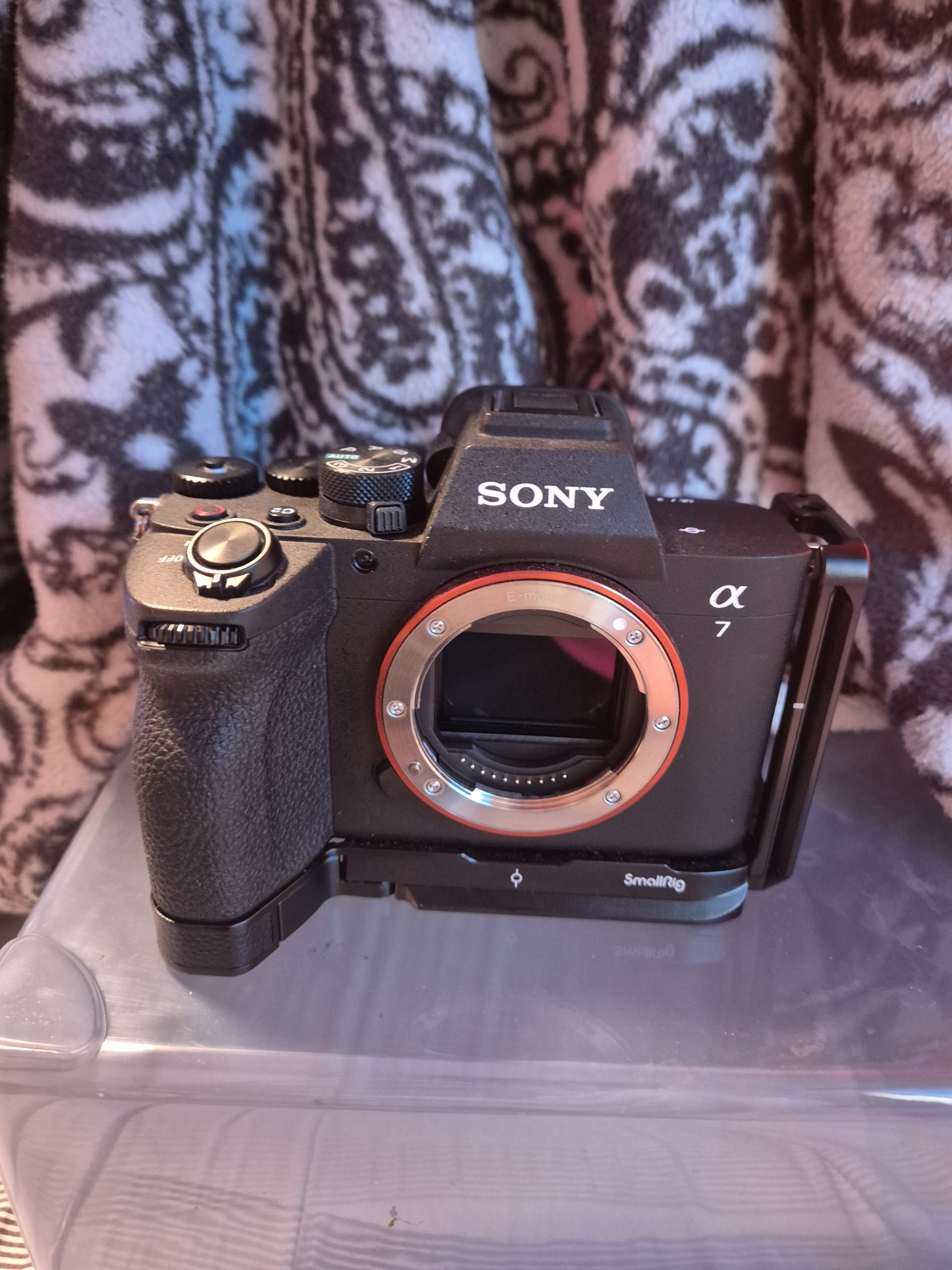
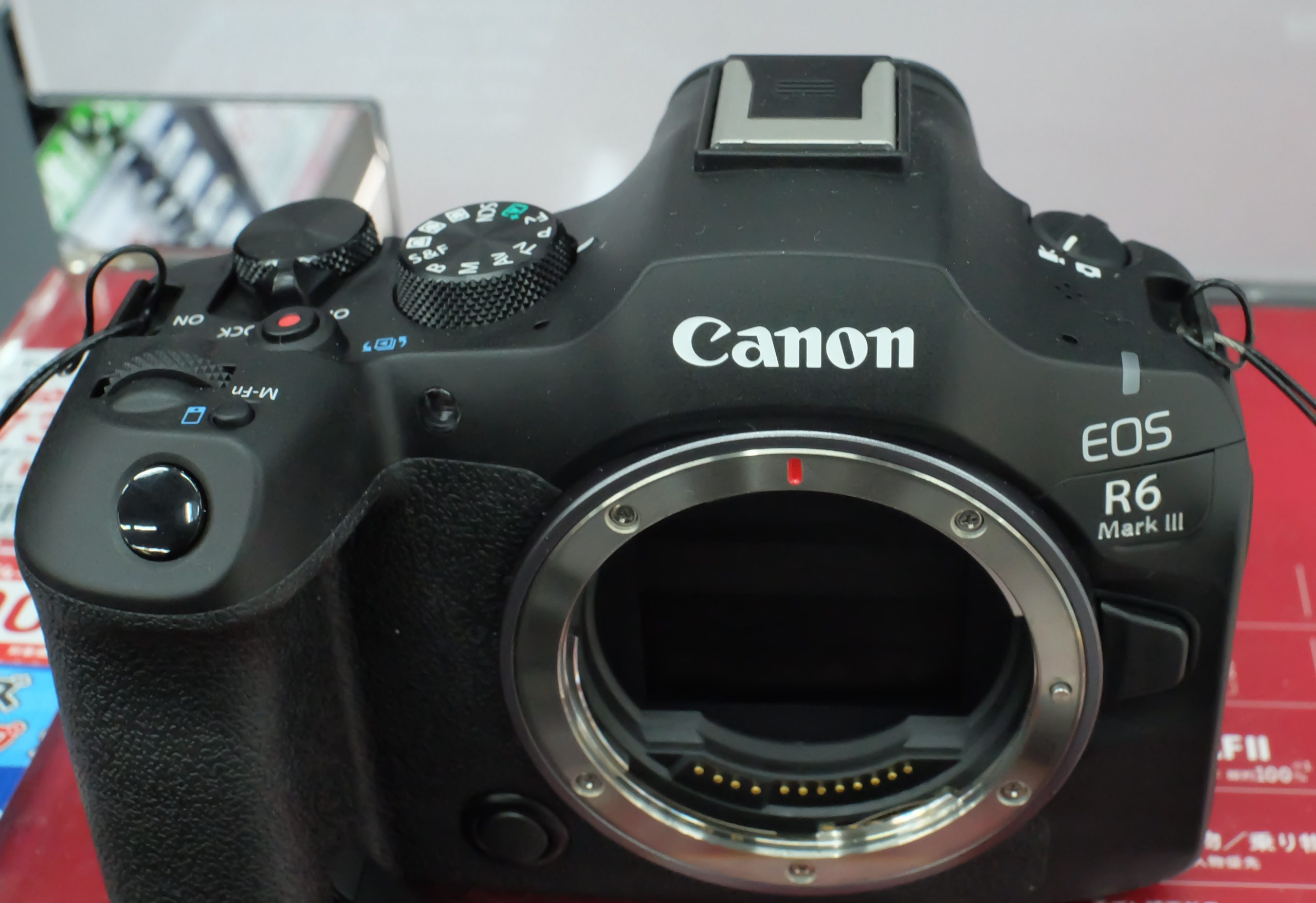
Sony and Canon sell the two best-known full-frame mirrorless systems, and in 2026 their mainstream bodies are the Sony A7 V and the Canon EOS R6 Mark III. This comparison uses the manufacturers’ published specifications and prices to show which system fits your work.
Every number below comes from Sony’s or Canon’s own specification pages, brochures or press releases, all linked at the end. It is not a claimed side-by-side field test, and it does not rank keeper rates, high-ISO noise or autofocus accuracy from files we have not shot. A spec sheet is a map. Run your own trial with the lenses you plan to use before you spend.
Quick decision: A7 V or R6 Mark III?
Start with the lenses you already own. If you have E-mount glass you trust, the A7 V is the default upgrade. If you have RF lenses, stay with the R6 Mark III. For a new system, write a two-lens shopping list for each mount and compare total costs before comparing bodies. As of November 2026, Sony lists the A7 V body at $2,899 and Canon lists the R6 Mark III body at $2,799, with a $2,599 promotional price on Canon’s US store at the time of writing.
If you are starting from zero and budget matters, the lens math usually favors Sony. Sigma and Tamron sell deep autofocus lens catalogs for E-mount, while Sigma’s first Canon RF-mount lenses only began shipping in late 2024. More on that below, because it decides more purchases than any sensor spec.
 Save
Sensors: 33 vs 32.5 megapixels
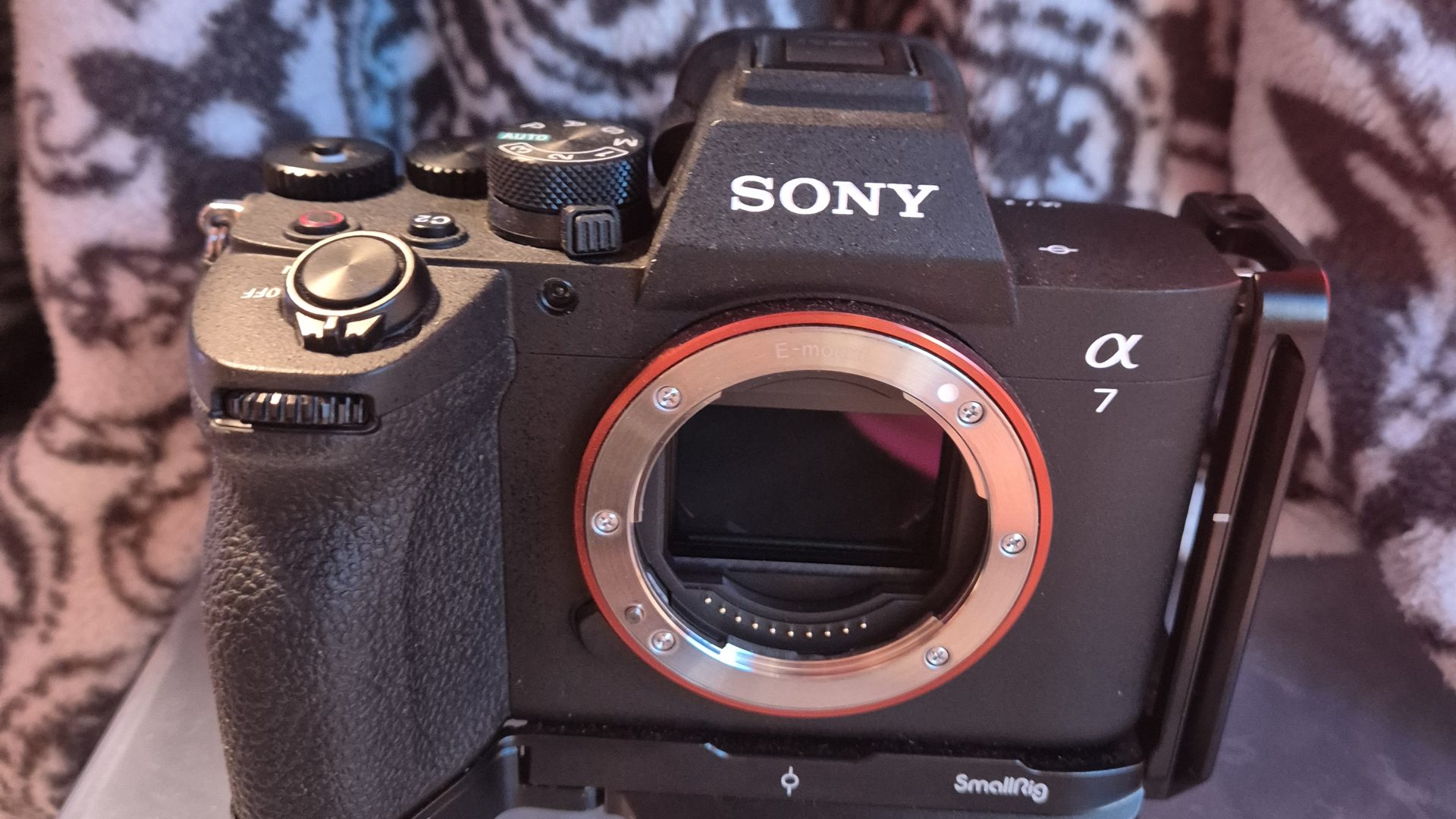
Sony lists the A7 V with a 33-megapixel effective full-frame partially stacked Exmor RS CMOS sensor behind a new BIONZ XR2 processor, and claims up to 16 stops of dynamic range. Canon lists the R6 Mark III with a 32.5-megapixel full-frame CMOS sensor. On output size they are effectively the same camera: 33 vs 32.5 megapixels changes nothing about how large you print or how hard you crop.
The design difference is readout speed. Sony’s partially stacked sensor is built for faster readout, which matters for electronic-shutter distortion and video. Canon’s brochure does not describe the R6 Mark III’s sensor as stacked, yet the Canon still advertises 40 fps electronic bursts. Faster readout on paper does not guarantee cleaner fast-subject frames in your hands, so this is one of the things your rental trial should test with your actual subjects.
Autofocus and burst: 30 fps vs 40 fps
Sony lists 759 phase-detection points on the A7 V, autofocus sensitivity down to -4 EV, up to 60 AF/AE calculations per second, and blackout-free continuous shooting at up to 30 fps with AF/AE tracking, including 14-bit RAW. Its Pre-Capture function can record up to one second before you press the shutter. Sony also claims up to 30 percent improved real-time recognition AF over its predecessor.
Canon lists Dual Pixel CMOS AF II with 100 percent frame coverage, stills AF sensitivity down to EV -6.5 (measured with an f/1.2 lens at the center point), and up to 40 fps with the electronic shutter or 12 fps mechanical, both with AF/AE tracking. Its pre-continuous shooting buffers up to 20 frames before the shutter press, and Canon adds its own footnote: rolling shutter distortion can appear depending on the subject and conditions.
Read the footnotes on both sides. The EV figures are measured under different conditions, and 40 fps is only better than 30 fps if your keeper rate holds at that speed. Neither company’s number tells you how many sharp frames you will bring home with your lens, your light and your distance.
Stabilization: both strong, Canon rates higher
Sony rates the A7 V’s 5-axis in-body stabilization at up to 7.5 stops at the center and 6.5 at the periphery under CIPA 2024 testing. Canon rates the R6 Mark III’s coordinated in-body and in-lens system at up to 8.5 stops at the center and 7.5 at the periphery. Both ratings come from standardized CIPA conditions with specific lenses. They compare the cameras to each other, not to your hands at the end of a long day. Stabilization steadies the camera; it cannot freeze a moving subject, so your shutter speed still does that job.
 Save
Video: different paths to a deliverable
Sony gives the A7 V 4K 60p recording oversampled from 7K in full-frame mode, and 4K 120p in APS-C / Super 35mm mode. Canon gives the R6 Mark III internal 7K RAW Open Gate recording at up to 30p, 7K RAW Light at 60p, 4K 30p oversampled from 7K, and 4K 120p, plus 7K RAW over HDMI. On paper, the Canon is the stronger internal-RAW machine and the Sony’s headline is full-width oversampled 4K 60p. Choose from your delivery specification: the resolution, frame rate and recording format your finished work needs, then check the card and storage costs that mode requires before buying.
Cards, ports and workflow
The A7 V takes one CFexpress Type A / SD UHS-II slot and a second SD UHS-II slot, offers dual USB-C ports and Wi-Fi 6E, and rates around 630 shots per charge with its updated battery management. The R6 Mark III takes one CFexpress Type B slot and one SD UHS-II slot, one USB-C port, and the LP-E6P battery (older LP-E6NH and LP-E6N work with reduced functions; the LP-E6 does not). CFexpress Type A and Type B cards differ in price and reader compatibility, so price the media for the video modes you plan to record, not just the body.
The lens question decides it
Both manufacturers sell a full native lens line. The difference is third-party autofocus support. Tamron maintains a dedicated E-mount lineup page, and Sigma sells a broad E-mount catalog that has grown for years. Sigma’s Canon RF-mount lenses only began launching in November 2024, starting with APS-C primes, with more models following through 2025. The RF third-party catalog is growing, but it is newer and smaller today.
For older DSLR glass, both companies sell their own adapters: Canon’s EF-EOS R adapter for EF lenses and Sony’s LA-EA series for A-mount lenses. Adapting keeps optics usable, though size and autofocus behavior vary by lens. If your bag already holds a mount, that is your loudest spec. Bodies are replaceable; a lens collection is the investment.
Buying checklist before you spend
- Write a two-lens shopping list for each mount and compare total system cost, not body price.
- Check the current firmware on the body you will actually receive, and the update history for the modes you need.
- Price the memory cards and reader for the video modes on your list, not just the cheapest stills mode.
- Rent the body with your lens, or buy with a return window long enough to run a real trial: full sequences, reviewed at your delivery size.
- If you are building skills alongside the gear, our photography courses will move your images further than a 0.5-stop spec difference.
Questions about the A7 V and R6 Mark III
Is the Sony A7 V better than the Canon R6 Mark III?
Neither is universally better. The Sony offers a partially stacked sensor, full-width 4K 60p oversampled from 7K, and a deeper third-party lens market. The Canon offers faster 40 fps bursts, a higher stabilization rating, and internal 7K RAW recording at a lower list price. Your lenses and deliverables decide.
Which one is better for video?
For internal RAW and Open Gate recording, the R6 Mark III lists 7K RAW 30p in-camera. For full-width oversampled 4K 60p, the A7 V lists 7K downsampling without a crop. Both list 4K 120p with reduced sensor area. Pick from the format you deliver, then confirm the card costs.
Can I use my old DSLR lenses?
Usually yes. Canon sells EF-EOS R mount adapters for EF lenses, and Sony sells LA-EA adapters for A-mount lenses. Autofocus behavior and size vary by lens, so test the combinations you own.
Are the burst numbers comparable?
Not directly. Canon’s 40 fps uses the electronic shutter with its own footnotes; Sony’s 30 fps includes AF/AE tracking and 14-bit RAW. Compare keeper rates on your subjects, not headline numbers.
Which has better stabilization?
Canon rates the R6 Mark III higher: up to 8.5 stops at the center versus Sony’s 7.5. Both are CIPA-standard ratings with specific lenses, useful for comparison but not a guarantee of handheld shutter speeds.
What about the A7 IV or the R6 Mark II?
Both remain on sale at lower prices and remain capable cameras. If a used or discounted A7 IV fits your budget, our Sony A7 IV settings guide shows how to set it up for real work.
The verdict
There is no universal winner, and anyone who gives you one without asking about your lenses is selling something. Choose Sony for the mature third-party lens market, the partially stacked sensor and full-width 4K 60p. Choose Canon for faster bursts, the higher stabilization rating and internal 7K RAW at a lower list price. Then run a field trial, because the last step of every spec comparison is a shoot.
For the full mode tables and footnotes, see Sony’s A7 V specifications, Sony’s A7 V launch announcement, Canon’s EOS R6 Mark III brochure and the Canon USA R6 Mark III product page. Recheck them against the firmware on the body you use.
Check current prices and availability for the Sony A7 V at B&H or on Amazon, and the Canon R6 Mark III at B&H or on Amazon.
Related guides
- Canon R5 Mark II vs Sony A1 II: Specs and Tradeoffs
- Fuji X-H2S vs OM-1 Mark II: Which Stacked-Sensor Body Wins in 2026
- Sony A7 IV Settings for Wedding Photography
- Best Camera for Beginner Photographers in 2026
- Panasonic GH5 Used Buyer Guide
Some links on this page are affiliate links. If you shop through them, Shut Your Aperture may earn a commission at no extra cost to you.
Images: CC0, via Wikimedia Commons.