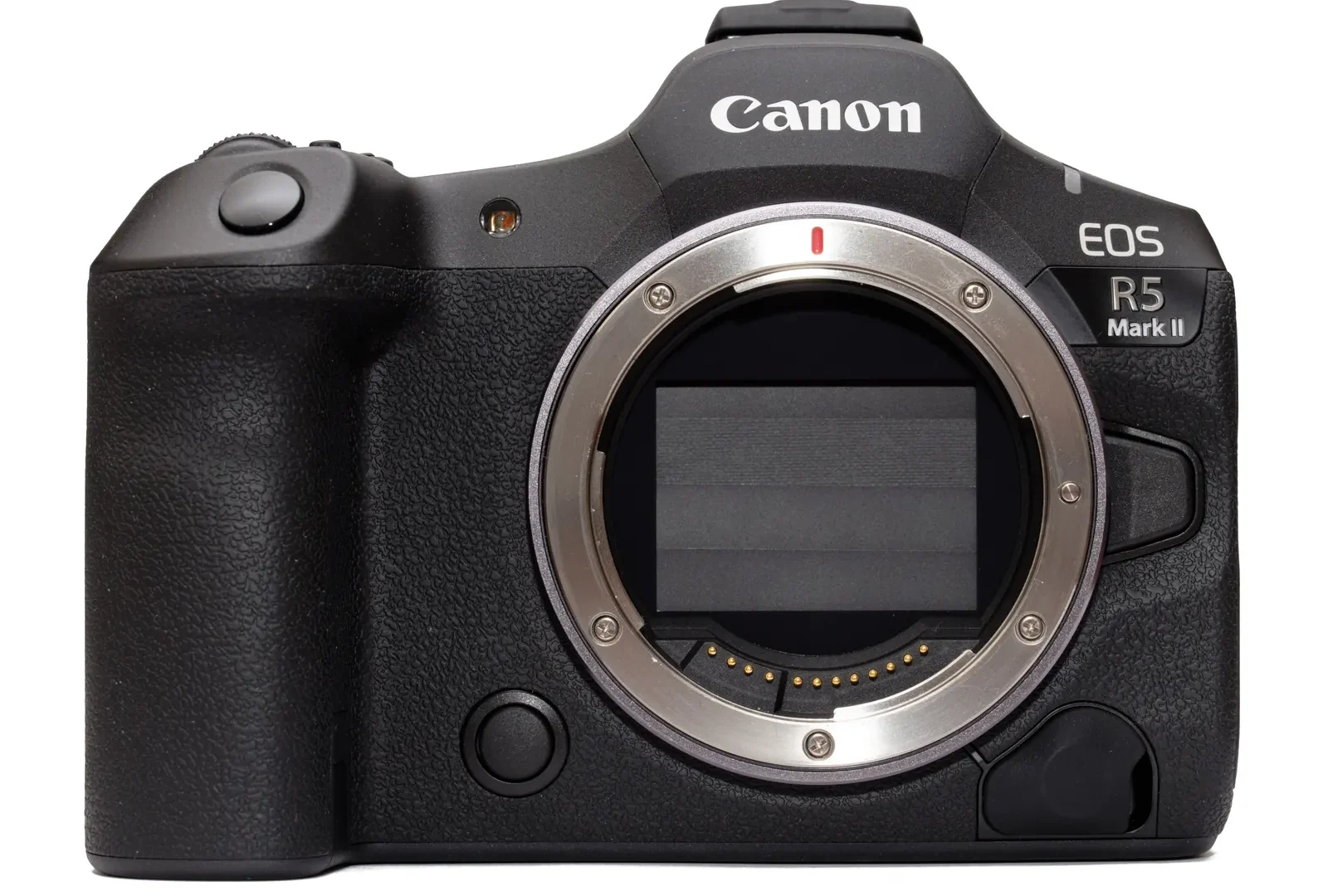
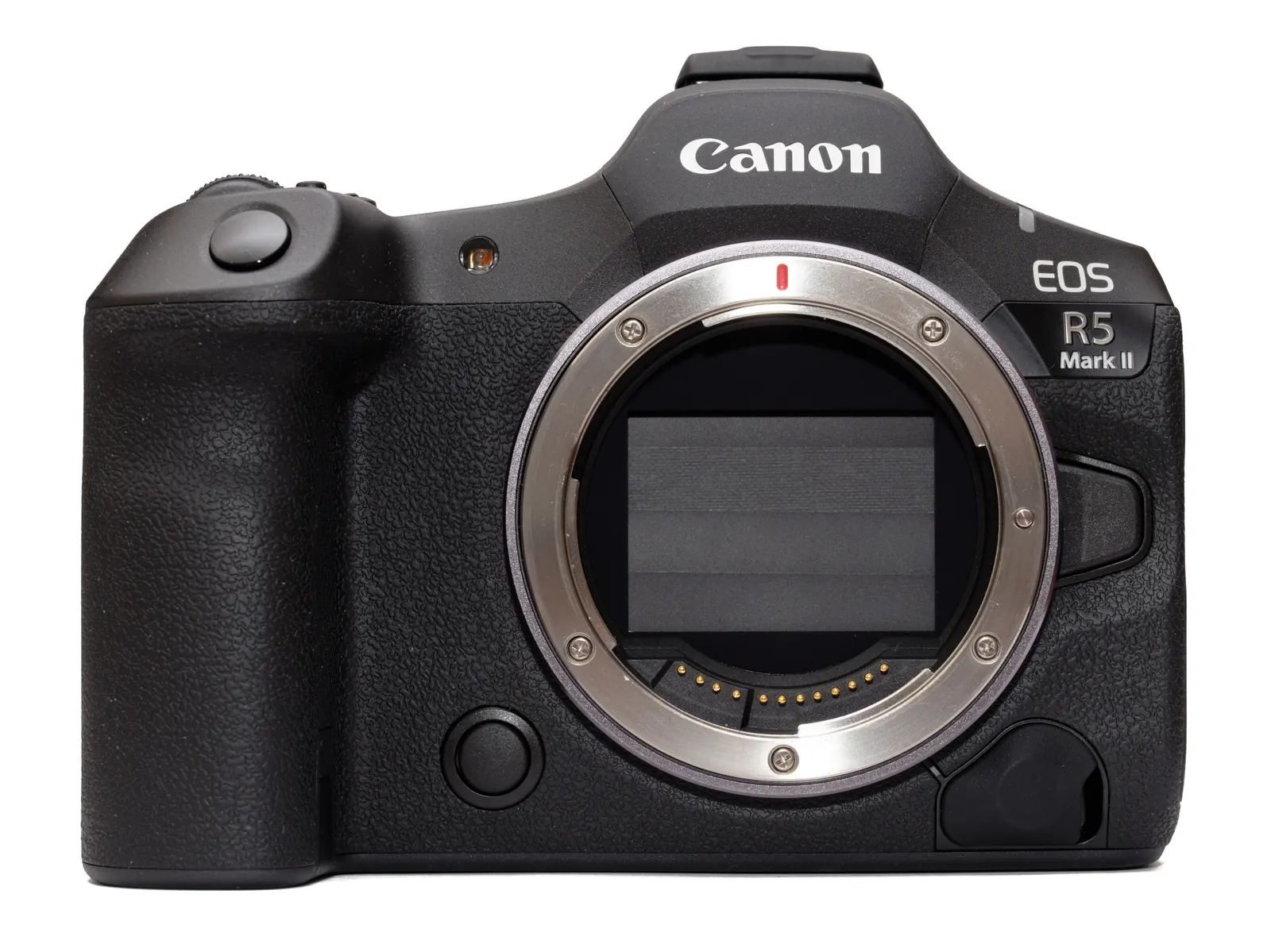
You’re not buying both. That’s the entire point of this comparison. The Canon EOS R5 Mark II and the Sony A1 II are the two flagship full-frame stills/video hybrids built by the two companies that dominate working pro kit, and once you’re at this price tier the wrong choice costs you ten grand by the time the lens collection catches up. So let’s do the math properly — sensor, autofocus, video, build, ecosystem, price — and land on a buy/skip/wait verdict for each working shooter type.
 Save
SaveThe Short Answer
If you primarily shoot stills with occasional video and care about wedding/portrait/landscape work, the Canon R5 Mark II wins on price-to-performance. If you primarily shoot sports, wildlife, news, or pure speed-critical work where you can’t miss the frame, the Sony A1 II wins on raw capability. The Sony costs roughly $2,000 more body-only, which buys you a slightly faster sensor readout, a meaningfully better EVF, and the deepest mirrorless lens library on the market.
Both bodies will outshoot every photographer reading this for years. The question isn’t which is sharper — it’s which fits your ecosystem and your shoot calendar.
Specs at a Glance
| Spec | Canon R5 Mark II | Sony A1 II |
|---|---|---|
| Sensor | 45MP stacked BSI CMOS | 50.1MP stacked BSI CMOS |
| Continuous burst (electronic) | 30 fps | 30 fps |
| Burst (mechanical) | 12 fps | 10 fps |
| Video — max | 8K/60p RAW internal | 8K/30p, 4K/120p |
| Autofocus | Dual Pixel AF II, deep-learning subject ID | AI processing unit, 759 phase points |
| IBIS | Up to 8.5 stops (CIPA) | Up to 8.5 stops (CIPA) |
| EVF | 5.76M-dot, 120fps | 9.44M-dot, 240fps |
| Rear LCD | 3.2″ vari-angle, 2.1M-dot | 3.2″ 4-axis tilt, 2.1M-dot |
| Storage | CFexpress Type B + SD UHS-II | Dual CFexpress Type A / SD UHS-II |
| Shutter (electronic max) | 1/32,000s | 1/32,000s |
| Weight (body) | 746g | 743g |
| Battery (CIPA) | ~630 frames | ~520 frames |
| Body-only price (June 2026) | ~$4,299 | ~$6,499 |
Where to Buy — Dual-Affiliate Picks
| Best for | Pick | B&H | Amazon | Why |
|---|---|---|---|---|
| Hybrid stills + video pros | Canon EOS R5 Mark II — $4,299 | Check at B&H | Check at Amazon | 8K/60p RAW internal, 45MP, $2k cheaper than the Sony, RF lens lineup at maturity |
| Pure speed — sports/wildlife/news | Sony A1 Mark II — $6,499 | Check at B&H | Check at Amazon | 50MP, 9.44M-dot EVF, AI autofocus unit, deepest E-mount lens library |
| Budget alternative — Canon side | Canon EOS R6 Mark II — $2,299 | Check at B&H | Check at Amazon | 24MP, 40fps, fantastic AF, half the price — most pros don’t actually need 45MP |
| Budget alternative — Sony side | Sony A7R V — $3,499 | Check at B&H | Check at Amazon | 61MP, same AI AF chip as the A1 II, $3k less — landscape and studio shooters skip the A1 II |
Sensor — 45MP vs 50MP
The Sony hits 50.1MP, the Canon 45MP. On paper Sony wins. In practice the gap is closer to a print-size argument than a quality argument — both sensors out-resolve 99% of lenses people pair with them, and at base ISO both produce files you can punch a 30×40 print from without breaking a sweat. The Canon’s lower pixel count buys it slightly cleaner high-ISO performance (you’ll see roughly a third-stop advantage at ISO 12,800+), and slightly faster file write times in burst.
Stacked-sensor readout — the trait that makes both these bodies special — is essentially identical: 1/250s to 1/300s rolling-shutter window, which means you can shoot under LED/scoreboard lighting at 1/8000 without banding and you can use the silent electronic shutter for sports without the warped-bat distortion that ruined the R5 mark one for baseball shooters.
Dynamic range: both bodies sit at roughly 14.5 stops at ISO 100 measured. Real-world: you can recover three stops of shadow without color drift, two stops of highlight on either. The aperture choices you make matter more for the final file quality than the sensor difference here.
Autofocus — Where the Money Actually Goes
This is the real reason to buy either body. Both Canon and Sony have crossed the line where you don’t think about focus anymore — the camera locks the right eye, holds it through occlusion, and tracks it across the frame at 30fps. The differences are at the edges.
Sony’s A1 II adds a dedicated AI processing unit (first introduced in the A7R V) that improves human pose recognition, animal-skeleton tracking, and the system’s ability to identify a subject from compositional clues even when the eye isn’t visible. Birders and wildlife shooters report measurable hit-rate improvements over the original A1 — roughly 5-10% more keepers on chaotic action sequences.
Canon’s R5 II uses Dual Pixel AF II with deep-learning subject ID — humans, animals, vehicles, eyes — and added a register-people mode that locks priority to a named subject. For wedding shooters this is a game-changer: tag the bride, and the camera prioritizes her face over every other face in the frame for the rest of the day. Sony has no equivalent.
For sports, Sony has the edge. For weddings, Canon has the edge. For everything in between, they’re a wash.
Video — Canon Wins on Spec, Sony Wins on Workflow
Canon R5 Mark II shoots 8K/60p RAW internally to CFexpress. That’s the headline. It also shoots 4K/120p, has Canon Log 2 / Log 3, and waveforms. Heat management is genuinely improved over the original R5 — you can shoot 8K/30p for over an hour without thermal cut on a cooled body.
Sony A1 II tops out at 8K/30p and 4K/120p. Lower spec on paper. In practice Sony’s S-Log3 to S-Cinetone pipeline is cleaner and matches their FX-series cinema bodies (FX3, FX6, FX9) frame-for-frame, which matters if you mix camera bodies on a shoot. Sony also has a deeper third-party monitor/recorder ecosystem (Atomos, Ninja V) that just works.
If you’re a stills shooter who shoots occasional 4K — both are overkill, pick on AF and lenses. If you’re a hybrid pro doing real video work — Canon’s spec advantage matters. If you cut against an FX3 second body — Sony wins.
EVF and Rear Screen
Sony’s 9.44M-dot, 240fps EVF is the best in any camera. Period. Canon’s 5.76M-dot, 120fps EVF is excellent but not in the same league. If you spend long sessions glued to the finder — birding, sports — the Sony reduces eye fatigue measurably.
Rear screen goes the other way. Canon’s fully articulating vari-angle screen is more useful for video and vlogging. Sony’s 4-axis tilt screen is better for stills (especially vertical shooting on a tripod) but worse for video selfie shooting. Pick the screen by your actual workflow.
Build, Battery, and Storage
Both weigh within 3 grams of each other (746g Canon, 743g Sony). Both are weather-sealed magnesium alloy. Canon’s grip is deeper and works better with large primes and long telephotos; Sony’s grip is more compact and works better with smaller lenses. Hand fit is genuinely personal — try both at a store before you spend $4-6k.
Battery: Canon’s LP-E6P gets ~630 CIPA frames per charge, Sony’s NP-FZ100 gets ~520. Real-world for stills you’ll get 1500-2500 on either; for 8K video you’ll burn batteries in under an hour on both.
Storage: Canon uses CFexpress Type B (faster, larger, used by RED and ARRI) plus SD UHS-II. Sony uses CFexpress Type A (proprietary, more expensive per GB) plus SD UHS-II. If you already own Type B cards from another body, Canon saves you a card investment. If you’re starting fresh, the Sony Type A workflow is genuinely fast — it just costs more per terabyte.
Lens Ecosystem — Sony’s Strongest Argument
Canon’s RF mount is now mature for first-party glass — the RF 24-70 f/2.8, RF 70-200 f/2.8, RF 50 f/1.2 L, RF 85 f/1.2 L are best-in-class. Third-party is still catching up: Sigma and Tamron have committed to RF for 2026, but the lineup is thinner.
Sony E-mount has been open to third parties for years. The lens library — Sony G Master, Sigma Art, Tamron, Zeiss Loxia, Voigtlander — is the deepest in mirrorless. If you want options at every price tier, Sony wins easily. If you want best-in-class first-party glass and don’t mind paying for it, Canon is just as good.
One quiet point: if you already own Canon EF or Sony A-mount lenses from a DSLR era, adapters work well on both, but Canon’s EF-to-RF adapter is the better-engineered of the two. EF glass on an R5 II AF tests indistinguishably from native RF.
Where Each Falls Short
Canon R5 II downsides: 45MP can crush slow SD cards in burst — invest in proper CFexpress Type B (180+ MB/s) or you’ll choke at 30fps. The EVF refresh isn’t as good as Sony’s. Canon’s video color is gorgeous but the codec choices (especially the heavier RAW options) demand fast workstations to edit. RF lens prices are still high compared to Sony equivalents.
Sony A1 II downsides: $6,499 body-only is a lot of money for a 20% performance bump over a Sony A7R V at $3,499. The CFexpress Type A storage costs more per gigabyte than anyone else’s CFexpress. Menu system is improving but still denser than Canon’s. The 9.44M EVF eats battery noticeably faster than Canon’s 5.76M.
Gear Budget Math
The real cost isn’t the body. It’s the system. Three working zooms (24-70, 70-200, 16-35) plus one or two fast primes (50 f/1.2, 85 f/1.2 or 35 f/1.4) lands you at:
- Canon R5 II + RF 24-70 f/2.8 + RF 70-200 f/2.8 + RF 50 f/1.2: ~$11,500
- Sony A1 II + 24-70 GM II + 70-200 GM II + 50 f/1.2 GM: ~$13,500
Canon saves you ~$2,000 on the full kit. That’s a backup body, or a third zoom, or a year’s worth of memory cards. Multiply across an upgrade cycle and it matters.
Buy / Skip / Wait Verdict by Shooter Type
Wedding/portrait pro: Buy — Canon R5 Mark II. Register-people AF, vari-angle screen, Canon skin tones, deeper grip with f/1.2 primes. Saves you $2k vs Sony.
Sports/wildlife pro: Buy — Sony A1 Mark II. Best EVF in the industry, AI subject-tracking edge, FE 200-600 G + 600 f/4 GM lens options Canon doesn’t match yet.
Landscape/travel shooter: Skip — buy the Sony A7R V or Canon R5 (mark one used). Both these flagships are overkill for genres that don’t need 30fps or 8K. Save $2-4k.
Hybrid video/stills: Buy — Canon R5 Mark II. 8K/60p RAW internal is genuinely useful and nobody else has it at this price.
Current A1 owner: Skip — wait. The A1 II is a refinement, not a leap. Your A1 will still outperform 90% of working pros for three more years.
Current R5 mark one owner: Buy — R5 Mark II. The stacked sensor, doubled buffer, and improved heat handling are genuine upgrades over the original. Trade-in offers from B&H and KEH are strong right now.
High-ISO performance and shutter-speed control are where both bodies show their stacked-sensor pedigree — but neither will fix a focus miss or save you from the wrong glass. Pick the body that fits your shoot calendar, the ecosystem you already own, and the genre you actually shoot. Then stop reading comparison posts and go shoot.
Last updated June 2026. Prices verified at major US retailers.