What Actually Makes a Camera “Underwater Ready”
Three words get thrown around interchangeably by camera retailers and they mean completely different things: waterproof, rugged, and housing-compatible. Before you drop a dollar on any underwater camera system, you need to understand what you’re actually buying.
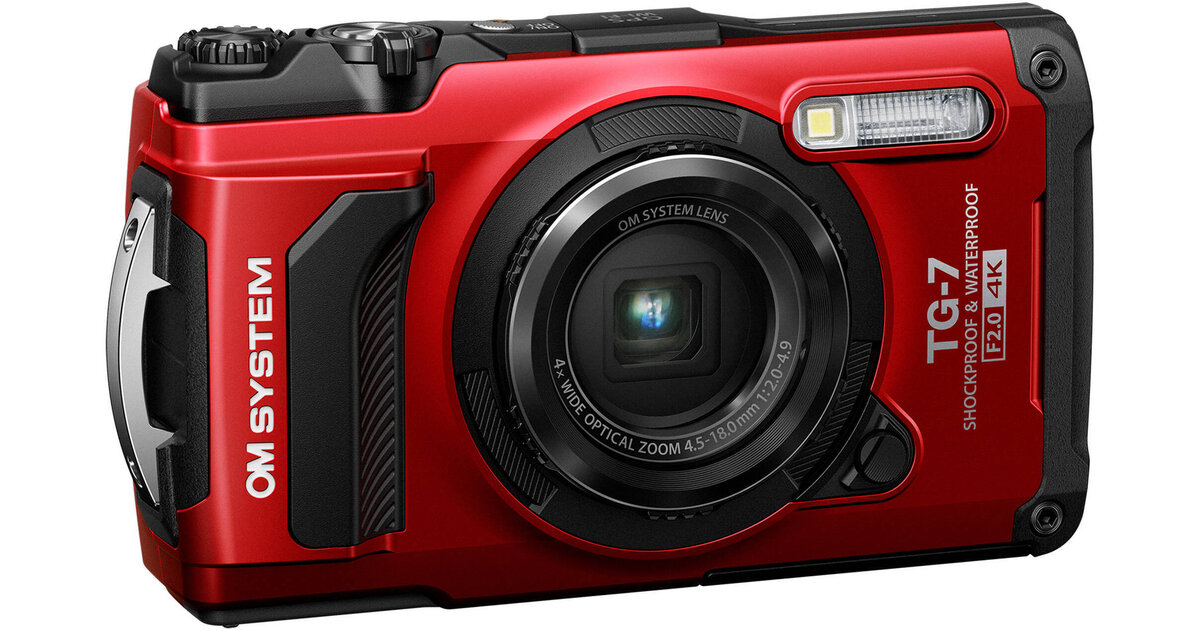
Waterproof (rugged compacts): These are sealed, all-in-one cameras — the OM System TG-7, Ricoh WG-80, Fujifilm XP140 — that go underwater without any extra gear. The TG-7 is rated to 15m (about 50 ft) straight out of the box. They’re real cameras, not toys, but they do have hard limits. Deeper than 50 ft, you need a housing even for these.
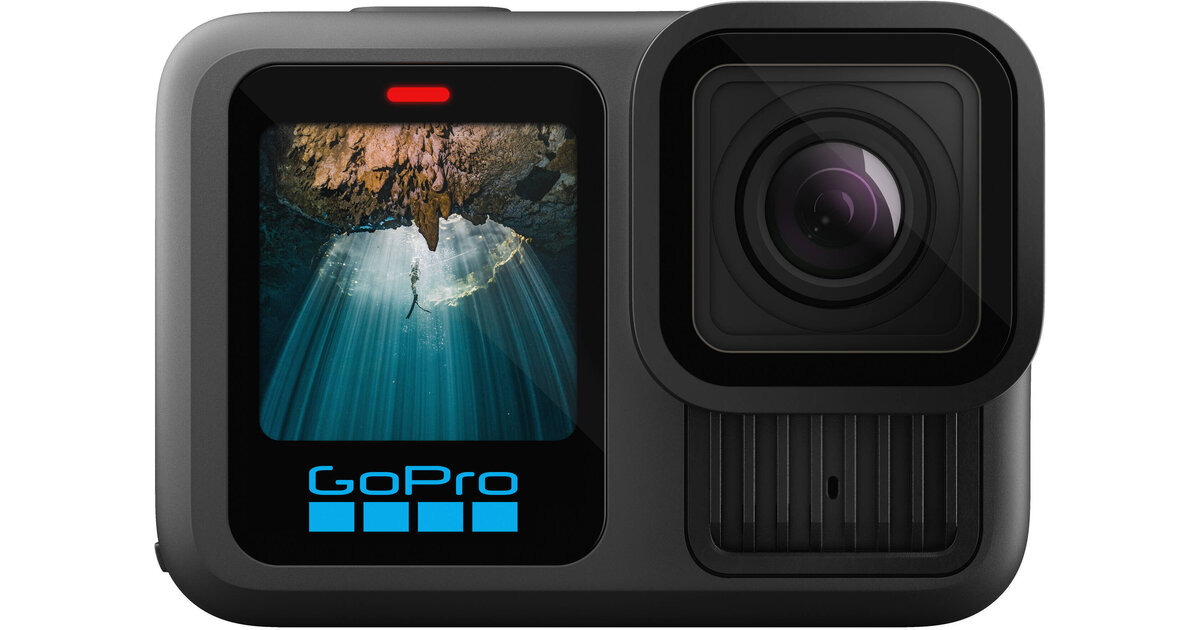
Action cams: GoPro, DJI, Insta360. The Hero 13 Black goes to 33 ft without a housing. They shoot incredible video, fit in a BC pocket, and cost a fraction of what a mirrorless rig runs. The trade-off is a small sensor, no RAW stills, and limited manual control. For video divers, they’re lethal. For serious still photographers, they’re a sidearm.
Mirrorless + housing: This is where professional underwater photography lives. You’re pairing a full-frame or crop-sensor mirrorless body — Sony, Nikon, Canon — with a purpose-built housing from Ikelite, Nauticam, Sea Frogs, or Aquatech. These rigs are expensive, heavy, and require real maintenance discipline. They’re also the only way to get magazine-quality, print-worthy underwater stills. If you’re shooting macro on a reef at 80 ft, there’s no substitute.
The choice isn’t really about budget — it’s about what you dive and why you shoot. A snorkeler documenting a reef in Belize has different needs than a technical diver working a wreck at 130 ft. Get that clear before reading anything else on this page. The rest will make a lot more sense. And if you’re still figuring out the fundamentals, our complete camera buyer guide is a good place to start.
The Three Categories of Underwater Cameras
Rugged Compacts: No Housing Needed (to a Point)
Rugged compacts are the entry point for recreational diving and snorkeling photography. They’re sealed at the factory, rated to 15–25m depending on the model, and small enough to tuck into a BCD pocket. The OM System TG-7 is the gold standard here — it shoots 4K video, has five dedicated underwater scene modes, and can pair with an optional PT-059 housing to reach 45m (about 150 ft) for scuba work. It also has dual-pane anti-fog glass on the lens, which matters more than most buyers realize when you’re breathing warm air into a cold housing.
The Ricoh WG-80 ($330) is the budget compact pick — 14m rated, 16MP, and essentially indestructible. It won’t win any image quality contests, but it’ll survive every drop and splash you can throw at it. The Fujifilm XP140 goes deeper at 25m and adds Wi-Fi for quick transfers, but its image processor is aging. For most recreational divers who want a capable point-and-shoot that goes in the water without drama, the TG-7 is the easy recommendation.
Action Cams: The Diver’s Video Machine
GoPro and DJI have made underwater video accessible to everyone. The GoPro Hero 13 Black shoots 5.3K at 60fps and 4K at 120fps — numbers that beat many consumer mirrorless cameras for video specs. Waterproof to 33 ft as-is, and to 200 ft with the standard housing. The Insta360 X4 adds a completely different dimension: 8K 360° capture that lets you reframe the shot in post, which means you never miss the whale shark that swam behind you. DJI’s Osmo Action 5 Pro brings a 1/1.3″ sensor (massive for an action cam), 20m native waterproofing, and built-in dive data logging — depth, temperature, duration — baked into metadata.
The limitation with action cams underwater is the same as topside: small sensors struggle in the low-light conditions you’ll hit past 40 ft, and color science is tuned for video, not still photography. They’re also wide-angle locked — you’re not doing intimate macro work with a GoPro. But if you’re a dive videographer, a freediver, or someone who wants to capture the dive experience rather than pixel-peep macro details, an action cam paired with a small video light is genuinely unbeatable value.
Mirrorless + Housing: Where Serious Work Happens
A mirrorless body in a quality housing changes everything. You get a full-size sensor, RAW files, interchangeable lenses, manual control over every exposure variable, and the ability to pair external strobes for color-accurate lighting at depth. The Sony A7R V’s 61-megapixel full-frame sensor underwater means you can crop aggressively on a mantis shrimp and still have a printable file. The Nikon Z8’s autofocus system — 493 points covering 90% of the frame — tracks fish in murky water in ways that no compact or action cam can approach.
The cost of entry is real. A mirrorless body, quality housing, dome port, strobe arms, and a pair of strobes will run $5,000–$12,000 depending on your choices. These rigs are also maintenance-intensive: o-rings need to be inspected, lubricated, and replaced; housings need vacuum-tested before every dive; ports need anti-fog protection. If you’re not willing to put in that discipline, the rig will flood eventually. But for photographers who are serious about underwater image quality — and who understand that aperture control and shutter speed management matter as much underwater as topside — there’s no substitute.
Underwater Camera Comparison Table
| Model | Type | Max Depth (native) | Sensor | Video | Price Tier | Best For |
|---|---|---|---|---|---|---|
| OM System TG-7 | Rugged Compact | 15m / 50 ft (45m w/ housing) | 1/2.33″ CMOS | 4K/30p, C4K | $ (~$400) | Snorkeling, rec diving, travel |
| Ricoh WG-80 | Rugged Compact | 14m / 45 ft | 1/2.3″ CMOS, 16MP | 1080p/30p | $ (~$330) | Budget waterproof, casual shooting |
| Fujifilm XP140 | Rugged Compact | 25m / 82 ft | 1/2.3″ CMOS, 16.4MP | Full HD/60p | $ (~$300) | Deeper snorkel, Wi-Fi sharing |
| GoPro Hero 13 Black | Action Cam | 10m / 33 ft (60m w/ housing) | 1/1.9″ CMOS | 5.3K/60p, 4K/120p | $$ (~$400) | Dive video, freediving, travel |
| DJI Osmo Action 5 Pro | Action Cam | 20m / 66 ft (60m w/ housing) | 1/1.3″ CMOS, 40MP | 4K/120p, 240fps (1080p) | $$ (~$350) | Low-light dive video, long dives |
| Insta360 X4 | Action Cam (360°) | 10m / 33 ft (50m w/ dive case) | Dual 1/2″ CMOS | 8K/30p 360°, 4K single-lens | $$ (~$500) | 360° diving, immersive video |
| Sony A7R V + Ikelite Housing | Mirrorless Rig | 60m / 200 ft (housing rated) | Full-frame, 61MP | 8K/24p, 4K/60p | $$$$ (~$6,500+ full rig) | Pro stills, macro, wide-angle |
| Nikon Z8 + Nauticam NA-Z8 | Mirrorless Rig | 100m / 330 ft (housing rated) | Full-frame, 45.7MP | 8K/60p RAW, 4K/120p | $$$$ (~$8,500+ full rig) | Pro all-rounder, wildlife, deep |
| Sony A7 IV + Sea Frogs Housing | Mirrorless Rig | 40m / 130 ft (housing rated) | Full-frame, 33MP | 4K/60p, 10-bit | $$$ (~$3,500 rig) | Entry-level mirrorless setup |
| Canon EOS R5 + Nauticam Housing | Mirrorless Rig | 100m / 330 ft (housing rated) | Full-frame, 45MP | 8K/30p RAW, 4K/120p | $$$$ (~$8,000+ full rig) | High-res stills + cinema video |
Top Picks: Deep Dive on the Cameras Worth Buying
OM System TG-7 — Best Dedicated Rugged Compact
The TG-7 is the camera I hand to friends who want to shoot their first dive trip without spending $3,000. Waterproof to 15m straight out of the box, and it has five underwater scene modes baked in — Underwater Snapshot, Underwater Wide, Underwater Macro, Underwater Microscope, and Underwater HDR. Each one is tuned for a specific shooting situation rather than leaving you guessing at manual settings while your dive buddy disappears around a coral head. See current pricing at B&H Photo.
The 4K video is legitimate — C4K at 30fps with three white balance presets (Shallow, Mid-Range, Deep) that actually work. Anti-fog dual-pane lens glass is not a gimmick; condensation on the front element is a real problem in tropical waters when your camera is cold from air-conditioning. The macro capability is exceptional for a compact — the Digital Microscope mode can focus at 1cm, which means interesting close-up work on coral polyps and nudibranchs that most action cams can’t touch.
With the optional PT-059 underwater housing (~$350), the TG-7 becomes a legitimate scuba camera rated to 45m. That covers most recreational diving and a lot of technical dive profiles. The housing adds bulk and weight, but the image quality difference between the TG-7 and a bare action cam at depth is real — you get actual RAW-ish processing, better low-light behavior from the BSI CMOS sensor, and full manual control. The total kit — camera plus housing — comes in under $800, which makes it the best-value underwater rig on this list.
The honest limitation: this is a 1/2.33″ sensor. In bright, shallow water it performs well above its class. At 80 ft in poor visibility, you’re going to see noise and color issues that a larger sensor simply doesn’t produce. The TG-7 is not trying to be a pro camera. It’s trying to be the best rugged compact ever built, and it largely succeeds.
GoPro Hero 13 Black — Best Action Cam for Diving
GoPro’s Hero 13 Black is the action cam that set the standard everyone else chases. Native waterproofing to 33 ft (10m) without any housing, and with the standard GoPro underwater housing the rating jumps to 60m (200 ft). The video specs are genuinely impressive: 5.3K at 60fps, 4K at 120fps, and a new burst slow-motion mode that captures 5.3K at 120fps for up to 15 seconds. On a single dive, that’s enough firepower to capture every critical moment from a shark pass to a cleaning station interaction. Shop the GoPro Hero 13 Black at B&H Photo.
The Hero 13 adds 10-bit G-Log and HLG color profiles for the first time, which matters for color grading underwater footage. Previously, GoPro underwater video was flat and difficult to grade without banding artifacts. The log profiles give you actual latitude to work with in post, especially useful when you’re correcting for the blue-green cast that dominates ambient light below 30 ft. The new 1900 mAh Enduro battery buys you about 1.5 hours at 5.3K/30p — enough for two standard recreational dives if you’re not recording continuously.
The GoPro’s 157-degree field of view with the UltraView lens mod is exceptional for reef overviews, shipwreck penetrations, and freediving footage where you want environmental context. For action photography — turtles, sharks, rays in motion — the 120fps at 4K gives you slow-motion capability that mirrorless cameras struggle to match. The limitation is that this is still a small sensor, and below 40 ft in ambient light, you’ll be shooting in essentially blue monochrome unless you’ve got a video light or red filter on the front.
For divers who want great video without the complexity of a housing rig, the Hero 13 is the honest pick. It pairs naturally with a small 1,000-lumen video light on an arm bracket — that combination alone transforms what’s possible in terms of color accuracy at depth. Mount it to your mask strap, clip it to your BCD D-ring, or hand it to your dive buddy. It’s nearly impossible to operate wrong.
Sony A7R V + Ikelite Housing — Best Mirrorless Rig Under $7K
The Sony A7R V is underwater photography’s current sweet spot: 61 megapixels of full-frame resolution, 8K/24p and 4K/60p video, 8 stops of in-body image stabilization, and an AI-powered autofocus system that actually finds fish eyes in murky water. That IBIS system is genuinely useful for video — shooting handheld macro at 90mm underwater while maintaining stability is something that previously required a gimbal setup. See the Sony A7R V at B&H Photo.
The Ikelite 200DL housing for the A7R V is one of the most accessible mirrorless housings on the market at around $2,095. It’s constructed from a polycarbonate blend — lighter than aluminum, which means it floats positive in the water without counterweights — and depth-rated to 60m (200 ft), which covers recreational and most technical diving. Ikelite’s open-groove o-ring design is simple and proven; it’s easier to inspect and maintain than dual o-ring systems. The clear polycarbonate back lets you see your camera’s indicator lights during a dive, which sounds like a small thing until you’re at 80 ft and wonder if your battery is dying. Browse Ikelite housings at B&H Photo.
The A7R V’s 61MP sensor underwater means you’re not cropping in post and losing resolution — you’re cropping and still having a usable print file. On a mantis shrimp macro shot at 4:1, that matters enormously. The AI autofocus is also the best I’ve used underwater for tracking small, fast-moving subjects. Fish that the previous generation would lose on a recompose, the A7R V sticks with. The 10fps burst rate is enough for strobe-lit photography, where you’re limited by strobe recycle time anyway.
The full rig — body ($3,500), Ikelite housing ($2,095), dome port, tray, arms, and two strobes — runs $6,500–$7,500 depending on the strobes you choose. That’s real money, but it’s also a professional-grade tool that will produce images you can sell. If you’re shooting macro at this level, pair the housing with a quality strobe setup; the Sea & Sea YS-D3 strobes are a natural match for this rig.
Nikon Z8 + Nauticam NA-Z8 — Pro Tier
If the A7R V is the best mirrorless rig under $7K, the Nikon Z8 in a Nauticam NA-Z8 housing is what you buy when budget stops being the constraint. The Z8 is essentially a Z9 in a 30% smaller body — identical 45.7MP sensor, same video codec support (8K/60p ProRes RAW, 4K/120p), and the same 493-point autofocus system that covers 90% of the frame. Underwater, that AF coverage matters more than almost any other spec — subjects at the edge of the frame get tracked cleanly, not lost to hunting.
The Nauticam NA-Z8 housing is the benchmark against which every other mirrorless housing is measured. Built from anodized aluminum, depth-rated to 100m (330 ft), with ergonomics designed around one-handed operation so your other hand can manage your buoyancy. The vacuum check and leak detection system is temperature-compensated — no false alarms when the camera heats up during a long dive. Nauticam’s N120 port system accommodates essentially every relevant underwater lens, from ultra-wide 8mm fisheye to 105mm macro. It also includes built-in fiber optic bulkheads for strobe triggering.
The honest trade-off with the Z8 vs. the Sony A7R V underwater is autofocus philosophy. The Z8’s tracking in murky water with fast-moving fish in the AF-C 3D mode is arguably the best in the industry. The Sony’s AI processor has a slight edge on identifying small subjects like fish eyes in cluttered backgrounds. For wide-angle reef photography and anything involving tracking, the Z8 wins. For detail-dense macro in clear water, the A7R V is arguably better. Neither is a bad choice if price is not the deciding factor.
Total rig cost is real: Z8 body (~$4,000), Nauticam housing (~$3,200), dome port, extensions, tray, arms, two strobes — you’re looking at $9,000–$11,000 fully configured. This is not a casual purchase. But if you’re doing liveaboard trips to Komodo, the Red Sea, or Cocos Island, you want this rig. It will never be the limiting factor in your photography.
Insta360 X4 — Best 360° Camera for Diving
The Insta360 X4 is the only camera on this list that solves a problem no other camera even addresses: the shot you missed because it was behind you. With 8K/30p 360° capture and AquaVision 2.0 auto color correction in the Insta360 app, you can reframe any moment from any angle after the dive. The dive that produces a whale shark approach from behind, a hammerhead circle, or a massive school of barracuda wrapping around your group — the X4 gets it all. No other camera does that.
Native waterproofing is 10m (33 ft), and the Invisible Dive Case ($$$) extends that to 50m (164 ft) while remaining invisible in 360° footage thanks to an optical dome design that compensates for underwater light refraction and stitching artifacts — previous dive cases for 360° cameras showed an obvious crescent of the housing material in the lower frame. The X4 requires firmware v1.0.80 or above to run Dive Case Mode, and the dive case control interface drops you to two external buttons for record and mode switching, so getting familiar with the control scheme before your first dive is non-negotiable.
The practical limitations are real. Below 10m in ambient light, color correction is necessary — reds are gone by 15 ft — and the X4’s sensor, while better than its predecessor, still produces noise in the low-light conditions of a deep dive. The dive case acrylic dome can scratch, so it needs a protective sleeve during transport and on the boat. For freediving, shark dives, drift dives, and wide-angle marine life encounters, the X4 is extraordinary. For close-focus macro work or any situation where you need manual exposure control at depth, it’s the wrong tool.
Lighting Underwater: Why Strobes Are Non-Negotiable Past 30 Feet
Water doesn’t just make things wet — it eats light. Specifically, it absorbs the longer wavelengths of the visible spectrum first. Red is effectively gone by 15 ft. Orange disappears around 25 ft. Yellow fades out by 35–45 ft. By 60–70 ft, you’re shooting in a world where only blue and green light remain. That red starfish you saw looking vibrant at 30 ft? Your camera sensor sees it as dark brown-grey. Your brain compensates; your sensor doesn’t.
This is why strobes are the single biggest image quality upgrade available to any underwater photographer. A strobe or video light fires full-spectrum white light at your subject — overcoming the ambient color loss — and illuminates the actual colors that exist at depth. The physics are simple: the light only has to travel from your strobe to the subject (and back to the lens), not down through the entire water column. A subject 3 ft away lit by a strobe at 80 ft looks like a subject 3 ft away lit by a strobe at 10 ft. The depth barely matters for strobe-lit shots.
The two standard approaches are strobes (for stills, paired with fiber optic cables or sync cords from the housing to the strobe) and video lights (constant-on LED panels, ideal for video and for action cams that don’t have strobe triggering). Strobes offer higher power output and freeze motion; video lights offer continuous illumination for video and for judging exposure in real time. Most serious photographers eventually own both. The Sea & Sea YS-D3 strobes are a proven standard pairing for mirrorless rigs — they’re powerful, have wide beam angles, and offer TTL automation. For video, a matched pair of 1,500–3,000 lumen LED lights on articulating arms covers most subjects.
Backscatter — the blown-out specular reflections from suspended particles in the water column — is the primary strobe placement problem you’ll fight. The further your strobes are from your lens port, and the more they’re angled away from the optical axis, the less backscatter you’ll capture. Most divers position their strobe arms wide and slightly behind the dome port. It takes time to get dialed in for different conditions, but once you understand the geometry, it becomes intuitive.
Housing Buyer’s Guide: Ikelite vs. Nauticam vs. Sea Frogs vs. Aquatech
Ikelite is the accessible entry point for mirrorless housings. Polycarbonate construction keeps costs down (~$1,500–$2,500 for most bodies), the open-groove o-ring design is easy to maintain, and Ikelite has housings for almost every current mirrorless body on the market. The trade-off: polycarbonate is positively buoyant (you’ll need counterweights), the vacuum system has been criticized for reliability over time, and the acrylic dome ports will affect corner sharpness with ultra-wide lenses. For photographers entering the mirrorless-housing world, Ikelite is a reasonable first housing.
Nauticam is the pro standard. Aluminum alloy construction, ergonomics designed by divers, full vacuum leak detection system that’s temperature-compensated, and a port system (N120) that’s the most comprehensive in the industry. Nauticam housings run $2,500–$4,500 body-specific, and the port system adds more on top. They’re also neutrally buoyant in the water, which matters enormously for stable video and long dive days. The ergonomics — every critical control reachable without releasing your grip — are noticeably better than competing aluminum systems. For serious underwater photographers, Nauticam is the destination, not the starting point.
Sea Frogs occupies the budget end of the market, typically running $800–$1,400 for a polycarbonate housing. Setup is straightforward, and they make housings for a wide range of camera bodies. The documented weaknesses are real: limited control access compared to Ikelite and Nauticam, vacuum systems that may have depth limitations (check the specific model), and acrylic domes only. For a photographer testing the mirrorless-housing waters before committing to a $3,000+ Nauticam rig, a Sea Frogs housing makes sense. Don’t expect it to behave like a Nauticam at 60m.
Aquatech builds aluminum housings that occupy a slightly different niche — they’re known for surf photography and snorkeling/ocean-sports applications. Their EDGE Pro housings are polycarbonate and rated to 10m, designed for surface work and water sports. Their deeper aluminum models are competitive with Nauticam and offer glass dome options, neutrally buoyant construction, and a solid vacuum system with continuous in-dive monitoring. If you want an aluminum housing that isn’t Nauticam, Aquatica is the serious alternative.
Budget Pick: TG-7 + Small Video Light
If your budget is under $600 and you want a genuinely capable underwater photography setup, here’s the kit: OM System TG-7 (~$400) paired with a compact 1,000-lumen video light (~$60–$150 from a variety of manufacturers). You don’t need a housing for recreational depths — the TG-7 goes to 50 ft sealed. You don’t need strobes — for video and casual stills, a constant video light on a small tray arm does the job. Add a basic underwater accessory kit — wrist lanyard, anti-fog inserts, UV filter — and you’re fully equipped.
That combination covers snorkeling, recreational scuba to 50 ft, and travel photography in tropical water. The video light restores color in the 10–30 ft range where the TG-7 shoots best. The five underwater scene modes handle the exposure decisions so you can focus on composition. This is the honest beginner setup, and it produces results that will surprise people who expect a $400 camera to look like a $400 camera. The TG-7 punches above its weight class when conditions are good.
Mistakes to Avoid
Housing Leaks: The Preventable Disaster
- Inspect the o-ring before every single dive. Remove it completely, wipe the groove with a lint-free cloth, check for nicks, cracks, or debris, apply a thin layer of silicone grease, reseat it carefully. This takes four minutes. A flooded mirrorless body takes several thousand dollars to replace.
- Vacuum test before entry. If your housing has a vacuum system, pull vacuum before you hit the water and verify it holds. A housing that loses vacuum on the surface will flood on descent.
- Never change o-rings on a boat in the wind. Sand, salt spray, and hair are the three things most likely to sit in your o-ring groove and create a flood path. Do o-ring maintenance in a controlled environment.
- Rinse in fresh water after every dive. Salt crystals that dry in the locking mechanisms and control shafts are a maintenance problem that compounds over time.
Flash Backscatter
- Backscatter is caused by strobe light bouncing off particles between your lens and your subject. The fix is angle and distance — position your strobes wide (at least shoulder-width from the port) and angle them slightly outward and forward. The strobe lights the subject; the particles between you and the subject are outside the cone of illumination.
- Shooting in blue water (open ocean with less suspended material) eliminates most backscatter. In surge near the reef, silt gets kicked up and backscatter becomes unavoidable. In those conditions, ambient-light shots often look cleaner than strobe-lit ones.
White Balance at Depth
- Auto white balance underwater produces images with heavy blue-green casts. Set a custom white balance at depth by pointing your camera at a white slate or white dive glove in natural light and capturing that reference. Most cameras allow you to do this even in underwater scene modes.
- Adjust white balance every time you change depth by more than 10 ft. What worked at 40 ft will be noticeably off at 60 ft — the color temperature of ambient light shifts significantly over that range.
- Below 60 ft, ambient-light white balance becomes ineffective because there’s not enough warm light remaining to correct from. Use strobes or video lights below this depth; ambient-only shots will be green-blue no matter what you do in camera or post.
Frequently Asked Questions
Can I use a regular camera underwater in a waterproof bag?
Soft waterproof pouches are rated for surface splashes and very shallow submersion. They don’t give you any real control over the camera, they distort image quality significantly, and they fail without warning. For anything below arm’s reach, use a camera that’s purpose-built for the water or a purpose-built housing. Bag-style solutions are a false economy.
How deep can a GoPro Hero 13 go without a housing?
The GoPro Hero 13 Black is rated to 33 ft (10m) without a housing. With the standard GoPro Protective Housing, the depth rating increases to 60m (200 ft). For recreational scuba diving depths — typically 60–130 ft — you’ll want the standard housing at minimum. For serious depths, third-party housings from Isotta (rated to 100m) and Recsea (rated to 300m) are available.
Do I need strobes if I already have a video light?
For video, a constant-on video light is generally better than a strobe — it gives you even, continuous illumination, lets you see what you’re lighting in real time, and pairs well with the autofocus systems in action cams and mirrorless cameras. For still photography, strobes offer dramatically higher output and freeze motion more effectively than a video light. Many underwater photographers eventually run both: strobes for stills, video lights as focus assists and fill. If you’re just starting out, a single 1,500–2,000 lumen video light is the more versatile first purchase.
What’s the difference between an acrylic and glass dome port?
Acrylic dome ports are standard on most polycarbonate housings (Ikelite, Sea Frogs). They’re lighter, cheaper, and repairable if scratched. Glass dome ports — available on premium aluminum housings like Nauticam and Aquatica — offer significantly better corner sharpness when shooting ultra-wide, are more scratch-resistant (though scratches, when they happen, are permanent), and are optically superior for split-shot over-under photography. For serious wide-angle work, the glass port difference is visible in print. For general photography and video, acrylic is completely adequate.
Is the Insta360 X4 Invisible Dive Case actually invisible?
The Invisible Dive Case is a major improvement over the previous generation for 360° underwater footage — the optical dome design significantly reduces the housing’s visibility in the stitched footage compared to earlier X3 cases. That said, some users report minor edge artifacts and a faint glimmer under certain lighting conditions. More practically, the acrylic dome scratches relatively easily and needs a protective sleeve during transport. Enable Dive Case Mode on the camera (requires firmware v1.0.80+) and use AquaVision 2.0 in post for the best results.