Best Photography Spots Near Haneda Airport (HND): Layover Guide
Updated
~12 min read · 2026-05-24
For a longer stay in the city, continue with our Tokyo photography spots guide. Keep your airport return time separate from the time you spend shooting.
Haneda Airport (HND) is Tokyo’s primary domestic and growing international gateway, one of the world’s most on-time airports, with three dedicated observation decks open to the public and the Keihinjima Tsubasa Park under the approach path. This is the layover photographer’s field guide to Tokyo: seven plane-spotting and architectural locations within 30 minutes of the terminals, five regional photo subjects within an hour, layover length recommendations from 2 hours to 8+, gear that earns its carry-on space, and the photography law that determines what you can actually shoot at the airport itself.
 Save
SaveWhy Tokyo airport is a photographer's launchpad
Haneda is the rare major international airport that has fully embraced aviation photography as a public amenity: three official observation decks across three terminals, all free to access, with Terminal 3 open 24 hours and Terminal 1 offering views toward Mount Fuji on clear winter days. The airport sits in Tokyo Bay, 15 minutes from Shinagawa by Keikyu Line and 30 minutes from Tokyo Station by Tokyo Monorail — fast enough that a 4-hour layover delivers you to Shibuya or Asakusa with time to shoot. For aviation photography specifically, the T1 and T2 observation decks are the working photographer’s tools: clean glass, low fence, excellent angles on JAL and ANA domestic heavies and the international parade at T3. The Keihinjima Tsubasa Park, 15 minutes by taxi, puts you directly under the approach path to runway 16L/34R with a 200-600mm frame of aircraft against the Tokyo skyline backdrop.
Quick layover map: 7 spots within 30 minutes of HND
- Terminal 1 Observation Deck, 5F — approx 35.5499, 139.7798
- Terminal 2 Sky Deck, 5F and RF — approx 35.5528, 139.7796
- Terminal 3 International Observation Deck, 4F — approx 35.5477, 139.7851
- Haneda Innovation City Sky Deck (HICity) — approx 35.5510, 139.7744
- Tama River Riverbank, Terminal 3 South — approx 35.5415, 139.7860
- Tenkubashi Station Viewing Deck, Zone E — approx 35.5405, 139.7740
- Keihinjima Tsubasa Park (by taxi) — approx 35.5625, 139.8037
Best photography spots within 30 minutes of Haneda Airport
Terminal 1 Observation Deck, 5F
Location: approx 35.5499, 139.7798
The original Haneda observation deck, covering approximately 6,000sqm on the 5th floor of Terminal 1. Benches, binoculars, and direct sightlines to taxiways and the runway used by JAL, StarFlyer, and Skymark. On clear winter days Mount Fuji is visible to the southwest. Open 6:30-22:00. Free access, no ticket required. Best for domestic Japanese carrier traffic and JAL wide-body international movements when airlines share the terminal. A 200-300mm lens fills the frame on aircraft on short final.
Terminal 2 Sky Deck, 5F and RF
Location: approx 35.5528, 139.7796
Terminal 2's most celebrated observation area covers the 5th floor (approx 2,500sqm) and the rooftop RF level. Views directly over runway 16L/34R, used by ANA, SolaseedAir, and AirDo. The T2 deck is considered the best shooting angle at Haneda for aircraft on the runway — ANA A380s, B787s, and B777s in clean liveries against the Tokyo Bay backdrop. The RF rooftop is fully open-air. Open 6:30-22:00. A bar and cafeteria are on the deck level. Tripods are not permitted on the rooftop per hotel and terminal rules.
Terminal 3 International Observation Deck, 4F
Location: approx 35.5477, 139.7851
The international terminal observation terrace is open 24 hours — the only deck at Haneda with overnight access, making it uniquely useful for late-night long-haul international departures from all major carriers. Covers approximately 1,000sqm. Views of runway 16R/34L and international aircraft movements. An aviation specialty store is on the same floor. Bring a fast lens (f/2.8 or wider) for the night photography opportunities; aircraft navigation lights on the wet tarmac produce striking long-exposure results.
Haneda Innovation City Sky Deck (HICity)
Location: approx 35.5510, 139.7744
Haneda Innovation City, the mixed-use development adjacent to Terminal 2, includes an open Sky Deck accessible from street level via Keikyu EX Inn and Hotel Metropolitan Tokyo Haneda. The footbath area on the Sky Deck is a popular plane-spotting point, with views toward the airport. Open even on windy days. Best from 3pm-7pm in south-wind conditions when departures and arrivals pass the deck angle. No tripods; handheld shooting only. Access by 7-minute walk from Terminal 2.
Tama River Riverbank, Terminal 3 South
Location: approx 35.5415, 139.7860
Walk 15 minutes southeast from Terminal 3 Exit on the 1F Entrance Plaza, cross under the Tokyo Monorail tracks, and follow the riverbank 1km southeast to the observation terrace at the Tama River mouth. Views of arrivals on runway 34L and aircraft taxiing to the international terminal. Best light: noon to sunset. No vending machines — bring drinks from the terminal convenience store. 150-250mm for B787s on approach, 300mm for narrow-bodies.
Tenkubashi Station Viewing Deck, Zone E
Location: approx 35.5405, 139.7740
Exit Tenkubashi Station (Keikyu Line and Tokyo Monorail) and walk east to the office complex in Zone E. The roof of this building has an accessible deck via outdoor stairs. Views of aircraft movements to the western ramps and heavy arrivals on runway 22 as they approach the international terminal. Open; no fee. Shops and a footbath facility in the adjacent building. 100-400mm working range.
Keihinjima Tsubasa Park (by taxi)
Location: approx 35.5625, 139.8037
The best plane-spotting location in Tokyo when north winds push runway 05 into service. Located under the approach path at the northern end of the airport, accessible by taxi in approximately 15 minutes from Haneda terminals (budget JPY 1,500-2,500). The park puts you directly under aircraft on short final at 200-300 feet. A 70-300mm lens fills the frame on widebodies. No direct bus; taxi recommended for efficient layover use. Bring cash — return taxis can be scarce.
Best photography spots within 1 hour of Haneda Airport
Shibuya Scramble and Shibuya Sky
Location: 35.6580, 139.7016
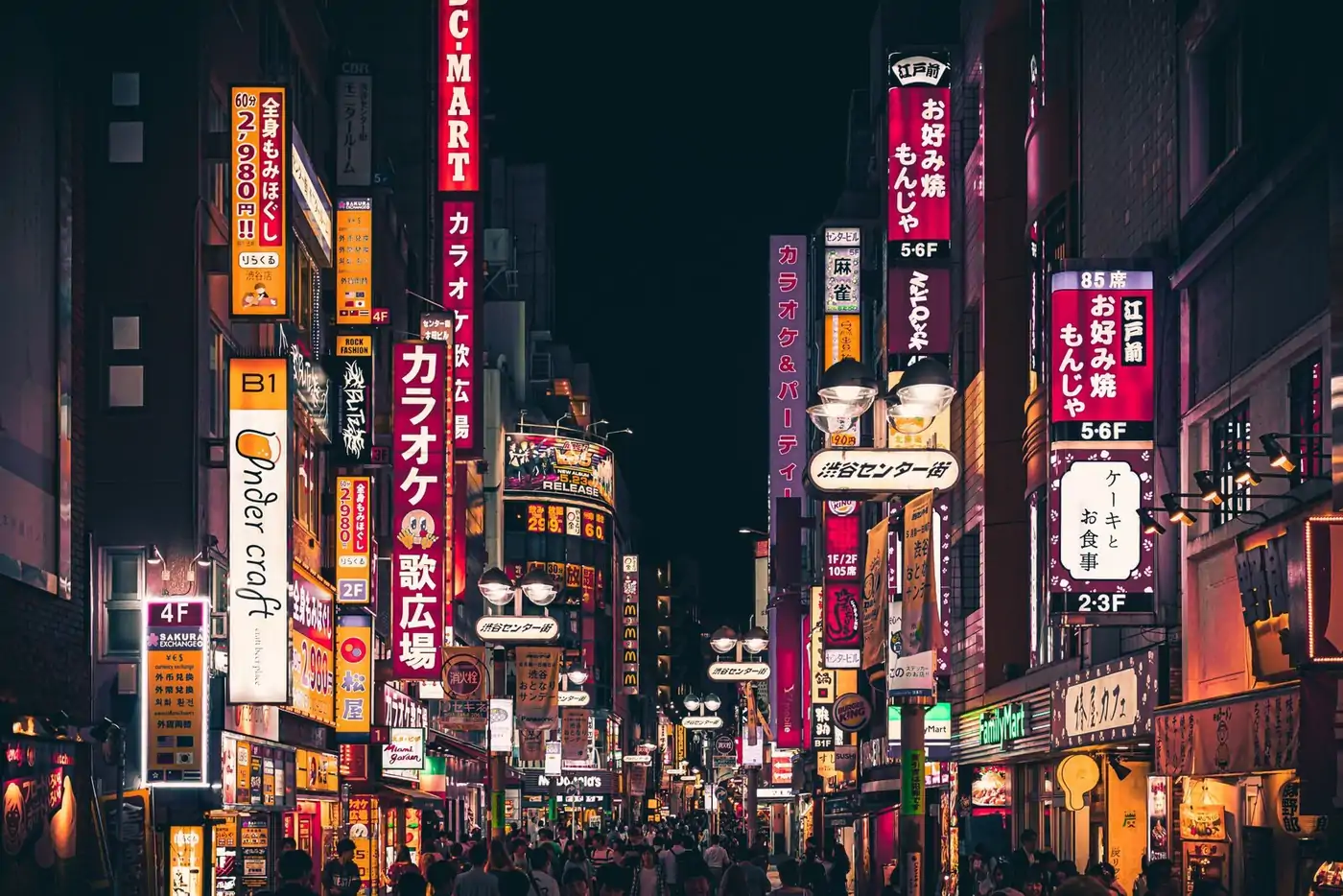
The world's most photographed pedestrian crossing, plus the Shibuya Sky rooftop observation deck on Shibuya Scramble Square Tower (open 10:00-22:30, ticket JPY 2,000). 45 minutes from Haneda by Keikyu Line to Shinagawa, then JR Yamanote to Shibuya. The scramble crossing is best at dusk with neon advertising and dense crowd flows. The Shibuya Sky deck gives telephoto views of the Tokyo skyline extending to Mt. Fuji on clear days.
Asakusa and Senso-ji Temple
Location: 35.7148, 139.7967
Tokyo's oldest temple district, 40 minutes from Haneda via Keikyu Line to Asakusa Station. The Kaminarimon gate, Nakamise shopping street, and the five-story pagoda photograph best at dawn before tourist flows, or at night when the lanterns are lit. The Sumida River walk from Azumabashi adds reflective water surfaces to the frame.
Tokyo Station Marunouchi
Location: 35.6812, 139.7671
The 1914 red-brick Marunouchi Station building, restored to its original design in 2012, is the city's finest architectural railway subject. 30 minutes from Haneda. The classic wide-angle symmetrical shot from the central plaza, and the interior brick-vaulted ceilings of the Marunouchi North and South domes. Best at twilight when the building is illuminated against a blue sky.
Odaiba Seaside Park and Rainbow Bridge
Location: 35.6267, 139.7762
The artificial island of Odaiba looks back at the Tokyo skyline with the Rainbow Bridge in the foreground — one of the classic Tokyo Bay compositions. 30 minutes from Haneda by Tokyo Monorail to Hamamatsucho, then Rinkai Line to Tokyo Teleport. From the seaside park, telephoto-compressed shots of the Sumida skyline with aircraft on approach to Haneda visible in the distance are possible.
Yokohama Minato Mirai 21
Location: 35.4552, 139.6312
The Yokohama waterfront district: Landmark Tower, the Cosmo Clock 21 ferris wheel, red-brick warehouses, and the harbour view from the Osanbashi pier. 30 minutes from Haneda by Keikyu Line to Yokohama direct. The Minato Mirai waterfront is excellent in blue hour, and the Osanbashi wooden pier offers unobstructed 270-degree harbour views.
Photographing the airport itself
All three Haneda terminals permit handheld photography inside public areas. The observation decks are the designated photography zones and are among the best-designed aviation viewing facilities in the world — the Terminal 2 RF rooftop is particularly useful because it eliminates the glass-reflection problem that affects most airside window shooting. Inside the terminals, the Japan Airlines domestic check-in halls in T1 and the ANA equivalent in T2 have spacious modernist architecture worth a wide-angle prime treatment. Security-side photography: do not frame baggage X-ray, passport control, or staff in security roles — standard Japanese airport courtesy. Tripods are not permitted on the observation decks or inside the terminals; handheld or monopod only.
Layover length guide
2-hour layover
Two hours at HND: use the Terminal 2 Sky Deck RF rooftop immediately after clearing arrivals. ANA widebody movements on 16L/34R, the Tokyo Bay backdrop, and clean Japanese light make this the most photogenically productive airport-side 2-hour window of any major hub. A 70-200mm zoom, a 24-70mm for the architectural concourse shots, and patience at the deck railing. The Terminal 3 international deck provides the same quality airside photography for international transit passengers.
4-hour layover
Four hours opens Shibuya or Shinagawa decisively. Keikyu Line to Shinagawa in 11 minutes (JPY 320), then Yamanote Line north. You have 2 hours in the city before the return journey. Asakusa is 40 minutes from Haneda — the Senso-ji gate and dawn photography before the tourist wave is one of the best uses of an early-morning Tokyo layover. Return to Haneda allows 30 minutes terminal buffer for international departures.
6-hour-plus layover
Six hours opens Odaiba, Akihabara, or the full Shibuya/Harajuku corridor. Tokyo Monorail to Hamamatsucho (20 min, JPY 500), then JR into the city. The Shibuya Sky deck at dusk, the scramble crossing in neon, and the return by Tokyo Monorail at night — the illuminated bay approaches visible from the monorail car are themselves worth a frame. With 8+ hours you can reach Yokohama Minato Mirai by Keikyu Line direct (30 min) for the waterfront and Landmark Tower views.
Camera and lens recommendations for layovers
Haneda layover kit: a 70-200mm f/2.8 for the observation decks — this is primarily the working lens at HND because the aircraft are close and the decks are well-positioned. A 24-70mm for terminal architecture and Tokyo street work. A fast 35mm or 50mm prime for Shibuya scramble at dusk and Asakusa lantern photography. The observation deck rooftop at T2 is exposed — bring a lens cloth for humidity and a light rain shell. Japanese weather can shift quickly. A Suica or Pasmo IC card loaded at the airport is essential for smooth transit; it covers the Keikyu Line, Tokyo Monorail, JR, and most Tokyo buses in one contactless tap.
Transit from HND to top spots
Haneda to Shinagawa: Keikyu Airport Line, 11 minutes, JPY 320. Haneda to Hamamatsucho: Tokyo Monorail, 13 minutes, JPY 500. Haneda to Shibuya: Keikyu Line to Shinagawa + JR Yamanote, total 45 minutes, approx JPY 500. Haneda to Asakusa: Keikyu Line direct, approximately 40 minutes, JPY 630. Haneda to Yokohama: Keikyu Line direct, 30 minutes, JPY 330. Taxis available outside arrivals; metered, starting at JPY 730. IC cards (Suica/Pasmo) purchased at any train station vending machine cover all transit. Airport buses to central Tokyo hotels depart every 15-30 minutes from the terminal bus bays and take 40-60 minutes to Shinjuku.
Photography restrictions and aviation rules
Japan’s airports have among the most photography-friendly environments of any major hub. All three Haneda terminals permit handheld photography in public areas. The designated observation decks are specifically designed for aviation photography and have no photography restrictions beyond the standard prohibition on tripods (for safety and space reasons). Do not photograph security checkpoints, passport control, or baggage screening areas — standard international protocol. Drones are prohibited within the entirety of Haneda’s airspace control zone; Japan’s Civil Aeronautics Law enforces strict no-fly zones around all major airports, with fines up to JPY 500,000 for violations. The Tokyo Bay waterfront near the airport is similarly restricted.
Frequently asked questions
Can I leave Haneda during a layover for photography?
Yes, if your nationality qualifies for visa-free entry to Japan (many do) and you have at least 5 hours between flights. Haneda is Tokyo's close-in airport: the Keikyu line and Tokyo Monorail reach central Tokyo in about 20-30 minutes, so even a 6-hour layover covers Shibuya or Asakusa. Confirm current entry rules before exiting and leave at least an hour for security on your return.
What is the best plane spotting location at Haneda?
Haneda is one of the world's great spotting airports: three free public observation decks (Terminal 1 5F, Terminal 2 Sky Deck, and the Terminal 3 international deck on 4F) look straight over the ramps and runways. Off-airport, Keihinjima Tsubasa Park sits directly under the approach path for dramatic low passes, and the Haneda Innovation City Sky Deck adds a fourth elevated angle.
Are drones allowed near Haneda airport?
No. Japan's MLIT prohibits drone flights near airports and over densely populated districts like central Tokyo without permission, and Haneda sits inside both restrictions. Violations bring heavy fines. There is no recreational pathway to aerial footage anywhere near the field or the city.
How far are Shibuya and Asakusa from Haneda?
Both are about 30-40 minutes by train with one change. Shibuya gives the scramble crossing and the Shibuya Sky rooftop view; Asakusa gives Senso-ji's temple gates and lanterns. Pick one per layover – trying to do both burns your buffer.
Can I photograph inside the Haneda terminals?
Japan's airports are photo-friendly and the observation decks are built for cameras. Handheld photography in public areas is fine; as everywhere, avoid security checkpoints, immigration halls, and screening lanes.
More airport guides: browse the complete airport photography hub → for sibling guides.
What to Pack
A landscape kit built around wide views, steady support, and changing light is a useful starting point. Compare the gear and choose what fits your camera, budget, and conditions. These links lead to B&H Photo Video and Amazon.
| What & Why | B&H | Amazon |
|---|---|---|
Sony 16-35mm f/2.8 GM Check the camera mount before buying. Choose a focal length that fits the photos you plan to make. | Shop B&H → | Shop Amazon → |
Peak Design Travel Tripod Check the load rating, packed size and local tripod rules before buying. | Shop B&H → | Shop Amazon → |
Breakthrough X4 CPL Check the filter type and lens thread size before buying. Use a filter only when the effect fits your photo. | Shop B&H → | Shop Amazon → |
Breakthrough X4 10-stop ND Check the filter type and lens thread size before buying. Use a filter only when the effect fits your photo. | Shop B&H → | Shop Amazon → |
Sony NP-FZ100 battery Use the battery type specified for your camera. Bring a spare if your shooting plan calls for one. | Shop B&H → | Shop Amazon → |
SanDisk Extreme Pro 128GB Check the card format and speed requirements specified for your camera. | Shop B&H → | Shop Amazon → |
Koh microfiber cloths Compare this option with your current kit. Check compatibility and the product details before buying. | Shop B&H → | Shop Amazon → |
B&H and Amazon links are affiliate links. We earn a small commission on purchases at no extra cost to you.