If aperture still feels fuzzy, start with our deep-dive aperture photography guide — it covers everything from f-stop math to bokeh control.
Is the glass we’ve known and loved for decades finally gasping its last breath? If you follow the industry whispers coming out of the major manufacturing hubs this morning, you might think so. It’s Monday, April 13, 2026, and the photography world is buzzing with news that could change the way we look through our viewfinders forever.
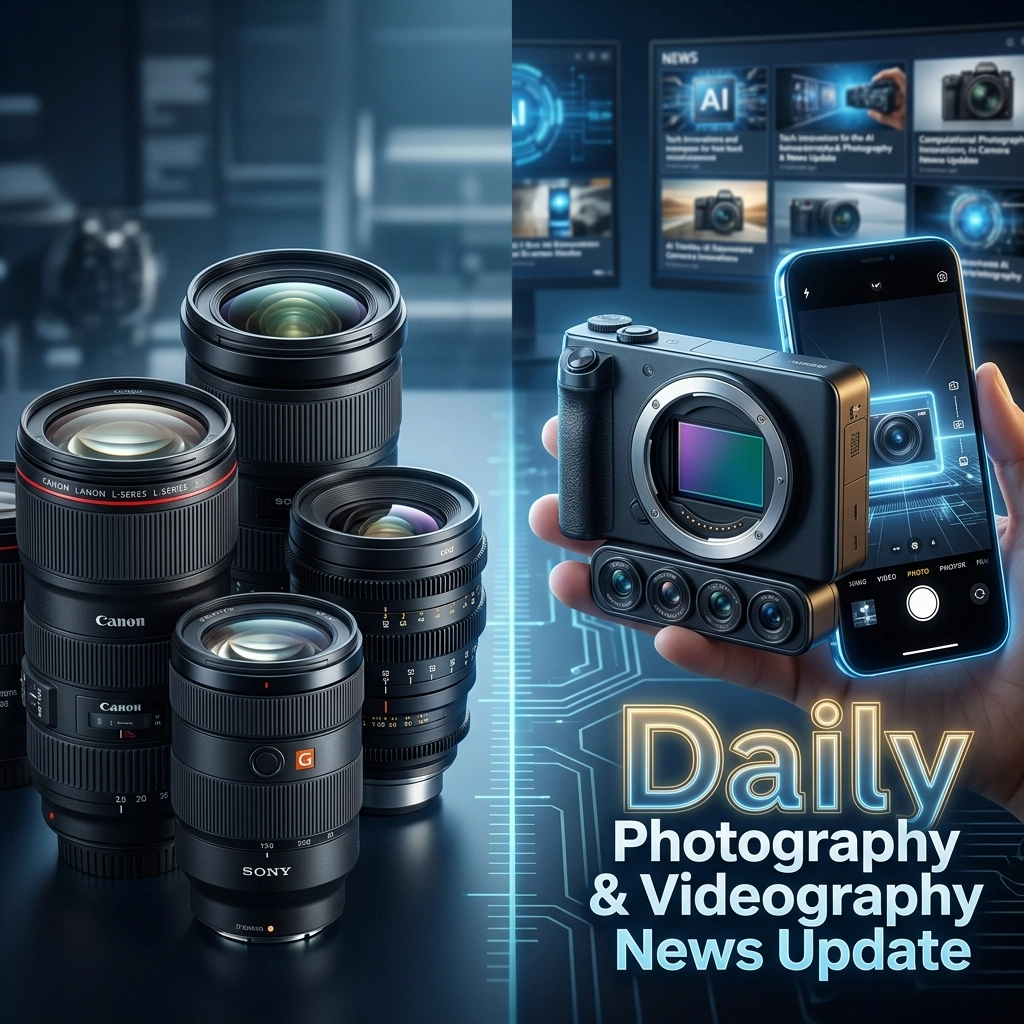
For a long time, lens making was an art form. It was about heavy glass, precision grinding, and mechanical barrels that felt like they could survive a tank run-over. But as we move deeper into the mid-2020s, the "traditional" lens is facing an existential crisis. Today, we’re diving into why traditional manufacturing is on its way out, what’s replacing it, and the daily news updates you need to stay ahead of the curve.
The End of the "Analog" Lens Era
Industry observers are sounding the alarm: traditional lens manufacturing is likely in its final decade. We aren’t saying you should throw your 50mm f/1.8 in the trash just yet, but the way these things are built is shifting from the machine shop to the semiconductor clean room.
The move is being driven by two main factors: cost and the absolute dominance of mirrorless systems. Mirrorless cameras have allowed engineers to place the rear element of a lens much closer to the sensor, which has opened up a playground of new optical designs. However, those designs are becoming so complex that traditional grinding and polishing methods can’t keep up, at least not at a price point that doesn't require a second mortgage.
Manufacturers are now borrowing techniques from the world of computer chips. We’re seeing more molded plastics that outperform old-school glass and "flat lenses" (metalenses) that use nanostructures to bend light. This isn't just a tech upgrade; it’s a total reimagining of what a lens actually is. If you want to keep up with these shifts, checking out resources like ProShoot.io can help you stay grounded in professional standards while the gear evolves.

SEO Alt Text: A futuristic camera lens manufacturing facility using advanced semiconductor technology to create flat metalenses.
Today’s Top News: Camera Releases and Firmware Hits
While the long-term outlook for glass is changing, the immediate news cycle is packed. Here is what’s landing on the desks of photographers and videographers this morning.
The Sony A7R VI Spec Leak
Rumors are swirling about the Sony A7R VI. If the leaks are true, Sony is moving toward a hybrid sensor that prioritizes computational data over raw megapixel count. This ties directly into our lens discussion. By using AI to correct lens aberrations in real-time, Sony might be able to release even smaller, lighter lenses that rely on software to achieve "perfection." It’s a controversial move, but it’s the future.
Adobe’s "Neural Optics" Update
Adobe just dropped a major update for Lightroom and Photoshop. The headline feature? Neural Optics. It’s an AI-driven tool that can simulate the "look" of legendary vintage glass on photos taken with modern, clinical lenses. It’s becoming harder to justify carrying a bag of heavy primes when software can replicate the bokeh and flare of a 1960s Leica Summicron with a single click.
Skylum's Luminar AI Enhancements
Speaking of software, Luminar has updated its engine to better handle the ultra-flat files coming out of the latest smartphone sensors and new-gen mirrorless glass. If you find your modern shots looking a bit too "perfect" or sterile, using Luminar to add back some soul is a game-changer. Many pros are falling into the trap of over-editing, so make sure you aren't making these 7 mistakes you’re making with photo editing.
Why Vintage Glass is Having a Massive Resurgence
If traditional lenses are "dead," then the vintage market is a very noisy ghost. Paradoxically, as modern lenses become more clinical and software-dependent, photographers are flocking back to glass from the 1950s, 60s, and 70s.
Why? Because they have "character." Modern lenses are often designed to be perfect, zero distortion, zero chromatic aberration, zero soul. Vintage lenses have "flaws" that we now view as artistic choices. On a mirrorless body, these old lenses are easier to use than ever, thanks to focus peaking and in-body image stabilization (IBIS).
We’ve seen a huge trend in using rare textures for tangible aesthetic photography, where the lens choice is just as important as the subject. The "imperfections" of an old Takumar or Helios lens provide a look that is incredibly hard to bake into a modern, digitally-perfected file.
SEO Alt Text: A vintage 1970s film camera lens mounted on a modern mirrorless digital camera body for a hybrid photography setup.
The Rise of Metalenses: Goodbye, Bulk
One of the most exciting industry trends in 2026 is the progress of metalenses. Imagine a lens that is as thin as a piece of paper but has the resolving power of a heavy 85mm f/1.2.
Metalenses use a flat surface covered in nanostructures that can focus light more efficiently than a curved piece of glass. While we are still a few years away from these being the primary lenses for professional sports or wildlife photography, they are already showing up in smartphone modules and drone cameras.
For landscape photographers, this is a dream. Imagine hiking to hidden gem locations for travel photography with a kit that fits in your pocket but delivers full-frame quality. We are moving toward a world where the "glass" might just be a thin film on the front of your sensor.
The Software vs. Hardware Debate: Where Do You Stand?
In the current landscape, the line between hardware and software is blurring. In the past, if a lens had a lot of vignetting or distortion, it was a "bad" lens. Today, manufacturers like Canon and Nikon are shipping lenses that rely on software profiles to be usable.
This brings up a big question: Are we still photographers, or are we data managers? If the lens isn't doing the work, and the sensor is just capturing raw data for an AI to interpret, does the gear even matter?
The truth is, the gear matters for the experience. Taking a camera out to discover ethereal landscapes is about the tactile feel of the equipment and the process of the hunt. Even if traditional lenses are being phased out in favor of "computational optics," the intent behind the shot remains the same.
Practical Tips for Navigating the 2026 Lens Market
If you’re looking to upgrade your kit this year, here’s how to handle the "death" of traditional lenses:
- Don’t Sell Your Primes Yet: While "flat lenses" are coming, high-quality traditional glass still holds its value. If you have a set of solid L-series or G-Master glass, keep them.
- Invest in Adapters: The best way to future-proof your kit is to buy high-quality adapters. Being able to put vintage glass on your new mirrorless bodies gives you an artistic edge that "clinical" modern shooters lack.
- Master Your Software: Since so much of lens performance is now corrected in-post, you need to be a wizard in your editor. Check out Luminar for tools that bridge the gap between digital data and artistic vision.
- Watch the Drone Space: Drones are the testing ground for new optics. The tech we see in the latest DJI or Skydio releases today will be in your handheld camera tomorrow.
SEO Alt Text: A photographer using a high-tech mirrorless camera on a tripod during golden hour at a remote landscape location.
Industry Trends: Video is Driving the Bus
We can’t talk about lenses without talking about video. In 2026, every camera is a video camera. This has led to the rise of "hybrid" lenses, glass that features de-clicked apertures, minimal focus breathing, and power zooms.
Traditional lenses were built for stills, where focus breathing didn't matter. But as more creators move into high-end cinematography, the demand for lenses that can do both is killing the old "stills-only" lens market. If a lens isn't optimized for video today, it’s basically dead on arrival.
This shift is great for creators who want to build a diverse portfolio, from enigmatic vistas to urban street films. If you’re looking to level up your video game, keep an eye on how these new "smart lenses" communicate with your camera's autofocus system. The days of manual pulling are fading, replaced by AI eye-tracking that works even with "dumb" vintage glass via electronic adapters.
The Verdict: Are Traditional Lenses Actually Dead?
So, back to the big question. Are traditional lenses dead?
The answer is: Technically, yes. Artistically, no.
Manufacturing is moving away from the old ways. The cost of labor, the precision required for modern sensors, and the rise of computational photography mean that the "old school" lens is becoming a boutique item. We are seeing the "vinyl-ification" of lenses. Just like people still buy records because they like the sound, people will continue to buy traditional glass because they like the look and the feel.
However, for the working pro who needs speed, accuracy, and lightweight gear, the traditional lens is being replaced by something more efficient. Whether it's a lens designed specifically for a mirrorless mount or a flat metalens that weighs nothing, the tools are changing.
SEO Alt Text: A close-up of a modern professional camera sensor reflecting light, representing the shift toward computational photography.
Stay Updated with Shut Your Aperture
The pace of change in the photography world is faster than ever. From finding hidden gems for travel photography to mastering the latest AI software, we’ve got you covered.
If you want to dive deeper into the world of high-end imagery, check out the top spots for stunning nature imagery or learn how to unlock secrets to enchanting urban photography. The glass might be changing, but the world is still waiting to be captured.
Keep your eyes on the news, keep your sensors clean, and most importantly, keep shooting. Whether you’re using a state-of-the-art metalens or a dusty piece of glass from 1964, it’s the person behind the camera that makes the shot.
For more professional guides and industry updates, stay tuned to our daily feed. If you need professional-grade resources or high-end photography services, ProShoot.io is the place to be. And don't forget to give your photos the finish they deserve with Luminar.
The "death" of the traditional lens isn't an ending: it's just the start of a new chapter in how we see the world. How are you going to use these new tools to tell your story? That’s the real question.