Burlington sits on a piece of Vermont coastline that does not get the credit it deserves. Lake Champlain runs 120 miles north to south and the Burlington shoreline catches the long axis of every sunset from May through October. Add a walkable downtown with century-old brick, two ferry routes that drop you mid-lake for the Adirondack backdrop, and a small-city pace that lets you move between sites in under fifteen minutes, and you have one of the most efficient photography weekends in the Northeast.
What follows is a working photographer’s site list, not a tourist roundup. Each spot includes the time of day that actually works, the lens that earns its place in the bag, and the parking and access notes you’ll wish someone had told you before you carried a tripod up from the wrong street.
Waterfront Park and the boardwalk
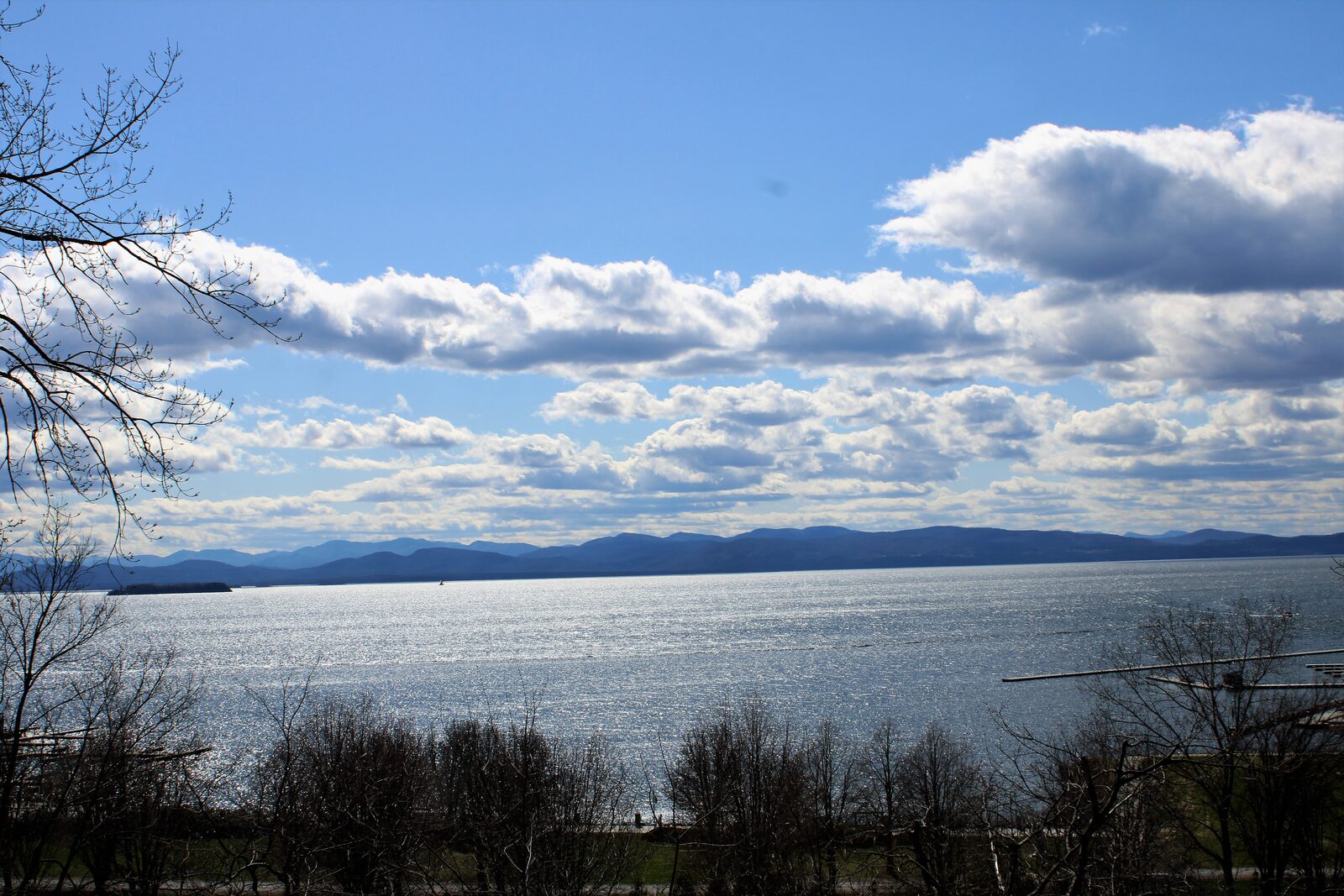
Start here. Waterfront Park runs from the College Street ferry dock north to North Beach, and the entire stretch is your sunset position for the trip. The promenade is paved and tripod-friendly, the western horizon is wide open over the lake with the Adirondacks as backdrop, and on clear evenings the alpenglow on Whiteface and the Jay Range is the postcard shot of Burlington.
Set up an hour before sunset. The best sky usually arrives in the ten minutes after the sun drops behind the ridgeline, when the cirrus catches that long pink and the lake goes from chrome to violet. Use a 24-70mm zoom for flexibility, then switch to a 70-200mm to compress the Adirondack peaks against the silhouettes of sailboats and the ferry coming in. If you’ve never worked with aperture for landscape depth, this is the spot to practice — f/8 to f/11 keeps the boardwalk railings sharp into the horizon.
ECHO Center and the boathouse pier
Walk south from Waterfront Park to the ECHO Leahy Center pier. The pier extends 200 feet into the lake and gives you a leading-line composition pointing west, perfect for blue hour and the first wave of dock lights coming on. The boathouse itself is a clean reflection subject when the lake is calm — typically early morning before any wind builds.
This is also the cleanest spot in Burlington for long-exposure water work. A 6-stop or 10-stop ND turns the chop into silk and the cirrus into streaks. Tripod is non-negotiable. Pre-dawn, the pier is empty; by 7am, joggers and dog walkers arrive and the geometry stops being yours.
Church Street Marketplace
Burlington’s pedestrian-only main street is four blocks of street photography that works in any season. The brick storefronts, mid-century neon, and rotating buskers give you human-interest compositions that don’t feel staged. Work it golden hour to blue hour — the sodium streetlights come on around the same time the sky goes deep cobalt, and the color contrast is a gift.
A 35mm or 50mm prime is the right tool. You want to be close enough that strangers register as subjects, not extras. Vermont is unusually friendly about being photographed in public, but ask before you point a long lens at a child or a street performer who isn’t actively performing.
Battery Park overlook
Battery Park sits on the bluff above Waterfront Park and gives you a higher-angle composition over the lake. It’s the right spot when the foreground at sea level is too cluttered with boats or people, or when you want a tall portrait frame with the marina in the lower third and the Adirondacks filling the top two thirds.
The park itself has Civil War cannons and a small bandstand that work as foreground anchors if you want a Vermont-specific element in the frame. Sunset is the call. The crowd thins after 8pm in summer and you can keep working into civil twilight without being in anyone’s way.
The breakwater and lighthouse
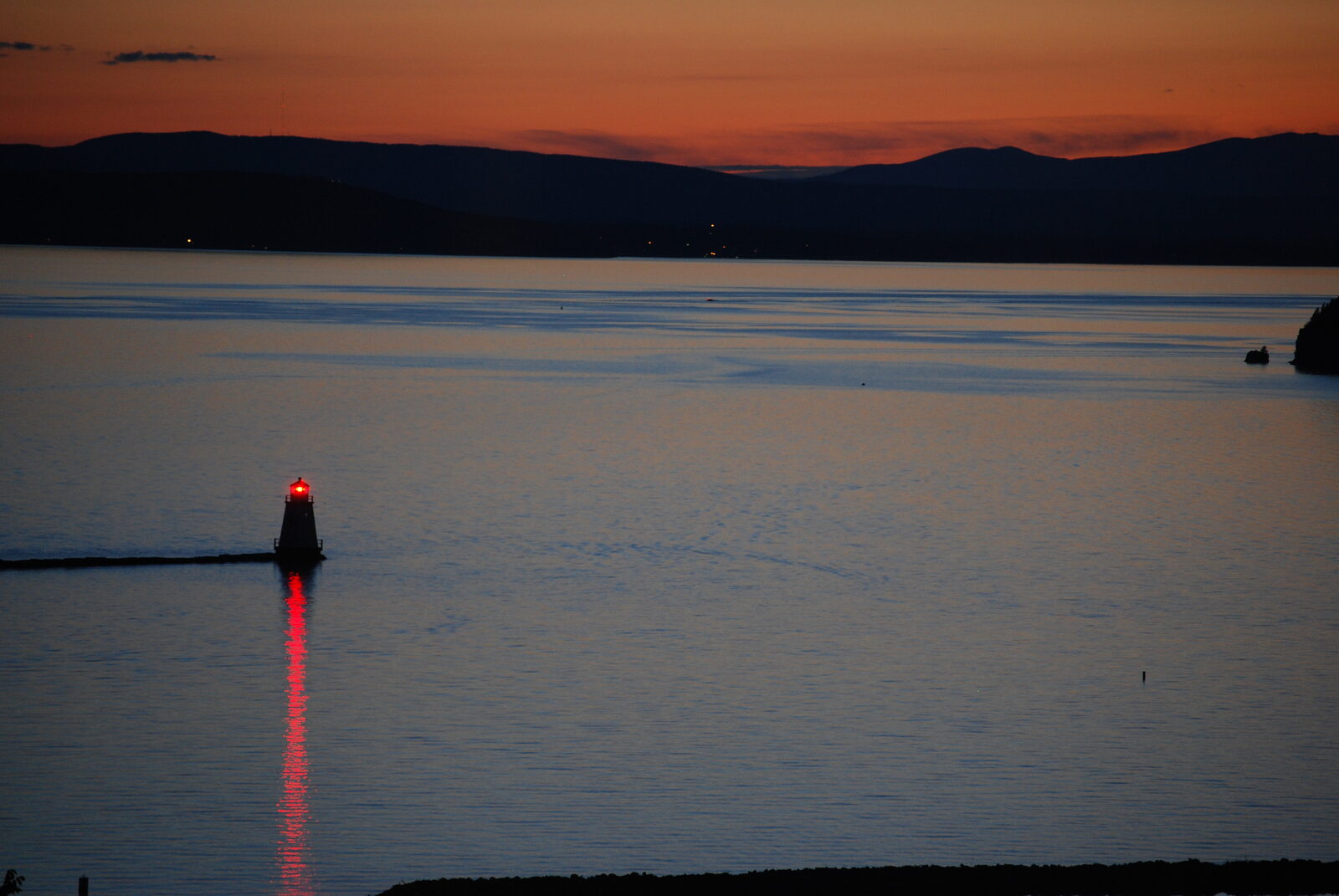
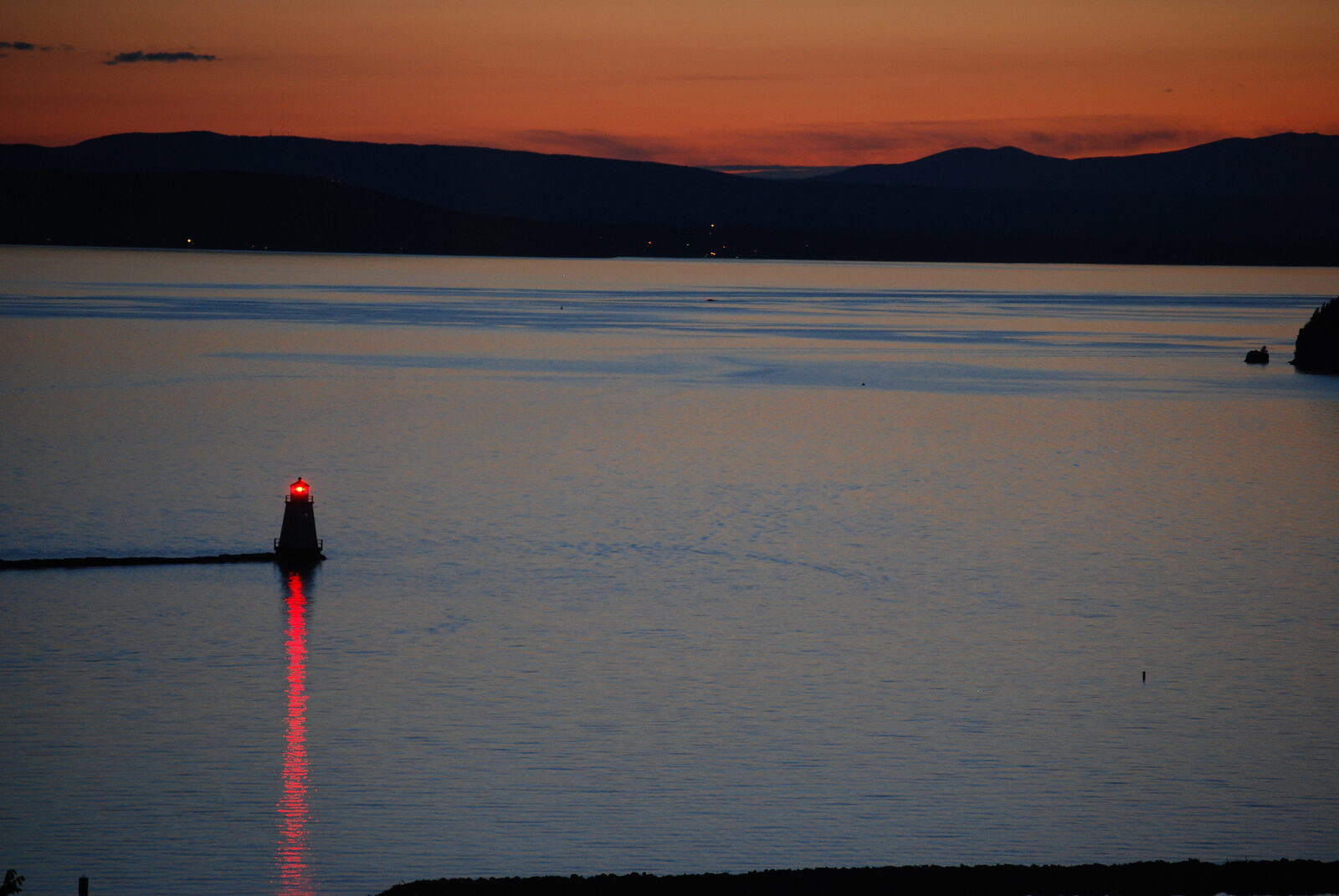
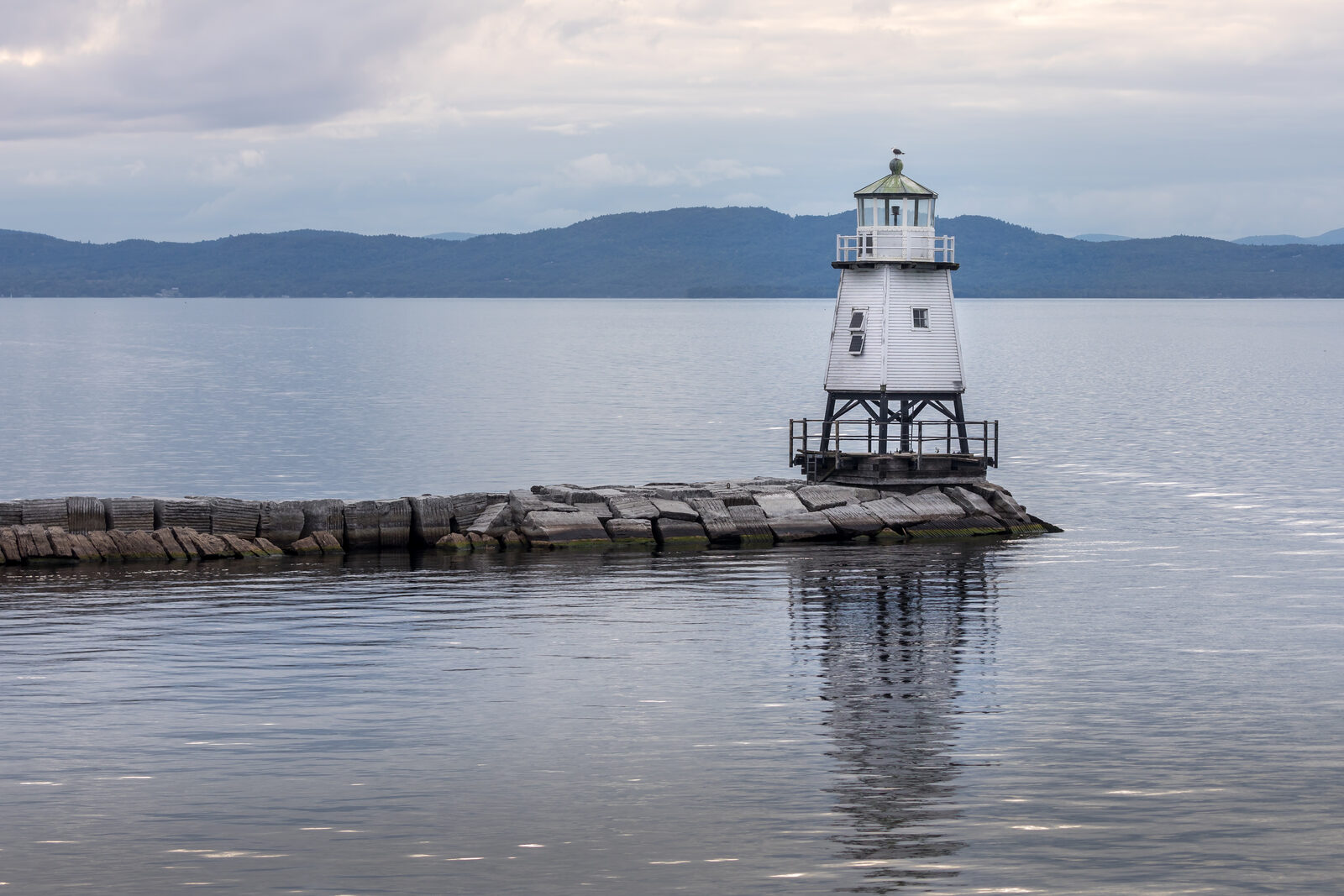
Burlington’s outer breakwater runs parallel to the shoreline about a quarter mile offshore. The Burlington Breakwater South Lighthouse sits on its southern end, and from the right vantage on the boardwalk, you can compose the lighthouse against the lake with a 70-200mm or longer. After the new harbor light was installed in 2018, the structure has become one of the most photographed objects in the city.
For the cleanest lighthouse shot, go to the Coast Guard Auxiliary boat launch on the south end of the harbor and shoot from there with a 200mm-plus lens. The compression flattens the lighthouse against the Adirondacks and gives you a clean stack. Golden hour, light winds, and a polarizer to cut glare are the formula.
North Beach and the boathouse rows
North Beach is the northernmost section of the waterfront and the one most casual visitors never reach. It has a different feel — quieter, with sandy shoreline instead of pier and railing. The boathouse rows along the access road have weathered wood textures and morning light that’s specific to this end of the lake.
Best at sunrise. The east-facing access road catches the first light coming over the Green Mountains behind the city, with the lake and Adirondacks lit indirectly. Bring a 24-70mm and a polarizer. Beach access requires a small fee in season but you can park on the access road and walk in for free if you arrive before the booth opens at 9am.
Ethan Allen Tower and the Intervale
For a wider perspective on Burlington itself, drive ten minutes northeast to Ethan Allen Park and climb the stone tower. The view spans the city, the lake, and the Adirondacks in a single 270-degree panorama. It’s the right move on a clear afternoon when the haze has lifted and you want a context shot for the rest of your portfolio.
The Intervale, the floodplain north of the city, gives you Vermont farmland and the Winooski River with the Green Mountains behind. It’s a different aesthetic from the lake shots — pastoral, agricultural, distinctly New England. Best at low sun, early morning or just before sunset, when the side-lighting raises the texture in the fields.
Ferry crossing to the Adirondacks
The Lake Champlain Ferry from King Street Dock to Port Kent, NY takes about an hour each way. The crossing puts you mid-lake with Burlington behind, the Adirondacks ahead, and 360 degrees of subject. Bring a body with good IBIS (the ferry vibrates), a 24-105mm or similar, and a wide for the bow-rail compositions.
The afternoon return crossing is the photography choice — you’re heading east into Burlington with the city face-on and the late light raking across the brick downtown. The morning crossing puts the sun in your face on the way out, which limits compositions but does give you a clean silhouette setup.
Seasonal considerations
May through October is the prime window. Foliage peaks late September into the first week of October, and the lake shots gain a band of red and orange along the Vermont shore that genuinely transforms the standard composition. Winter is harder access but the ice formations along the breakwater and the steam fog rising off open water on the coldest mornings are unique to the cold months.
Burlington gets serious wind off the lake. Check the marine forecast, not the city forecast — 15-knot winds from the west will turn the lake into chop and make tripod work hard. Calm mornings are your reflection days.
What to Pack for Burlington VT Photography
A lake-and-cityscape weekend is a flexible-focal-length trip. Carry one mid-range zoom and one telephoto, plus a fast prime for downtown street work.
| Best for | Pick | B&H | Amazon | Why |
|---|---|---|---|---|
| Wide-to-portrait zoom | 24-70mm f/2.8 | Check at B&H | Check on Amazon | The single most useful lens for Burlington — boardwalk, Church Street, ferry deck |
| Compression telephoto | 70-200mm f/2.8 or f/4 | Check at B&H | Check on Amazon | Stacks the Adirondacks against the breakwater lighthouse and sailboats |
| Sturdy travel tripod | Carbon-fiber tripod with ball head | Check at B&H | Check on Amazon | Mandatory for blue-hour pier shots and long-exposure water |
| Circular polarizer | 77mm or 82mm CPL | Check at B&H | Check on Amazon | Cuts lake glare, saturates foliage, helps with reflection control on calm mornings |
| Variable ND | 6-stop or variable ND filter | Check at B&H | Check on Amazon | Long-exposure water shots from the boathouse pier |
| Memory cards | 128GB UHS-II SD or CFexpress B | — | Check on Amazon | Burst sessions on the ferry and at North Beach burn frames fast |
| Spare batteries | 2-3 OEM packs | — | Check on Amazon | Cold lake mornings drain batteries faster than expected |
Guided photography options
If you’re new to Burlington and want a local guide who knows where the boats are docked on which weekends and which boardwalk benches frame the lighthouse cleanest, a half-day photography tour is the fastest way to get oriented. Lake Champlain sunset cruises also give you a working photography platform with the city behind you — useful for the harder-to-reach mid-lake compositions.
Browse Burlington VT photography tours and lake cruises on Viator to compare timing and group sizes. Sunset sailing charters out of the Burlington Boathouse run May through October and most accept tripod gear on board.
Practical logistics
Burlington is small. You can base anywhere from downtown to South End and be at any of these locations within fifteen minutes. Free street parking is available outside the metered downtown core; the waterfront has paid lots that cap at $10 a day in summer. The bike path runs the entire waterfront and is the fastest way to move between Waterfront Park, ECHO, Battery Park, and North Beach with a backpack of gear.
Two-day minimum to cover the list. Three days if you want to add the Adirondack ferry crossing and a sunrise at North Beach. The full travel photography workflow — pre-scouting, weather check, golden-hour timing — is the difference between leaving with a couple of decent shots and leaving with a portfolio set.