Updated October 13, 2026. This guide has been revised with new text and photos; the original publication date is retained.
Sensor size is one of the first things people compare when they pick a camera, and one of the most misunderstood. A larger sensor does not make you a better photographer. It changes how much total light a picture can be made from, how the same framing and aperture behave, and how big the lenses and the whole kit tend to be. This guide explains the three formats most photographers meet first: full frame, APS-C and Micro Four Thirds, and it compares them the way photographers actually use them: same framing, same position, same output size.
The short version: with comparable sensor technology, a larger sensor can gather more total light for the same picture and can give a shallower depth of field. Smaller formats usually let you build a smaller kit. Technology, megapixels, lenses and the quality of the light often matter as much as format, and all three formats make excellent pictures.
What a camera sensor does
The sensor is the flat chip behind the lens that records the light. Sensor size is the physical area of that chip. It is not the same thing as megapixels: two sensors can have the same pixel count and very different physical sizes.
Why does physical size matter? At the same shutter speed and the same f-number in the same scene, the light per unit area on the sensor is about the same on any format. A larger sensor has more area, so the whole picture is made from more total light. When you compare pictures framed the same way, from the same position and viewed at the same size, that extra total light tends to show up as less noise, assuming comparable sensor technology. DPReview explains this in its guide to equivalence. Sensor generation, lens quality and processing also change the result, so treat format as one factor among several.
 Save
The three formats at a glance
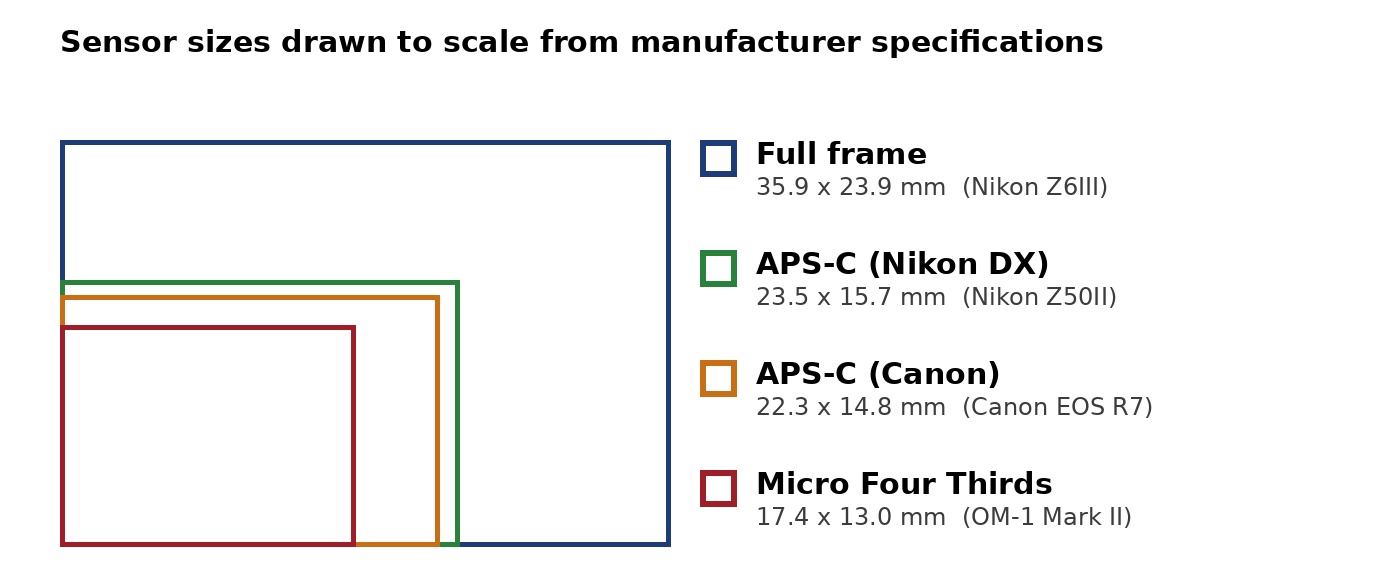
- Full frame (35mm): the reference format for focal lengths. For example, Nikon lists the Z6III sensor at 35.9 x 23.9 mm.
- APS-C: smaller than full frame. Nikon lists the Z50II (DX format) at 23.5 x 15.7 mm, and Canon lists the EOS R7 at about 22.3 x 14.8 mm, so exact size varies by brand.
- Micro Four Thirds: smaller again, with a squarer 4:3 shape. OM System lists the OM-1 Mark II at 17.4 x 13.0 mm.
Always check the specification page for the exact camera you are considering. Sources: Nikon Z6III, Nikon Z50II, Canon EOS R7 and the OM System OM-1 Mark II specifications.
What “crop factor” means
Crop factor compares a sensor to the full frame reference. A lens does not change its real focal length when you move it to a smaller sensor. What changes is the field of view: the smaller sensor records a narrower piece of what the lens projects. The “equivalent focal length” is the full frame lens that would give the same field of view. Canon, for example, states that the R7 gives a field of view equivalent to 1.6x the focal length of the lens, and OM System lists approximately twice for Micro Four Thirds.
A narrower field of view is useful if you shoot distant subjects, because the subject fills more of the frame without a longer lens. It is not a free gain in detail. How much detail you get depends on pixel density, lens quality and noise, and a full frame image can be cropped to the same view. It works against you when you want a wide view, because you need a lens with a shorter focal length to get it.
- With a 1.5x crop factor, a 24mm lens gives a field of view like about 36mm on full frame.
- With a 2x crop factor, a 24mm lens gives a field of view like about 48mm on full frame.
- With a 1.6x crop factor (Canon APS-C), a 100mm lens gives a field of view like about 160mm on full frame.
Depth of field and background blur
To compare depth of field fairly, match the framing, the subject distance and the same f-number. With those matched, the larger format gives a shallower depth of field, because getting the same framing on a larger sensor takes a longer actual focal length. Equivalent f-numbers (the f-number multiplied by the crop factor) give comparable depth of field across formats. DPReview shows the math: a 50mm f/2 lens on APS-C behaves, for depth of field and total light, like a 75mm f/3 lens on full frame. The lens itself does not change. Its effect on the picture does.
The reverse is useful too. A smaller format can give you more depth of field at the same framing and f-number, which helps for macro, landscapes and product work where you want a deeper zone of sharpness. If you shoot close-ups, our guide to macro photography techniques shows how much depth of field matters up close.
 Save
Low light and image noise
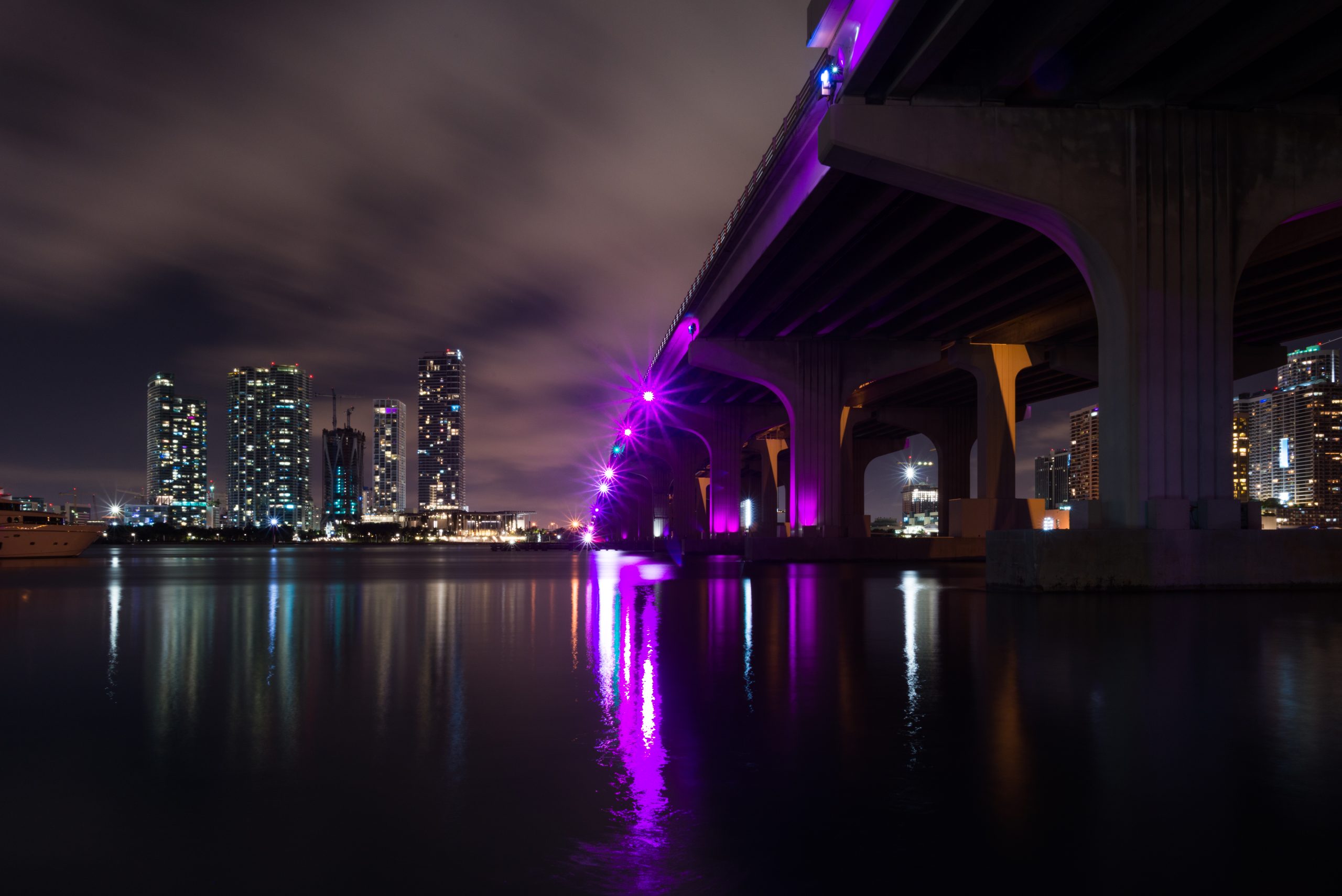
Low light is where format differences can show. If you shoot at the same shutter speed and f-number, the larger sensor collects more total light for the picture, so a file viewed at the same size can have less visible noise, with comparable technology. In practice it depends on the camera generation, the lens and the processing. A recent APS-C or Micro Four Thirds body with a fast lens can beat an older full frame body. For practical tips on working in dim conditions, see our guide to low light photography.
Dynamic range and detail
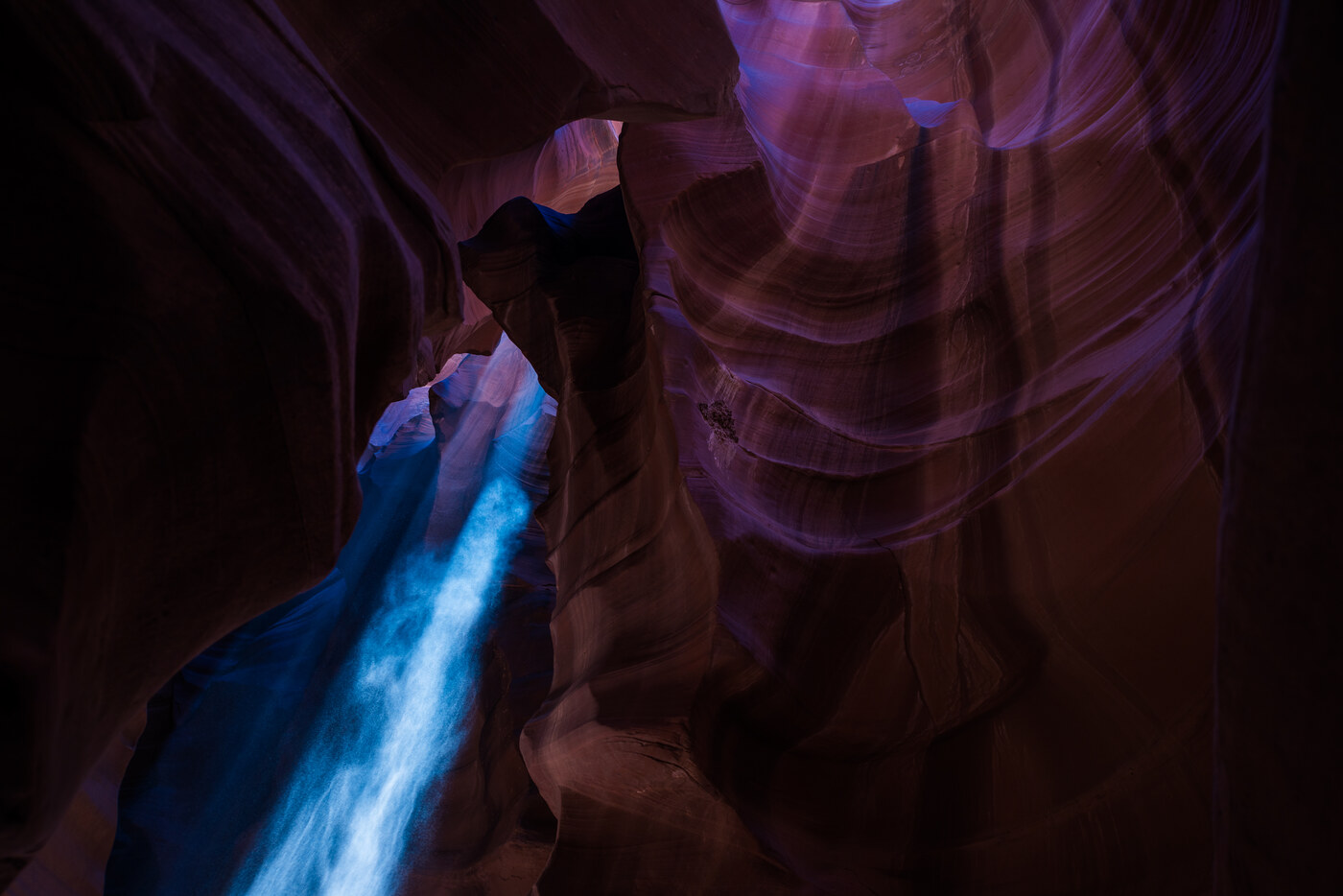
Dynamic range, the span between the darkest and brightest tones a camera can record, depends on the sensor design as much as the size. Larger sensors often have an advantage when technology is comparable, and it matters most in scenes with bright and dark areas together. It matters less in even light. Compare measured results for the specific cameras you are considering instead of assuming a format wins.
 Save
Size, weight and cost
Size and weight depend on the whole kit, not just the body. A smaller sensor allows lenses that are physically smaller for the same field of view, but the lens you choose, its aperture and its zoom range change the weight a lot. Compare a complete kit: body, the lenses you would actually use, and accessories.
Cost varies by brand, generation and lens lineup, so format alone does not decide it. Look at the price of the actual body and lenses you would buy, and check current listings before you decide.
Full frame: who it suits
- Photographers who often shoot in low light, such as events, concerts and night skies, and want to maximize total light for the picture.
- Portrait photographers who want the option of a very shallow depth of field.
- People who want a native wide-angle lens range without a crop.
- Anyone who prints large or crops often and values a generous pixel budget (check the model’s megapixels).
APS-C: who it suits
- Photographers who want a balance of image quality, kit size and price.
- Travelers and hobbyists who want a more compact system.
- Wildlife and sports shooters who like the narrower field of view from the same lens.
- Beginners who want a capable camera that can be a good value (compare actual models).
Micro Four Thirds: who it suits
- Photographers who value a compact system and are willing to trade some low light capability.
- Travel and street photographers who want a discreet kit.
- People who like a deeper depth of field at the same framing for landscape, macro or video.
- Anyone who wants a system with a broad choice of small lenses.
 Save
Common myths about sensor size
“Full frame is always better.” It has advantages in total light and depth of field control. It is not better for portability, cost or lens size.
“More megapixels means a better sensor.” Pixel count describes resolution. Size, design and processing decide how good the pixels are.
“Crop sensors zoom lenses.” A smaller sensor does not change the lens or its focal length. It records a narrower field of view from the same image, so the subject fills more of the frame.
“Small sensors cannot make professional pictures.” Plenty of professionals work with APS-C and Micro Four Thirds. The right camera is the one that suits your subject, budget and way of working.
Sensor size and lenses
Compatibility depends on the mount and the image circle, not on sensor size alone. Lenses made for a smaller format cover a smaller image circle. Within the same mount, a lens made for the larger format usually works on the smaller sensor, and the camera applies the crop. A lens made only for APS-C may be cropped or may show dark corners on a full frame body of the same mount. Across different mounts, you need an adapter, and autofocus, stabilization and other electronic functions may be limited or missing. Check the maker’s compatibility information for your exact camera and lens before you buy.
If you may move to a larger format later, check that the lenses you buy are made for that mount and format, so they will keep working without an adapter.
Sensor size for specific subjects
Landscape
Any format works. A larger sensor can give you more total light and tonal range when you view at the same size, and smaller formats can give you lighter kits for long hikes and more depth of field at the same framing and f-number.
Portraits
Getting a very shallow depth of field is easier on a larger format with a fast lens. On a smaller format, choose a shorter actual focal length to get the same portrait framing from the same distance. APS-C can still produce beautiful portraits with a fast lens.
Wildlife and sports
A smaller format gives a narrower field of view from the same lens, so distant subjects fill more of the frame. Full frame can be cropped to the same view, and cameras differ in pixel density and autofocus, so compare the actual models.
Real estate and interiors
Wide lenses matter most. On a smaller format you need a shorter real focal length to match the field of view of a given full frame lens, and lens availability varies by mount. Our guide to real estate cameras goes deeper on that job.
Video
Larger sensors can help in low light and make a shallow look easier. Smaller sensors give more depth of field at the same framing and f-number. Video modes often crop the sensor differently from stills, so check the spec sheet for your camera.
 Save
How to choose
- Start with your subject. Think about where and what you shoot most often.
- Compare the whole kit. Body, lenses, weight and price, not just the sensor.
- Compare like with like. Same field of view, same aperture in equivalent terms, same output size, similar sensor generation and megapixels.
- Handle the cameras. Comfort affects how much you shoot.
- Check the lens lineup. A system with the lenses you want matters more than a small spec edge.
A simple way to decide
If total light and shallow depth of field are your priorities and you accept a larger kit, look at full frame. If you want a balance of size, price and quality, look at APS-C. If a compact kit matters most, look at Micro Four Thirds. Then compare actual cameras and lenses, and spend your effort on light, composition and practice.
Frequently asked questions
What is the difference between full frame and APS-C?
Full frame sensors are larger than APS-C sensors, and sizes vary by brand. For example, Nikon lists the Z6III at 35.9 x 23.9 mm and the Z50II at 23.5 x 15.7 mm, while Canon lists the EOS R7 at about 22.3 x 14.8 mm. With comparable technology, the larger sensor gathers more total light for the same framing and can give a shallower depth of field. Smaller formats can allow smaller lenses.
What is crop factor?
Crop factor compares a sensor to full frame. It does not change the lens. It changes the field of view, which becomes narrower on a smaller sensor. Canon lists 1.6x for the EOS R7 and OM System lists approximately twice for Micro Four Thirds.
Is full frame better than Micro Four Thirds?
It depends on what you need. Full frame can gather more total light for the same framing and make a shallower depth of field easier. Micro Four Thirds systems can be more compact and give more depth of field at the same framing and f-number. Compare the actual cameras and lenses.
Does a bigger sensor mean better image quality?
Not automatically. With comparable technology, a larger sensor gathers more total light for the same picture, which can reduce visible noise. Sensor generation, megapixels, lens quality and light matter too.
Can I use full frame lenses on an APS-C camera?
Within the same mount, usually yes, and the camera crops the image. A lens made only for APS-C may be cropped or show dark corners on a full frame body. Across mounts you need an adapter, and autofocus and other electronic functions may be limited. Check the maker’s compatibility information for your camera and lens.
Which sensor size is best for beginners?
There is no single best format. Choose a camera and lenses that fit your subjects, budget and how much you want to carry, and compare the whole kit.
Do megapixels depend on sensor size?
No. A sensor of any size can have more or fewer pixels. Sensor size is the physical area of the chip. Megapixels count the pixels on it.
Sensor size changes light, depth of field, reach and the size of your kit. It does not decide whether a picture is good. Pick the format that fits your subjects, your budget and how far you are willing to carry your gear, then go out and shoot.