Kyoto vs Tokyo: Honest Comparison and a Clear Winner
–
 Save
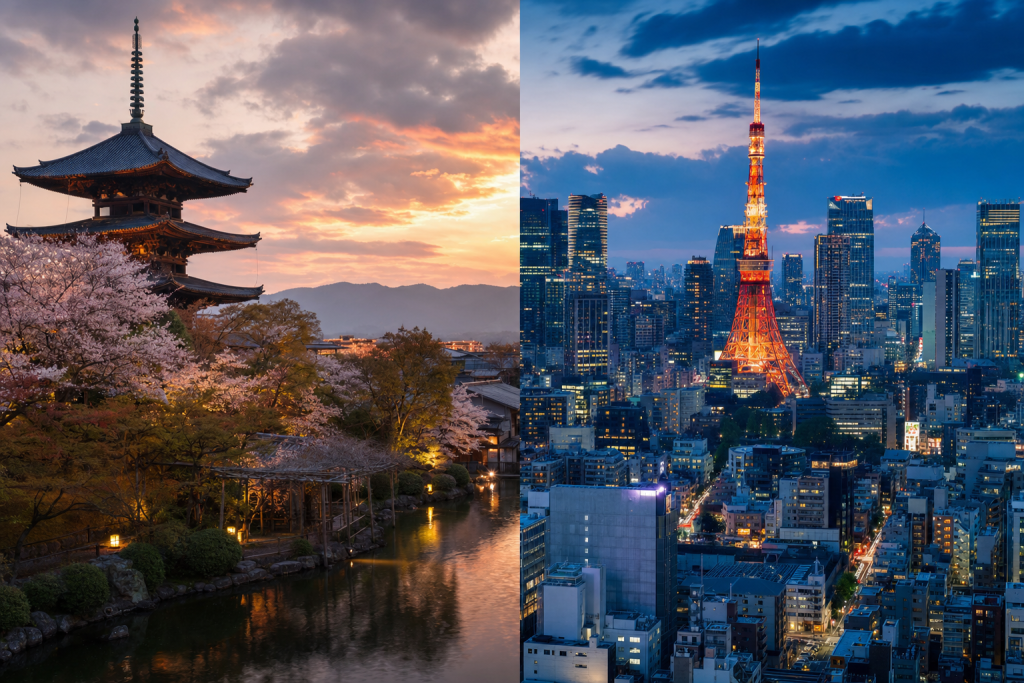
SaveSide-by-Side Spec Comparison
Before diving into use cases and recommendations, here is a direct specification comparison. Use this table as a quick reference when you need to compare a specific attribute.
| Specification | Kyoto | Tokyo |
|---|---|---|
| Population | 1.4 million | 14 million (Tokyo metro: 37 million) |
| Best photography season | March–April (cherry blossoms), November (maple autumn) | March–April (cherry blossoms), December–January (illumination festivals) |
| Iconic shots | Fushimi Inari torii gates, Arashiyama bamboo grove, Gion geiko | Shibuya Crossing, Shinjuku neon, Asakusa Senso-ji temple at night |
| Photography style | Traditional, serene, zen, minimalist, cultural | Urban, cyberpunk, street, contemporary, neon |
| Temple/shrine density | Highest in Japan — 2,000+ shrines and temples | Many temples but surrounded by urban development |
| Street photography | Gion district for traditional; Nishiki Market for street food culture | World-class — Shinjuku, Shibuya, Harajuku, Akihabara, Yanaka |
| Golden hour architecture | Extraordinary — bamboo, moss gardens, vermilion torii | Good — but often competing with urban density and construction |
| Budget (accommodation) | Mid — ryokan guesthouses from $150-400/night | Wide range — capsule hotels $30/night; boutique hotels $200-500/night |
| Distance between cities | 2 hours 15 minutes by Shinkansen (covered by JR Pass) | — |
Real-World Use Cases: Which Option Wins for Your Situation?
Specifications only tell part of the story. Here is how each option stacks up for specific photography scenarios:
| Your Situation | Best Choice | Why |
|---|---|---|
| Traditional Japan photographer | Kyoto | Fushimi Inari at 5:30 a.m., the Arashiyama bamboo grove in autumn morning mist, and Gion’s preserved machiya townhouses are the visual essence of pre-modern Japan. |
| Street and urban photographer | Tokyo | Shibuya Crossing, Shinjuku Golden Gai, Akihabara anime signage, and Yanaka’s old merchant district — the world’s greatest density of street photography subjects in one city. |
| Cherry blossom (sakura) photographer | Both simultaneously | Cherry blossoms in Kyoto: Maruyama Park, Philosopher’s Path, Arashiyama. Tokyo: Shinjuku Gyoen, Ueno Park, Yoyogi Park. Both peak approximately same week in late March/early April. |
| Night photography (urban) | Tokyo | Shinjuku’s neon density, the TeamLab digital art installations, and the Odaiba skyline at night are the most visually complex urban night photography in Japan. |
| First-time Japan photography trip | Both — Shinkansen between cities is 2:15 | A 10-day trip covering 4 days Kyoto / 5 days Tokyo is the classic itinerary. Add Nara (30 min from Kyoto) for the deer park and ancient temples. |
Pricing Breakdown
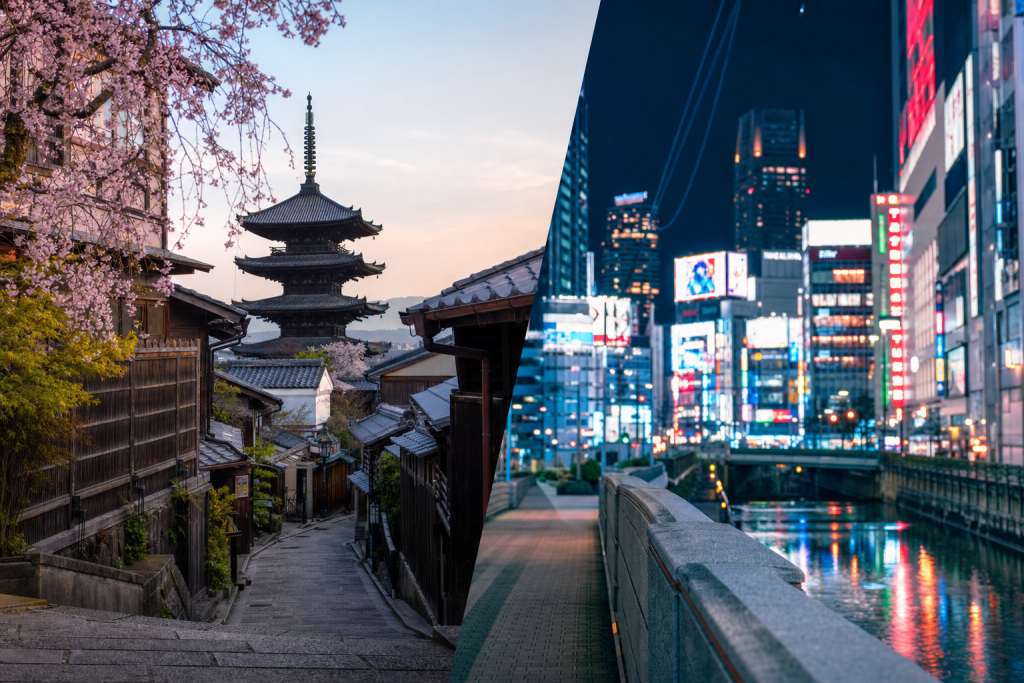
Japan is surprisingly affordable when planned well. The 14-day JR Pass ($550) covers all Shinkansen travel between cities. Kyoto ryokan: $150-400/night for traditional experience. Tokyo ranges from $30 capsule hotels to $500+ luxury ryokan. Budget $80-150/day for accommodation, food, and transport. Cherry blossom season (late March to early April) requires booking 6-9 months in advance.
 Save
SaveAlternatives Worth Considering
Before you commit to either option, these alternatives may better suit your specific needs:
- Nara, Japan: 45 minutes from Kyoto by train — Nara Park’s free-roaming deer against ancient wooden temples is among the most unique wildlife-meets-architecture photography in the world.
- Osaka, Japan: Between Kyoto and Tokyo in aesthetic — the dotonbori neon canal district at night is world-class street photography, and the food market culture is richer than either Kyoto or Tokyo.
- Hakone, Japan: Mt. Fuji visible from Hakone on clear mornings (especially October-February) — the classic composition from Lake Ashi with the torii gate is photographed by every Japan visitor.
Frequently Asked Questions
Can I photograph geisha (geiko) in Kyoto?
In public streets, yes — but etiquette matters. Do not block their path, call out, or approach them. Photograph from a respectful distance. The city of Kyoto has implemented rules against harassment in Gion; violators can be fined.
Which city is better for food photography?
Osaka is actually the best — the food market culture in Dotonbori and Kuromon Ichiba market rivals Tokyo and Kyoto. Of the two, Tokyo’s depachika (department store basement food halls) are extraordinary food photography locations.
Which has better autumn photography?
Kyoto — the maple (momiji) season in Arashiyama and the temple gardens of Tofuku-ji and Eikan-do is Japan’s most dramatic autumn color concentration. Tokyo’s Shinjuku Gyoen and Yoyogi Park have excellent fall color but lack the temple backdrop.
Do I need the JR Pass for just Kyoto-Tokyo travel?
A single Shinkansen Kyoto-Tokyo ticket costs ~$85 one-way; the 7-day JR Pass ($350) pays for itself after two round trips. If you’re also traveling to Hiroshima, Osaka, or Nara, the pass becomes excellent value.
The Bottom Line
Our recommendation: Kyoto for traditional Japan and serene beauty; Tokyo for urban energy and contemporary culture. The best choice ultimately depends on your specific shooting style, budget, and existing kit. Use the use-case table above as your primary decision framework — find your most common scenario and choose the option that wins there. Both options in this comparison are used by working professional photographers; you cannot make a wrong choice if it aligns with your actual workflow.
 Save
SaveCombining Kyoto and Tokyo in One Trip
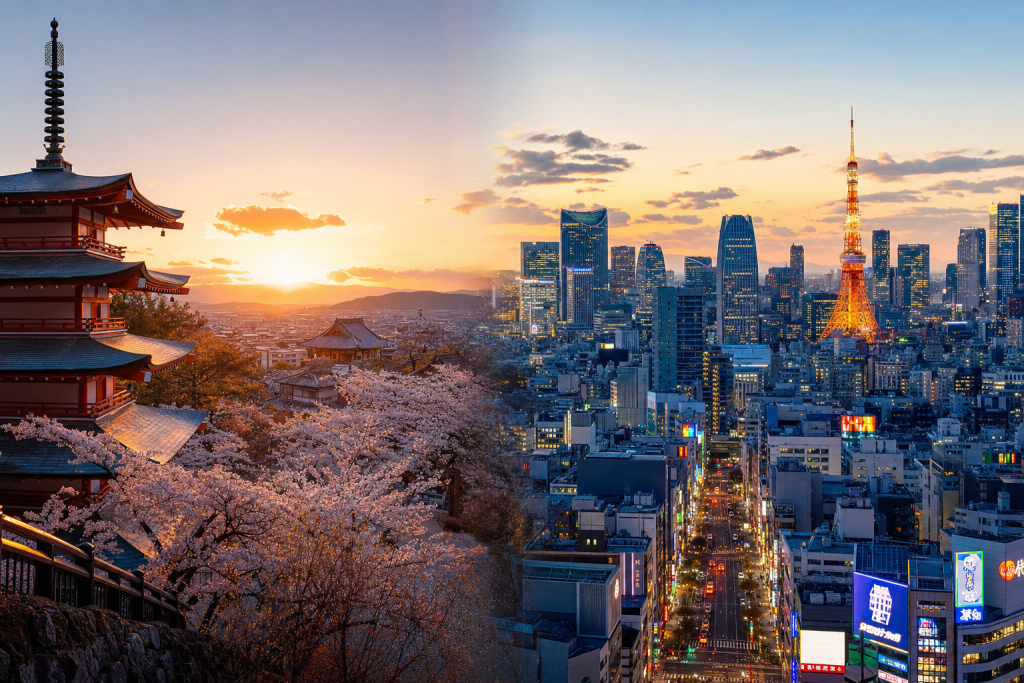
The Shinkansen (bullet train) between Kyoto and Tokyo runs every 10-15 minutes throughout the day and covers the 513 km distance in 2 hours 15 minutes on the Nozomi express. A 7-day JR Pass ($350) covers unlimited Shinkansen travel and pays for itself with just two round trips between the cities — essential for photographers who want to move freely between the two. The Kyoto-Tokyo-Osaka triangle is the most common Japanese photography itinerary for first-time visitors, and the JR Pass makes the logistics simple and cost-efficient.
One strategic timing note: Kyoto’s most photographed locations are most accessible during the shoulder seasons (mid-November for maple season, late March to early April for cherry blossoms) when the weather is spectacular but the summer crowds are absent. If visiting during cherry blossom season specifically, book accommodation in Kyoto six to nine months in advance — the city fills to capacity in the last week of March and first week of April, and hotels that normally cost $150/night can reach $400 or more during peak bloom. The bloom timing varies by up to two weeks year to year based on winter temperatures; monitor the Japan Meteorological Corporation’s sakura forecast for the most accurate prediction.