The best APS-C camera in 2026 depends on the photographs and video you need to make, the lenses you will carry and the total system cost. A list of five anonymous “top picks” cannot answer that. Neither can a claim that Edin tested cameras if those tests were not documented. These are five real cameras with current manufacturer specification pages, compared as candidates rather than ranked by a made-up field score. Check the exact model and version before buying.
This guide starts with five distinct jobs: an accessible first system, a reach-oriented stills kit, high-resolution stills, a compact hybrid and fast action with demanding video. Each camera can do more than the job used to frame it. The point is to narrow a shortlist and design a rental or return-window test. Manufacturer numbers verify features under stated conditions; they do not establish a used body’s condition, current price, autofocus keeper rate or whether a lens feels good after a full day.
Best APS-C camera in 2026: the shortlist at a glance
- Nikon Z50II: start here if you want a manageable Nikon Z DX system and an electronic finder, then verify the lens list and the single card slot fit your work.
- Canon EOS R7: consider the 32.5-megapixel APS-C body and RF/RF-S lens choices for detail and reach, without assuming any published burst rate guarantees sharp wildlife files.
- Fujifilm X-T5: investigate 40.2-megapixel stills and the X-mount lens system if output detail and handling matter more than a speed headline.
- Sony a6700: compare the E-mount lens setup and 26-megapixel hybrid body for a smaller kit; try it with the actual lens you intend to carry.
- Fujifilm X-H2S: investigate the stacked 26.16-megapixel sensor, media and video formats for high-speed or hybrid work, then check the whole kit and card cost.
This is not a hierarchy of “best” through fifth best. The right camera must meet your required output with its actual lens, controls and workflow. If two finalists both do that, rent them or buy through a return process that permits meaningful testing. Do not mistake a body-only promotional price or retailer search page for the total cost of a working system.
How to choose before reading five spec sheets
Write down the next three shoots you will really make. For each, note the subject, distance, available light, desired focal lengths, crop and delivery size. Add video resolution, frame rate, audio and editing codec only if those are genuinely needed. A bird photographer needing a long lens, a family photographer wanting a light carry kit and a hybrid filmmaker requiring a certain 10-bit format are not shopping for the same thing.
Now price a body and two lenses for each system, plus cards, batteries, reader, storage, bag and any adapter. Check whether an existing lens can be reused without losing essential autofocus, stabilization or image coverage. Do not equate an APS-C focal-length equivalent with identical depth of field, lens mass or low-light performance. An adapter may expand options but also changes the size and handling; test the exact combination.
Finally, pick what you will test. Shoot your subject repeatedly in the light you face, with the intended lens and card. Inspect full sequences for focus rather than selecting the best frame. Try the grip, electronic finder, controls, battery swaps and transfer to your editing computer. That process yields a decision that a generic review paragraph cannot.
Nikon Z50II: accessible Z-mount starting point
Nikon lists the Z50II as a DX-format camera with 20.9 million effective pixels, a Nikon Z mount, an electronic finder, vari-angle touch screen and one SD UHS-II-compatible card slot. Those facts make it a real candidate for a first interchangeable-lens kit or a compact second Nikon body. They do not prove that its sensor is “enough” for every crop, or that its autofocus outruns a different brand. Check Nikon’s current subject-recognition and recording-mode details for the exact firmware you will use.
The single slot is an operational choice. If you photograph an event where immediate in-camera redundancy is a requirement, that may rule it out regardless of image quality. If you work on deliberate landscapes and back up after the shoot, the slot may be fine. Take a compatible SD card, shoot and transfer files, then confirm your own backup process. Do not claim two-card insurance because a product category calls it a “serious” camera.
Build a Nikon Z DX lens shortlist with the focal lengths you need. Check native lenses, and whether any adapted lens you own focuses as expected. Hold the body with the longest lens you might carry; a light body can become front-heavy. Make a raw frame of fine detail, a moving subject sequence if action matters, and a short video if you need it. The body starts a system, not a completed shopping cart.
Canon EOS R7: resolution and RF reach
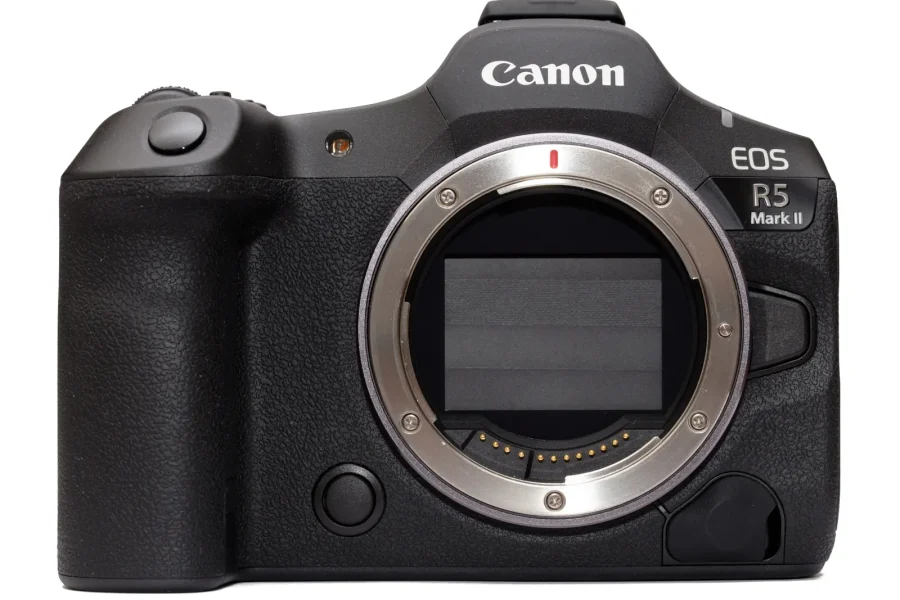
Canon’s EOS R7 specifications list a 32.5-megapixel APS-C sensor, sensor-shift image stabilization and an RF mount that natively supports RF and RF-S lenses. Canon lists compatible EF/EF-S lenses via specified adapters, but EF-M lenses are not compatible. These mount distinctions matter when someone offers a “cheap Canon lens” with a used body. Verify the exact product before building your budget.
The R7 is worth testing for wildlife or sports if cropping and long-lens options matter to you. More pixels can give flexibility, but an out-of-focus or motion-blurred bird does not become sharp through cropping. Bring the actual long lens and shoot repeated passes in representative light. Compare tracking, buffer recovery, viewfinder behavior and file quality at your delivery size. Canon’s stabilization claim is measured under particular lens conditions; it cannot freeze the bird.
If you use RF-S lenses and later consider a full-frame RF body, check image coverage and the resulting crop behavior. If you adapt an EF telephoto, test focus and balance rather than assuming every combination works like a native lens. For indoor work, account for lens aperture and lighting, not only the sensor format. The R7 may be the right kit when its lenses and controls solve your work; megapixels alone do not settle it.
Fujifilm X-T5: high-resolution APS-C stills
Fujifilm specifies a 40.2-million-pixel APS-C X-Trans CMOS 5 HR sensor, X mount and five-axis sensor-shift stabilization for the X-T5. Its full-resolution 3:2 still is listed at 7728 × 5152 pixels. That is worth investigating for landscapes, architecture detail or portraits where the lens resolves enough detail and you need crop room. It also increases file size and editing load. Make a sample shoot and time the workflow.
Fujifilm’s published fastest electronic shutter figures have caveats, including potential limits for fast movement, handheld shooting and flash. Do not make the X-T5 a sports recommendation by copying a maximum shutter-speed number. Try the mechanical and electronic modes for your subject and lighting, then inspect rolling distortion and banding. If you photograph people under stage lights, that test matters more than an extreme numerical shutter limit.
Choose X-mount lenses for the field of view, aperture and size you need. Try the physical control layout with a glove or in changing light if that is how you shoot. Fujifilm’s film simulations can be useful JPEG starting looks, but compare your own files and skin tones. The high-resolution sensor is a tool, not a guarantee of superior color or a replacement for composition and light.
Sony a6700: compact E-mount hybrid candidate
Sony lists an approximately 26.0-megapixel APS-C sensor, E mount, raw stills, five-axis sensor-shift stabilization and a single SD UHS-I/II-compatible slot for the a6700. It offers multiple movie formats, but each resolution, frame-rate, color-sampling and media combination must be checked separately. If video is part of your paid delivery, write those requirements before shopping rather than assuming “hybrid” covers every codec and recording condition.
Try a lens that matches your actual work. A compact body with a large telephoto may not balance the way a product photograph suggests. Test the grip, finder and screen, card and battery access, external microphone setup and whether you can change focus modes quickly. For a travel or family kit, the body may feel right with a small standard zoom or prime. For long-lens action, a different grip or support may matter more than a few hundred grams on a chart.
Single-slot recording may be acceptable for many personal jobs but not every paid event. Make raw and video files with the cards you would use, transfer to your computer and confirm the edit software handles the chosen format. Sony’s 5-stop stabilization number is under specified CIPA conditions with a particular lens; photograph several handheld trials with your lens instead of treating it as a fixed shutter allowance.
Fujifilm X-H2S: stacked-sensor speed and video
The X-H2S specification table lists a stacked APS-C X-Trans CMOS 5 HS sensor with approximately 26.16 million effective pixels, a Fujifilm X mount, five-axis sensor-shift stabilization, a CFexpress Type B slot and an SD slot. It lists high electronic burst modes and 6.2K and internal ProRes recording options. That combination merits attention if action or video formats are central to your work. It may be unnecessary expense and media complexity if most of your images are static and a less demanding body meets the brief.
The table’s highest electronic burst is approximately 40 frames per second, but buffer depth changes with raw format and recording settings. The fastest rate does not establish sustained tracking, sharpness or a better photograph. Try repeated passes with your lens, write cards and actual raw setting; count in-focus images over the entire burst. Test pre-shot behavior only if the moments you cover benefit from it. More frames can mean more storage and more culling without more decisive images.
For video, confirm the exact 6.2K or 4K format, frame rate and card it requires. Fujifilm specifies that internal ProRes needs CFexpress Type B; do not expect it from a convenient SD card. Record enough footage to test power, heat, audio and edit performance under your conditions. For a fuller comparison of its X-H2S strengths and limits against another high-speed system, see our X-H2S versus OM-1 Mark II guide.
Compare the system, not one headline number
These five cameras span about 20.9 to 40.2 million effective pixels, but image dimensions alone do not measure the sharp files you will deliver. Exposure, lens quality, focus, subject motion and processing all matter. If your output is a modest web gallery, file handling or focus reliability may be a bigger issue than the widest possible crop. If you print large with close inspection or routinely crop wildlife, test the final print and see whether the extra pixels help. Do not pay for a number without looking at your own result.
Likewise, in-body stabilization is available on several of these bodies and its absence or configuration matters, but published stop ratings come from different lenses and test conditions. Test your own hands and focal lengths. An electronic shutter can be silent and fast, but moving subjects and flickering light can reveal distortion or banding. A longer burst can be useful, but it can also fill a card and your editing queue. A balanced setup solves a real shoot, not a spreadsheet.
For lens economics, list one normal lens, one lens for the subject you most care about, and any special lens that would make or break the purchase. Compare new and used prices for those exact items when you are ready to buy. Add a card and reader that support your intended recording mode, a spare battery, taxes and any needed support. Body-only comparison prices expire quickly. There is no universal 40 to 50 percent discount on “one generation behind” gear, and no universal three-to-five-year replacement calendar.
Run a practical comparison in one afternoon
Rent two finalists if possible, or test them at a retailer with a return policy you understand. Use comparable fields of view and keep the files separate and labeled. Photograph a static textured scene for detail, a high-contrast scene for highlights and shadows, and a moving subject if action matters. Record a representative video clip with audio if you need video. Repeat instead of trusting the single nicest frame from each.
On the computer, compare at the final size you will deliver and note editing time, not just a 100-percent pixel peek. Count missed focus in full sequences, check buffer recovery and card write time, review video and audio in your editor, and see whether controls caused mistakes. If you cannot make an honest side-by-side test, write that uncertainty down rather than claiming a decisive winner. A retailer’s demo and a manufacturer specification cannot replicate a month of work.
Before placing an order, verify the exact listing: new or used, body or kit, sensor/model designation, included battery, current warranty, return deadline and final total. If a lens is part of the deal, confirm mount and item condition. Do not use this guide as proof that stock, a promotion or a price is still available. The camera buyer guide can help organize an inspection when you are deciding between used and new.
Questions about the best APS-C camera in 2026
Which APS-C camera is best for beginners?
The Nikon Z50II is a reasonable starting candidate if its controls, Z lenses and single card slot suit you. Other bodies can fit a beginner too. Try handling and menu choices with the lens you can afford, and buy for the photographs you plan to make, not a “beginner” badge.
Which one gives the most resolution?
Among these five, Fujifilm lists 40.2 million effective pixels for the X-T5. That can help with crop room when the lens and technique support it. It is not proof of the sharpest result in every scene.
Is the Canon EOS R7 the automatic wildlife choice?
No. Its 32.5-megapixel sensor and RF lens system make it worth testing for reach and detail, but autofocus yield depends on lens, light, subject and settings. Compare the complete kit and full sequences against another finalist.
Does a camera with more frames per second take better action pictures?
Not by itself. A high burst can catch a moment, but tracking, buffer depth, lens behavior, shutter effects and the photographer’s timing matter. Test the intended raw format and card rather than copying a maximum rate.
Can I use my older lenses on a new APS-C body?
Sometimes, with a compatible native mount or a specific adapter. Check image coverage, autofocus, stabilization, size and controls for the exact lens-body pair. Canon’s RF camera does not accept EF-M lenses; EF/EF-S adapters are a separate route.
Should I upgrade every three to five years?
No fixed interval applies. Upgrade when a real limitation costs work or effort and a tested alternative solves it at a justified total cost. A lens, lighting or skill change may help more than replacing a working body.
The honest pick
Pick the system whose lens kit and body pass your own assignment checklist. The Nikon Z50II, Canon EOS R7, Fujifilm X-T5, Sony a6700 and Fujifilm X-H2S each provide a credible route for a different emphasis. This article documents manufacturer features and practical tests to run; it does not claim Edin personally shot all five, rank their undocumented keeper rates, or promise a current deal. Once the lenses and deliverables are clear, the choice gets much easier.