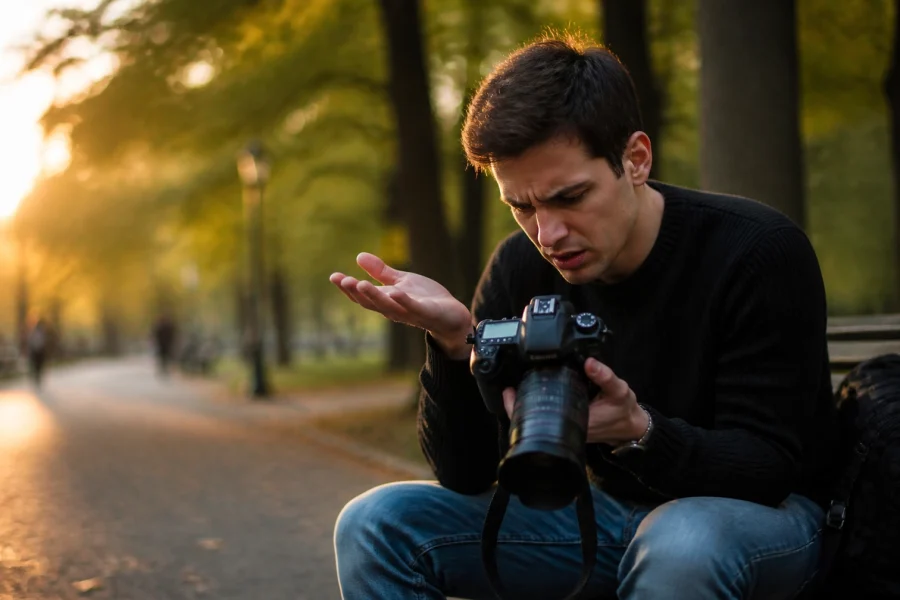
Let’s be honest: street photography is exhausting. You’re walking miles, dodging tourists, and trying not to look like a creep while aiming your lens at strangers. After a while, everything starts to look the same. You see the same crosswalks, the same guy on a bench, and the same pigeons. Your Instagram feed starts to feel like a Groundhog Day loop of urban boredom.
If you’re feeling uninspired, you don’t need a new camera (though checking out the latest mirrorless cameras never hurts). You just need a new way of looking at the chaos. Street photography is more than just "taking pictures of people outside." It’s about finding the extraordinary in the painfully ordinary.
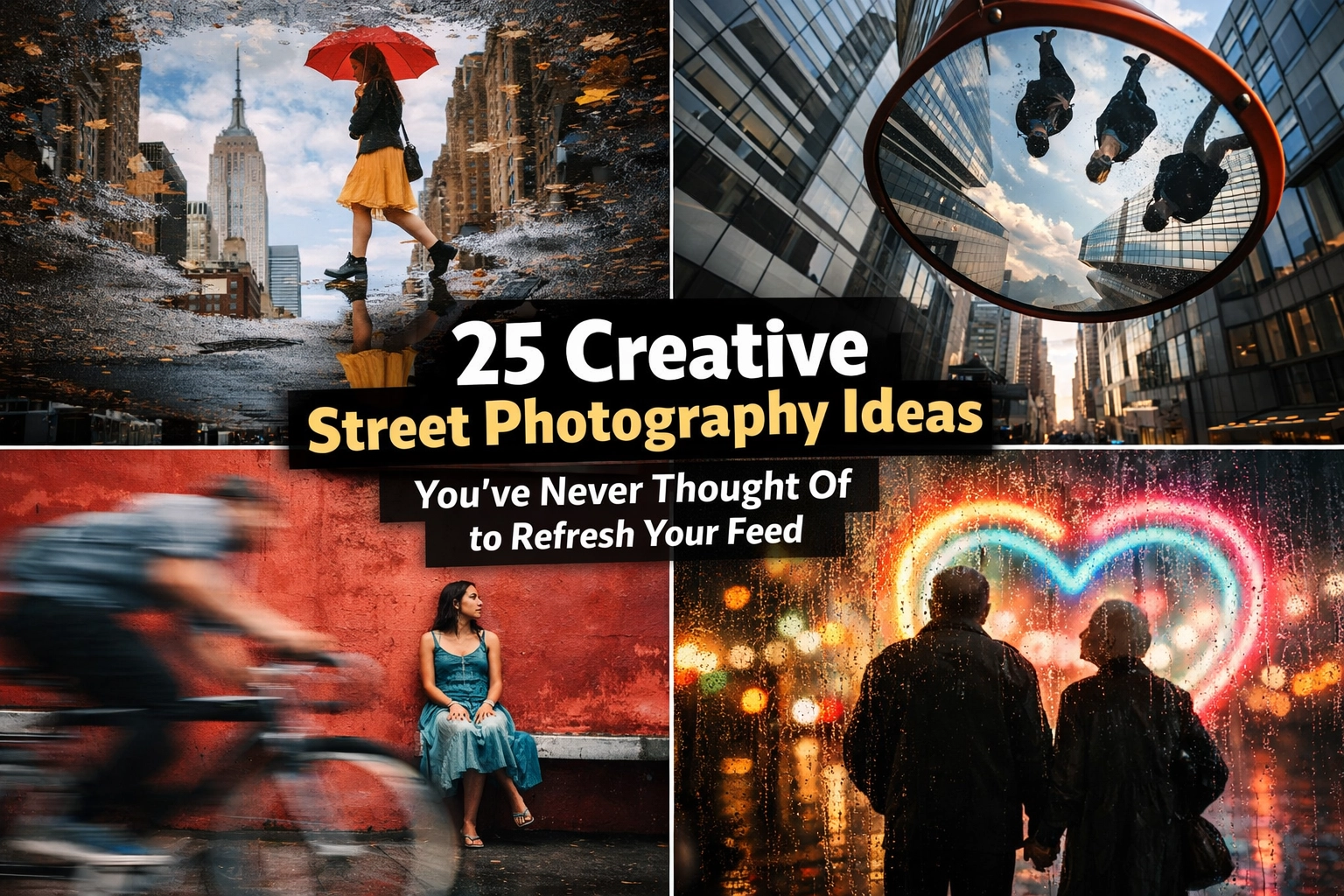
Here are 25 creative street photography ideas to get you out of your funk and back into the flow.
1. Silhouettes with Backlighting
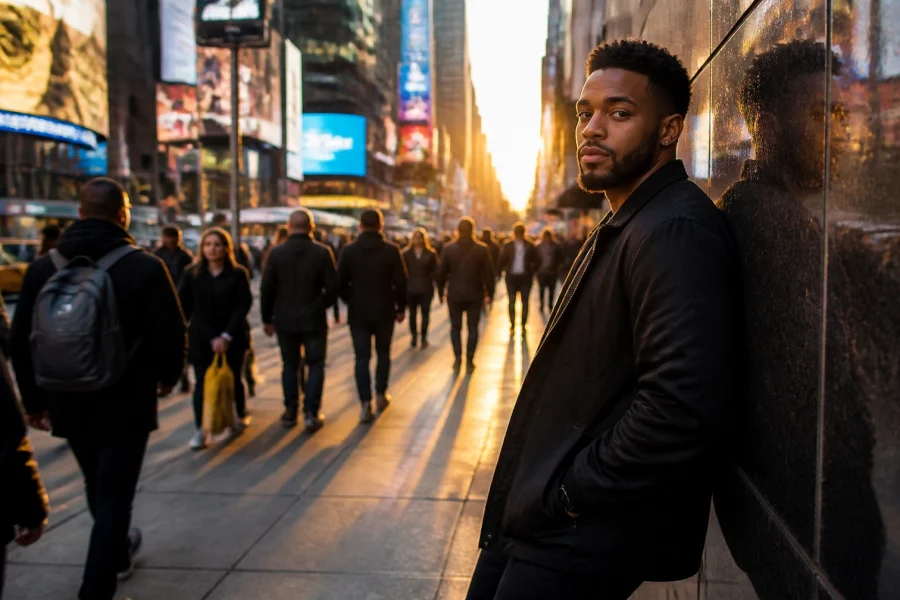
The easiest way to make a photo look professional? Hide the details. Find a strong light source: like a setting sun or a bright storefront: and wait for a person with a recognizable shape to walk in front of it. Underexpose your shot to turn your subject into a black cutout. This adds a layer of mystery that keeps people looking at your feed longer.
2. Shadows and Dramatic Patterns
Sometimes the shadow is more interesting than the person casting it. Look for architectural elements like railings, fire escapes, or slats that create geometric patterns on the sidewalk. When someone walks through those lines, they become part of a larger graphic design. For more on capturing unique visual elements, check out our guide on using rare textures.
3. Neon Reflections on Wet Streets
Rain is a street photographer’s best friend. Don't hide inside. When the sun goes down and the neon signs turn on, look at the puddles. The mix of vibrant colors and the distorted texture of wet pavement creates a painterly, almost abstract look. It’s an instant mood booster for your portfolio.
4. Street Tunnels with Light at the End
Tunnels provide a natural frame. By positioning yourself in the dark middle of a tunnel and shooting toward the exit, you create a "light at the end of the tunnel" effect. The high contrast between the dark foreground and the bright exit creates a silhouette that pulls the viewer's eye straight to the subject.
5. High-Key, Dreamlike Photography
Forget the gritty, dark look for a minute. Try blowing out the highlights. Shoot in bright, midday sun and intentionally overexpose. This creates a soft, ethereal vibe that feels more like a memory than a news report. If you’re struggling with exposure settings, our Manual Mode 101 guide will help you dial it in.
6. Motion Blur with Moving Cars
The city never stops, so why should your shutter? Use a slow shutter speed to capture the streaks of headlights or the blur of a passing bus. It communicates the frantic energy of urban life in a way a sharp photo never can. It’s also a great way to hide distracting details in the background.
7. Cyclists with Motion Blur
Cyclists move at a rhythm that's faster than walkers but slower than cars. This makes them perfect subjects for motion blur. If you use a shutter speed around 1/15th of a second, the bike and rider will look like they’re warping through space. It’s dynamic, energetic, and looks great on a grid.
8. Crowds with Motion Blur
Ever feel like the city is just a giant machine? Use a tripod (or a very steady hand) and a long exposure in a busy subway station or crosswalk. The static environment will stay sharp while the crowd becomes a ghostly, colorful wave of motion. This is a classic technique used by pros you might see on Shut Your Aperture.
9. Panning for Vibrant Life
Panning is the art of tracking your subject at the same speed they are moving. If you get it right, the subject stays relatively sharp while the background streaks past. It’s hard to master, but when you nail it with a street performer or a skater, it’s pure magic.
10. Street Performers in Motion
Instead of just taking a portrait of a street musician, try to capture the movement of their hands or the sway of their body. Using a slightly slower shutter speed adds "soul" to the image. It captures the sound through the visual blur.
11. Focus on Forms and Colors
Take a break from "subjects" and look for shapes. Spend an entire hour only looking for the color red, or only looking for circles. This forces your brain to stop looking for people and start looking for composition. It’s a great exercise to sharpen your eye, a technique often discussed over at Edin Chavez’s personal blog.
12. Shoot the Back
You don't always need a face to tell a story. Sometimes the back of a person: their posture, the way they carry their bag, or the jacket they’re wearing: is more telling than their expression. Plus, it’s way less intimidating if you’re shy about street photography.
13. Reflections through Windows
Storefront windows offer a double-exposure effect without the Photoshop work. You get the mannequins inside mixed with the street life reflected on the glass. It’s a complex, layered way to tell a story about consumerism and the city.
14. Silhouettes Against Bright Backgrounds
This differs from backlighting because it’s about the environment. Find a giant, brightly lit billboard or a white wall in direct sun. Wait for a subject to pass by. It’s minimalist, clean, and highlights the human form in a sea of urban architecture.
15. People Photographing
Meta, right? Photographers are weird people. We crouch, we lean, and we stare intensely at things no one else notices. Capturing another photographer in their element is a fun way to document the culture of the craft itself. You can find some great examples of this lifestyle at proshoot.io.
16. Hands and Feet Close-ups
A person’s hands can tell you their entire life story. The way a businessman grips his briefcase or how an elderly woman holds her grocery bag is incredibly poignant. Get low and get close. These "micro-stories" add a lot of heart to your "Photo Series."
17. Hair and Natural Poses
Street photography is often associated with faces, but hair can be incredibly sculptural. Capture the wind blowing someone’s hair or the way someone twirls a strand while waiting for the bus. These small, subconscious gestures are the peak of candid photography.
18. Glancing Over the Shoulder
There is something inherently cinematic about someone looking back. It suggests they are being followed, or they’re looking for someone, or they’re leaving something behind. This "look-back" shot adds immediate narrative tension to your feed.
19. Street Portraits
Don't be afraid to actually talk to people. Ask for a portrait. While candid shots are the bread and butter of street photography, a directed street portrait allows you to capture the soul of a stranger in a more controlled way. If you want to see how high-end street portraiture looks, check out Edin Fine Art.
20. Street Art and Graffiti
Don't just take a photo of the mural. Use the mural as a background for a living subject. Find a piece of street art and wait for someone to walk by who either matches the art or contrasts with it perfectly. It’s a collaboration between you, the muralist, and the pedestrian.
21. Urban Geometry and Patterns
Architecture is the skeleton of the city. Look for leading lines in bridges, the repetition of windows in a skyscraper, or the symmetry of a subway staircase. These shots work exceptionally well in black and white, where the focus is entirely on the structure.
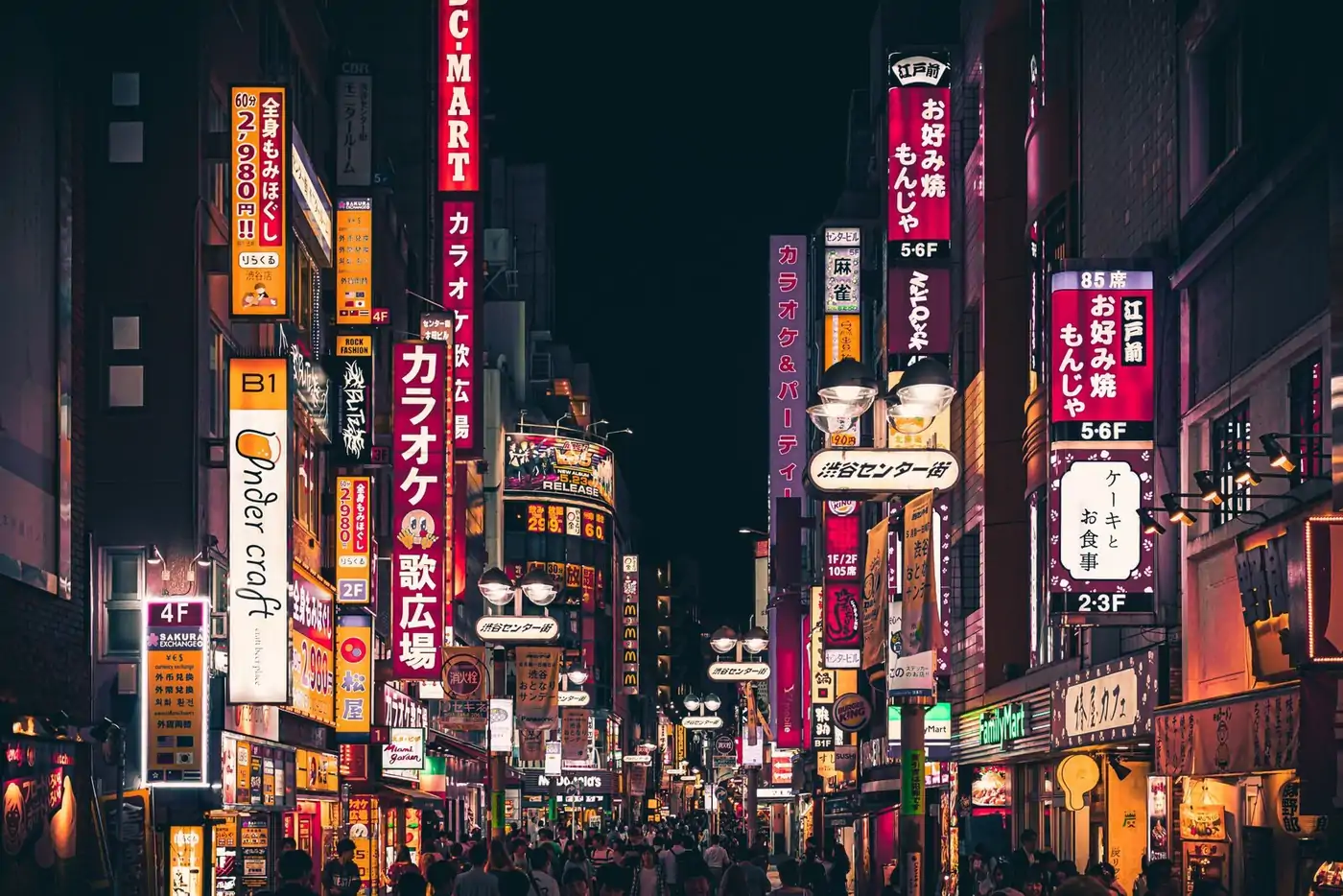
22. Neon Signage at Night
Neon is iconic. But instead of just shooting the sign, focus on how the light hits the people standing near it. Neon creates very specific, localized color casts that look incredible when edited. When you’re back at your desk, using a tool like Luminar can help you pop those specific neon hues to make the image truly stand out.
23. Nightlife and Business Districts
The energy changes after 10 PM. The suits are gone, and the revelers are out. The lighting is harsher, the shadows are deeper, and the emotions are more raw. It’s a different world that deserves its own spot in your portfolio.
24. Repeated Location Over Time
Pick one street corner. Go there every Saturday for a month. You’ll start to notice the "characters" of that neighborhood. You’ll see how the light changes. This kind of "Photo Series" project shows dedication and helps you find deep stories that a one-off visit would miss.
25. Everyday Objects and Water Effects
A discarded coffee cup, a fire hydrant, or water splashing from a fountain. These small details are part of the street experience. Use a fast shutter speed to freeze water droplets or a slow one to make them look like silk. It’s about finding beauty in the things we usually walk right past.
Leveling Up Your Workflow
Coming up with the ideas is only half the battle. The other half is what you do with the images once you get home. Street photography often results in a lot of "almost" shots that need a little push in post-processing. Whether it's fixing the white balance on a neon shot or bringing out the textures in a sidewalk, your editing suite is your best friend. We highly recommend playing around with Luminar for its intuitive AI tools that can save a lot of time on tedious edits.
If you’re looking to go professional with your street work or need a space to produce high-end content, Edin Studios offers the resources you need to take your hobby to a career level.
Final Thoughts
Street photography is a marathon, not a sprint. You won't get 25 "bangers" in one day. But if you head out with one or two of these specific ideas in mind, you’ll find yourself looking at the world differently. You’ll stop seeing a crowd and start seeing a "motion blur opportunity." You’ll stop seeing a rainy street and start seeing a "neon reflection canvas."
Get out there, keep your eyes open, and don't forget to shut your aperture every once in a while to see what happens.
Categories: News, PHOTO SERIES, TUTORIALS, TRAVEL
Tags: News, PHOTO SERIES, TUTORIALS, TRAVEL