If you’ve picked up a camera lately, or even just scrolled through your favorite photography news feed, you’ve probably noticed a massive shift. It’s not just about more megapixels or faster shutter speeds anymore. We are living in the era of the AI-powered camera. It’s March 2026, and the tech inside our bags has become smarter than we ever imagined.
For some, it’s a bit scary. For others, it’s the most exciting time to be a creator. Whether you are looking for photography for beginners tips or you’re a seasoned pro, the latest AI camera gear is changing the game. It’s making the "impossible" shots easy and the "hard" shots a total breeze.
In this post, we’re going to dive deep into why everyone is buzzing about AI gear, how it’s revolutionizing different styles of photography, and why you might want to consider upgrading your kit.
The Brains Inside the Box
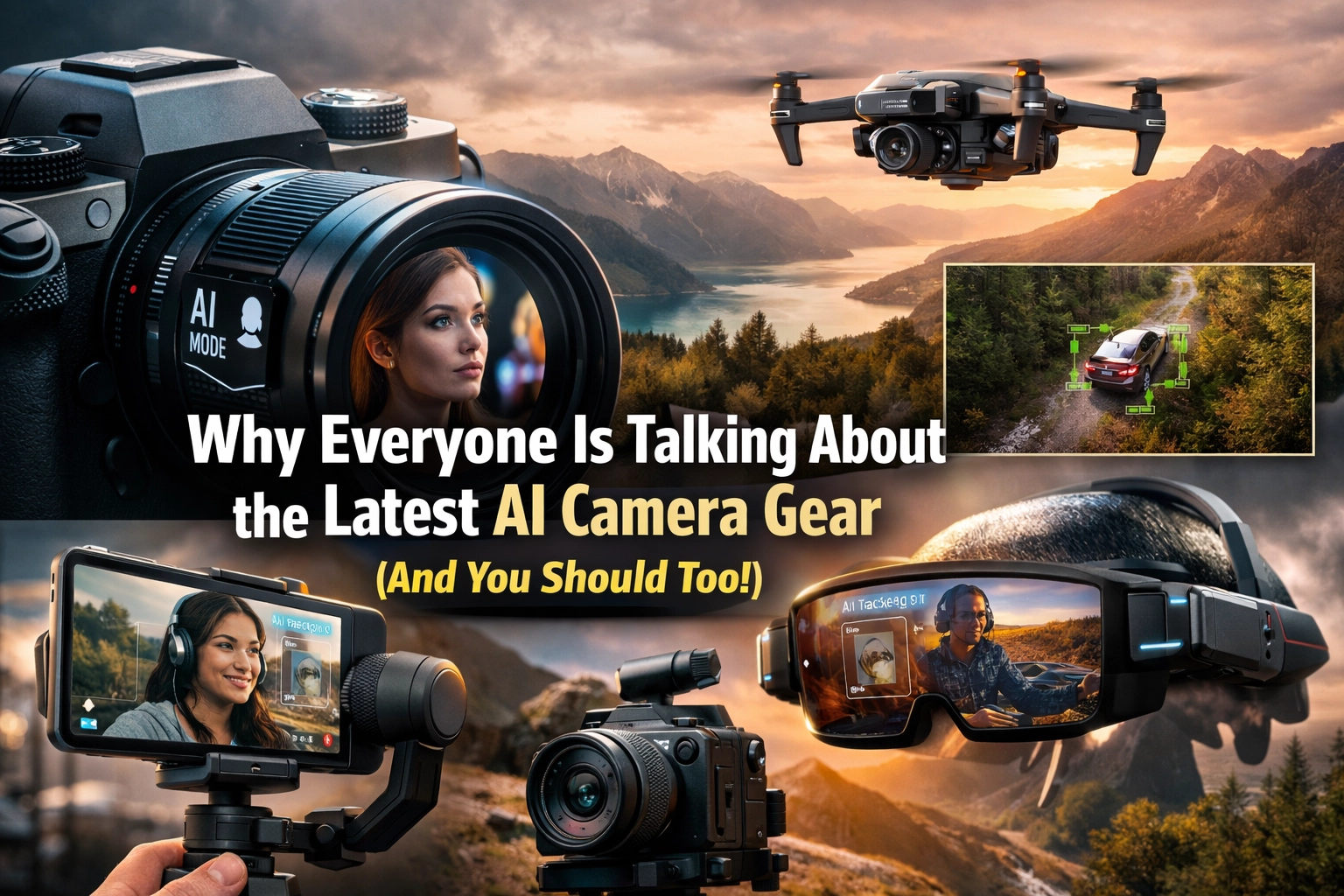
The biggest change in the best mirrorless cameras today isn't the glass on the front; it’s the processor inside. We’ve moved away from cameras being passive recording devices. Now, they are intelligent systems that see, analyze, and respond in real-time.
Take autofocus, for example. We used to struggle with getting a sharp eye in a portrait or keeping a bird in focus as it zipped through the trees. Now, AI-driven autofocus systems in the latest bodies from Sony, Canon, and Nikon can identify specific subjects instantly. They don’t just look for "a face"; they look for "a bird’s eye," "a car’s headlight," or even "a plane’s cockpit."
![A professional photographer using a modern mirrorless camera with an AI-interface overlay showing real-time subject tracking and data on the LCD screen.]
 Save
SaveThis level of intelligence means that beginners can achieve results that used to take years of practice. If you are just starting out, checking out our manual mode 101 guide is still vital, but AI is like having a co-pilot who handles the heavy lifting while you focus on the art.
Revolutionizing Photography for Beginners
Let’s be honest: photography can be intimidating. You have to worry about the exposure triangle, composition, and timing all at once. AI gear is lowering the barrier to entry.
With modern photography tutorials, we often talk about the "decisive moment." AI cameras now offer "pre-capture" modes. The camera starts recording images the second you half-press the shutter. If you’re a fraction of a second late hitting the button when a whale jumps out of the water, the camera has already saved the frames leading up to it. It’s basically cheating, in the best way possible.
If you’re wondering where to start, looking into how to choose the best mirrorless cameras is a great first step. The gear available in 2026 makes learning so much more intuitive.
Landscape Photography Tips in the AI Age
Landscape photography has always been about patience. You wait for the light, you set up your tripod, and you hope for the best. While AI can't change the weather (yet), it can change how you capture it.
Modern AI sensors can now perform real-time computational RAW stacking. Instead of taking one long exposure and hoping you don't blow out the highlights, the camera takes dozens of images and merges them instantly to create a file with a dynamic range that exceeds what the human eye can see.
When looking for landscape photography tips, remember that your gear is now a powerful computer. You can find more inspiration for your next trip over at blog.edinchavez.com or browse high-end prints at www.edinfineart.com to see what’s possible with modern tech.
![A breathtaking landscape at sunset with a wide-angle lens view, featuring ultra-detailed peaks and vibrant sky colors, representing the peak of AI-enhanced dynamic range.]
SavePortrait Photography Techniques and AI
If you’re into people, AI is your best friend. Portrait photography techniques used to rely heavily on expensive lenses with wide apertures to get that creamy background blur (bokeh).
Now, AI can map depth in a scene even with a standard lens. It can identify the subject and apply a natural-looking blur that mimics the most expensive glass. But it doesn't stop there. AI can now adjust lighting after the shot is taken. If your subject’s face was a little too dark because of a harsh shadow, the camera (or software) can intelligently relight the face while keeping the background untouched.
When it comes to editing those portraits, tools like Luminar have pioneered this "AI-first" workflow. It allows you to retouch skin, enhance eyes, and adjust lighting with a few clicks rather than hours of tedious masking.
Street Photography Ideas: Staying Stealthy with AI
Street photography is all about being fast and discreet. One of the best street photography ideas for 2026 is to lean into the AI's "silent" capabilities.
AI-enhanced cameras are now smaller and more powerful. They can track a subject through a crowded market in Istanbul without you ever having to look at the screen. You can shoot from the hip, knowing the AI is locked onto the person’s eye. This allows you to stay present in the moment rather than fiddling with settings.
For more technical deep dives, Shut Your Aperture is a fantastic resource for mastering these newer techniques.
Beyond the Traditional: AI Gear Highlights from CES 2026
The photography news coming out of CES 2026 has been wild. We aren't just seeing new cameras; we’re seeing new types of sensors.
- Birdbuddy 2 Mini: This is basically "Shazam for birds." It’s a compact AI camera that identifies birds by both their feathers and their song. It’s perfect for nature lovers who want to document what visits their garden without needing a 600mm lens.
- Dreame Leaptic Cube: A modular 8K action camera that uses AI for "infinite stabilization." You could drop this thing down a flight of stairs and the footage would look like it was shot on a professional gimbal.
- Autonomous Vision Sensors: We are seeing gear like the Mountain IBEX, which can monitor remote environments for wildfires or wildlife without needing a human to check the feed.
These innovations are proving that AI isn't just a filter, it’s a fundamental shift in how we capture the world. For more updates on the business of photography, check out www.edinstudios.com.
![A futuristic, compact modular action camera sitting on a rock in a rugged environment, symbolizing the new wave of AI gear shown at CES 2026.]
SavePhoto Editing Tutorials: The AI Workflow
The revolution doesn't stop when you click the shutter. Photo editing tutorials are looking very different these days. Gone are the days of spending three hours removing a power line from a beautiful shot.
With generative AI built into software and even some cameras, you can simply circle an object and tell the AI to "remove it." The software analyzes the surrounding pixels and fills in the gap perfectly. It saves time, which means you can spend more time out in the field shooting and less time hunched over a desk.
If you’re looking to level up your post-processing, check out the resources at www.proshoot.io for professional-grade workflows.
Why You Still Need to Learn How to Use Manual Mode Camera
You might be thinking, "If the camera does everything, why do I need to learn anything?"
That’s a fair question. But here’s the truth: AI is a tool, not a replacement for your vision. Learning how to use manual mode camera settings gives you the foundation to tell the AI what you want.
Think of it like a self-driving car. It can stay in the lanes and avoid hitting things, but you still need to tell it where you want to go. If you want a specific "look", like intentional motion blur or a very specific exposure for a silhouette, you need to know how to override the AI's "perfect" settings to get your "artistic" settings.
![A split-screen view: one side showing a classic vintage camera dial, the other side showing a futuristic digital AI interface, representing the balance between manual control and AI assistance.]
SaveCheck out our ultimate guide to today's news to see how pros are balancing these two worlds in videography and photography.
The Future: What’s Next for AI and Cameras?
We are just scratching the surface. In the near future, we can expect AI that can predict weather patterns for landscape photographers or suggest better compositions in real-time through the viewfinder. Imagine your camera whispering in your ear, "Hey, if you step two feet to the left, you'll have a better leading line."
While some purists might roll their eyes, the goal of Shut Your Aperture has always been to make photography accessible and fun. AI gear is doing exactly that. It's stripping away the technical frustrations and leaving us with the pure joy of creation.
Whether you're looking for the best mirrorless cameras or just trying to figure out how to take better photos of your kids, embracing AI is the way forward.
Don't be afraid of the tech. Use it. Push it. See what it can do. And most importantly, keep shooting.
For more inspiration, tutorials, and gear reviews, keep browsing our site. We’ve got everything from cinematic techniques for real estate to deep dives into the latest sensors.
Categories: News, TUTORIALS
Tags: photography for beginners, landscape photography tips, best mirrorless cameras, street photography ideas, portrait photography techniques, photography tutorials, photo editing tutorials, photography news, camera gear reviews, how to use manual mode camera, Luminar, News, PHOTO SERIES, TUTORIALS, TRAVEL