
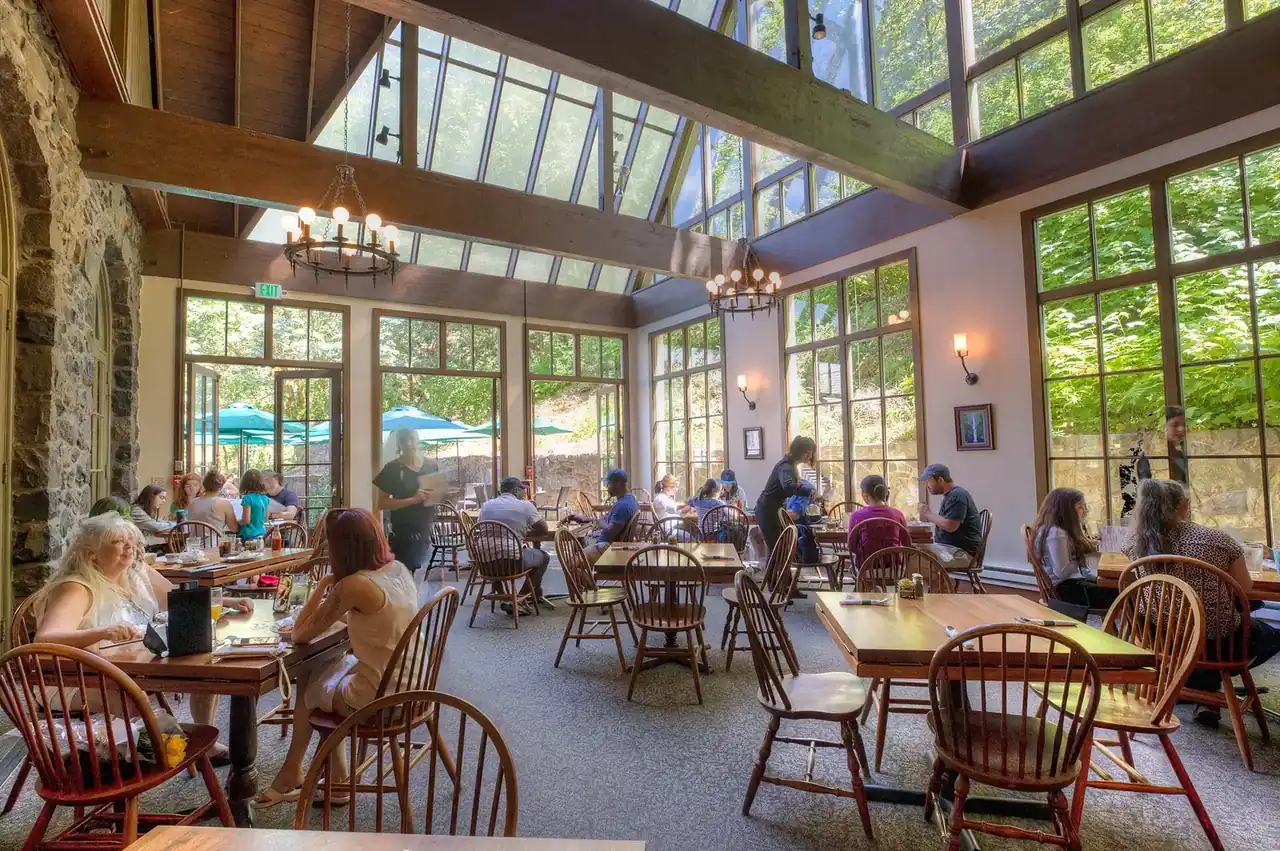
Multnomah Falls drops 611 feet in two tiers on the Oregon side of the Columbia River Gorge, making it the tallest waterfall in Oregon and one of the most visited natural attractions in the Pacific Northwest. The Benson Bridge spans the falls between the upper and lower drops, providing a mid-level vantage point that no other major US waterfall offers.
Best Time to Shoot
Overcast days are ideal — the waterfall is lit evenly and the gorge walls show full color saturation without harsh shadows. Peak flow is March through May. Summer weekends are extremely crowded; visit early morning on weekdays or in November-February when flow is still high but visitor numbers drop significantly. For practitioners, see our breakdown of shutter for street motion. For practitioners, see our breakdown of Library module workflow. For practitioners, see our breakdown of aperture and diffraction.
How to Get There
Multnomah Falls Lodge is off Interstate 84 Exit 31, 30 miles east of Portland. A timed entry permit is required from May through October ($2 per vehicle) — reserve at recreation.gov. The base area is paved and accessible. The Benson Bridge is a 5-minute walk up. The top-of-falls viewpoint is a 2.2-mile round trip with 690 feet of gain.
Camera Settings
At the base: 16-24mm, f/11-f/16, ISO 100, 1/2 to 2 seconds on a tripod for silky water. Polarizer is essential — it cuts the mist haze and brings out the gorge greens. From the Benson Bridge: 24-35mm frames both tiers cleanly.
Recommended Gear for This Spot
Common Mistakes
- Shooting in direct afternoon sun, which creates hard shadows across the rock face.
- Forgetting a rain cover: the mist zone at the base soaks gear faster than rain.
- Not checking the permit requirement before driving out — the lot fills by 7 a.m. on summer weekends without a reservation.
- Shooting only from the base: the Benson Bridge view is more interesting and far less crowded.
A Columbia River Gorge waterfall photography tour covers Multnomah, Latourell, and Crown Point in one guided day with guaranteed timed entry. Browse Multnomah Falls photography tours to find options that fit your schedule.
For more location guides like this, see the Landscape Photography Guide on Shut Your Aperture. Browse all spots on the USA OR photo spots hub.
What to Pack
A focused landscape kit handles every shot at Multnomah Falls without breaking your back. Here is the working photographer's pack list — every link goes to B&H Photo Video (our primary supplier) or Amazon (for accessories and same-day delivery in the US).
| What & Why | B&H | Amazon |
|---|---|---|
Wide-angle zoom (14-35mm range) The single most important lens for sweeping vistas. Pair with a circular polarizer for skies and water. | Shop B&H → | Shop Amazon → |
Sturdy travel tripod Carbon fiber, packs to 15 inches, holds steady in wind off the coast. Essential for blue-hour and long-exposure work. | Shop B&H → | Shop Amazon → |
Circular polarizer (77mm or 82mm) Cuts haze, deepens sky, reveals texture in water. Non-negotiable for landscape work. | Shop B&H → | Shop Amazon → |
10-stop ND filter For 30-second exposures that turn moving water and clouds into silk. | Shop B&H → | Shop Amazon → |
Extra batteries (3 minimum) Cold weather and long exposures eat batteries. Carry triple what you think you need. | Shop B&H → | Shop Amazon → |
Fast SD/CFexpress cards V90 or CFexpress depending on your body. Two cards minimum so a failure mid-trip is recoverable. | Shop B&H → | Shop Amazon → |
Microfiber lens cloths Salt spray, mist, and dust will ruin every shot if you don't carry a cloth. | Shop B&H → | Shop Amazon → |
B&H and Amazon links are affiliate links. We earn a small commission on purchases at no extra cost to you. We only recommend gear we use or would buy ourselves.