Moab is a town the size of a postage stamp wedged between two national parks, a state park, and the most photogenic stretch of red rock in North America. If you have a camera and four free days, you can come home with frames that look like you spent a month working the area. The catch is knowing where to point your tripod and when — because the difference between a forgettable shot and a portfolio shot here usually comes down to the angle of the sun and whether you arrived an hour earlier than you wanted to.
This is the working guide I wish someone had handed me my first trip. Where to be at sunrise, where to be at sunset, what lens to put on the body before you start hiking, and which spots reward the effort versus which ones are crowded for a reason. Nothing in here is theoretical — these are the locations photographers keep coming back to season after season.
Mesa Arch — Canyonlands Island in the Sky (sunrise)
 Save
Save
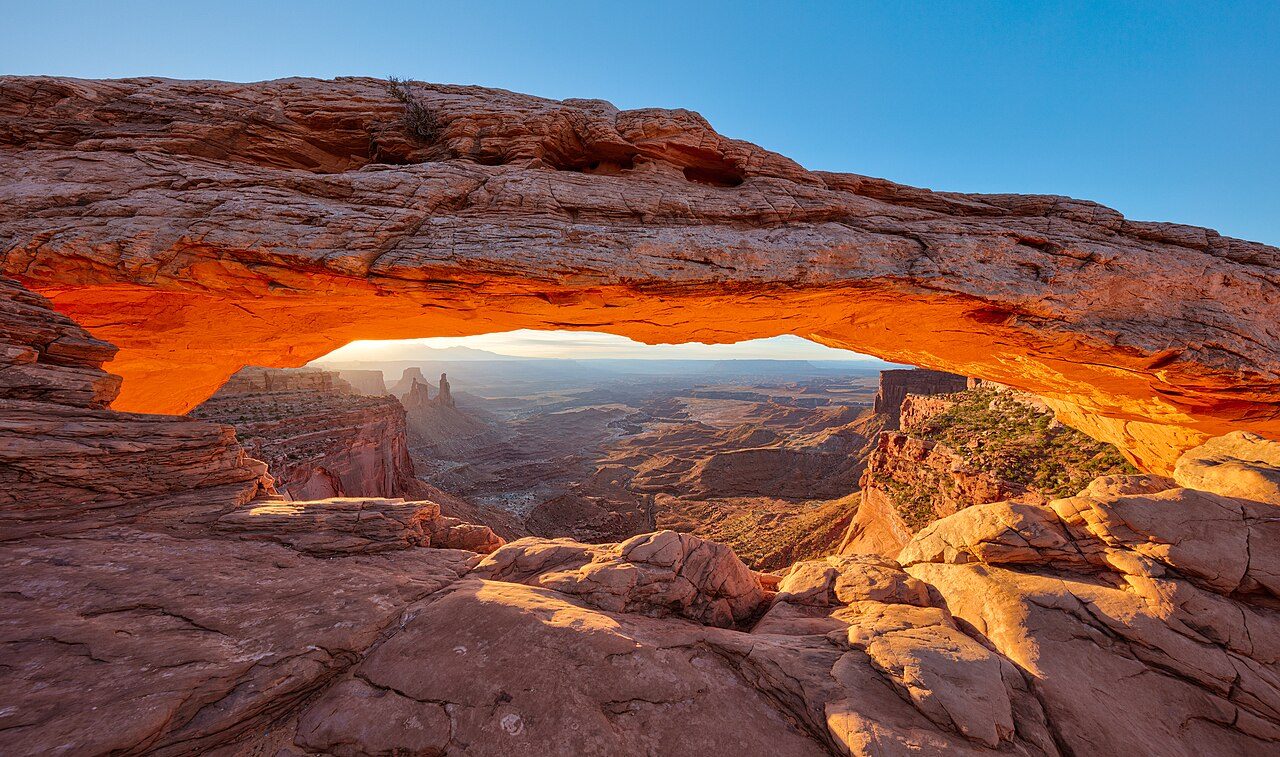
Mesa Arch is the postcard. The arch frames the canyon to the east, and at sunrise the first rays bounce off the underside of the arch and turn it incandescent orange. This is the single most famous photograph in Canyonlands, and you will not be alone — expect a wall of tripods at any time between April and October.
The play: arrive in the dark, ninety minutes before sunrise. The trail from the parking lot is half a mile and easy, but the shooting area is small. The front row is gone by the time the sky starts to lighten. Bring a wide lens — anywhere from 14mm to 24mm full-frame — and a polariser to cut glare off the sandstone. Shoot a bracket of exposures because the dynamic range from glowing arch to shadowed canyon will blow out one extreme or the other in a single frame.
If you control your aperture, your aperture choice here matters more than you’d think — f/11 to f/13 gives you front-to-back sharpness without losing edge detail to diffraction.
Delicate Arch — Arches National Park (sunset)
 Save
Save
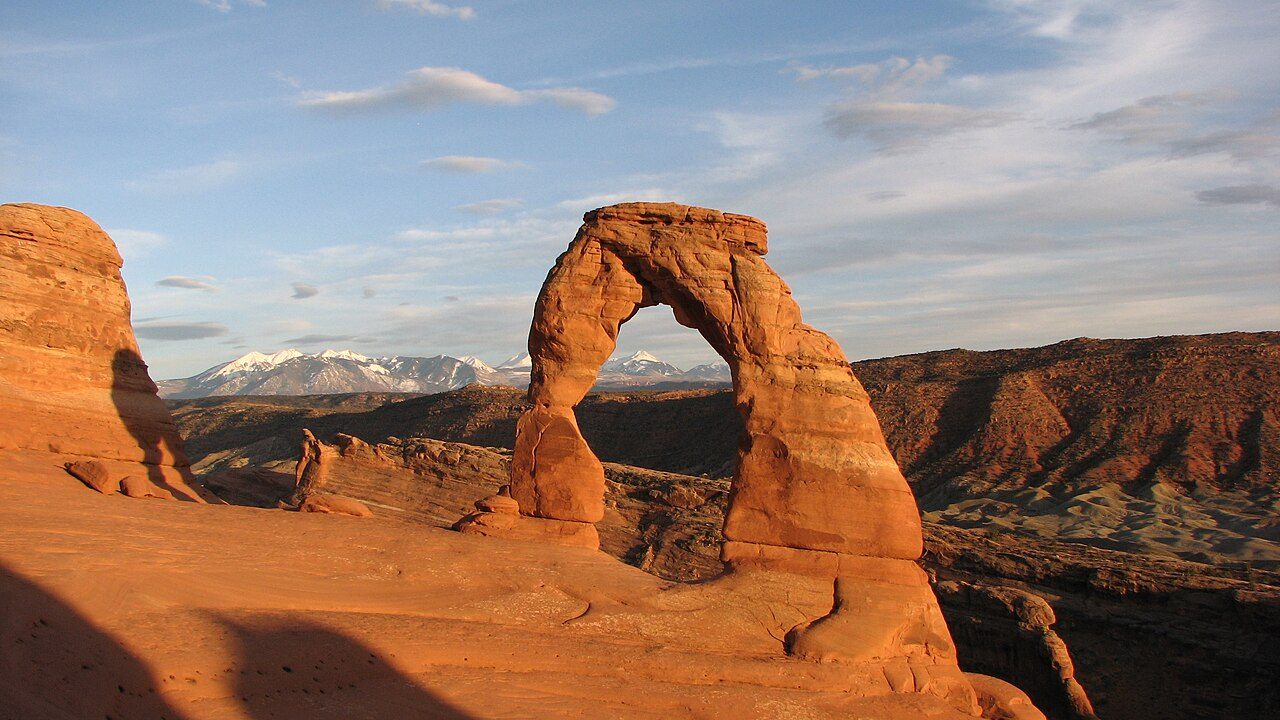
The other Utah license-plate icon. The hike is three miles round trip with about 480 feet of elevation gain across slickrock — moderate, but bring water and don’t underestimate the afternoon sun. The arch sits in a natural amphitheatre with the La Sal Mountains behind it, and at sunset the rock turns the colour of a hot ember.
Most photographers shoot from the bowl directly below the arch, which is fine but predictable. If you have time, work your way around to the rim trail above and to the left — you’ll get the arch with the snowcapped La Sals as a backdrop instead of an empty sky. The 24-70mm zoom range is your friend here because you’ll want to recompose as the light shifts.
Pack a headlamp. The hike back to the car after sunset is across smooth slickrock with no painted markers in the dark, and people get genuinely lost every year.
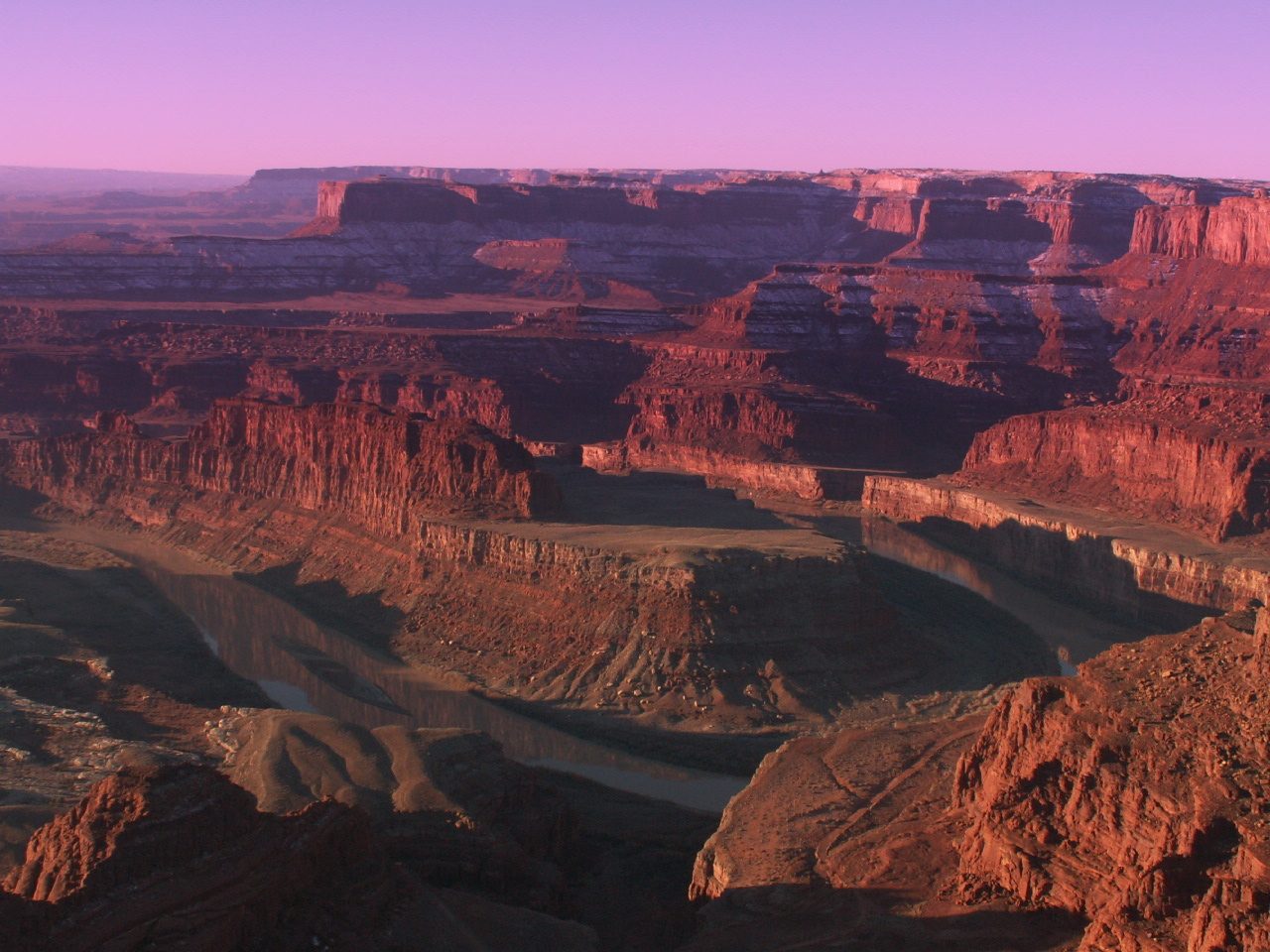
Dead Horse Point State Park (sunrise or sunset)
 Save
Save
The view is a 2,000-foot drop to the Colorado River carving a near-perfect horseshoe through layered sandstone — the same geological story as the more famous Horseshoe Bend in Page, Arizona, but with fewer tour buses. East-facing for sunrise, west-facing rim a short walk away for sunset.
This is where I recommend taking your time. The overlook stretches for a quarter mile and the foreground composition changes dramatically every twenty paces. Walk it before you commit to a tripod position. Polariser on, ISO 100, bracket exposures — the river often sits in shadow when the rim catches the sun.
Park fee is separate from the Arches/Canyonlands pass. Worth it.
Turret Arch and The Windows (sunrise)
Twenty minutes from the Arches park entrance and a five-minute walk from the parking lot. Three arches in close formation: North Window, South Window, and Turret Arch through the gap. The classic frame is Turret Arch shot through the North Window opening — at sunrise the rising sun hits the underside of Turret while the Windows stay in soft shadow, giving you a layered composition with depth.
This is one of the few sunrise spots in Arches where you can get a strong shot without a pre-dawn hike. Bring a 24-70mm and a tripod, and work the angles before the light hits its peak ten-minute window.
Park Avenue and Courthouse Towers (late afternoon)
The first major pullout inside Arches as you drive in from the highway. Park Avenue is a flat one-mile walk through a cathedral of sandstone fins and monoliths. The Courthouse Towers loom at the far end. Late afternoon light side-lights the towers and pulls texture out of the fins that disappears in midday flat light.
Wide angle for the corridor view, then switch to a 70-200mm telephoto for compressed compositions stacking the towers against the La Sals on the horizon. This spot is criminally underrated because most photographers race past it on the way to Delicate Arch.
Grand View Point — Canyonlands (sunset)
Drive to the southern end of Island in the Sky and walk the short paved path. The name is not marketing — you’re looking south across the confluence of the Green and Colorado Rivers, with the Needles District visible in the distance and the La Sal Mountains catching the last light to the east. Layers on layers on layers.
This is a telephoto spot more than a wide-angle spot. A 70-200mm or longer lets you isolate the distant spires as they catch alpenglow after the foreground has gone into shadow. Slightly less crowded than Mesa Arch, equally rewarding.
Corona Arch and Bowtie Arch (mid-morning)
Three miles round trip from a trailhead off Potash Road just outside town, on BLM land — no park fee. Corona Arch is enormous: 140 feet wide, 105 feet tall, and you can stand directly under it. Bowtie Arch is a 200-yard detour off the same trail, an unusual double-pothole arch in the roof of a alcove.
Mid-morning works because the sun is high enough to light the arch interior but the side walls of the canyon haven’t gone fully shadowed yet. Wide lens, vertical orientation for Corona to capture the scale, and don’t forget to look up.
Castle Valley and Fisher Towers (late afternoon)
Twenty miles north of Moab on Highway 128 along the Colorado River — one of the most scenic drives in the Southwest. Fisher Towers are a series of red sandstone spires that look like they were sculpted by a deranged artist; Castle Valley behind them is open ranch country surrounded by 2,000-foot cliffs.
This is a late afternoon and sunset spot. The Towers face west and catch direct sun until well into the evening, and Castle Rock — the iconic spire above the valley — has been on every Marlboro ad since the 1960s for a reason. Multi-day campers can shoot here at sunset, then drive twenty minutes to dark-sky locations for Milky Way work after twilight ends.
The Milky Way over Arches (April through September, new moon)
Both Arches and Canyonlands are International Dark Sky Parks. The Milky Way core rises in the southeastern sky from April through September, which lines up with the Windows section facing south. Park near the Windows turnout, walk in 100 yards, and frame the arches against the galactic core after astronomical twilight ends (roughly 90 minutes after sunset in summer).
Settings to start with: 14-24mm wide, f/2.8, ISO 3200-6400, 15-25 second exposure. A star tracker doubles what you can pull out of the sky but is not required. The right ISO setting on an astrophotography shoot is closer to the upper end than most landscape shooters are comfortable with — modern sensors handle ISO 6400 cleanly.
When to visit
Spring (late March through May) and fall (mid-September through October) are the photography sweet spots. Summer hits 100°F+ and the afternoon light is brutal. Winter is quiet, has the best chance of snow on red rock for striking contrast, but some side roads close after storms. November and February are underrated — daytime highs in the 50s, golden hour around 5pm instead of 8pm, and crowds drop sharply.
For trip planning, our travel photography pillar covers the workflow side of organising multi-location shoots like this.
What to Pack
Red rock country is hard on gear. Fine red dust gets into everything, and the dynamic range between glowing sandstone and shadowed canyon is brutal. Build your kit around that.
| Best for | Pick | B&H | Amazon | Why |
|---|---|---|---|---|
| Wide landscape body | Sony a7R V | Check at B&H | Check at Amazon | 61MP files hold up to aggressive shadow lifts on bracketed exposures. |
| Ultra-wide for arches | Sony FE 14mm f/1.8 GM | Check at B&H | Check at Amazon | Light enough for the Delicate Arch hike, fast enough for Milky Way at the Windows. |
| Sturdy travel tripod | Peak Design Travel Tripod CF | Check at B&H | Check at Amazon | Folds small for the Mesa Arch trail crush, stable enough for long exposures at Dead Horse. |
| Variable ND for daytime water | Breakthrough X4 ND 6-9 stop | Check at B&H | Check at Amazon | Lets you smooth the Colorado River from the Dead Horse overlook mid-morning. |
Smaller things that matter more than you’d guess:
- Rocket Air Blower — red dust on the sensor at every lens change. Blow before you swap.
- SanDisk Extreme Pro 128GB CFexpress — high-res bracket sequences eat cards fast.
- USB-C rechargeable headlamp — for the Delicate Arch hike back.
Book a tour to scout faster
If you’ve only got a day or two, a guided photo tour cuts the recon time in half. The local Moab outfitters know which arch is catching what light on which day. Browse Moab photography tours on Viator — sunrise Arches tours and Canyonlands 4×4 backcountry tours are both available and both produce results you can’t easily get solo.
One last note on Moab
The temptation in Moab is to hit every named arch in the guidebook and never actually slow down. Don’t. The photographers who come back with the best work pick three or four locations and shoot them in different light across multiple days — sunrise at Mesa Arch one day, sunset at Delicate the next, blue hour at Dead Horse the third, Milky Way at the Windows the fourth. Repetition is how you find the frame nobody else has.
And keep the brand straight: this is Shut Your Aperture, and our goal is to make you a working photographer in places like this, not a list-ticker. Two parks. Four days. Same red rock, twelve different ways to see it.