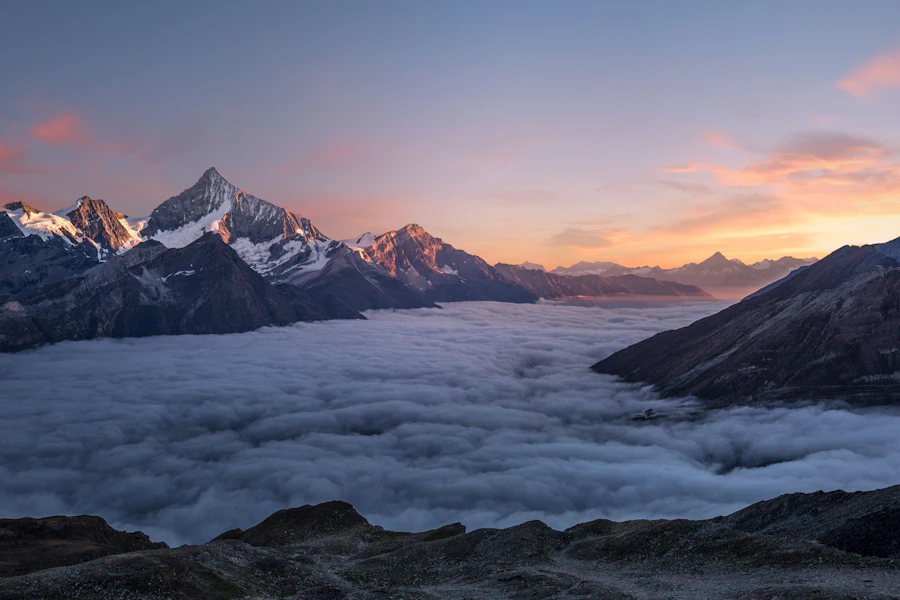
Travel photographer with gear on international assignment

Travel photography is one of the most insurance-exposed niches in the business. You take expensive gear into airports, rental cars, hotels, and countries where local theft and damage realities are very different from the US. Most US-based policies cover travel but with sub-limits and conditions that surprise photographers who only read the marketing page.

Affiliate disclosure: this article contains affiliate links to Full Frame Insurance and gear retailers. If you purchase through these links, Shut Your Aperture may earn a commission at no extra cost to you. We only recommend coverage and products we would buy ourselves.

The travel-specific exposure

  • Theft: airports, hotel rooms, rental cars, street settings. Travel gear theft is the most common claim in this niche.
  • Lost or damaged checked baggage: most policies exclude gear in checked luggage. Always carry on.
  • International work: some policies cover work in foreign countries, others exclude it entirely or require a separate rider.
  • Rental car coverage gaps: gear stored in a rental car at a trailhead is a common claim scenario.
  • Health and evacuation: not photography insurance, but worth pairing with travel medical and evacuation coverage for international work.

How a US-based policy treats travel work

Photography-specific carriers like Full Frame Insurance typically cover travel work performed outside the US under the standard policy, but with conditions:

  • Coverage may apply only to US-based business operations.
  • Equipment coverage extends to in-transit and at-destination, but with specific exclusions (unattended vehicles, checked baggage, certain high-risk countries).
  • Liability coverage for work performed abroad may have sub-limits or require additional endorsement.

Read your specific policy’s territory and travel clauses, or ask the carrier directly before an international shoot.

The locked-vehicle requirement

Almost every equipment coverage policy requires gear to be in a locked vehicle if left in a car at all, and many exclude gear left in vehicles overnight. The single most common travel claim denial is gear stolen from a rental car overnight at a hotel parking lot. Practice: hotel safe, not the car.

Coverage that travels with you

Annual Plus from Full Frame Insurance covers gear at home, in transit, and on assignment. Quote in three minutes.

Get Travel Coverage

Affiliate disclosure: we may earn a commission at no extra cost to you.

The carry-on rule

Camera gear belongs in your carry-on. The math:

  • Airline liability for lost checked baggage is capped at roughly $3,800 (international, Montreal Convention) or much less domestic.
  • Your equipment coverage may exclude gear in checked baggage entirely.
  • Replacement cost for a working kit easily exceeds the airline cap.

A roller-style carry-on (Think Tank Airport Roller, Peak Design Roller) is the industry-standard solution.

International work and additional considerations

  • Carnets: for high-value gear crossing certain borders, an ATA Carnet is the customs document that prevents you from being treated as importing for sale.
  • Visas and work permits: some countries require a work visa for paid photography, even for short trips.
  • Local insurance requirements: some countries require local insurance for commercial work; rare for photography but worth checking for production-level assignments.

Backup workflow for travel

  • Offload cards to laptop each evening.
  • Backup to a second drive that travels in a separate bag from the laptop.
  • Cloud backup over hotel wifi when bandwidth allows.
  • Keep raw files for one year minimum.

Travel-ready gear that pairs with coverage

Recommended Gear

Best for Pick B&H Amazon Why
Lightweight travel body Sony A7C II B&H Amazon Compact, full-frame, lower replacement cost reduces claim frequency.
Travel zoom Tamron 28-200mm f/2.8-5.6 B&H Amazon One-lens travel solution, light enough to carry all day.
Carry-on roller Think Tank Airport Roller B&H Amazon Carry-on compliant, fits two bodies and four lenses.

Insure the kit before the next trip

Annual Plus covers gear globally for US-based photographers. Add international coverage rider if needed.

Quote Travel Coverage

Affiliate disclosure: we may earn a commission at no extra cost to you.

For destination shot lists, the Shut Your Aperture travel photography workflow is the starting point. For broader coverage, see the photography insurance pillar.

FAQ on travel insurance

Does my policy cover gear stolen from a hotel room?

Generally yes, if the room shows signs of forced entry or the theft is documented with a police report. Coverage for gear left in plain sight in an unlocked room may be limited.

What about gear in checked baggage?

Most policies exclude gear in checked baggage. Always carry on. Airline liability for lost checked baggage is capped at roughly $3,800 international (Montreal Convention) or much less domestic, far below a working kit’s replacement value.

Does my US policy cover work in Europe or Asia?

Depends on the carrier. Some cover work performed abroad under the standard policy. Others require a specific international rider. Ask the carrier directly before booking international work.

What if I get sick on assignment abroad?

Photography business insurance does not cover personal health. Pair with travel medical insurance and emergency evacuation coverage for international work. Common bundles run $50-$200 per trip.

Travel pre-trip checklist

  • Annual policy active with travel coverage confirmed.
  • Equipment coverage extends to international work.
  • Carry-on bag holds full working kit.
  • Travel medical and evacuation coverage active.
  • ATA Carnet documented if crossing high-restriction borders.
  • Work visa or permit confirmed if required.
  • Backup workflow tested for international bandwidth.

International work specifics

If you regularly shoot internationally, ask the carrier these questions explicitly:

  • Does the policy cover work performed outside the US?
  • Is liability coverage subject to sub-limits for international work?
  • Does equipment coverage extend to international destinations?
  • Are any countries excluded?
  • How are claims handled when the incident occurs abroad?

The answers vary by carrier. Confirm in writing.

Customs and gear protection

For destinations that require ATA Carnets (high-restriction borders, some Latin American and Middle Eastern countries), the carnet documents your gear as professional equipment temporarily imported rather than imported for sale. The carnet protects against customs disputes; it does not replace insurance for loss or damage.

Travel medical and evacuation pairing

Travel medical insurance and emergency evacuation coverage are separate from photography business insurance but pair naturally with it. Common bundles:

  • $50-$100 per trip for travel medical with $250,000 coverage.
  • $200-$400 per trip for medical evacuation to nearest adequate facility.
  • Annual travel medical for frequent travelers: $500-$1,000 depending on coverage.

For destination wedding photographers, brand-trip shooters, and travel photographers who go abroad three or more times per year, an annual travel medical policy makes sense alongside the annual photography business policy.

Border crossings with professional gear

Customs officers in some countries view professional camera gear with suspicion, assuming commercial intent without proper paperwork. A carnet (ATA Carnet) is the international document that lets you temporarily import professional equipment into participating countries without paying duty. For trips into Brazil, India, and some other markets, a carnet is the difference between smooth entry and hours of negotiation. Carnets cost roughly $250-$400 to issue and last a year.

Carrying gear lists for declaration

Maintain a printed gear list with serial numbers, declared values, and proof of US ownership (purchase receipts). Even where no carnet applies, the gear list speeds reentry to the US and supports insurance claims if anything goes missing in transit. Photograph the list and save it to cloud storage as backup.

The geographic coverage map

Photography-specific carriers typically cover US-based photographers worldwide, but coverage varies by destination. The default coverage map at most carriers:

  • Tier 1 (full coverage) — North America, Western Europe, UK, Japan, Australia, New Zealand.
  • Tier 2 (covered with notice) — Most of Latin America, Eastern Europe, South Korea, Singapore, UAE.
  • Tier 3 (require pre-approval) — Russia, China, parts of Africa, parts of Southeast Asia.
  • Tier 4 (excluded) — Active conflict zones, OFAC-sanctioned countries.

A photographer planning international work should confirm coverage at the destination before booking. The conversation with the carrier takes minutes and prevents surprises.

Carnets and customs paperwork

Professional camera gear at international borders sometimes triggers customs scrutiny. The ATA Carnet is the international document that lets you temporarily import professional equipment into participating countries without paying duty or posting a bond. Carnets cost roughly $250-$400 to issue, last one year, and cover most professional gear at declared values.

Countries where carnets are essentially required for professional gear: Brazil, India, Russia, China (varies by entry point), Indonesia, several others. Countries where carnets help but aren’t always required: most of Latin America, parts of Africa, parts of Asia. Countries where carnets are not needed: most of Europe (with EU-internal free movement), the US-Canada-Mexico zone, most island tourist destinations.

Insurance and the digital nomad lifestyle

Photographers who live and work abroad for extended periods create complications for US-based photography policies. The default assumption in most policies is that the photographer is US-based with international travel for specific projects. A photographer who relocates abroad for 6+ months may need to switch to a different policy structure entirely. The conversation with the carrier should happen before the relocation. Some carriers offer expatriate-friendly policies; others require the photographer to switch to a local carrier in the new country.

Lost gear in transit: airline vs insurance claims

When gear is lost or damaged in transit, two claims paths exist: the airline’s baggage liability and the photographer’s equipment insurance. Airline baggage liability is capped at modest amounts ($1,500-$3,500 typically) and excludes high-value items. Equipment insurance covers replacement cost without the cap. The discipline: file the airline claim for everything because it’s free, but rely on equipment insurance for the actual replacement. The two claims don’t conflict; the airline payment is typically subrogated by the equipment insurance carrier.

Climate exposure: tropical, alpine, desert

Different climates create different equipment exposure profiles. Tropical environments add humidity damage and saltwater corrosion. Alpine environments add cold-related battery and lubrication issues. Desert environments add sand intrusion and overheating. Insurance covers damage from these environments but the operational discipline reduces incident probability:

  • Tropical — desiccant packs in gear bags, rain covers always available, freshwater rinse for any saltwater spray exposure.
  • Alpine — extra batteries kept warm, lens caps to prevent condensation when entering warm spaces.
  • Desert — UV protection for screens, blower brushes for dust removal, sealed bags for camera bodies when not in use.

The repatriation scenario

The worst-case international scenario is the photographer’s own injury or illness while abroad. Travel medical insurance is separate from photography business insurance and covers the photographer’s personal exposure. The combination of business insurance (covers equipment, liability) and travel medical insurance (covers the photographer’s health) creates complete coverage. Either one alone leaves a significant gap. The cost of travel medical insurance for a one-week international trip is typically $50-$100; for extended trips, $200-$500.

The pre-trip insurance check

Before each international trip for photography work, run a structured insurance check:

  • Confirm the policy covers the specific destination.
  • Confirm equipment coverage extends to international locations.
  • Note any geographic sub-limits or restrictions.
  • Generate destination-specific COIs if any venues require them.
  • Add the carrier’s claims phone number to your phone contacts.
  • Verify cyber liability covers international data transmission.
  • Confirm professional liability covers work done abroad.

The check takes 15-30 minutes per trip and prevents surprises during the trip.

Documentation discipline for international shoots

International shoots create documentation that protects the photographer in multiple ways:

  • Carnet (if applicable) with detailed equipment list.
  • Visa documentation for any work-visa requirements.
  • Contract translations if working with non-English clients.
  • Local business registration if required by destination.
  • Tax documentation for any income earned abroad.
  • Equipment receipts demonstrating US ownership.

The documentation supports customs entry, tax compliance, and any insurance claims that arise.

The “fixer” relationship

Travel photographers often work with local fixers (guides, translators, location coordinators) in destinations they’re not deeply familiar with. The fixer relationship has insurance implications:

  • The fixer is typically a 1099 contractor with their own coverage.
  • The fixer’s actions in the destination can create liability for the photographer.
  • The fixer should have a written agreement specifying scope and responsibility.
  • The photographer should verify the fixer’s local credentials.

Personal safety considerations

Travel insurance for the photographer’s personal safety is separate from business insurance. The full safety stack for travel work:

  • Business liability coverage (this guide).
  • Travel medical insurance covering personal illness and injury.
  • Evacuation coverage for severe medical emergencies.
  • Trip cancellation/interruption coverage.
  • Personal property coverage for non-business items.

The combined cost for a 2-week international trip is typically $100-$300 across all coverage types.

Working with foreign clients

Foreign clients have payment and contract considerations beyond US clients. The defensive practices:

  • Require deposit in advance (typically 50%) to confirm booking.
  • Use international payment methods that work for both parties (PayPal, Wise, bank transfer).
  • Document exchange rates at the time of payment.
  • Use contract language that specifies governing law and jurisdiction.
  • Be prepared for dispute resolution to be more complex than domestic disputes.

The destination-specific incident plan

Different destinations have different incident response capabilities. The photographer’s pre-trip planning should include:

  • Local emergency numbers.
  • Location of US embassy or consulate.
  • Identification of trusted medical facilities.
  • Contact information for the home carrier’s international claims line.
  • Documentation of insurance policy details in a format accessible offline.

The renewal-time decision tree

Every annual renewal is a decision point. Working photographers should walk through the same questions each time:

  • Has the business changed? Different genre mix, more travel, new equipment, new entity structure — each can warrant a coverage adjustment.
  • Are the limits still appropriate? Revenue growth eventually pushes the photographer into higher-tier clients whose contracts may require higher limits.
  • Are there add-ons I should consider? Cyber liability, higher professional liability limits, additional drone endorsements — each one closes a specific gap.
  • Is the current carrier still the right fit? Price, service quality, claims handling, technology — all worth reconsidering periodically.
  • Have I documented everything from the past year? Equipment changes, claims, near-misses, contract changes — all should be reflected in the renewed policy.

The decision tree takes 30 minutes to walk through each year. The discipline catches drift between actual business and policy structure before it becomes a coverage gap.

Building the documentation habit

The single highest-leverage discipline for any working photographer is documentation. Every shoot, every booking, every incident, every conversation with a client about scope. Documentation makes claims smoother, makes disputes resolvable, makes the business defensible. The components of strong documentation:

  • Standardized contract template signed by every client.
  • Email communication preserved (no relying on memory or phone calls alone).
  • Shot logs or session notes for every booking.
  • Equipment schedule kept current.
  • Backup workflow documented and followed consistently.
  • Delivery confirmation with timestamps.
  • Any incidents documented within 24 hours.

Photographers who run their business at this discipline level rarely face claim difficulties even when incidents occur. The carrier sees a professional operator and treats claims accordingly.

The relationship between insurance and pricing

Insurance is part of the cost of operating a photography business and should be priced into client engagements. The math:

  • Total annual business overhead (insurance, software, accounting, marketing).
  • Divided by realistic billable engagements per year.
  • Equals the overhead allocation per engagement.

For a photographer with $5,000 annual overhead working 100 engagements, that’s $50 per engagement in pure overhead. Pricing below the overhead allocation means losing money on the engagement before shooting time is even considered. Insurance premium contributes a small share of this total but is part of the math.

When to consider raising coverage limits

The standard $1M / $2M general liability coverage works for most photographers. Specific triggers to consider raising limits:

  • Working with corporate clients whose vendor agreements require $2M or higher.
  • Working at venues that require $2M coverage as a standard.
  • Operating in litigation-heavy states (California, New York, Florida).
  • Carrying high equipment values that increase incident severity.
  • Hiring employees or regularly using contractors.
  • Adding higher-risk operations (workshops, photography tours, drone work).

The premium increase for moving from $1M to $2M is typically modest ($75-$150 per year). The protection increase is substantial.

Photography insurance as part of the broader business stack

Insurance sits within a broader business stack that working photographers need:

  • Legal structure (sole prop, LLC, S-corp).
  • Banking (separate business checking account, business credit card).
  • Accounting (bookkeeping software, accountant relationship).
  • Tax compliance (federal estimated payments, state filings, sales tax if applicable).
  • Business insurance (the subject of this guide).
  • Contracts (standardized templates for each engagement type).
  • Technology stack (gallery hosting, CRM, scheduling, payment processing).

Each layer reinforces the others. Insurance alone doesn’t protect a photographer who lacks contracts; contracts alone don’t protect against catastrophic claims; legal structure alone doesn’t help if the business gets sued for damages beyond the entity’s assets. The full stack creates the durable business that lasts across multiple years and economic cycles.

What domestic policies actually cover overseas

Domestic photography policies vary widely in how they treat international shoots. Some carriers offer worldwide coverage for liability arising out of the photographer’s operations regardless of where the shoot happens. Others limit liability coverage to the U.S., Canada, and territories. Still others exclude certain high-risk countries or activities entirely. Reading the policy territory clause is the single most important step before any international assignment.

Equipment coverage on a domestic inland marine schedule usually extends worldwide for short trips but may have sub-limits or exclusions for specific regions. Check the policy for a “worldwide coverage” rider versus a “U.S. and Canada only” base form. Some carriers ask for a list of destinations or an itinerary in advance for trips longer than 30 days.

What domestic policies do not replace: travel medical coverage, trip interruption, evacuation, and personal accident benefits. Those live in separate travel medical or expat health policies — World Nomads, IMG, Allianz, GeoBlue. A photographer on a two-week assignment to Peru wants both the photography policy (liability and equipment) and a travel medical policy (emergency medical, evacuation) running in parallel. Cost for the travel medical layer is usually $40 to $150 for a two-week trip depending on age and coverage limits.

If the assignment includes adventure activities — backcountry hiking for a landscape shoot, helicopter access for an aerial assignment, scuba for an underwater shoot — both the photography policy and the travel medical policy may exclude or sub-limit those activities. Each requires a separate read-through and possibly an adventure-sports rider.