Photography Guide to Egypt: Regions, Best Months & Field Notes
~14 min read · 2026-05-23 For practitioners, see our breakdown of shutter and image stabilization. For practitioners, see our breakdown of noise vs detail trade-off at high ISO.
shutyouraperture-20). Buying through these links costs you nothing extra and helps fund our free guides.
Egypt is a country where 5,000 years of monumental architecture, the Nile valley’s vertical desert geography, and Red Sea coastline combine into one of the most singular photographic subjects on Earth. This is the working photographer’s field guide to the country: when to be there for the light in each region, what gear actually fits, the 6 photo regions explained with their best months and headline subjects, the current drone and security-photography law, the cultural etiquette that separates respectful documentary frames from tourist photographs, and the post-processing notes for the Egypt color palette. Plan with the same rigor you bring to portrait or wedding work.
 Save
SaveWhy Egypt is a photographer's dream
Egypt is photographically unmatched not because of any single subject but because of the density and scale of what it contains. The Giza pyramid complex and Sphinx, the Karnak temple precinct, Luxor and the Valley of the Kings, the Abu Simbel rock-cut temples, the Cairo Islamic-era old city, Alexandria’s Mediterranean light, the Western Desert oases (Siwa, Bahariya, Farafra, the White Desert), the Sinai Peninsula’s granite mountains and Red Sea reefs — every region offers a completely different photographic register. Add the Nile itself, a natural compositional through-line that ties river-bank village life to the pharaonic ruins on the west bank. Light quality is one of Egypt’s underrated strengths: dry desert air produces hard, clean light that’s exhausting at midday but spectacular in golden hour, with long shadows that emphasize the geometric volumes of pyramids, columns, and dune fields. Plan the trip around light, not just sites.
For first-time visitors, the temptation is to try to cover every headline subject in a single trip. Egypt rewards the opposite approach: choose two or three regions, learn their light, and produce a focused portfolio. The country will still be there next year. Decide your photographic priority first — architectural, landscape, religious, coastal, astrophotography — and then choose the region that delivers it best in the month you can travel.
When to photograph Egypt: month-by-month
October to April is the working photographer’s window. November-February offers the most pleasant temperatures (18-25C daytime) for Upper Egypt (Luxor, Aswan, Abu Simbel) and the Western Desert, with clear blue skies and comfortable working conditions. October and March-April are shoulder-season — slightly warmer but excellent for desert work and dawn light at the pyramids. May-September is brutal: 40-45C+ in Upper Egypt and the Western Desert, with sandstorms (khamasin winds) in spring. Cairo is more forgiving but still hot. Coastal Sinai and the Red Sea remain workable in summer but crowded with European holidaymakers.
| Month | What to expect |
|---|---|
| January | Coolest month. 12-22C in Cairo and Luxor. Crystal-clear desert light. Peak tourist season at Giza. |
| February | Similar to January. Excellent for the Western Desert. Abu Simbel Sun Festival on Feb 22 (sun aligns with inner sanctum). |
| March | Warm and clear. Spring khamasin sandstorms possible — check weather. Last good month for Upper Egypt before heat. |
| April | Coptic Easter (variable date) brings religious processions. Sham el-Nessim spring festival. Warming up but still workable. |
| May | Daytime heat builds to 35C+ in Luxor. Shoot at dawn only. Red Sea and Mediterranean coast start peak season. |
| June | Brutal interior heat. Only Sinai mountains and Mediterranean coast remain comfortable. |
| July | Hottest month. 40-45C in Luxor. Closed-season for most desert tour operators. |
| August | Continued extreme heat. Domestic tourist crush on Red Sea beaches. |
| September | Heat starts to break by late September. Still too hot for confident Upper Egypt work. |
| October | Working temperatures return. Excellent for desert and Nile cruises. Crowds rebuild at Giza. |
| November | Best month overall. Cool clear weather, full archaeological-site access, ideal desert work. |
| December | Peak season. Christmas-week crowds at headline sites. Coptic Christmas Jan 7. |
The single biggest planning mistake is to assume a country has a single best season. Egypt, like every photogenic destination, has regional micro-seasons. The month that delivers golden light on the coast may deliver brutal heat in the interior. Plan around the region you have chosen, not the country as a whole.
The 6 photo regions of Egypt
Egypt divides into 6 photogenically distinct regions. The list below is organized by geography and photographic identity. Pick two or three regions for a 7-14 day trip — trying to cover them all in a single visit produces tired travel photography rather than considered portfolio work.
Cairo and Giza (north)
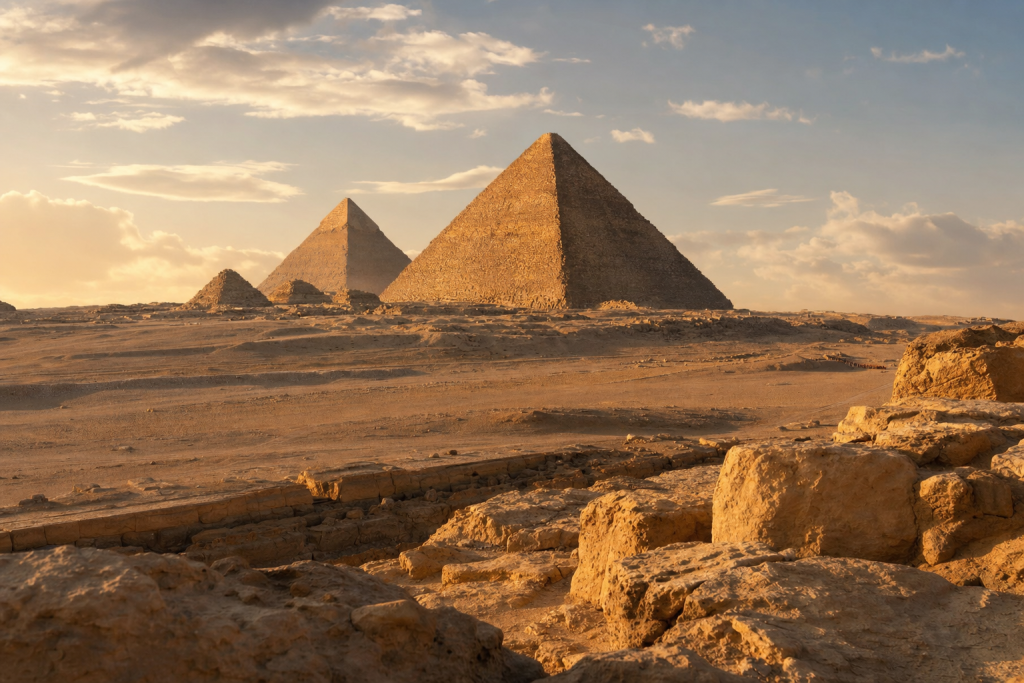
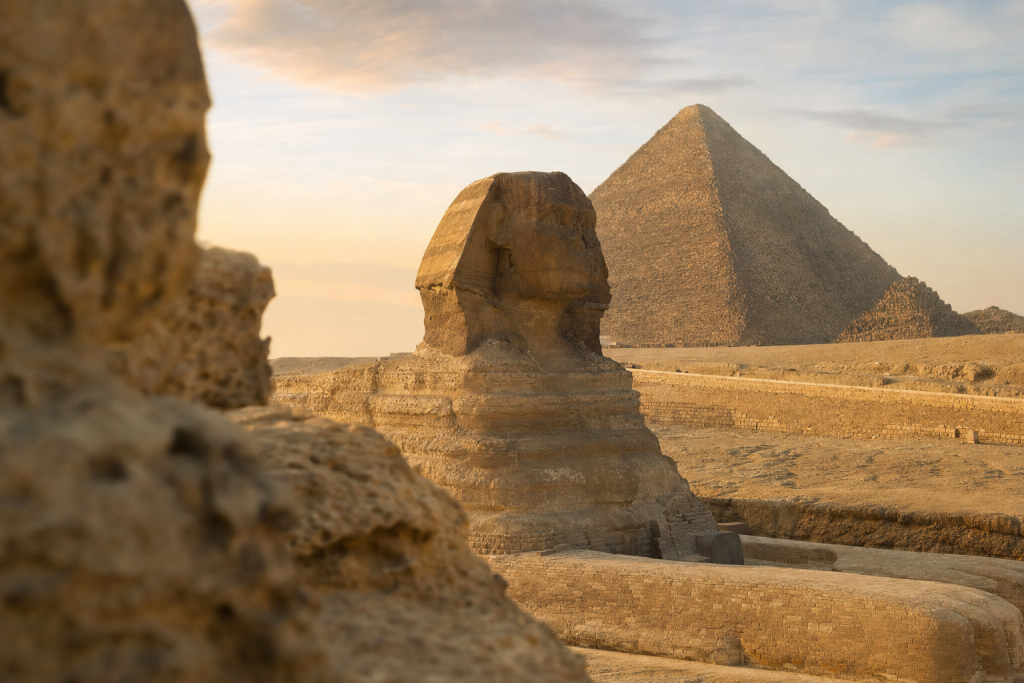
Highlights: Giza pyramid complex (Khufu, Khafre, Menkaure) and Sphinx, Saqqara (Step Pyramid of Djoser), Dahshur (Bent and Red pyramids), Memphis. Islamic Cairo (Khan el-Khalili bazaar, Al-Azhar mosque, Sultan Hassan, Citadel). The new Grand Egyptian Museum at Giza.
Best time: October-April. November-February ideal.
Photo focus: Monumental architecture, light-and-shadow on pyramids, bazaar street photography, mosque interiors, sunset from the Citadel.
Luxor and West Bank (Upper Egypt)
Highlights: Karnak Temple precinct, Luxor Temple, Valley of the Kings (Tutankhamun, Ramses VI, Seti I), Valley of the Queens, Hatshepsut's Mortuary Temple at Deir el-Bahari, Medinet Habu, Colossi of Memnon, the Ramesseum. Felucca rides on the Nile at sunset.
Best time: November-March only. Avoid May-September (45C+).
Photo focus: Columned hypostyle halls, painted tomb interiors (where flash allowed), golden hour on the Theban Necropolis, Nile-river compositions.
Aswan and Abu Simbel (deep south)
Highlights: Philae Temple, the Unfinished Obelisk, Aswan High Dam, Nubian villages on Elephantine Island, Abu Simbel (Great Temple of Ramses II and the smaller Temple of Hathor at Nefertari), Lake Nasser.
Best time: November-March. Abu Simbel Sun Festival Feb 22 + Oct 22.
Photo focus: Rock-cut facades at sunrise (Abu Simbel famous moment), Nubian color, Nile-island life, dam-and-desert vastness.
Western Desert (Siwa, White Desert)
Highlights: Siwa Oasis (Cleopatra's Pool, Shali fortress ruins, salt lakes), Bahariya Oasis, the Black Desert, the White Desert (chalk rock formations), Farafra, Dakhla. Multi-day 4×4 desert expeditions.
Best time: October-March only. Night temperatures drop near zero in deep winter.
Photo focus: Sand dune fields, chalk-rock formations at golden hour and starlight, Bedouin camp life, salt-lake reflections, dark-sky astrophotography.
Sinai Peninsula and Red Sea
Highlights: St. Catherine's Monastery, Mount Sinai (Mt. Horeb) sunrise hike, Dahab and Sharm el-Sheikh diving, Ras Mohammed National Park reefs, the Colored Canyon, Nuweiba.
Best time: October-May for mountain work. Summer manageable on coast but crowded.
Photo focus: Granite mountain landscapes, sunrise from Mt. Sinai summit, underwater reef photography (waterproof rigs), Bedouin desert life, Red Sea blues.
Mediterranean Coast (Alexandria)
Highlights: Alexandria (Bibliotheca Alexandrina, Qaitbay Citadel on the site of the ancient lighthouse, Roman amphitheater, Pompey's Pillar), Mediterranean fishing harbors, El-Alamein war cemeteries, Marsa Matruh beaches.
Best time: April-October. Cooler and breezier than the interior year-round.
Photo focus: Mediterranean light (softer than Upper Egypt), seafront citadels, fishing-boat color, Greco-Roman ruins, beach life.
Photography rules and legal restrictions in Egypt
Egyptian photography rules are strict around archaeological sites and security infrastructure but generally relaxed in public street settings. The 2018 antiquities law requires photography permits for any commercial or tripod-supported work at all Ministry of Antiquities sites — Giza, Saqqara, Karnak, Luxor Temple, the Valley of the Kings, Abu Simbel, and Philae included. Permits are issued by the Supreme Council of Antiquities in Cairo and must be applied for at least 30 days in advance. Phone and handheld DSLR/mirrorless personal photography is permitted at most sites for a small ticket fee (typically 300 EGP photography pass on top of the entrance ticket). Flash and tripods are banned inside almost all tomb interiors in the Valley of the Kings. Drones are effectively prohibited for tourists: the Civil Aviation Authority requires a permit obtained months in advance through diplomatic channels, and unauthorized drones are routinely confiscated at Cairo and Hurghada airports. Photographing military installations, government buildings, bridges, the Suez Canal, and on-duty police is illegal and can lead to detention. The blanket safe assumption: no drone, no flash inside tombs or mosques during prayer, no military or government subjects.
The practical photographer’s checklist for Egypt in 2026: assume tripods are restricted indoors at major archaeological and religious sites; assume drones require advance registration and likely a permit; assume any direct on-duty police or military photo is legally fraught; expect no-flash and no-tripod signage at headline interiors. When in doubt, ask the on-site staff before raising the camera. A small consideration goes a long way.
Gear recommendations for Egypt
Egypt rewards a versatile travel kit with weather resistance against fine desert dust. Minimum useful combination: a 16-35mm wide for hypostyle hall interiors and pyramid base compositions; a 24-70mm for general Cairo street and site exteriors; a 70-200mm telephoto for compression of Theban Necropolis from across the Nile, distant pyramids from the desert plateau, and isolated detail of carved reliefs and column capitals. A polarizer reduces the harsh desert haze and deepens Nile and Red Sea blues. A circular polarizer is essential. ND filters less useful in Egypt’s reliably clear skies. A sturdy carbon-fiber tripod with quick-release for dawn shoots at Giza, Karnak, and Abu Simbel; but expect to fold it at most site entrances if you don’t have the official permit. Dust protection is critical: pack a rocket blower, lens-cleaning cloths in sealed bags, and consider a UV filter for the front element on every lens (cleanable without risking the actual front glass). Body and lens dust-resistant sealing is worth the upgrade for serious desert work.
One detail specific to Egypt: gear protection matters more than for European travel. Pack a rocket blower, sealed plastic bags for memory cards and batteries, and a polarizer that screws onto your most-used lens. The little things — a microfiber cloth in every pocket, a spare battery against your body in cold months, a UV filter on the front element to sacrifice in dust — separate productive trips from frustrating ones.
 Save
Save7-day and 14-day itinerary suggestions
7-day Egypt photography loop
Days 1-2: Cairo (Pyramids of Giza at sunrise + sunset, Saqqara and the Step Pyramid, Egyptian Museum or new Grand Egyptian Museum, Islamic Cairo at golden hour). Day 3: morning flight to Luxor. Day 4: Karnak at opening hour, Luxor Temple at blue hour. Day 5: West Bank — Valley of the Kings, Hatshepsut, Medinet Habu. Day 6: train or flight to Aswan, Philae Temple at sunset, felucca sunset on the Nile. Day 7: Abu Simbel day trip by early flight or 3-hour drive, returning to Aswan to catch evening flight to Cairo. This is the canonical Egypt first-timer’s loop covering both pyramidal and temple architecture.
14-day Egypt photography portfolio trip
Days 1-3: Cairo + Giza + Saqqara + Dahshur (extra day allows the Dahshur pyramids — Bent and Red — which most tourists skip). Day 4: drive or fly to Bahariya Oasis, overnight in the desert. Day 5: White Desert chalk-rock camping, returning to Cairo or continuing west. Day 6: flight to Luxor. Days 7-8: full Theban Necropolis — Valley of the Kings, Queens, Hatshepsut, Medinet Habu, Ramesseum, Colossi of Memnon, Karnak twice (sunrise and sunset), Luxor Temple. Days 9-10: Nile cruise Luxor to Aswan with stops at Edfu (Temple of Horus) and Kom Ombo (double temple). Day 11: Aswan — Philae, Unfinished Obelisk, Nubian villages on Elephantine. Day 12: Abu Simbel by air. Days 13-14: optional Sinai extension — fly to Sharm el-Sheikh, climb Mt. Sinai for sunrise from St. Catherine’s. The 14-day version covers all four photographic Egypts — Cairo, Western Desert, Upper Egypt, Sinai.
Cultural etiquette and respectful photography
Egyptians are warm and generally relaxed about photography in public spaces, but specific rules apply at sacred and domestic settings. Inside mosques during prayer time, photography is forbidden — wait until prayer ends, ask the attending muezzin or imam, and remove shoes and cover legs and shoulders. Coptic churches similarly ask for discretion during services. Tomb-interior flash is banned at the Valley of the Kings to preserve the painted reliefs from light damage; violation is the most common reason tourists are removed. Children at archaeological sites and in villages may ask to be photographed and then expect a small tip (5-10 EGP) — this is the local norm; either decline politely or pay the tip and don’t photograph if you’d rather not. Bedouin and Nubian communities in Sinai, Siwa, and Aswan have varied attitudes — ask before tight portraits, and respect refusals. Female travelers and photographers should expect more direct attention; framing with two people in a group reduces this. The general rule across Egypt: smile, ask, tip when appropriate, and the country opens up to your camera.
The deeper rule beneath all of this: Egypt is a country where strangers will engage with your camera one way or another — curiosity, warmth, occasional suspicion. Photographers who slow down, eat the meal, learn a handful of words, and shoot what arises produce stronger portfolios than photographers running a tight tourist itinerary with the camera always at eye level. The country rewards patience and the camera held down at the chest, not always up at the eye.
Transit, logistics, and getting around Egypt
Egypt’s transit options are uneven but workable. Domestic flights (EgyptAir, Air Cairo) connect Cairo to Luxor, Aswan, Abu Simbel, Sharm el-Sheikh, and Hurghada at low cost (under USD 100 each way typically); book in advance for fixed seat availability with camera carry-on. The Cairo-Aswan sleeper train (Watania) is a classic option for photographers — overnight in private cabin, arrives at Luxor before dawn for the morning Karnak shoot. Nile cruises between Luxor and Aswan (3-4 night minimum) are essentially floating hotels with stops at Edfu and Kom Ombo; choose a small dahabiya boat over the large hotel-class cruisers for better photographic access. Within Cairo, Uber and Careem are reliable; the metro is cheap and useful for crossing the city. Avoid driving in Cairo as a tourist — traffic discipline is informal at best. For the Western Desert, hire a 4×4 with a guide from Bahariya or Siwa — independent travel is not safe nor advisable. Sinai requires military checkpoint clearance; book through a licensed Sinai operator.
Post-processing the Egypt palette
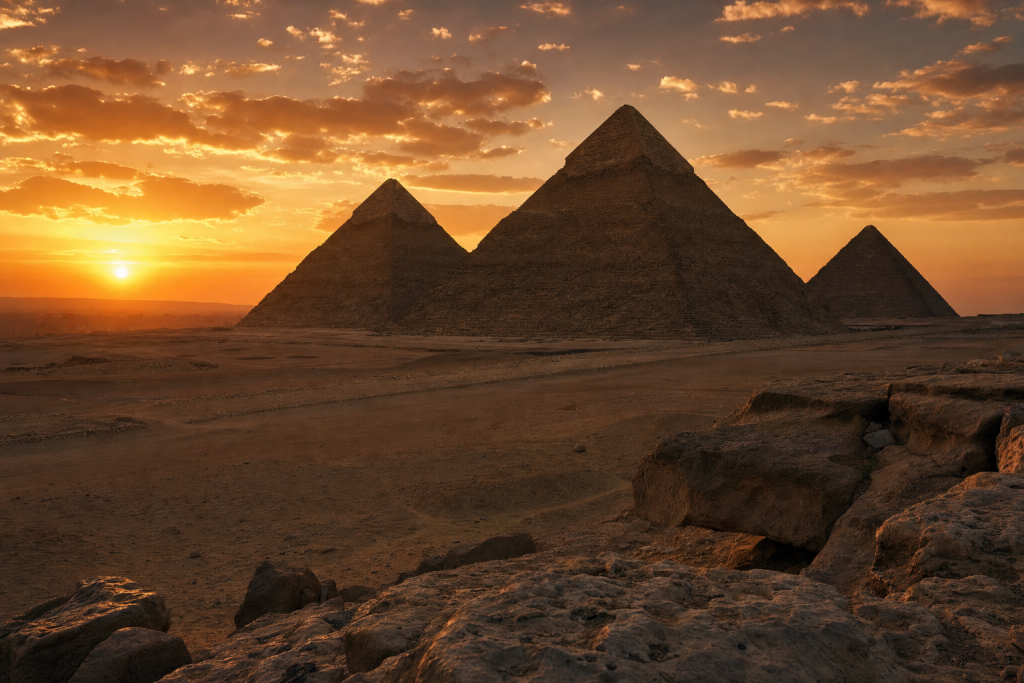
Egypt’s color signature is dust-warm sandstone, blue desert sky, and the green-blue Nile cutting through the frame. RAW files from Egypt tend to look slightly flat out of camera because the dry desert haze reduces contrast. Pull blacks slightly (-15), add a mid-tone contrast boost via the tone curve, and the limestone and sandstone come alive. For golden-hour pyramid frames, the trap is over-warming the white balance and producing orange-cake stone. Leave WB cooler than instinct suggests (around 5200-5500K) and let the warmth come from the actual light. For tomb interiors lit by tungsten work lights, shoot tungsten-balanced or correct in post — the painted reliefs lose all definition under uncorrected orange light. The Spain-style 20-preset Egypt-themed Lightroom pack in the matched product below handles desert warm tones, polished granite cool tones, Nile blue-green, and tomb-interior tungsten correction with calibrated starting points.
One Egypt-specific edit detail worth flagging: regional color palettes vary in ways that generic travel presets miss. A single global edit applied to every Egypt frame flattens these distinctions. Use HSL adjustments to preserve regional color identity: small global tone curve, regional HSL pushes per location. The matched preset pack below ships with per-region starting points calibrated for Egypt’s actual color signature, not a generic warm-tone travel formula.
Quick Amazon shortcuts to the gear most useful for this kind of shot. Use them if Prime shipping or Amazon credit makes more sense than B&H. As an Amazon Associate ShutYourAperture earns from qualifying purchases.
 Save
SaveFrequently asked questions
When is the best time of year to photograph Egypt?
October to April is the working photographer's window. November-February offers the most pleasant temperatures (18-25C daytime) for Upper Egypt (Luxor, Aswan, Abu Simbel) and the Western Desert, with clear blue skies and comfortable working conditions. October and March-April are shoulder-season — slightly warmer but excellent for desert work and dawn light at the pyramids. May-September is brutal: 40-45C+ in Upper Egypt and the Western Desert, with sandstorms (khamasin winds) in spring. Cairo is more forgiving but still hot. Coastal Sinai and the Red Sea remain workable in summer but crowded with European holidaymakers.
Do I need a drone permit in Egypt?
Regulations vary; see the legal section above for Egypt-specific rules. The safe default: assume any drone with a camera or over 250g requires advance registration and likely an explicit flight permit, especially near urban areas, beaches, and protected sites. Carrying an unregistered drone risks confiscation at airport customs in many countries.
How many days do I need for a Egypt photography trip?
For a first-time portfolio trip, plan 7-14 days. The 7-day version covers the iconic core; the 14-day version lets you add a second region and avoid the burnout of constant transit. Egypt rewards slower travel.
Is Egypt safe for solo travel photographers?
Egypt is generally manageable for experienced solo travelers, with standard precautions about valuable gear, registered transit, and respecting local norms. Review current government travel advisories before booking and check region-specific safety notes for the parts of Egypt you plan to visit.
What lens do I need for Egypt?
For most travel photographers, a 16-35mm wide + 24-70mm standard + 70-200mm telephoto kit covers everything Egypt offers. See the gear section above for Egypt-specific notes on which focal lengths come into their own at the headline subjects.
More travel photography guides: browse the complete photography by country hub → for sibling guides on the world’s top photo countries. See also the Italy photography guide, Spain photography guide, and France photography guide for sibling country guides.
All links go to Viator (a TripAdvisor company), the world’s largest marketplace for guided experiences. Tagged as affiliate per FTC.
All links go to B&H Photo Video, the trusted pro source. Tagged as affiliate per FTC.
What to Pack
A focused landscape kit handles every shot at Egypt without breaking your back. Here is the working photographer's pack list — every link goes to B&H Photo Video (our primary supplier) or Amazon (for accessories and same-day delivery in the US).
| What & Why | B&H | Amazon |
|---|---|---|
Wide-angle zoom (14-35mm range) The single most important lens for sweeping vistas. Pair with a circular polarizer for skies and water. | Shop B&H → | Shop Amazon → |
Sturdy travel tripod Carbon fiber, packs to 15 inches, holds steady in wind off the coast. Essential for blue-hour and long-exposure work. | Shop B&H → | Shop Amazon → |
Circular polarizer (77mm or 82mm) Cuts haze, deepens sky, reveals texture in water. Non-negotiable for landscape work. | Shop B&H → | Shop Amazon → |
10-stop ND filter For 30-second exposures that turn moving water and clouds into silk. | Shop B&H → | Shop Amazon → |
Extra batteries (3 minimum) Cold weather and long exposures eat batteries. Carry triple what you think you need. | Shop B&H → | Shop Amazon → |
Fast SD/CFexpress cards V90 or CFexpress depending on your body. Two cards minimum so a failure mid-trip is recoverable. | Shop B&H → | Shop Amazon → |
Microfiber lens cloths Salt spray, mist, and dust will ruin every shot if you don't carry a cloth. | Shop B&H → | Shop Amazon → |
B&H and Amazon links are affiliate links. We earn a small commission on purchases at no extra cost to you. We only recommend gear we use or would buy ourselves.