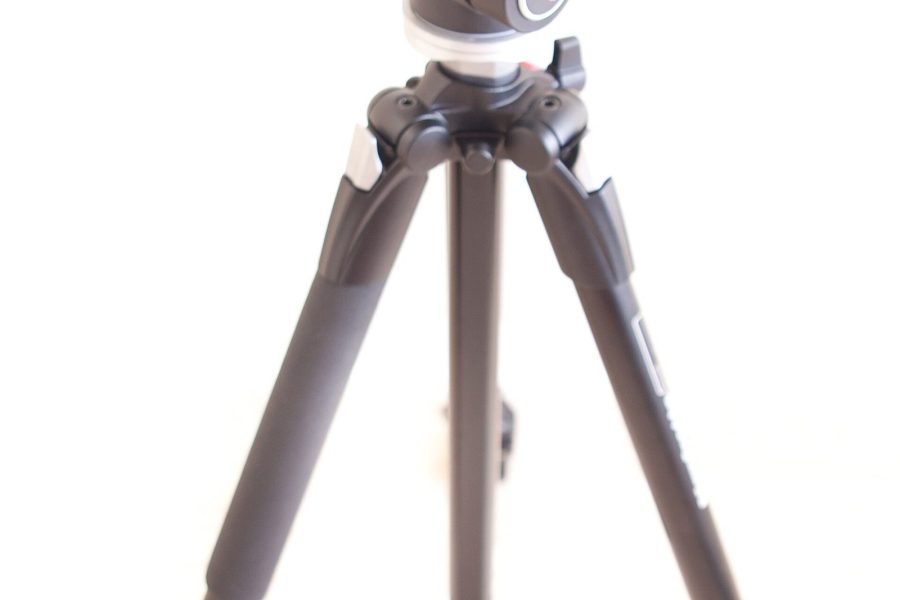
A travel tripod is the piece of gear most photographers overspend on and the piece most photographers underuse. Spend $500 on a sticks-and-head combo and you’ll bring it everywhere; spend $1,200 and you’ll resent the weight by day three; spend $200 and you’ll be replacing it inside a year. The 2026 market has consolidated around five or six really good options and a long tail of products you can safely ignore.
This guide is the working shortlist. The criteria: under 1.5kg packed, supports a full-frame mirrorless body with a 24-70 f/2.8 attached, fits in a carry-on suitcase, and survives airline check-in baggage handling when it has to. The picks below are tested through one calendar year of working travel — wedding, real estate, landscape, photojournalism. No marketing copy, no affiliate-driven rankings.
 Save
SaveThe Short Answer
If you have $700 to spend and you fly a lot: the Peak Design Travel Tripod Carbon — the column-and-leg geometry packs smaller than anything else on the market and the head/legs are one integrated unit. If you have $400 and you want the working pro’s safe pick: the Manfrotto Befree Advanced Carbon. If you have $250 and you need it tomorrow: the K&F Concept TC2535. Detail below.
Buyer Guide — Side-by-Side Picks
| Best for | Pick | B&H | Amazon | Why |
|---|---|---|---|---|
| Best overall — carry-on travel | Peak Design Travel Tripod Carbon — $649 | Check at B&H | Check at Amazon | Packs to 39cm, weighs 1.27kg, integrated ball-head fits in the leg footprint. The category-defining design. |
| Working-pro safe pick | Manfrotto Befree Advanced Carbon — $399 | Check at B&H | Check at Amazon | Italian engineering, 1.25kg, M-Lock leg system that genuinely beats twist-locks for speed. Bulletproof reputation. |
| Best budget under $300 | K&F Concept TC2535 Carbon — $249 | Check at B&H | Check at Amazon | Carbon legs at this price was unheard of two years ago. Center column converts to monopod. Honest 1.4kg pack. |
| Best heavy-payload travel | Gitzo Mountaineer GT1545T — $899 | Check at B&H | Check at Amazon | Holds 10kg, weighs 1.3kg. The professional landscape shooter’s tripod. Lifetime build quality. |
| Best for vlogging / hybrid stills+video | Benro Rhino FRHN24CVX20 — $429 | Check at B&H | Check at Amazon | Video-friendly head with pan/tilt damping, leveling base, 1.45kg. Best stills+video hybrid in this weight class. |
| Best ultralight (under 1kg) | 3 Legged Thing Punks Brian 2.0 — $329 | Check at B&H | Check at Amazon | 980g with head, 14kg load capacity. Folding rubberized foot pads. British-engineered, weirdly fun to use. |
How to Choose — The Three Numbers That Matter
Forget marketing copy. Three specs decide whether you’ll actually use a travel tripod.
Packed length. Anything over 45cm and you’re back to checking it as luggage. Carry-on regulations vary but 42cm is the safest universal number. Peak Design at 39cm, Manfrotto Befree at 40cm, Gitzo 1545T at 42cm — all carry-on legal. Anything claiming “travel tripod” at 50cm is misnamed.
Weight with head. Most spec sheets show legs-only weight. Mentally add 250-400g for a ball head. The sweet spot for full-frame mirrorless travel is 1.2-1.4kg total. Below 1kg you’re either compromising stability or paying $400 just for carbon weight savings. Above 1.5kg you’ll resent it on day three.
Maximum load capacity. Spec sheets exaggerate. A “10kg load capacity” tripod will hold 5kg steady in wind. Multiply spec capacity by 0.6 for real-world working load. Your mirrorless body plus 24-70 f/2.8 plus L-bracket is 2.5-3kg, so you want a spec capacity of 5kg minimum. The K&F’s 10kg spec means real-world ~6kg — fine for most. Gitzo’s spec is honest because Gitzo doesn’t need to lie.
Carbon Fiber vs Aluminum
The carbon premium is $150-300 over the equivalent aluminum. Worth it if you fly more than 4-5 times a year. Carbon weighs 30% less, transfers 80% less cold to your hands in winter, and damps high-frequency vibration better. Aluminum is more rigid (very slightly) and won’t shatter if you drop it from 6 feet onto concrete (carbon can crack invisibly). For most working photographers the carbon weight savings pay back inside two trips.
Skip the “basalt fiber” mid-tier — it’s marketing for low-grade carbon and doesn’t justify the price.
Leg Locks — Twist vs Lever
Twist locks (Gitzo, Peak Design): faster to operate when wet or gloved, fewer parts to break, less likely to snag on a backpack. The pro standard.
Lever locks (Manfrotto M-Lock): visually you can see which legs are locked, slightly faster for one-handed deploy, but lever pads wear and pinch fingers if you’re not careful.
Either is fine. Pick the one your hands prefer at a store.
Heads — What Actually Matters
The integrated ball head on the Peak Design and the Befree are good enough for travel. The Gitzo legs ship without a head — budget another $150-300 for an Arca-Swiss compatible ball head (Really Right Stuff BH-30, Acratech GP-s, or the Sirui K-30X). For video work you want a dedicated video head with pan/tilt damping — but no travel tripod’s integrated head is going to beat a $400 Manfrotto MVH500AH fluid head, so don’t try.
L-brackets are non-optional for serious tripod work. The body-flop position when you go vertical without an L-bracket is unstable and shifts your composition off-axis. Add another $50-100 for a body-specific L-bracket from SmallRig or Really Right Stuff.
What to Skip in 2026
Tabletop tripods for travel: too small to actually compose with at eye level. They’re a second purchase, not a primary.
Tripods with built-in Bluetooth remotes: the battery dies, the firmware is junk, and your phone’s timer works fine.
Anything with a non-Arca-Swiss quick-release plate: the entire industry has standardized on Arca-Swiss, and proprietary plates lock you out of L-brackets and head upgrades.
Center-column-as-boom-arm tripods: they’re heavy and the boom arms wobble. Buy a real boom if you need one.
Verdict by Shooter Type
Wedding / event photographer: Manfrotto Befree Advanced Carbon. Robust, fast to deploy, fits in your second-shooter’s roller. The M-Lock leg system is genuinely faster for grabbed-moment setups.
Landscape / travel pro: Gitzo Mountaineer GT1545T + Really Right Stuff BH-30. Buy once, cry once. This setup will outlast three camera bodies. The lifetime build is worth the $1,100 entry.
Solo creator / digital nomad: Peak Design Travel Tripod Carbon. The packed-length advantage matters when your bag also has a laptop, a drone, and three lenses. Best in class for pack volume.
Hybrid stills+video shooter: Benro Rhino FRHN24CVX20. The video-damped head saves you carrying a second tripod. Not the lightest, not the smallest, but the right tool for the hybrid job.
Budget / first travel tripod: K&F Concept TC2535 Carbon. $249 for a carbon-fiber travel tripod that does 80% of what the Peak Design does. Replace it in three years when you know what you actually want.
Beginner / weekend shooter under $150: Skip carbon, get the Manfrotto Element Traveller Aluminum at $129 from B&H. Aluminum, perfectly fine, will get you through the learning curve.
Settings and Use Notes
A travel tripod isn’t a studio tripod. The expectation should be: usable for 1-second exposures handheld-equivalent in still air, usable for 5-15 second exposures in shielded conditions, marginal for 30+ second exposures in any wind. Shutter speed and tripod-class need to match — if you’re shooting milky-way work or 5-minute moonscapes, you probably want a heavier kit.
The pre-shot stability tricks that earn the tripod weight back: extend the thicker leg sections first, skip the center column extension unless you absolutely need height, weigh down the center hook with your camera bag if there’s any wind, use a 2-second timer or remote release on every frame, and lock mirror-up if your body has a mirror (relevant for DSLR shooters only). Stack these habits and a 1.3kg travel tripod performs like a 2.5kg studio rig.
Travel tripods earn their keep at blue hour, in cathedrals, on parkway overlooks, anywhere a handheld file would be 1/8 second at ISO 6400 instead of 2 seconds at ISO 100. The math is simple — bring it, use it, get cleaner files. Leave it in the hotel and you’re handhold-crippled for half your shoot window.
Last updated June 2026. Prices verified at major US retailers.