Best Photography Spots in Lisbon: 12 Locations With GPS
edinchavez01-20). Buying through these links costs you nothing extra and helps fund our free guides.
Lisbon, Portugal is one of the most photogenic cities in the world. If you have a camera and the patience to show up before dawn, Lisbon will give you images that last a career — but only if you know where and when to point it.
This is the definitive field guide to the 12 best photography spots in Lisbon, with GPS coordinates you can drop straight into Google Maps, exact camera settings tuned to Lisbon’s unique light, precise timing for every location, and the access notes nobody else bothers to document. It mirrors the intel inside our Lisbon Ultimate Photographer’s Guide ($47 PDF) — a downloadable field guide with full-page hero images, GPS maps, seasonal tables, a city safety briefing, and a complete photographer’s packing list. Get the guide →
Planning multi-city travel? See also: U.S. cities photography hub and the National Parks Photography Guides.
12 GPS-mapped locations · Exact camera settings · Multi-season shooting calendar · Free annual updates
Download the PDF guide →
Get the Lisbon Ultimate Photographer’s Guide
Every location below — pre-mapped with GPS, golden-hour timing, gear recommendations, cultural rules, and a 14-day itinerary. Downloaded by 200+ working photographers.
Quick jump to the 12 spots
- Miradouro da Senhora do Monte
- Miradouro de Santa Catarina
- Castelo de São Jorge
- Torre de Belém & Mosteiro dos Jerónimos
- Padrão dos Descobrimentos
- 25 de Abril Bridge from Cristo Rei
- Tram 28 — Alfama Route
- Praça do Comércio
- LX Factory
- Pink Street — Rua Nova do Carvalho
- Elevador de Santa Justa
- Time Out Market — Mercado da Ribeira Exterior
A look inside the Lisbon Photographer’s Guide
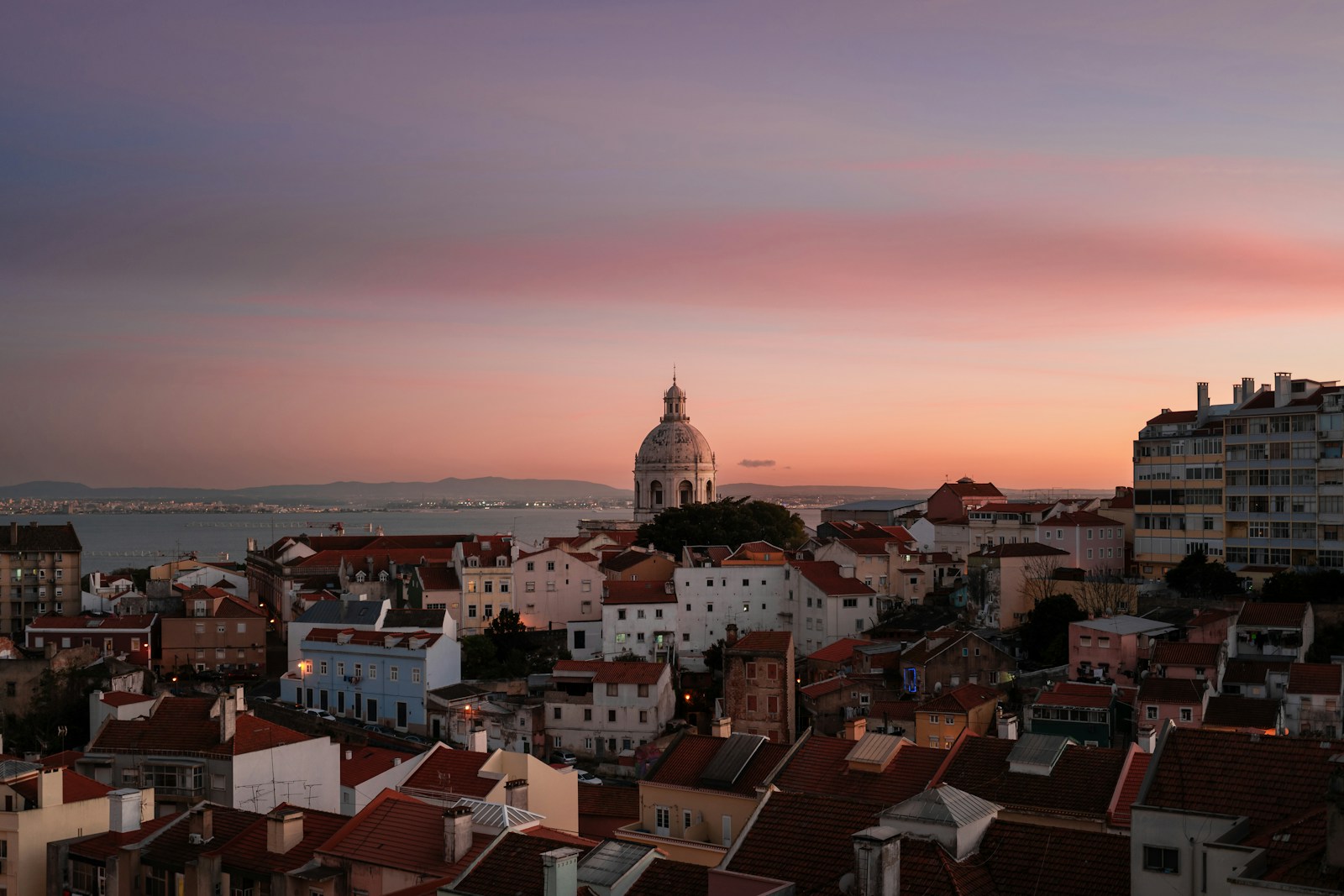
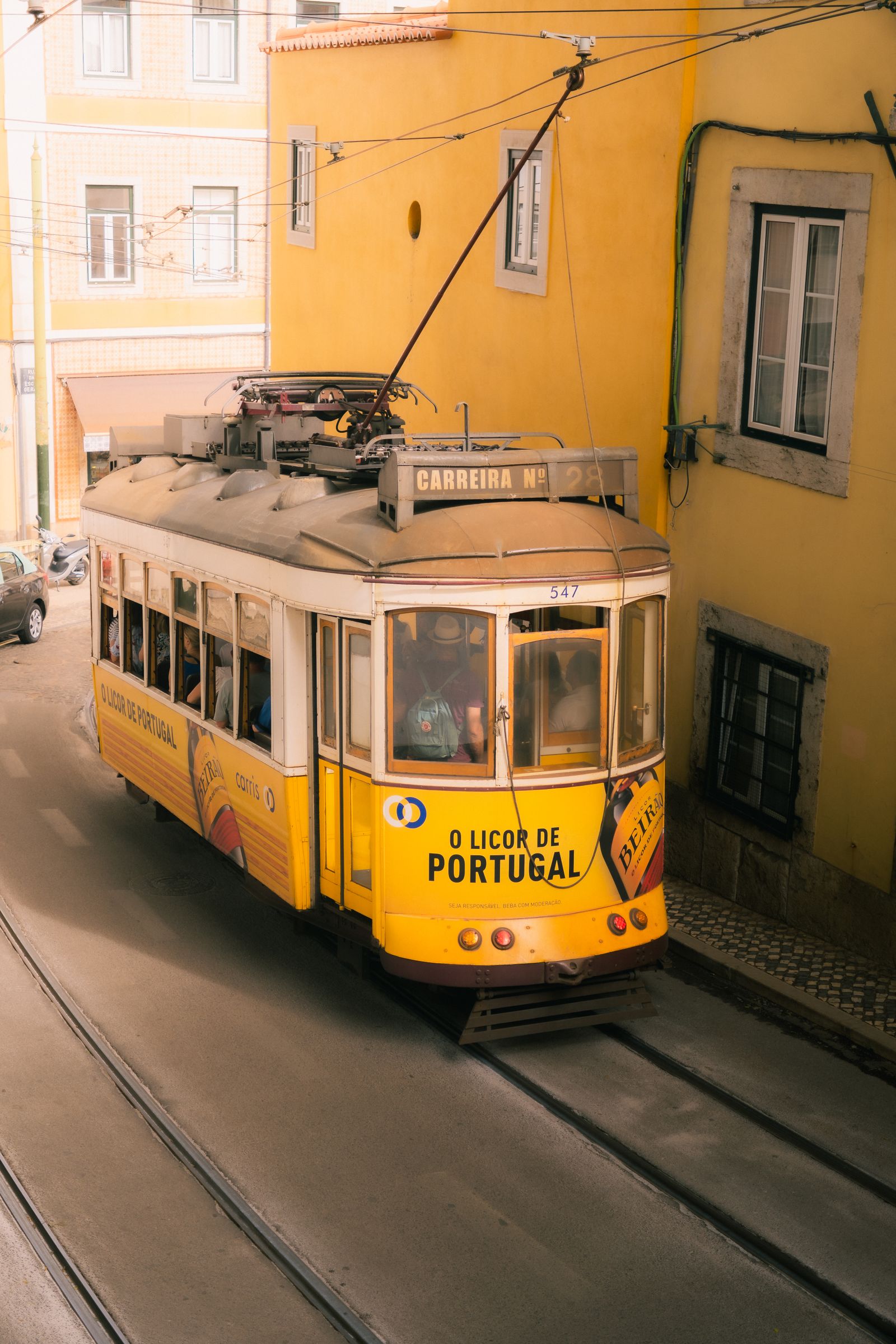
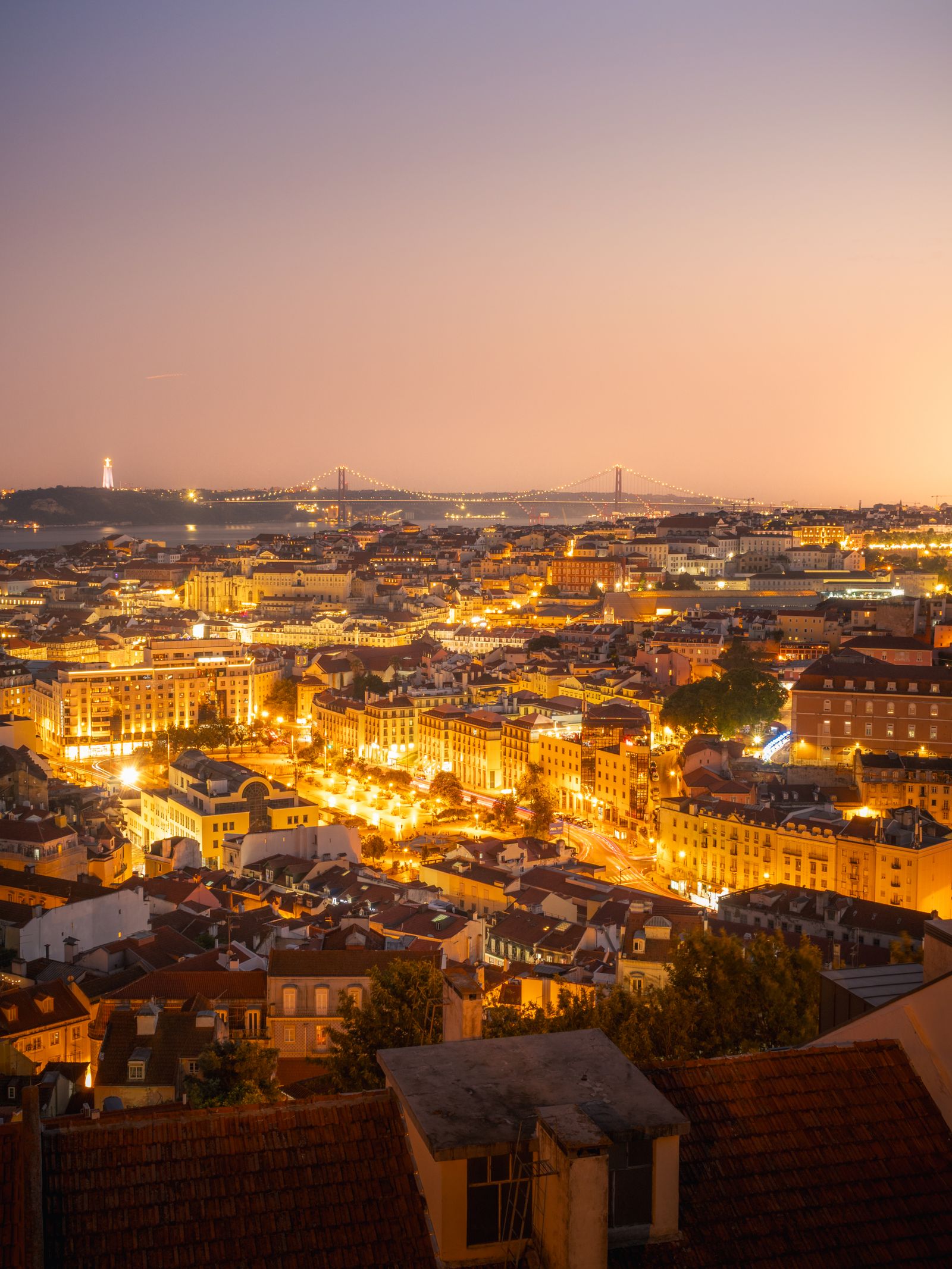
Here are three of the actual shots you’ll find inside the PDF — cinematic full-page references for the exact spots, lenses, and lighting conditions documented in the guide. The full guide includes 12 locations, each with a hero image, GPS map, settings table, and a five-shot list.
Save
Before you shoot Lisbon: the essentials
- Free public access: All miradouros are free. Praça do Comércio, Pink Street, LX Factory (exterior), Tram 28 route photography (from street level), and the exterior of Torre de Belém and Jerónimos Monastery are free. Paid entries 2024/2025: Castelo de São Jorge €17 adult; Torre de Belém €15 adult; Mosteiro dos Jerónimos cloister €12 adult (church free); Padrão dos Descobrimentos observation deck €6; Cristo Rei statue top €8 adult; Elevador de Santa Justa ride €6 tourist ticket (or €1.80 with Viva Viagem transport card); Lisboa Card (24 h €31, 48 h €51, 72 h €62) covers free entry to castle, tower, monastery, and unlimited public transport.
- Commercial permits: Personal and tourist photography in all public spaces, miradouros, streets, and open squares is unrestricted and requires no permit. Commercial shoots (advertising, editorial assignments, film crews) on public land require prior authorisation from Câmara Municipal de Lisboa (cm-lisboa.pt). Filming inside monuments requires separate approval from the managing institution. Drones are prohibited over Lisbon’s historic city centre (ANAC restricted zones) without special CAA/ANAC waiver.
- Best photography seasons: March–May (spring light, mild temperatures, manageable crowds, wildflowers) and September–October (golden autumn light, warm evenings, post-summer drop in tour groups)
- Blue hour notes: Lisbon sits at 38.7°N — lower latitude than Paris, so the sun arc is higher and the city enjoys intense golden light. Blue hour lasts 15–25 minutes after sunset. In summer sunset is as late as 9:05 PM; in winter as early as 5:02 PM. The Tagus riverfront at Praça do Comércio and the Belém waterfront promenade are finest during blue hour when the river turns deep indigo and monument illumination ignites.
- Drone policy: Drone laws vary widely by country and city — many capital and tourist zones are no-fly. Verify the local civil aviation authority’s current rules before launching.
- Local resource: Official visitor information
The full-resolution version of every map below — plus seasonal calendars, gear notes per location, sun-angle diagrams, and a complete photographer’s packing checklist — is inside the Lisbon Photographer’s Guide PDF ($47).
1. Miradouro da Senhora do Monte
The highest public viewpoint in Lisbon at ~590 ft, offering a 210-degree panorama that sweeps from the 25 de Abril Bridge and Cristo Rei on the far left, across the Tagus estuary, through Baixa’s grid, past São Jorge Castle, and out toward the National Pantheon and São Vicente de Fora on the right. No other miradouro matches this horizontal breadth. A tiled topographic map embedded in the stone wall identifies every landmark. The small whitewashed chapel of Nossa Senhora do Monte frames the left edge of classic compositions and adds human scale. At sunset the entire city glows in warm amber light without any buildings interrupting the sightline.
- GPS: 38.7191, -9.133
- Elevation: 590 ft
- Best time of day: Golden hour before sunset and into blue hour — the viewpoint faces west-southwest and delivers Lisbon’s widest panorama; in winter the sun sets directly behind the Tagus estuary producing an incandescent silhouette of the entire city; in summer, arrive 45 minutes before sunset to secure a position before crowds peak
- Sun direction: The viewpoint faces west at azimuth ~260°. The sun sets between ~240° (winter) and ~290° (summer) as seen from this platform. Morning sun (east, behind the camera) lights the rooftops and castle facade — good for telephoto compression shots looking across the city. At sunset in summer the sun descends northwest of the viewpoint, rim-lighting the São Jorge Castle and the dome of the National Pantheon. In winter, sunset moves due southwest and drops behind the Tagus estuary, creating dramatic contre-jour silhouettes. Lisbon’s latitude of 38.7°N means the sun arc is relatively high — midday light is harsh from April through September.
- Access: Rua da Senhora do Monte, 1170-302 Lisboa. Free public viewpoint, open 24 hours. Take Tram E28 to Graça stop (Rua da Graça), then walk 400 m uphill along Rua da Senhora do Monte — steep final 150 m. Alternatively, bus 734 or 756 to Graça. Uber/Bolt recommended after dark. No parking directly at the viewpoint; metered spaces in Rua da Graça below.
- Difficulty: moderate — steep 400 m uphill walk from tram stop; flat once at the platform
- Recommended settings: Golden Hour Panorama: f/8, 1/250 sec, ISO 200, 24mm — captures the full cityscape sweep in warm directional light · Blue Hour Long Exposure: f/11, 6 sec, ISO 100, 35mm, tripod — city lights glow against deep cobalt sky over the Tagus · Telephoto Castle Compression: f/8, 1/500 sec, ISO 400, 135mm — compresses São Jorge Castle against rooftop layers and the river ribbon · Night City Lights: f/5.6, 15 sec, ISO 800, 24mm, tripod — city illumination trails and Tagus reflections in long exposure
Shots to chase:
- Wide-angle panorama at blue hour with the chapel of Nossa Senhora do Monte silhouetted on the left and the entire lit city stretching to the Tagus and Cristo Rei glowing in the distance
- Telephoto compression from the far right corner of the platform using a 135–200 mm lens to stack São Jorge Castle, Alfama rooftops, and the Tagus into a compressed layered cityscape
- Sunrise shot facing east-southeast with the National Pantheon dome glowing pink in the first light and empty cobblestone streets below
- Winter sunset sequence when the sun drops behind the Tagus estuary, turning the river into a sheet of molten gold below the darkening city silhouette
- Include foreground elements — the stone parapet rail and tiled orientation map — to frame the panorama and add depth at golden hour
Pro tip: Arrive 45 minutes before sunset on weekdays — by 30 minutes before, the platform fills with locals and sunset-chasers. The rightmost corner of the terrace (facing southeast toward the Pantheon) is less crowded and gives a different framing that avoids the tour group cluster near the tile map. Bring a tripod; the platform has a low stone wall useful for camera stabilisation but a tripod gives the most flexibility. In winter, sunset can be spectacular even on partially cloudy days when the clouds catch the last light over the Tagus.
Common mistake to avoid: Standing in the centre of the platform with an ultra-wide lens produces a distorted fish-eye panorama; 24–50 mm range is more flattering. Arriving at sunset and leaving immediately afterward — blue hour (15–20 minutes post-sunset) is arguably the finest light and most photographers miss it. Forgetting that in summer the actual sunset is hidden behind the Bairro Alto hills, so the most dramatic light is the reflected golden glow on the castle and rooftops, not a direct sun disk.
2. Miradouro de Santa Catarina
Santa Catarina delivers the most direct and unobstructed view of the 25 de Abril Bridge and the Tagus estuary of any miradouro inside the city. The large stone statue of Adamastor — the sea monster from Camões’ Os Lusíadas — stands at the terrace edge as a mythological foreground element unique in Lisbon. The bohemian atmosphere of local musicians, beer in hand, and mixed young crowd creates a lively ambient energy distinct from the tourist-heavy eastern miradouros. Noobai café’s terrace extends the photographable foreground. Sunsets here are among the most vivid in the city due to the open western exposure over the river.
- GPS: 38.7095, -9.1477
- Elevation: 295 ft
- Best time of day: Sunset — the viewpoint faces west-northwest and delivers a direct, unobstructed view of the 25 de Abril Bridge, the Tagus estuary, and the distant Cristo Rei; the sun sets over the river in summer producing dramatic orange skies reflected on the water; local street musicians typically play from late afternoon through dusk, making this the most atmospheric sunset miradouro in the city
- Sun direction: The viewpoint faces west-northwest at azimuth ~285°. In summer the sun sets at ~300°, almost directly ahead and slightly right of the bridge — ideal for bridge-and-sunset compositions. In winter the sun swings to ~240°, still producing warm river reflections and sunset colour on the bridge cables. The viewpoint faces the setting sun squarely from May through August, making polarising filters useful to manage glare on the Tagus. Morning light (sun behind the camera to the east) back-lights the distant south bank and Cristo Rei, good for silhouette work.
- Access: Rua de Santa Catarina / Calçada do Combro, 1200-111 Lisboa, Bairro Alto. Free public viewpoint open 24 hours. Take Bus 758 to Miradouro de Santa Catarina, or walk 10 minutes downhill from Praça do Príncipe Real. Metro to Cais do Sodré (Green Line) and walk 12 minutes uphill. Quiosque do Adamastor café and Noobai rooftop bar are on the terrace.
- Difficulty: easy
- Recommended settings: Sunset Bridge Wide: f/8, 1/500 sec, ISO 200, 24mm — captures bridge, estuary, and sunset sky in one frame · Telephoto Bridge Compression: f/8, 1/250 sec, ISO 400, 135mm — compresses the bridge with Christ statue and Cristo Rei behind · Blue Hour Long Exposure: f/11, 8 sec, ISO 100, 35mm, tripod — river reflections and bridge lights against cobalt sky · Street Scene Dusk: f/2.8, 1/125 sec, ISO 1600, 50mm — candid of Adamastor statue with musicians and warm city glow behind
Shots to chase:
- Classic sunset composition with the Adamastor statue silhouetted against the sky and the 25 de Abril Bridge framed in the background over the Tagus
- Long exposure at blue hour with the bridge’s red cables reflected as glowing streaks in the still-water sections of the Tagus visible from this elevation
- Wide-angle scene from the terrace edge capturing the crowd, musicians, and bridge in a single frame that tells the story of Lisbon evening culture
- Telephoto shot compressing the 25 de Abril Bridge with Cristo Rei statue visible behind it across the river, shot just after sunset with warm light on the bridge towers
- Low-angle detail of the Adamastor stone carving with the river and bridge in the soft-focus background during golden hour
Pro tip: The Noobai café terrace (right side of the platform) has elevated seating that gives a slightly higher angle, reducing foreground clutter and revealing more of the river. For bridge shots at sunset, position yourself at the far left edge of the terrace where the sightline is clear of any tree branches. A 70–200 mm lens is the sweet spot for isolating bridge compression shots without needing to be further back. The crowd peaks 30 minutes before sunset on summer weekends; weekday visits are significantly calmer.
Common mistake to avoid: Using too wide a lens at the standard standing position — trees on the right side intrude below 20 mm focal length. Leaving immediately after the sun touches the horizon: the 10–15 minutes of pink afterglow and the bridge illumination coming on at blue hour are stronger photography moments. Shooting with the sun directly behind you in morning misses the most dramatic light; this viewpoint rewards westward-facing photographers in the late day.
3. Castelo de São Jorge
São Jorge Castle is a 10th-century Moorish fortress occupying the highest point of the old city, offering the most dramatic 360-degree elevated view of Lisbon available inside the walls. Walking the battlements gives a bird’s-eye perspective over the tiled rooftops of Alfama, the Tagus, Baixa’s grid, the Ponte 25 de Abril, and on clear days, the Atlantic. The 11 towers and massive curtain wall provide extraordinary architectural foreground elements. The Camera Obscura in the Tower of Ulysses projects a real-time 360° live image of the city — a unique photographic novelty. Peacocks wander the inner gardens freely.
- GPS: 38.7139, -9.1336
- Elevation: 410 ft
- Best time of day: One to two hours before sunset in summer (March–October, open until 9 PM) to catch golden light on Lisbon’s rooftops from the western battlements, or early morning (9–10 AM) for empty courtyards with soft directional light on the Manueline stonework; the Camera Obscura is best in mid-morning with high ambient light
- Sun direction: The castle sits atop the highest hill in the old city. The western battlements face azimuth ~260°, making them the definitive sunset vantage point in Lisbon — the sun descends over Bairro Alto and the Tagus estuary directly ahead. The inner courtyard faces northeast; morning sun (rising at ~65° in summer) lights the tower facades from the east. The eastern wall has views toward the National Pantheon with morning backlighting. In winter, sunset at ~230° sends warm light diagonally across the rooftops and the Tagus shimmers to the south.
- Access: Rua de Santa Cruz do Castelo, 1100-129 Lisboa. Entry fee: adults €17, youth 13–25 €8.50, seniors 65+ €14, children under 12 free; Lisboa Card free. Summer hours: 9 AM–9 PM (last admission 8:30 PM); winter 9 AM–6 PM (last admission 5:30 PM). Closed January 1, May 1, December 24–25 and 31. Nearest bus 737 or 794; Tram E28 to Miradouro de Santa Luzia then 8-minute walk uphill. Online booking skips the queue; recommended in summer.
- Difficulty: moderate — uphill approach through narrow cobblestone streets; interior has uneven stone surfaces and stairways to wall-walks
- Recommended settings: Sunset Panorama Battlements: f/8, 1/400 sec, ISO 200, 24mm — full cityscape sweep from western wall at golden hour · Telephoto Rooftop Compression: f/8, 1/500 sec, ISO 400, 200mm — layer-stack of terracotta rooftops toward the Tagus · Morning Courtyard Architecture: f/8, 1/250 sec, ISO 200, 24mm — Manueline stonework and towers in soft directional morning light · Blue Hour City Glow: f/8, 15 sec, ISO 400, 35mm, tripod — city lights from battlements with Tagus and Cristo Rei glowing in distance
Shots to chase:
- Wide sunset panorama from the northern end of the western battlements looking southwest, with Lisbon’s terracotta rooftops, the Tagus ribbon, and the 25 de Abril Bridge silhouetted in warm light
- Telephoto compression from the highest accessible tower (Torre de São Lourenço) with a 200 mm lens stacking multiple layers of Alfama’s white-and-yellow facades into a dense mosaic
- Peacock in the foreground of the inner garden with the Ulysses Tower rising behind in soft morning light — a uniquely Lisboeta shot
- Looking down through an arched crenellation in the battlements to the Alfama neighbourhood below, using the stone frame as a natural vignette
- Blue-hour long exposure from the western wall: tripod-mounted shot of the glowing city with light trails from boats crossing the Tagus
Pro tip: The best light on the city is from the northwest corner of the western battlements — position here for a clean view toward the 25 de Abril Bridge without obstructions. In summer, enter by 7:30 PM to be on the walls before the 6 PM access restriction on wall-walks (check daily; the exact close time varies with daylight). Early morning on weekdays before 10 AM gives near-empty courtyards for architectural shots. The Torre de Ulisses Camera Obscura runs guided tours included in the ticket; the photographic novelty is worth experiencing. Bring extra memory cards — the variety of shots from courtyards, towers, gardens, and battlements is exceptional.
Common mistake to avoid: Rushing through the interior courtyards to reach the battlements and missing the intimate architectural details — the arched gateways, carved stone doorways, and layered masonry textures are compelling subjects in their own right. Visiting at midday in summer when harsh overhead light creates unpleasant shadows on the stone surfaces. Not checking wall-walk access hours — they can close before the main monument closes, leaving sunset photographers unable to access the best viewpoints.
4. Torre de Belém & Mosteiro dos Jerónimos
The two UNESCO World Heritage Sites of Belém are separated by just 600 metres and together define the pinnacle of Manueline (Portuguese Late Gothic) architecture. The Torre de Belém (1519) is a 16th-century maritime fortress covered in rope-twist carvings, armillary spheres, coral motifs, and a rhinoceros head — appearing to float in the Tagus at high tide. The Mosteiro dos Jerónimos (completed 1601) has the world’s finest Manueline cloister: 55 metres of intricate stone lacework per side, two storeys high, housing the tombs of Vasco da Gama and Luís de Camões. No other neighbourhood on earth has two buildings of this architectural uniqueness and historical weight within walking distance of each other.
- GPS: 38.6947, -9.211
- Elevation: 13 ft
- Best time of day: For Torre de Belém: sunrise before 8 AM for an empty tower with pink morning light on the Manueline stonework and a glassy Tagus; check tide tables — high tide floats the tower above mudflat. For Mosteiro dos Jerónimos: early morning 9:30–10:30 AM when the cloister’s eastern arcade fills with directional shadow geometry; or late afternoon after 4 PM when tour groups depart. A combined Belém half-day visit (9:45 AM start) covers both in 4 hours in good photographic light.
- Sun direction: Torre de Belém’s ornate main facade faces south-southeast (azimuth ~155°) toward the Tagus; the tower is best lit from the east in morning (from ~7:30 AM) and from the west in afternoon (from ~3 PM). The Mosteiro’s spectacular south facade faces due south (azimuth ~180°) — flat frontal light at noon; oblique raking sidelight from the southwest from ~3 PM reveals the Manueline carvings three-dimensionally. The cloister’s eastern arcade receives morning sun at ~45° from 9:30 AM creating classic light-and-shadow arch patterns across the stone floor. Both monuments are 600 m apart along the Tagus promenade in Belém.
- Access: Torre de Belém: Avenida Brasília, 1400-038 Lisboa. Entry fee (2025): adults €15, children 6–12 and seniors 65+ €7.50, under 6 free; Lisboa Card free. Open Tuesday–Sunday 10 AM–5:30 PM; closed Monday. Mosteiro dos Jerónimos: Praça do Império, 1400-206 Lisboa. Cloister and church ticket €12 adult; church only (Santa Maria de Belém) free via western entrance. Open Tuesday–Sunday, cloister 9:30 AM–5:30 PM; church 10:30 AM–5 PM (Sunday 2–5 PM); closed Monday. Both: Lisboa Card free entry; online booking strongly recommended. Train from Cais do Sodré to Belém station (8 min) then 10-minute riverside walk. Combined Lisboa Card or the official combo ticket (monastery + tower ~€18–20) is best value.
- Difficulty: easy — flat riverside walk between the two monuments; cloister and tower interior involve steps
- Recommended settings: Torre High Tide Sunrise: f/16, 30 sec, ISO 100, 24mm, ND filter, tripod — silky water surrounding Torre de Belém in morning light at high tide · Cloister Morning Arches: f/8, 1/125 sec, ISO 400, 24mm — cloister courtyard with arch shadows raking across the stone floor at 10 AM · Torre Manueline Detail: f/5.6, 1/250 sec, ISO 400, 100mm — rope-twist columns and armillary sphere carvings in oblique afternoon sidelight · Jeronimos South Facade: f/8, 1/500 sec, ISO 200, 50mm — full south facade in afternoon sidelight with Manueline portal three-dimensionally revealed
Shots to chase:
- Torre de Belém: low-angle reflection shot from the east bank at sunrise with the tower perfectly reflected in the glassy Tagus and no tourists present
- Jerónimos cloister: strong shadow geometry from the eastern ground-floor arcade at 10 AM — bar-shadows from the Manueline arches project across the stone floor in parallel lines
- Looking upward from the Jerónimos cloister corner through the two-storey lacework arches toward the blue sky, using the concentric square geometry as leading lines
- Promenade wide shot connecting both monuments: 24 mm from the riverfront promenade with the Torre de Belém on the far left and the Jerónimos dome visible to the right, the Tagus in the foreground
- Torre de Belém detail series: the rhinoceros head carving, the armillary sphere, and the watchtower balcony with Tagus in the blurred background — each a unique Manueline signature
Pro tip: Check tide tables (tides.net for Lisbon) before visiting the Torre de Belém — high tide makes the tower appear to float and removes mudflat distractions. Monday is the best day for exterior Torre de Belém photography: the tower is closed so no queue crowds the foreground, and weekday mornings have fewer tour groups. For the Jerónimos cloister, arrive at 9:45 AM to be first in at 10 AM opening — you will have near-empty flagstones for 20–30 minutes before the first groups arrive. Free church entry (west door) gives access to the nave, Vasco da Gama’s tomb, and the transept without paying for the cloister — excellent for nave photography.
Common mistake to avoid: Visiting the Torre de Belém at low tide — exposed mudflats in the foreground make the tower appear grounded rather than maritime; always check tide times. Rushing through the Jerónimos cloister rather than sitting in one position and waiting for clean shadow compositions without other visitors walking through the frame. Visiting both monuments at midday when harsh overhead light creates the worst shadows on the carved reliefs and queues are at their peak.
Want this in your pocket on the street?
The full-resolution version of every spot above — with full-page hero photography, GPS maps with gold location pins, sun direction diagrams, multi-season tables, and a complete safety + packing checklist — is inside the Lisbon Ultimate Photographer’s Guide PDF ($47). Print it, save it offline, take it on the walk. Get the guide →
5. Padrão dos Descobrimentos
Save
The Monument to the Discoveries (1960) is a 52-metre reinforced concrete sculpture shaped as a ship’s prow thrusting into the Tagus, carved with 33 life-size figures of Portuguese explorers, cartographers, missionaries, and poets led by Henry the Navigator. The prow form is so visually compelling that every angle of approach produces a different dramatic silhouette. The enormous compass-rose mosaic inlaid in the plaza (donated by South Africa in 1960, 50 m diameter) is one of the most photographed aerial compositions in Portugal, visible from the observation deck. The riverside promenade between the monument and the Belém Tower is one of the most photogenic stretches of river-walking in Europe.
- GPS: 38.6936, -9.2057
- Elevation: 10 ft
- Best time of day: Golden hour before sunset — the westward-facing prow of the monument catches the full force of warm afternoon light, turning the carved limestone figures orange-gold against the Tagus behind; also good mid-morning for the famous compass-rose aerial photograph from the observation deck; the waterfront promenade south of the monument offers the best exterior compositions
- Sun direction: The monument is oriented with its prow pointing southwest toward the Tagus at azimuth ~220°. The east face receives morning light from approximately 8 AM. The main west face (with the carved procession of navigators) faces azimuth ~45° relative to north — this face receives afternoon sidelight from ~2 PM and full warm frontal light from ~5 PM onward in summer. The best frontal light is from a position on the south promenade between 4 PM and sunset. From the observation deck (52 m high), the Tagus to the south is backlit at sunrise and frontlit at sunset.
- Access: Avenida Brasília, 1400-038 Lisboa, Belém. Exterior and promenade: free, open 24 hours. Observation deck €6 adult; free with Lisboa Card. Indoor museum and deck open Tuesday–Sunday 10 AM–7 PM (March–September), 10 AM–6 PM (October–February); closed Monday. The famous compass-rose mosaic in the plaza is accessible at all times at ground level. Tram 15E to Largo dos Jerónimos, then 5-minute walk west along the riverside promenade.
- Difficulty: easy
- Recommended settings: Golden Hour West Face: f/8, 1/400 sec, ISO 200, 50mm — warm sidelight on carved limestone navigator figures · Wide Prow Shot: f/11, 1/250 sec, ISO 200, 16mm — full prow from south bank, Tagus behind, sky as backdrop · Observation Deck Compass Rose: f/8, 1/500 sec, ISO 400, 24mm — aerial straight-down shot of the 50-m compass mosaic · Blue Hour Long Exposure: f/11, 10 sec, ISO 100, 24mm, tripod — monument lit at blue hour with river reflections and Jerónimos in the background
Shots to chase:
- Low angle from the riverside path directly south, with the prow pointing toward the camera and the sunset sky behind — the monument appears to sail directly at you
- Observation deck straight-down vertical shot of the compass-rose mosaic plaza, catching visitors as scale figures on the map of Portuguese discoveries
- Series of carved figures along the west face in late afternoon sidelight at 100 mm, isolating individual explorers — Henry the Navigator at the prow, Vasco da Gama, Magellan — against the blurred Tagus behind
- Looking west along the promenade at sunset with the Torre de Belém small in the distance and the monument large in the right foreground, the 25 de Abril Bridge visible in the haze
- Night shot with monument illumination reflected in the Tagus from a tripod position on the south quay
Pro tip: The best exterior angle is from the south jetty/floating dock extending into the Tagus — this gives a clean water-level view of the full prow without fences or walkways in the foreground. A 50–85 mm lens from this position gives a flattering perspective on the carved figures. The compass-rose mosaic is best photographed aerially from the observation deck (€6) — go mid-morning when the sun is high enough to illuminate the mosaic without long shadows from the monument itself. After 5 PM the monument’s floodlights come on — combine with the setting sun for dramatic mixed-light shots.
Common mistake to avoid: Shooting only the full-monument exterior from the front promenade with a wide lens, missing the extraordinary sculptural detail of the individual carved figures. Visiting at noon when harsh overhead light flattens the carved relief into grey stone. Missing the compass mosaic by not paying the €6 observation deck fee — it is one of the most distinctive aerial compositions in Lisbon.
6. 25 de Abril Bridge from Cristo Rei
Cristo Rei provides the most comprehensive and dramatic viewpoint of Lisbon available anywhere: a 360-degree panorama at 84 metres height that takes in the full length of the 25 de Abril Bridge in the foreground (seen from the south anchor tower), the entire Lisbon skyline, the Tagus estuary from east to west, and on clear days the Arrábida mountain range to the south. No other vantage point situates you above the bridge with the city behind it simultaneously. The 28-metre-tall statue of Christ above adds a spiritual and compositional foreground element. The view is wider and more elevated than any miradouro in the city itself.
- GPS: 38.6786, -9.1713
- Elevation: 394 ft
- Best time of day: Late afternoon into sunset — Cristo Rei sits on the south bank facing north toward Lisbon; afternoon light illuminates the bridge cables and the entire city skyline from this angle; the golden hour before sunset turns the bridge red-orange and lights up Lisbon’s terracotta rooftops behind it; sunrise is excellent for empty platforms and misty atmosphere over the Tagus
- Sun direction: Cristo Rei viewpoint faces north at azimuth ~0°, looking directly at the bridge and city. The sun rises to the east (~65–80° in summer), which means morning light comes from the right side of the bridge, illuminating the south face of the bridge towers and the city skyline behind. In the afternoon, the sun swings west and drops to ~250–280°, creating warm sidelight on the west bridge tower and a golden backlight on Lisbon’s buildings. At sunset in summer, the sun is at ~300°, casting warm raking light across the entire city panorama. Direct frontal (north-facing) light occurs around solar noon.
- Access: Alto do Pragal, Avenida Cristo Rei, 2800-058 Almada. Entry: terrace at the base of the pedestal is free, open daily 10 AM–7 PM. Elevator to the statue’s feet and panoramic deck: €8 adult (2024/2025), €4 senior 65+, €3 children 6–12, under 6 free. Last elevator ~5:45 PM. To reach: take ferry from Cais do Sodré to Cacilhas (~€1.30 each way, 10-minute crossing, runs frequently), then bus 101 from Cacilhas ferry terminal to Cristo Rei (30 min). Alternatively, Uber/Bolt from Cacilhas.
- Difficulty: moderate — requires ferry crossing and bus; the pedestal terrace and observation platform involve elevator and 59 steps
- Recommended settings: Panorama City And Bridge: f/8, 1/500 sec, ISO 200, 35mm — full bridge and Lisbon skyline in late afternoon light · Telephoto Bridge Towers: f/8, 1/1000 sec, ISO 400, 200mm — compresses the two bridge towers with the city layered behind · Golden Hour Wide: f/11, 1/250 sec, ISO 200, 24mm — warm golden light on entire city panorama with bridge in foreground · Blue Hour Tripod: f/8, 15 sec, ISO 200, 35mm, tripod — city lights and bridge illumination with dark sky and mirror-still river
Shots to chase:
- Wide panorama from the observation deck at the statue’s feet with the 25 de Abril Bridge stretching from left to right and the entire Lisbon cityline behind it in warm afternoon light
- Telephoto compression using a 200 mm lens from the free base terrace to bring the north bridge tower close with Lisbon’s buildings layered behind it
- Including the arm or base of the Cristo Rei statue as a foreground element to frame the bridge and Tagus below
- Sunset sequence: shoot the bridge and city as the sun drops behind Monsanto Hill and the entire skyline glows amber, then stay for the blue hour when bridge illumination and city lights create a nocturnal panorama
- Ferry crossing shot: from the Cais do Sodré–Cacilhas ferry, the mid-river position provides a direct eye-level view of the bridge base and both Lisbon and Almada waterfronts simultaneously
Pro tip: The free base terrace at the foot of the pedestal is often overlooked but delivers an excellent westward view of the bridge and river without paying for the elevator. From the paid observation deck (84 m), a 35–70 mm lens covers the full panorama; a telephoto is needed to isolate bridge details. Arrive at least 1 hour before sunset for the observation deck — the last elevator is typically at 5:45 PM, meaning late summer sunsets (9 PM) cannot be caught from the top. For the trip: the ferry crossing itself is photogenic, providing mid-river perspectives unavailable from either bank.
Common mistake to avoid: Arriving after 5:30 PM in summer only to find the elevator closed — check closing times before the visit. Relying entirely on the paid top level and missing the free base terrace’s excellent angles. Not staying for blue hour from the free base terrace once the paid deck closes.
7. Tram 28 — Alfama Route
Tram 28 is the most iconic moving subject in Lisbon — a cream-and-yellow vintage wooden-bodied tram (model Remodelado, built 1930s–1960s) navigating impossibly narrow medieval streets, leaning through tight bends just centimetres from building facades. The combination of the vivid yellow vehicle against the azulejo-tiled and pastel-painted buildings of Alfama is one of the most reproduced street photography compositions in Europe. The route’s best photography positions allow the photographer to stand still and wait for the tram to enter the frame — turning a moving subject into a predictable, repeatable shot.
- GPS: 38.7125, -9.1282
- Elevation: 230 ft
- Best time of day: Early morning 7–9 AM on weekdays — the yellow trams are uncrowded, streets are empty of tour groups, and the low-angle morning light from the east rakes across the cobblestones and terracotta facades; the tram photograph at Largo das Portas do Sol is best in the two hours after sunrise; avoid midday and summer afternoons when the tram is packed and the narrow streets are choked with tourists
- Sun direction: The Alfama quarter sits on a south-facing hillside. Key photography spots on the route face various orientations: Rua das Escolas Gerais runs east-west, receiving morning light from the east along the track corridor — the tram is frontlit in early morning from the east end. Largo das Portas do Sol faces southeast at ~130°, catching warm morning light on the pale facades that frames the tram. The Sé Cathedral stop on Rua de Augusto Rosa faces southwest; afternoon light from ~3 PM is ideal here. Rua da Conceição in Baixa runs east-west, receiving golden sidelight in the early morning and late afternoon.
- Access: Tram E28 runs from Martim Moniz (east) to Campo de Ourique (west), operating daily from approximately 6 AM to 11 PM. Single journey ticket purchased on board: €3.00 (2024/2025). Viva Viagem transport card zapping: €1.80 (same as metro fare). Lisboa Card: free unlimited rides. Best photo positions require standing on the street rather than riding: Largo das Portas do Sol (GPS 38.7130, -9.1270); Rua das Escolas Gerais (GPS 38.7149, -9.1292); Rua da Conceição in Baixa. Trams run approximately every 12–18 minutes in each direction.
- Difficulty: easy — all street-level photography positions are freely accessible; riding the tram is a separate activity
- Recommended settings: Tram In Narrow Street: f/8, 1/500 sec, ISO 400, 50mm — freeze the tram in the narrow street with enough depth of field to keep facades sharp · Golden Hour Street Scene: f/5.6, 1/250 sec, ISO 800, 35mm — tram and street scene in warm early morning light · Motion Blur Tram: f/16, 1/15 sec, ISO 100, 35mm, tripod — intentional tram blur with sharp building context (use ND filter in daylight) · Telephoto Compression: f/8, 1/1000 sec, ISO 400, 135mm — tram compressed against the background with layered Alfama buildings
Shots to chase:
- Classic shot at Largo das Portas do Sol: position camera to the left of the viewpoint terrace and wait for the tram to emerge from the narrow downhill lane with the Tagus River visible in the background below
- At Rua das Escolas Gerais: crouch low and wait for the tram to navigate the sharp bend in the narrowest section, the tram body nearly scraping the building walls — use a 50 mm lens to capture the tension of the tight clearance
- At Rua da Conceição in Baixa: use a 135 mm lens from the east end of the street to compress multiple trams approaching simultaneously with the Arco da Rua Augusta in the far background
- Ride the tram itself and shoot out the open windows: the swaying motion and extreme proximity to buildings and pedestrians produces visceral street-photography energy impossible from the pavement
- Detail shot series: the tram door handle, route number plate, worn wooden interior bench, and conductor’s ticket punch as a narrative of everyday Lisbon transport
Pro tip: At Largo das Portas do Sol, position yourself against the left wall (west side) of the viewpoint gate and wait — the tram descends from the left and crosses in front of the Tagus-view background. Trams run every 12–18 minutes; knowing this, you can shoot a test frame, assess composition, and be ready for the next tram. A 50 mm lens gives the most balanced perspective in the narrow streets. Mornings on weekdays are dramatically less crowded than weekends and afternoon; the tram looks entirely different without tourists hanging from every railing.
Common mistake to avoid: Shooting from the middle of the tram tracks and not realising the tram will arrive and you need to move quickly — always position to the side. Using too wide a lens (below 35 mm) in the narrow streets introduces barrel distortion that bends the building facades. Going in the afternoon when the tram is so crowded it loses its charm and the streets are cluttered with pedestrians.
8. Praça do Comércio
Praça do Comércio — Terreiro do Paço — is the grand ceremonial gateway between Lisbon and the sea, built on the site of the Royal Palace destroyed in the 1755 earthquake. Three sides are enclosed by perfectly symmetrical neoclassical arcades with ochre-yellow columns; the fourth side opens entirely to the Tagus, giving the square a unique open river-facing character unlike any enclosed European plaza. The centrepiece bronze equestrian statue of Dom José I (1775) and the triumphal Arco da Rua Augusta with its sculptural allegories create multiple architectural focal points. Tram 28 crosses the square diagonally — adding a moving subject to the architectural composition.
- GPS: 38.7078, -9.1367
- Elevation: 10 ft
- Best time of day: Early morning at sunrise — the square is empty of the crowds that fill it by 9 AM, and the long morning shadows from the arcades create dramatic geometry across the enormous paving stone expanse; alternatively, late afternoon when warm light floods the ochre-yellow facades from the west; the triumphal arch (Arco da Rua Augusta) is best lit at sunset when direct western light rakes across the sculptural relief
- Sun direction: The square opens to the south onto the Tagus at azimuth ~180°. The Arco da Rua Augusta is at the north end of the square, facing south. Morning sun (east, azimuth ~70–80°) enters from the left of the square, illuminating the east colonnade and casting long westward shadows across the paving stones. The equestrian statue of Dom José I in the centre casts a dramatic morning shadow. The yellow arcade facades face south-southwest and receive warming light from approximately 2 PM. At sunset, the western colonnade glows amber. After rain, the vast stone-paved square reflects the sky and monuments beautifully.
- Access: Praça do Comércio, 1100-038 Lisboa, Baixa-Chiado. Free public space, open 24 hours. Metro: Terreiro do Paço (Blue Line). Tram E28 stops at Rua da Conceição, 5-minute walk south. The Arco da Rua Augusta observation terrace has a separate paid entry (approx. €3); the arch and square are free from ground level. Tagus ferry terminal (to Cacilhas and Barreiro) is at the south end of the square.
- Difficulty: easy
- Recommended settings: Sunrise Empty Square: f/11, 1/60 sec, ISO 200, 24mm — long shadow geometry across the paving stones with arcades lit · Arch Symmetry Wide: f/8, 1/250 sec, ISO 200, 24mm — standing in the arch centre and shooting south toward the Tagus with the arch frame · Equestrian Statue Sidelight: f/8, 1/500 sec, ISO 200, 85mm — Dom José I bronze in late afternoon sidelight against yellow arcade background · After Rain Reflection: f/11, 1/125 sec, ISO 400, 24mm — square floor reflects arcades and sky after rain, tripod for mirror symmetry
Shots to chase:
- Shoot from beneath the Arco da Rua Augusta looking south through the arch to the Tagus, using the arch as a natural frame with the equestrian statue centred in the middle ground
- Pre-dawn long exposure from the Tagus ferry quay looking north into the square: the arc of lights from the arcades reflects on the wet pavement creating a glowing theatre set
- Tram 28 crossing the square from the northeast corner: position at the southwest corner with a 50 mm lens and wait for the yellow tram to enter the frame between the arcades
- Aerial angle: from the top of the Arco da Rua Augusta terrace, shoot straight down into the square to show the geometric grid of the paving stones and the bronze statue from directly above
- After-rain reflection shot from a low angle at pavement level, with the ochre arcades mirrored perfectly in a thin film of water on the stone — a technically demanding but stunning result
Pro tip: Arrive at sunrise (6:30–7:30 AM in summer, 7:30–8:30 AM in winter) on weekdays when the square is almost entirely empty — by 9 AM it begins filling with commuters and tour groups. The Tagus ferry to Cacilhas provides a unique reverse perspective shooting back into the square from the water, with the city skyline behind — an underused angle. Tram 28 crossings through the square are irregular; check the route map and position on Rua da Conceição for the best tram-and-arch compositions.
Common mistake to avoid: Standing in the centre of the square and shooting the arcades with a wide lens — the perspective lines converge awkwardly; shooting from under one arcade toward the opposite gives better architectural geometry. Visiting between 11 AM and 3 PM when the overhead sun casts ugly shadows inside the arcades and the stone floor is in full flat light. Missing the Tagus side — facing south from the north end of the square with the river as background completely changes the character of the compositions.
Want this in your pocket on the street?
The full-resolution version of every spot above — with full-page hero photography, GPS maps with gold location pins, sun direction diagrams, multi-season tables, and a complete safety + packing checklist — is inside the Lisbon Ultimate Photographer’s Guide PDF ($47). Print it, save it offline, take it on the walk. Get the guide →
9. LX Factory
Save
LX Factory is a repurposed 19th-century textile manufacturing complex — 23,000 sqm of industrial warehouses, factory floors, and yards now occupied by design studios, restaurants, bookshops, and market vendors. The visual character is extraordinary: raw brick walls and steel beams covered in large-scale murals by Portuguese and international street artists (including a 20-metre bee sculpture by Bordalo II assembled from recycled waste), industrial skylights diffusing light into cavernous interiors, and the dramatic overhead presence of the 25 de Abril Bridge whose pillar stands at the factory’s north end. The Sunday market brings colour and life. The multi-storey bookshop Ler Devagar occupies a former press room with original machines intact.
- GPS: 38.7032, -9.1721
- Elevation: 30 ft
- Best time of day: Sunday morning 10 AM–1 PM during the weekly market — industrial architecture bathed in late morning light with vendors, street art, and the bridge overhead; alternatively weekday evenings after 5 PM for graphic contrast of the industrial interiors backlit from skylights against warm ambient light; overcast days are excellent for street art photography as diffuse light eliminates shadows
- Sun direction: LX Factory’s main street runs roughly north-south with the 25 de Abril Bridge overhead to the north. Morning sun (east, azimuth ~70°) enters the east-facing factory facades from approximately 8 AM, creating strong sidelight on the corrugated iron walls and street art murals. The main outdoor boulevard faces north-northwest, receiving indirect light in the morning and warm direct sidelight from ~3 PM onward. The bridge pillar (Pilar 7) to the north catches afternoon light from the west. The steel and corrugated structures create deep shadows in any conditions — a polariser is useful.
- Access: Rua Rodrigues de Faria 103, 1300-501 Lisboa, Alcântara. Free entry to the precinct (individual businesses have their own prices). Open daily; most stores/cafés 10 AM–8 PM, bars/restaurants until midnight–2 AM, Sunday market 10 AM–7 PM. Tram 15E to Calvário stop (20 min from Praça da Figueira), then 3-minute walk. Train to Alcântara-Mar, then 10-minute walk along Avenida da Índia. No dedicated parking within the factory.
- Difficulty: easy
- Recommended settings: Street Art Murals: f/8, 1/250 sec, ISO 400, 35mm — full mural coverage in diffuse overcast light · Industrial Interior: f/4, 1/60 sec, ISO 1600, 24mm — available light inside factory spaces with skylights · Sunday Market Street: f/5.6, 1/500 sec, ISO 800, 50mm — candid vendors and visitors in the main street · Bridge Pillar Overhead: f/11, 1/500 sec, ISO 200, 16mm — ultra-wide looking straight up at the 25 de Abril Bridge overhead from the north end
Shots to chase:
- Standing at the north end of the factory main street and shooting south with the 25 de Abril Bridge pillar dominating the sky overhead and the factory facades receding into the distance as converging lines
- Bordalo II’s large 3D bee sculpture assembled from compressed trash against the old brick wall — approach at a 45° angle to show the depth of the 3D construction in afternoon sidelight
- Inside Ler Devagar bookshop: the original printing press machines on the ground floor with book-filled mezzanine balconies above, in the natural light from the skylights
- Sunday market candid series: extreme close-ups of artisan goods, wide shots of the crowded main avenue, and environmental portraits of vendors in their stalls
- Looking up from ground level through the industrial steel roof structure with skylights, using the geometric lattice as a leading-line composition to the blue sky
Pro tip: Visit on Sunday for the market — the combination of architecture, street art, vendors, and the bridge overhead produces the richest subject variety in any single Lisbon location. Overcast days are ideal for street art photography: the diffuse light eliminates harsh shadows and reveals the full colour saturation of the murals. Ler Devagar bookshop is open daily and allows photography — the interior is one of the most visually striking in Europe. The back of the factory now has a new entrance from Avenida da Índia (Google Maps not yet updated as of 2024) — this approach reveals the riverside face of the complex.
Common mistake to avoid: Arriving on a weekday morning before 10:30 AM when nothing is open and the factory feels desolate. Shooting the street art with a polariser when the murals need overcast light, not polarised light. Missing the Bordalo II bee sculpture located inside the factory — it is easy to walk past without exploring the side yards.
10. Pink Street — Rua Nova do Carvalho
Pink Street is Lisbon’s most photographed urban street and the nightlife nucleus of Cais do Sodré. The street’s pink-painted pavement (since 2013, part of an urban renewal project) contrasts dramatically with the yellow and blue building facades and the hanging coloured umbrella canopy that covers its 90-metre length in summer. Once a red-light district, the street now hosts some of Lisbon’s most fashionable bars and one of its best cocktail venues. The visual combination — pink ground, primary-colour facades, overhead canopy, neon bar signs, and fado music filtering from doorways — is unlike any other street in Europe.
- GPS: 38.7066, -9.144
- Elevation: 16 ft
- Best time of day: Early morning before 8:30 AM for empty street compositions — by 9 AM rubbish is being cleared but delivery vehicles arrive; mid-evening (9–11 PM) for neon and nightlife atmosphere with bar terraces full and the pink pavement lit by overhead strings of lights; avoid midday entirely (restaurants set up outdoor furniture blocking the full street width)
- Sun direction: Rua Nova do Carvalho runs roughly northeast-to-southwest, approximately 90 metres long. The street is a canyon between 4–5 storey buildings, so direct sunlight only penetrates at the open southern end (facing Praça de São Paulo) for a brief period in the afternoon. Mid-afternoon (around 3–4 PM in summer), the sun angles southwest and briefly illuminates the western end of the street, creating a warm raking light on the coloured umbrella canopy and the pink pavement. For most of the day, the street is in soft reflected light from the surrounding facades — excellent for colour photography without harsh shadows. The yellow-painted building on the eastern corner is a natural reflector in morning light.
- Access: Rua Nova do Carvalho, 1200-291 Lisboa, Cais do Sodré. Free public street, open 24 hours. Metro: Cais do Sodré (Green Line), then 3-minute walk north. Tram 15E to Cais do Sodré. The street is pedestrianised and bars open from approximately 6 PM to 4 AM. The coloured umbrella canopy is typically installed for summer months (May–October); the pink pavement is permanent year-round.
- Difficulty: easy
- Recommended settings: Empty Morning Wide: f/8, 1/250 sec, ISO 400, 24mm — full street length with pink pavement leading lines to the far end · Umbrella Canopy Upward: f/8, 1/500 sec, ISO 200, 16mm — shooting straight up through the colourful umbrella canopy with the building facades rising above · Night Neon Scene: f/2.8, 1/30 sec, ISO 3200, 35mm — handheld night photography of the neon bar signs and bustling crowd · Telephoto Colour Compression: f/5.6, 1/500 sec, ISO 400, 85mm — from the street entrance, compress the coloured umbrellas and pink pavement into a flat graphic composition
Shots to chase:
- Stand at the Praça de São Paulo (south) entrance of the street and shoot north at 24 mm with the pink pavement as a strong leading line narrowing to the far end, framed by the yellow buildings on either side
- Low angle on the pavement pointing up at the umbrella canopy — use a 16 mm lens at the widest umbrella section for a surreal overhead canopy composition
- Nighttime neon scene at 35 mm with a wide aperture (f/2.8), capturing bar terraces, neon signs, and the pink glow underfoot in one layered composition
- From the street bridge at Rua do Alecrim overhead, shoot down into the street at the western (downhill) end for a bird’s-eye view of the full umbrella canopy and street layout
- Documentary series: the contrasting identities of the street — empty at dawn, busy at lunch with outdoor seating, packed and neon-lit at midnight
Pro tip: For the cleanest empty-street shot, arrive at 7:30 AM before rubbish collection crews and before the first delivery vehicles. The bridge over the street on Rua do Alecrim is the best elevated shooting position and is free to access at all hours — it provides a top-down perspective that reveals the full pattern of the umbrellas and the pink pavement that is impossible from street level. On warm summer nights, the street is at its most photogenic between 10 PM and midnight when the bars are at full capacity but not yet closing-time chaotic.
Common mistake to avoid: Arriving mid-morning to find restaurant staff setting up outdoor tables that block the full-street shot. Shooting in flat midday light that desaturates the pink pavement and umbrella colours — early morning or evening light brings out the saturation. Missing the elevated Rua do Alecrim bridge angle, which is the most graphic and distinctive composition available.
11. Elevador de Santa Justa
The Elevador de Santa Justa (1902, engineer Raul Mesnier du Ponsard, trained under Eiffel) is a 45-metre neo-Gothic iron lift tower connecting Baixa at street level to the Largo do Carmo at the top of the Bairro Alto hill. The tower itself is the city’s most ornate piece of industrial architecture: five tiers of arching iron filigree, circular observation deck rotunda, and two wooden-bodied lift cabins. The structure is visually remarkable from every angle — looking up from street level, framed from distance on Rua do Carmo, or from the cross-bridge walkway level where it connects to the Carmo terrace. The view from the upper walkway encompasses Rossio, the castle, the Tagus, and the entire Baixa grid.
- GPS: 38.7073, -9.1369
- Elevation: 197 ft
- Best time of day: Blue hour and twilight — the elaborate neo-Gothic iron structure is illuminated by warm amber uplighting that contrasts beautifully against the deep blue sky; early morning before 9 AM for empty street-level shots with long shadows from the east; the observation deck at top level (free from Largo do Carmo walkway, or €1.50 paid access to spiral staircase) is best at sunset for views over Baixa and toward the castle
- Sun direction: The elevator is oriented with the tower face looking east onto Rua de Santa Justa at azimuth ~85°. The east face receives morning light from sunrise onward; the elaborate wrought iron filigree is beautifully lit at a low 30–45° angle from the east between 7–9 AM. The tower faces Rua do Carmo to the west at azimuth ~265° — this face catches afternoon and golden hour light. The observation deck at the top faces in all directions but the best view is northeast toward Castelo de São Jorge. From street level, the most dramatic shot is looking straight up along the tower’s length from Rua de Santa Justa below, with the tower framing the sky.
- Access: Rua de Santa Justa 78, 1150-316 Lisboa, Baixa. Lift ticket: €6 tourist fare (includes return and deck access) or €1.80 with Viva Viagem/Navegante transport card; Lisboa Card free. Upper viewing walkway access only: free via Largo do Carmo staircase (no lift ticket required). Observation deck top level: €1.50 additional. Open daily 7 AM–10:45 PM (shorter in winter). Metro: Baixa-Chiado (Blue/Green Lines), 5-minute walk east. Tram E28 to Rua da Conceição, 3-minute walk.
- Difficulty: easy
- Recommended settings: Blue Hour Tower Exterior: f/8, 4 sec, ISO 200, 35mm, tripod — illuminated ironwork against cobalt sky on Rua de Santa Justa · Looking Up Street Level: f/11, 1/250 sec, ISO 400, 24mm — straight up along the tower with converging iron tiers to the sky · Observation Deck City View: f/8, 1/250 sec, ISO 400, 35mm — view toward Castelo de São Jorge over Baixa rooftops from the upper walkway · Tower In Context: f/8, 1/500 sec, ISO 200, 50mm — from Rua do Carmo looking east, the tower framed between the Carmo Convent ruins and Baixa buildings below
Shots to chase:
- Stand at the street-level base of the tower on Rua de Santa Justa and shoot straight up with a 24 mm lens — the five tiers of neo-Gothic ironwork converge toward the circular summit rotunda, a classic architectural abstraction
- Blue-hour shot from the north side of Rua de Santa Justa: the entire tower illuminated in warm amber against deep blue sky with wet cobblestones reflecting the lift lights below
- From the upper walkway (Largo do Carmo side) looking east toward Castelo de São Jorge: the castle sits on its hill in the background with the tiled rooftops of Baixa spread below
- Interior lift cabin: the curved wooden-panelled cabin interior with its brass fittings and porthole windows, shot looking down from the cabin as it ascends through the ironwork shaft
- From Rua do Carmo (west), looking through the arch of the Carmo Convent ruins with the Santa Justa tower visible in the gap below, combining two of Lisbon’s most photogenic neo-Gothic structures
Pro tip: The cheapest and most photographer-friendly access to the top view is to walk up to Largo do Carmo and cross the free connecting walkway — no ticket, no queue, and you get the bridge level view over Baixa. The €1.50 spiral staircase to the very top rotunda deck is worth paying for the 360° panoramic view that shows the Tagus in the south and the castle in the northeast. For the base street-level shot, set up a tripod and aim straight up during blue hour (15 minutes after sunset) when the lift is lit and the sky is deep blue.
Common mistake to avoid: Queuing for the expensive tourist lift ticket when the free Largo do Carmo walkway access gives an identical view from the top. Going at midday when the harsh sunlight burns out the ironwork detail and the queue is at maximum. Not photographing the street-level base of the tower from below — the upward perspective is one of the most striking architectural abstractions in Lisbon.
12. Time Out Market — Mercado da Ribeira Exterior
The Mercado da Ribeira is one of Lisbon’s most distinctive pieces of 19th-century iron architecture — a vast market hall built in 1882 with an ornate iron and glass structure similar in spirit to London’s Leadenhall Market. The clock tower on the northeast corner is an iconic Lisbon landmark in the Cais do Sodré district. The building occupies an important urban junction: the Tagus riverfront promenade to the south, the ferry terminal and Pink Street to the east, and the Bairro Alto hill rising to the north. The Time Out Market (since 2014) has made the building a 24-hour active destination. The exterior iron structure, particularly the arched fenestration and corner tower, is visually rich in industrial detail.
- GPS: 38.7069, -9.1456
- Elevation: 13 ft
- Best time of day: Late afternoon golden hour — the 1882 iron market building exterior faces east-southeast onto Avenida 24 de Julho and the Tagus riverfront; afternoon light from the west rakes across the facade and the riverside promenade; sunset over the Tagus from the adjacent Cais do Sodré quay is excellent; early morning for the empty riverfront before commuter traffic starts
- Sun direction: The Mercado da Ribeira building faces northeast along Avenida 24 de Julho at approximately azimuth ~50°. The main eastern facade receives morning light from sunrise until about 11 AM. The southern riverside face (facing the Tagus) receives afternoon light from approximately 1 PM onward, reaching golden hour quality by 4 PM. The Tagus promenade immediately south of the building faces southwest at sunset — excellent for riverfront compositions. The market’s iron clock tower is a natural vertical subject for blue-hour illumination shots.
- Access: Avenida 24 de Julho, 1200-479 Lisboa, Cais do Sodré. Exterior and riverside promenade free, open 24 hours. Market interior: open daily Sunday–Wednesday 10 AM–midnight, Thursday–Saturday 10 AM–2 AM. Metro: Cais do Sodré (Green Line), immediate exit. Tram 15E terminus at Cais do Sodré. Pink Street is 3 minutes walk east.
- Difficulty: easy
- Recommended settings: East Facade Morning: f/8, 1/500 sec, ISO 200, 35mm — full facade in morning light with clock tower as vertical element · Riverfront Sunset: f/8, 1/500 sec, ISO 200, 24mm — Tagus promenade at sunset with the market building and 25 de Abril Bridge in one frame · Blue Hour Clock Tower: f/8, 8 sec, ISO 200, 50mm, tripod — clock tower illuminated at blue hour with ferry lights on the Tagus · Interior Market Wide: f/5.6, 1/60 sec, ISO 1600, 24mm — available light inside the iron-and-glass market hall
Shots to chase:
- From the Tagus riverfront promenade directly south of the market: 24 mm wide-angle capturing the market building on the left, the 25 de Abril Bridge in the background right, and the Tagus in the foreground
- Clock tower corner at blue hour with the tower lit and deep blue sky: use a 50 mm lens from the northeast corner of the building to frame the tower against the sky
- From the ferry terminal quay looking west along the waterfront with the market building, the Tagus, and the bridge visible in a single wide composition at sunset
- Interior: looking up at the iron roof structure from the food hall floor — the arched iron trusses and glass panels create a Victorian-industrial ceiling composition
- Candid street photography from the exterior terrace at the Avenida 24 de Julho entrance: the market’s main door framed with tram 15E passing in the foreground
Pro tip: The most underused angle is from the small fishing quay on the Tagus side (south of the building), which gives a low water-level perspective on the building’s south facade with the Tagus in the foreground and the bridge in the distance. For blue hour, set up on the Tagus promenade facing northwest to catch the clock tower lit against the residual cobalt sky over the city. The interior market is architecturally interesting but access requires navigating large crowds — early opening (10 AM) is the best time for architecture shots inside.
Common mistake to avoid: Treating the market only as a food destination and missing the exterior architectural photography opportunities. Shooting from the Avenida 24 de Julho footpath with parked cars in the foreground — walk to the Tagus quay for clean compositions. Missing the bridge-and-market combination shot possible from the riverfront — this connects two of Lisbon’s most iconic landmarks in one frame.
When to photograph Lisbon: a year-round breakdown
Lisbon is photogenic every month of the year — but the conditions differ radically by season. Here is what to expect:
March–May (spring light, mild temperatures, manageable crowds, wildflowers) and September–October (golden autumn light, warm evenings, post-summer drop in tour groups)
Photographer safety in Lisbon: read this
City photography has its own risks: gear visibility, neighborhood timing, traffic, weather. Read the briefing before you go.
- Gear visibility: Use a discreet bag with no obvious camera branding. Keep a body strapped under a jacket on transit.
- Neighborhood timing: Pre-dawn and post-sunset shoots reward early scouting. Cross-reference each location with current local guidance and choose well-lit transit routes.
- Situational awareness: Headphones out. One eye in the viewfinder, one on the street.
- Traffic: Bridges, medians, and bike lanes are not setup zones. Shoot from sidewalks and pedestrian areas only.
- Weather: Summer storms move quickly; winter cold drains batteries. Layer up, keep gear dry, watch for ice on cobblestones at blue hour.
The complete safety briefing is inside the Lisbon Photographer’s Guide PDF.
Take this guide into the city
This post is the complete field reference. The Lisbon Ultimate Photographer’s Guide PDF is the field-deployable version: full-page resolution hero photography, GPS maps with gold pins for every location, multi-season shooting calendars, gear notes per location, sun-angle diagrams, the full city safety briefing, and a print-ready editorial layout in Framehaus black and gold. Save it offline. Print it. Take it on the walk.
Lisbon Ultimate Photographer’s Guide
Downloadable PDF · 12 GPS-mapped locations · Multi-season calendar · City safety briefing · Packing checklist
Get the Lisbon guide — $47
Get the Lisbon Guide + Preset Pack
Photograph it. Edit it. Done.
All links go to Viator (a TripAdvisor company), the world’s largest marketplace for guided experiences. Tagged as affiliate per FTC.
Quick Amazon shortcuts to the gear most useful for this kind of shot. Use them if Prime shipping or Amazon credit makes more sense than B&H. As an Amazon Associate ShutYourAperture earns from qualifying purchases.
Take Lisbon home in your pocket.
Every shot location, every angle, every time of day worth shooting. Printable PDF + GPS-tagged map.
Instant download. Works on phone, tablet, and printed.
Continue reading
- International Cities Photography Guides — every city, mapped
- U.S. Cities Photography Hub
- National Parks Photography Guides
- Travel photography destinations
- Travel photography pillar
- How to shoot golden hour like a pro
- Blue hour photography settings and locations
← Back to International Cities Photography Guides
Related guides nearby
Three more photography guides within striking distance — perfect for combining into one trip.
The complete Lisbon guide is $47
All vantage points above + 5 bonus secret spots, printable map, gear pack list, and editing recipes. One-time payment, instant download, lifetime updates.
Common questions about the Lisbon guide
Is the Lisbon photography guide worth $47?
For most photographers, yes. The guide saves 8-12 hours of trip-planning research and prevents the most common mistake of Lisbon photography: shooting at the wrong time of day. If a single better frame is worth $47 to you, the guide pays for itself on day one. Buyers get every GPS coordinate, every golden-hour window, every cultural rule, and a printable shot list.
Does the Lisbon guide include GPS coordinates?
Yes — every vantage point in the guide has Google Maps-ready GPS coordinates so you can pin them before you fly. The guide also includes a printable map showing all locations clustered by walking distance, so you can build efficient half-day routes.
What's in the Lisbon PDF that isn't in this article?
The article shows the highlights. The PDF includes: 5 additional secret spots not published online, a 14-day itinerary with daily routes, the full camera-settings cheat sheet for every scenario in Lisbon, a printable gear packing list, post-processing recipes with screenshot examples, and a list of local guides we trust for portrait commissions.
Do I get the Lightroom presets too?
The $47 guide is the PDF only. The matching Lisbon preset pack is a separate $19 download — most buyers grab both as a bundle and save the editing time. Both are instant download, both work on Lightroom Classic and Lightroom Mobile.
Will the guide work for a Lisbon trip in 2026?
Yes. The guide is updated annually as fees, restrictions, and new vantage points change. All buyers get free lifetime updates. The 2026 edition includes the latest drone rules, museum photography policies, and seasonal light data for the year.
Visiting more than Lisbon?
Bundle multiple destination guides and save planning time across the trip:
- Paris Photographer’s Guide ($47)
- London Photographer’s Guide ($47)
- Rome Photographer’s Guide ($47)
- Barcelona Photographer’s Guide ($47)
- Amsterdam Photographer’s Guide ($47)
Or get all 60+ destinations in one bundle: Photo Atlas — every guide, every map, $97.