Photography Guide to Turkey: Regions, Best Months & Field Notes
~14 min read · 2026-05-23 For practitioners, see our breakdown of luminance masking workflow. For practitioners, see our breakdown of shutter for fireworks. For practitioners, see our breakdown of aperture-driven bokeh.
shutyouraperture-20). Buying through these links costs you nothing extra and helps fund our free guides.
Turkey is a transcontinental country where Byzantine and Ottoman architecture, Cappadocian volcanic geology, and 8,000 km of Mediterranean and Aegean coastline create one of the most photogenically layered destinations in the world. This is the working photographer’s field guide to the country: when to be there for the light in each region, what gear actually fits, the 6 photo regions explained with their best months and headline subjects, the current drone and security-photography law, the cultural etiquette that separates respectful documentary frames from tourist photographs, and the post-processing notes for the Turkey color palette. Plan with the same rigor you bring to portrait or wedding work.
 Save
SaveWhy Turkey is a photographer's dream
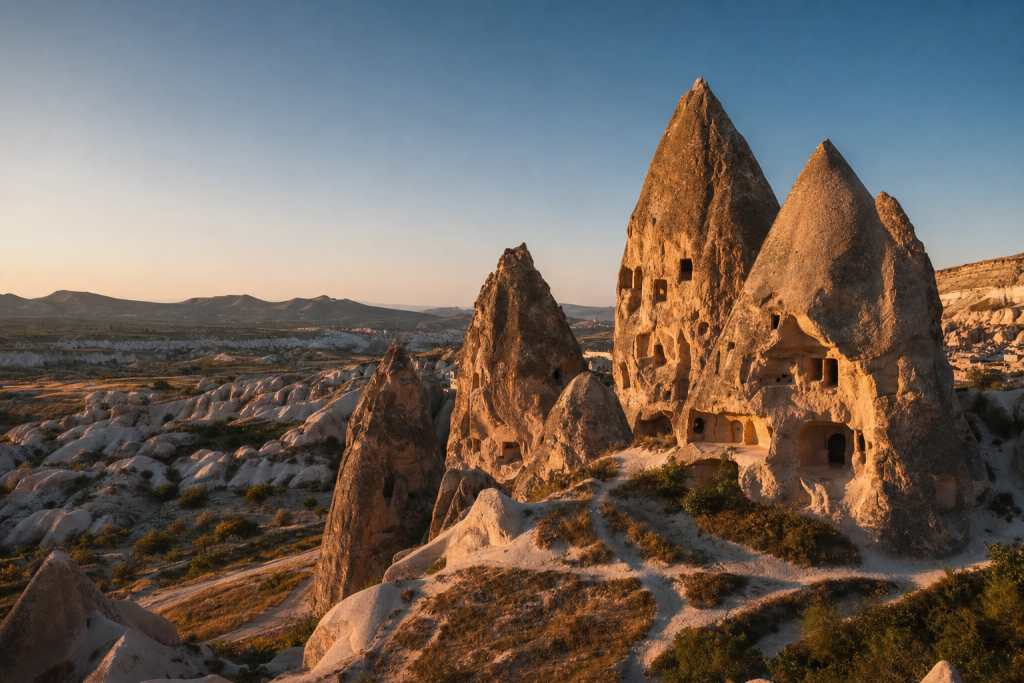
Turkey straddles two continents and three photographic worlds: the Byzantine and Ottoman heritage of Istanbul, the volcanic fairy-chimney landscape of Cappadocia, and the Mediterranean-Aegean coastline that runs from Greek-Roman ruins at Ephesus and Pergamon down to the Lycian coast and across to the eastern Anatolian highlands. Add Mount Nemrut’s monumental heads at sunrise, the travertine pools of Pamukkale, the Black Sea tea country, and the lakes and mosques of Bursa and Konya, and the country becomes an inexhaustible photographic project. The Sultanahmet skyline alone — Hagia Sophia, Blue Mosque, Topkapi, the Bosphorus — would justify the trip. What makes Turkey rare is that this density of subjects exists in a country with modern infrastructure, reliable flights, and high-speed trains. Plan around two or three regions, not the whole country at once.
For first-time visitors, the temptation is to try to cover every headline subject in a single trip. Turkey rewards the opposite approach: choose two or three regions, learn their light, and produce a focused portfolio. The country will still be there next year. Decide your photographic priority first — architectural, landscape, religious, coastal, astrophotography — and then choose the region that delivers it best in the month you can travel.
When to photograph Turkey: month-by-month
April-June and September-October are the photographer’s sweet spots. Spring delivers wildflowers in Cappadocia and Lycia, cool clear weather across the country, and the best balloon-flight visibility in Cappadocia. Autumn delivers warm Aegean light, harvest landscapes, smaller crowds at Ephesus and Pamukkale, and reliably stable hot-air balloon mornings. Summer (July-August) is hot and crowded everywhere; the Aegean coast peaks tourist traffic and Istanbul climbs to 35C+. Winter (December-February) offers snowy Cappadocian fairy chimneys (genuinely magical when it happens), uncrowded Istanbul, and Mediterranean coast in moody off-season mode — but balloon flights cancel often, eastern Turkey is harsh, and many Lycian-coast businesses close.
| Month | What to expect |
|---|---|
| January | Snow in Cappadocia possible (magical when it lands). Cold Istanbul (3-9C). Eastern Anatolia harsh. |
| February | Similar to January. Limited balloon flights in Cappadocia. Worth it for snow + chimneys frame. |
| March | First wildflowers in Lycia. Istanbul warming but still cool. Tulip festival starts late March. |
| April | Istanbul Tulip Festival peak (mid-April). Cappadocia hot-air balloons most stable. Excellent weather countrywide. |
| May | Best balloon month in Cappadocia. Warm Mediterranean, perfect Aegean coast. Wildflowers across Anatolia. |
| June | Long warm days. Pamukkale travertines spectacular in spring runoff. Crowds rebuild on coast. |
| July | Hot. Coastal Turkey at peak tourist density. Cappadocia balloon flights still reliable. |
| August | Hottest month. Istanbul 35C+. Aegean coast peak crowds and prices. |
| September | Heat starts breaking. Excellent Aegean light. Pamukkale less crowded. Balloon flights stable. |
| October | Best autumn month. Soft warm light, harvest in Anatolia, ideal Cappadocia hiking weather. |
| November | Cooler and quieter. Last reliable balloon month. Istanbul moody and atmospheric. |
| December | Winter sets in. Snow possible in Cappadocia. Christmas-period European tourism in Istanbul. |
The single biggest planning mistake is to assume a country has a single best season. Turkey, like every photogenic destination, has regional micro-seasons. The month that delivers golden light on the coast may deliver brutal heat in the interior. Plan around the region you have chosen, not the country as a whole.
The 6 photo regions of Turkey
Turkey divides into 6 photogenically distinct regions. The list below is organized by geography and photographic identity. Pick two or three regions for a 7-14 day trip — trying to cover them all in a single visit produces tired travel photography rather than considered portfolio work.
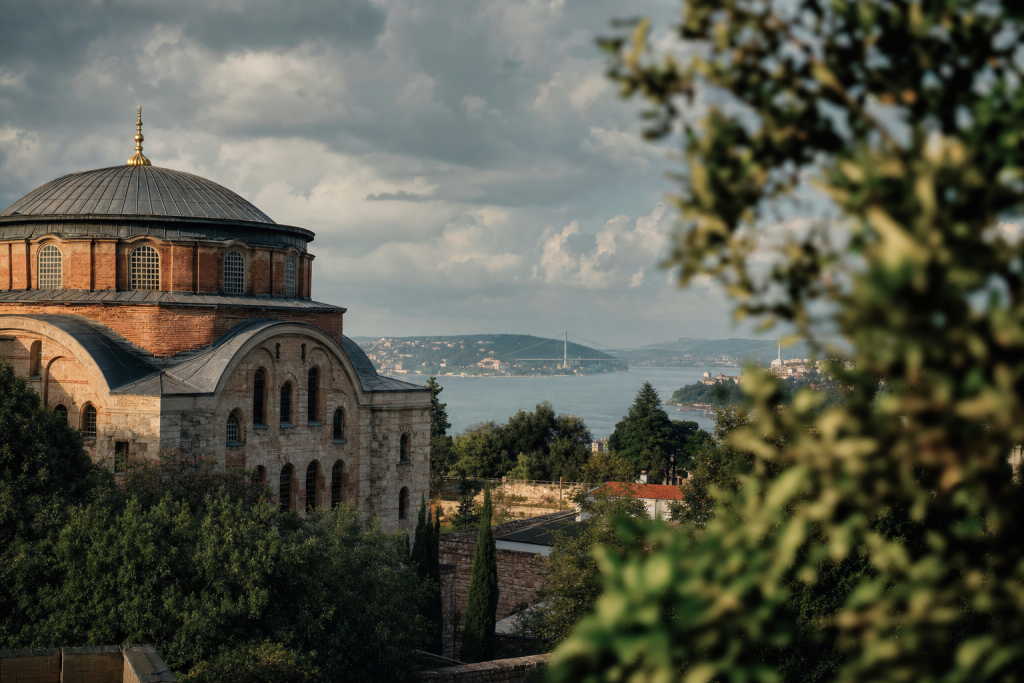
Istanbul (northwest)
Highlights: Sultanahmet (Hagia Sophia, Blue Mosque, Topkapi Palace, Basilica Cistern), Grand Bazaar, Spice Bazaar, Galata Tower, Bosphorus ferries, Suleymaniye Mosque, Chora Church, Princes' Islands, Eyup Sultan Mosque sunset.
Best time: April-June and September-November. December-February for moody atmosphere.
Photo focus: Ottoman-Byzantine architecture, bazaar street photography, Bosphorus blue hour, mosque interiors, ferry-deck street scenes.
Cappadocia (central)
Highlights: Goreme Open-Air Museum (rock-cut churches), Uchisar Castle, Pasabag (Monks Valley), Devrent Valley, Love Valley, Avanos pottery, Kaymakli and Derinkuyu underground cities, Ihlara Valley, hot-air balloon flights.
Best time: April-June and September-November. Winter for snow drama.
Photo focus: Hot-air balloons at sunrise, fairy-chimney geology, rock-cut church interiors, underground city architecture, dramatic dawn light over Goreme valley.
Aegean Coast (west)
Highlights: Ephesus ancient city (Library of Celsus, Great Theatre), Pergamon Acropolis, Pamukkale travertine terraces + Hierapolis, Bodrum Castle, Selcuk and the Temple of Artemis, Aphrodisias, Priene-Miletus-Didyma trio.
Best time: April-June and September-October.
Photo focus: Greek-Roman ruins in soft Mediterranean light, white travertine terraces, hilltop archaeology, Aegean coast harbor towns.
Lycian / Mediterranean Coast (southwest)
Highlights: Antalya old town (Kaleici), Patara beach and lighthouse, Olympos and the Chimaera flames, Demre and Myra rock tombs, Kekova sunken city, Kas, Fethiye, the Blue Lagoon at Oludeniz, the Lycian Way long-distance trail.
Best time: April-June and September-October. Summer beach scrum applies.
Photo focus: Mediterranean turquoise water, Lycian rock tombs, paragliding from Babadag, harbor towns, coastal hiking compositions.
Eastern Anatolia (east)
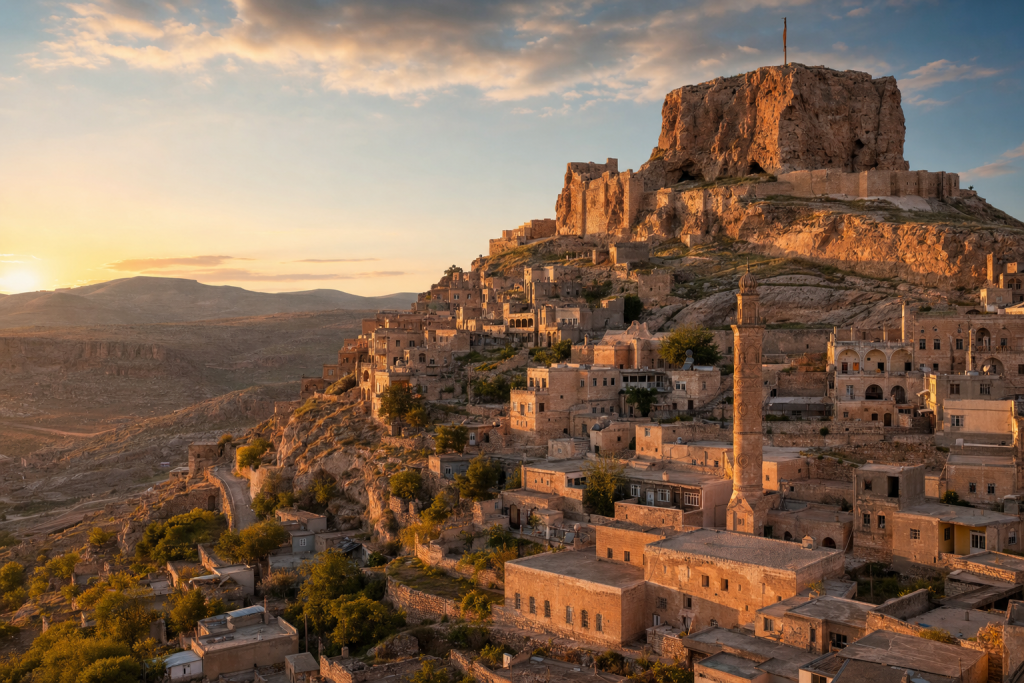
Highlights: Mount Nemrut (UNESCO monumental heads at sunrise), Lake Van, Akdamar Island church, Diyarbakir city walls, Mardin old town, Gaziantep mosaics museum, Sanliurfa (claimed birthplace of Abraham), Gobekli Tepe (world's oldest known temple complex).
Best time: May-October only. Winter is severe and many sites inaccessible.
Photo focus: Monumental archaeology, lake-and-mountain compositions, southeastern Anatolian color and texture, the world's oldest religious architecture at Gobekli Tepe.
Black Sea Coast (north)
Highlights: Trabzon, Sumela Monastery cliff-clinging, Uzungol mountain lake village, Ayder plateau, Rize tea plantations, Hopa fishing villages. Hazelnut and tea country.
Best time: June-September.
Photo focus: Cliff monasteries in mist, green tea-plantation terraces, alpine lake villages, fishing-harbor life. The greenest Turkey.
Photography rules and legal restrictions in Turkey
Turkish photography law is generally permissive in public spaces but tightens around mosques during prayer, military and government buildings, and archaeological sites with separate camera tickets. Most major mosques (Blue Mosque, Suleymaniye, Hagia Sophia which functions as a mosque since 2020) allow photography outside of prayer times; remove shoes, cover shoulders and legs, women should cover hair, and no flash in interior spaces. Archaeological sites under the Culture Ministry (Ephesus, Pergamon, Aphrodisias, Hierapolis) accept handheld photography for the ticket price; tripods and commercial use require advance permits. Cappadocia balloon flights are heavily regulated by the General Directorate of Civil Aviation — independent drone use during balloon flight windows (roughly sunrise to 9am) is strictly prohibited and enforced. Drones in general require a license from the Directorate General of Civil Aviation; flight over urban areas, military zones, and many archaeological sites is prohibited. Foreign tourists must register drones at customs entry. Photographing military installations, airports, port infrastructure, and government buildings is illegal. The 2018 amendments to the law on photographing public officials remain in force — photographing on-duty police or military personnel without consent can lead to detention. Default assumption: no drone unless registered, no flash in interiors, no military or government subjects.
The practical photographer’s checklist for Turkey in 2026: assume tripods are restricted indoors at major archaeological and religious sites; assume drones require advance registration and likely a permit; assume any direct on-duty police or military photo is legally fraught; expect no-flash and no-tripod signage at headline interiors. When in doubt, ask the on-site staff before raising the camera. A small consideration goes a long way.
Gear recommendations for Turkey
Turkey rewards a flexible kit covering wide-angle architecture, telephoto compression, and reliable low-light for mosque interiors. Minimum useful combination: a 16-35mm wide for the Hagia Sophia and Blue Mosque interiors, Cappadocian valley vistas, and Ephesus Library compositions; a 24-70mm for general street and harbor scenes; a 70-200mm telephoto for balloon-against-fairy-chimney compression at sunrise (this is THE Cappadocia shot), Lycian rock-tomb isolation, and Bosphorus ferry traffic from elevated viewpoints. A fast prime (35mm or 50mm f/1.8) is useful for low-light bazaar interiors and mosque ambient-light work where flash is banned. A polarizer for the Aegean and Mediterranean coast deepens water and reduces haze; less essential in Cappadocia or Istanbul. ND filters useful for Pamukkale travertine long exposures and Bosphorus motion blur. A sturdy tripod for Cappadocia pre-dawn balloon shoots and Istanbul blue-hour mosque silhouettes; collapsible for transit. Dust and weather sealing matters more in Cappadocia and eastern Anatolia than the coast; carry a rocket blower and cleaning cloths.
One detail specific to Turkey: gear protection matters more than for European travel. Pack a rocket blower, sealed plastic bags for memory cards and batteries, and a polarizer that screws onto your most-used lens. The little things — a microfiber cloth in every pocket, a spare battery against your body in cold months, a UV filter on the front element to sacrifice in dust — separate productive trips from frustrating ones.
 Save
Save7-day and 14-day itinerary suggestions
7-day Turkey photography loop
Days 1-3: Istanbul (Sultanahmet axis — Hagia Sophia + Blue Mosque + Topkapi, Bosphorus ferry day, Galata + Karakoy old town, Grand Bazaar morning, blue-hour mosque silhouettes from Galata Bridge). Day 4: morning flight to Kayseri or Nevsehir, drive to Goreme, late-afternoon Uchisar viewpoint and Pasabag chimneys. Day 5: balloon flight at dawn (book in advance), then Goreme Open-Air Museum, Devrent Valley sunset. Day 6: morning at Pasabag or Love Valley, return to Istanbul or fly to Izmir for Aegean leg. Day 7: Ephesus + Selcuk + return. This loop covers Turkey’s two iconic photographic registers — Ottoman Istanbul and Cappadocian geology.
14-day Turkey photography portfolio trip
Days 1-3: Istanbul (full Sultanahmet, Bosphorus, Chora Church, Suleymaniye, Galata, day trip to Princes’ Islands). Day 4: fly to Cappadocia, late-afternoon Uchisar. Days 5-6: full Cappadocia — balloon flight, Goreme Open-Air Museum, Devrent + Pasabag, Ihlara Valley, Kaymakli underground city. Day 7: fly to Antalya or drive to Konya (Mevlana Museum). Days 8-9: Lycian coast — Olympos + Chimaera, Demre rock tombs, Kekova sunken city, Patara beach. Day 10: Pamukkale + Hierapolis (sunrise on travertines is the moment). Day 11: Ephesus full day (start at opening hour for clean architectural light). Day 12: Pergamon Acropolis + Aphrodisias. Day 13: fly to Gaziantep for southeast leg — mosaics museum, Sanliurfa, Gobekli Tepe. Day 14: Mount Nemrut sunrise (pre-dawn drive, the photographic payoff of southeast Turkey). The 14-day version covers all six photographic Turkeys — Istanbul, Cappadocia, Aegean, Lycian, Pamukkale, southeastern Anatolia.
Cultural etiquette and respectful photography
Turks are generally relaxed about photography in public, with mosques and conservative neighborhoods requiring extra care. Inside working mosques outside of prayer times, dress conservatively (shoulders, legs covered; women cover hair with a scarf — most major mosques provide one at the door), remove shoes, no flash, and avoid framing worshippers in personal prayer. The Hagia Sophia, since its 2020 reversion to mosque status, has the same rules. The Grand Bazaar and Spice Bazaar are photographer-friendly but tight-frame vendor portraits are courteous to ask first — a small purchase opens many doors. Cappadocia balloon-flight pilots will often happily pose for portraits at landing if you ask. In southeastern Turkey, particularly Kurdish-majority regions around Diyarbakir and Mardin, photographing women without clear consent is frowned upon; group scenes in markets are fine. Military checkpoints exist on roads in the southeast and east — never photograph soldiers or vehicles. Greek-Roman archaeological sites (Ephesus, Pergamon) are crowded with European tour groups in summer; arrive at opening hour for clean frames.
The deeper rule beneath all of this: Turkey is a country where strangers will engage with your camera one way or another — curiosity, warmth, occasional suspicion. Photographers who slow down, eat the meal, learn a handful of words, and shoot what arises produce stronger portfolios than photographers running a tight tourist itinerary with the camera always at eye level. The country rewards patience and the camera held down at the chest, not always up at the eye.
Transit, logistics, and getting around Turkey
Turkey has excellent transit infrastructure for photographers. Domestic flights (Turkish Airlines, Pegasus, SunExpress) connect Istanbul to Cappadocia (Kayseri or Nevsehir airport), Izmir (for Ephesus), Antalya (for Lycian coast), Gaziantep, and Trabzon at low cost; book in advance for camera carry-on compliance. High-speed rail (YHT) connects Istanbul to Ankara (4h), Konya, and Eskisehir. The Marmaray underwater rail tunnel makes Bosphorus crossing trivial. Within Istanbul, the tram system reaches every major Sultanahmet site; ferries across the Bosphorus and to the Princes’ Islands are photographically essential. Cappadocia is best by rental car — distances between Goreme, Uchisar, Pasabag, and Ihlara Valley are short but unwalkable. The Lycian coast is best by car or via dolmus minibuses between major towns. Eastern Turkey is best by domestic flight to Gaziantep or Diyarbakir then rental car; long-distance buses are reliable but slow. Driving is on the right; toll roads are well-signed; gas is widely available.
Post-processing the Turkey palette
Turkey’s color signature varies sharply by region. Istanbul’s Bosphorus blue-grey light needs cool white balance (5000-5300K) and slight cyan-magenta split-tone in shadows to preserve the strait’s signature mood. Cappadocian fairy chimneys photograph as warm beige-pink stone against blue sky — boost orange-yellow HSL slightly, but watch for over-saturating the rock into orange-cake territory. Aegean and Lycian Mediterranean blues respond well to vibrance (+15) rather than saturation; saturation pushes plastic-looking turquoise. Pamukkale travertines are pure white-blue with mineral staining — pull highlights -20 to recover detail, lift shadows +15 for cave-pool reflections. Mosque interiors lit by tungsten lamps need careful white balance — cooler than instinct, around 3000-3400K, or convert to monochrome which often suits the geometric Islamic-art ceiling work. The Turkey-themed Lightroom preset pack in the matched product below handles Istanbul blue hour, Cappadocian stone warmth, Aegean turquoise, and Pamukkale white-balance with calibrated starting points.
One Turkey-specific edit detail worth flagging: regional color palettes vary in ways that generic travel presets miss. A single global edit applied to every Turkey frame flattens these distinctions. Use HSL adjustments to preserve regional color identity: small global tone curve, regional HSL pushes per location. The matched preset pack below ships with per-region starting points calibrated for Turkey’s actual color signature, not a generic warm-tone travel formula.
Quick Amazon shortcuts to the gear most useful for this kind of shot. Use them if Prime shipping or Amazon credit makes more sense than B&H. As an Amazon Associate ShutYourAperture earns from qualifying purchases.
 Save
SaveFrequently asked questions
When is the best time of year to photograph Turkey?
April-June and September-October are the photographer's sweet spots. Spring delivers wildflowers in Cappadocia and Lycia, cool clear weather across the country, and the best balloon-flight visibility in Cappadocia. Autumn delivers warm Aegean light, harvest landscapes, smaller crowds at Ephesus and Pamukkale, and reliably stable hot-air balloon mornings. Summer (July-August) is hot and crowded everywhere; the Aegean coast peaks tourist traffic and Istanbul climbs to 35C+. Winter (December-February) offers snowy Cappadocian fairy chimneys (genuinely magical when it happens), uncrowded Istanbul, and Mediterranean coast in moody off-season mode — but balloon flights cancel often, eastern Turkey is harsh, and many Lycian-coast businesses close.
Do I need a drone permit in Turkey?
Regulations vary; see the legal section above for Turkey-specific rules. The safe default: assume any drone with a camera or over 250g requires advance registration and likely an explicit flight permit, especially near urban areas, beaches, and protected sites. Carrying an unregistered drone risks confiscation at airport customs in many countries.
How many days do I need for a Turkey photography trip?
For a first-time portfolio trip, plan 7-14 days. The 7-day version covers the iconic core; the 14-day version lets you add a second region and avoid the burnout of constant transit. Turkey rewards slower travel.
Is Turkey safe for solo travel photographers?
Turkey is generally manageable for experienced solo travelers, with standard precautions about valuable gear, registered transit, and respecting local norms. Review current government travel advisories before booking and check region-specific safety notes for the parts of Turkey you plan to visit.
What lens do I need for Turkey?
For most travel photographers, a 16-35mm wide + 24-70mm standard + 70-200mm telephoto kit covers everything Turkey offers. See the gear section above for Turkey-specific notes on which focal lengths come into their own at the headline subjects.
More travel photography guides: browse the complete photography by country hub → for sibling guides on the world’s top photo countries. See also the Italy photography guide, Spain photography guide, and France photography guide for sibling country guides.
All links go to Viator (a TripAdvisor company), the world’s largest marketplace for guided experiences. Tagged as affiliate per FTC.
All links go to B&H Photo Video, the trusted pro source. Tagged as affiliate per FTC.
What to Pack
A focused landscape kit handles every shot at Turkey without breaking your back. Here is the working photographer's pack list — every link goes to B&H Photo Video (our primary supplier) or Amazon (for accessories and same-day delivery in the US).
| What & Why | B&H | Amazon |
|---|---|---|
Wide-angle zoom (14-35mm range) The single most important lens for sweeping vistas. Pair with a circular polarizer for skies and water. | Shop B&H → | Shop Amazon → |
Sturdy travel tripod Carbon fiber, packs to 15 inches, holds steady in wind off the coast. Essential for blue-hour and long-exposure work. | Shop B&H → | Shop Amazon → |
Circular polarizer (77mm or 82mm) Cuts haze, deepens sky, reveals texture in water. Non-negotiable for landscape work. | Shop B&H → | Shop Amazon → |
10-stop ND filter For 30-second exposures that turn moving water and clouds into silk. | Shop B&H → | Shop Amazon → |
Extra batteries (3 minimum) Cold weather and long exposures eat batteries. Carry triple what you think you need. | Shop B&H → | Shop Amazon → |
Fast SD/CFexpress cards V90 or CFexpress depending on your body. Two cards minimum so a failure mid-trip is recoverable. | Shop B&H → | Shop Amazon → |
Microfiber lens cloths Salt spray, mist, and dust will ruin every shot if you don't carry a cloth. | Shop B&H → | Shop Amazon → |
B&H and Amazon links are affiliate links. We earn a small commission on purchases at no extra cost to you. We only recommend gear we use or would buy ourselves.