Best Photography Spots in Istanbul: 14 Locations With GPS

Tours & experiences disclosure: This guide includes affiliate links to Viator, the world’s largest tour and experiences marketplace. If you book through these links, ShutYourAperture may earn a small commission at no extra cost to you.

Istanbul photography guide hero imageSave

Amazon Associates disclosure: ShutYourAperture is a participant in the Amazon Services LLC Associates Program. As an Amazon Associate we earn from qualifying purchases. Some links below go to Amazon (Store ID edinchavez01-20). Buying through these links costs you nothing extra and helps fund our free guides.
Skip the planning. Get the Istanbul PDF. All locations, GPS coordinates, golden-hour times, gear tips. Instant download.

Istanbul, Turkey is one of the most photogenic cities in the world. If you have a camera and the patience to show up before dawn, Istanbul will give you images that last a career — but only if you know where and when to point it.

This is the definitive field guide to the 14 best photography spots in Istanbul, with GPS coordinates you can drop straight into Google Maps, exact camera settings tuned to Istanbul’s unique light, precise timing for every location, and the access notes nobody else bothers to document. It mirrors the intel inside our Istanbul Ultimate Photographer’s Guide ($47 PDF) — a downloadable field guide with full-page hero images, GPS maps, seasonal tables, a city safety briefing, and a complete photographer’s packing list. Get the guide →

Planning multi-city travel? See also: U.S. cities photography hub and the National Parks Photography Guides.

Istanbul Ultimate Photographer’s Guide — $47
14 GPS-mapped locations · Exact camera settings · Multi-season shooting calendar · Free annual updates

Download the PDF guide →
Skip the planning

Get the Istanbul Ultimate Photographer’s Guide

Every location below — pre-mapped with GPS, golden-hour timing, gear recommendations, cultural rules, and a 14-day itinerary. Downloaded by 200+ working photographers.

Get the PDF · $47
Instant download · Lifetime updates

Quick jump to the 14 spots

  1. Hagia Sophia (Ayasofya) — exterior and upper gallery
  2. Blue Mosque (Sultanahmet Camii)
  3. Galata Tower
  4. Topkapi Palace and courtyards
  5. Grand Bazaar (Kapalıçarşı)
  6. Spice Bazaar (Mısır Çarşısı) and Yeni Cami
  7. Bosphorus Strait — Eminönü waterfront and public ferry
  8. Süleymaniye Mosque — terrace and garden viewpoint
  9. Basilica Cistern (Yerebatan Sarnıcı)
  10. Ortaköy Mosque and Bosphorus Bridge
  11. Balat and Fener neighborhoods — colorful houses
  12. Pierre Loti Hill — Eyüp Golden Horn viewpoint
  13. Istiklal Avenue and Karaköy district
  14. Maiden’s Tower (Kız Kulesi) from Üsküdar shore

A look inside the Istanbul Photographer’s Guide

Here are three of the actual shots you’ll find inside the PDF — cinematic full-page references for the exact spots, lenses, and lighting conditions documented in the guide. The full guide includes 14 locations, each with a hero image, GPS map, settings table, and a five-shot list.

Hagia Sophia (Ayasofya) — exterior and upper gallery — from the Istanbul Photographer's GuideSave
Hagia Sophia (Ayasofya) — exterior and upper gallery — sample reference photo from the Istanbul Photographer’s Guide PDF

Before you shoot Istanbul: the essentials

  • Free public access: Blue Mosque (Sultanahmet Camii) interior free but closed to tourists during five daily prayer times and Friday mornings until 14:30; Süleymaniye Mosque garden and terrace free; Galata Bridge free; Eminönü waterfront free; Balat and Fener streets free; Pierre Loti Hill cable car uses Istanbulkart (small fare); Ortaköy mosque exterior free; Hagia Sophia upper gallery €25 for foreign visitors (introduced January 2024, children under 8 free); Topkapi Palace combined ticket ~2750 TL (~€55) for foreigners; Basilica Cistern daytime ~1950 TL (~€37) for foreigners, night session ~3000 TL; Galata Tower admission required; Maiden’s Tower accessible by boat from Üsküdar
  • Commercial permits: Personal tourist photography in all public spaces is unrestricted. Commercial video/film productions require a General Filming Permit from the Turkish Cinema Department (Ministry of Culture and Tourism) plus a local authority permit for specific locations — iconic touristic sites, museums, ancient landmarks, and national parks all require location-specific permits with applicable fees. A local Turkish fixer/production partner is mandatory for permit applications. Stills photography productions must apply directly through the Provincial Directorate of Culture and Tourism (Istanbul). Drone flights in central Istanbul require separate CAA authorization and are restricted over heritage zones. Tripods are not allowed inside the Basilica Cistern or most mosque interiors without special permission.
  • Best photography seasons: April–June (spring light, tulip festivals, moderate crowds, clear skies over the Bosphorus) and September–October (golden autumn light, fewer peak-summer crowds, warm Bosphorus water for reflections)
  • Blue hour notes: Istanbul sits at 41.0°N — the sun arc is moderate, giving a blue-hour window of 20–30 minutes after sunset. The Bosphorus strait, Golden Horn, and Sea of Marmara all provide extensive reflective surfaces for blue-hour cityscape shots. In summer, sunset falls after 8 PM giving long golden-hour windows; in winter, sunset can be as early as 5 PM. The European Sultanahmet skyline (Hagia Sophia, Blue Mosque domes and minarets) is best captured from the Bosphorus looking west-northwest at blue hour. Set up 45 minutes before sunset to work through the full golden-to-blue transition.
  • Drone policy: Drone laws vary widely by country and city — many capital and tourist zones are no-fly. Verify the local civil aviation authority’s current rules before launching.
  • Local resource: Official visitor information

The full-resolution version of every map below — plus seasonal calendars, gear notes per location, sun-angle diagrams, and a complete photographer’s packing checklist — is inside the Istanbul Photographer’s Guide PDF ($47).

1. Hagia Sophia (Ayasofya) — exterior and upper gallery

One of the greatest works of architecture in human history — an immense Byzantine dome built in 537 AD that dominated the world’s skyline for nearly a millennium. The upper gallery gives eye-level access to the Deesis Mosaic (c. 1261), considered one of the finest Byzantine mosaics extant, while floor-to-ceiling windows frame the Blue Mosque directly across Sultanahmet Square. The exterior’s cascade of domes, semi-domes, and minarets creates an endlessly compositional structure from every angle.

  • GPS: 41.0086, 28.9802
  • Elevation: 95 ft
  • Best time of day: sunrise (exterior) — arrive before 7 AM for golden light bathing the domes with no crowds; open to tourists from 9 AM for upper gallery (interior mosaics best in morning soft light)
  • Sun direction: Hagia Sophia faces roughly north–south. At sunrise the eastern facade catches warm orange-gold light; the dome is ideally lit from the southeast between 7–9 AM. In the afternoon, the western face glows amber 1–2 hours before sunset. The upper gallery’s Deesis Mosaic faces south, receiving diffused window light best in late morning. Avoid midday harsh overhead sun for exterior shots.
  • Access: Sultanahmet Square, Fatih, Istanbul. Tourist entrance on east side near Topkapi Palace main gate. Foreign visitor fee: €25 for upper gallery access (children under 8 free with passport). Open daily 9 AM–7:30 PM (summer); closed to tourists during prayer times (approx. five times daily — check daily schedule). Ground-floor prayer hall reserved for worshippers; foreign tourists access upper gallery only. Buy tickets online to skip queues. Women must cover hair (scarves available at entrance). No tripods on gallery level. Source: hagia-sophia.org
  • Difficulty: easy
  • Recommended settings: Exterior Sunrise Wide: f/8, 1/250 sec, ISO 100, 16–24mm — capture full dome cascade with warm light raking across stone  ·  Upper Gallery Mosaic: f/2.8, 1/60 sec, ISO 1600, 35mm — available light on Byzantine mosaics without flash  ·  Blue Hour Long Exposure: f/11, 20 sec, ISO 100, 16mm, tripod — illuminated domes against deep-indigo sky  ·  Telephoto Dome Detail: f/5.6, 1/500 sec, ISO 400, 200mm — isolate dome and minarets against blue sky

Shots to chase:

  • Wide-angle exterior from Sultanahmet Square at sunrise framing both Hagia Sophia and the Blue Mosque minarets rising behind
  • Upper gallery close-up of the Deesis Mosaic (Christ, Virgin, and St. John the Baptist) in available Byzantine light
  • Long-exposure blue-hour shot from Sultanahmet park with illuminated dome reflecting off wet paving stones
  • Interior upward shot from gallery level capturing the soaring central dome with its ring of windows flooding the space with light
  • Telephoto compression shot from Bosphorus ferry with Hagia Sophia, Blue Mosque, and Topkapi Palace stacked in the skyline

Pro tip: Arrive at Sultanahmet Square at first light (6:30–7:30 AM) for the most atmospheric exterior shots before the crowds. For the upper gallery, buy tickets online and visit early to photograph the mosaics in relative calm before tour groups dominate. The rooftop terrace bars surrounding the square (accessible for the price of a tea) offer legal tripod use and allow extended compositions of the illuminated exterior at night.

Common mistake to avoid: Arriving after 10 AM on a sunny summer day — long queues and flat midday light ruin both the experience and the photography. Attempting to use flash on the mosaic gallery — it is forbidden and damages ancient pigments. Forgetting that the main prayer hall is now a mosque — the floor is carpeted and reserved for worshippers; tourists cannot walk around the ground level freely.

2. Blue Mosque (Sultanahmet Camii)

The only mosque in Istanbul with six minarets — a feature so controversial when built in 1616 that Sultan Ahmed I had to fund a seventh minaret at Mecca’s Grand Mosque in apology. The interior is lined with over 20,000 hand-painted Iznik tiles in more than 50 different tulip designs, giving the space its famous blue quality when light filters through 260 stained-glass windows. The external cascade of domes and half-domes rivals Hagia Sophia directly across the square.

  • GPS: 41.0054, 28.9768
  • Elevation: 105 ft
  • Best time of day: golden hour before sunset — the west-facing courtyard glows amber 1–2 hours before dusk; interior best mid-morning (10–11 AM) when high windows flood the blue Iznik tile interior with diffuse natural light
  • Sun direction: The mosque faces north toward Sultanahmet Square. The iconic six-minaret silhouette is best photographed from the north (Sultanahmet park benches) at sunrise when the rising sun catches the east face and minarets. The interior faces southeast — morning light enters the upper windows flooding the blue Iznik tiles best between 9–11 AM. The courtyard fountain is lit from the south at midday for detail shots.
  • Access: Sultanahmet Meydanı, Fatih, Istanbul. Free entry for tourists via separate non-worshipper entrance on north side. Closed to tourists during five daily prayer calls (each closure ~90 minutes); on Fridays closed until 14:30 for Friday sermon. Dress code strictly enforced: shoulders and legs covered, women must cover hair (scarves provided). No shoes inside. Open approx. 8:30 AM until 1 hour before dusk. No tripods inside the prayer hall. Photography allowed in public courtyard areas. Source: storyhunt.io
  • Difficulty: easy
  • Recommended settings: Exterior Wide Courtyard: f/8, 1/250 sec, ISO 100, 16mm — capture full six-minaret silhouette from north garden  ·  Interior Iznik Tile Detail: f/2.8, 1/60 sec, ISO 3200, 35mm — no flash, available light on blue tiles  ·  Interior Dome Looking Up: f/4, 1/30 sec, ISO 3200, 16mm — central dome with chandelier and calligraphy medallions  ·  Blue Hour Exterior: f/11, 15 sec, ISO 100, 16mm, tripod — illuminated facade against deep blue sky

Shots to chase:

  • Classic wide-angle from the Sultanahmet hippodrome bench at sunrise with all six minarets catching warm golden light
  • Interior upward fisheye or ultra-wide shot capturing the central dome ringed with blue Iznik tile patterns and cascading chandeliers
  • Courtyard fountain in the foreground with the prayer hall facade and minarets rising behind in afternoon golden light
  • Blue-hour long exposure from the garden with illuminated dome and minarets glowing against the twilight sky
  • Detail telephoto shot of single minaret balcony with calligraphy inscription and stone lace carving

Pro tip: Visit the interior on a weekday morning between prayer times — 10–11 AM offers the best light through the stained windows. Bring a 16–20mm wide lens; the interior scale is vast. For exterior night shots, use the rooftop café of a nearby hotel (Arasta Bazaar area) which places you at dome height for an unusual angle. Check the prayer schedule posted at the entrance to plan your timing.

Common mistake to avoid: Arriving at prayer time and being turned away — this happens to most visitors who don’t check the schedule. Using any flash inside — strictly forbidden and disrespectful. Visiting on a Friday morning and finding the mosque closed until 2:30 PM. Shooting the exterior from directly across the street rather than backing into Sultanahmet Square for a proper wide composition.

3. Galata Tower

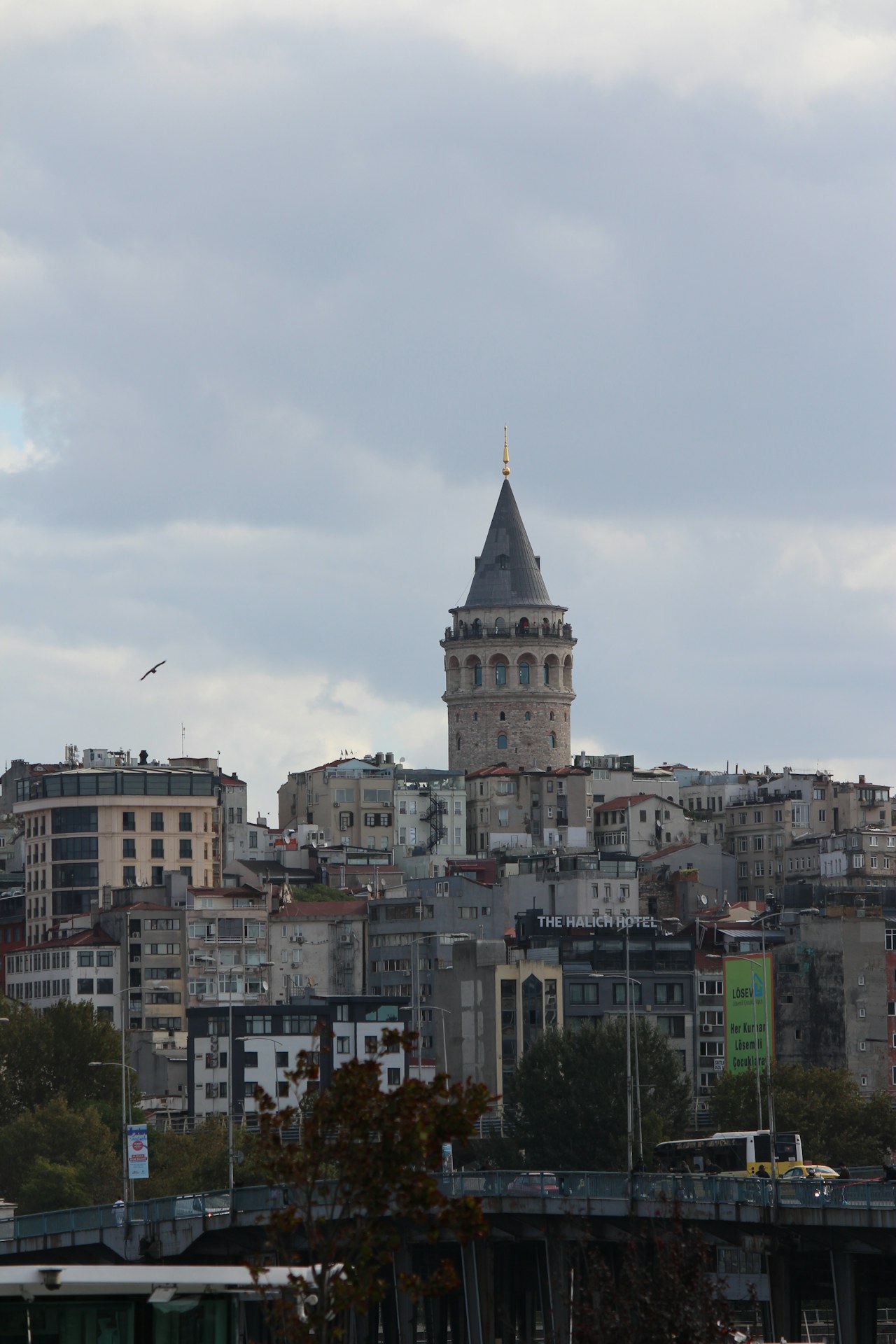
The 14th-century Genoese tower (built 1348) rises 66.9 m / 220 ft from Beyoğlu hill, giving one of Istanbul’s few 360° panoramic views from an elevated structure. The Old City skyline — Hagia Sophia, Blue Mosque, Topkapi Palace promontory — unfolds across the Golden Horn to the south, while the Bosphorus bridges extend northeast. The cobblestone streets leading up to the tower from Karaköy form one of Istanbul’s most photographed street perspectives.

  • GPS: 41.0256, 28.9742
  • Elevation: 295 ft
  • Best time of day: 45–60 minutes before sunset — golden light warms the Sultanahmet skyline and the Bosphorus simultaneously from the circular balcony; also excellent at blue hour when the city lights ignite
  • Sun direction: Galata Tower sits in the Beyoğlu district north of the Golden Horn. The balcony faces all directions for 360° views. At sunset (west-northwest), golden light falls across the Old City (Sultanahmet) on the south side of the Golden Horn — face south for the best light. The Bosphorus bridges are visible to the northeast. The Golden Horn stretches east-west directly below. On clear days, the Princes’ Islands are visible to the southeast in the Sea of Marmara.
  • Access: Büyük Hendek Caddesi, Beyoğlu, Istanbul. Entry fee required (check current prices at gotoistanbul.com — approximately 400–600 TL for foreigners). Timed tickets recommended (buy online). Open daily with extended hours. Take elevator to museum level then short stairs to outdoor circular balcony. Walking distance from Karaköy ferry terminal (~10 min uphill). Photo tip: Galatasaray and the surrounding cobblestone streets also provide excellent street-level exterior shots. Source: galata-tower.istanbul
  • Difficulty: easy
  • Recommended settings: Golden Hour Panorama: f/8, 1/250 sec, ISO 100, 16mm — stitch 3-shot panorama across Sultanahmet skyline  ·  Blue Hour Cityscape: f/11, 8 sec, ISO 100, 24mm, mini-tripod — city lights and illuminated skyline  ·  Telephoto Bosphorus Compression: f/8, 1/500 sec, ISO 400, 200mm — compress Bosphorus Bridge with Old City domes  ·  Street Level Cobblestone: f/5.6, 1/250 sec, ISO 400, 35mm — leading line of cobblestone street toward tower

Shots to chase:

  • Wide-angle three-shot panorama from the circular balcony stitching together: Golden Horn west, Sultanahmet south, and Bosphorus east
  • Sunset silhouette of Hagia Sophia and Blue Mosque domes and minarets from the south-facing balcony section
  • Blue-hour long exposure with illuminated tower reflection in wet cobblestones at street level
  • Leading-line cobblestone street shot looking up at the tower with tourists and café awnings framing the composition
  • Telephoto compression shot from the Üsküdar shore (Asian side) framing Galata Tower with the Golden Horn and skyline

Pro tip: Buy timed entry tickets online to avoid the 30–60 minute queue that forms daily after 11 AM. Arrive at the tower T-50 minutes before sunset — allow ~20 min for elevator and exhibits, then ~20 min first balcony circuit, saving the last 10 min for blue-hour shots as city lights come on. The balcony is narrow and circulates one-way; adopt a move-shoot-yield rhythm. For the street-level cobblestone leading-line shot, position yourself at the foot of Galata Tower street (Büyük Hendek Cad.) facing south with the tower behind you.

Common mistake to avoid: Arriving at midday when the queue is longest and the light is worst. Standing in one spot on the balcony rather than slowly circulating for all four directions. Missing the blue-hour window by leaving immediately after sunset. Not booking timed tickets and waiting 45+ minutes in summer.

4. Topkapi Palace and courtyards

The administrative heart of the Ottoman Empire for 400 years (1465–1856), Topkapi’s four successive courtyards reveal an entire world of imperial architecture, from the Byzantine Hagia Irene church in the First Courtyard to the extraordinary Iznik-tiled rooms of the Harem and the Fourth Courtyard terraces overlooking the junction of the Bosphorus, Golden Horn, and Sea of Marmara — one of the most dramatically positioned palaces on earth.

  • GPS: 41.0115, 28.9833
  • Elevation: 180 ft
  • Best time of day: early morning — doors open 9 AM; arrive at 9 AM to shoot the courtyards in soft raking light before tour groups crowd the spaces; late afternoon for golden light in the Fourth Courtyard Bosphorus terrace
  • Sun direction: Topkapi Palace spreads east along a promontory above the Bosphorus. The First Courtyard (Hagia Irene) faces west — best lit in morning. The Harem faces south-southeast, receiving warm morning light in its tiled courtyards. The Fourth Courtyard Baghdad Kiosk terraces face northeast over the Bosphorus, offering spectacular views of the Asian shore that glow in late afternoon eastward light. The Treasury courtyard is sheltered and receives diffuse light all day.
  • Access: Topkapı Palace, Sultanahmet, Fatih, Istanbul. Entry ticket required — current combined ticket (Palace + Harem + Hagia Irene) approximately 2750 TL for foreigners (~€55) as of 2026; Harem add-on requires separate ticket (~900 TL). Open daily except Tuesdays, 9 AM–6 PM (summer; last entry 5 PM), 9 AM–4:30 PM (winter). Closed Tuesdays. Photography prohibited in Imperial Treasury and Sacred Relics Room; flash and tripods banned in Harem; courtyard and exterior photography unrestricted. Buy tickets online to skip queues. Source: palacetopkapi.com
  • Difficulty: easy
  • Recommended settings: Courtyard Architectural Wide: f/8, 1/250 sec, ISO 100, 16mm — capture gate arches with courtyard depth  ·  Harem Iznik Tile Detail: f/2.8, 1/60 sec, ISO 1600, 50mm — available light on intricate tile patterns  ·  Fourth Courtyard Bosphorus View: f/8, 1/500 sec, ISO 100, 24mm — panorama of Bosphorus from terrace kiosk  ·  Imperial Gate Portrait Frame: f/5.6, 1/250 sec, ISO 200, 24mm — gate arch as natural frame with courtyard behind

Shots to chase:

  • Grand Imperial Gate (Bab-ı Hümayun) low-angle wide shot emphasizing the massive Ottoman crenellated gateway
  • Harem tile room with Iznik ceramics in cobalt blue and coral red filling the frame edge-to-edge
  • Fourth Courtyard Baghdad Kiosk terrace panorama over the Bosphorus junction with Asian shore and Sea of Marmara
  • Symmetrical courtyard shot through successive gate arches, leading the eye deep into the palace complex
  • Detail close-up of the tiled mihrab niches and mother-of-pearl inlay in the Audience Hall interior

Pro tip: Enter at opening at 9 AM and go directly to the Harem to secure a timed-entry slot before they sell out mid-morning. The Fourth Courtyard terrace (behind the Circumcision Chamber) offers the best Bosphorus panorama in the palace and is often uncrowded early. Photography is banned in the Treasury and Sacred Relics Room — security is strict. The tulip garden in the Fourth Courtyard is spectacular in April during Istanbul Tulip Festival.

Common mistake to avoid: Arriving without a Harem ticket — it sells out by mid-morning in summer. Attempting to photograph in the Treasury or Sacred Relics Room — cameras are confiscated. Visiting on a Tuesday when the palace is closed. Spending too much time in the first two courtyards and missing the Fourth Courtyard’s panoramic views.

Want this in your pocket on the street?
The full-resolution version of every spot above — with full-page hero photography, GPS maps with gold location pins, sun direction diagrams, multi-season tables, and a complete safety + packing checklist — is inside the Istanbul Ultimate Photographer’s Guide PDF ($47). Print it, save it offline, take it on the walk. Get the guide →

5. Grand Bazaar (Kapalıçarşı)

Grand Bazaar (Kapalıçarşı) Istanbul photography sampleSave
Grand Bazaar (Kapalıçarşı) — cinematic reference from the Istanbul Photographer’s Guide PDF

Built in 1461, the Grand Bazaar is one of the oldest and largest covered markets in the world — 30,000 sq m of vaulted streets arranged by trade guild, from gold merchants to spice sellers to carpet weavers. The painted and gilded domed ceilings, geometric tile work on shop fronts, colored lanterns, stacked ceramics, and cascading fabrics create an infinitely photogenic environment for documentary and detail photography.

  • GPS: 41.0108, 28.968
  • Elevation: 130 ft
  • Best time of day: 9–10 AM on a weekday — merchants opening stalls, natural light filtering through the domed skylights before dense crowds arrive; overcast days diffuse the skylight light for even interior exposures
  • Sun direction: The Grand Bazaar is an enclosed covered market — interior lighting comes from domed skylights that deliver best diffuse natural light in mid-morning (10 AM–noon). The main Beyazıt Gate entrance faces west; the Nuruosmaniye Gate faces east-northeast. At sunrise, the eastern skylights illuminate the main streets in warm tones. Flash and artificial lighting for commercial purposes require permits.
  • Access: Kapalıçarşı, Beyazıt, Fatih, Istanbul. Free entry via multiple gates (main gates: Beyazıt Gate and Nuruosmaniye Gate). Open Monday–Saturday 8:30 AM–7 PM; closed Sundays and public holidays. 61 covered streets, 4,000+ shops. No tripods; handheld photography allowed throughout. Densely crowded midday and on weekends. Best reached by tram (T1 line, Beyazıt stop). Source: lifepixel.com
  • Difficulty: easy
  • Recommended settings: Wide Interior Street: f/5.6, 1/125 sec, ISO 800, 16mm — skylight-lit vaulted corridor with depth  ·  Merchant Portrait Candid: f/2.8, 1/250 sec, ISO 800, 50mm — available light street portrait  ·  Lantern Detail Ceiling: f/4, 1/60 sec, ISO 1600, 24mm — hanging lanterns and painted dome  ·  Stacked Ceramics Color: f/5.6, 1/250 sec, ISO 400, 85mm — compressed telephoto of stacked goods

Shots to chase:

  • Wide-angle shot looking down the main Kalpakçılar Caddesi (goldsmiths’ street) with painted vaults, hanging lamps, and receding stalls
  • Overhead view from a stall interior looking up at the gilded and painted domed ceiling with skylights
  • Candid portrait of a spice or tea merchant in their stall framed by piled goods in saturated colors
  • Low-angle detail of stacked blue-and-white Iznik-style ceramics or Turkish lanterns creating color-block compositions
  • Motion-blur shot of pedestrians streaming through the vaulted street using 1/15 sec to capture market energy

Pro tip: Enter via the Nuruosmaniye Gate (east side) early in the morning — this gate opens onto the main thoroughfare and catches the first skylights. Be patient and unobtrusive for merchant portraits; always ask permission first and carry a business card or small gift. The best ambient light is on cloudy days when skylights deliver even diffuse illumination. The caravanserai courtyards within the bazaar (Sandal Bedesteni, İç Bedesten) offer the most historic and photogenic architectural spaces.

Common mistake to avoid: Visiting on a Sunday (closed). Arriving after 11 AM when the bazaar is shoulder-to-shoulder with tour groups. Using a flash — it disturbs merchants and other visitors, and commercial lighting requires a permit. Missing the Inner Bedesten (oldest section with antiques and jewellers) by staying only on the main streets.

6. Spice Bazaar (Mısır Çarşısı) and Yeni Cami

Built in 1664, the Egyptian Bazaar is the second largest covered market in Istanbul, famous for its extravagant displays of spices, dried fruits, Turkish delight, and herbal teas arranged in conical mounds of vivid color. The adjacent Yeni Cami (New Mosque, 1663) on the Golden Horn waterfront creates a powerful architectural duo: the golden-domed mosque surrounded by pigeons and the chai-fragrant bazaar a few steps away form one of Istanbul’s most photographically complete scenes.

  • GPS: 41.0165, 28.9713
  • Elevation: 80 ft
  • Best time of day: morning 9–11 AM — soft light through the L-shaped bazaar’s arched openings, spice displays freshly arranged, and the adjacent Yeni Cami courtyard quiet before tour groups arrive
  • Sun direction: The Spice Bazaar L-shaped building runs roughly east–west then turns south. The main entrance faces south toward the Golden Horn. Morning light enters the eastern end of the bazaar through the entrance arch around 9–10 AM. The Yeni Cami mosque immediately to the south-southwest faces north — its courtyard is best lit from above at midday, while the exterior domes catch golden south-southwest light 1–2 hours before sunset.
  • Access: Mısır Çarşısı, Eminönü, Fatih, Istanbul. Free entry. Open Monday–Saturday 8 AM–7:30 PM; closed Sundays. 88 shops in an L-shaped vaulted structure. The adjacent Yeni Cami (New Mosque) is free and open daily outside prayer times — same dress code as other mosques. Five-minute walk from Eminönü ferry terminal and Galata Bridge. Source: havecamerawilltravel.photography
  • Difficulty: easy
  • Recommended settings: Spice Cone Macro: f/5.6, 1/250 sec, ISO 400, 100mm — close-up of color-saturated spice cones in saffron, paprika, turmeric  ·  Bazaar Interior Wide: f/5.6, 1/125 sec, ISO 800, 16mm — arched vaulted corridor with hanging lamps and spice stalls  ·  Yeni Cami Exterior Wide: f/8, 1/250 sec, ISO 100, 24mm — mosque dome and minarets with pigeons in flight  ·  Blue Hour Cami Reflection: f/11, 10 sec, ISO 100, 24mm, tripod — illuminated Yeni Cami reflected in Golden Horn waterfront

Shots to chase:

  • Macro close-up of saffron, sumac, and turmeric cones filling the frame in saturated geometric color
  • Looking down the vaulted spice bazaar corridor at late morning with hanging lanterns and tourists moving between stalls
  • Wide-angle exterior of Yeni Cami with pigeons exploding from the courtyard as a flock of feeding birds is disturbed
  • Blue-hour long exposure of Yeni Cami dome and minarets illuminated against twilight from Eminönü waterfront with ferry movement blur
  • Street-level portrait of a Turkish delight vendor surrounded by layered trays of lokum in pastel hues

Pro tip: Position yourself at the main south entrance arch (facing the Golden Horn) for a naturally framed shot looking into the bazaar interior. The rooftop cafés surrounding Eminönü offer elevated angles of the Yeni Cami courtyard. Visit the pigeon courtyard of Yeni Cami just before the call to prayer — the rush of released pigeons at the sound of the ezan creates spectacular motion shots. The stairs behind Eminönü ferry terminal give an elevated frontal view of the mosque.

Common mistake to avoid: Visiting on a Sunday when the Spice Bazaar is closed. Using a telephoto only — the bazaar’s compact vaulted interior rewards wide-angle compositions. Ignoring the backside alley of the bazaar (toward the Golden Horn) which has equally photogenic but less crowded market stalls. Missing the interaction between the bazaar and the mosque courtyard which creates the complete Eminönü scene.

7. Bosphorus Strait — Eminönü waterfront and public ferry

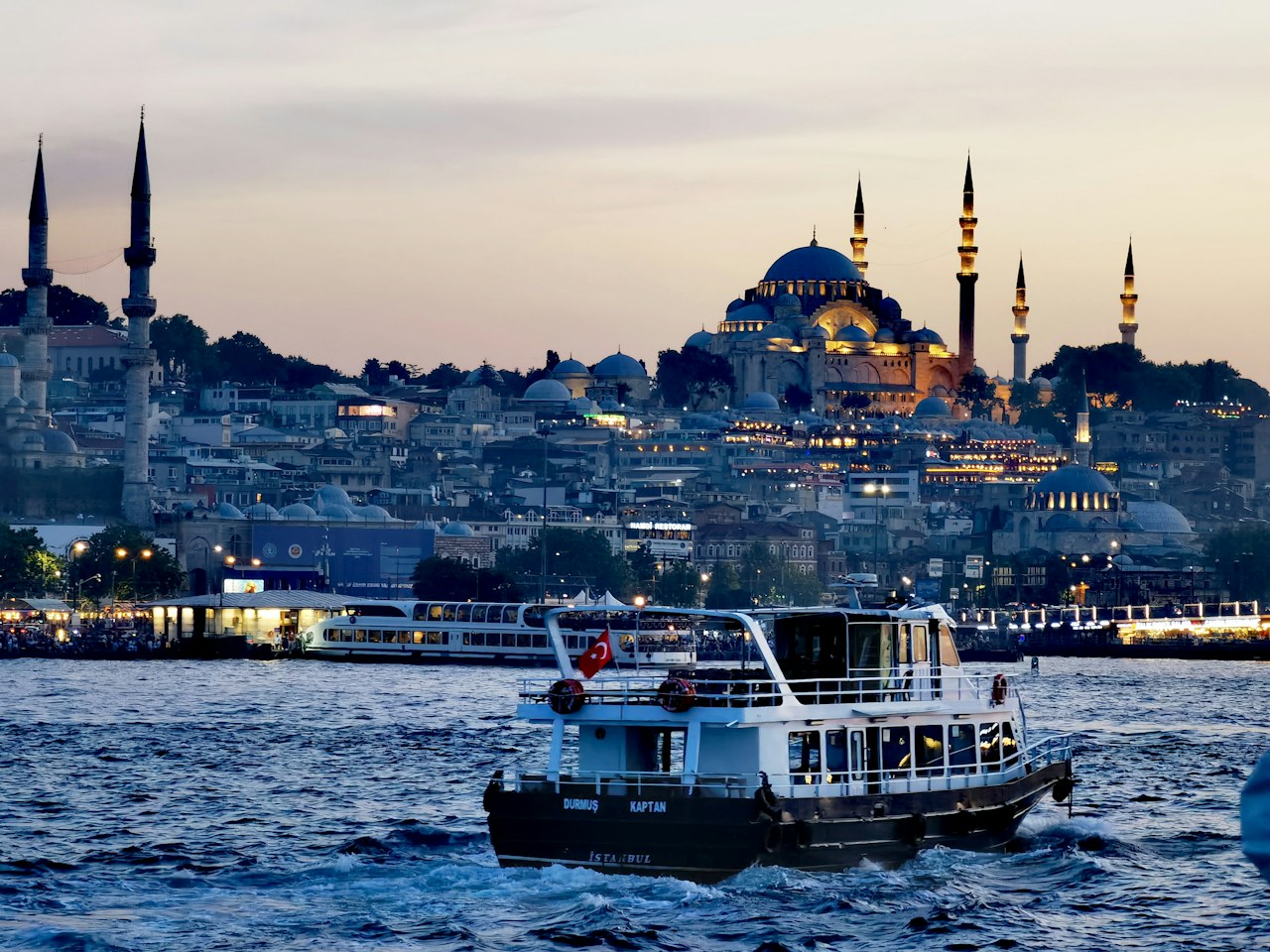
The Bosphorus is the sole waterway connecting the Black Sea to the Mediterranean, bisecting Istanbul between two continents. Shooting from a public ferry puts you in the middle of the world’s busiest strait — tankers, fishing skiffs, commuter ferries, and private yachts — with the entire Istanbul skyline unfolding across both shores. No other vantage delivers the classic postcard of Hagia Sophia, Blue Mosque, and Topkapi Palace all together in their maritime context.

  • GPS: 41.0184, 28.9745
  • Best time of day: late afternoon golden hour — departing on the 3 PM or later Bosphorus public ferry from Eminönü places you on the water during golden hour as the sun drops toward the west and illuminates the Sultanahmet skyline from the water looking west-northwest
  • Sun direction: The Bosphorus runs roughly north–south. Shooting from a westbound ferry (leaving Eminönü heading north up the strait), the Sultanahmet skyline (Hagia Sophia, Blue Mosque, Topkapi) is lit face-on during the afternoon when the sun is west-southwest. At sunrise, board a ferry heading east to Üsküdar or Kadıköy for the sun rising over the Asian hills while the European skyline is side-lit. The Galata Bridge fishermen scene is best lit at golden hour from below the bridge (looking up the Golden Horn toward the west).
  • Access: Eminönü Ferry Terminal, Eminönü Square, Fatih, Istanbul. Public ferry (Şehir Hatları / Sehir Hatlari) runs the Long Nostalgic Bosphorus Tour daily at 10:35 AM (and 1:35 PM in high season) from Eminönü — round trip approximately 400 TL for foreigners. Short Bosphorus crossings (Eminönü–Üsküdar, Eminönü–Kadıköy) cost a single Istanbulkart fare. Waterfront itself is free public space open 24 hours. Galata Bridge free to walk. Source: gomadnomad.com
  • Difficulty: easy
  • Recommended settings: Skyline From Ferry Wide: f/8, 1/500 sec, ISO 200, 24mm — full Sultanahmet skyline from moving ferry  ·  Fisherman Portrait Galata: f/2.8, 1/500 sec, ISO 400, 85mm — fishermen on Galata Bridge, compressed detail  ·  Ferry Wake Long Exposure: f/11, 1/15 sec, ISO 200, 16mm — panning shot of ferry with motion blur wake  ·  Blue Hour Waterfront: f/8, 4 sec, ISO 400, 24mm, tripod — illuminated mosques and ferry terminal at twilight

Shots to chase:

  • Classic panorama of the Sultanahmet skyline (Hagia Sophia, Blue Mosque, Topkapi palace) from the upper deck of the Bosphorus public ferry heading northwest
  • Fishermen silhouetted against the Golden Horn at golden hour from below the Galata Bridge, looking west
  • Motion-blur panning shot of a commuter ferry pulling away from Eminönü terminal with the Old City skyline behind
  • Seagull flight shots over the water at Eminönü as tourists throw bread from the dock — use 1/2000 sec to freeze mid-air
  • Blue-hour long exposure from Eminönü waterfront with illuminated Yeni Cami, Galata Tower, and ferry light trails on the Golden Horn

Pro tip: Board the public Bosphorus ferry (not a private tour boat) — it’s far cheaper (400 TL vs. 800+ TL), slower, and gives you 5–7 hours on the water with multiple stops. Secure the upper bow-right deck seat for the best forward-facing skyline views; these fill up quickly on weekend departures. For the Galata Bridge fishermen shot, descend under the bridge to the lower level walkway and shoot looking east toward the Golden Horn in afternoon light.

Common mistake to avoid: Booking a private tour boat rather than the official Şehir Hatları ferry — you pay triple for a worse experience. Shooting from the lower deck where the railing obstructs the skyline. Missing the blue-hour window by disembarking at Eminönü before twilight. Leaving the ferry at first stop rather than staying aboard for the full Bosphorus panorama.

8. Süleymaniye Mosque — terrace and garden viewpoint

Sinan’s masterpiece (1557) and the largest mosque complex in Istanbul, Süleymaniye sits at the highest point of the historic peninsula with a north-facing cemetery terrace that delivers a free panoramic view arguably superior to any paid viewpoint: the Golden Horn, the Bosphorus, Galata Tower, and dozens of mosque minarets all visible in a single wide sweep. The mosque’s four minarets with two galleries each (a design Sinan refined for Topkapi) create a supremely elegant profile against the sky.

  • GPS: 41.0162, 28.9639
  • Elevation: 200 ft
  • Best time of day: sunrise — arrive before first light (6 AM) to have the mosque garden terrace alone with the city waking below in pastel hues; golden hour 1–2 hours before sunset also spectacular for the Bosphorus-facing terrace
  • Sun direction: Süleymaniye sits on the Third Hill of Istanbul’s historic peninsula. The mosque faces south; the northern cemetery garden terrace overlooks the Golden Horn and offers a sweeping northwest panorama that includes the Bosphorus Bridge. At sunrise, soft peach and pink light fills the sky over the Asian hills to the east while the Golden Horn below is in misty shadow. At sunset, the west-northwest view captures the sun dropping toward the horizon with the mosque silhouette in foreground.
  • Access: Süleymaniye Camii, Süleymaniye, Fatih, Istanbul. Free entry. Mosque open daily outside prayer times — closed approximately 90 minutes during each of the five daily prayers. Dress code required (shoes off, scarves for women). Terrace garden (cemetery side, north) is a public outdoor space free and open at all hours, making it accessible for early sunrise photography. Tram T1 to Beyazıt or Eminönü then 10-minute walk uphill. Source: nomadicniko.com
  • Difficulty: moderate (uphill walk from Eminönü)
  • Recommended settings: Sunrise Golden Horn Panorama: f/8, 1/60 sec, ISO 400, 16mm — pre-dawn blue sky over Golden Horn from terrace  ·  Mosque Exterior Wide: f/8, 1/250 sec, ISO 100, 16mm — full mosque facade from courtyard fountain  ·  Interior Dome Upward: f/2.8, 1/30 sec, ISO 3200, 16mm — central dome calligraphy and painted pendentives  ·  Golden Horn Sunset: f/11, 1/125 sec, ISO 100, 24mm — Golden Horn and cityscape panorama at sunset

Shots to chase:

  • Pre-dawn terrace shot from the cemetery garden looking north-northwest over the Golden Horn with the Bosphorus and bridges visible in the far distance
  • Interior wide-angle of the prayer hall looking up at the massive central dome with its ring of Ottoman calligraphy medallions
  • Classic exterior courtyard composition with ablution fountain centered between the two shorter minarets
  • Sunset panorama from the north terrace with Galata Tower and the Bosphorus illuminated in orange-gold light
  • Street-level shot of the mosque’s massive outer walls and entrance gate with the hillside mosques of Istanbul cascading behind

Pro tip: The cemetery terrace on the north side (accessed via a small gate off Kanuni Sultan Süleyman Caddesi) is the city’s best free panoramic viewpoint. Come before sunrise, before any other photographers arrive — the light is spectacular and the space is entirely yours. For interior shots, visit between the morning and noon prayers (approximately 7:30–11:30 AM) when the mosque is open and natural light enters from the 136 windows illuminating the painted dome.

Common mistake to avoid: Confusing the main mosque entrance (south) with the panoramic terrace (north) — ask locals for the cemetery garden side. Missing the interior by only photographing the exterior. Visiting at midday when the mosque is closed for prayer and the terrace is crowded with picnicking locals. Using flash inside the mosque.

9. Basilica Cistern (Yerebatan Sarnıcı)

Basilica Cistern (Yerebatan Sarnıcı) Istanbul photography sampleSave
Basilica Cistern (Yerebatan Sarnıcı) — cinematic reference from the Istanbul Photographer’s Guide PDF

Built in 532 AD by Emperor Justinian to supply water to the Great Palace, the Basilica Cistern holds 336 marble columns arranged in 12 rows — each column base reflecting in 8-cm-deep water to create an endlessly recursive forest of stone. At the far northwest corner, two ancient Medusa heads (one inverted, one on its side) serve as column bases — their origin and deliberate disorientation are one of Istanbul’s great unsolved mysteries. The symmetry, reflections, and dramatic lighting make this one of the most surreal interior spaces in the world.

  • GPS: 41.0084, 28.978
  • Elevation: 75 ft
  • Best time of day: 9 AM opening (weekday) for fewest visitors; Night Shift session (19:30–22:00) for the most dramatic artistic lighting and atmospheric ambiance; avoid midday and weekends
  • Sun direction: The cistern is entirely underground — natural light is absent. All illumination is provided by atmospheric artificial lighting (amber uplighting on columns, blue reflections in the water, dramatic spotlighting on the Medusa heads). Night Shift sessions (19:30–22:00) feature specially designed artistic lighting programs that shift color and intensity. Bring a fast lens; no flash or tripods allowed.
  • Access: Yerebatan Caddesi 1/3, Sultanahmet, Fatih, Istanbul. Entry fee for foreigners: ~1950 TL daytime (9 AM–6:30 PM); Night Shift ~3000 TL (19:30–22:00, tickets only at door). Audio guide 300 TL extra. Open daily all week. Museum Pass NOT valid — buy separate ticket. Photography allowed (no flash, no tripods; small gorilla pods tolerated). 96% humidity inside — protect electronics. Source: istanbul-tourist-information.com
  • Difficulty: easy
  • Recommended settings: Column Reflection Symmetry: f/2.8, 1/15 sec, ISO 3200, 20mm — symmetric wide shot of columns and water reflections  ·  Medusa Head Closeup: f/2.8, 1/30 sec, ISO 3200, 50mm — inverted Medusa with column rising from her face  ·  Long Exposure Columns: f/8, 2 sec, ISO 800, 16mm, gorilla pod — motion blur of walking visitors between sharp columns  ·  Atmospheric Cistern Wide: f/2.8, 1/30 sec, ISO 3200, 16mm — full column forest in amber uplighting from entrance platform

Shots to chase:

  • Symmetrical wide-angle composition down the main axis of columns with water reflections creating a perfect mirror world
  • Inverted Medusa head close-up with the column rising from her upturned chin in dramatic uplighting
  • Long exposure (gorilla pod on railing) with moving visitors creating ghost trails between sharp columns
  • Perspective-compressed telephoto shot down a single row of columns vanishing into darkness
  • Night Shift colored-lighting variation with the cistern bathed in shifting blue-to-amber light

Pro tip: Tripods and professional setups are officially not allowed; bring a small gorilla pod and use the metal railings as a camera rest for longer exposures. The humidity is 96% — keep your camera in a bag between shots and use lens cloths constantly. The best symmetry shot is from the entrance platform looking straight down the column axis; arrive early to claim this position before others crowd in. The Night Shift session (19:30–22:00) offers the most cinematic lighting but tickets sell out — buy at the door from 19:00.

Common mistake to avoid: Bringing expensive camera gear without protecting it from the 96% humidity — condensation on lenses and sensor is a real risk. Using flash — strictly prohibited and ruins the atmospheric lighting for everyone. Attempting to set up a full-sized tripod — security will ask you to remove it. Visiting on a Saturday afternoon when it’s the most crowded.

Want this in your pocket on the street?
The full-resolution version of every spot above — with full-page hero photography, GPS maps with gold location pins, sun direction diagrams, multi-season tables, and a complete safety + packing checklist — is inside the Istanbul Ultimate Photographer’s Guide PDF ($47). Print it, save it offline, take it on the walk. Get the guide →

10. Ortaköy Mosque and Bosphorus Bridge

The juxtaposition of the 1854 Baroque Ottoman mosque (Büyük Mecidiye Camii) with the 1973 Bosphorus suspension bridge in the same frame is one of Istanbul’s most photographed and reproduced images — the ancient and the modern, the intimate and the monumental, coexisting on the same 200-meter stretch of waterfront. The mosque sits at sea level with the bridge soaring 64 m above it, creating a naturally dramatic scale contrast.

  • GPS: 41.0473, 29.0272
  • Elevation: 20 ft
  • Best time of day: golden hour before sunset and blue hour — the mosque faces west-northwest; the setting sun positions behind the First Bosphorus Bridge (July 15 Martyrs Bridge) to the north, creating the iconic mosque-under-bridge composition as the sky turns orange then deep blue
  • Sun direction: Ortaköy Mosque sits at the western Bosphorus shore, facing northeast onto the water. The 15 July Martyrs Bridge towers directly to the north-northeast, allowing a composition where the small baroque Ottoman mosque appears to sit under the massive suspension bridge. At sunset (west-northwest), the bridge catches golden-orange light while the mosque is in warm side-light. Blue hour (20–30 min after sunset) is when the twin elements — white floodlit mosque + illuminated bridge cables — reach maximum contrast.
  • Access: Ortaköy Cami, Beşiktaş, Istanbul. Mosque free entry outside prayer times. Ortaköy pier square is a public waterfront promenade, free and open 24 hours. Reached by bus (25E, 22, 40 from Taksim/Beşiktaş) or ferry from Eminönü. Short taxi from city center. The shooting position on the cobblestone promenade directly in front of the mosque offers the best angle. No tripod restrictions on the public promenade. Source: Wikipedia / en.wikipedia.org/wiki/Ortak%C3%B6y_Mosque
  • Difficulty: easy
  • Recommended settings: Mosque Bridge Wide Golden: f/8, 1/250 sec, ISO 100, 24mm — full composition with mosque and bridge arch at golden hour  ·  Blue Hour Illuminated: f/11, 15 sec, ISO 100, 24mm, tripod — white mosque and lit bridge cables against deep blue sky  ·  Telephoto Bridge Compression: f/8, 1/500 sec, ISO 200, 200mm — bridge towers compressed over the mosque dome  ·  Reflection Water Shot: f/8, 1/60 sec, ISO 200, 24mm — high tide water reflection of mosque in foreground cobblestones

Shots to chase:

  • Classic wide-angle composition from the Ortaköy promenade: mosque in lower third of frame, bridge arch spanning the upper half, at blue hour
  • Golden-hour silhouette of the mosque’s twin minarets and dome against the bridge towers backlit by the setting sun
  • Long-exposure blue-hour shot with the illuminated mosque reflection shimmering in the Bosphorus water
  • Telephoto compression from the Kabataş or Beşiktaş shore, stacking the mosque dome against distant Bosphorus Bridge towers
  • Street market foreground element (Ortaköy is famous for kumpir stalls) with the mosque lit in the background at dusk

Pro tip: Position yourself on the cobblestone promenade directly in front of the mosque — this single spot 20–30 meters from the mosque entrance delivers the canonical composition. For blue-hour long exposures, bring a lightweight tripod (promenade has no restrictions). The Ortaköy neighborhood is famous for kumpir (stuffed baked potato) stalls — arrive at golden hour, shoot the mosque, then eat while waiting for blue hour. The adjacent boat dock gives a water-level view looking up at the mosque.

Common mistake to avoid: Arriving in midday harsh light when the composition is washed out. Standing too close to the mosque and losing the bridge from the frame — back up to include both. Missing blue hour by leaving at sunset. Shooting only the classic angle without exploring the water-level view from the dock, which offers an unusual low-perspective composition.

11. Balat and Fener neighborhoods — colorful houses

Balat is one of Istanbul’s oldest and most layered neighborhoods — historically a Jewish quarter adjacent to the Greek Orthodox Fener district, it is now a rapidly gentrifying but still authentic residential area of wooden Ottoman-era houses painted in vivid pinks, yellows, blues, and greens by residents who have maintained the Ottoman tradition of painting homes in distinctive colors. The steep hillside streets, Byzantine city walls, Greek Orthodox churches, and synagogues create an unparalleled documentary street photography environment.

  • GPS: 41.028, 28.945
  • Elevation: 65 ft
  • Best time of day: early morning 7–9 AM — soft raking light illuminates the narrow streets before residents are out, shadows are long and directional, and the candy-colored houses glow without harsh contrast; golden hour before sunset is the second option for warm tones
  • Sun direction: Balat and Fener occupy steep hillside streets running east–west above the Golden Horn on the European shore. The most famous colored-house streets (Kiremit Caddesi) run east–west, receiving low directional morning light from the east (perfect for illuminating facades). The rainbow-painted staircase streets run north–south and catch afternoon western light. Overcast days diffuse the light and are ideal for shadow-free street photography among the saturated-colored buildings.
  • Access: Balat and Fener districts, Fatih, Istanbul. Entirely free public streets — no entry fee, open 24 hours. Kiremit Caddesi (the most famous Instagram street) is a 3-minute walk north of Balat tram stop (T1 line). Merdivenli Yokuş Evleri (pastel steep row houses) is a 5-minute walk east. Walking tours available through the area but not required. Respectful behavior in this residential neighborhood is essential — residents live here. Source: thirdeyetraveller.com
  • Difficulty: easy
  • Recommended settings: Morning Street Wide: f/5.6, 1/250 sec, ISO 100, 35mm — morning raking light on colorful facades  ·  Colorful Stairs Portrait: f/2.8, 1/500 sec, ISO 200, 35mm — person on rainbow staircase with colored houses behind  ·  Door Detail Texture: f/4, 1/250 sec, ISO 200, 85mm — weathered painted doors and tiled doorsteps  ·  Overhead Laundry Alley: f/5.6, 1/250 sec, ISO 400, 24mm — clothes drying overhead across narrow colored alley

Shots to chase:

  • Looking down Kiremit Caddesi with the row of candy-colored houses receding into the frame, early morning light raking across the facades
  • Person ascending the rainbow-painted staircase street with layers of pastel-colored houses rising up the hill behind
  • Weathered painted wooden door detail — peeling paint, rusty knocker, tiled threshold — that tells the story of centuries of habitation
  • Overhead composition from an elevated staircase of laundry hanging across a narrow alley between yellow and pink houses
  • Documentary portrait of an elderly resident sitting outside their vividly painted house with a glass of tea

Pro tip: Arrive on Kiremit Caddesi before 8 AM — this is the single most photographed street in the neighborhood and will be crowded with tour groups from 10 AM onward. Explore the less-known Merdivenli Yokuş Evleri (pastel houses with steep staircase) for equal visual quality with virtually no crowds. Bring a 35mm prime lens — it works perfectly for both tight street scenes and wider house-facades. This is a living neighborhood; always ask permission before photographing residents closely.

Common mistake to avoid: Visiting only Kiremit Caddesi and missing the dozens of equally photogenic streets throughout Fener and Balat. Arriving at 10 AM when tour groups arrive — the streets are elbow-to-elbow. Photographing through car windows or iron gates of the Greek Orthodox Patriarchate without permission. Being unaware that residents live here — treat it with the same respect you would a residential neighborhood, not a theme park.

12. Pierre Loti Hill — Eyüp Golden Horn viewpoint

Named for French novelist Pierre Loti (Julien Viaud) who frequented the hilltop café while writing about Istanbul, this viewpoint delivers the widest and most complete panorama of the Golden Horn — a 7.5 km natural harbor — with Istanbul’s mosques, minarets, Byzantine walls, the Halic Bridge, and the Bosphorus all visible simultaneously. The walk through the multi-century Ottoman cemetery (with carved turbaned tombstones under ancient cypress trees) adds an extraordinary photographic prelude to reaching the summit.

  • GPS: 41.0595, 28.9345
  • Elevation: 265 ft
  • Best time of day: golden hour before sunset — the northwest-facing hilltop viewpoint receives warm side-light on the cityscape below in the 1–2 hours before dusk; sunrise is also excellent when mist often fills the Golden Horn valley below the viewpoint
  • Sun direction: Pierre Loti Hill faces northeast overlooking the full length of the Golden Horn. The sun sets to the northwest (over the hills behind you), so the Golden Horn and the far city skyline are side-lit during the hour before sunset. At sunrise, the sun rises over the Asian hills to the east and low golden light rakes across the Golden Horn from east to west, illuminating the Halic Bridge and the minarets of Eyüp Sultan Mosque below. The viewing platform provides a 180° sweep from the Bosphorus (northeast) to Galata Tower (southeast).
  • Access: Pierre Loti Tepesi, Eyüp, Istanbul. Cable car from Eyüp Sultan Mosque area — uses Istanbulkart (small standard fare). Cable car runs 8 AM–10 PM daily. Walking alternative: 15-minute uphill walk through the historic Ottoman cemetery (Eyüp Cemetery) adds its own photogenic atmosphere. The hilltop café area is free to access; some café interiors charge for seating. Source: nomadicniko.com/turkey/istanbul/pierre-loti-hill/
  • Difficulty: easy (cable car) or moderate (walking through cemetery)
  • Recommended settings: Golden Horn Panorama Wide: f/8, 1/250 sec, ISO 100, 16mm — full Golden Horn sweep from cable car arrival point  ·  Misty Morning Golden Horn: f/5.6, 1/125 sec, ISO 400, 50mm — morning mist in valley with minarets emerging above  ·  Cemetery Gravestones Detail: f/4, 1/250 sec, ISO 200, 85mm — carved Ottoman tombstone with cypress and cityscape  ·  Sunset Panorama Telephoto: f/8, 1/250 sec, ISO 200, 200mm — compressed telephoto of Halic Bridge and far Galata Tower at golden hour

Shots to chase:

  • Wide-angle sunrise panorama from the observation terrace with mist filling the Golden Horn valley and minarets of Eyüp Sultan Mosque emerging below
  • Ottoman cemetery gravestones in the foreground with the Golden Horn and distant Istanbul skyline behind, at golden hour
  • Cable car cabin silhouetted against the morning sky with the Golden Horn panorama visible through its windows
  • Telephoto compression of the Halic (Golden Horn) Bridge with Galata Tower and the distant Bosphorus in the far background
  • Long-exposure blue-hour shot of the illuminated Golden Horn with the Halic Bridge’s reflected lights creating long streaks in the water

Pro tip: Visit on a weekday to avoid long cable car queues on weekends and national holidays. Walk up through the Eyüp cemetery instead of taking the cable car — the ancient tombstones, cypress trees, and partial Golden Horn views during the ascent are profoundly atmospheric and rarely photographed. Position yourself at the northwest end of the observation terrace for the longest Golden Horn view stretching toward the Bosphorus. Mist often gathers in the Golden Horn valley on autumn and winter mornings, creating exceptional atmospheric landscape shots.

Common mistake to avoid: Taking only the cable car and missing the cemetery walk, which is one of Istanbul’s most unique photographic environments. Visiting on a weekend afternoon when the cable car queue can be 30–45 minutes. Positioning at the café terrace (slightly lower) rather than the dedicated observation platform slightly higher up. Leaving before the last light of golden hour when the minarets below go from gray to warm gold.

13. Istiklal Avenue and Karaköy district

Istanbul’s beating cultural heart since the 19th century, Istiklal Caddesi is a 1.6 km pedestrian boulevard lined with neo-Baroque and neo-Gothic buildings, boutiques, cafes, churches, and covered arcades (pasajlar) that channel daylight through ornate skylights. The restored 1914-era red tram trundling through the crowd is one of Istanbul’s defining images. Karaköy below has transformed into Istanbul’s most vibrant contemporary art and design district, where Byzantine cisterns and Ottoman hans host galleries and cafés.

  • GPS: 41.0335, 28.9771
  • Elevation: 120 ft
  • Best time of day: overcast morning (8–10 AM) for street photography on empty Istiklal before shops open; golden hour and blue hour for the vintage red tram motion shots with crowds as context; Karaköy street art and galeries best mid-morning
  • Sun direction: Istiklal Caddesi runs roughly northeast (Taksim) to southwest (Tünel/Karaköy). In the morning, the northeast-facing upper end of the street catches early light; the lower Tünel end is in shadow until late morning. For the iconic red-tram-on-Istiklal shot, position yourself looking northeast (toward Taksim) in the morning light so the tram is front-lit. Karaköy’s narrow streets run east–west and receive the best light between 10 AM and 1 PM.
  • Access: İstiklal Caddesi, Beyoğlu, Istanbul. Entirely free public pedestrian avenue 1.6 km long. Nostalgic red tram (T2 line) runs 7 AM–10 PM, every 40 minutes; accepts Istanbulkart. Reached from Taksim Square (M2 metro) or by funicular from Kabataş. Karaköy is at the foot of Galata Tower, 10-minute walk from Eminönü. Source: turkeytravelplanner.com
  • Difficulty: easy
  • Recommended settings: Tram Motion Blur: f/8, 1/30 sec, ISO 200, 35mm — panning shot of red tram with crowd blur  ·  Empty Morning Street: f/8, 1/250 sec, ISO 100, 16mm — receding Istiklal perspective before crowds  ·  Arcade Interior Wide: f/5.6, 1/60 sec, ISO 800, 16mm — ornate skylit passage interior with shoppers  ·  Karakoy Street Art: f/5.6, 1/250 sec, ISO 200, 24mm — Karaköy mural with Galata Tower skyline behind

Shots to chase:

  • Classic panning shot of the red tram on Istiklal at golden hour — 1/30 sec to blur the crowd while keeping the tram sharp
  • Early morning empty Istiklal Caddesi looking northeast toward Taksim, the entire width of the Art Nouveau facades visible without crowd obstruction
  • Covered arcade (Çiçek Pasajı or Hazzo Pulo Pasajı) interior with ornate stained-glass ceiling and floral ironwork lit from above
  • Galata Tower framed at the end of a narrow Karaköy side street with street art in the foreground
  • Tram at the Galatasaray Square crossing where two trams pass simultaneously — use 1/500 sec to freeze both vehicles in motion

Pro tip: The tram runs every 40 minutes — check the schedule at the Taksim terminus and position yourself at Galatasaray Square, where the two directions cross, for a double-tram shot opportunity. For empty-street photography, arrive at 8 AM on a weekday when shopkeepers are opening but tourists haven’t appeared yet. The covered arcades (pasajlar) off Istiklal, especially Çiçek Pasajı (Flower Passage), offer some of Istanbul’s most ornate interior architectural photography.

Common mistake to avoid: Visiting at midday on a weekend when Istiklal has millions of people and no compositional space. Missing the covered arcades by only photographing the main street facade. Arriving exactly as the tram is departing and waiting 40 minutes for the next one without setting up in advance. Ignoring Karaköy completely — the narrow streets, street art, and coffee culture make it a distinct photographic world.

14. Maiden’s Tower (Kız Kulesi) from Üsküdar shore

Maiden’s Tower (also Leander’s Tower) is Istanbul’s most romantically positioned landmark — a Byzantine-era watchtower on a tiny islet at the point where the Bosphorus meets the Sea of Marmara. It appears in legend, James Bond films (The World Is Not Enough, 1999), and Turkish folk poetry. Its position — isolated from both European and Asian shores — means that every photograph of the tower inherently includes both the water and at minimum one Istanbul skyline, creating compositions unavailable anywhere else in the city.

  • GPS: 41.0213, 29.0042
  • Best time of day: golden hour and blue hour — the tower faces west; shooting from the Üsküdar–Salacak promenade at sunset places the tower perfectly silhouetted against the orange-to-blue European Istanbul skyline as the background light changes
  • Sun direction: Maiden’s Tower sits 200 meters offshore from Üsküdar on the Asian side. Shooting from the Salacak promenade (western Üsküdar shore), the tower is positioned with the European Istanbul skyline (Hagia Sophia, Blue Mosque, Topkapi) behind it to the west. At sunset, the sun drops behind the European shore, creating a golden-orange backlit halo around the tower. At blue hour, the illuminated white tower glows against a deep blue sky with the floodlit Old City skyline visible behind it. From the European side (Kabataş or Sarayburnu), the tower is silhouetted against the Asian hills at sunrise.
  • Access: Salacak Promenade (Salacak İskelesi), Üsküdar, Istanbul. Promenade free, open 24 hours. Ferry to the island (Kız Kulesi) from Üsküdar pier: operated by private boat, approximately 50–100 TL one way; tower museum entry required (check muze.gen.tr for current prices). Tower open daily 9 AM–8 PM. For the classic exterior shot, no ticket required — the Salacak promenade gives the definitive ground-level composition. Source: maidenstower.tr
  • Difficulty: easy
  • Recommended settings: Golden Hour Backlit Tower: f/8, 1/500 sec, ISO 100, 85mm — backlit tower silhouette against European skyline  ·  Blue Hour Illuminated: f/8, 4 sec, ISO 200, 100mm, tripod — white floodlit tower with city lights behind  ·  Sunrise From European Side: f/8, 1/250 sec, ISO 100, 200mm — tower silhouette against Asian dawn sky from Sarayburnu  ·  Passing Ferry Motion: f/8, 1/15 sec, ISO 200, 85mm — long exposure of Bosphorus ferry passing tower with light trail

Shots to chase:

  • Classic golden-hour composition from Salacak promenade: Maiden’s Tower in the lower third of the frame with the orange-gold European skyline and silhouetted mosques behind
  • Blue-hour shot with the floodlit white tower set against the deep blue sky and distant illuminated European shore
  • Long exposure from the Salacak promenade of a Bosphorus commuter ferry light trail passing the Maiden’s Tower
  • From the tower’s top walkway, panoramic view of Topkapi Palace, Hagia Sophia, Blue Mosque, and Galata Tower all visible simultaneously on the European shore
  • Sunrise silhouette shot from the Sarayburnu park on the European side with the tower backlit against the rising sun over the Asian hills

Pro tip: The Salacak promenade is the single best spot — position yourself exactly 150–200 m south of the ferry pier for the composition that places the tower central with the European skyline behind. Bring a 70–200mm lens for this shot — from the promenade, a 100–135mm equivalent focal length centers the tower perfectly with skyline behind. For visiting the island itself, take the morning ferry to explore the tower museum and shoot looking back toward Üsküdar and the Bosphorus Bridge from the sea. Sunset departures from Üsküdar pier looking back at the illuminated tower from the ferry make for exceptional on-water compositions.

Common mistake to avoid: Shooting only from the European side (Kabataş) where the tower is too far away for impact. Visiting only at midday when the light is flat and harsh. Using a wide-angle lens from the Salacak promenade — at 200 m from the tower, a wide lens makes it tiny; use 85–135mm for the classic composition. Missing the opportunity to shoot from the tower itself looking back toward both Istanbul shores simultaneously.

When to photograph Istanbul: a year-round breakdown

Istanbul is photogenic every month of the year — but the conditions differ radically by season. Here is what to expect:

April–June (spring light, tulip festivals, moderate crowds, clear skies over the Bosphorus) and September–October (golden autumn light, fewer peak-summer crowds, warm Bosphorus water for reflections)

Photographer safety in Istanbul: read this

City photography has its own risks: gear visibility, neighborhood timing, traffic, weather. Read the briefing before you go.

  • Gear visibility: Use a discreet bag with no obvious camera branding. Keep a body strapped under a jacket on transit.
  • Neighborhood timing: Pre-dawn and post-sunset shoots reward early scouting. Cross-reference each location with current local guidance and choose well-lit transit routes.
  • Situational awareness: Headphones out. One eye in the viewfinder, one on the street.
  • Traffic: Bridges, medians, and bike lanes are not setup zones. Shoot from sidewalks and pedestrian areas only.
  • Weather: Summer storms move quickly; winter cold drains batteries. Layer up, keep gear dry, watch for ice on cobblestones at blue hour.

The complete safety briefing is inside the Istanbul Photographer’s Guide PDF.

Take this guide into the city

This post is the complete field reference. The Istanbul Ultimate Photographer’s Guide PDF is the field-deployable version: full-page resolution hero photography, GPS maps with gold pins for every location, multi-season shooting calendars, gear notes per location, sun-angle diagrams, the full city safety briefing, and a print-ready editorial layout in Framehaus black and gold. Save it offline. Print it. Take it on the walk.

Istanbul Ultimate Photographer’s Guide
Downloadable PDF · 14 GPS-mapped locations · Multi-season calendar · City safety briefing · Packing checklist

Get the Istanbul guide — $47

Combo Deal

Get the Istanbul Guide + Preset Pack

Photograph it. Edit it. Done.

$66
$54
Save $12
PDF Guide Every spot, GPS, golden hour
Preset Pack 20 Lightroom presets
Book your tours & experiences in Istanbul

All links go to Viator (a TripAdvisor company), the world’s largest marketplace for guided experiences. Tagged as affiliate per FTC.

Also on Amazon: gear that helps with this technique

Quick Amazon shortcuts to the gear most useful for this kind of shot. Use them if Prime shipping or Amazon credit makes more sense than B&H. As an Amazon Associate ShutYourAperture earns from qualifying purchases.

Take Istanbul home in your pocket.

Every shot location, every angle, every time of day worth shooting. Printable PDF + GPS-tagged map.

Instant download. Works on phone, tablet, and printed.

Continue reading

← Back to International Cities Photography Guides

Related guides nearby

Three more photography guides within striking distance — perfect for combining into one trip.

Browse all 78 guides → · Open the map

Save your trip-planning hours

The complete Istanbul guide is $47

All vantage points above + 5 bonus secret spots, printable map, gear pack list, and editing recipes. One-time payment, instant download, lifetime updates.

Buy Istanbul PDF →

Common questions about the Istanbul guide

Is the Istanbul photography guide worth $47?

For most photographers, yes. The guide saves 8-12 hours of trip-planning research and prevents the most common mistake of Istanbul photography: shooting at the wrong time of day. If a single better frame is worth $47 to you, the guide pays for itself on day one. Buyers get every GPS coordinate, every golden-hour window, every cultural rule, and a printable shot list.

Does the Istanbul guide include GPS coordinates?

Yes — every vantage point in the guide has Google Maps-ready GPS coordinates so you can pin them before you fly. The guide also includes a printable map showing all locations clustered by walking distance, so you can build efficient half-day routes.

What's in the Istanbul PDF that isn't in this article?

The article shows the highlights. The PDF includes: 5 additional secret spots not published online, a 14-day itinerary with daily routes, the full camera-settings cheat sheet for every scenario in Istanbul, a printable gear packing list, post-processing recipes with screenshot examples, and a list of local guides we trust for portrait commissions.

Do I get the Lightroom presets too?

The $47 guide is the PDF only. The matching Istanbul preset pack is a separate $19 download — most buyers grab both as a bundle and save the editing time. Both are instant download, both work on Lightroom Classic and Lightroom Mobile.

Will the guide work for a Istanbul trip in 2026?

Yes. The guide is updated annually as fees, restrictions, and new vantage points change. All buyers get free lifetime updates. The 2026 edition includes the latest drone rules, museum photography policies, and seasonal light data for the year.

Get the Istanbul guide · $47