Best Photography Spots in Athens: 11 Locations With GPS
edinchavez01-20). Buying through these links costs you nothing extra and helps fund our free guides.
Athens, Greece is one of the most photogenic cities in the world. If you have a camera and the patience to show up before dawn, Athens will give you images that last a career — but only if you know where and when to point it.
This is the definitive field guide to the 11 best photography spots in Athens, with GPS coordinates you can drop straight into Google Maps, exact camera settings tuned to Athens’s unique light, precise timing for every location, and the access notes nobody else bothers to document. It mirrors the intel inside our Athens Ultimate Photographer’s Guide ($47 PDF) — a downloadable field guide with full-page hero images, GPS maps, seasonal tables, a city safety briefing, and a complete photographer’s packing list. Get the guide →
Planning multi-city travel? See also: U.S. cities photography hub and the National Parks Photography Guides.
11 GPS-mapped locations · Exact camera settings · Multi-season shooting calendar · Free annual updates
Download the PDF guide →
Get the Athens Ultimate Photographer’s Guide
Every location below — pre-mapped with GPS, golden-hour timing, gear recommendations, cultural rules, and a 14-day itinerary. Downloaded by 200+ working photographers.
Quick jump to the 11 spots
- Acropolis — Parthenon & Erechtheion
- Lycabettus Hill — Summit Panorama
- Areopagus Hill — Mars Hill
- Anafiotika — Whitewashed Cycladic Houses
- Plaka — Mnisikleous Steps & Adrianou Street
- Roman Agora & Tower of the Winds
- Panathenaic Stadium — Kallimarmaro
- Temple of Olympian Zeus & Hadrian’s Arch
- Monastiraki Square & Tzistarakis Mosque
- Syntagma Square — Parliament & Evzone Guards
- Filopappou Hill — Parthenon Eye-Level View
A look inside the Athens Photographer’s Guide
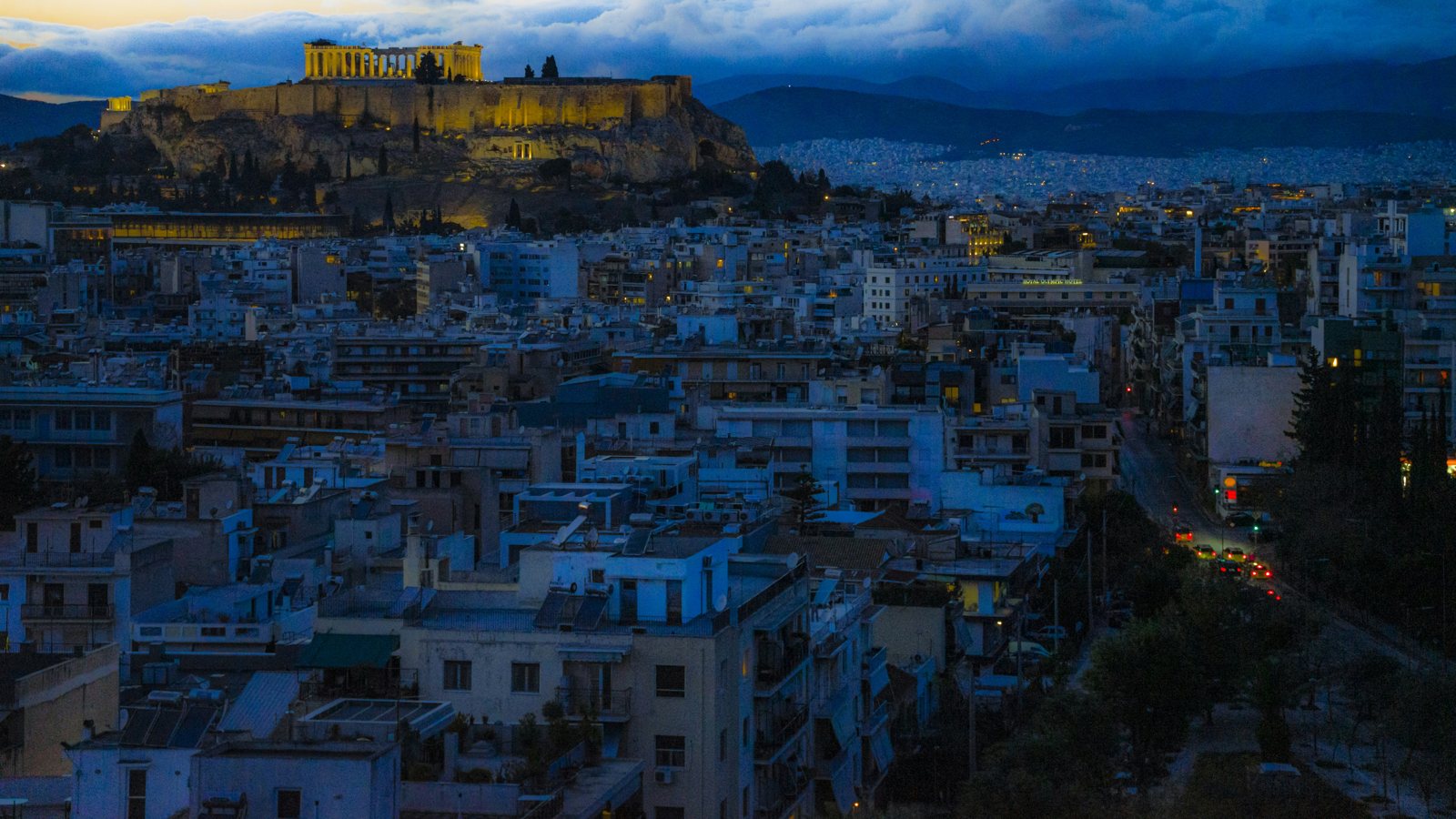
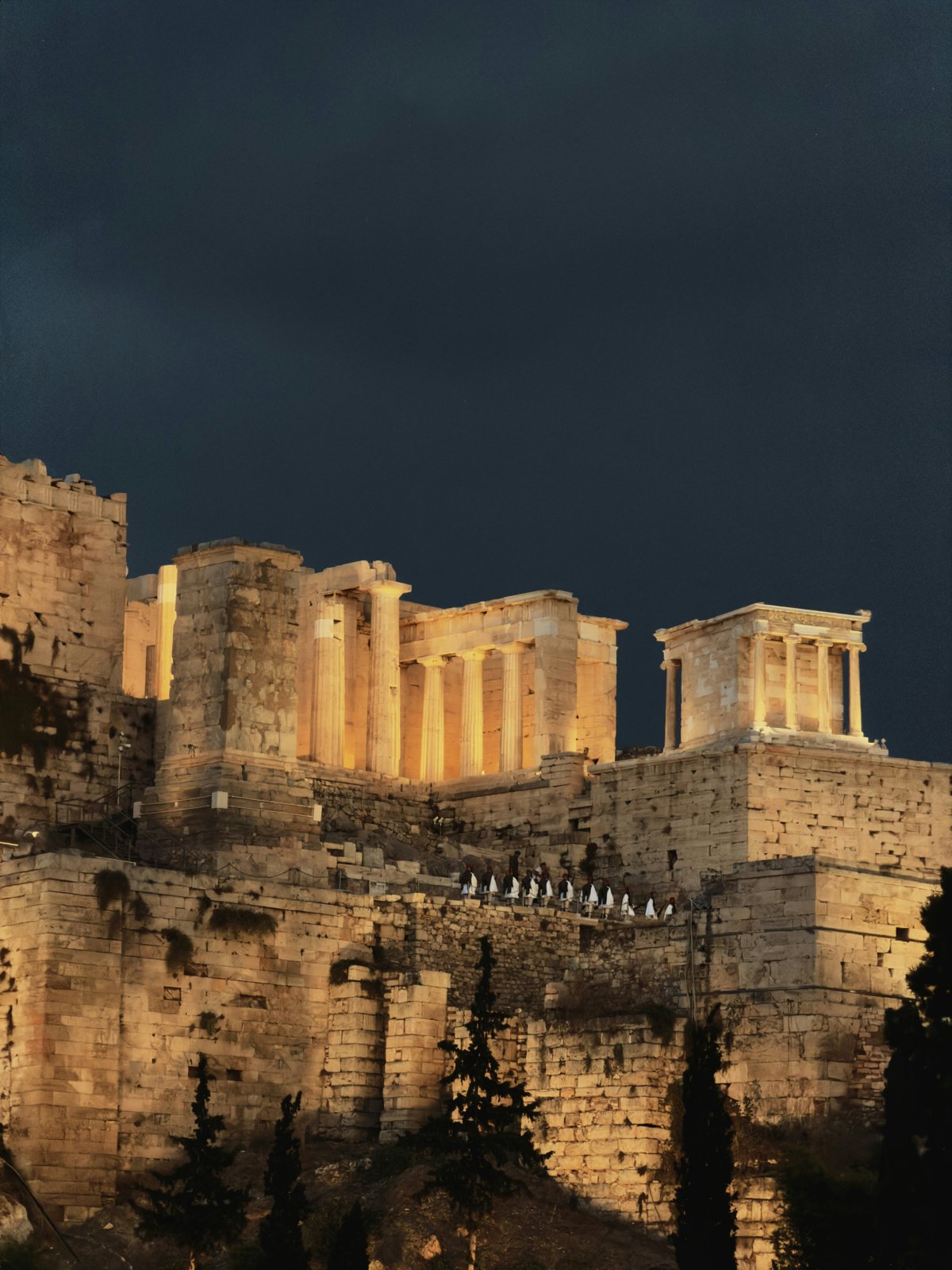
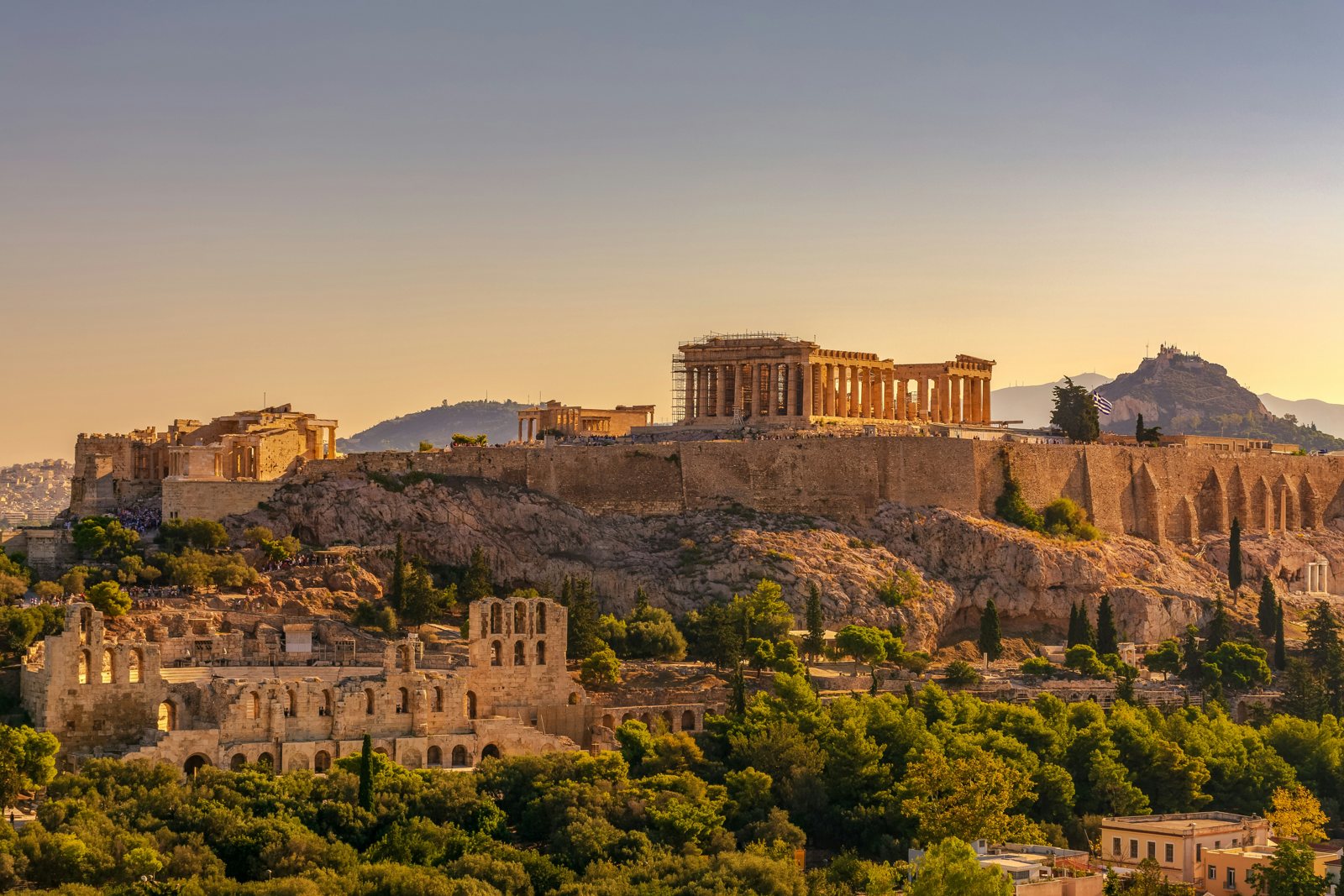
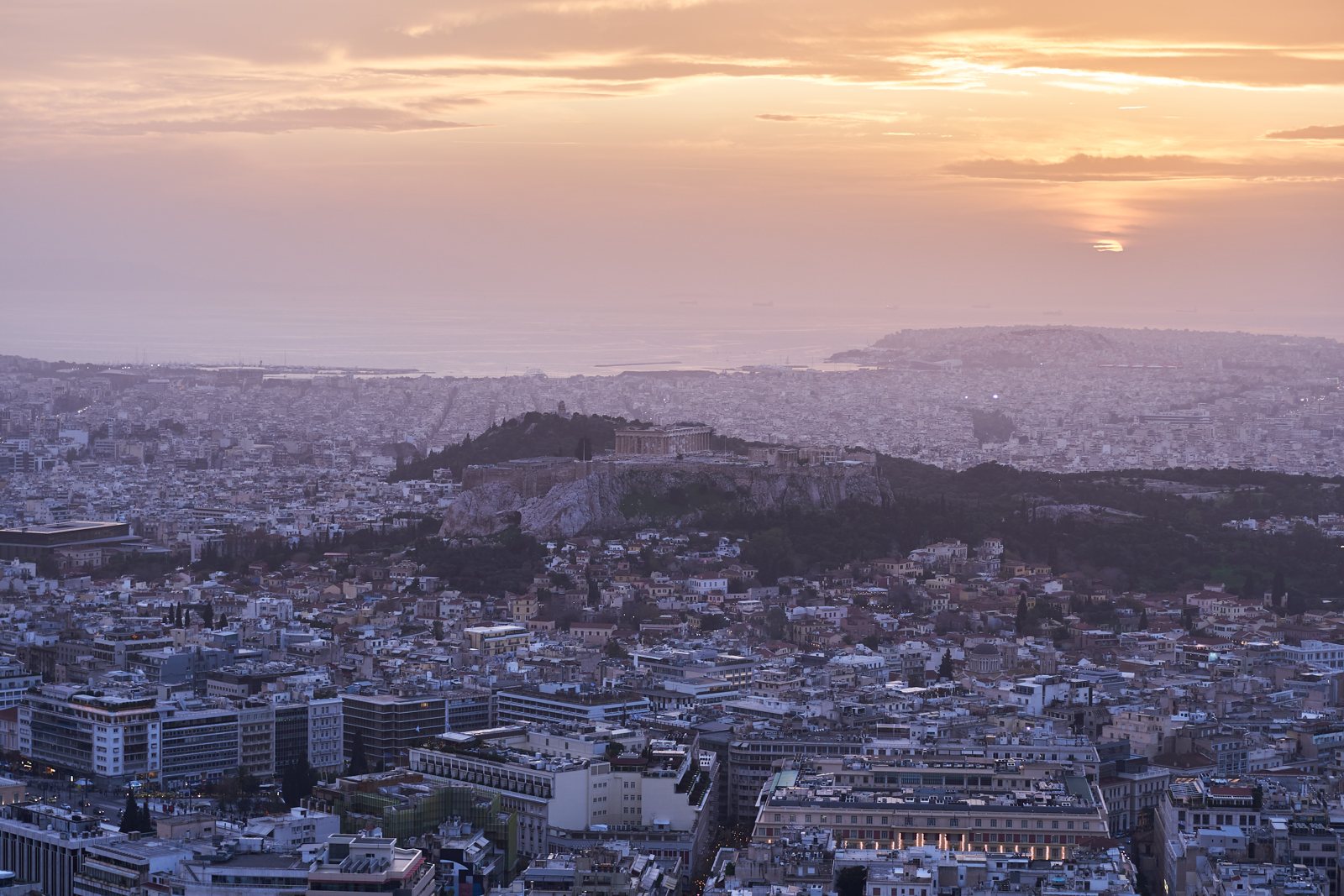
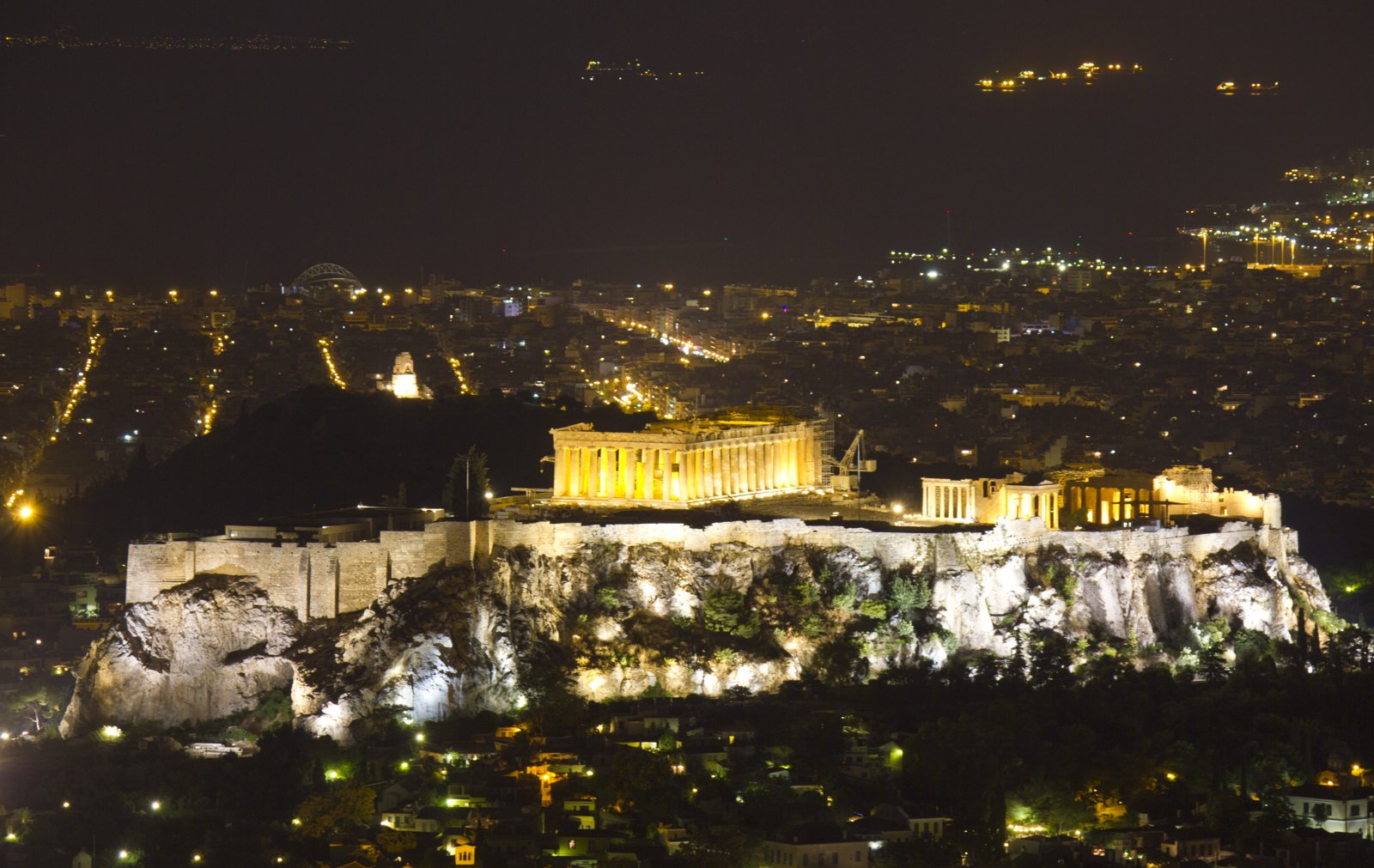
Here are three of the actual shots you’ll find inside the PDF — cinematic full-page references for the exact spots, lenses, and lighting conditions documented in the guide. The full guide includes 11 locations, each with a hero image, GPS map, settings table, and a five-shot list.
Save
Before you shoot Athens: the essentials
- Free public access: Areopagus Hill (Mars Hill), Filopappou Hill, Monastiraki Square, the Dionysiou Areopagitou pedestrian promenade, Hadrian’s Arch exterior, Syntagma Square, the National Garden (dawn to dusk), and Zappeion exterior gardens are all free. Acropolis: €30/adult (year-round from April 2025, previously seasonal). Acropolis Museum: €20/adult. Roman Agora + Tower of Winds: €8 summer / €4 winter. Temple of Olympian Zeus: €6/adult (standalone) or included in combo passes. Panathenaic Stadium (Kallimarmaro): €12/adult (from October 2025, previously €10). Lycabettus Hill summit is free; funicular €13 return / €10 one-way. Government combo ticket (Acropolis + 6 sites for €30) was discontinued 1 April 2025; individual tickets now required. Third-party bundle passes (Acropolis + 5 sites + audio) available via GetYourGuide at ~€98/person. Free entry days at all Ministry of Culture sites: 6 March, 18 April, 18 May, last weekend of September, 28 October, first Sunday November–March.
- Commercial permits: Personal and tourist photography throughout all public spaces in Athens is unrestricted. Commercial shoots (advertising, editorial, film crews) in public spaces and at archaeological sites managed by the Hellenic Ministry of Culture and Sports require advance written permission from the Central Archaeological Council (KAS) via the Ministry of Culture (culture.gov.gr). Drone flight over the Acropolis, ancient sites, and central Athens heritage zones is prohibited without a special permit from the Hellenic Civil Aviation Authority (HCAA); enforcement is active. All archaeological sites prohibit flash photography inside enclosed museum spaces.
- Best photography seasons: April–June (wildflowers on hillsides, mild light, moderate crowds, long golden hours) and September–October (warm light, reduced summer crowds, clear skies, comfortable temperatures for hillside hikes)
- Blue hour notes: Athens sits at 37.98°N — a significantly lower latitude than northern European cities, giving a faster-moving blue hour (15–25 minutes after sunset) but intense warm golden light. Summer sunset falls between 8:00–8:45 PM (late June–July), giving extended golden hours. Winter sunset is around 5:10–5:30 PM (December–January), making blue hour accessible in the early evening. The Acropolis floodlights activate at dusk automatically, making blue-hour shots from Filopappou Hill and Areopagus exceptionally compelling: warm tungsten monument light against deep indigo sky.
- Drone policy: Drone laws vary widely by country and city — many capital and tourist zones are no-fly. Verify the local civil aviation authority’s current rules before launching.
- Local resource: Official visitor information
The full-resolution version of every map below — plus seasonal calendars, gear notes per location, sun-angle diagrams, and a complete photographer’s packing checklist — is inside the Athens Photographer’s Guide PDF ($47).
1. Acropolis — Parthenon & Erechtheion
The Acropolis is the most recognizable archaeological site in the Western world — the Parthenon’s Doric colonnade of 46 outer columns carved from Pentelic marble (completed 432 BC) remains the definitive icon of ancient Greek civilization. As a photography subject, it is most compelling from the outside: the citadel perched on its vertical rock face, glowing gold at sunset against the Athens skyline, is a more powerful photograph than almost anything achievable from within the busy site. From inside, the scale of the Parthenon’s original construction — 13.7 m column drums, subtly curved stylobate, refined optical corrections — rewards careful close architectural study. The Erechtheion’s Caryatid Porch (six female figure columns) and the views over Athens from the north wall are secondary photographic rewards.
- GPS: 37.9715, 23.7267
- Elevation: 512 ft
- Best time of day: first 90 minutes after site opens (8:00–9:30 AM) for warm horizontal light on the Pentelic marble with minimal crowds; or late afternoon 1 hour before closing when golden light rakes across the columns from the west and backlit shots of the Propylaea gateway become possible
- Sun direction: The Acropolis rock faces broadly south-southwest. At Athens latitude (37.98°N), the sun arcs moderately high across the southern sky. Summer sunrise (azimuth ~65°) brings early-morning easterly light that catches the Erechtheion’s north porch and the Parthenon’s east facade. By mid-morning the sun is already steep and harsh. Golden hour (sun at low western azimuth ~285° in June/July) backlit the Parthenon’s western facade spectacularly from Filopappou Hill; from inside the site the Propylaea entrance gate is front-lit with warm amber. Winter solstice sun (azimuth ~125° at sunrise, ~235° at sunset) creates dramatic low long shadows across the entire plateau throughout the day.
- Access: Main entrance on the south slope, Dionysiou Areopagitou street, Makrigianni, Athens. Metro Line 2 (red) to Acropolis station, exit 1 (3-min walk). Bus 230 to Acropoli stop. Open daily 8:00 AM–7:00 PM (April–October); 8:00 AM–5:00 PM (November–March). Admission €30/adult (year-round, no seasonal reduction from 1 April 2025). Reduced tickets (50%): EU/EEA citizens under 25 with ID, teachers of primary/secondary education, etc. Free admission: EU children under 18 with ID, all visitors on designated free-entry days. Advance timed-entry booking strongly recommended in summer (sells out); purchase at etickets.tap.gr or via third-party platforms. No tripods allowed inside the Acropolis site. Photography on slippery ancient marble — wear grippy shoes.
- Difficulty: moderate
- Recommended settings: Golden Hour Exterior: f/8, 1/250 sec, ISO 200, 70–200mm telephoto from Filopappou or Areopagus · Early Morning Interior: f/8, 1/200 sec, ISO 400, 24mm wide · Blue Hour Illuminated: f/11, 4–8 sec, ISO 400, 50mm, tripod (from Filopappou Hill — tripods not allowed on site) · Overcast Architectural: f/11, 1/100 sec, ISO 800, 35mm
Shots to chase:
- Wide-angle shot from Dionysiou Areopagitou street bend where the full Parthenon floats above the cliff edge with no modern structures in frame
- Telephoto compression (200mm) from Filopappou Hill at sunset — dense columns of warm amber marble against a blurred city below
- Caryatid Porch of the Erechtheion at dawn light — the six female figures against a pale blue-gold sky
- Looking through the Propylaea gateway columns toward the Parthenon beyond — natural stone-frame composition
- Blue-hour shot from Areopagus Hill with the illuminated Acropolis rock against deep indigo sky and city lights below
Pro tip: Arrive at 8:00 AM opening — tour groups arrive by 9:30–10:00 AM and the site becomes congested. In midsummer, heat on the exposed marble plateau can reach 40°C by midday; early morning is far more comfortable. The most photogenic view of the Acropolis requires no ticket at all: the Dionysiou Areopagitou promenade circling its base offers constantly shifting angles and Odeon arches as natural foreground frames. Long exposures at night from Filopappou Hill eliminate any tourists from the composition. The white Pentelic marble photographs best with a slight exposure underexposure (−1/3 to −2/3 EV) to preserve highlight detail.
Common mistake to avoid: Shooting only from the top of the site when the best views are from outside. Visiting at midday when harsh overhead light bleaches the marble flat white and crowds are at maximum. Forgetting that no tripods are allowed on the archaeological site itself. Using a very wide-angle lens (14mm) from directly below — the resulting distortion makes columns look tapered rather than monumental.
2. Lycabettus Hill — Summit Panorama
At 277 m, Lycabettus is the highest point in central Athens — nearly twice the height of the Acropolis rock — and the only viewpoint from which you can see the Acropolis, the full urban basin stretching to the sea, Piraeus port, and the Saronic Gulf in a single unobstructed sweep. The dense white apartment buildings and terracotta rooftops compressed in every direction create one of the most complete ‘city portrait’ panoramas in Europe. At blue hour, 5–6 million city lights flicker on progressively across the basin while the illuminated Acropolis glows warm gold in the foreground — a colour and scale combination unavailable from any other viewpoint in Athens.
- GPS: 37.9793, 23.7451
- Elevation: 909 ft
- Best time of day: 45 minutes before sunset to claim a position on the summit terrace; stay 20–30 minutes after sunset through blue hour when city lights emerge across the entire basin and the sky turns deep indigo — the definitive Athenian cityscape window
- Sun direction: Lycabettus summit faces 360° with optimal photography toward the southwest at sunset. The sun sets broadly northwest in summer (azimuth ~300°) and southwest in winter (~240°). At golden hour, the Acropolis — which lies to the southwest at approximately 2.5 km range and 400 m lower elevation — is bathed in direct warm frontal light when viewed from Lycabettus summit. The sea (Saronic Gulf) lies beyond Piraeus to the south-southwest at ~10 km, creating a silver reflective horizon in clear conditions. Sunrise shots face east over the Hymettus mountain range, catching alpenglow on rocky ridgelines.
- Access: Summit accessible by funicular (Lycabettus Funicular) from Aristippou/Plutarchiou Street junction, Kolonaki; nearest metro Evangelismos (Line 3/blue, 5-min walk). Funicular runs daily 9:00 AM–2:30 AM (shorter hours possible in winter); every 30 min, more frequent at peak hours. Tickets: €13 return / €10 one-way; cash and card accepted. Alternatively, walk up via hiking paths in 25–40 minutes (free). Summit access is free 24/7; only the funicular has a fee. Restaurant and café on summit (Orizontes Lycabettus). Chapel of Saint George at the very top.
- Difficulty: easy (funicular) / moderate (hiking)
- Recommended settings: Golden Hour Panorama: f/8, 1/200 sec, ISO 200, 24mm wide-angle · Blue Hour Cityscape: f/11, 4–8 sec, ISO 400, 16–24mm, tripod · Telephoto Acropolis: f/8, 1/250 sec, ISO 200, 200mm for compressed Parthenon against city · Night City Lights: f/8, 15–30 sec, ISO 400, 16mm, tripod
Shots to chase:
- 360° panoramic sweep at blue hour from the summit terrace — stitch 8–12 frames for a full-city panorama print
- Chapel of Saint George as foreground silhouette against a warm orange sunset sky with Acropolis and sea in background
- Telephoto compression (200mm) isolating the illuminated Acropolis rock against the sea horizon at dusk
- Pine forest path on the way up — dappled late-afternoon light through the trees for environmental portraits
- Long-exposure star trail from summit on a clear moonless night with city lights below
Pro tip: The summit gets very crowded at sunset, especially in summer. Arrive 45 minutes early to claim a front-row position on the north or south terrace. For the definitive blue-hour shot, wait until 20 minutes after sunset when the sky goes fully indigo and all city lights are on — most visitors leave at sunset. The funicular travels through a tunnel and offers no views during the ride; walking up is preferable for photography. The pine forest path provides excellent dappled-light portrait shots 30–45 minutes before the summit. Tripods are permitted on the public summit terrace.
Common mistake to avoid: Leaving immediately after sunset and missing the superior blue-hour window. Going at sunrise when the Acropolis is backlit from this direction (less dramatic). Expecting the funicular to offer views — it is a tunnel ride. Forgetting a jacket; temperatures drop significantly at 277 m after sunset even in summer.
3. Areopagus Hill — Mars Hill
Areopagus (Mars Hill) is a bare limestone outcrop rising directly beside the Acropolis entrance, offering one of the most intimate and immediate views of the Parthenon available from any free public vantage point in Athens. The rocky summit — worn smooth by millions of feet over 2,500 years — requires no ticket, faces directly toward the Acropolis at close range, and provides an unobstructed foreground of ancient rock and Athens rooftops. The hill’s own significance is profound: it served as the Supreme Court of Athens in antiquity and is where the Apostle Paul preached to the Athenians in 51 AD (a bronze plaque commemorates the sermon). At blue hour, the illuminated Acropolis seen from this rocky perch against the city panorama is one of the finest free photography experiences in the city.
- GPS: 37.9723, 23.7237
- Elevation: 371 ft
- Best time of day: sunrise (approximately 6:00–6:30 AM in summer, 7:30–8:00 AM in winter) for a nearly empty summit with warm horizontal light on the Acropolis rock just above and to the east; or 1 hour before sunset when the Acropolis is golden-lit and the city below transitions from afternoon to dusk light
- Sun direction: Areopagus sits directly northwest of the Acropolis — placing the Acropolis at roughly SE to E from the summit. At sunrise, the early light comes from the northeast and illuminates the Acropolis’s north face and Parthenon from the side, creating texture and dimension in the marble. At sunset, warm westerly light bathes the Acropolis’s south and west faces in amber, with the Areopagus summit itself lit from behind the camera for face-lit Acropolis views. At blue hour after sunset, the artificially lit Acropolis provides extraordinary warm light contrast against the darkening city below.
- Access: Free, open 24 hours. Located directly northwest of the Acropolis main entrance, at the junction of Dionysiou Areopagitou and Apostolou Pavlou streets. Accessible on foot from the Acropolis (5-min walk downhill from main entrance). Metro Line 2 (red) to Acropolis station, then 8-min walk. A metal staircase and cut stone steps lead to the summit. Warning: the natural marble surface becomes dangerously slippery when wet — appropriate footwear essential.
- Difficulty: easy
- Recommended settings: Sunrise Golden Hour: f/8, 1/250 sec, ISO 200, 35–50mm · Blue Hour Illuminated: f/11, 6–10 sec, ISO 400, 35mm, tripod on flat rock · Wide City Panorama: f/11, 1/125 sec, ISO 400, 16–24mm · Telephoto Parthenon: f/8, 1/400 sec, ISO 200, 70–100mm
Shots to chase:
- Silhouette of lone figure on the summit rocks against the golden-lit Acropolis at sunset — the most powerful free Acropolis composition in Athens
- Wide-angle including both the Acropolis to the east and the Athens cityscape/Agora to the west in a single frame
- Blue-hour long exposure with the illuminated Parthenon glowing gold against deep indigo sky and city lights spreading below
- Closeup of the ancient worn marble rock surface with the Parthenon sharply focused in the background (wide-open aperture, f/2.8)
- Sunrise shot looking east with the Acropolis as a dark silhouette against a pink/orange dawn sky
Pro tip: Arrive before 6:30 AM in summer for a completely deserted summit — tour groups begin arriving at 8:30–9:00 AM. The rock surface is bare limestone polished to a near-mirror finish; flat-soled rubber shoes are essential, especially if damp. Tripods can be set up on the flat rock areas on the southeast side of the summit. This is an excellent location for blue-hour shots after visiting the Acropolis itself (which closes at sunset/7 PM): walk down to Areopagus and shoot the illuminated citadel from below for another 30–45 minutes of quality light.
Common mistake to avoid: Visiting only in the morning when the Acropolis is backlit from this angle (good for silhouettes, less ideal for detail). Attempting the summit in sandals or smooth-soled shoes on wet marble — genuinely hazardous. Overlooking this viewpoint entirely in favor of paying for Lycabettus or Filopappou.
Want this in your pocket on the street?
The full-resolution version of every spot above — with full-page hero photography, GPS maps with gold location pins, sun direction diagrams, multi-season tables, and a complete safety + packing checklist — is inside the Athens Ultimate Photographer’s Guide PDF ($47). Print it, save it offline, take it on the walk. Get the guide →
4. Anafiotika — Whitewashed Cycladic Houses
Anafiotika is a Cycladic island village — whitewashed cubic houses, blue-painted doors and window shutters, bougainvillea cascading over low walls, terracotta pots of geraniums — transplanted into the heart of Athens on the north slope of the Acropolis. Built in the 19th century by workers from the island of Anafi who came to construct Athens’ first modern buildings and replicated their island architecture as a community, it is one of the most extraordinary and dissonant urban photography environments in Europe: within 200 meters of Monastiraki Square’s souvlaki vendors and tourist shops, you step into a scene that looks indistinguishable from Santorini or Folegandros. The narrow lanes naturally frame every composition and the Acropolis summit is just visible over the rooftops in multiple positions — a composition unique to this neighborhood.
- GPS: 37.9731, 23.7261
- Elevation: 430 ft
- Best time of day: 7:00–9:00 AM on a weekday — streets are genuinely empty, the light is soft and directional from the east, cats are active on the warm stone, and every composition is available without tour groups
- Sun direction: Anafiotika clings to the northeast slope of the Acropolis rock, facing broadly north and northeast. Morning light (from the east/northeast) enters the narrow lanes obliquely, creating directional side-light that illuminates whitewashed walls while casting deep shadows on doors and window reveals — ideal for texture. By 10 AM the steep Acropolis rock behind creates harsh overhead shadow contrast. In late afternoon, warm westerly light wraps around from the south, catching bougainvillea flowers and warm stone facades. The Parthenon is just visible peeking over the roofline from several lane positions, best photographed with a longer lens (50–85mm) to compress the composition.
- Access: Free, open 24 hours — a residential neighborhood, no entrance fee. Best entered from Stratonos Street (approach from above, looking down into the lanes) to bypass the tourist path from Plaka. Alternatively, walk up through Plaka from Monastiraki Metro station (Line 1 green or Line 3 blue) — approximately 15 minutes on foot. The neighborhood is pedestrian-only; narrow lanes, no vehicles. Respect residents: it is a functioning residential area, not a tourist attraction.
- Difficulty: easy
- Recommended settings: Morning Soft Light: f/4, 1/250 sec, ISO 200, 35–50mm prime · Bougainvillea Detail: f/2.8, 1/500 sec, ISO 200, 85mm portrait · Lane Leading Lines: f/8, 1/200 sec, ISO 400, 24mm wide · Acropolis Over Roofline: f/5.6, 1/400 sec, ISO 200, 85mm
Shots to chase:
- Narrow whitewashed lane leading to a blue door with bougainvillea overhead and the Parthenon silhouette just visible over the roofline
- Portrait subject against a white wall with artfully framing a blue-painted doorway — saturated colors against bright white
- Cat sleeping in a sunny doorway surrounded by terracotta flower pots — the defining street-life image of Anafiotika
- Upward-angled shot from a low position in a narrow lane eliminating the modern city completely — makes it look entirely like the Aegean islands
- Long exposure at dusk with lantern-lit lanes and the illuminated Acropolis glowing over the rooftops
Pro tip: Enter from Stratonos Street from above rather than walking up from Plaka — this approach brings you down into the neighborhood from above, revealing the full white-walled roofscape and allowing you to shoot downward into the lanes for a more original composition. Come on a weekday before 9 AM: tour groups arrive by 10 AM and the narrow lanes fill completely. Be respectful of residents — walk quietly, do not photograph inside open windows, and ask before photographing anyone directly. Spring (April–May) is optimal: bougainvillea is in full bloom.
Common mistake to avoid: Arriving after 10 AM when the lanes are full of tour groups and all ’empty street’ compositions are impossible. Shooting everything at eye-level; crouching and shooting slightly upward eliminates all modern city background and makes the scene completely Cycladic. Using a wide-angle zoom at maximum zoom-out — the resulting barrel distortion straightens the curved lanes and loses the sense of enclosure that makes Anafiotika special.
5. Plaka — Mnisikleous Steps & Adrianou Street
Save
Plaka is Athens’ oldest continuously inhabited neighborhood — a labyrinth of neoclassical, Ottoman, and Byzantine architecture pressed against the foot of the Acropolis rock, with bougainvillea-draped balconies, ancient marble columns embedded in later buildings, and cats on every warm stone surface. The Mnisikleous Steps (Skalakia) are the neighborhood’s photographic centrepiece: wide marble terraces flanked by bougainvillea and jasmine, tumbling through the middle of Plaka in a cascade of natural leading lines. Adrianou Street — the main pedestrian artery — provides a continuously varied backdrop of neoclassical facades, Byzantine church domes, and the Acropolis rock rising behind them at every upward glance.
- GPS: 37.9726, 23.7282
- Elevation: 295 ft
- Best time of day: morning 7:30–9:30 AM for empty stone stairways with soft directional side-light and bougainvillea flowers catching the first sun; late afternoon 4:00–6:00 PM for warm amber light on terracotta and stone facades and shadow play on the stepped streets
- Sun direction: Plaka occupies the eastern and northeastern slopes below the Acropolis, oriented broadly north. Morning light (easterly, 7–10 AM) enters the stepped streets from the northeast at a low angle, creating beautiful side-lighting on neoclassical and Ottoman building facades and casting long shadows across stone steps. By midday the sun is high above and light is flat. Late afternoon (4–7 PM) as the sun drops toward the west, warm amber light filters in from behind the camera for anyone facing south toward the Acropolis — this is the golden hour for Plaka portraits.
- Access: Free, open 24 hours. Main access from Monastiraki Square (Metro Line 1/green or Line 3/blue, Monastiraki station) walking southeast on Adrianou Street. The Mnisikleous Steps (also called Skalakia) are located at the upper end of Plaka, at the base of the Acropolis climb; approximately 15 minutes walk from Monastiraki. No entrance fees anywhere in the neighborhood. Most restaurants and cafés open from 10:00 AM.
- Difficulty: easy
- Recommended settings: Morning Steps: f/8, 1/200 sec, ISO 200, 24–35mm · Bougainvillea Portrait: f/2.8, 1/400 sec, ISO 200, 85mm · Street Scene Afternoon: f/5.6, 1/250 sec, ISO 200, 35–50mm · Upward Staircase Wide: f/11, 1/125 sec, ISO 400, 16–20mm
Shots to chase:
- Low angle from the bottom of Mnisikleous Steps looking up — layered terraces of stone with bougainvillea overhead and figures climbing create depth and motion
- Portrait subject mid-frame on the steps with receding staircase lines as leading elements — classic Plaka couples composition
- Adrianou Street at dusk with cafe lights, neoclassical facades, and the illuminated Acropolis visible at the upper end of the street
- Narrow side-lane with embedded ancient marble column fragment in a later building wall — a visual compression of 2,500 years of urban history
- Looking south from Lysikratous Square with the Lysikrates Monument (4th century BC) framing the far end of the square
Pro tip: The Mnisikleous Steps face slightly east — morning light comes from the right and creates directional shadows across the stone. In spring, the bougainvillea is thick enough to form a flower tunnel over the upper sections of the steps. Shoot from below, pointed upward, to use the receding geometry of the steps as leading lines. The neighborhood is much quieter before 9:30 AM than any time after; virtually all ’empty street’ shots require early arrival. Plaka cats are famously photogenic and approachable.
Common mistake to avoid: Treating Plaka purely as a transit corridor to the Acropolis without stopping to photograph it. Shooting at midday when the Byzantine quarter is deep in shadow and the light is flat. Choosing Adrianou Street for street photography during peak lunch hour (1–3 PM) when it is impassably crowded.
6. Roman Agora & Tower of the Winds
The Tower of the Winds (1st century BC) is the best-preserved ancient building in Athens — a marble octagonal structure 12 m tall with eight sculpted relief panels, each depicting a wind deity facing its respective compass direction. Originally a combined water clock, sun clock, and wind vane, it is architecturally unique in the ancient world. The Roman Agora (1st century BC–1st century AD) surrounding it offers the remains of a colonnaded commercial square with the elegantly preserved Gate of Athena Archegetis. The combination of ruins, the Acropolis rock rising directly to the south, and the proximity to Anafiotika and the Tzistarakis Mosque makes this one of the most layered and historically compressed photography zones in Athens.
- GPS: 37.9749, 23.7266
- Elevation: 236 ft
- Best time of day: opening at 8:00 AM when light enters obliquely from the northeast, illuminating the Tower of the Winds relief panels in warm side-light with virtually no other visitors present; late afternoon (4–6 PM) for warm golden-hour light on the white limestone columns of the Gate of Athena Archegetis
- Sun direction: The Roman Agora occupies flat ground between Plaka and the Acropolis rock, oriented roughly east-west. The Tower of the Winds (Horologion of Andronikos Kyrrhestes) faces all compass directions with its eight sculptural wind-god reliefs — each face catches different light throughout the day. The northeast face (Kaikias/cold wind) catches morning light first; the western faces (Zephyr, Skiron) are warm in late afternoon. The Gate of Athena Archegetis on the western side catches afternoon light perfectly. Late-afternoon golden-hour light from the west illuminates the entire site with warm tones against a blue sky.
- Access: Entrance on Polygnotou Street, Monastiraki/Plaka border, Athens. Metro Line 1/3 (Monastiraki station, 5-min walk east). Open daily 8:00 AM–7:00 PM (April–October), 8:00 AM–5:00 PM (November–March). Admission: €8/adult summer (April–October), €4 winter (November–March); reduced €4. Note: as of 1 April 2025, the official government Acropolis combo ticket has been discontinued; the Roman Agora now requires a separate ticket. Third-party bundle passes (via GetYourGuide) covering this site with the Acropolis and others are available. The Tower of the Winds can be viewed through the fence from Aiolou Street at no cost.
- Difficulty: easy
- Recommended settings: Tower Morning Detail: f/8, 1/200 sec, ISO 200, 50–85mm for relief panel details · Gate Golden Hour: f/8, 1/250 sec, ISO 200, 24–35mm · Wide Site Overview: f/11, 1/125 sec, ISO 400, 16–24mm · Blue Hour Tower: f/11, 4–8 sec, ISO 400, 35mm, tripod
Shots to chase:
- Tower of the Winds framed against a clear blue sky — include two or three relief panels facing the morning light
- Looking east through the Gate of Athena Archegetis with the Tower and Acropolis visible beyond in a layered depth-of-field composition
- Morning low-angle shot of the column drums of the Gate of Athena Archegetis with long shadow lines across ancient paving stones
- Detail panel of a specific wind deity (e.g., Boreas/north wind) with shallow depth of field against out-of-focus ruins
- Blue-hour shot of the Tower illuminated by artificial light against an indigo sky from the adjacent Aiolou Street fence
Pro tip: The site is small (visit takes 30–45 minutes) and can be combined with the Ancient Agora and Kerameikos in a single morning. The Tower is visible for free from Aiolou Street to the north — the fence view gives a clean full-tower frame. For interior site access, the gate columns at the western entrance photograph best in late afternoon (4–6 PM). The site is rarely as crowded as the Acropolis, making unhurried composition much easier. Bring a telephoto lens (85–200mm) for the Tower relief panels.
Common mistake to avoid: Spending €8 entry then only photographing the Tower from one angle. Overlooking the Gate of Athena Archegetis at the western entrance — its four standing Doric columns are excellent wide-angle subjects. Missing the exterior fence view on Aiolou Street which gives a cleaner unobstructed framing of the Tower.
7. Panathenaic Stadium — Kallimarmaro
The Panathenaic Stadium — Kallimarmaro, ‘the beautiful marble’ — is the only major stadium in the world built entirely from white Pentelic marble, the same stone quarried from Mount Pentelikon for the Parthenon. Originally constructed in 329 BC for the ancient Panathenaic Games and rebuilt in marble by the Roman senator Herodes Atticus in 144 AD using 104,000 tons of marble, it was restored in 1895–96 for the first modern Olympic Games and is still used as the marathon finish line. The stadium is at once ancient, neoclassical, and modern — and the perfect symmetry of its horseshoe form in pure white marble is one of the most architecturally compelling subjects in Greece. From the top tier of Stand 21, the Acropolis, Filopappou Hill, the Temple of Olympian Zeus, Zappeion, and Lycabettus are all visible simultaneously.
- GPS: 37.9683, 23.7408
- Elevation: 246 ft
- Best time of day: dawn (30 minutes after sunrise) when the outer curved marble facade glows warm amber-gold in horizontal light and the stadium interior is empty; or late afternoon (5–7 PM) when marble shifts back to warm gold from flat white — by mid-morning the marble bleaches to flat overexposed white
- Sun direction: The Panathenaic Stadium runs north-south, with its open horseshoe end facing north toward the street. The outer curved marble facade faces broadly north-northwest, catching indirect light throughout the morning. The stadium interior (bowl) faces south internally, with the marble seating tiers catching direct overhead sun from late morning; this creates harsh bleached-white conditions unfavorable for photography. Dawn light from the northeast catches the outer facade in warm golden tones. Late afternoon (sun moving to the west/southwest) illuminates the facade from a low angle, returning the golden quality. For interior shots, the marble seating catches the most interesting textural light from low-angle morning sun in summer.
- Access: Vasileos Konstantinou Avenue (also known as Irodou Attikou Street area), Mets neighborhood, Athens. Metro Line 2 (red) to Syntagma station, then 10-min walk south. Bus 550 to Panathinaiko Stadio stop. Open daily 8:00 AM–7:00 PM (March–October), 8:00 AM–5:00 PM (November–February). Admission: €12/adult, €6 reduced (from October 1, 2025; previously €10/€5). Audio guide in 11 languages included in ticket price. Ticket purchase at stadium ticket desk only (cash or card); no online advance purchase. The outer curved facade can be photographed freely from the public pavement of Vasileos Konstantinou Avenue at no cost, at any hour.
- Difficulty: easy
- Recommended settings: Dawn Facade: f/8, 1/200 sec, ISO 200, 24–35mm for outer facade symmetry · Interior Wide: f/11, 1/125 sec, ISO 400, 16mm from top tier looking down · Marble Texture Detail: f/8, 1/200 sec, ISO 200, 85mm for marble grain closeups · Golden Hour Track: f/8, 1/250 sec, ISO 200, 35mm from track level
Shots to chase:
- Perfectly symmetrical wide-angle shot of the outer curved marble facade from the center of Vasileos Konstantinou Avenue at dawn — golden marble, empty street, classical proportions
- View from the top tier of Stand 21 looking south over the 50,000-seat marble bowl — vertiginous scale with a single figure on the track for reference
- Upward low-angle from track level looking at the sweeping marble seating tiers — the sheer scale only apparent from below
- Tree-lined approach avenue (Vasileos Konstantinou) leading to the marble facade — classic leading-line composition available for free
- Detail of the individual cut marble seat units in the front rows — crystalline Pentelic marble with ancient carved inscriptions
Pro tip: The outer facade can be photographed for free from the public pavement before the site opens — arrive at dawn for the best light without buying a ticket. From inside, the top tier of Stand 21 gives the only viewpoint combining the stadium bowl with the Acropolis on the horizon — plan this shot specifically. The marble turns flat overexposed white between 10 AM–4 PM in summer; arrive early or late. Photography is permitted throughout including on the running track. Visitors may walk the track circuit (bring running shoes if desired). Audio guide gives the full history of the 1896 Games — an excellent narrative photography framework.
Common mistake to avoid: Visiting mid-morning when the marble is bleached flat. Photographing only from outside and skipping interior access. Missing the panoramic view from the top tier toward the Acropolis — the most surprising shot in the stadium.
Want this in your pocket on the street?
The full-resolution version of every spot above — with full-page hero photography, GPS maps with gold location pins, sun direction diagrams, multi-season tables, and a complete safety + packing checklist — is inside the Athens Ultimate Photographer’s Guide PDF ($47). Print it, save it offline, take it on the walk. Get the guide →
8. Temple of Olympian Zeus & Hadrian’s Arch
The Temple of Olympian Zeus was the largest temple ever built in Greece — begun by the tyrant Pisistratos in 515 BC and completed by Emperor Hadrian in 131 AD after nearly 700 years of intermittent construction. Of the original 104 Corinthian columns (each 17 m tall), 15 remain standing, with a 16th that toppled in a storm in 1852 lying in a dramatic collapsed heap still visible on site. The sheer scale of the surviving columns makes them appear almost impossibly large in person. Hadrian’s Arch (built 131 AD to mark the boundary between old Athens and the new Roman city) frames the distant Acropolis perfectly through its opening — a two-civilization composition with ancient Athens beyond and imperial Rome in the foreground.
- GPS: 37.9692, 23.7325
- Elevation: 230 ft
- Best time of day: blue hour — 20 minutes after sunset — when both Hadrian’s Arch and the distant Acropolis are simultaneously lit in warm gold against a deep indigo sky, while remaining car traffic on Vasilissis Olgas avenue creates light trails through the arch frame; late afternoon provides strong golden-hour light on the 15-surviving columns
- Sun direction: The Temple of Olympian Zeus (Olympieion) faces east-west, with the surviving colonnade oriented along the north-south axis. Hadrian’s Arch stands immediately to the north of the temple entrance, facing east-west. At morning, the arch is lit from behind when photographed from the west (backlit arch/silhouette). At afternoon/sunset, the sun moves to the west, front-lighting both the arch and — visible through its opening — the Acropolis 500 m to the northwest. At blue hour after sunset, both are artificially illuminated, creating the definitive two-monument composition. Summer sunset (8:00–8:30 PM) allows extended golden-hour work.
- Access: Temple of Olympian Zeus entrance on Vasilissis Olgas Avenue (corner with Amalias), Makrigianni, Athens. Metro Line 2 (red) to Acropolis station, then 8-min walk southeast. Open daily 8:00 AM–7:00 PM (summer), 8:00 AM–5:00 PM (winter). Admission: €6/adult standalone; note the official government combo ticket was discontinued 1 April 2025, but third-party bundle passes covering this site with Acropolis and others are available. Hadrian’s Arch is a free public monument on Vasilissis Amalias Avenue, never closes, permanently lit after dark.
- Difficulty: easy
- Recommended settings: Blue Hour Arch: f/11, 2–5 sec, ISO 400–800, 16–24mm wide, tripod · Golden Hour Columns: f/8, 1/250 sec, ISO 200, 24–50mm · Arch Detail Daytime: f/11, 1/200 sec, ISO 200, 24mm · Fallen Column: f/8, 1/200 sec, ISO 200, 24–35mm low angle
Shots to chase:
- Blue-hour shot pressing wide-angle lens as close to Hadrian’s Arch as possible — complete arch filling the frame with the illuminated Parthenon perfectly centered in the opening
- Same composition from across the road to capture car light trails passing through the arch foreground with the Acropolis beyond
- Looking south from within the Temple site across the fallen column drum to the still-standing colonnade against blue sky
- Low-angle shot from below the surviving columns looking upward — the enormous Corinthian capitals against the sky make the scale visceral
- Long telephoto (200mm) from the east side of the temple showing all 15 columns compressed in a tight vertical cluster
Pro tip: The arch is best photographed at blue hour, not during the day — daytime light is harsh, sky blows out, and the composition lacks drama. Arrive at 20 minutes after sunset and work for 15–20 minutes as the sky cycles from orange to deep blue. Use a tripod for the 2–5 second exposures needed. Position yourself as close to the arch as safety allows with a 16–24mm lens — this is the shot. The north side of the temple within the site offers the best view of the 15 standing columns against an unobstructed sky. Walk to the northwest corner of the site for a view that includes both the colonnade foreground and the Acropolis rising beyond.
Common mistake to avoid: Photographing the arch at midday — the sky blows out and the arch goes dark. Missing the low-angle column shot from below inside the site. Forgetting that Hadrian’s Arch is freely accessible 24 hours — there is no need to enter the paid site to photograph it.
9. Monastiraki Square & Tzistarakis Mosque
Save
Monastiraki Square is the living urban heart of old Athens — a convergence point of the ancient Agora, the Ottoman city, the neoclassical 19th-century city, and the contemporary metropolis within a single frame. The Tzistarakis Mosque (1759), one of the last surviving Ottoman structures in Athens, anchors the square’s north side with its distinctive dome and minaret base. Looking south from the square, the Acropolis rises directly behind the roofline in an alignment found nowhere else in the city — the most accessible close-range view of the Parthenon that requires no ticket and no hill-climb. On Sunday mornings, the flea market extends across every pavement, creating the most diverse, chaotic, and richly photogenic street scene in Athens.
- GPS: 37.9762, 23.7244
- Elevation: 230 ft
- Best time of day: Sunday 8:00–11:00 AM for the full flea market at maximum activity with soft morning light and clear views of the Acropolis above the rooflines; or any day at golden hour when the Acropolis behind the square turns warm amber and the square’s activity is backlit dramatically from the east
- Sun direction: Monastiraki Square is open and roughly flat, with the Acropolis rising to the southeast at ~200 m horizontal distance and 300 m above. Morning sun (from the northeast) front-lights the Tzistarakis Mosque facade and Acropolis simultaneously from the square. By late morning, the square is in full sun. Late afternoon and golden hour bring warm southwesterly light across the square, creating excellent conditions for street photography with warm ambient fill. The Acropolis above the square is best lit for photography from this position in the late afternoon when the low sun from the west catches the Parthenon’s southern and western faces in golden light.
- Access: Monastiraki Square, Monastiraki neighborhood, Athens. Metro Line 1 (green) or Line 3 (blue) to Monastiraki station — exits directly onto the square. The square is a public space, free and open 24 hours. Flea market: permanent antique shops open daily 9:00 AM–6:00 PM along Ifestou Street and Avissinias Square; Sunday street market 8:00 AM–3:00 PM extending across all surrounding streets. The Tzistarakis Mosque (now the Museum of Greek Folk Ceramics) has independent opening hours.
- Difficulty: easy
- Recommended settings: Street Photography: f/5.6, 1/500 sec, ISO 400, 35–50mm · Acropolis Roofline: f/8, 1/250 sec, ISO 200, 85–200mm for compressed Parthenon over rooftops · Mosque Facade: f/8, 1/200 sec, ISO 200, 24–35mm · Blue Hour Square: f/8, 4 sec, ISO 400, 24mm, tripod
Shots to chase:
- Telephoto compression (85–200mm) from within the square or nearby rooftop bar — Parthenon floating directly behind the jumbled Monastiraki rooflines and satellite dishes
- Sunday morning street market: wide shot (24mm) at low angle through flea-market stalls with the Tzistarakis Mosque dome visible above the vendors
- Interior of an antique shop on Ifestou Street — overflowing shelves of copper pots, icons, vintage objects, extraordinary ambient light
- Blue-hour long exposure from the square center: illuminated mosque dome and Acropolis beyond, with the metro station entrance and street life in foreground
- Detail shot of vendor hands at the Sunday market — weathered faces, copper merchandise, old objects
Pro tip: For the Acropolis-over-rooftops composition, use a telephoto (100–200mm) and position yourself on the south side of the square shooting southeast — the compression makes the Parthenon appear to hover directly behind the street level. The rooftop bars and cafés on Monastiraki Square offer a free or coffee-purchase elevated view of both the square and the Acropolis simultaneously. Sunday is the unmissable day: arrive by 8:00 AM before crowds build. The permanent antique shops on Ifestou Street west of the square have extraordinary interiors — ask permission before photographing owners.
Common mistake to avoid: Photographing the square without the Acropolis context — always include the citadel above the roofline. Using a wide-angle lens from close range that distorts the Mosque dome. Visiting on a weekday and missing the Sunday market which is the most photogenic version of this location.
10. Syntagma Square — Parliament & Evzone Guards
The Hellenic Parliament building (1842, designed by Bavarian architect Friedrich von Gärtner as the Royal Palace for King Otto of Greece) is the definitive symbol of modern Greek statehood — a massive neoclassical structure dominating the upper edge of Syntagma Square, the political heart of the country. The Tomb of the Unknown Soldier, carved directly into the base of the building in 1930, is guarded 24 hours a day by the Evzones — the Presidential Guard, whose ceremonial uniform (fustanella kilt, tasseled cap, pompon shoes) represents one of the most photographically distinctive military dress uniforms in the world. The Sunday 11 AM ceremony adds a full military band and up to 60 Evzones in white dress uniform, creating a spectacle of extraordinary photographic intensity.
- GPS: 37.9753, 23.7359
- Elevation: 230 ft
- Best time of day: Sunday 10:30–11:30 AM for the formal weekly ceremony (Evzones in white dress uniform, full military band, 30-minute parade and guard change); any weekday on the hour for the regular hourly guard change (5–7 minutes); for architectural shots of the Parliament building, late afternoon with warm western light on the neoclassical facade
- Sun direction: The Hellenic Parliament (former Royal Palace) faces west-northwest toward Syntagma Square. The Tomb of the Unknown Soldier is directly in front, in an open area between the building and the square. Morning light comes from the east and backlit the Parliament facade from the square — less ideal for the building but good for Evzone portraits against backlit stone. Late afternoon and golden hour bring direct warm westerly light onto the neoclassical facade and the marble Tomb of the Unknown Soldier reliefs — the best architectural window. The Syntagma Metro station entrance at the bottom of the Parliament steps provides an interesting compositional element.
- Access: Syntagma Square (Plateia Syntagmatos), central Athens. Metro Lines 2 (red) and 3 (blue) to Syntagma station, exits directly into the square. The square and Parliament exterior are public spaces, free and open 24 hours. Evzone guard change: hourly, every day on the hour, all day and night. Sunday formal ceremony: 11:00 AM sharp — arrive by 10:30 AM. The Tomb of the Unknown Soldier is directly below the Parliament building on the east side of the square. Photography is fully permitted. Stand across the street from the memorial (not in the open area immediately in front, which is cleared for the ceremony). No admission fee for any of this.
- Difficulty: easy
- Recommended settings: Evzone Portrait: f/5.6, 1/500 sec, ISO 200, 200mm telephoto for close detail without approaching guard · Ceremony Wide: f/8, 1/500 sec, ISO 400, 24–50mm for full crowd scene · Parliament Facade Afternoon: f/11, 1/200 sec, ISO 200, 24mm · Guard Post Blue Hour: f/8, 4 sec, ISO 400, 50mm, tripod
Shots to chase:
- Telephoto portrait (200mm) of a single Evzone standing motionless at the Tomb — the elaborate uniform details visible without approaching the guard
- Wide shot (24mm) of the Parliament building from the far end of Syntagma Square showing neoclassical facade with the two guard boxes flanking the entrance and Greek flag above
- Sunday ceremony: the full parade procession on Vasilissis Sofias Avenue with the military band and 60 Evzones in white — shot from the street to capture the full column
- Abstract closeup of the Evzone uniform detail — the 400 precisely counted folds of the fustanella kilt, the pompon shoes, the embroidered jacket
- Dusk or blue-hour shot of the Parliament building illuminated with the Evzones silhouetted against warm stone light
Pro tip: For the Sunday ceremony, arrive by 10:30 AM and position yourself across Vasilissis Amalias Avenue (the road in front of the Tomb) — do not stand in the open area between the Tomb and the square as it is cleared for the procession. The guards execute distinctive slow-motion stamping steps — even hourly changes are worth watching. Telephoto lens (150–300mm) is essential for close portrait details without disturbing the guards (they cannot break concentration). The 400 pleats of the fustanella kilt are a traditional count representing the 400 years of Ottoman occupation — communicate this in caption context. The Hotel Grande Bretagne breakfast terrace offers an elevated viewing angle of the Sunday ceremony for paying guests.
Common mistake to avoid: Standing in the route of the procession on Sunday — you will be firmly redirected by police and miss the best shots. Getting too close to the guards with a wide-angle lens to show detail — use telephoto from a distance. Visiting on a weekday and expecting the elaborate white-uniform ceremony which is Sunday-only.
11. Filopappou Hill — Parthenon Eye-Level View
Filopappou Hill provides the definitive face-on view of the Acropolis and Parthenon from near-equal elevation — approximately 147 m versus the Acropolis’s 156 m — at a distance of 600–800 m to the northeast. This alignment means the telephoto compression of a 200–300mm lens from the halfway-up viewpoint makes the Parthenon appear as large as it does when standing inside the site, with the entire Athens cityscape compressed into a dense urban backdrop below. This composition — warm amber Parthenon against a carpet of white and terracotta Athens rooftops — is the most published sunset photograph of the Acropolis. It is completely free, accessible 24 hours, and 20 minutes’ walk from Monastiraki. The Philopappos Monument (2nd century AD) on the summit itself adds a secondary architectural subject.
- GPS: 37.9683, 23.7197
- Elevation: 482 ft
- Best time of day: 45 minutes before sunset when golden light rakes directly across the Parthenon’s west facade and the Acropolis rock glows amber against a deepening blue sky; stay through blue hour (20–30 minutes after sunset) when floodlights activate and the illuminated Acropolis contrasts against deep indigo — the prime Athens blue-hour composition
- Sun direction: Filopappou Hill faces the Acropolis directly to the northeast from a near-equal elevation of 147 m, at a horizontal distance of approximately 600–800 m. At sunset in summer, the sun sets to the northwest (azimuth ~300°), which means the Parthenon’s west and northwest faces are front-lit from behind the camera when shooting from Filopappou’s viewpoint — ideal conditions for evenly illuminated architectural photography with warm amber tones. This is the only major Athens viewpoint with this front-lit alignment at sunset. At blue hour, the artificially illuminated Acropolis provides warm tungsten light that contrasts perfectly against the cool blue sky from this angle.
- Access: Free, open 24 hours — a public municipal park. Located southwest of the Acropolis on the hill between the Acropolis and Thissio. Main approach: walk up from Dionysiou Areopagitou Street (10–15 min) or from Apostolou Pavlou Street at Thissio. Metro Line 1 (green) to Thissio station (10-min walk), or Metro Line 2 (red) to Acropolis station (15-min walk). No entrance fees. The main viewpoint platform with benches is near the summit; the best photography position is slightly below the summit at the Philopappos Monument (GPS of the photo icon on Google Maps). Uneven rocky terrain — sturdy footwear recommended. No facilities on the hill; no water available.
- Difficulty: moderate
- Recommended settings: Golden Hour Telephoto: f/8, 1/250 sec, ISO 200, 200–300mm for Parthenon compression · Blue Hour Long Exposure: f/11, 8–15 sec, ISO 400, 50–85mm, tripod on rocky platform · Wide Panorama: f/11, 1/125 sec, ISO 400, 24mm for full city panorama with Acropolis · Sunset Silhouette: f/16, 1/1000 sec, ISO 100, 24mm for extreme silhouette against bright sky
Shots to chase:
- Telephoto compression (200mm) from the south-facing midpoint path — Parthenon columns filling 1/4 of the frame against a dense canvas of Athens rooftops and Lycabettus in the distance
- Blue-hour long exposure with the illuminated Acropolis glowing warm gold against deep indigo sky while city lights emerge below
- Pine-tree-framed Acropolis — find a position where Filopappou’s pine branches frame the left or right side of the composition
- Silhouette of the Philopappos Monument against a blazing orange sunset sky with the Acropolis visible in the background at medium aperture
- Sunrise shot (facing east) with the Acropolis silhouetted against a pink and gold dawn sky while Athens is still quiet below
Pro tip: The best photography position is NOT at the main summit viewpoint with benches but rather halfway up the south-facing path, at the spot labeled ‘Hill’ (photo icon) on Google Maps near the Philopappos Monument. From here, the Parthenon is directly across at near-equal elevation — ideal for telephoto compression. Arrive 45 minutes before sunset to find your position on the jagged rocky platform before crowds build. The rocky viewing surfaces are uneven and require care when moving with a tripod. Tripods are allowed on Filopappou Hill. On Sunday evenings from spring to autumn, a small crowd gathers — arrive early. Winter mornings can be almost entirely deserted.
Common mistake to avoid: Going only to the summit benches and missing the better photography position halfway down at the Philopappos Monument. Using a wide-angle lens for the Acropolis view — the distance requires telephoto. Leaving immediately after sunset and missing blue hour, which is when the most impactful images are available from this location.
When to photograph Athens: a year-round breakdown
Athens is photogenic every month of the year — but the conditions differ radically by season. Here is what to expect:
April–June (wildflowers on hillsides, mild light, moderate crowds, long golden hours) and September–October (warm light, reduced summer crowds, clear skies, comfortable temperatures for hillside hikes)
Photographer safety in Athens: read this
City photography has its own risks: gear visibility, neighborhood timing, traffic, weather. Read the briefing before you go.
- Gear visibility: Use a discreet bag with no obvious camera branding. Keep a body strapped under a jacket on transit.
- Neighborhood timing: Pre-dawn and post-sunset shoots reward early scouting. Cross-reference each location with current local guidance and choose well-lit transit routes.
- Situational awareness: Headphones out. One eye in the viewfinder, one on the street.
- Traffic: Bridges, medians, and bike lanes are not setup zones. Shoot from sidewalks and pedestrian areas only.
- Weather: Summer storms move quickly; winter cold drains batteries. Layer up, keep gear dry, watch for ice on cobblestones at blue hour.
The complete safety briefing is inside the Athens Photographer’s Guide PDF.
Take this guide into the city
This post is the complete field reference. The Athens Ultimate Photographer’s Guide PDF is the field-deployable version: full-page resolution hero photography, GPS maps with gold pins for every location, multi-season shooting calendars, gear notes per location, sun-angle diagrams, the full city safety briefing, and a print-ready editorial layout in Framehaus black and gold. Save it offline. Print it. Take it on the walk.
Athens Ultimate Photographer’s Guide
Downloadable PDF · 11 GPS-mapped locations · Multi-season calendar · City safety briefing · Packing checklist
Get the Athens guide — $47
Get the Athens Guide + Preset Pack
Photograph it. Edit it. Done.
All links go to Viator (a TripAdvisor company), the world’s largest marketplace for guided experiences. Tagged as affiliate per FTC.
Quick Amazon shortcuts to the gear most useful for this kind of shot. Use them if Prime shipping or Amazon credit makes more sense than B&H. As an Amazon Associate ShutYourAperture earns from qualifying purchases.
Take Athens home in your pocket.
Every shot location, every angle, every time of day worth shooting. Printable PDF + GPS-tagged map.
Instant download. Works on phone, tablet, and printed.
Continue reading
- International Cities Photography Guides — every city, mapped
- U.S. Cities Photography Hub
- National Parks Photography Guides
- Travel photography destinations
- Travel photography pillar
- How to shoot golden hour like a pro
- Blue hour photography settings and locations
← Back to International Cities Photography Guides
Related guides nearby
Three more photography guides within striking distance — perfect for combining into one trip.
- Santorini 229 km away · city · Unknown
- Istanbul 563 km away · city · Turkey
- Cappadocia 966 km away · city · Unknown
The complete Athens guide is $47
All vantage points above + 5 bonus secret spots, printable map, gear pack list, and editing recipes. One-time payment, instant download, lifetime updates.
Common questions about the Athens guide
Is the Athens photography guide worth $47?
For most photographers, yes. The guide saves 8-12 hours of trip-planning research and prevents the most common mistake of Athens photography: shooting at the wrong time of day. If a single better frame is worth $47 to you, the guide pays for itself on day one. Buyers get every GPS coordinate, every golden-hour window, every cultural rule, and a printable shot list.
Does the Athens guide include GPS coordinates?
Yes — every vantage point in the guide has Google Maps-ready GPS coordinates so you can pin them before you fly. The guide also includes a printable map showing all locations clustered by walking distance, so you can build efficient half-day routes.
What's in the Athens PDF that isn't in this article?
The article shows the highlights. The PDF includes: 5 additional secret spots not published online, a 14-day itinerary with daily routes, the full camera-settings cheat sheet for every scenario in Athens, a printable gear packing list, post-processing recipes with screenshot examples, and a list of local guides we trust for portrait commissions.
Do I get the Lightroom presets too?
The $47 guide is the PDF only. The matching Athens preset pack is a separate $19 download — most buyers grab both as a bundle and save the editing time. Both are instant download, both work on Lightroom Classic and Lightroom Mobile.
Will the guide work for a Athens trip in 2026?
Yes. The guide is updated annually as fees, restrictions, and new vantage points change. All buyers get free lifetime updates. The 2026 edition includes the latest drone rules, museum photography policies, and seasonal light data for the year.
Visiting more than Athens?
Bundle multiple destination guides and save planning time across the trip:
- Paris Photographer’s Guide ($47)
- London Photographer’s Guide ($47)
- Rome Photographer’s Guide ($47)
- Barcelona Photographer’s Guide ($47)
- Amsterdam Photographer’s Guide ($47)
Or get all 60+ destinations in one bundle: Photo Atlas — every guide, every map, $97.