Best Photography Spots in Paris: 14 Locations With GPS
edinchavez01-20). Buying through these links costs you nothing extra and helps fund our free guides.
Paris, France is one of the most photogenic cities in the world. If you have a camera and the patience to show up before dawn, Paris will give you images that last a career — but only if you know where and when to point it.
This is the definitive field guide to the 14 best photography spots in Paris, with GPS coordinates you can drop straight into Google Maps, exact camera settings tuned to Paris’s unique light, precise timing for every location, and the access notes nobody else bothers to document. It mirrors the intel inside our Paris Ultimate Photographer’s Guide ($47 PDF) — a downloadable field guide with full-page hero images, GPS maps, seasonal tables, a city safety briefing, and a complete photographer’s packing list. Get the guide →
Planning multi-city travel? See also: U.S. cities photography hub and the National Parks Photography Guides.
14 GPS-mapped locations · Exact camera settings · Multi-season shooting calendar · Free annual updates
Download the PDF guide →
Get the Paris Ultimate Photographer’s Guide
Every location below — pre-mapped with GPS, golden-hour timing, gear recommendations, cultural rules, and a 14-day itinerary. Downloaded by 200+ working photographers.
Quick jump to the 14 spots
- Eiffel Tower — Trocadéro Esplanade
- Eiffel Tower — Bir-Hakeim Bridge / Champ de Mars
- Louvre Museum — Cour Napoléon Pyramid
- Notre-Dame Cathedral — Square Jean XXIII & Pont de l’Archevêché
- Arc de Triomphe — Rooftop Observatory
- Sacré-Cœur Basilica & Montmartre Staircases
- Pont Alexandre III
- Place du Trocadéro / Palais de Chaillot — Alternative Eiffel Angle
- Galeries Lafayette Haussmann — Free Rooftop Terrace
- Le Marais — Place des Vosges & Rue des Rosiers
- Île Saint-Louis & Pont de la Tournelle — Notre-Dame Backdrop
- Tuileries Garden — Louvre to Place de la Concorde Axis
- Latin Quarter — Shakespeare and Company & Panthéon
- Canal Saint-Martin — Locks, Bridges & Swing Bridges
A look inside the Paris Photographer’s Guide
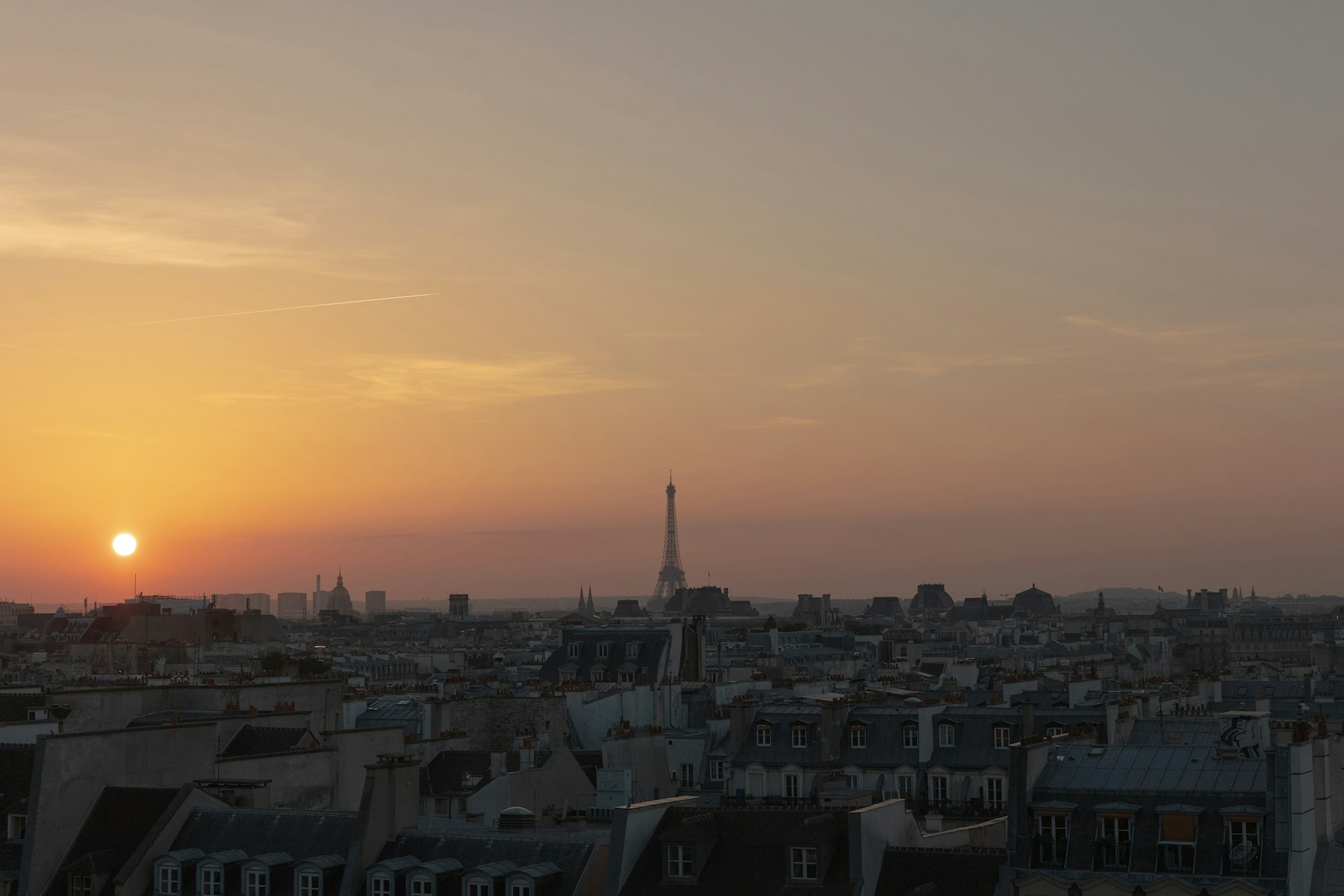
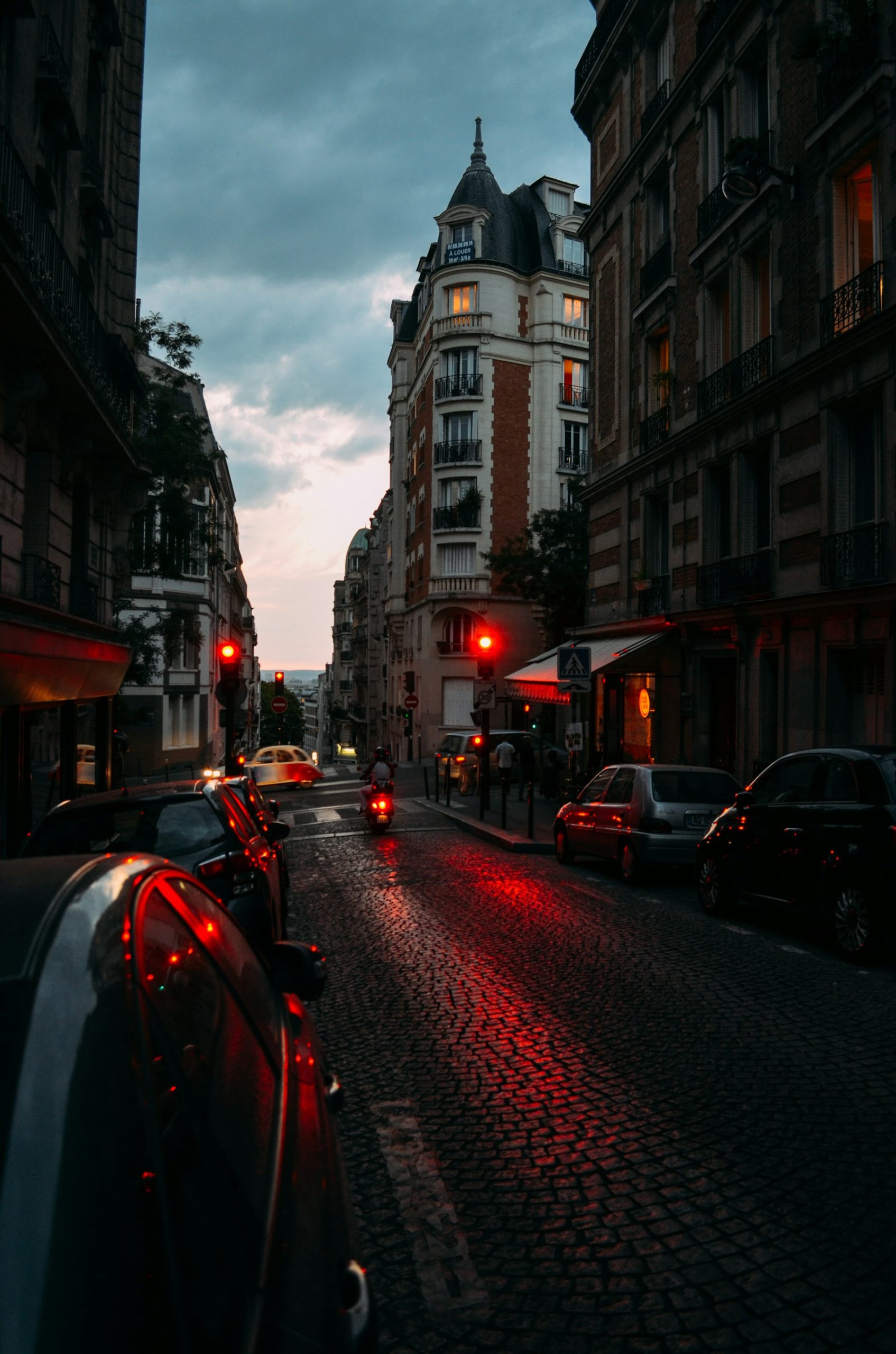
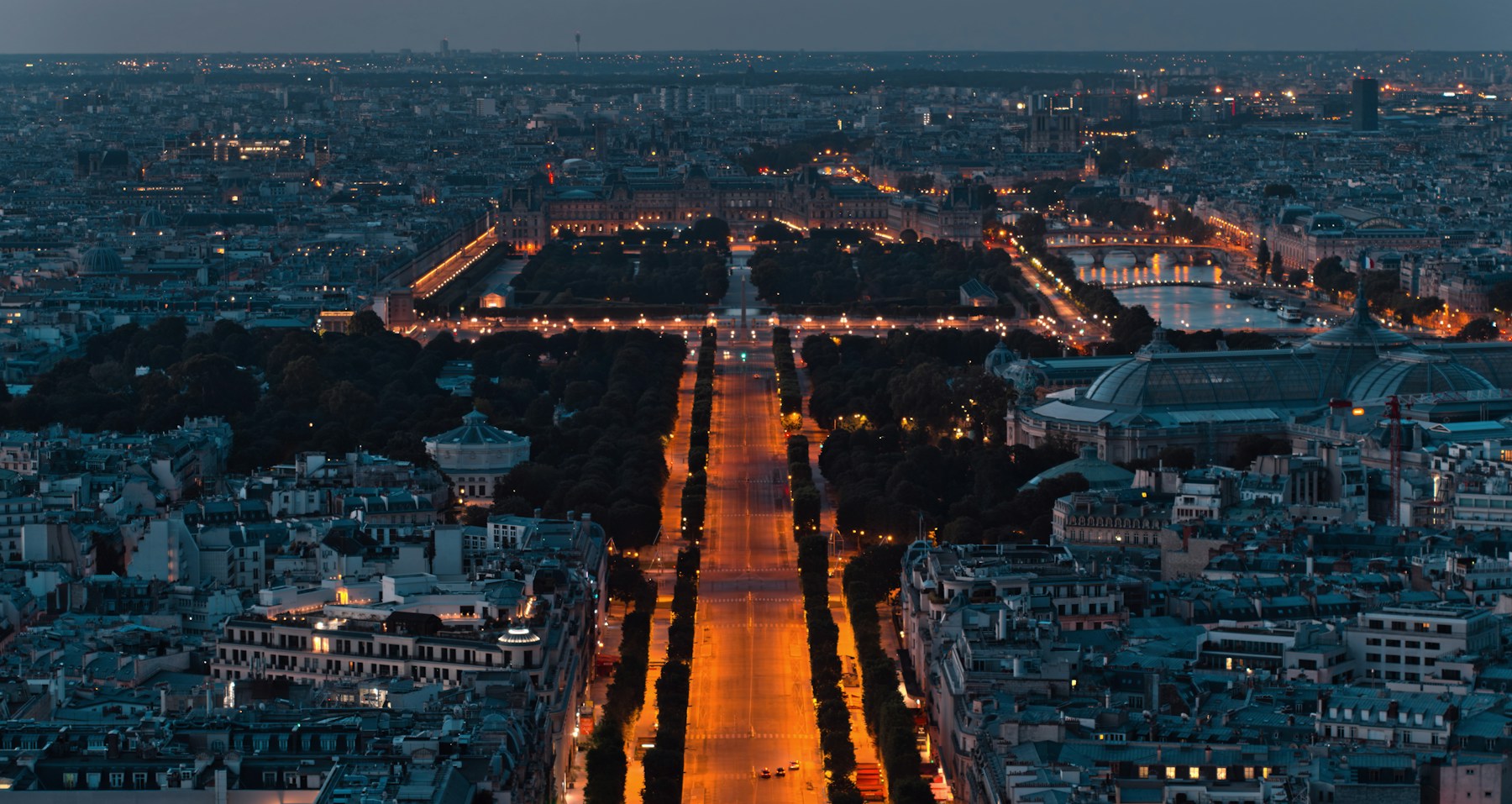
Here are three of the actual shots you’ll find inside the PDF — cinematic full-page references for the exact spots, lenses, and lighting conditions documented in the guide. The full guide includes 14 locations, each with a hero image, GPS map, settings table, and a five-shot list.
Save
Before you shoot Paris: the essentials
- Free public access: Notre-Dame interior (reopened December 2024), Trocadéro esplanade, Champ de Mars, Pont Alexandre III, Bir-Hakeim Bridge, Square du Vert-Galant, Tuileries Garden, Canal Saint-Martin quays, Le Marais streets, Place des Vosges arcades, Latin Quarter streets, and Galeries Lafayette rooftop are all free; Arc de Triomphe rooftop €13/adult; Louvre museum €22 (free first Sunday of month); Sacré-Cœur dome €8; Eiffel Tower summit €35.30/adult, access via toureiffel.paris
- Commercial permits: Personal/tourist photography in all public spaces is unrestricted. Commercial shoots (advertising, editorial assignments, film crews) in Paris public spaces require a filing with Paris Film / Mission Cinéma via the AGATE platform at least 15 working days in advance (paris.fr/en). Shoots with ≤10 people using light equipment on streets only may file a simpler prior declaration 1 week ahead at no charge. Parks, gardens, riverbanks, monuments, and iconic landmarks require the full AGATE permit with variable fees (updated July 2024). Drones require separate CAA authorization and are prohibited over central Paris heritage zones without special clearance.
- Best photography seasons: April–June (spring blossoms, mild light, moderate crowds) and September–October (golden autumn light, clear skies, fewer tourists than summer peak)
- Blue hour notes: Paris sits at 48.85°N — the sun arc is lower and more southerly than tropical cities. Blue hour lasts 20–35 minutes after sunset (longer than at lower latitudes), giving more time for tripod setup. In summer, sunset is as late as 9:55 PM; in winter, as early as 4:55 PM. The Seine riverbanks, Trocadéro esplanade, and Canal Saint-Martin locks are at their most photogenic during this window when warm city illumination balances against the deep cobalt sky.
- Drone policy: Drone laws vary widely by country and city — many capital and tourist zones are no-fly. Verify the local civil aviation authority’s current rules before launching.
- Local resource: Official visitor information
The full-resolution version of every map below — plus seasonal calendars, gear notes per location, sun-angle diagrams, and a complete photographer’s packing checklist — is inside the Paris Photographer’s Guide PDF ($47).
1. Eiffel Tower — Trocadéro Esplanade
Trocadéro is the definitive full-frontal Eiffel Tower viewpoint — symmetrical architecture of the Palais de Chaillot’s curved wings frames both sides of the tower from this elevated platform, creating a composed scene impossible to match elsewhere. The Jardins du Trocadéro fountains in the foreground add reflective foreground interest and scale. This is the most reproduced Eiffel Tower photograph in existence, and for good reason: no other vantage aligns the tower, the Seine, and the sky so cleanly.
- GPS: 48.8623, 2.2882
- Elevation: 197 ft
- Best time of day: blue hour — 20–25 minutes after sunset when the tower’s gold illumination ignites against a deep cobalt sky and the fountains of the Jardins du Trocadéro reflect the light below
- Sun direction: The Eiffel Tower lies due south-southeast of Trocadéro at azimuth ~155°. The sun rises to the east-northeast in summer (azimuth ~55°) and far southeast in winter (azimuth ~120°), arcing low across the southern sky at Paris’s latitude of 48.85°N. In spring and summer, sunrise briefly backlit the tower from behind the camera; by mid-morning the tower is side-lit from the east. At sunset in summer the sun sets to the northwest (~310°), casting warm directional light across the tower’s iron lattice with Trocadéro in shadow — ideal. In winter, sunset swings south toward ~230°, still providing warm low-angle golden-hour light on the tower façade.
- Access: Place du Trocadéro et du 11 Novembre, 75016 Paris. Metro lines 6 and 9 (Trocadéro station, exit 1). Bus lines 22, 30, 32, 63 serve Trocadéro. Esplanade is a public space open 24 hours, no fee. Parking: underground at Trocadéro (75016); metered street parking on Avenue d’Iéna. For Eiffel Tower entry: advance booking mandatory at toureiffel.paris; adult summit ticket ~€35.30, second floor ~€19.40.
- Difficulty: easy
- Recommended settings: Blue Hour Long Exposure: f/11, 8 sec, ISO 100, 24mm, tripod · Golden Hour Ambient: f/8, 1/250 sec, ISO 200, 35mm · Sparkle Show Night: f/8, 1/15 sec, ISO 800, 50mm (burst mode for sparkling lights) · Overcast Flat Light: f/8, 1/125 sec, ISO 400, 16mm
Shots to chase:
- Symmetrical long-exposure composition at blue hour with the tower perfectly centered between the Palais de Chaillot wings and fountain reflections in the foreground pools
- Low-angle shot from the bottom of the Trocadéro steps with the tower framed through the arcade at the top of the stairs
- Hourly sparkle show (5 minutes each hour after nightfall): burst-mode capture at f/8 to freeze individual light blasts against the dark sky
- Wide-angle pre-dawn shot with light trails from rare early buses on Avenue du Président Wilson visible at the frame edges
- Telephoto compression (200mm) from the very back of the esplanade compressing the crowds, fountains, and tower into a dense layered composition
Pro tip: Arrive 45 minutes before sunrise on a weekday to find the esplanade nearly empty — by 9 AM it fills with tour groups. Position your tripod at the top of the grand staircase (not at ground level near the fountains) for the cleanest tower framing without pedestrian clutter. The sparkle show runs every hour on the hour after nightfall for exactly 5 minutes; pre-focus before it starts. In winter, mist often forms over the Seine at dawn, creating a dreamy diffused low-level fog around the tower base — a rare and spectacular effect worth chasing.
Common mistake to avoid: Using a very wide lens (14mm or wider) from the standard esplanade position distorts the tower shape into a trapezoid; 24–35mm is more flattering and architecturally accurate. Arriving at golden hour and leaving before blue hour — the best light at Trocadéro is after sunset, not during it. Forgetting that photographing the illuminated tower after dark is technically subject to copyright under French law for commercial use (personal non-commercial use is fine).
2. Eiffel Tower — Bir-Hakeim Bridge / Champ de Mars
Bir-Hakeim is Paris’s only two-level metal bridge (built 1905), and the upper metro viaduct’s iron columns and arches create a natural repeating foreground frame for the Eiffel Tower beyond. At close range, the tower’s true scale becomes overwhelming and intimate simultaneously. Champ de Mars offers the classic ‘lawn leading line’ composition that makes the tower appear to soar directly out of the green — a perspective impossible from Trocadéro.
- GPS: 48.8556, 2.2876
- Elevation: 131 ft
- Best time of day: blue hour — position on the bridge deck at the central arch for the tower framed through ironwork, or at Champ de Mars lawn at golden hour for the low-angle frontal view with the tower rising from the grass
- Sun direction: From Bir-Hakeim Bridge, the tower lies to the northeast at azimuth ~35°. This means at sunrise (especially in spring/summer when sun rises north-northeast) the tower is nearly backlit with a glow behind it — dramatic for silhouettes. By late afternoon, the sun moves to the northwest, side-lighting the tower from the right for three-dimensional texture in the metalwork. At Champ de Mars (south of the tower, camera pointing north), the tower faces the camera; morning sun from the east lights the east face, and afternoon light illuminates the west face.
- Access: Pont de Bir-Hakeim, 75015/75016 Paris. Metro line 6 (Bir-Hakeim station, directly at the bridge). Champ de Mars: open public park 24 hours, free; nearest metro Champ de Mars – Tour Eiffel (RER C) or École Militaire (line 8). No permit required for photography from bridge or park.
- Difficulty: easy
- Recommended settings: Bridge Arch Framing: f/8, 1/250 sec, ISO 200, 35mm · Champ De Mars Golden Hour: f/8, 1/500 sec, ISO 100, 24mm · Bridge Blue Hour Long Exposure: f/11, 4 sec, ISO 100, 24mm, tripod · Metro Viaduct Leading Lines: f/8, 1/125 sec, ISO 400, 35mm
Shots to chase:
- Standing on the central pedestrian deck of Bir-Hakeim and framing the tower through a series of receding iron arches on the lower level for an Inception-movie-style perspective
- Long exposure from the bridge capturing light trails from the overhead Metro line 6 trains with the tower behind
- Wide lawn composition from the eastern end of Champ de Mars with the Ecole Militaire as a counterpoint in the background
- Low-angle close-up shot looking up through the iron latticework of the bridge columns with the tower rising above
- At sunrise from the bridge: deep blue sky silhouette of the tower with the first rays rimming its outline in warm orange
Pro tip: The Bir-Hakeim lower pedestrian deck (accessible via stairs from either bank) is less crowded than the main street level and puts you at eye level with the iron arch columns for foreground framing. The Metro runs on the upper deck — a 20-second exposure during a train crossing creates a luminous light trail overhead. At Champ de Mars, the best lawn-level compositions are from the southeastern corner looking northwest, where the tower aligns with the central axis of the park.
Common mistake to avoid: Shooting only from the top roadway level of Bir-Hakeim misses the most interesting compositional angles available from the lower pedestrian walkway. Visiting Champ de Mars at midday produces harsh overhead light and dense tourist crowds obscuring the foreground lawn. Underestimating how close you are to the tower from Bir-Hakeim — a 24–50mm lens captures the full structure; anything wider distorts the ironwork.
3. Louvre Museum — Cour Napoléon Pyramid
I.M. Pei’s 1989 glass-and-steel pyramid set within a 500-year-old Renaissance palace creates one of the most audacious architectural contrasts in the world — and one of the most photographed juxtapositions in photography. The three smaller secondary pyramids, the two reflecting pools, and the perfect symmetry of the Richelieu and Denon wings offer a photographer almost infinite compositional variation within a single courtyard.
- GPS: 48.861, 2.3357
- Elevation: 115 ft
- Best time of day: blue hour — the glass pyramid glows from within against the Richelieu and Denon wings lit in warm gold, and the reflecting pools mirror the sky and architecture in still water; also magnificent at dawn for empty courtyard compositions
- Sun direction: The Cour Napoléon is an enclosed east-west courtyard. The pyramid faces north toward the Richelieu wing. Morning sun rises to the east and enters the courtyard from the Rue de Rivoli end, catching the northern faces of the Sully wing from the east. Midday sun is overhead, flattening all detail on the pyramid glass. Late afternoon and evening, the sun to the west backlights the pyramid from the Carrousel direction and casts long shadows that emphasize the cobblestone texture of the courtyard. The blue-hour window (30 min after sunset) is optimal when internal pyramid illumination comes on.
- Access: Musée du Louvre, Rue de Rivoli, 75001 Paris. Metro Palais Royal–Musée du Louvre (lines 1 and 7). The Cour Napoléon exterior courtyard is publicly accessible during museum hours; the glass pyramid can be photographed from outside without purchasing a museum ticket. Museum entry: €22/adult; free first Sunday of each month and for under-18s. Open 9 AM–6 PM (Wed and Fri until 9:45 PM); closed Tuesdays. Advance booking strongly recommended at louvre.fr. Tripods permitted in the exterior courtyard; not inside the museum.
- Difficulty: easy
- Recommended settings: Blue Hour Pyramid Reflection: f/11, 15 sec, ISO 100, 24mm, tripod · Overcast Architectural Detail: f/8, 1/250 sec, ISO 200, 50mm · Interior Pyramid Upward: f/8, 1/125 sec, ISO 800, 14mm, handheld · Dawn Empty Courtyard: f/11, 1/30 sec, ISO 400, 24mm
Shots to chase:
- Symmetrical long-exposure reflection of the pyramid and Richelieu wing in the northern pool at blue hour with zero wind
- Low-angle composition using one of the three smaller pyramids as a foreground pointing toward the main pyramid and the Denon wing facade
- Looking up through the glass ceiling panels of the pyramid from the interior Hall Napoléon (Hall Napoleon) — geometric abstract of the steel ribs against sky
- Pre-dawn single-exposure from the eastern edge of the courtyard with the pyramid glowing and the palace wings in total darkness except for architectural uplighting
- Telephoto from the Cour Carrée (older enclosed courtyard behind the Sully wing) capturing architectural detail of the Renaissance arcade without the tourist crowds of the main Cour Napoléon
Pro tip: The best reflection position is at the edge of the northern pool (between the pyramid and the Richelieu wing) — kneel or use a small gorilla-pod to get the lens near water level for maximum reflection depth. The Cour Carrée, accessible via an archway to the east, sees far fewer visitors and offers intimate stone arcade compositions at any time of day. For dawn shots, the Louvre opens at 9 AM but the outer Cour Napoléon can be entered from the Rue de Rivoli gate earlier on most mornings.
Common mistake to avoid: Shooting the pyramid from the Carrousel du Louvre entrance (south side) produces a flat, less interesting composition compared to the north-facing Cour Napoléon. Arriving at midday when flat overhead light turns the glass opaque and crowds are densest. Forgetting to change position within the courtyard — the three auxiliary pyramids each offer a unique framing angle often missed by tourists who photograph only from the main axis.
4. Notre-Dame Cathedral — Square Jean XXIII & Pont de l’Archevêché
Post-2024 restoration has returned Notre-Dame to its finest condition in centuries — cleaned limestone reveals detail invisible for generations, and the new LED illumination system creates spectacular night photography. The cathedral’s Gothic flying buttresses photographed from Square Jean XXIII, with the Seine in the foreground, represent one of the most architecturally complex and rewarding compositions in Paris. The location at the heart of the Île de la Cité means multiple vantage points within a short walk.
- GPS: 48.8518, 2.3514
- Elevation: 115 ft
- Best time of day: morning golden hour (7:30–9 AM) for the east apse and flying buttresses lit by low slanting light from the east; or blue hour after sunset when the LED illumination system activates, and the Seine reflects the lit cathedral from Pont de l’Archevêché
- Sun direction: Notre-Dame’s nave runs east-west; the main west façade (towers and rose window) faces due west. From Square Jean XXIII (behind the apse, east side), morning sun rising to the east-northeast strikes the apse and flying buttresses directly — this is the golden-hour sweet spot. The west façade catches afternoon and evening light beautifully. From Pont de l’Archevêché (south), the camera faces northeast to capture the cathedral’s south flank; afternoon sun from the west lights this side. From Square du Vert-Galant (Île de la Cité’s western tip), the view is of the cathedral ~500m to the northeast, backlit by morning sun — best at dawn.
- Access: Notre-Dame Cathedral, 6 Parvis Notre-Dame – Place Jean-Paul II, 75004 Paris. Reopened 16 December 2024 after 5-year restoration. Metro Cité (line 4) or Saint-Michel Notre-Dame (RER B/C). Entry to the nave is free; open Mon–Fri 7:45 AM–7 PM, Thu until 10 PM, Sat–Sun 8:15 AM–7:30 PM. No flash photography, no tripods inside. Exterior photography unrestricted 24 hours. Square Jean XXIII: public garden, free, on the cathedral’s east side. Pont de l’Archevêché: public bridge, free access 24 hours.
- Difficulty: easy
- Recommended settings: East Apse Morning Golden: f/8, 1/500 sec, ISO 100, 35mm · Interior Nave Handheld: f/2.8, 1/60 sec, ISO 3200, 24mm (no flash, no tripod) · Blue Hour Illuminated West Facade: f/8, 4 sec, ISO 100, 24mm, tripod on bridge · Telephoto Flying Buttresses: f/8, 1/400 sec, ISO 200, 135mm
Shots to chase:
- Wide-angle shot of the east apse from Square Jean XXIII at golden hour with the flying buttresses converging overhead and the Seine glinting in the background
- Pont de l’Archevêché long-exposure at blue hour with the illuminated cathedral reflected in the Seine and Notre-Dame’s light rippling in the current
- Vertical telephoto composition isolating the rebuilt spire (inaugurated 2024) against deep blue sky with surrounding pinnacles creating depth
- Front façade shot from Parvis Notre-Dame (Place Jean-Paul II) at evening with the rose window backlit from inside and the twin towers framing the symmetry
- Interior north rose window (Virgin Mary theme) backlit in afternoon — underexpose 1.5 stops with spot meter on glass for saturated blues and purples
Pro tip: The new LED illumination system activates approximately 30 minutes after sunset — schedule a tripod session on Pont de l’Archevêché to capture both the lit cathedral and its Seine reflection. Thursdays are ideal for interior photography: the cathedral stays open until 10 PM and a free organ recital takes place every Sunday at 4 PM providing atmospheric human-scale context. Square Jean XXIII closes at dusk but the adjacent quayside remains open 24 hours for nighttime east-face compositions.
Common mistake to avoid: Shooting only the iconic west façade from the Parvis and missing the dramatically photogenic east apse — the flying buttresses are the cathedral’s most architecturally distinctive feature. Interior photography with flash is prohibited and will draw immediate attention from staff. Arriving on a Sunday morning during the 11:30 AM mass when photography in the nave is restricted and crowds are at maximum.
Want this in your pocket on the street?
The full-resolution version of every spot above — with full-page hero photography, GPS maps with gold location pins, sun direction diagrams, multi-season tables, and a complete safety + packing checklist — is inside the Paris Ultimate Photographer’s Guide PDF ($47). Print it, save it offline, take it on the walk. Get the guide →
5. Arc de Triomphe — Rooftop Observatory
Save
No other viewpoint in Paris reveals the city’s deliberate Haussmann urban geometry as completely as the Arc de Triomphe rooftop — the 12 radiating avenues create a star pattern that is Paris’s most distinctive aerial signature. On clear days, the full historical axis is visible: Louvre pyramid, Tuileries, Place de la Concorde, Champs-Élysées, and La Défense Grande Arche aligned over 9 kilometers. The Eiffel Tower sparkle show (every hour after nightfall) is visible from the rooftop, providing a dramatic telephoto target.
- GPS: 48.8738, 2.295
- Elevation: 295 ft
- Best time of day: golden hour into blue hour — arrive 60–90 minutes before sunset to clear security, climb the 284 steps, and set up; the Champs-Élysées stretches southeast toward the Louvre axis while the Eiffel Tower catches the last warm rays to the south-southwest
- Sun direction: The Arc sits at the center of Place Charles de Gaulle (Place de l’Étoile), from which 12 grand avenues radiate. At sunset, the sun descends to the west-northwest (azimuth ~290° in summer, ~240° in winter), roughly aligned with Avenue de la Grande Armée reaching toward La Défense — creating a sun-between-avenue shot. The Eiffel Tower is visible 2.8 km to the south-southwest (azimuth ~220°). The Champs-Élysées extends to the southeast (azimuth ~115°) toward the Louvre and beyond to the Grande Arche axis. Evening light on the Champs-Élysées from the rooftop is warm from the western sun.
- Access: Place Charles de Gaulle, 75008 Paris. Metro Charles de Gaulle–Étoile (lines 1, 2, 6; RER A). Underground tunnel from Avenue des Champs-Élysées (do NOT try to cross the roundabout). Open daily 10 AM–10:30 PM (last entry 10 PM). Admission: €13/adult; free for EU residents under 26 and all visitors under 18. Advance booking available (and recommended in peak season) at arcdetriomphe.monuments-nationaux.fr. Rooftop is open-air; no tripod restrictions on the rooftop terrace.
- Difficulty: moderate
- Recommended settings: Champs Elysees Golden Hour: f/11, 1/500 sec, ISO 100, 24mm · Blue Hour City Panorama: f/11, 8 sec, ISO 100, 24mm, tripod · Telephoto Eiffel Sparkle: f/5.6, 1/30 sec, ISO 800, 200mm (handheld or monopod) · Aerial Avenue Star Pattern: f/11, 1/250 sec, ISO 100, 16mm
Shots to chase:
- Wide-angle panorama showing all 12 avenues radiating outward with evening car-light trails forming the star pattern (5–15 second exposure)
- Telephoto shot down the Champs-Élysées at golden hour with headlights and taillights forming dual lines of light converging toward the Louvre axis
- Long-exposure at blue hour with the Eiffel Tower illuminated to the south-southwest and the Arc’s own shadow projecting across the roundabout below
- Using the stone railing as a foreground element and framing the Avenue de la Grande Armée leading toward La Défense at sunset
- Night capture: Eiffel Tower sparkle show with the city light matrix surrounding it, at 200mm with a fast ISO for a 1/30-sec handheld freeze
Pro tip: Buy tickets in advance online — the ticket window queue can be 30–45 minutes. Arrive 70 minutes before sunset to account for the queue, 284 steps, and finding your preferred position on the circular rooftop before the best light arrives. The metal spike barriers around the parapet require shooting through gaps — a standard 24–70mm lens barrel fits cleanly between the bars at most positions. The eternal flame ceremony at the Tomb of the Unknown Soldier (located at the base of the Arc) happens at 6:30 PM daily — visible from above and adds a storytelling element.
Common mistake to avoid: Attempting to cross the roundabout on foot, which is illegal and dangerous — always use the underground passage from the Champs-Élysées. Arriving just before sunset without advance tickets and spending the golden hour in a queue instead of on the rooftop. Shooting only toward the Champs-Élysées and missing the wide star-pattern panorama that is the location’s most unique offering.
6. Sacré-Cœur Basilica & Montmartre Staircases
Sacré-Cœur’s white travertine stone self-cleans in rain and brightens over time, making it one of the most luminous architectural subjects in Paris at any time of day. The grand staircase cascading down the hill, the funicular rails, and the narrow streets of Montmartre create layered foreground compositions that tell the story of this Bohemian quarter. As Paris’s highest point (130m / 430 ft), the esplanade commands the widest unobstructed panoramic view in the city.
- GPS: 48.8865, 2.3431
- Elevation: 420 ft
- Best time of day: sunrise — arrive before dawn for an empty esplanade and the city of Paris spread below in the predawn blue with the white basilica emerging from darkness; blue hour after sunset when the basilica’s floodlit travertine glows amber against deep indigo
- Sun direction: Sacré-Cœur sits atop the Butte Montmartre, facing south. From the main esplanade, the camera points south-southwest toward Paris below. At sunrise, the sun rises to the east-northeast and catches the basilica’s east flank and the Roman-Byzantine domes in warm side light. The west-facing parvis catches afternoon sun on the main façade. From the Abbesses staircase below, morning light illuminates the steps from the east in a raking stripe pattern. The city panorama below faces south toward the horizon.
- Access: 35 Rue du Chevalier de la Barre, 75018 Paris. Metro Abbesses (line 12) — 237 steps up, or funiculaire (valid with standard metro ticket). Metro Anvers (line 2) or Lamarck–Caulaincourt (line 12). Basilica free, open daily 6 AM–10:30 PM. Dome visit: €8/adult, open daily 10 AM–7 PM (last entry 6:30 PM), 280 steps via narrow staircase. Exterior and esplanade: public space, no fee, open 24 hours. Esplanade and garden are free.
- Difficulty: moderate
- Recommended settings: Predawn Basilica Blue Hour: f/8, 20 sec, ISO 200, 24mm, tripod · Staircase Leading Lines: f/8, 1/250 sec, ISO 100, 24mm · Basilica Facade Morning: f/8, 1/500 sec, ISO 100, 35mm · City Panorama From Esplanade: f/11, 1/250 sec, ISO 100, 16mm
Shots to chase:
- Pre-dawn from the main esplanade: city lights and predawn sky below with the white domes silhouetted above, shot at blue hour for natural sky/light balance
- Ascending the grand staircase with the basilica centered above and symmetrical lamp posts flanking the frame — best on a foggy morning when steps are wet and reflective
- Looking back down the Rue Foyatier stairs from mid-level: Paris’s rooftops and the Eiffel Tower visible in the gap between terraced buildings in the distance
- Interior dome detail: looking straight up at the Byzantine mosaic ‘Christ in Majesty’ with natural light filtering through the lantern windows
- Wide-angle from the Place du Tertre (artists’ square 100m west of the basilica) with the iconic domes visible above the artist umbrellas and market activity
Pro tip: The Montmartre funiculaire operates 6 AM–12:45 AM and accepts standard Paris metro tickets — take it up at pre-dawn and walk down afterward through the vine-covered staircases for varied compositions. The dome visit (€8) gives a bird’s-eye perspective of Paris unavailable from the ground, including a direct look down onto the esplanade — underrated as a photography stop. Place du Tertre begins filling with portrait artists by 9 AM; arrive before then for a cleaner architectural shot of the streets. Note: a new entry fee for Place du Tertre (artists’ square) was announced for mid-2025.
Common mistake to avoid: Arriving at midday during summer when the esplanade is a shoulder-to-shoulder tourist crowd and the white stone is overexposed under harsh overhead sun. Using too wide an angle from up close — the domes are better rendered with a 35–50mm lens that preserves their spherical shape. Photographing only the basilica from the front and ignoring the staircases and Montmartre streets, which are often more compelling photographic subjects.
7. Pont Alexandre III
Pont Alexandre III is consistently rated the most ornate and photogenic bridge in Paris — 37 gilded bronze statues, 18 elaborate Art Nouveau lamp posts, four 17-meter colossal columns topped by gilded winged horses, and intricate floral garlands across every surface. It connects the most Beaux-Arts-dense corridor in the city (Grand Palais, Petit Palais, Invalides), making any shot framed with the bridge also framing three architectural masterpieces. The bridge’s single-arch low deck keeps the city skyline in view above it from any angle.
- GPS: 48.8639, 2.3134
- Elevation: 115 ft
- Best time of day: golden hour — low afternoon light from the west turns the gilded bronze statues, candelabra, and lamp posts amber-gold; the Eiffel Tower is visible to the west, and the Grand Palais and Invalides dome frame both ends
- Sun direction: Pont Alexandre III spans the Seine roughly east-west, connecting the Invalides (north bank) with the Grand Palais/Petit Palais (south bank — actually north geographic). The four golden nymphe columns at each corner catch direct afternoon western sun beautifully. The Eiffel Tower is visible to the west-southwest (azimuth ~250°) from the bridge center. Morning sun from the east backlights the gilded statues if shooting westward, creating a rim-light effect. The ornate lamp posts run north-south along the bridge — in afternoon they cast long parallel shadows across the deck.
- Access: Pont Alexandre III, between Quai d’Orsay (7th arr.) and Avenue Winston Churchill (8th arr.), Paris. Metro Invalides (lines 8 and 13) or Champs-Élysées–Clemenceau (lines 1 and 13). Public bridge, open 24 hours, no fee. No vehicle restrictions — bridge open to pedestrians and vehicles. No photography restrictions.
- Difficulty: easy
- Recommended settings: Golden Hour Gilded Statues: f/8, 1/500 sec, ISO 100, 50mm · Wide Bridge With Grand Palais: f/8, 1/400 sec, ISO 100, 24mm · Blue Hour Lamp Posts: f/8, 4 sec, ISO 100, 35mm, tripod · Telephoto Nymph Column Detail: f/5.6, 1/800 sec, ISO 100, 135mm
Shots to chase:
- Centered perspective shot looking west along the bridge deck at golden hour with the Eiffel Tower in the far distance and gilded lamp posts flanking the scene
- Low-angle close-up of one of the colossal gilded column capitals (winged horse, Fame, Science, or Commerce) with the Grand Palais glass roof behind
- Blue-hour long exposure with the lamp posts all illuminated creating a line of warm orbs receding into the distance, reflected in the wet deck
- Telephoto from the Invalides quayside looking up at the south-bank angel pylon with the Eiffel Tower rising behind it in soft light
- Wide-angle from beneath the bridge on a passing bateau-mouche: the ornate stone arch and underside gilding with the city above — very rarely photographed
Pro tip: The northwestern corner pillar (northwest nymph column) gives a composition with the tower in the background and the gilded statue in the foreground — set up here 20 minutes before sunset. The bridge deck is vehicle-accessible, so watch for traffic when setting up a low-angle tripod shot. During Paris Fashion Week (February/March, September/October) the bridge is frequently used for shoots — avoid these periods if you want a clear scene. The ornate Pont des Invalides upstream is a quieter alternative for detail shots without crowds.
Common mistake to avoid: Shooting the bridge only from the bridge deck and missing the dramatically photogenic views from both quaysides, particularly from Quai d’Orsay looking toward the Grand Palais. Arriving in rain without checking that the gilded surfaces look extraordinary when wet — rain is actually ideal for this location. Photographing only the lamp posts and missing the incredible sculptural detail on the four corner pillars.
8. Place du Trocadéro / Palais de Chaillot — Alternative Eiffel Angle
The Palais de Chaillot’s two symmetrical curved wings and the terrace between them create a natural theatrical stage for Eiffel Tower photography — standing between the wings looks directly down the central axis of the Jardins du Trocadéro toward the tower with the Seine and Champ de Mars stretching beyond. The curved wing colonnade can be used as a curved framing element around the tower for architectural-photography-style compositions.
- GPS: 48.8623, 2.2881
- Elevation: 197 ft
- Best time of day: sunrise — arrive pre-dawn to find the esplanade completely empty and use the curved Palais de Chaillot wings as foreground framing with the tower emerging from mist at dawn; also excellent during the Eiffel Tower sparkle show for creative tower-framing shots
- Sun direction: Trocadéro is the elevated northern bank; the Eiffel Tower is directly to the south across the Seine. At sunrise the sun rises behind the camera to the east-northeast, lighting the tower’s northern face (facing Trocadéro) in warm golden light — this is the front-lit sunrise composition. By late morning the sun moves west, leaving the tower’s north face in shadow. Sunset is to the northwest — the tower is side-lit in golden-hour conditions, and post-sunset, the north-facing tower façade catches reflected sky color beautifully. The Palais de Chaillot wings face south toward the tower, catching the same frontal light.
- Access: Place du Trocadéro et du 11 Novembre, 75016 Paris. Metro Trocadéro (lines 6 and 9). Bus lines 22, 30, 32, 63. Public esplanade, free, open 24 hours. Parking at Trocadéro underground garage. Note: this entry focuses on the Palais de Chaillot wing compositions and the esplanade’s Chaillot-framed angles, distinct from the central axis Trocadéro entry.
- Difficulty: easy
- Recommended settings: Colonnade Frame Tower: f/8, 1/250 sec, ISO 200, 35mm · Pre Dawn Blue Hour Empty: f/8, 15 sec, ISO 200, 24mm, tripod · Between Wings Wide Angle: f/11, 1/250 sec, ISO 100, 16mm · Fountain Reflection Long Exposure: f/11, 4 sec, ISO 100, 24mm, tripod
Shots to chase:
- Pre-dawn blue-hour composition centered between the Palais de Chaillot wings with the illuminated tower perfectly framed at the end of the axial view and zero tourists
- Low-angle from the main esplanade steps using the semicircular stone balustrade as a curved leading line sweeping into the tower in the background
- Symmetrical composition from the top step of the main stairs with the two wings’ golden statues flanking the tower center in the frame at sunset
- Perspective shot along the colonnade arcade of the north (Chaillot) wing with columns receding into the background and the tower visible through the arches
- Telephoto compression at 200mm from the rear of the Palais de Chaillot terrace: the Eiffel Tower and the golden statues compressed into a single layer
Pro tip: The single best crowd-free window at Trocadéro is the 30 minutes before sunrise on a weekday — the esplanade is nearly empty and the pre-dawn blue-hour compositions are the finest of the day. Two golden statues (‘La France’ and ‘L’Esprit’) on the balustrade make excellent foreground subjects at eye-level. The Palais de Chaillot also houses the Musée de l’Homme, Cité de l’Architecture, and Musée de la Marine (all with moderate admission) for inclement-weather alternatives.
Common mistake to avoid: Treating this as the same location as the Eiffel Tower Trocadéro entry — the Palais de Chaillot wing angles, colonnade, and balustrade compositions are architecturally distinct shots. Shooting only in the central axis and missing the wing colonnade detail shots. Arriving after 9 AM when souvenir hawkers and tour groups colonize the steps and clean compositions become impossible.
9. Galeries Lafayette Haussmann — Free Rooftop Terrace
Save
The Galeries Lafayette rooftop is Paris’s best-kept free viewpoint secret — a 360° panorama at rooftop level from which the Eiffel Tower, Sacré-Cœur, the Opéra Garnier roof, Arc de Triomphe (in the distance), and the characteristic zinc-grey Haussmann mansard roofline geometry of central Paris are all simultaneously visible. Unlike paid observation decks, the setting amid the ornate store architecture adds aesthetic texture to every composition.
- GPS: 48.8736, 2.332
- Elevation: 197 ft
- Best time of day: golden hour — arrive 90 minutes before sunset and position at the southwest corner for the Eiffel Tower shot over zinc Haussmann rooftops as the sky turns amber; also superb for the northeast corner shot toward Sacré-Cœur and the Opéra Garnier simultaneously
- Sun direction: The rooftop faces all four cardinal directions with no obstructions. The Eiffel Tower is to the southwest (azimuth ~230°) — at sunset in summer (sun ~310°), the tower is side-lit in warm golden tones against an amber sky. In winter, sunset aligns closer to the tower azimuth, backlit at ~240°. The Opéra Garnier is directly south at 170m distance — morning light from the east illuminates its elaborate facade from the side. Sacré-Cœur is to the north-northeast (azimuth ~25°) and catches afternoon and evening light on its southern face, visible over Haussmann rooflines.
- Access: 40 Boulevard Haussmann, 75009 Paris (Main building). Metro Chaussée d’Antin–La Fayette (lines 7 and 9) or Opéra (lines 3, 7, 8). Free entry to rooftop; take elevator to 7th floor (Lafayette Gourmet), then stairs to 8th floor terrace. Open Mon–Sat 10 AM–8:30 PM, Sun 11 AM–8 PM. No reservation required. Rooftop closes in rain or strong wind. No tripod restriction noted; glass safety barriers can cause reflection — angle lens at 45° to minimize.
- Difficulty: easy
- Recommended settings: Eiffel Golden Hour Southwest: f/8, 1/500 sec, ISO 100, 50mm · Opera Garnier Detail: f/8, 1/500 sec, ISO 100, 135mm · Haussmann Roofline Wide: f/11, 1/250 sec, ISO 100, 24mm · Blue Hour City Lights: f/11, 10 sec, ISO 100, 24mm, tripod
Shots to chase:
- Southwest corner: Eiffel Tower rising above Haussmann zinc-gray mansard rooftops at golden hour with warm sky behind it
- Telephoto of the Opéra Garnier roof — seen nearly at eye level from the terrace, revealing the green copper dome and rooftop sculpture gallery normally invisible from street level
- Northeast corner: Sacré-Cœur white domes visible in the distance above the sea of characteristic Paris rooftops
- Wide panorama stitched from the rooftop showing the complete 180° arc from the Eiffel Tower to the Montmartre hill with Opéra in the foreground
- Detail shot: zinc chimneys, mansard skylights, and ornate ironwork of the surrounding Haussmann buildings at eye level — a photographer’s texture study unavailable from street or from typical high viewpoints
Pro tip: The glass safety barrier on the parapet causes lens flare and reflections — position the lens at a 45° angle or press it gently against the glass to eliminate reflections. The interior Art Nouveau glass dome (visible from the main floor, not the rooftop) is a spectacular architectural photography subject in its own right: shoot from the 6th-floor balcony looking down, or from the ground floor looking up. Schedule the rooftop visit for the late afternoon and pair with the dome interior immediately before — you’ll have both Art Nouveau interior and outdoor panorama in one visit.
Common mistake to avoid: Confusing the ornate Art Nouveau interior dome with the rooftop terrace — they are different floors and different photography subjects. The rooftop closes in bad weather without warning; check the morning weather forecast before planning a sunset visit. Arriving in the final 30 minutes before store closing on the assumption of catching blue hour — the terrace closes at 8 PM, well before late-summer blue hour.
Want this in your pocket on the street?
The full-resolution version of every spot above — with full-page hero photography, GPS maps with gold location pins, sun direction diagrams, multi-season tables, and a complete safety + packing checklist — is inside the Paris Ultimate Photographer’s Guide PDF ($47). Print it, save it offline, take it on the walk. Get the guide →
10. Le Marais — Place des Vosges & Rue des Rosiers
Place des Vosges (1612) is the oldest planned square in Paris — 36 identical pink-brick pavilions with arcaded ground floors surround a formal garden, creating a perfectly symmetrical architectural composition that predates most of Paris by 200 years. As the heart of the historic Jewish quarter, the surrounding Marais streets provide a living street-photography scene of medieval alleyways, 17th-century hôtels particuliers, art galleries, and vibrant café culture layered across centuries of architecture.
- GPS: 48.8554, 2.3652
- Elevation: 115 ft
- Best time of day: early morning (7:30–9:30 AM) — Place des Vosges catches low eastern light through the arcade galleries, and the garden’s central fountain reflects the pink brick buildings; Rue des Rosiers is quiet before the tourists arrive
- Sun direction: Place des Vosges is a perfectly square enclosed plaza oriented northeast-southwest. The arcade galleries on all four sides face inward. Morning sun enters from the east, illuminating the northern arcade in raking side light and warming the pink brick façades of the southern wing. By midday the open central square is fully lit overhead. The Rue des Rosiers (100m north) is a narrow east-west street — morning light floods it from the east end, creating a warm corridor effect. Afternoon sun lights the western-facing facades.
- Access: Place des Vosges, 75004 Paris (3rd/4th arrondissement border). Metro Bastille (lines 1, 5, 8) or Saint-Paul (line 1) or Chemin Vert (line 8). Public square with free access. Garden open daily 8 AM–8:30 PM (seasonal). Surrounding arcades and Rue des Rosiers: public streets, open 24 hours. Victor Hugo’s house (Maison de Victor Hugo): free admission for permanent collection. No permit required for street photography.
- Difficulty: easy
- Recommended settings: Arcade Morning Light: f/5.6, 1/250 sec, ISO 400, 35mm · Central Garden Symmetry: f/8, 1/400 sec, ISO 100, 24mm · Rue Des Rosiers Street: f/4, 1/500 sec, ISO 400, 35mm · Blue Hour Illuminated Facades: f/8, 6 sec, ISO 100, 24mm, tripod
Shots to chase:
- Symmetrical wide-angle composition from the center of the garden looking toward the Pavillon du Roi (south gateway) with the fountain in the foreground and perfectly matching wings on left and right
- Arcade gallery perspective shot in early morning: columns receding in shadow on one side, warm morning light pooling on the courtyard floor through each arch opening
- Rue des Rosiers street scene with colorful Hebrew lettering shop signs, falafel vendors, and the narrow cobblestoned lane in morning light
- Long exposure of the central fountain at twilight with the illuminated arcade facades surrounding it in warm symmetry
- Detail shot of the carved stone medallions and oriel windows of the Pavillon du Roi façade at eye level from inside the arcade
Pro tip: The arcades on the north and east sides of Place des Vosges are in shadow in the morning and catch beautiful reflected light from the sunlit garden — shoot into the arcades from inside the garden for a high-contrast interplay of light and shadow in the columns. Victor Hugo’s apartment (corner of the Hôtel de Rohan-Guéménée at number 6) is a free museum — photograph the intimate 19th-century rooms from the doorways. The narrow Rue du Pas de la Mule on the eastern side of the Place is a rarely-photographed medieval approach alley.
Common mistake to avoid: Visiting only the garden and missing the arcade photography — the covered walkways with their changing light are the most evocative part of the square. Photographing Rue des Rosiers at lunchtime when queues for L’As du Fallafel and similar restaurants crowd the narrow street. Shooting the square with a wide angle from the center — the curvature of the fish-eye distorts the perfect straight rooflines; 24–35mm on full frame is the right choice.
11. Île Saint-Louis & Pont de la Tournelle — Notre-Dame Backdrop
Pont de la Tournelle offers one of the most photographed eastern vistas of Notre-Dame — the cathedral’s flying buttresses and spire fill the western horizon from the bridge’s central position over the Seine. The Île Saint-Louis itself is one of Paris’s most perfectly preserved 17th-century urban environments, with the Quai de Bourbon and Quai d’Orléans forming uninterrupted sequences of classical stone quayside mansions reflected in the Seine. The bronze statue of Sainte-Geneviève on the bridge provides a compelling silhouette foreground.
- GPS: 48.8507, 2.3556
- Elevation: 115 ft
- Best time of day: twilight / blue hour — from Pont de la Tournelle at sunset/blue hour, Notre-Dame’s restored exterior illumination is reflected in the Seine from the east, while the sky turns cobalt above the cathedral towers
- Sun direction: Pont de la Tournelle runs north-south across the Seine, connecting the 5th arrondissement to the Île Saint-Louis. From the bridge looking west-northwest (azimuth ~290°), Notre-Dame’s east apse is in direct view. Sunset in summer drops to the west-northwest, briefly backlighting the cathedral for about 10 minutes before golden hour wraps the south flank. At blue hour the camera faces west-northwest toward Notre-Dame, capturing the illuminated facade against the darkening western sky. Morning light from the east illuminates the quays and the bridge’s Saint-Geneviève statue from behind.
- Access: Pont de la Tournelle, 75004/75005 Paris. Metro Pont Marie (line 7) or Maubert-Mutualité (line 10). Public bridge, free, open 24 hours. Quai de Bourbon and Quai d’Orléans along Île Saint-Louis: public quays, free, open 24 hours. No photography restrictions.
- Difficulty: easy
- Recommended settings: Blue Hour Notre Dame Reflection: f/11, 8 sec, ISO 100, 35mm, tripod · Ile Saint Louis Quay Scene: f/5.6, 1/500 sec, ISO 200, 50mm · Sainte Genevieve Statue Silhouette: f/8, 1/1000 sec, ISO 100, 50mm · Dawn Mist Over Seine: f/8, 1/125 sec, ISO 400, 35mm
Shots to chase:
- Long-exposure blue-hour shot from the center of Pont de la Tournelle looking west-northwest: Notre-Dame’s illuminated east apse and spire reflected in the Seine with Sainte-Geneviève statue as a silhouette in the foreground
- Quai de Bourbon walk at golden hour: classical stone façades with mansard roofs, iron-railed balconies, and willow trees trailing in the Seine
- Sunset silhouette of the Sainte-Geneviève statue against the orange sky above Notre-Dame’s towers
- Looking east from Pont de l’Archevêché across to Pont de la Tournelle: the sequence of Seine bridges receding into the distance with warm city light on each arch
- Early morning mist: the Seine in soft-focus haze from the Quai d’Orléans looking toward the Île de la Cité with rowboats occasionally passing
Pro tip: The corner of Quai d’Anjou and Quai de Bourbon on Île Saint-Louis provides a mid-bridge-level composition looking directly at the Notre-Dame apse without the bridge railing obstruction — a tripod positioned on the quayside captures the same vista as the bridge but with better water access for long reflections. Notre-Dame’s LED illumination system activates 30 minutes after sunset; plan blue-hour sessions to begin exactly at that time for the optimal light balance. The lower quays of Île Saint-Louis (accessible by stairs) put you at water level for dramatic low-angle Seine reflections.
Common mistake to avoid: Shooting only from the bridge and missing the extended quayside compositions along the Île Saint-Louis that offer more variety. Visiting at midday when overhead sun creates unflattering harsh light on the stone facades and the cathedral loses its drama. Focusing only on Notre-Dame and ignoring the Île Saint-Louis architecture itself — the Quai de Bourbon is one of the most photogenic residential streets in Paris.
12. Tuileries Garden — Louvre to Place de la Concorde Axis
The Tuileries embodies Paris’s most distinctive urban planning legacy: the grand axial perspective stretching from the Louvre through the garden’s central allée, past the octagonal fountain pools, up the Champs-Élysées to the Arc de Triomphe — a 9-km engineered sightline. The garden’s formal French geometry (François I commissioned it in 1564) with its pleached trees, circular and octagonal pools, and symmetrical terraces provides endless compositional structures for both architectural and landscape photography.
- GPS: 48.8635, 2.3275
- Elevation: 115 ft
- Best time of day: golden hour — long shadows from the chestnut allées create dramatic parallel lines across the gravel path at sunrise and sunset; the obelisk at Place de la Concorde catches warm light at the western end; late October when foliage turns amber
- Sun direction: The Tuileries runs east-west, 1 km from the Louvre Pyramid to Place de la Concorde. The main central allée is oriented on the exact ‘Axe historique’ azimuth of approximately 295° (west-northwest). At sunrise, the sun rises east-northeast (behind the Louvre), casting the long morning shadows westward down the allée toward the obelisk. At sunset, the sun aligns nearly with the axis in summer (setting ~310° NW), backlighting the obelisk from behind the photographer at the Louvre end. Autumn creates golden canopy light through chestnut leaves.
- Access: Jardin des Tuileries, 75001 Paris (between Louvre and Place de la Concorde). Metro Tuileries (line 1) for central access; Palais Royal–Musée du Louvre (lines 1, 7) for eastern end; Concorde (lines 1, 8, 12) for western end. Public park, free, open daily approximately 7:30 AM–7:30 PM (winter) to 9 PM (summer). Tripods permitted in the garden. The garden spans 28 hectares along the Seine’s north bank.
- Difficulty: easy
- Recommended settings: Golden Hour Allée Shadows: f/11, 1/250 sec, ISO 100, 24mm · Octagonal Pool Long Exposure: f/16, 4 sec, ISO 100, 24mm, tripod, ND filter · Autumn Foliage: f/8, 1/500 sec, ISO 100, 50mm · Louvre Axis Telephoto: f/8, 1/500 sec, ISO 100, 135mm
Shots to chase:
- Sunrise from the Louvre Carrousel triumphal arch looking west through the central allée with long parallel shadows of chestnut trees and the obelisk as a distant focal point
- Autumn: the central allée with fallen chestnut leaves, amber canopy above, and the La Grande Roue (Ferris wheel, seasonal) at the western end
- Octagonal Grand Bassin fountain with long-exposure water smoothing at blue hour and the Musée de l’Orangerie visible in the background
- Telephoto compression at 135mm looking west: the Concorde obelisk, Champs-Élysées trees, and Arc de Triomphe all stacked in the same frame on the historic axis
- Seated figures on rental chairs beside the circular pools — classic Tuileries social photography scene; candid with a 50mm from a respectful distance
Pro tip: The garden’s two long terrace walks (north along Rue de Rivoli, south along the Seine) elevate you about 3 meters above the main garden floor — shoot downward along the allée from either terrace for a more commanding perspective. The Musée de l’Orangerie at the western end houses Monet’s enormous Water Lilies murals (entry €12.50) — combine a garden session with the interior visit. The Arc du Carrousel (at the Louvre end) perfectly frames the obelisk and distant Grande Arche through its central arch for the ultimate Axe historique telephoto shot.
Common mistake to avoid: Visiting only the central section and missing the south terrace overlooking the Seine, which offers completely different lighting and a Seine + garden composition. Photographing the round chairside pools with a wide angle from standing height — get low to use the water surface as a reflective foreground. Failing to account for the garden closing time, which in winter can be as early as 7:30 PM, cutting off blue-hour sessions.
13. Latin Quarter — Shakespeare and Company & Panthéon
Shakespeare and Company’s distinctive green-and-yellow storefront with hand-painted signs, tumbling flower boxes, and second-hand books stacked in the windows is arguably the most photographed independent bookshop in the world — and when framed with Notre-Dame’s towers rising across the Seine behind it, the composition captures Paris’s literary and architectural identity simultaneously. The Panthéon’s neoclassical grandeur and the Latin Quarter’s medieval street grid provide a completely different photographic character than the grand Haussmann boulevards.
- GPS: 48.8526, 2.3472
- Elevation: 148 ft
- Best time of day: morning (8–10 AM) — Shakespeare and Company storefront with Notre-Dame visible behind in soft morning light; Panthéon exterior at golden hour with long shadows from the Corinthian columns
- Sun direction: Shakespeare and Company (37 Rue de la Bûcherie) faces north, looking across the Seine toward the Île de la Cité and Notre-Dame. The storefront catches soft northern diffused light throughout the day — harsh direct sun never hits the yellow façade directly, making it reliably photographable in any weather. Notre-Dame is to the north-northwest (azimuth ~330°). The Panthéon is 500m to the southeast on top of the Montagne Sainte-Geneviève; its south-facing portico catches afternoon sun. The Rue Mouffetard cobblestoned market street runs north-south, lit best from the east in the morning.
- Access: Shakespeare and Company: 37 Rue de la Bûcherie, 75005 Paris. Metro Saint-Michel (line 4) or Cluny–La Sorbonne (line 10); RER B/C Saint-Michel Notre-Dame. Open Mon–Sat 10 AM–8 PM, Sun 12–7 PM; no photography inside. Panthéon: Place du Panthéon, 75005; Metro Cardinal Lemoine (line 10) or RER B Luxembourg. Panthéon entry €13; open daily 10 AM–6 PM (Apr–Sep until 6:30 PM). The exterior and Place du Panthéon: public space, free, 24 hours.
- Difficulty: easy
- Recommended settings: Bookshop Storefront Diffused: f/5.6, 1/500 sec, ISO 200, 35mm · Pantheon Corinthian Portico: f/8, 1/500 sec, ISO 100, 35mm · Rue Mouffetard Street Scene: f/4, 1/500 sec, ISO 400, 50mm · Notre Dame Through Bookshop Frame: f/8, 1/500 sec, ISO 100, 50mm
Shots to chase:
- Classic Shakespeare and Company storefront with a customer browsing in the foreground, the yellow façade with ‘Be not inhospitable to strangers’ motto, and Notre-Dame towers visible above the rooftops behind
- Rue du Petit-Pont looking north from the bookshop: Notre-Dame’s twin towers filling the end of the street in a telephoto compression shot
- Panthéon south portico at golden hour with the 22 Corinthian columns creating dramatic parallel shadow lines across the wide pediment
- Rue Mouffetard market scene at 8 AM: cobblestones, colourful market stalls, 17th-century facades, and local vendors setting up in morning light
- Place de la Contrescarpe fountain with the market street receding behind: a quieter alternative Latin Quarter scene rarely appearing in travel guides
Pro tip: Photography inside Shakespeare and Company is explicitly not allowed — the storefront, the surrounding Rue de la Bûcherie, and the view from Square Viviani (tiny park directly opposite with a 400-year-old false acacia tree) are the photography targets. From Square Viviani, a low-angle shot through the ancient acacia tree branches frames both the bookshop and Notre-Dame together in a single composition. The Panthéon’s interior (tickets required) has a spectacular Foucault’s pendulum under the central dome — worth the entry for the interior photograph.
Common mistake to avoid: Attempting to photograph inside Shakespeare and Company and being asked to leave. Visiting the bookshop storefront at lunchtime or weekends when tour groups form a permanent crowd in front — early weekday mornings give a clean scene. Missing the Rue Mouffetard, which is 400m to the east of Shakespeare and Company and offers one of Paris’s most photogenic medieval market streets.
14. Canal Saint-Martin — Locks, Bridges & Swing Bridges
Canal Saint-Martin is Paris’s most photogenic industrial canal — not grand like Versailles, but intimate, textured, and authentically local. The double locks, iron swing bridges, pedestrian footbridges, and plane-tree lined quays create a layered visual scene that changes every 100 meters. The area’s reputation as a haven for Paris’s creative class (independent design boutiques, vinyl record shops, concept cafés) means the human element of street photography is naturally rich here. The Hôtel du Nord building (immortalized in Marcel Carné’s 1938 film) is a pilgrimage site for cinephiles.
- GPS: 48.8706, 2.3632
- Elevation: 118 ft
- Best time of day: late afternoon to blue hour — warm light from the west reflects off the water between the plane-tree allées; the Hôtel du Nord (famous film location) facade lights up at dusk; the locks are most photogenic at blue hour when the canal water turns cobalt between the dark iron bridges
- Sun direction: Canal Saint-Martin runs roughly north-south between the Bassin de la Villette and the Seine. The canal sections are flanked by the Quai de Valmy (east bank) and Quai de Jemmapes (west bank), both oriented north-south. In the morning, east-side sun lights the plane trees on the Quai de Jemmapes from behind, creating rim-lit foliage. In the afternoon, western sun rakes directly down the canal corridor, creating reflections on the water surface and warm light on both quayside facades. The iconic iron swing bridge (Passerelle de la Grange-aux-Belles) is best photographed from the Quai de Jemmapes with afternoon sun from the west.
- Access: Canal Saint-Martin, 10th arrondissement, Paris. The most photogenic central section is between Rue du Faubourg du Temple (south) and Rue de la Grange-aux-Belles (north). Metro Goncourt (line 11), Jacques-Bonsergent (line 5), or République (lines 3, 5, 8, 9, 11). All quays are public, free, open 24 hours. Hôtel du Nord (102 Quai de Jemmapes): now a café/restaurant, open daily; no entry fee to photograph exterior.
- Difficulty: easy
- Recommended settings: Canal Long Exposure Blue Hour: f/11, 15 sec, ISO 100, 24mm, tripod · Swing Bridge Afternoon Light: f/8, 1/500 sec, ISO 100, 35mm · Lock Gates Detail: f/8, 1/250 sec, ISO 200, 50mm · Hotel Du Nord Facade: f/5.6, 1/400 sec, ISO 100, 35mm
Shots to chase:
- Long-exposure from a footbridge over the Écluse des Récollets lock at blue hour: mirror-smooth water between lock gates, reflections of plane tree shadows, and the iron bridge arch framing the scene
- The Hôtel du Nord art deco facade on Quai de Jemmapes at golden hour with Canal Saint-Martin in the foreground and its famous Art Deco lettering
- Atmospheric autumn shot: fallen yellow plane-tree leaves on the canal surface between the lock gates, reflections of the iron footbridges
- Street photography along Quai de Valmy — the Sunday market, vintage shop facades, and canal-side café terraces with hipster locals as subjects
- Time-lapse or single wide-angle shot of a working lock in operation: barge entering, lock gates closing, water rising — a 15-minute observation yields multiple exposures of an authentic working canal scene
Pro tip: The Écluse des Récollets double lock (Quai de Valmy / Rue de la Grange-aux-Belles) is the most architecturally complete lock on the canal, framed by the Passerelle Bichat and Passerelle Grange-aux-Belles footbridges on either side — set up a tripod on the Passerelle Bichat for an elevated view looking south. The canal water is mirror-smooth on calm days in early morning and at blue hour — avoid late afternoons when boat traffic ripples the surface. The famous iron footbridges (passerelles) are swing bridges that occasionally rotate to let barges through — check with locals about barge schedules for action shots.
Common mistake to avoid: Visiting only the visible canal section and missing the atmospheric covered section of the canal in the 10th arrondissement — a short metro trip to Bastille reveals where the canal disappears underground in a tunnel. Shooting the Hôtel du Nord facade with harsh midday overhead light — it photographs best in soft afternoon side-light or at dusk. Overloading on wide shots and missing the intimate detail photography opportunities: rusting iron lock mechanisms, bollard reflections, leaf-covered cobblestones, and canal-boat painted names.
When to photograph Paris: a year-round breakdown
Paris is photogenic every month of the year — but the conditions differ radically by season. Here is what to expect:
April–June (spring blossoms, mild light, moderate crowds) and September–October (golden autumn light, clear skies, fewer tourists than summer peak)
Photographer safety in Paris: read this
City photography has its own risks: gear visibility, neighborhood timing, traffic, weather. Read the briefing before you go.
- Gear visibility: Use a discreet bag with no obvious camera branding. Keep a body strapped under a jacket on transit.
- Neighborhood timing: Pre-dawn and post-sunset shoots reward early scouting. Cross-reference each location with current local guidance and choose well-lit transit routes.
- Situational awareness: Headphones out. One eye in the viewfinder, one on the street.
- Traffic: Bridges, medians, and bike lanes are not setup zones. Shoot from sidewalks and pedestrian areas only.
- Weather: Summer storms move quickly; winter cold drains batteries. Layer up, keep gear dry, watch for ice on cobblestones at blue hour.
The complete safety briefing is inside the Paris Photographer’s Guide PDF.
Take this guide into the city
This post is the complete field reference. The Paris Ultimate Photographer’s Guide PDF is the field-deployable version: full-page resolution hero photography, GPS maps with gold pins for every location, multi-season shooting calendars, gear notes per location, sun-angle diagrams, the full city safety briefing, and a print-ready editorial layout in Framehaus black and gold. Save it offline. Print it. Take it on the walk.
Paris Ultimate Photographer’s Guide
Downloadable PDF · 14 GPS-mapped locations · Multi-season calendar · City safety briefing · Packing checklist
Get the Paris guide — $47
Get the Paris Guide + Preset Pack
Photograph it. Edit it. Done.
All links go to Viator (a TripAdvisor company), the world’s largest marketplace for guided experiences. Tagged as affiliate per FTC.
Quick Amazon shortcuts to the gear most useful for this kind of shot. Use them if Prime shipping or Amazon credit makes more sense than B&H. As an Amazon Associate ShutYourAperture earns from qualifying purchases.
Take Paris home in your pocket.
Every shot location, every angle, every time of day worth shooting. Printable PDF + GPS-tagged map.
Instant download. Works on phone, tablet, and printed.
Continue reading
- International Cities Photography Guides — every city, mapped
- U.S. Cities Photography Hub
- National Parks Photography Guides
- Travel photography destinations
- Travel photography pillar
- How to shoot golden hour like a pro
- Blue hour photography settings and locations
← Back to International Cities Photography Guides
Related guides nearby
Three more photography guides within striking distance — perfect for combining into one trip.
- Tower Bridge London 340 km away · landmark · Unknown
- London 342 km away · city · United Kingdom
- Amsterdam 430 km away · city · Netherlands
The complete Paris guide is $47
All vantage points above + 5 bonus secret spots, printable map, gear pack list, and editing recipes. One-time payment, instant download, lifetime updates.
Common questions about the Paris guide
Is the Paris photography guide worth $47?
For most photographers, yes. The guide saves 8-12 hours of trip-planning research and prevents the most common mistake of Paris photography: shooting at the wrong time of day. If a single better frame is worth $47 to you, the guide pays for itself on day one. Buyers get every GPS coordinate, every golden-hour window, every cultural rule, and a printable shot list.
Does the Paris guide include GPS coordinates?
Yes — every vantage point in the guide has Google Maps-ready GPS coordinates so you can pin them before you fly. The guide also includes a printable map showing all locations clustered by walking distance, so you can build efficient half-day routes.
What's in the Paris PDF that isn't in this article?
The article shows the highlights. The PDF includes: 5 additional secret spots not published online, a 14-day itinerary with daily routes, the full camera-settings cheat sheet for every scenario in Paris, a printable gear packing list, post-processing recipes with screenshot examples, and a list of local guides we trust for portrait commissions.
Do I get the Lightroom presets too?
The $47 guide is the PDF only. The matching Paris preset pack is a separate $19 download — most buyers grab both as a bundle and save the editing time. Both are instant download, both work on Lightroom Classic and Lightroom Mobile.
Will the guide work for a Paris trip in 2026?
Yes. The guide is updated annually as fees, restrictions, and new vantage points change. All buyers get free lifetime updates. The 2026 edition includes the latest drone rules, museum photography policies, and seasonal light data for the year.
Visiting more than Paris?
Bundle multiple destination guides and save planning time across the trip:
- London Photographer’s Guide ($47)
- Rome Photographer’s Guide ($47)
- Barcelona Photographer’s Guide ($47)
- Amsterdam Photographer’s Guide ($47)
- Madrid Photographer’s Guide ($47)
Or get all 60+ destinations in one bundle: Photo Atlas — every guide, every map, $97.